Credential and fault review
Keys, codes, battery history and current lock behaviour gathered before attendance.
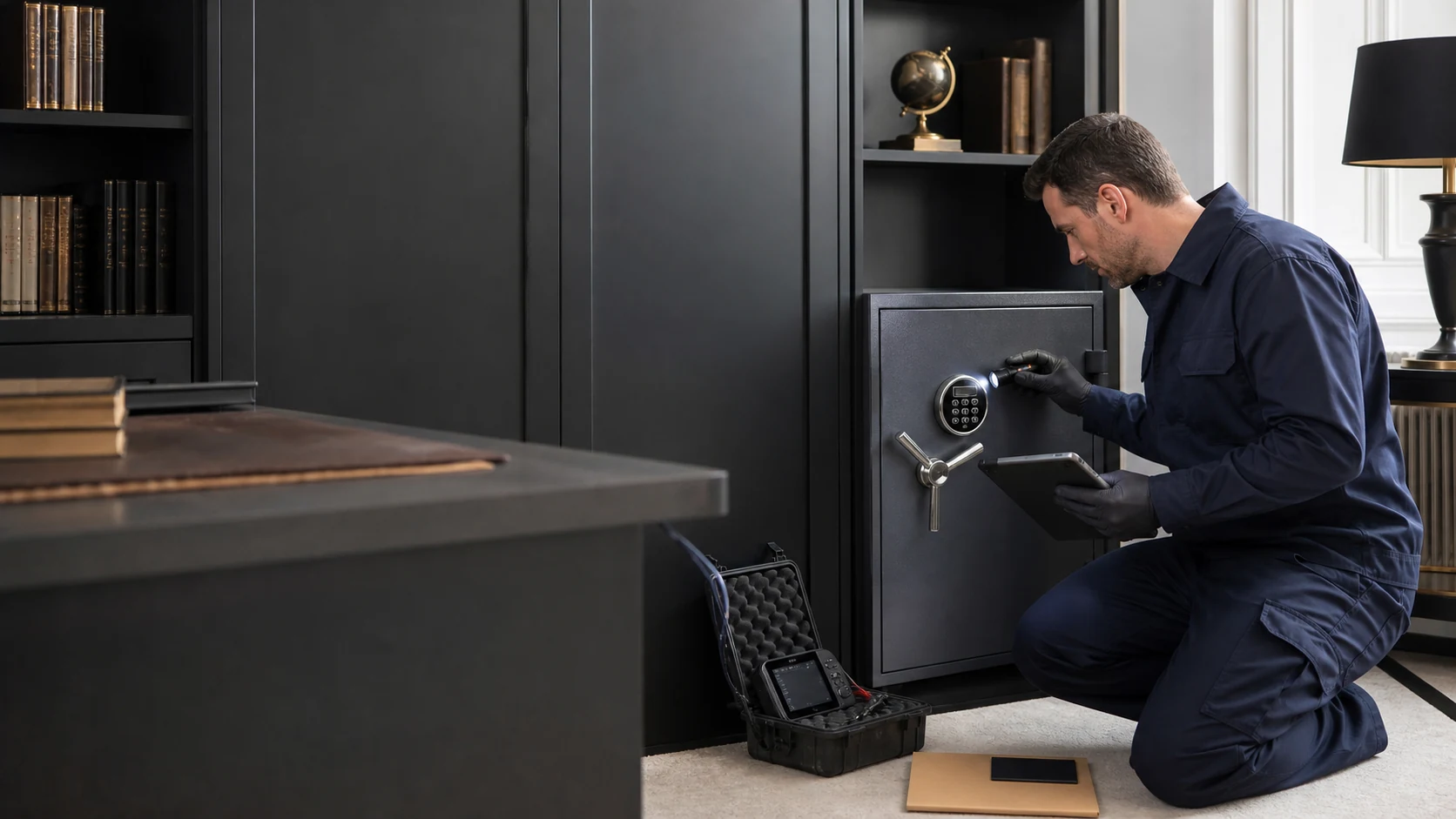
Alesta · Safe opening in London
Professional help for suitable domestic safes with lost credentials or lock faults, after ownership, safe type, location and access have been verified.
☎ Call 020 3608 3976Authority before access
A lost key, forgotten code, flat battery and mechanical failure can look similar from outside but require different diagnostics. The make, model, lock type, warning lights, sounds and last successful use all help establish the least destructive practical route.
We require evidence of identity and authority to access the safe and property. High-security, commercial, fire-damaged, tampered or unknown containers may need a dedicated safe engineer, manufacturer support or additional verification rather than an ordinary locksmith visit.
Keys, codes, battery history and current lock behaviour gathered before attendance.
Brand, model, lock type, dimensions and installation position assessed from clear images.
Non-destructive options considered before drilling or irreversible intervention.
Lock condition, continued use and any repair or replacement requirement explained.
Common reasons customers call
A known code fails or the electronic lock behaves differently from normal.
The mechanical lock cannot be operated with the available authorised key.
Battery access, override arrangements and model instructions need checking first.
The handle or boltwork will not move despite apparently correct credentials.
Why Alesta for safe opening
Access work proceeds only when identity, location and ownership rights are satisfactory.
Model information prevents unsuitable techniques and wasted attendance.
The technician considers reset, power and non-destructive routes before invasive work.
Specialist safes, unknown contents and manufacturer restrictions are escalated appropriately.
A verified access process
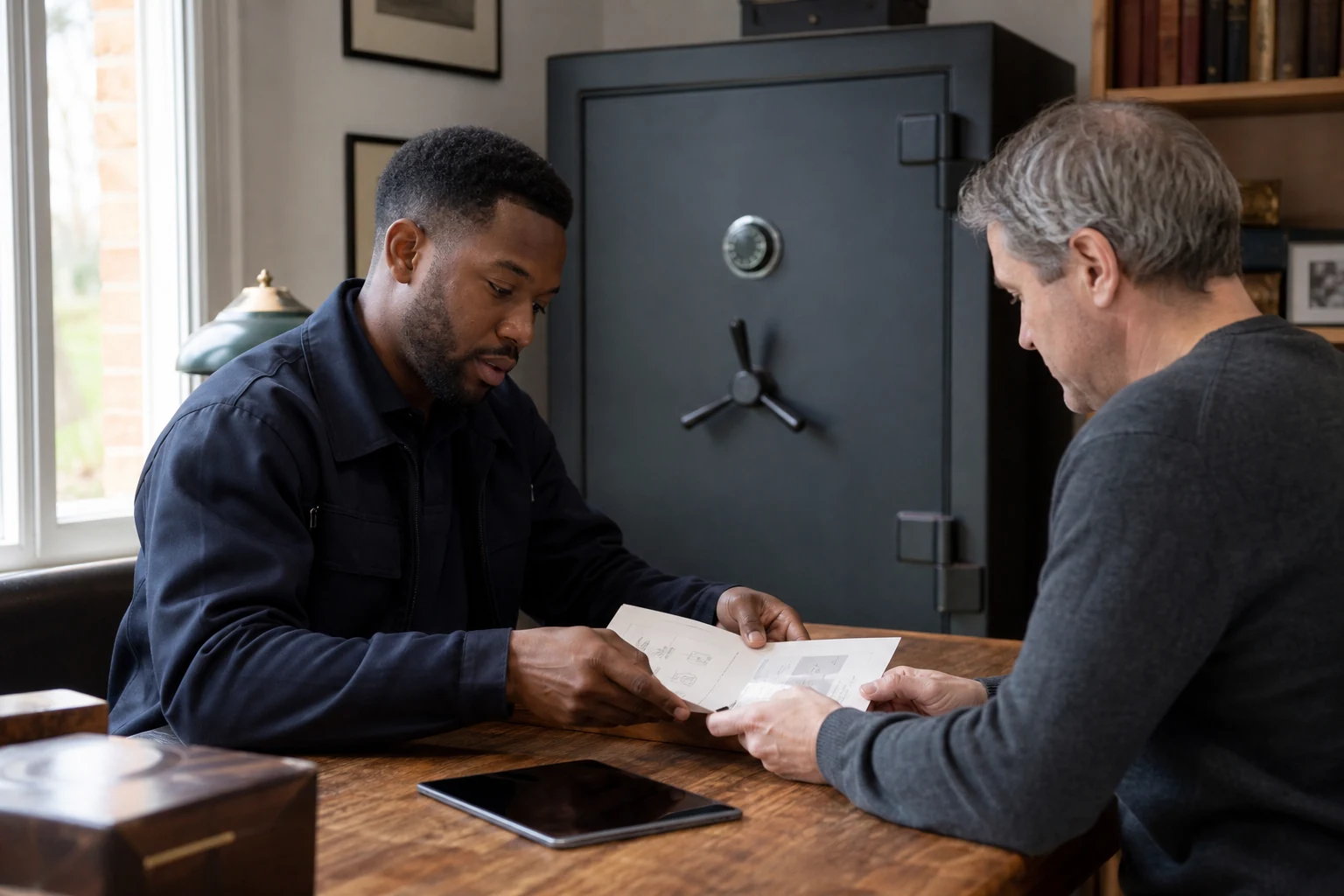
The first stage is authorisation. We ask who owns or controls the safe, where it is installed and what documents can demonstrate the right to open it. Clear photographs of the full safe, lock, hinges, labels and model plate are requested without revealing confidential codes. The customer describes the last successful opening, current symptoms, available keys and any attempted reset, forcing or drilling. Unknown or suspicious circumstances are not accepted for attendance.
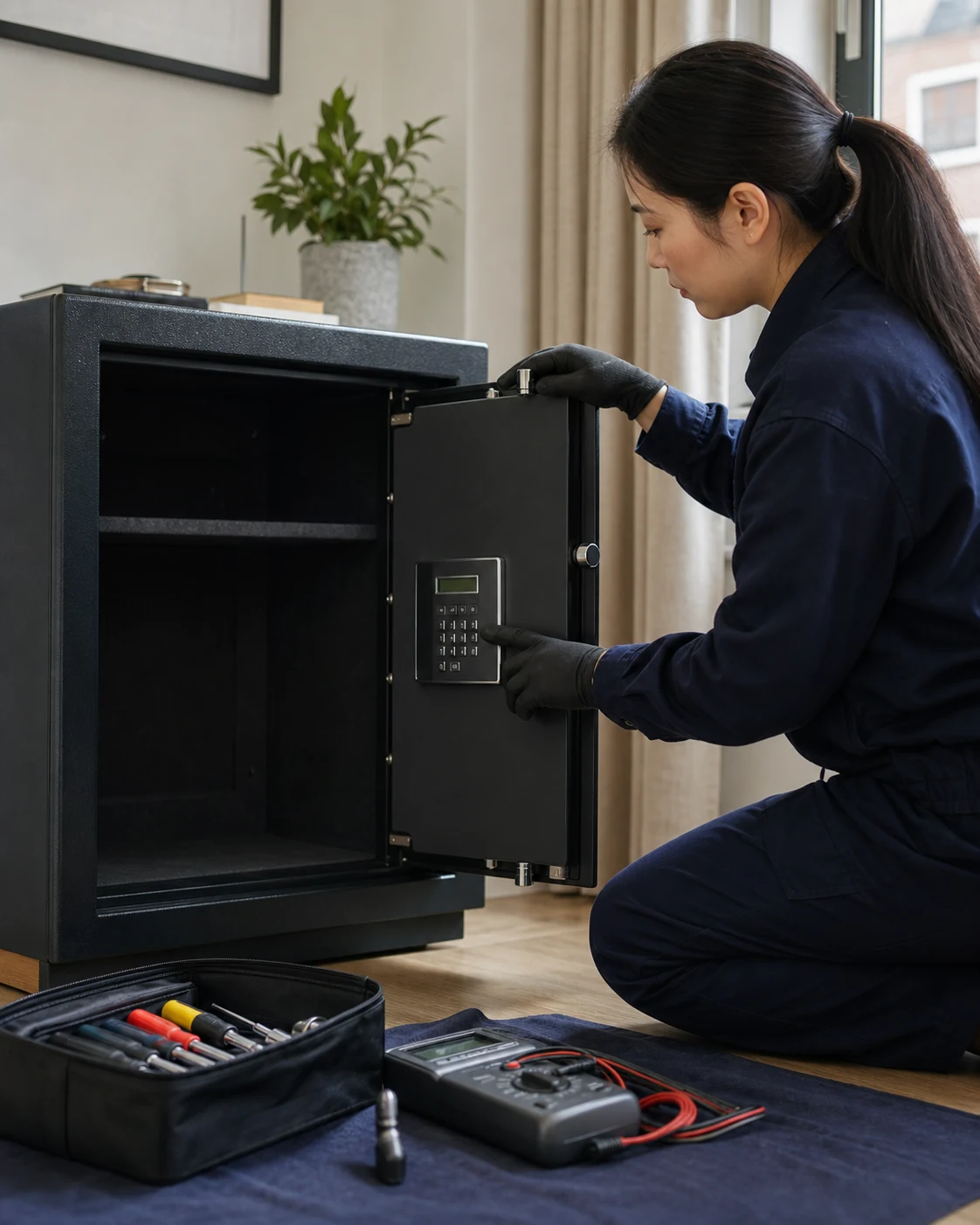
Before intervention, model instructions, power arrangements and lock behaviour are reviewed. At the property, the technician confirms identification and authority again, then checks whether the issue involves batteries, keypad procedure, handle pressure, a damaged key or internal boltwork. The safe must remain stable and safely accessible. Built-in units, alarm connections, heavy cabinets and safes fixed in confined locations can require extra access planning.
The least-destructive appropriate technique is attempted first where the safe and fault allow it. No method or opening time can be guaranteed from a photograph because internal locks, relockers and prior tampering change the task. If drilling or another irreversible method becomes necessary, the likely location, visible damage and effect on future use are explained before work proceeds. Specialist high-security units may be referred rather than experimented on.
After authorised access is restored, the technician assesses whether the lock can remain in service, needs repair or requires replacement. Resetting, new keys or electronic components are included only when agreed and compatible. Contents are not inventoried or handled beyond what is necessary for the work. The close-out records the practical condition and security limitation so the customer can decide whether repair, manufacturer service or safe replacement is the responsible next step.
Clear pricing
Cost depends on safe type, lock technology, fault, installation, access, prior tampering and whether non-destructive or invasive work is required.
| Service scope | Price | What affects the final price |
|---|---|---|
| Initial safe and lock assessment | Quoted from identification | Make, model, lock type, symptoms, authority and access |
| Standard authorised opening | Quoted after assessment | Technique, labour, installation and risk of damage |
| High-security or invasive opening | Specialist quotation required | Security rating, relockers, drilling, repair and specialist equipment |
Pricing context: Safe identification and proof of authority are required before a quote or visit. Replacement locks, keys, repair and making good are separate unless written into the scope.
How the service works
Provide authority, model images, lock type and the exact fault history.
The technician assesses access, likely method, limitations and damage risk.
Authorised access is restored and continued safe use is discussed.
Safe opening FAQ
Useful answers about authority, codes, damage, batteries, specialist safes and pricing.
☎ Call 020 3608 3976You need identification and satisfactory evidence that you own or are authorised to access both the safe and property. Additional documents may be requested.
No confidential code should be sent in ordinary photographs or messages. Describe the lock behaviour and available credentials without publishing the code.
No. Non-destructive options are considered first, but lock failure, security design or prior tampering may make invasive work necessary.
Share the make and model so external battery or manufacturer procedures can be checked. Do not force panels or connect unsuitable power.
That depends on the fault and method. The technician will explain whether reset, lock repair, replacement or safe replacement is required.
No. Some rated, commercial, fire-damaged or specialist safes require a dedicated safe engineer or manufacturer route.
Safe design, lock type, fault, installation, access, prior attempts, required method, labour and post-opening repair affect the quote.