
Missing labels narrow certainty, not the need for care
Sofa Cleaning in Raynes Park
Second-hand, re-covered and older sofas often arrive without a readable care label. Photographs and testing can inform a cautious decision, but they do not recreate missing manufacturer instructions.
- Send purchase or re-upholstery history if known
- Photograph underside cloth and accessible seams
- Point out replacement panels and old repairs
- Avoid home testing with bleach or solvents
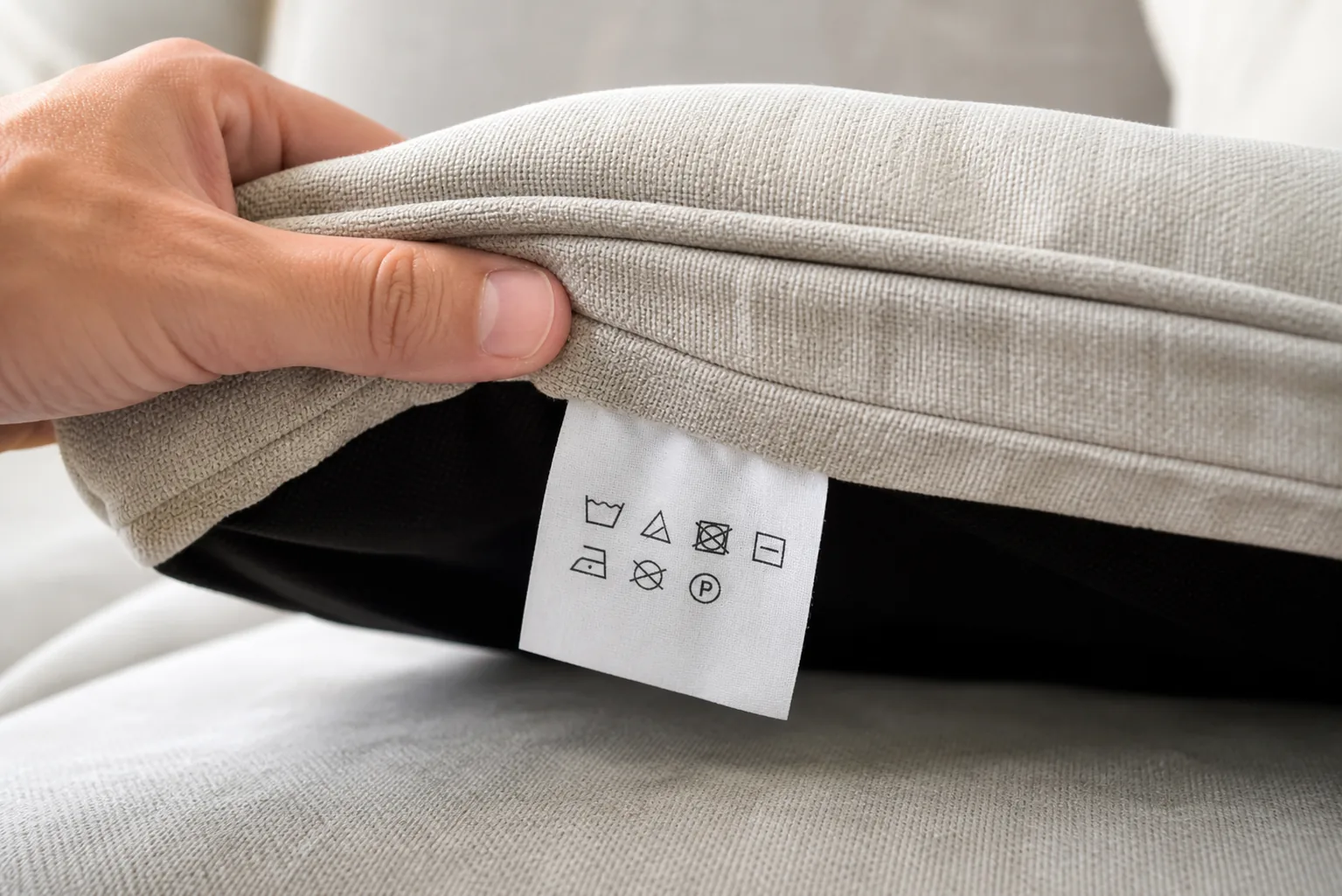
When the label is missing
Testing reduces uncertainty without removing it
Appearance alone cannot confirm a fibre blend, dye or backing. Purchase history, accessible seams and a cautious test can guide the decision, while unknown layers may still limit treatment.
- Share re-covering history
- Show repairs and replacement panels
- Avoid DIY bleach or solvent tests
Appearance alone cannot identify a fibre blend
Cotton, viscose, polyester and mixed yarns can share colour and weave. Backing, finish and dye add further variables. The technician examines accessible evidence and may test an inconspicuous area, yet hidden layers remain unknown. Where uncertainty is material, the treatment scope is reduced rather than supported by guesswork.
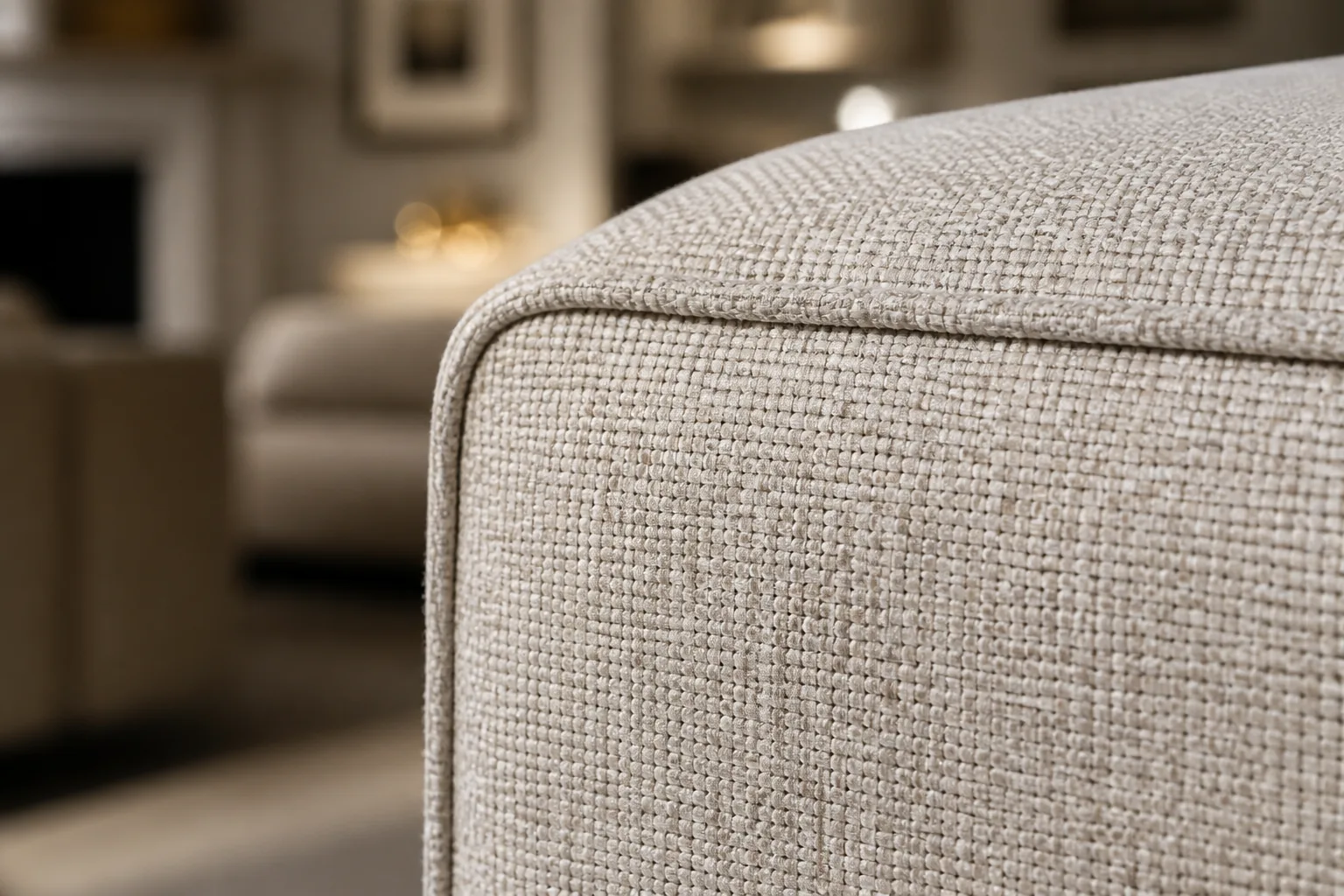

A test is evidence, not a guarantee
A small area can reveal immediate colour movement, texture change or residue response. It cannot prove how an entire panel will dry or what lies beneath every seam. Re-covered furniture is mapped panel by panel because the frame and loose cushions may not use the same cloth.
Pricing reference
The published guide is £45–£75 for two seats, subject to the material assessment.
No stain result is sold as part of a fixed local tariff.
A cautious result statement
Unknown composition can limit product choice, agitation and stain treatment. Cleaning cannot certify a fibre, replace missing compliance information or guarantee uniform response across re-covered panels. An unsafe uncertainty may lead to exclusion.
Access follows the property, not the postcode
For Raynes Park, include room, stairs and parking information along with the sofa history. Keep the underside accessible only where it can be viewed without tipping or dismantling a heavy frame. Repairs and fire labels should not be removed for cleaning preparation.
Fibre uncertainty
Build a decision from evidence, not appearance
A beige weave can be polyester, viscose, cotton, linen or a blend, and each may be finished with dyes, backing or stain protection that changes its behaviour. A zip, loose cover or seller description does not settle the question. Send the care label exactly as printed, including symbols, model number and any separate cushion information.
The technician reads construction as well as fibre. Yarn slubs, pile direction, latex backing, feather proofing and contrasting piping may create different risks on the same item. A discreet test considers colour transfer, texture, marking and drying response. It supports a choice; it does not certify the full sofa or predict removal of every stain.
Unknown does not mean experimental
When identity remains uncertain, the scope should become narrower and more conservative. Existing browning, water rings, brittle yarn or unstable dye may rule out a proposed method. The customer can then choose between a limited treatment, further manufacturer enquiry or leaving the item unchanged. That decision is better than treating a guess as a material fact.
Prepare the label trail
Search beneath seat cushions, under the platform and along the rear dust cover without cutting or unpicking anything. Keep purchase paperwork and fabric swatches if available. Photograph the whole item and the concern at true colour, then add one ruler-scale close-up. This compact evidence set makes a remote quotation more useful while preserving the need for on-item checks.
identification questions
Material questions worth settling early
Can you clean a sofa without a care label?
Sometimes, after cautious assessment, although missing information can narrow the suitable treatment scope.
Does a burn test identify the fabric?
Customers should not damage upholstery; identification and compatibility decisions belong in a safe assessment.
Is visual identification reliable?
No, similar-looking textiles can contain different fibres, backings, finishes and dyes.
What history should I provide?
Share purchase, re-upholstery, repair and earlier cleaning information, even when dates are approximate.
Does spot testing guarantee the full panel?
No, an accessible test cannot reveal every hidden layer or predict all drying behaviour.
Should the sofa be tipped over?
Do not lift or tip heavy furniture; show only safely accessible underside information.
Can a replacement cushion be included?
Yes, but it is assessed separately because its cover and filling may differ.
How does uncertainty affect price?
The quote follows the safe agreed scope, not an assumed method based on appearance.
Will cleaning validate fire labels?
No, cleaning does not certify compliance, replace labels or confirm an item’s manufacturing history.
Can another service join the appointment?
Yes, carpet, rug or mattress items need their own photographs and separate assessment.
