
Oil and coloured sauce should not be treated as one mark
Sofa Cleaning in Tooting
Food spills can combine fat, protein, sugar, pigment and home-cleaner residue. Naming the meal and the response taken afterwards gives a better starting point than repeatedly wetting a dark patch.
- Name the food or sauce where possible
- Report washing-up liquid or wipes already used
- Photograph the mark edge and nearby seam
- Blot fresh liquid without rubbing it through the weave
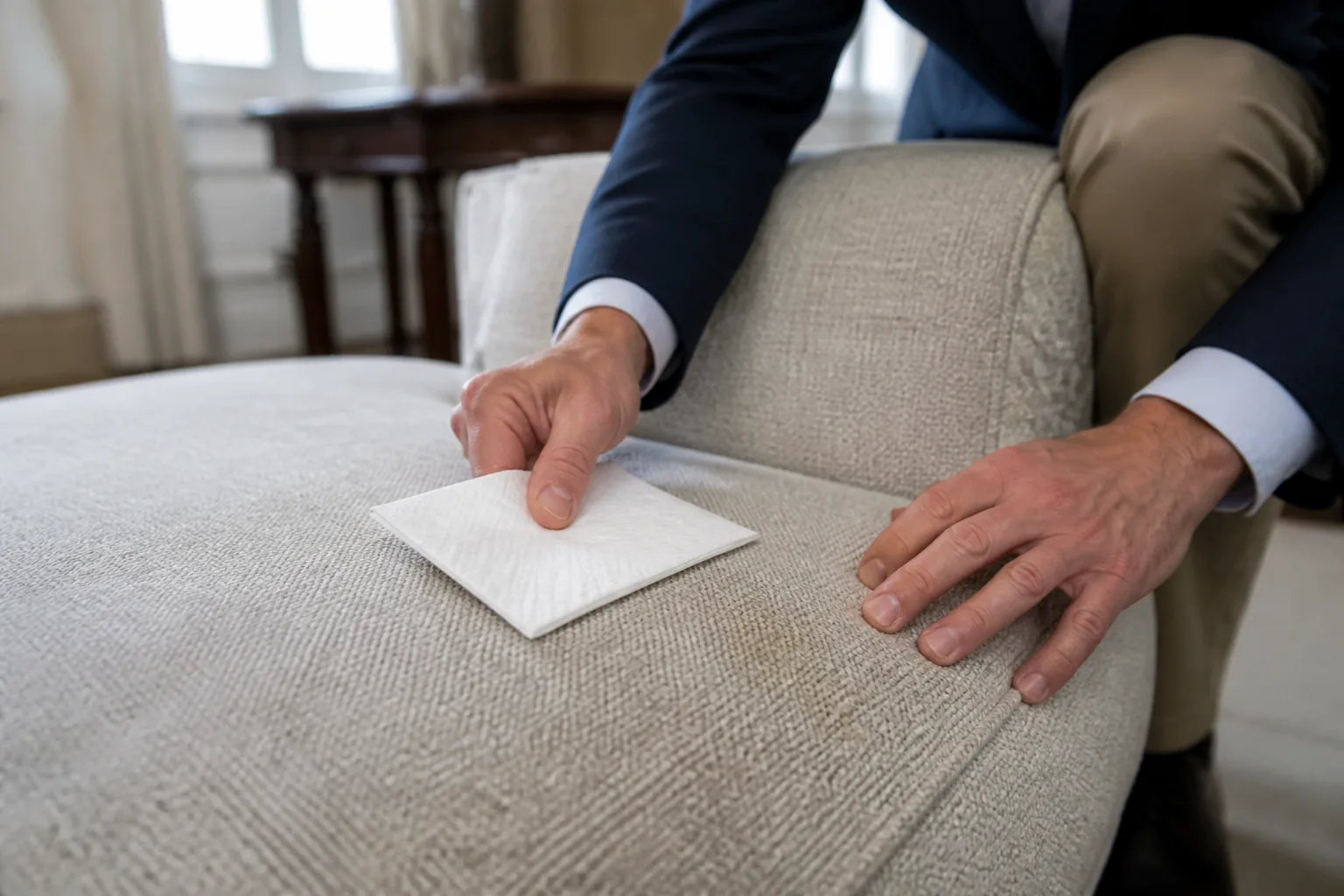
Food-spill notes
Oil, pigment and cleaner residue behave differently
A sauce mark may contain fat, protein, sugar and colour as well as residue from wipes or detergent. Naming the spill and the response already taken supports a more useful assessment.
- Identify the food if possible
- Report wipes or detergent
- Blot fresh liquid without rubbing
An oily patch can spread beyond the visible centre
Fat may migrate through yarns and into backing, while coloured ingredients remain closer to the face. Heat and age can make the mark more resistant. A household degreaser may add alkalinity, fragrance or its own residue. The assessment therefore considers substance, time, material and treatment history before setting a modest objective.
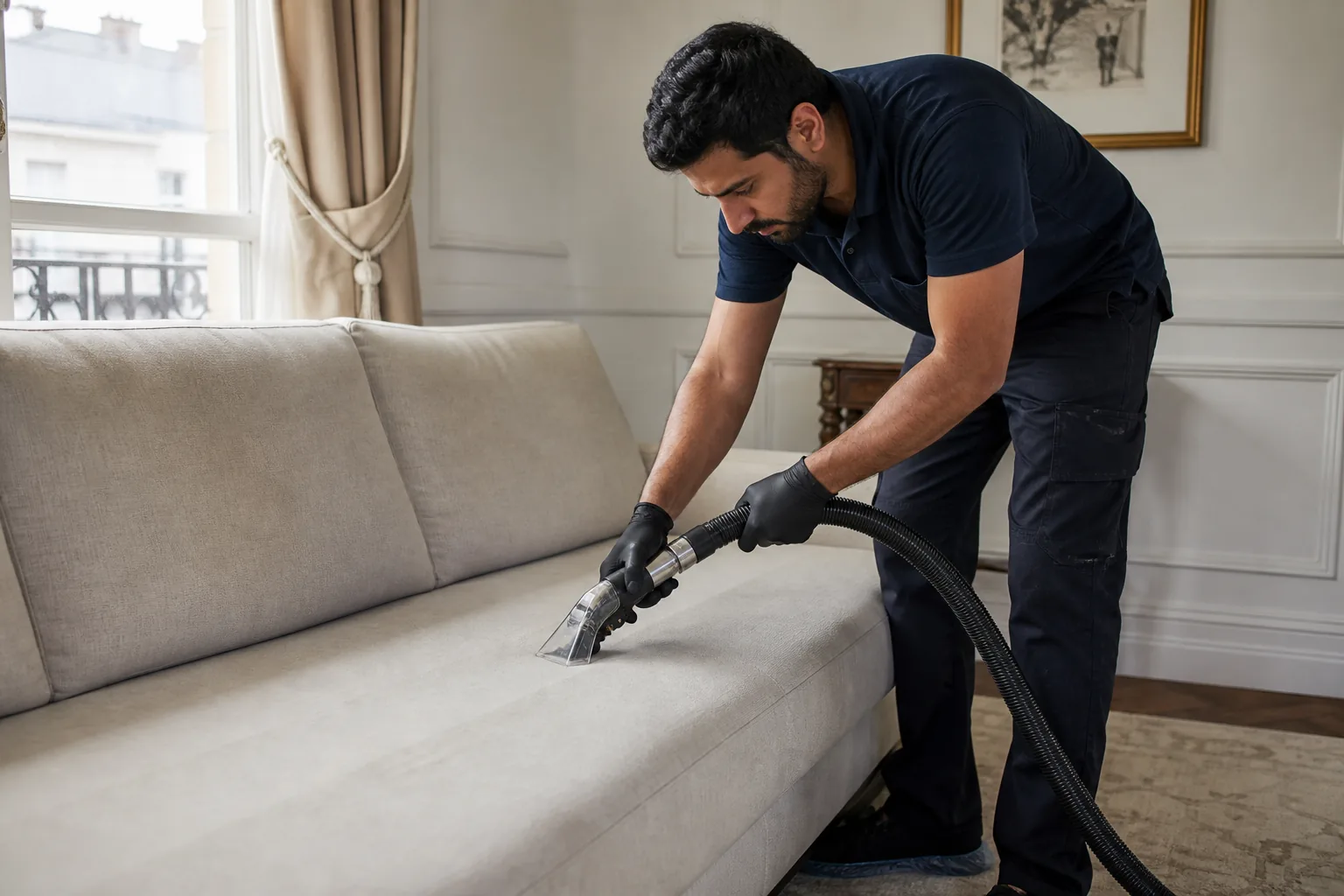
Kitchen proximity can create wider dulling
A sofa near an open kitchen may collect airborne oily deposit across arms and top edges, not just at the obvious spill. That general condition is distinguished from a single accident. Extractors, ovens and dining chairs are separate services, and their cleaning is never implied by the sofa quotation.
Pricing reference
For two upholstered seats, use £45–£75 as the current published guide.
A chair, footstool or rug keeps its own assessment.
Limits specific to this construction
Old oil can oxidise, darken fibres and retain odour. Strong pigment, abrasion from scrubbing and residue within backing may remain. Cleaning cannot promise food-hygiene certification or removal of contamination beyond safely accessible upholstery layers.
A practical note about the room
For a Tooting appointment, clear the work route from cooking areas and remove open food, hot pans and breakable items. Describe basement or upper-floor access and leave the affected cushion in its normal position until the first inspection photographs are complete.
Cooking-fat diagnosis
Follow the oil beyond the obvious splash
Food oil changes a textile differently from a water-based drink. It may darken yarn, bind dust and migrate into filling while leaving only a modest surface mark. Repeated wiping can enlarge the translucent edge. Record what was spilled, whether it was hot, which ingredients were present and how quickly any home product was applied.
A sofa beside an open kitchen can also collect a diffuse film from frying aerosols. Compare arms, cushion tops and the side facing the cooker with a protected rear panel. This broader dullness should not be confused with one accident. Extractor use, smoking, candles and fragranced sprays are relevant background because they contribute different deposits.
Do not season the stain with remedies
Flour, talc, salt and washing-up liquid may complicate later work. Powders can lodge in seams; concentrated detergent can leave a sticky halo. Blot fresh material without driving it inward, keep the upholstery label, and stop when colour transfers or the cloth distorts. A specialist can then decide whether a bounded oil treatment is compatible.
Judge after full stabilisation
Grease shadows can reappear as inner material redistributes during drying. The review therefore considers the dry seat, not a temporarily bright damp patch. Permanent oxidation, dye loss, heat damage and old cooking odour may remain. Keeping the kitchen ventilated and the sofa away from active cooking during drying reduces fresh deposition on the treated face.
oil questions
Before you approve the scope
Should I use washing-up liquid on an oil mark?
Avoid adding product; detergent residue can spread the patch and complicate later assessment.
What food details are helpful?
Name likely oil, dairy, sauce, colouring, heat and the approximate time of the spill.
Can an old grease mark disappear?
Some improve, but oxidation, pigment, backing migration and fibre damage can make change permanent.
Why has the patch become larger?
Oil, water or cleaner can move through yarns and create a broader visible boundary.
Does sofa cleaning sanitise food spills?
No broad hygiene certification is promised for inaccessible backing, foam or internal furniture layers.
Should I remove the affected cushion?
Leave it in position initially so orientation, wear and relation to other seats are recorded.
Can cooking odour be treated?
Accessible upholstery may improve, but odour held in filling or the wider room can remain.
How is the quotation calculated?
Item size, material, cushions, soil, earlier products, extras and access define the price.
Is oven cleaning included nearby?
No, oven cleaning is a separate service that requires its own booking and scope.
Can a rug under the sofa be added?
Yes, supply dimensions, fibre details and photographs for a separate rug-cleaning decision.
