
A few pieces awaiting placement
Measure the cabinet and other principal pieces.
Weybridge / Storage for Furniture Awaiting Placement
Some pieces are waiting for a room; others are waiting for a decision.
A Weybridge inventory can distinguish those two situations. Identify furniture with a known future position and belongings whose placement remains open, then explain how their likely return priorities differ.

Choose your starting point
Choose the retained contents type and explain any item whose material or future placement needs a separate discussion.
Inventory focus
Keep early-use household cartons identifiable and do not mix essential records or valuables into ordinary storage groups.
Add this to your inventory ↓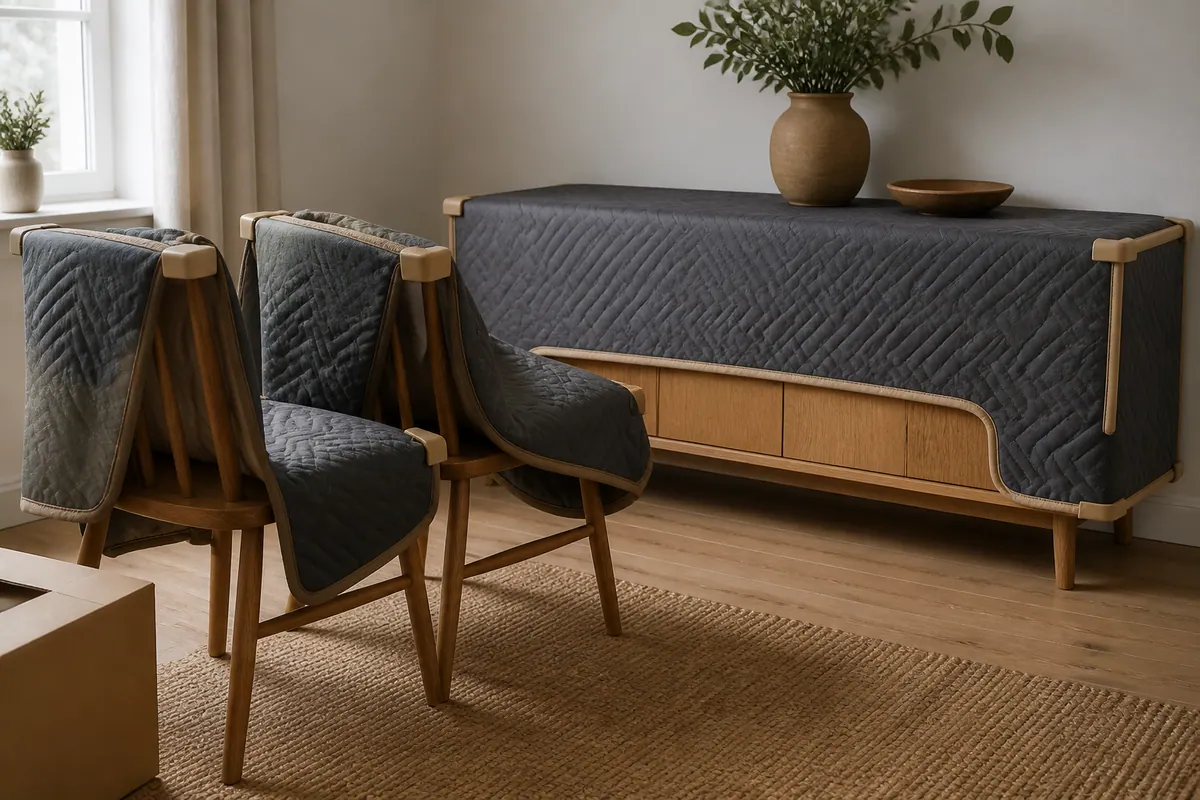
A useful first conversation
List the confirmed pieces and add notes about condition, dimensions and whether their receiving room is known.

Weybridge, before collection day
Furniture waiting for a finished room has a different uncertainty from furniture whose future position is undecided. A Weybridge inventory can identify both while keeping the return date provisional. Explain the likely priorities and discuss the term that suits the actual situation.
For this enquiry: Give a dining cabinet’s glazed sections individual attention and record spare-bed components separately. Identify household cartons needed before final placement, with their retrieval procedure agreed rather than assumed.
Include the cabinet’s dimensions and note any glazed sections. Mark the boxes required before the final furniture placement is decided.
Plan the route out of your property ↓Dimensions before estimates
Future placement does not determine current storage volume. Shape, protection, preparation and retrieval requirements need assessment for each accepted group.
Measure the cabinet and other principal pieces.
Count packed contents separately from furniture.
Identify which groups might return independently.
Request fuller review where many substantial pieces are retained.
Sensitive finishes and glazed sections need disclosure; no general storage description guarantees suitability for every material.
What changes at home?
Link the furniture return to practical readiness rather than a hoped-for completion date.
State that placement is unresolved and discuss the expected storage period honestly.
Record components and preparation needs separately from linen or packed contents.
Identify the household group needed before the larger furniture has its final position.
One connected arrangement
Distinguish known-room pieces from undecided placement.
Record dimensions and collection constraints.
Agree preparation for sensitive sections.
Confirm the selected furniture and cartons.
Review conditions against the declared materials.
Reconfirm receiving space before requesting each group.



Plan the return before the departure
Separate belongings needed before furniture placement is settled from pieces that can wait. Discuss this distinction before the arrangement is accepted.
Need earlier
Need later
Ask about notice and any selected-return charges. Keep valuables and irreplaceable records in a suitable separate arrangement.
Give early-use cartons names linked to the accepted inventory.
Record component identity and protection needs for beds and cabinets.
Distinguish occasional belongings from those supporting the first usable room.
The timetable can change
| Planning point | A shorter gap | A longer arrangement |
|---|---|---|
| Typical purpose | Furniture waiting for a ready room | Belongings retained while placement is decided |
| Preparation | Prepare for the identified handling stages | Review sensitive materials over the expected period |
| Retrieval | Return items with a confirmed place | Discuss later requests after decisions settle |
| Duration | Give the likely readiness interval | Ask about extensions and notice |
| Quotation | Assess the actual retained selection | Include ongoing and individual movement costs |
Uncertain placement does not mean an unlimited term. Confirm conditions, restrictions, insurance arrangements and the process for changing the period.
Scope first. Quote second.
For Weybridge, distinguish confirmed return requirements from unresolved furniture placement. Ask which parts of the proposal are conditional on later decisions.
| Service scope | Price approach | Main factors |
|---|---|---|
| Volume & access assessment | Retained-piece assessment | Sizes and sensitive-material notes |
| Collection & placement | Declared-furniture collection quote | Route and preparation requirements |
| Ongoing storage | Proposed retention term | Accepted contents and conditions |
| Final retrieval / delivery | Placement-confirmed return scope | Destination access and requested groups |
Glazed sections, dimensions, protection and access affect handling. The period and any selected return should be clear rather than implied by the furniture count.
Collection is part of the storage plan
Give overall measurements and projecting parts for substantial furniture.
Show the tightest route from its starting room to the entrance.
Explain the carry and any known restrictions at the proposed vehicle point.
Declare glazed doors or delicate finishes and ask about suitable preparation.
The eventual room may introduce different access requirements; check receiving details before return is arranged.
Flats and apartments: Describe shared access for the named cabinet.Mansion blocks: Check permissions and lift dimensions where relevant.Houses: Include the longest piece’s full carry route.Rental or managed properties: Confirm who can approve the selected load.
Direct answers before you book
Explain the unresolved placement and expected period. Give known collection details and ask what will be needed before arranging return.
Use a clear reference or group where it helps. Its return priority may differ from pieces still awaiting a decision.
Provide dimensions, condition and details of the glazed sections. Ask about preparation and suitability rather than assuming standard handling.
List furniture components and packed contents separately where useful. They may have different preparation or return needs.
Identify them before booking and confirm the process, notice and additional movement charges.
No automatic term is promised. Review the proposed duration and extension process before accepting the arrangement.
No blanket preservation guarantee is made. Disclose materials and review suitable conditions and preparation for the actual pieces.
Provide its details before delivery is arranged. The receiving route needs assessment even if collection was straightforward.
Keep essential records, valuables and daily necessities outside ordinary household storage. Declare unusual or potentially restricted contents.
Ask about the chosen solution’s written terms and options. Neither cover nor unrestricted access should be inferred.
Send the retained list, sensitive-piece notes, collection route and likely return groups, marking unresolved placement clearly.
Keep the move connected
Connect retained furniture storage with a wider household move.
Discuss a defined smaller transport group if required.
Agree preparation after sensitive sections are identified.
Arrange furniture delivery once its receiving space is confirmed.
Alesta customer feedback / Furniture removal & packing
“I used Alesta Services for furniture removal and packing when I moved houses. The team was incredibly careful with my belongings and made the whole process seamless.”
James W. · Existing Alesta review, not a storage testimonial for Weybridge.
Weybridge / Service area
Send the Weybridge postcode and sensitive-furniture details. The household scope is available at Storage Services.
Discuss suitable conditions and the return process for pieces whose receiving position has not yet been decided.
A little space. A clear next step.
Identify the known destinations, the unresolved decisions and the cartons you may need before the furniture returns.
