Site and access check
Gates, steps, slopes, soil condition and machinery route are reviewed before booking.
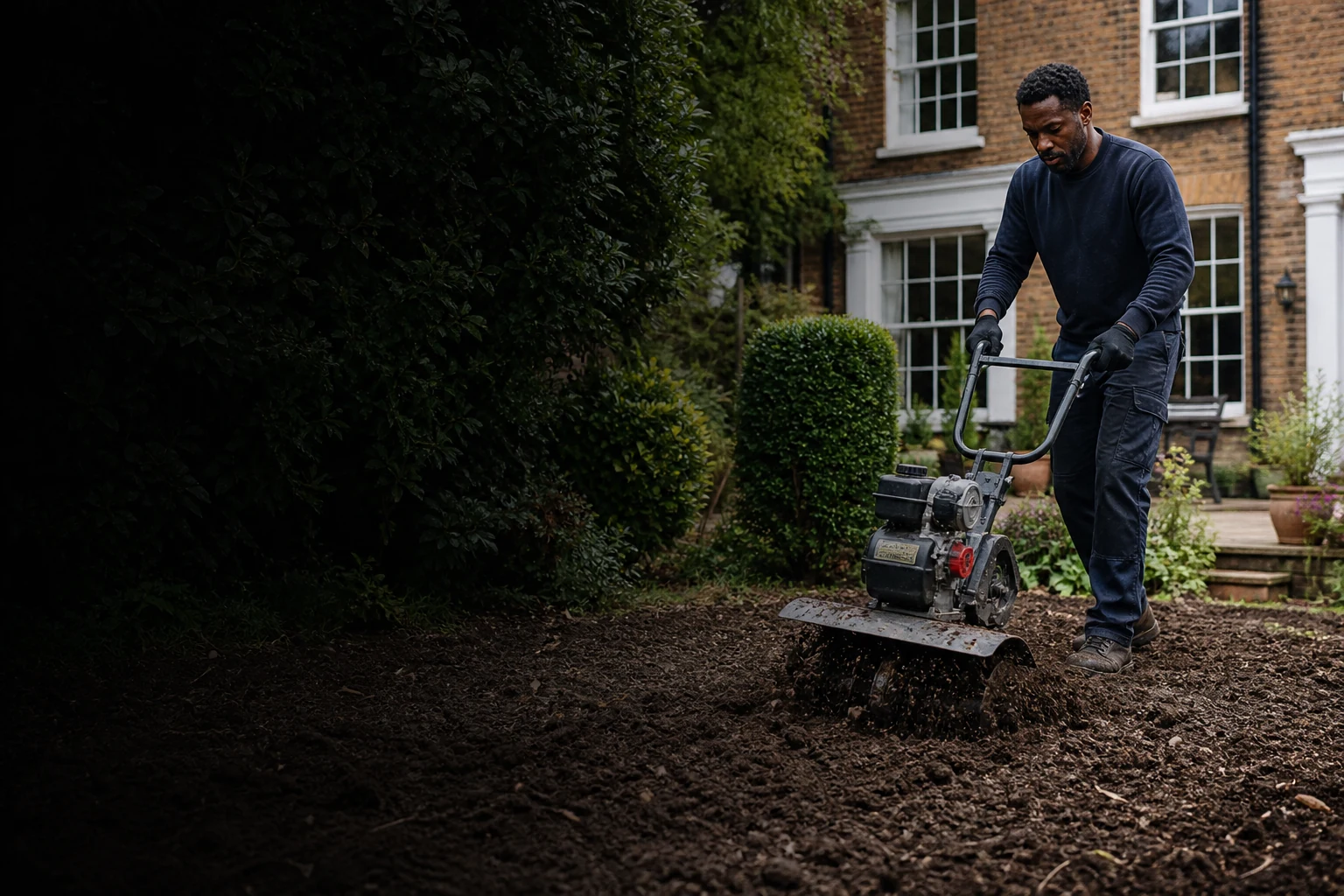
Alesta · Garden tilling in London
Garden tilling and cultivation planned around ground condition, access, buried risks and the planting, lawn or bed preparation you intend to complete.
☎ Call 020 3608 3976Ground assessment before machinery
Cultivation can loosen compacted ground, incorporate suitable amendments and prepare an area for planting or turf. It can also spread perennial weeds, damage roots or strike hidden services if used without understanding the site.
We establish the area, access width, slope, soil moisture, vegetation, known cables or pipes and intended finish first. Clearance, excavation, rotavating, levelling and imported topsoil are defined separately rather than assumed.
Gates, steps, slopes, soil condition and machinery route are reviewed before booking.
Depth and number of passes respond to soil, roots and the agreed preparation.
Exposed stones, roots and non-soil material are handled only to the stated scope.
The cultivated area is left for the agreed planting, turfing or further levelling stage.
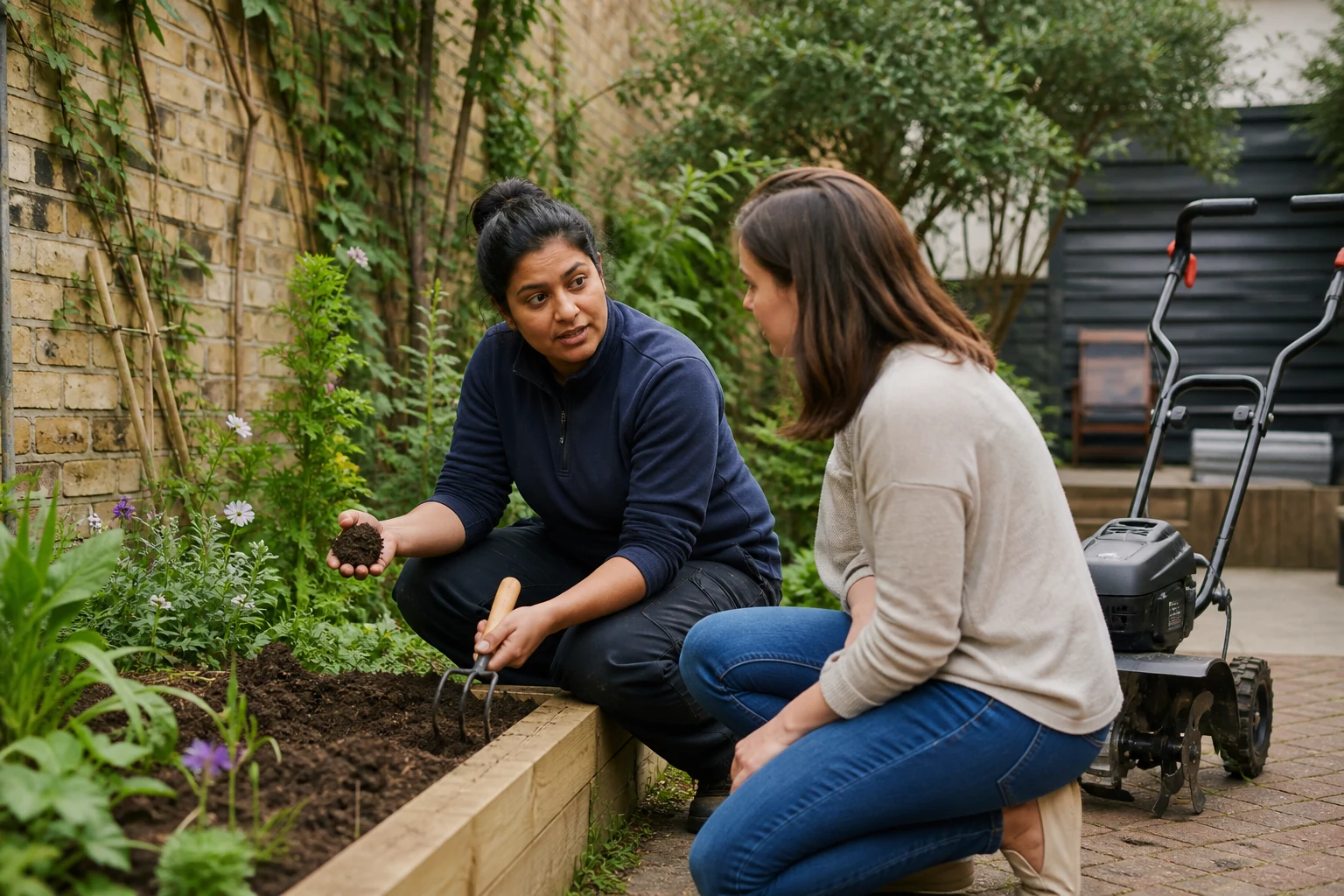
Common reasons customers call
Existing open soil needs loosening before compost and planting are introduced.
The surface needs cultivation as one part of broader levelling and turf preparation.
Previously worked soil is difficult to cultivate by hand and drains or roots poorly.
After suitable vegetation removal, the soil needs breaking down for its planned use.
Why Alesta for garden tilling
Known irrigation, lighting cables, pipes and shallow services must be identified first.
Saturated or extremely dry soil is not forced through an unsuitable treatment.
Rhizomes and invasive plants are not knowingly chopped and spread across the area.
Cultivation is distinguished from final grading, planting, turfing and landscaping.
A ground-led process
Planning starts with photographs, dimensions and the purpose of the cultivated area. We ask what previously grew there, whether weed membrane, rubble, tree roots or old foundations may remain and where utilities, irrigation or lighting routes run. Gate width, steps and turns determine whether suitable equipment can reach the soil. Heavy rain, drought and clay condition can change the date because working saturated soil can destroy structure while extremely hard ground can make machinery ineffective or unsafe.
Before machinery starts, the area is checked for visible glass, metal, wire, stones, timber and other hazards. Tall growth, woody shrubs, stumps and construction waste must be removed under a separate clearance scope. The operator marks exclusion zones around retained plants, shallow roots and known services. An exploratory hand check may be appropriate where uncertainty remains, but no surface check can guarantee that undocumented buried cables or pipes are absent; the property holder must disclose available information.
Cultivation proceeds in controlled passes rather than immediately at maximum depth. The operator watches how the soil breaks, how the machine responds and what material is exposed. Compacted layers may need a staged approach, while rhizomatous weeds can require removal rather than repeated chopping. Suitable compost or soil improver is incorporated only when specified by quantity and material. Tilling does not automatically correct drainage, remove every root or produce accurate finished levels for paving or turf.
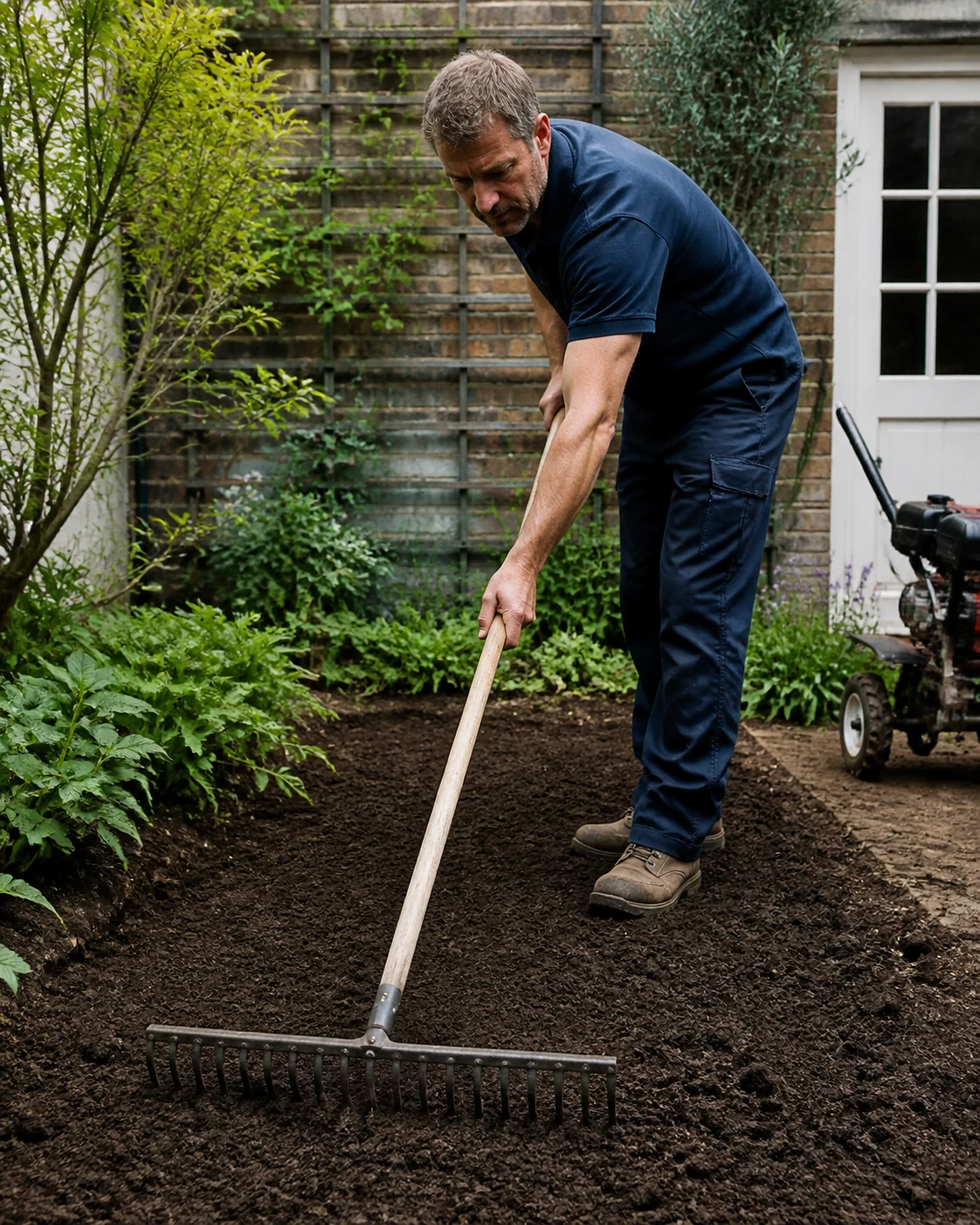
The worked area is reviewed and accessible exposed debris within scope is gathered. Depending on the next stage, the soil may receive a coarse rake or be left open to settle before final grading. Planting, seeding and turf each require their own depth, firmness and finish, so handover explains what remains. If hidden rubble, severe root systems, contaminated soil or waterlogging becomes evident, the team stops treating the issue as ordinary tilling and recommends the appropriate landscaping or specialist assessment.
Clear pricing
Cost depends on area, access, soil condition, slope, vegetation, machinery, depth, debris and the required finish.
| Service scope | Price | What affects the final price |
|---|---|---|
| Small open-bed cultivation | Quoted after assessment | Area, access, soil, roots, passes and finish |
| Lawn or larger plot preparation | Quoted after site review | Dimensions, compaction, machinery route, levelling and debris |
| Cultivation with landscaping work | Detailed quotation | Clearance, imported material, grading, planting or turfing |
Pricing context: Photographs and dimensions are required. Tilling alone excludes clearance, stump removal, drainage, contaminated soil, final landscaping and disposal unless listed.
How the service works
Share dimensions, ground history, services, soil condition and the planned finish.
We agree clearance, cultivation depth, amendments, debris and final condition.
Controlled passes prepare the soil and reveal any issue needing separate work.
Garden tilling FAQ
Useful answers about weeds, wet soil, utilities, depth, preparation, finish and pricing.
☎ Call 020 3608 3976No. Dense roots, invasive weeds, buried rubble, contaminated soil, steep access or unknown services may make another method safer.
No. It can expose or fragment weeds, and certain perennial rhizomes may spread when chopped. Weed management should be planned separately.
Not when saturated. Working very wet clay can smear and compact it, so timing may need to change until conditions improve.
Depth depends on equipment, soil, roots, buried risks and the next use. It is agreed after assessment rather than promised universally.
Remove furniture, waste and movable objects, identify services and irrigation, unlock access and disclose previous structures or treatments.
Not necessarily. Turf preparation can also require settlement, grading, stone removal, imported topsoil and firming before laying.
Area, gate access, slope, soil moisture, compaction, roots, debris, machinery, amendments, waste and finish affect the quote.