
Masonry
An apparently solid masonry wall can include weak or repaired areas. The assessed material and condition determine the fixing approach rather than a generic bag of supplied plugs.
Bow · Home technology, considered
Choose the view before the cable route
The nearest socket does not have to decide the whole Bow TV layout. Show the preferred viewing wall and the existing connections so the implications can be assessed.
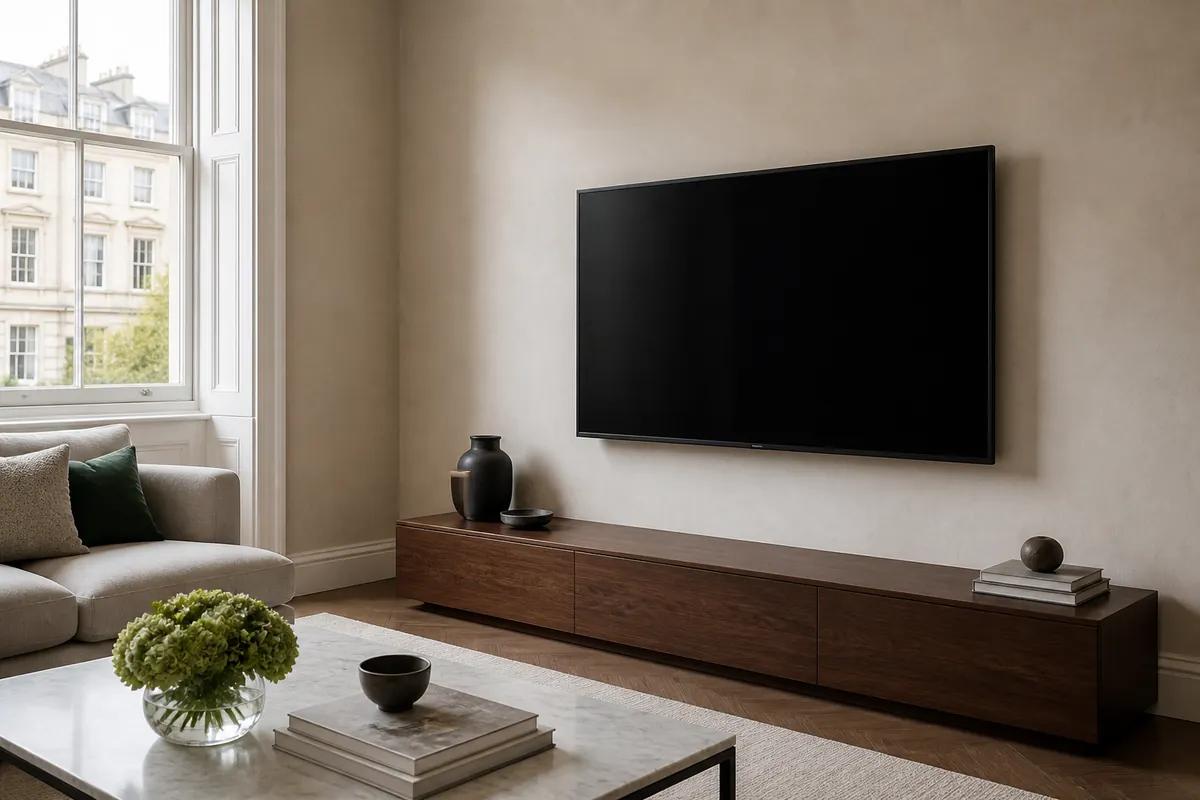
Condition changes the answer
Describe known alterations, previous mounting and damaged areas. The fixing plan should follow the actual support found behind the finish, especially for a bracket that extends.
An apparently solid masonry wall can include weak or repaired areas. The assessed material and condition determine the fixing approach rather than a generic bag of supplied plugs.
A lightweight partition may contain suitable support, but its position and capacity need establishing. Do not infer approval for a heavy screen from a small fitting already attached nearby.
Framing needs to be located and assessed, with the mount’s fixing positions considered. Fasteners cannot be chosen solely because the wall is described as timber-framed.
Flag decorative panelling, tile or stone even if you know the structure behind it. Passing through that face introduces its own requirements and damage considerations.
Send what you have: photographs, relevant drawings or information from previous work. Missing construction details are a reason for assessment, not for inventing a material.
No scanner can promise a complete picture inside the wall. The installation assessment must account for hidden-service risk alongside the strength and condition of support.
Each lead needs a destination
A cable-free appearance can involve different methods and scopes. The diagrams illustrate that choice without promising that your wall allows a concealed route.
Accessible leads can be organised as part of an agreed mounting brief. If you want them concealed, the route and wall access must be reviewed, with making good described rather than presumed.
Do not treat a socket relocation as cable tidying. It must be separately agreed electrical work; burying ordinary mains flex does not provide an appropriate replacement.
Discuss a new socketThis is an explanatory illustration rather than evidence of previous customer work.
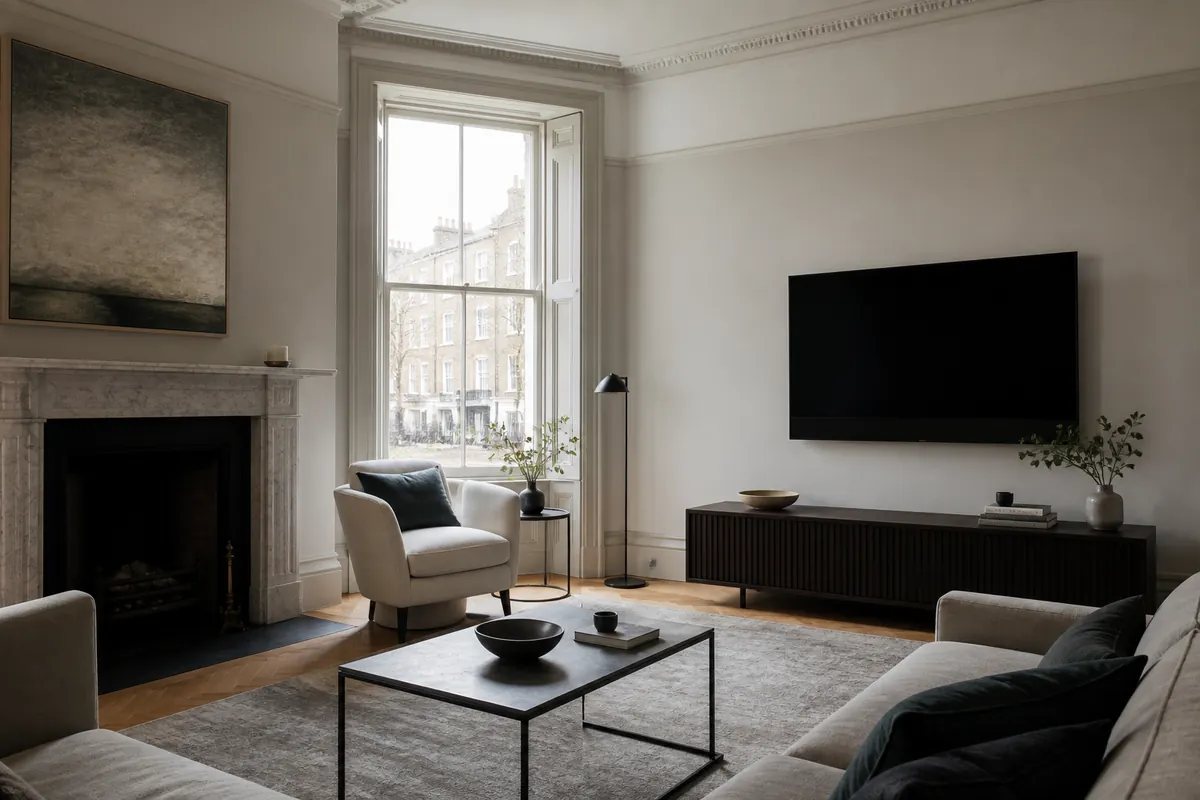
Bow / room by room
If a longer lead is currently stretched around furniture, explain whether that is temporary or your intended arrangement. Mounting should not preserve an awkward cable route merely because it already exists.
Compare the seated view from possible positions before requesting power alterations. Once a workable location is agreed, electrical changes, concealment and decorative repairs can be described as their own tasks.
Describe your Bow installation ↗Clear boundaries before booking
Provide the models, wall information and address details, then say what is changing in the room. Include furniture yet to arrive if it affects the final position.
An assessed quote can distinguish the core installation from requested cable concealment, electrical changes and finishing. Specify removals rather than assuming they follow automatically from a replacement screen.
Request my mounting quote ↗| Installation | Pricing | Main variables |
|---|---|---|
| Standard fixed-bracket mounting | Quote after assessment | TV-to-mount fit, assessed fixings and the chosen screen location. |
| Large TV / full-motion bracket | Quote after assessment | Large-panel access, suitable support and loads from bracket movement. |
| Mounting + additional cable / electrical work | Detailed quote | The route construction permits and separately agreed finishing tasks. |
Practical details
Send the replacement model and accessible details of the current bracket. Compare weight, VESA, panel dimensions and ports; a similar diagonal does not show which parts of the old arrangement can be retained.
The attachment holes may occupy a different position on the replacement panel. Explain the visible centre you want, then have it checked against the new screen and the existing wall plate arrangement.
Appearance alone cannot confirm capacity or complete condition. The rating, attachment parts, wall fixings and intended use need review against the replacement screen before reuse is approved.
Port position and the required connection route can change between models. Identify the leads and devices you want retained so reach, plug clearance and access can be considered with the new bracket arrangement.
Request that work explicitly. Removing a bracket and repairing or decorating the wall are separate scope questions, particularly if the new screen leaves an old fixing area exposed.
Provide the manufacturer’s mounting-related weight information and exact model rather than estimating. The assessment also considers handling, bracket capacity, VESA and the suitability of the wall fixings.
That depends on the plate geometry, assessed support and service risks at the proposed new fixing points. A small visual change is not necessarily a minor structural or finishing task.
Check actual width, height and required clearances rather than the diagonal. Include the shelf depths and any intended tilt or rotation, because the moving outline differs from the flat screen.
Do not assume disposal is included. Describe any removal, carrying or disposal request before booking so the agreed work distinguishes the new installation from what happens to the previous equipment.
Only if that type still suits the viewing arrangement. A changed room layout or connection requirement may justify a different option, subject to compatibility and suitable wall support.
Plan the finished arrangement
Think about the room after furniture returns: where the TV rests, whether it turns and where equipment stays. These options prepare the conversation, while support, access and hardware are checked separately.
Your answers establish preferences rather than technical approval.
Your setup brief
Small screen · Fixed bracket · Masonry wall · Visible cables.
Send this setup by email ↗Need a new socket? Plan the electrical work separately
A screen is a load and a shape
Diagonal size gives a rough scale, while width, height, mass and VESA define different installation constraints. Send the exact product details rather than estimating from the box.
For an oversized panel, the wall’s available width is only part of the question. Explain how the screen reaches that wall and whether there is a suitable area for preparation and supported lifting.
The bracket needs an appropriate rating and fit for the TV; its fixings need appropriate support. Intended extension makes those checks particularly important because it changes leverage.
| Bracket | Best suited for | Movement | Key consideration |
|---|---|---|---|
| Fixed | A straightforward presentation in one fixed direction | Minimal | Check the cable access before selecting the shallowest profile. |
| Tilt | A position where vertical adjustment serves the seated view | Vertical adjustment | Tilt cannot compensate for an unsuitable overall mounting height. |
| Full motion | A screen used from more than one part of a room | Extend and swivel | Confirm clearances and suitable cable allowance along the travel. |
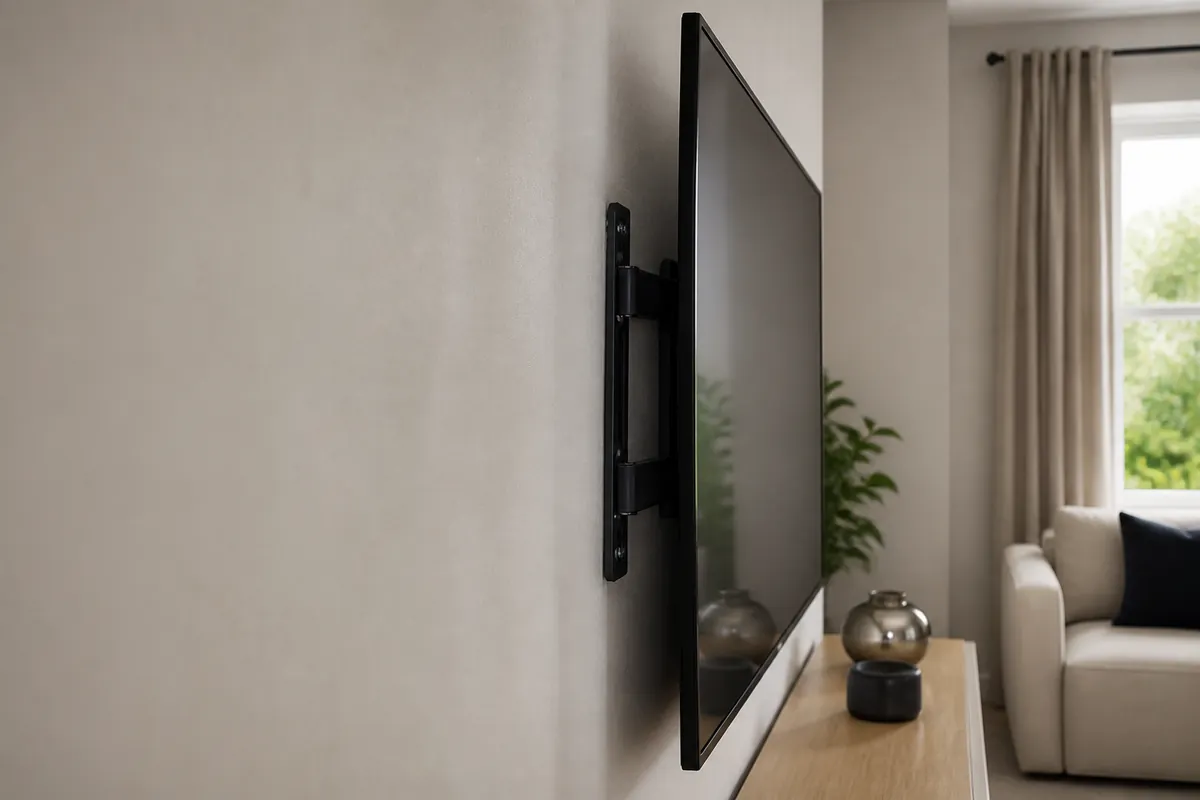
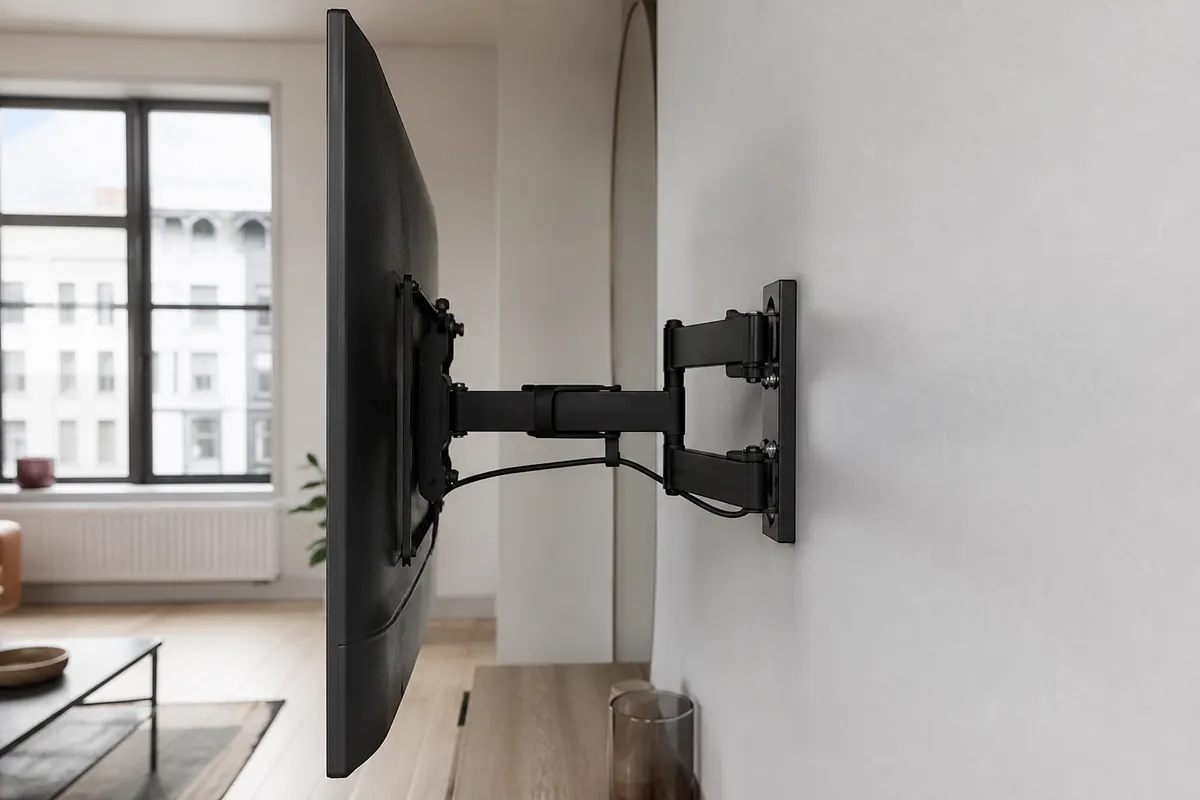
Room relationships before marks
The drawing is a conversation tool rather than a design for your property. Start with the main watching place and explain which surrounding items are fixed.
Give the main viewer priority when discussing height. A high cabinet can constrain the lower edge, but that constraint should be made explicit.
Look at the proposed position from the seat, not only from the doorway. Adjacent windows can influence the view even when the wall itself is clear.
A mount’s advertised rotation range does not guarantee the same range with your screen. Panel width and room obstacles can limit it.
Describe where equipment will live after installation. A neat screen location needs usable power and signal connections, with extra work separately scoped.
Fireplace assessment, not a default choice
A fireplace wall needs consideration of heat conditions, chimney or flue position, support and concealed services. Decorative balance cannot answer those technical questions.
The seated view also needs a separate check. Where the mantel forces excessive height or the cable route becomes impractical, discuss another arrangement before agreeing drilling.
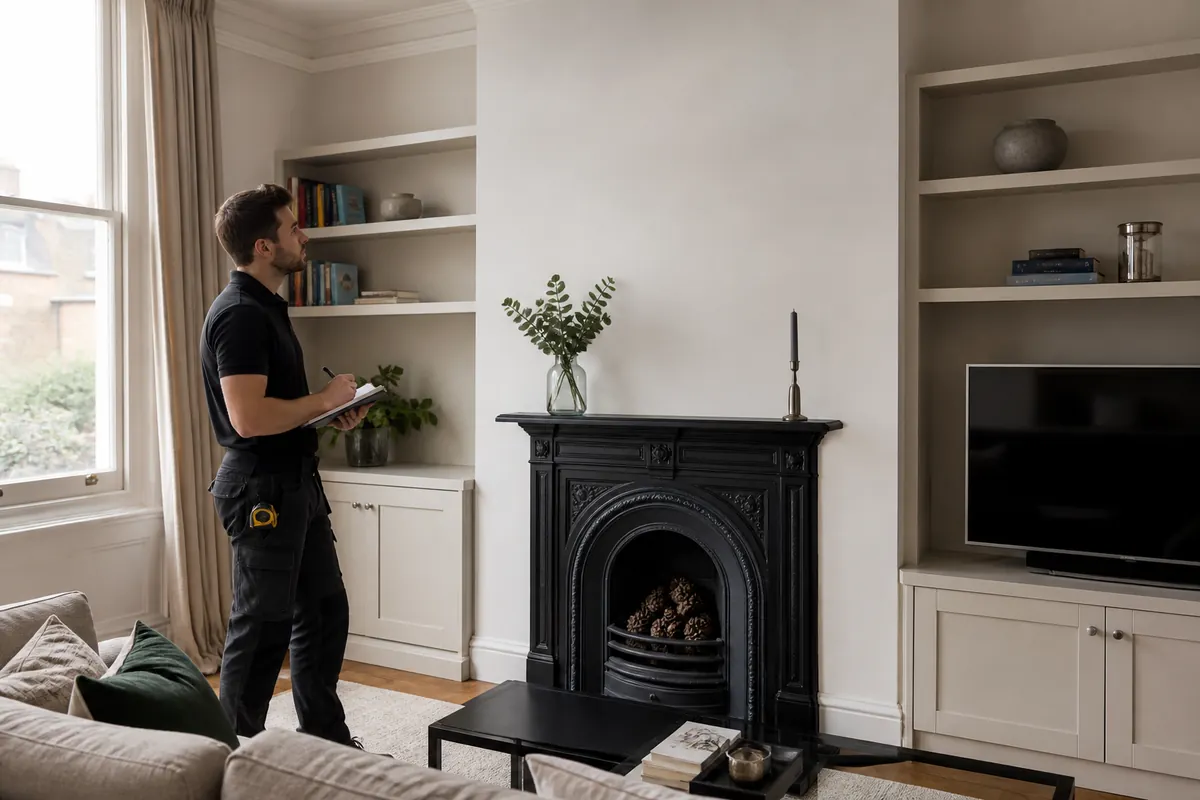
Before the position becomes permanent
Send exact model details, wall and room photographs, postcode, access restrictions and the cable result you want. Identify any additional removal or finishing tasks.
Yes. The assessed support behind the surface determines the approach; a smooth lining does not indicate the material or condition beneath it.
The actual panel and its handling requirements decide the support needed, together with the carrying route and access at the wall.
That depends on its geometry, the screen and suitable fixing points. Agree the visible screen centre after those constraints are assessed.
A new or relocated socket requires separately agreed electrical work. Identify available power when describing the mounting arrangement.
Have that location assessed rather than assuming it will work. Heat, flue, structural and service considerations may require another plan.
Provide the console’s finished dimensions and intended position, while keeping the watching seat part of the height and centre discussion.
Keep the model details, bracket parts and agreed room plan accessible, and prepare the route and workspace discussed when booking.
Follow the load and the connections
The proposed screen has to work with its mount, the mount with suitable wall support, and the finished arrangement with the viewer. Review these relationships together.
| Factor | What is checked | Why it matters |
|---|---|---|
| TV | Panel weight, VESA arrangement and manufacturer instructions | Defines compatible support and safe handling considerations. |
| Bracket | Rated loading, movement limits and specified bolts or spacers | Keeps the attachment appropriate to the actual television. |
| Wall | Material condition, fixing access and concealed services | Sets the viable fixing strategy or requires another location. |
| Position | Height, horizontal centre and space around the full screen | Checks both the view and clearance beyond the wall plate. |
| Cables | Device locations, port orientation and allowance for travel | Maintains accessible, unstrained connections through agreed movement. |
The work follows the assessment
Send the TV model, bracket details and pictures that show both the wall and surrounding furniture.
Review support, construction and concealed-service risks before accepting the chosen spot.
Verify the rated load, VESA arrangement and suitable bolts and spacers for the television.
Confirm height and centre with the complete panel dimensions and normal seating.
Secure and level the mount using fixings appropriate to the construction and condition.
Use the agreed handling assistance and check that the screen is correctly engaged and retained.
Connect specified devices and check that movement does not pull on their connectors.
Check the basic result and describe the agreed travel and access arrangements before handover.
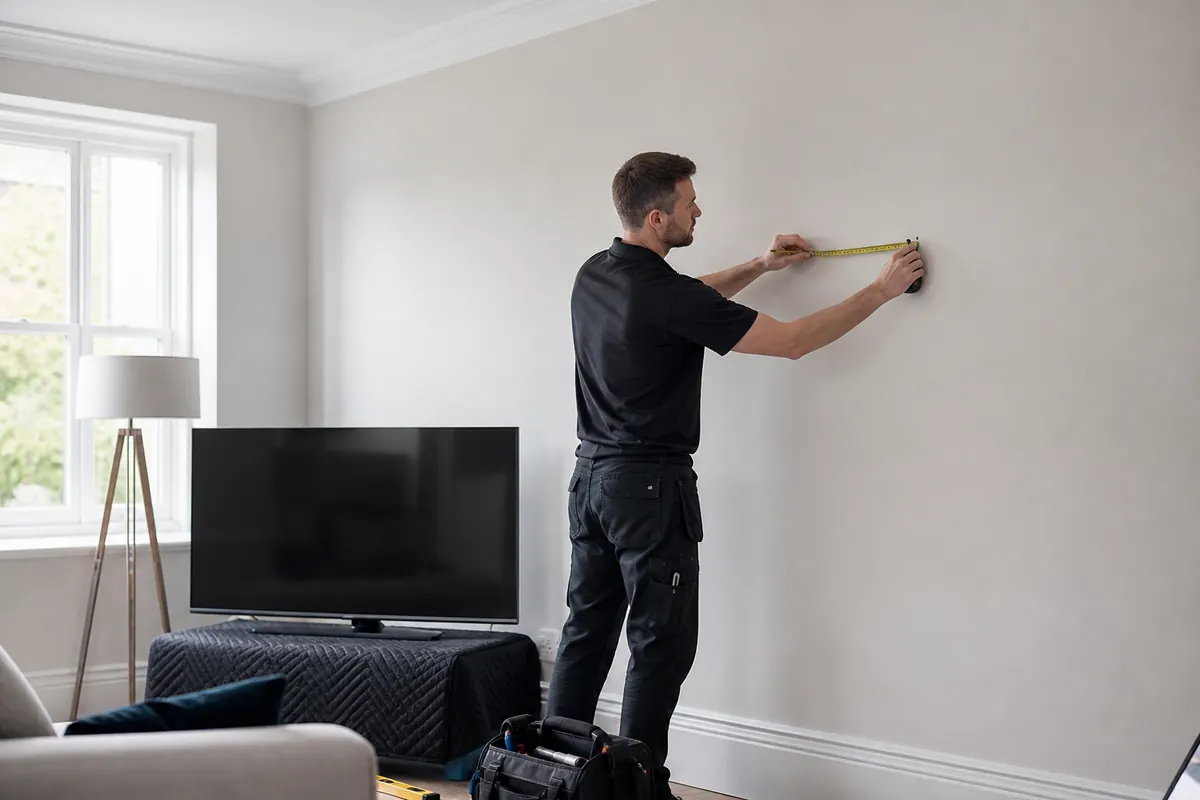
A clear brief before installation.
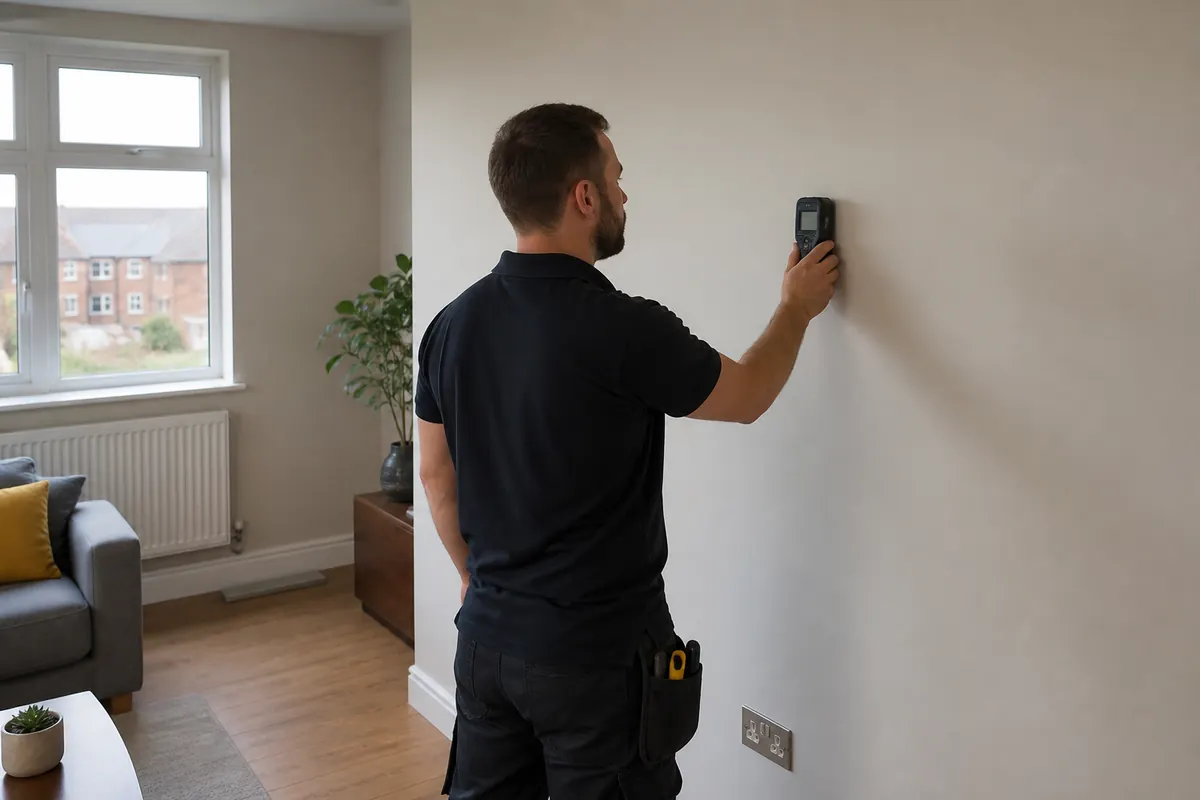
Technical and viewing checks resolved.
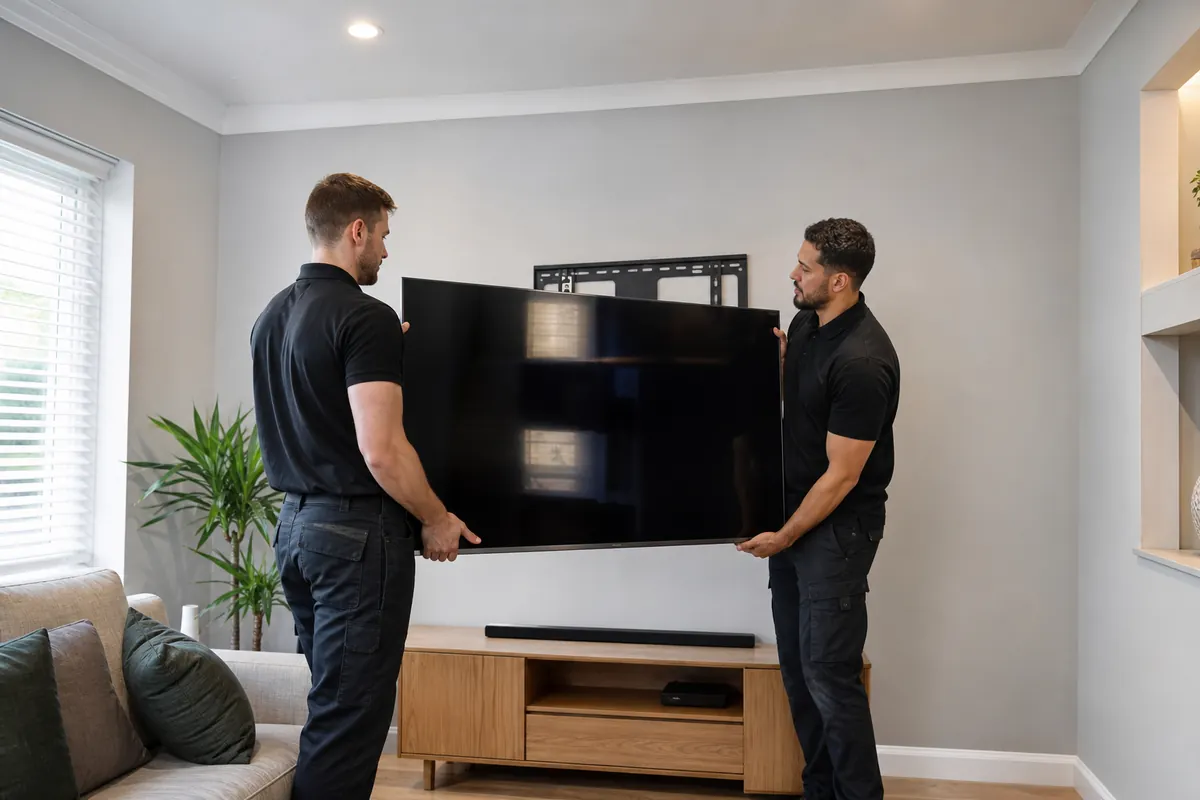
Handling planned for the real screen.
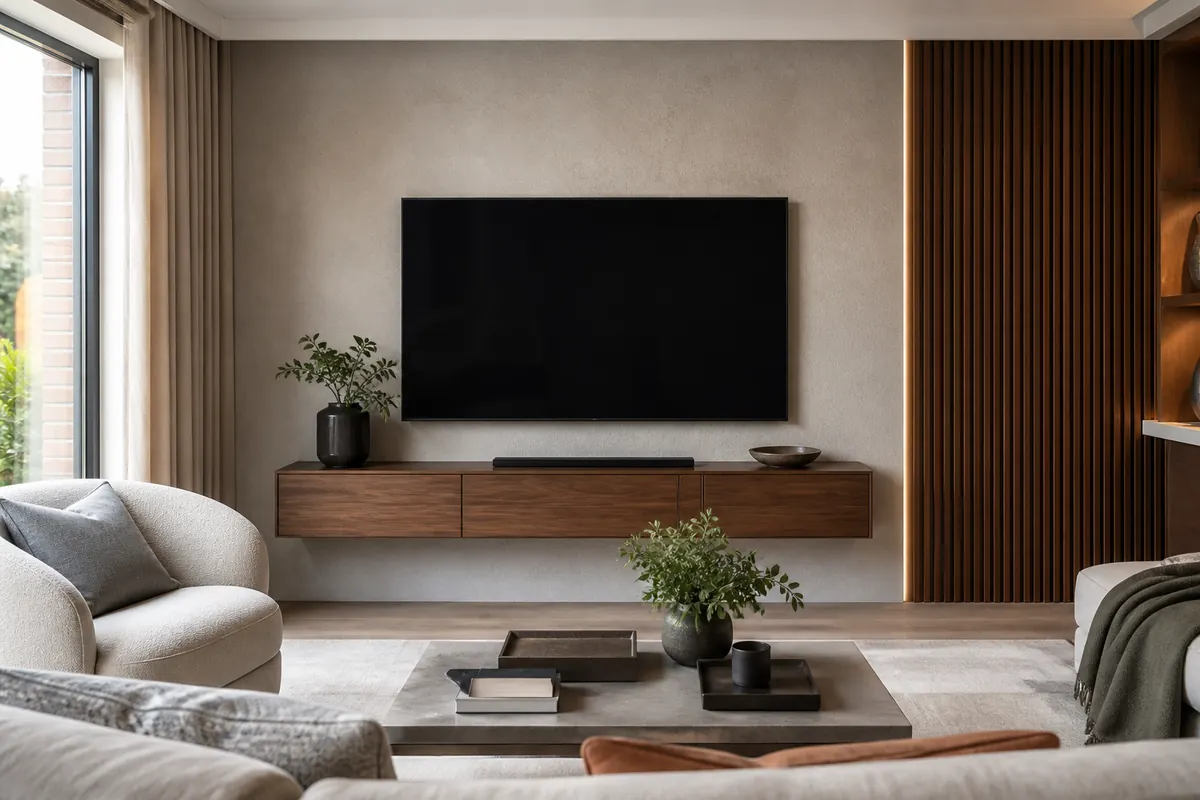
A finished arrangement ready to review.
Illustrative stages shown in different interiors, not one documented customer installation.
Room information beats property labels
The installation needs a suitable wall and a practical approach to it. Share photographs and known construction details even when the property seems straightforward from the outside.
Identify entry procedures and the route from stairs or lift. Mention a narrow hallway or permanent unit if it affects moving the panel.
Provide details of specialist finishes and visible architectural features. Known earlier repairs or wall changes can be useful to the assessment.
Share any relevant wall information supplied with the property. It still needs to be considered against the actual television and chosen bracket.
Explain where the screen is stored and whether it must change floors. The handling plan should include the actual journey, not just the final lift.
Ask for a separate scope confirmation for a workplace, public room or other non-domestic setting.
From arrival to installation
Provide the full postcode with clear entry instructions and known parking or loading limits. If there is a difficult turn or lift restriction, mention it with the screen dimensions. That context helps assess handling rather than leaving access to assumption.
For the wider service scope, see TV mounting in London .
The room comes first
For TV mounting in Bow, place the seating, wall and equipment in the same conversation. A tidy arrangement should still allow the screen to move as intended and its connections to remain practical. Include the exact TV and bracket models, wall photographs and postcode. Identify any additional work you want separately assessed.
