
The finished furniture layout
If a new sofa or console is coming, provide its planned dimensions. The current temporary arrangement need not set the permanent mounting centre.
Lewisham · Home technology, considered
Recheck what the replacement changes
Replacing a television in Lewisham is a fresh compatibility check, even when the new diagonal matches the old one. Share both the replacement model and the current mount details.
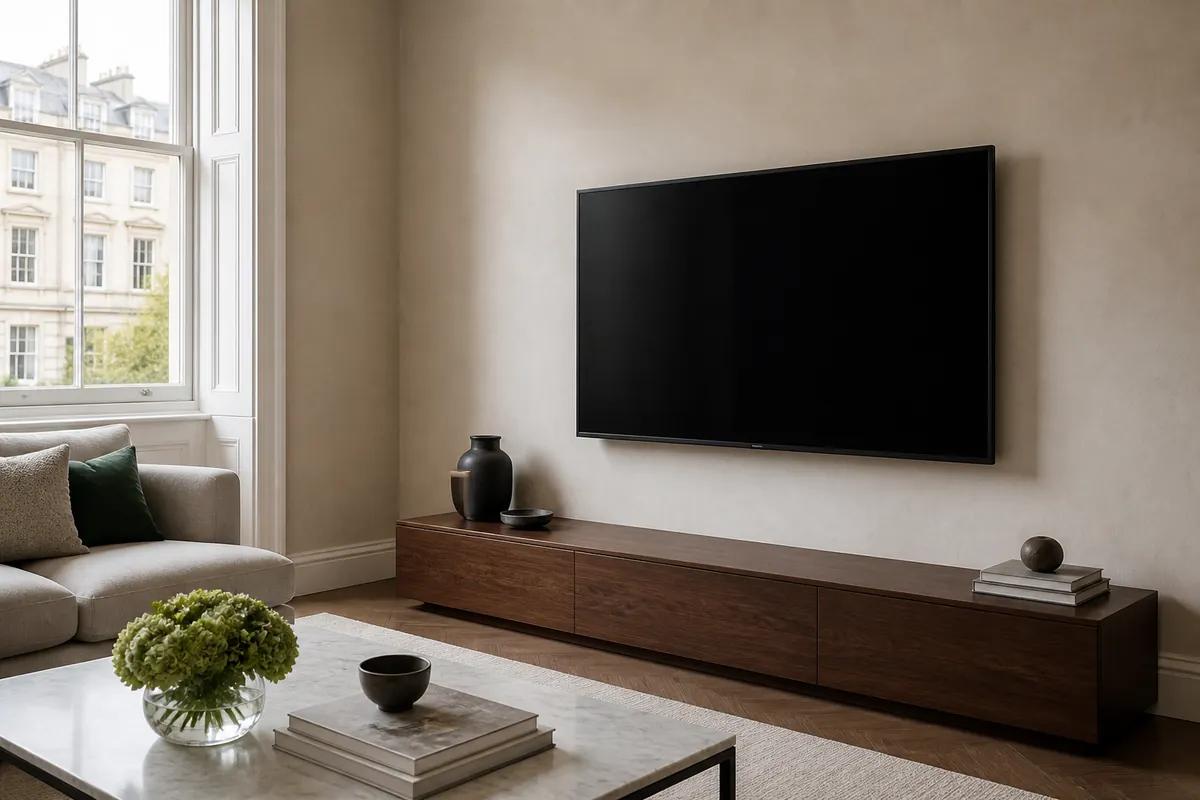
A view from the room
Treat the diagram as an aid for discussion. Measurements and the final screen position must come from the actual furniture, television and assessed wall.
If a new sofa or console is coming, provide its planned dimensions. The current temporary arrangement need not set the permanent mounting centre.
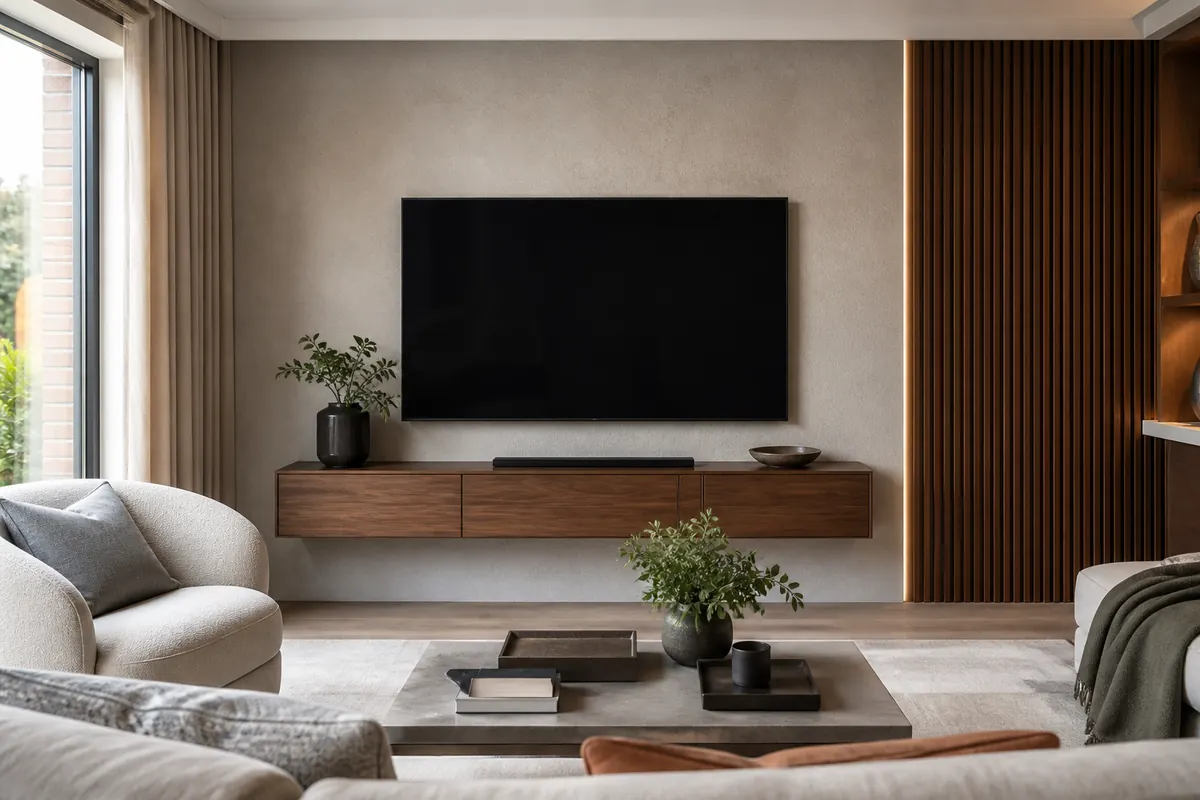
Look at the proposed position from the seat, not only from the doorway. Adjacent windows can influence the view even when the wall itself is clear.
A folded arm can still project into a narrow space. Consider its stored depth and the panel’s path past cupboards, shelving and circulation routes.
Provide device locations and identify leads you regularly disconnect. Access to those connections can influence the bracket and cable arrangement.
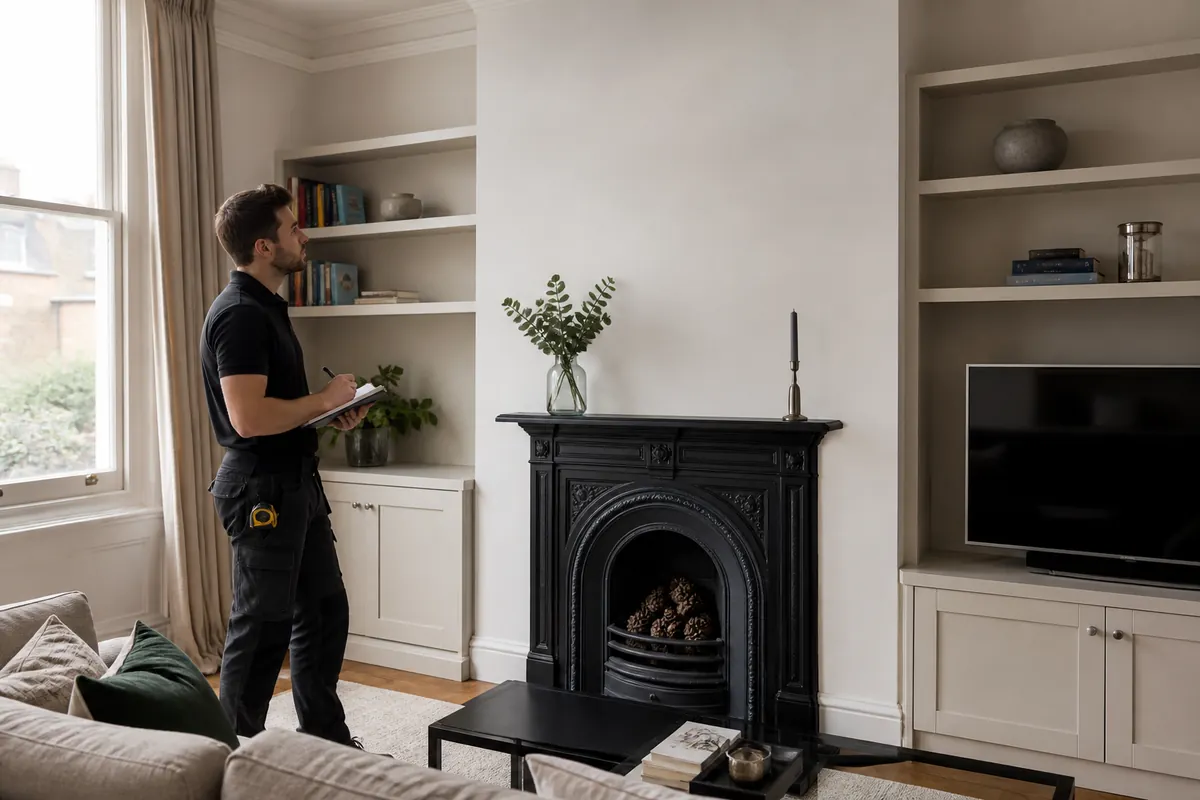
A separate above-fireplace assessment
Heat exposure and chimney or flue conditions may rule out a fireplace location even if the screen fits visually. Support and concealed-service risks also need to be assessed.
The position can also place the screen above a comfortable sightline. Consider an adjacent wall if the view or technical checks do not work, and reassess the connections for that alternative.
Lewisham / room by room
The mounting holes may sit differently on the new panel, changing its final height on an existing wall plate. Decide whether preserving the old centre is actually useful for your present seating.
Ports can also move between models. Describe which existing leads need reuse, and request removal or repair of redundant holes explicitly if the bracket position needs to change.
Describe your Lewisham installation ↗A mounting system, not isolated parts
A suitable screen mount still depends on appropriate fixings and a workable location. Assess the load path and connection access rather than approving each item in isolation.
| Factor | What is checked | Why it matters |
|---|---|---|
| TV | VESA specification, actual weight and safe handling notes | Clarifies the panel’s requirements beyond its visible dimensions. |
| Bracket | Load rating, VESA support, complete bolts and spacers | Avoids treating a broad advertised screen range as approval. |
| Wall | Support material, soundness and hidden-service considerations | Determines whether and how the wall can be used. |
| Position | Seat relationship, furniture outline and panel travel | Avoids fitting a compatible screen in an unusable position. |
| Cables | Device locations, port orientation and allowance for travel | Maintains accessible, unstrained connections through agreed movement. |
Scope first, quotation second
Send the exact TV and bracket information with photographs of the proposed wall and watching position. Explain access, available working space and the finish expected for the leads.
The assessment determines whether the proposal is workable and what is needed to deliver it. Additional tasks should be named so the quoted installation has understandable boundaries.
Request my mounting quote ↗| Installation | Pricing | Main variables |
|---|---|---|
| Standard fixed-bracket mounting | Quote after assessment | The intended fixed view and the assessed screen, bracket and wall. |
| Large TV / full-motion bracket | Quote after assessment | Load and leverage alongside the team’s handling and access needs. |
| Mounting + additional cable / electrical work | Detailed quote | Cable access, any electrical installation and the agreed repair finish. |
The route to your room
Include the postcode and any permitted unloading arrangement. Where entry relies on a resident, concierge or timed access, confirm who will admit the team. Describe stairs, lift limitations and the route onwards to the proposed wall.
For the wider service scope, see TV mounting in London .
Load the map when you need it.
Open map in a new tabFrom idea to specification
A fixed screen and a moving arm put different demands on position, clearance and support. Choose the intended arrangement, then include your actual TV, wall information and preferred cable finish for review.
This tool outlines the brief, not the final installation design.
Your setup brief
Small screen · Fixed bracket · Masonry wall · Visible cables.
Send this setup by email ↗Need a new socket? Plan the electrical work separately
Let assessment set the fixing plan
Wall mounting should begin with evidence about construction and condition. Keep an alternative location in mind if the desired centre or bracket movement cannot be supported safely.
Brick and block need fixings selected for their actual condition. A layer of plaster, an old hole or a previous fitting does not prove that a new wall plate can be supported.
Boarded partitions vary in their build-up. Establish suitable support and the proposed load before deciding whether the intended wall position can be retained.
With timber construction, check sound support at the required positions. A wall plate that reaches framing still needs an appropriate fixing arrangement and compatibility review.
Flag decorative panelling, tile or stone even if you know the structure behind it. Passing through that face introduces its own requirements and damage considerations.
If the preferred wall cannot be approved, discuss another position rather than assuming stronger-looking fixings solve it. The new option needs its own service and support checks.
Service detection is one aid with limits, not permission to drill anywhere else. Other evidence about concealed pipes and wiring remains relevant to the decision.
Specify the actual panel
Send the full model number so weight, VESA mounting pattern and handling instructions can be checked. Similar diagonals can conceal very different hardware.
A very large screen may need additional handling support even if it is not unusually heavy. Tell us about turns, doors and available preparation space so the method and team can be assessed.
Hardware compatibility includes VESA, rated load, bolts and spacers. The assessed wall fixing strategy remains necessary even when the bracket fits the back of the TV.
| Bracket | Best suited for | Movement | Key consideration |
|---|---|---|---|
| Fixed | A front-facing seat with a settled layout | Minimal | Ensure the chosen position works before fixing the plate. |
| Tilt | A viewing setup needing vertical angle control | Vertical adjustment | The angle range must work with the real panel dimensions. |
| Full motion | A room needing controlled extension or rotation | Extend and swivel | Lead routing and structural support must remain suitable as it moves. |
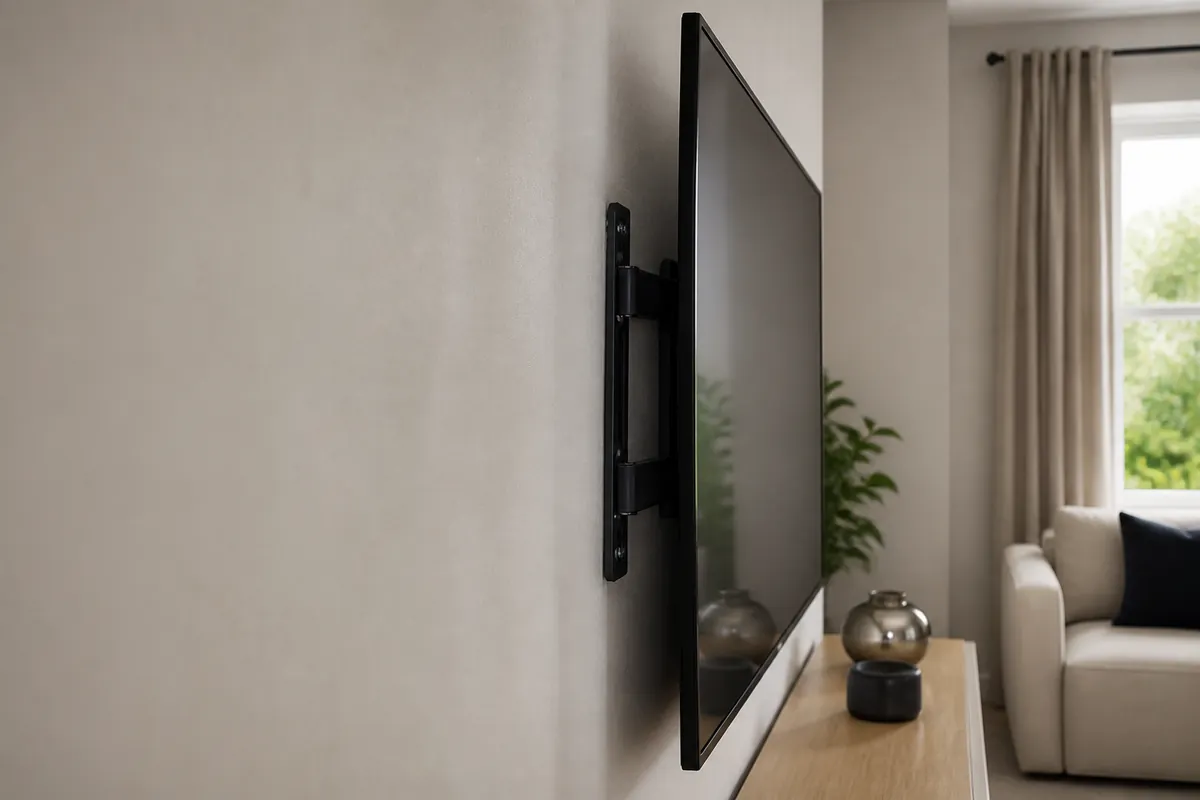
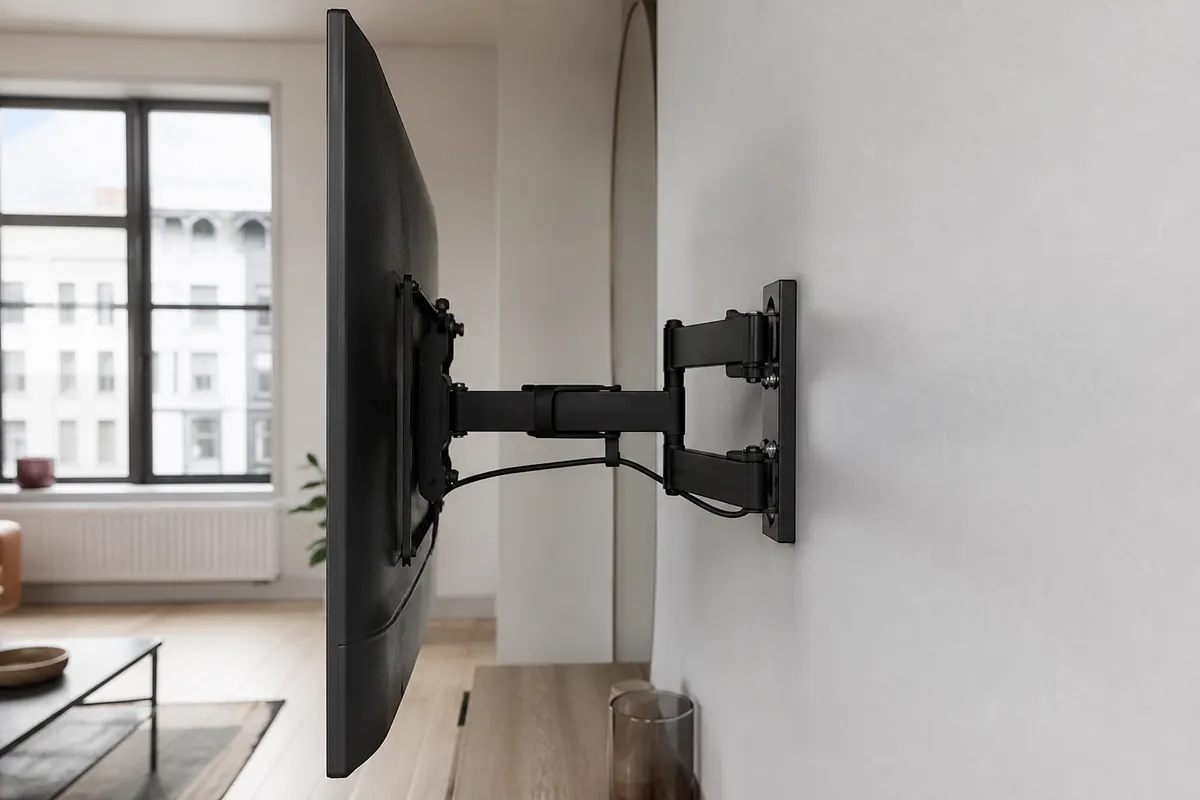
Connections after the screen is hung
The illustration is a starting point for discussing lead routes. Your wall, socket position and devices determine which treatment is practical and what extra work is needed.
A surface-managed run may meet your needs without opening the wall. Concealed options introduce separate construction, access and repair questions that should be assessed and included explicitly if requested.
An extra power point is a separate electrical task. Putting ordinary mains flex into the wall does not replace the need for an appropriate electrical installation.
Discuss a new socketThese are explanatory scenes, not photographs proving an installation result.
Before the position becomes permanent
Reuse still requires assessment of condition, compatibility and wall fixings. Removal, access or revised connections may change the quote.
It assists the assessment but cannot guarantee detection of every concealed service. Wall information and other evidence remain important.
Both requirements must be satisfied. Matching the mounting holes is not sufficient to approve the bracket for that television.
Send its model and rating, with details of its parts. Reuse depends on its condition, completeness and suitability for the assessed arrangement.
That needs checking against the agreed route and bracket movement. Additional routing or electrical alterations should be specified separately.
Not automatically. Comfort, heat, flue, support and service risks must still be considered; another location may be preferable.
Provide the console’s finished dimensions and intended position, while keeping the watching seat part of the height and centre discussion.
Yes, especially for a wide panel. Access limitations can affect handling even when there is ample space at the finished wall.
Decisions before execution
Gather the screen label, mount details and pictures showing the wall, furniture and connected equipment.
Assess suitable support and concealed-service considerations alongside the desired centre.
Confirm load rating, VESA compatibility and the correct TV-side hardware before assembly.
Confirm height and centre with the complete panel dimensions and normal seating.
Install the wall hardware with the assessed approach and check its level.
Follow the handling plan, engage the screen and check all applicable locking features.
Connect accessible equipment and leave the leads suitable for the agreed travel.
Check basic operation, level and agreed travel, then explain adjustment and access to the finished setup.
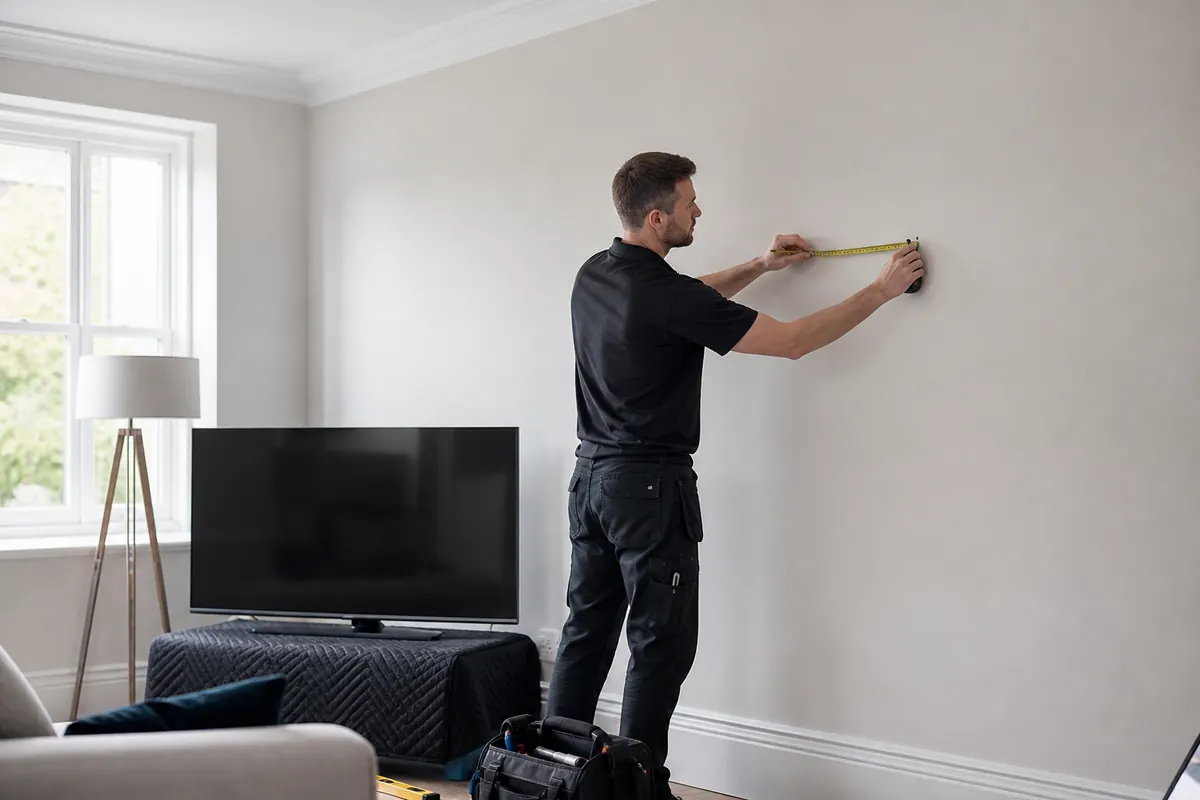
The room and equipment described.
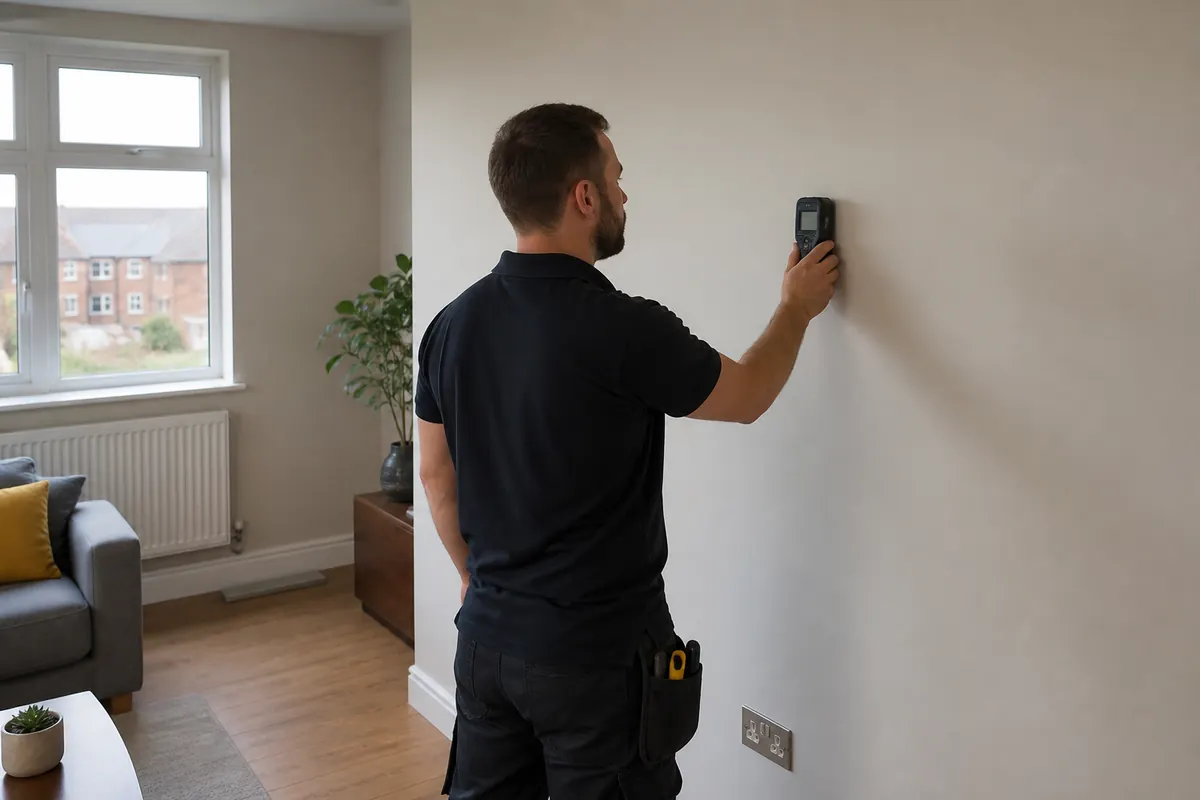
Support and position considered first.
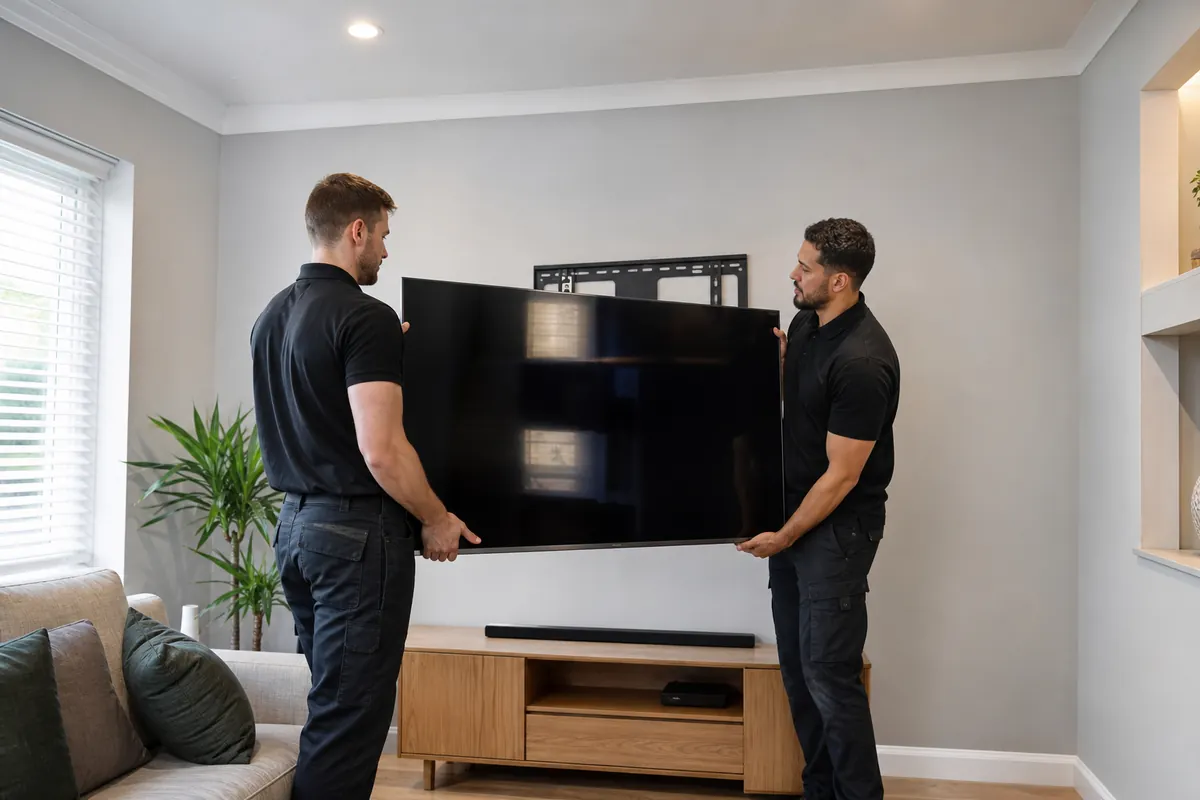
Handling planned for the real screen.
The user understands the arrangement.
Illustrative stages shown in different interiors, not one documented customer installation.
Work with the actual room
An apartment, house or refurbished room can contain several wall constructions. Explain the particular installation area and access rather than relying on the property type.
Explain shared-door arrangements, lift limits and the approach inside the home. Identify fixed furniture that reduces the space available to prepare the screen.
Where an older room has decorative details or a chimney breast, show the complete arrangement and mention known changes beneath the surface.
Share any relevant wall information supplied with the property. It still needs to be considered against the actual television and chosen bracket.
Show any difficult turns and identify furniture that cannot move. The panel’s safe handling needs apply throughout its route.
Confirm requirements separately where the screen is intended for a workplace or another non-domestic environment.
Practical details
A concealed signal route and an electrical power point are different tasks. Explain each desired change so construction, electrical requirements and making good can be assessed and agreed separately.
Not necessarily, but the sound does not identify a suitable fixing method. The wall build-up and dependable support points need establishing for the intended load and movement.
Yes, the actual connector arrangement must be checked. A nominally compatible slim bracket can still leave insufficient practical room for the plugs or the required bend in a connected lead.
Yes. Identify known partitions, linings or previous repairs, without treating recollections as verified construction information. The installer still needs to assess suitable support and service risks at the proposed fixing points.
Tilting changes the angle but does not automatically make a high position comfortable. Discuss the reason for the height and compare alternatives from the usual seat before accepting the mounting centre.
Provide the manufacturer’s mounting-related weight information and exact model rather than estimating. The assessment also considers handling, bracket capacity, VESA and the suitability of the wall fixings.
Bringing the screen forward increases leverage on the mounting arrangement. The assessment must consider that intended use alongside the panel load, bracket rating and actual wall support.
That depends on the TV’s port orientation, connector size and bracket arrangement. Explain which connections you expect to change regularly before selecting a mount chiefly for its shallow profile.
No. Chimney or flue construction, support and concealed services still matter, with heat conditions and viewing comfort assessed as appropriate. The location must be considered on its actual circumstances.
It follows assessment of the TV, support, bracket, handling and requested connection work. Specify additional removals or finishing tasks so the quote reflects the arrangement you actually want.
The room comes first
For a replacement TV in Lewisham, send the new model and details of the current bracket. A similar-sized panel may have different weight, mounting points or connections that affect what can be retained. Include the exact TV and bracket models, wall photographs and postcode. Identify any additional work you want separately assessed.
