
Keep seating in the brief
Show the sofa and intended screen together so centre and height can be discussed in context.
Maida Vale · Home technology, considered
Know what is behind the chosen finish.
If the construction of your Maida Vale wall is uncertain, make that the starting point. Photographs, existing information and an on-site assessment are more useful than assuming a smooth wall can carry any bracket.
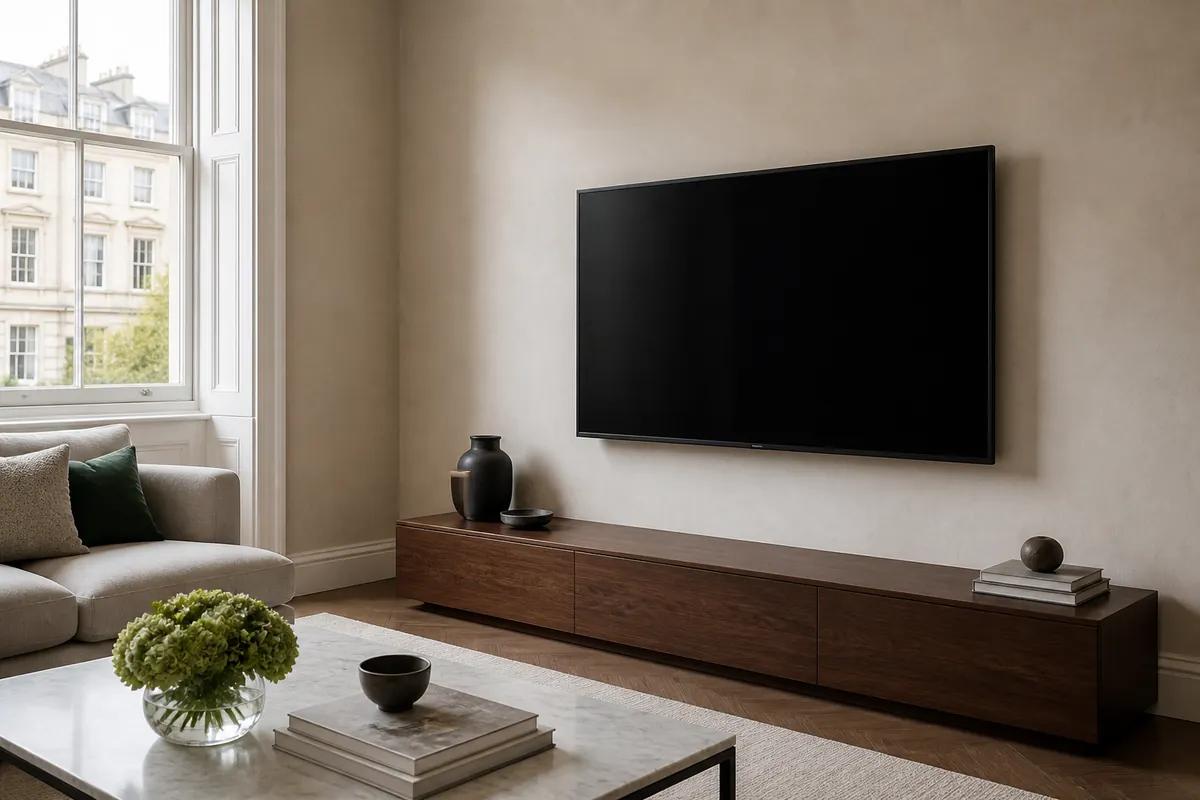
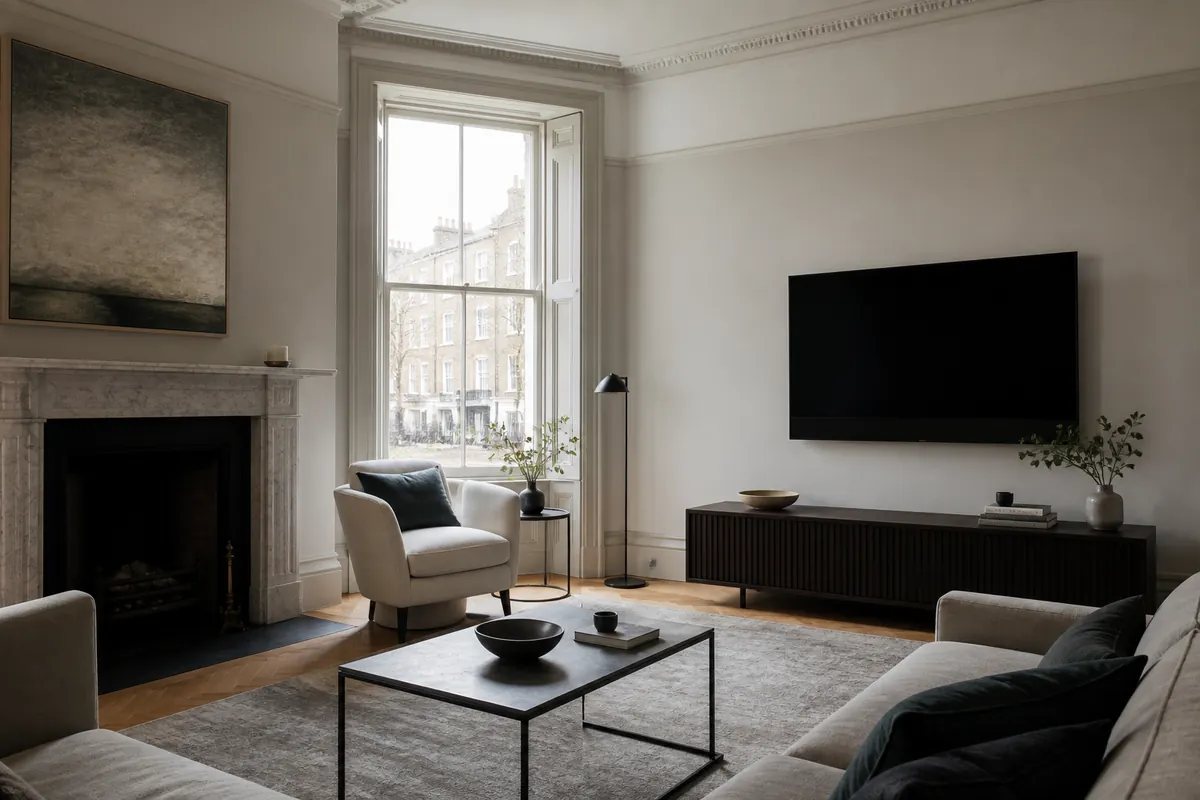
Maida Vale / room by room
For a Maida Vale room with a lined or altered wall, distinguish what you know from what you suspect. A hollow sound or fresh decoration does not establish a fixing strategy or a safe load.
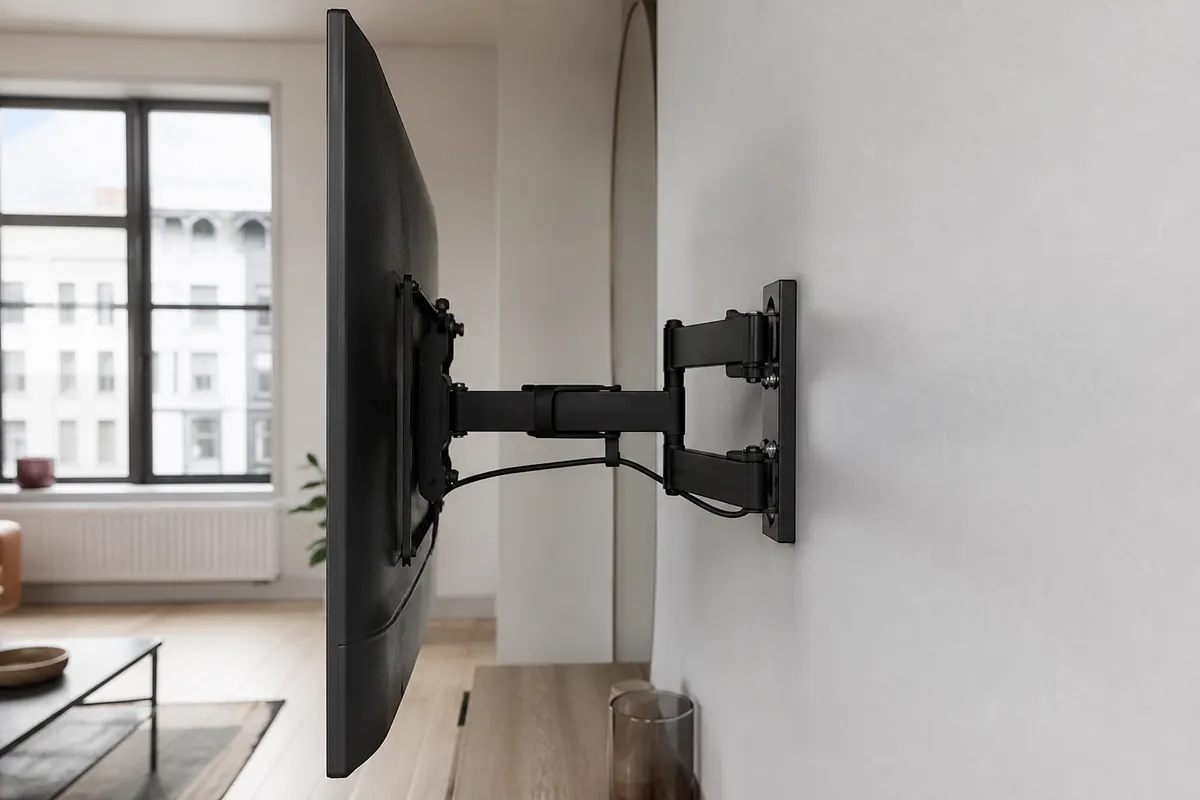
Bring the bracket specification into that assessment as well. The same television placed close to the wall and carried on an extended arm presents different movement and leverage considerations.
Describe your Maida Vale installation ↗Plan the view and the edges
If the room is being rearranged, supply the intended layout before mounting. The schematic shows the factors to compare, not a prescribed screen centre or distance that applies to every television.
Show the sofa and intended screen together so centre and height can be discussed in context.
A clear wall can still reflect a window directly towards the sofa; include that window in photographs.
Bracket travel has to leave room for screen corners and open storage fronts, not merely the arm.
Access to plugs and devices should remain possible without assuming a separate electrical alteration is included.
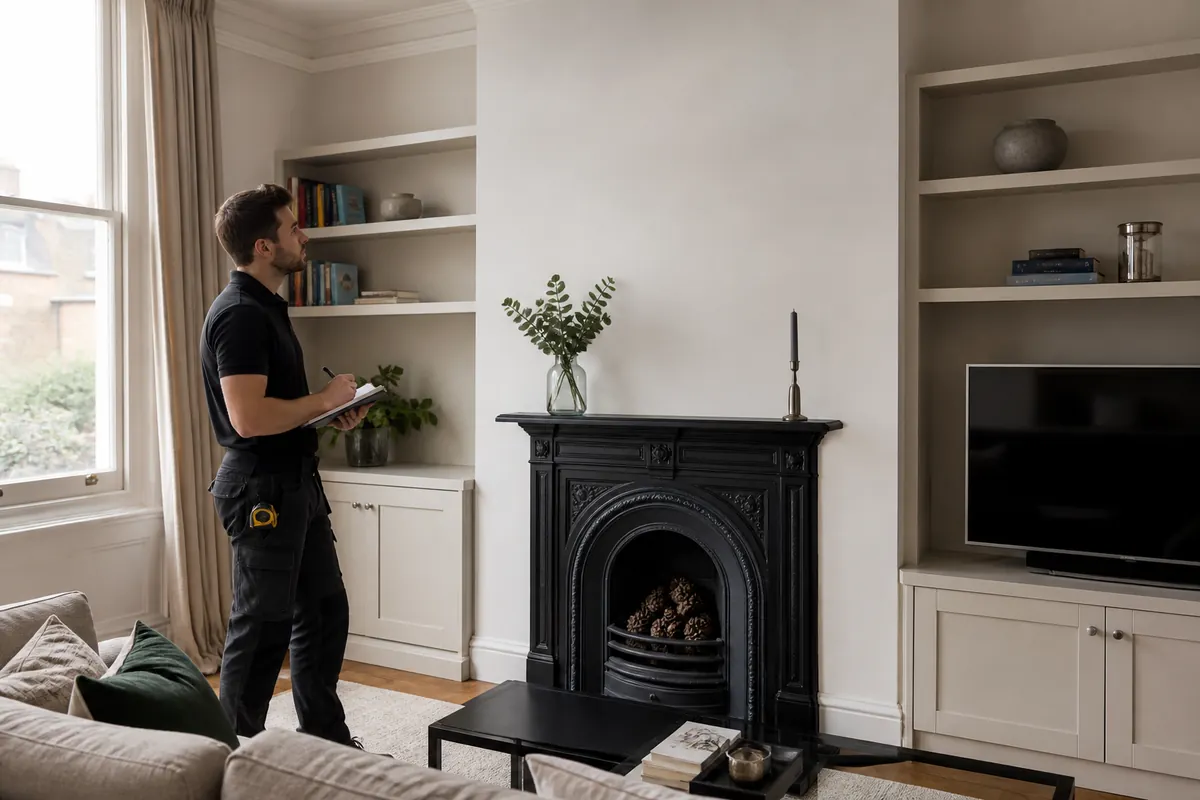
A conditional location
Heat, flue position, support behind the finish and hidden utilities require review. None of these questions is answered simply by fitting the television within the chimney breast’s width.
Also consider the resulting viewing height and the route for power and signal cables. If the position cannot meet those needs, discuss a different wall rather than committing to the appearance alone.
Resolve uncertainty early
Wall descriptions supplied with an enquiry should separate knowledge from inference. The assessment needs enough information to connect the desired television position with a defensible supporting and fixing arrangement.
Brickwork and blockwork are not interchangeable fixing conditions. Existing damage or a weak area may change where and how the mounting plate can be secured.
Where plasterboard covers a cavity, the supporting arrangement must be understood. The board finish alone is insufficient evidence for a heavy panel or moving mount.
Timber positions must be identified and assessed against the wall plate. The preferred screen centre and the available support may not initially coincide.
Specialist surfaces can limit the drilling approach and repair options. Provide clear photographs before assuming that the preferred mounting point is straightforward.
An unknown wall is a reason to gather information, not to choose a stronger-looking bracket. An alternative location may be needed if support cannot be established.
Power and plumbing information helps identify concerns. Neither a detector nor a tidy surface guarantees that the proposed fixing zone contains no concealed services.
A connected workflow
Record the television, bracket and room information along with any access limitations.
Consider construction, condition, utility risks and the usable fixing area.
Check bracket capacity and VESA together with bolts, spacers and handling guidance.
Confirm height and centre with the intended furniture layout before marking.
Attach the wall plate to suitable support and check its level before lifting.
Provide the required handling assistance and verify the mount’s retaining features.
Connect agreed devices accessibly and keep cables clear through the intended travel.
Review basic operation, alignment and travel, then discuss safe adjustment with the user.
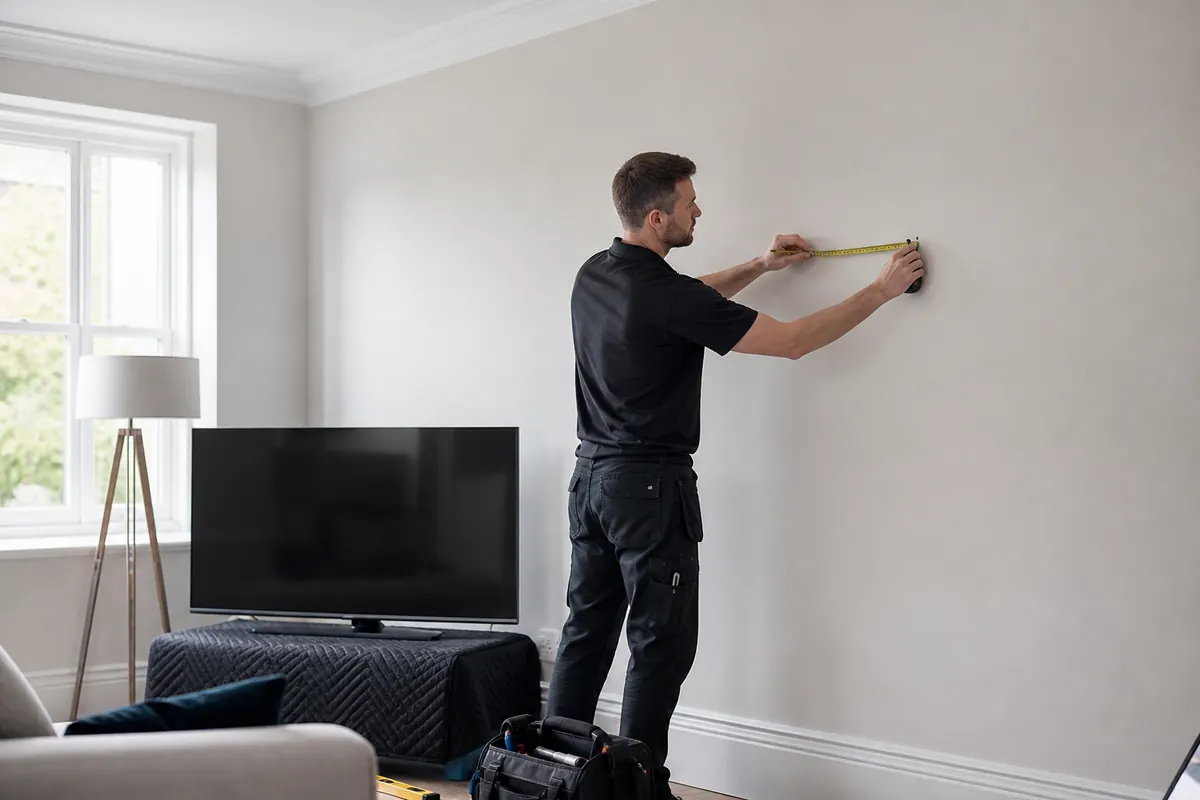
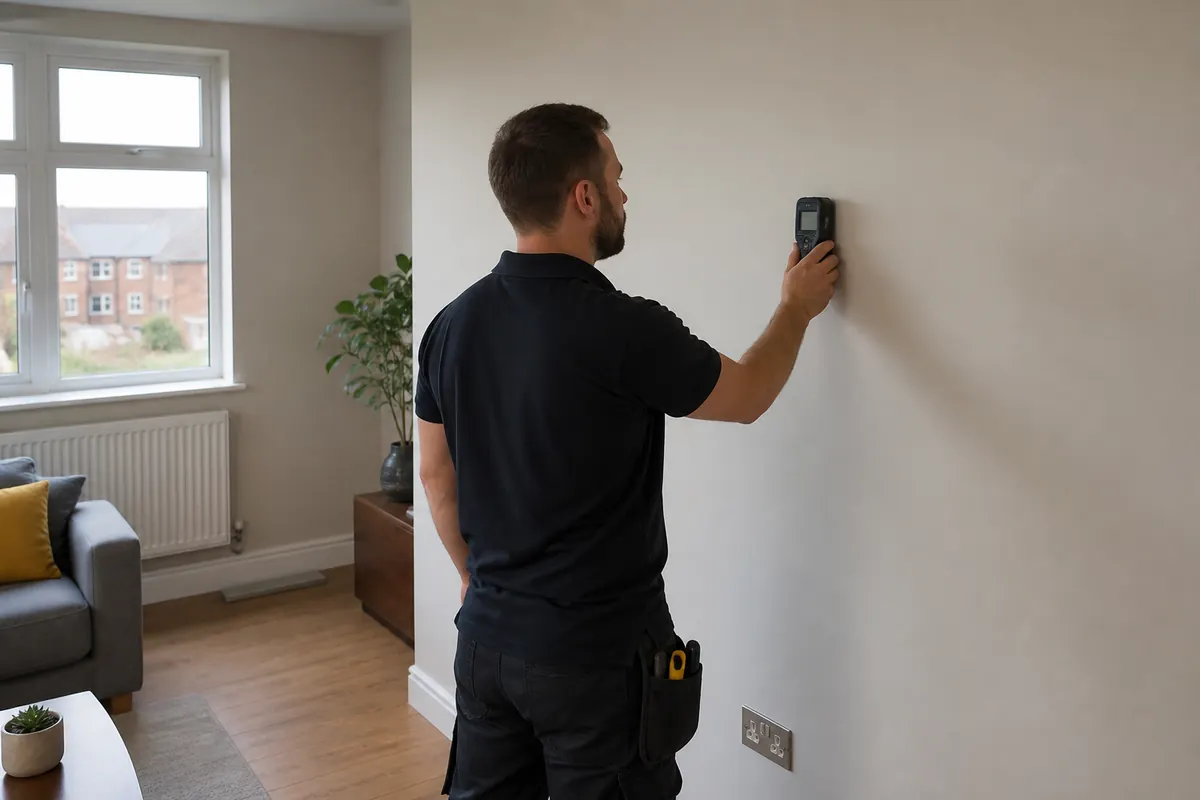
The television waiting for compatibility review.
An assessed support strategy and agreed centre.
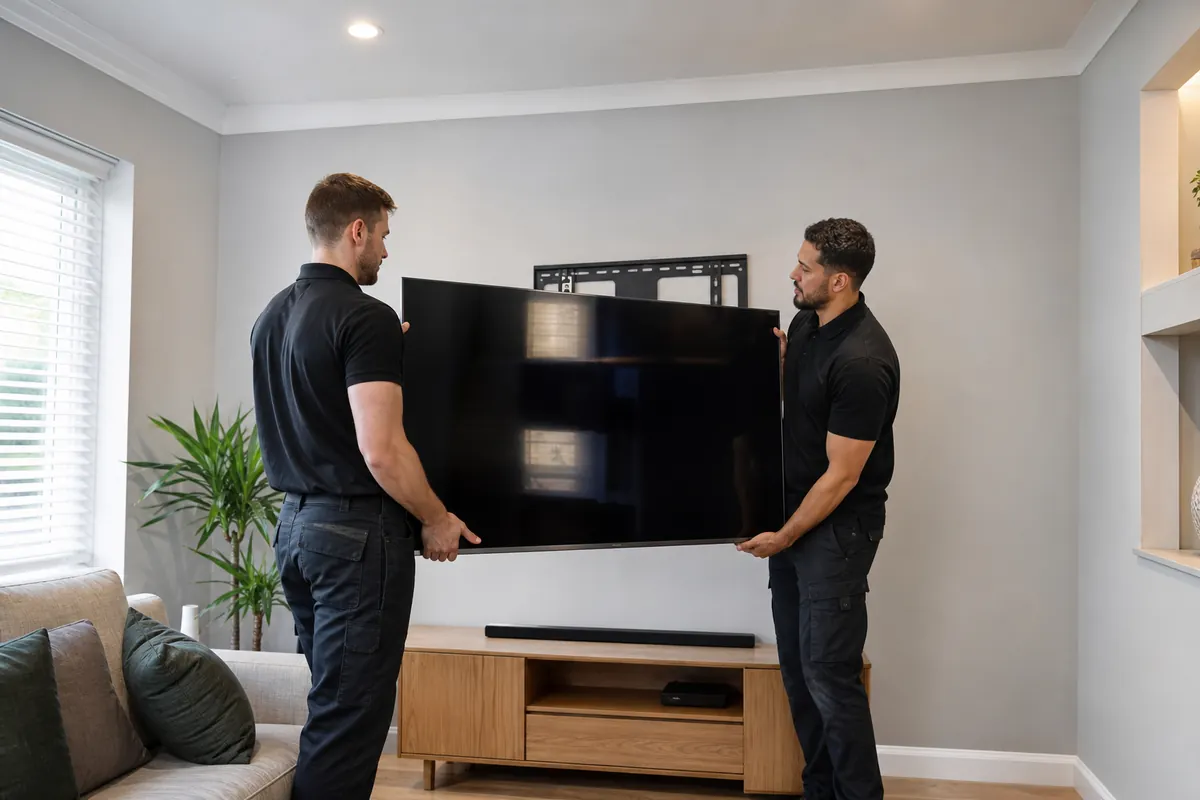
Handling support provided for mounting.
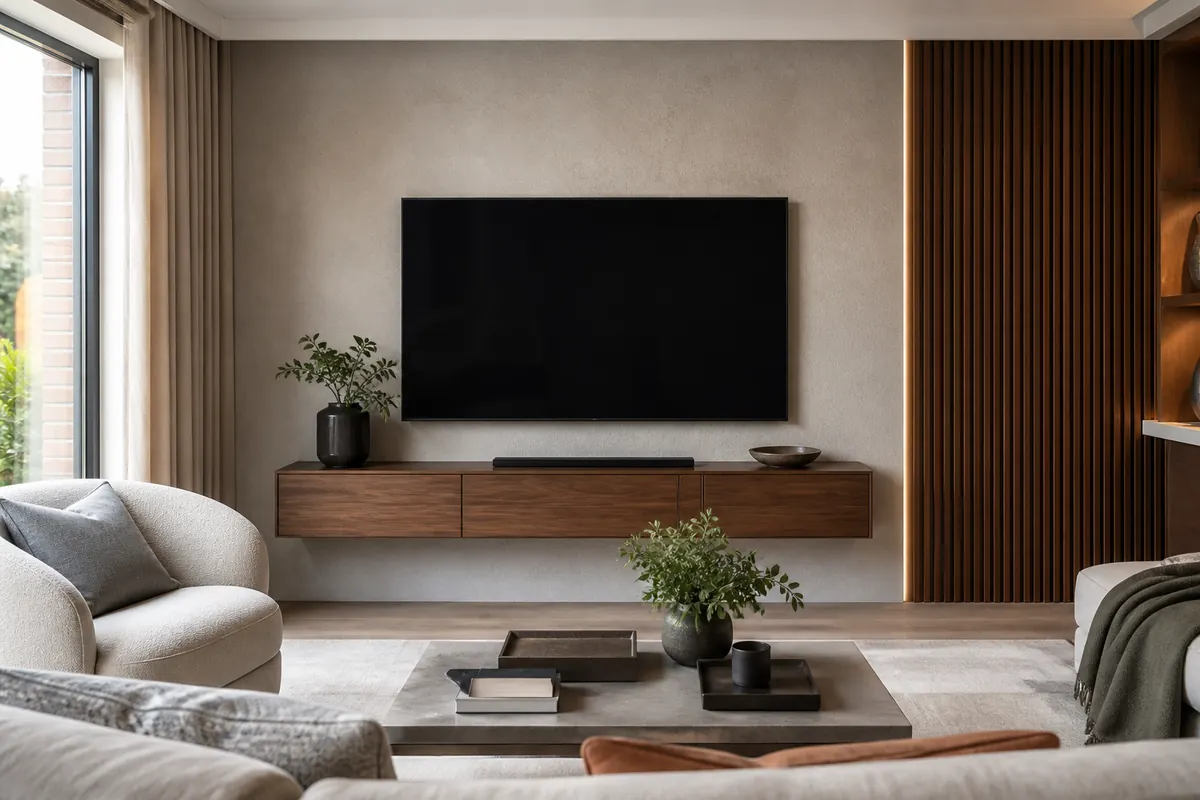
The setup checked in its intended position.
Illustrative stages shown in different interiors, not one documented customer installation.
Make the assumptions visible
Send the full postcode with the screen model, bracket details and photographs from several useful angles. Explain access, retained furniture and which cable or power changes you would like considered.
There is no automatic price from screen size alone. Assessment establishes compatibility, handling and any additions so the quotation can describe a defined piece of work.
Request my mounting quote ↗| Installation | Pricing | Main variables |
|---|---|---|
| Standard fixed-bracket mounting | Quote after assessment | Support condition, equipment fit and the agreed screen location. |
| Large TV / full-motion bracket | Quote after assessment | The load when extended and the people required to handle it. |
| Mounting + additional cable / electrical work | Detailed quote | Wall opening, cable concealment, electrical changes and making good if agreed. |
Start with your priorities
Choose the closest description of your intended arrangement, then add anything the controls cannot explain: awkward access, retained furniture or an existing bracket. Photographs and model numbers give those choices useful context.
Sending these details requests a review; it does not reserve a particular installation method or establish a final cost.
A summary worth expanding
Small screen · Fixed bracket · Masonry wall · Visible cables.
Send this setup by email ↗Need a new socket? Plan the electrical work separately
Specify the actual panel
The actual model provides a better starting point than small, medium or large. Manufacturer weight, VESA dimensions and handling requirements inform decisions that the diagonal alone cannot settle.
Consider where the new television will be unpacked or prepared and how it reaches the bracket. The safest handling arrangement cannot be inferred from screen size or the previous installation alone.
TV-side compatibility and wall attachment are distinct checks. The correct VESA pattern does not prove that the wall fixings or extended bracket load are suitable.
| Bracket | Best suited for | Movement | Key consideration |
|---|---|---|---|
| Fixed | An accurate, mostly permanent viewing direction | Minimal | Accurate initial placement matters because later adjustment is limited. |
| Tilt | A setup where vertical angle changes are useful | Vertical adjustment | Check that tilting leaves enough space for the panel and cables. |
| Full motion | Turning between identified watching positions | Extend and swivel | Consider the force on the wall when extended and the panel’s complete sweep. |
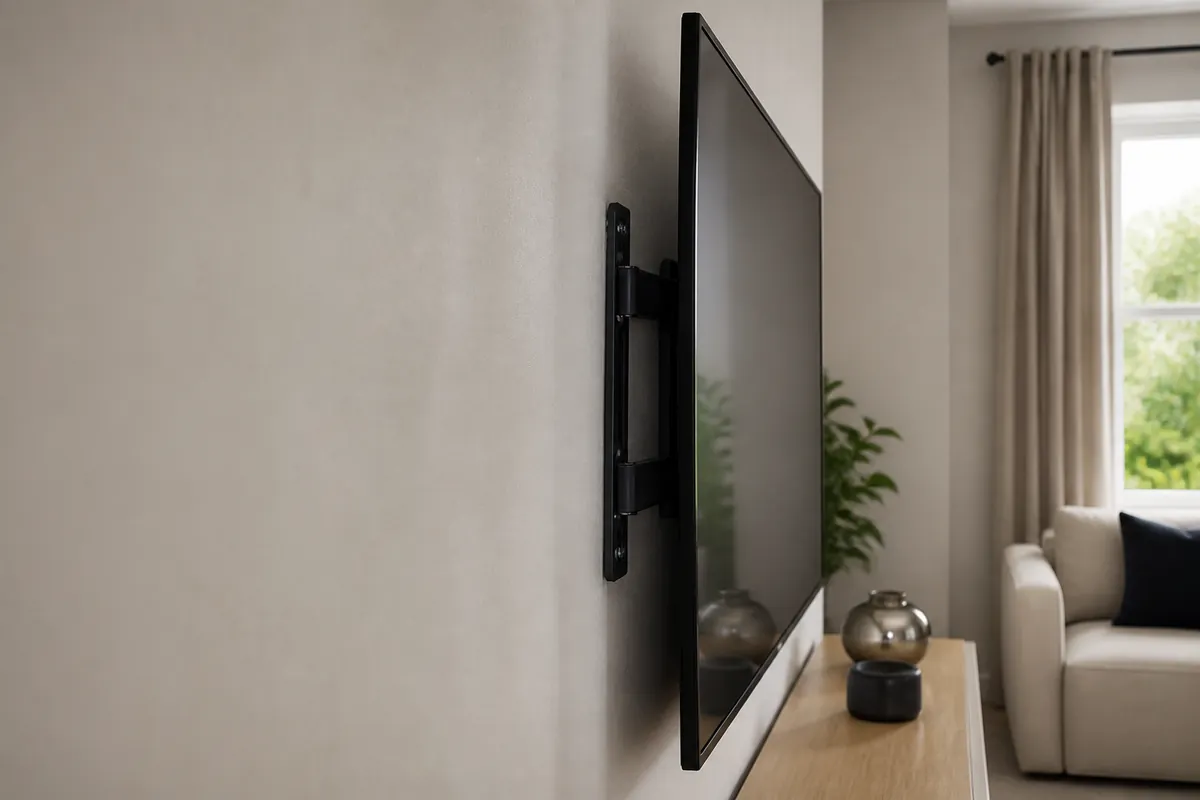
Connections after mounting
A photograph of the proposed wall should include the equipment below it. The schematic contrast is about cable presentation, not evidence that an internal route is available.
For an articulated mount, cables must accommodate the agreed travel without strain. Any concealment, wall access or decorative making good should be specifically quoted rather than presumed to accompany that connection work.
A relocated socket requires appropriately scoped electrical work. Pushing normal mains flex into a wall is not an acceptable substitute for that installation.
Discuss a new socketIllustration only. No claim of a completed customer before-and-after installation.
Resolve the key details
Similar-sized panels may have different weights, brackets and handling conditions. The actual installation details determine the assessed quotation.
It addresses the mounting pattern only. Actual load, suitable hardware, support and intended movement must also be checked.
Specialist finishes affect drilling and access. The construction behind the facing must still offer suitable support.
The folded screen must leave doors, storage and circulation usable, as well as work when extended.
No. Specify how reinstatement will be assessed and agreed where opening or altering routes affects the finish.
It cannot remove heat, flue, structural or service concerns, or guarantee comfortable watching at a high position.
They explain possible reflections and viewing direction. A wall-only image may omit daylight concerns relevant to placement.
Weight, handling guidance and the route determine sufficient assistance. Diagonal alone does not settle the team requirement.
Connect the decisions
A VESA match is an important starting point, but it does not establish wall suitability. Review equipment and construction together with the space needed to fit, connect and use them.
| Factor | What is checked | Why it matters |
|---|---|---|
| TV | The precise panel specification and safe handling requirements. | Actual weight and mounting geometry matter more than a familiar screen-size label. |
| Bracket | The mount’s capacity, movement and complete attachment components. | Correct bolts and spacers matter alongside the bracket’s advertised capacity. |
| Wall | The actual supporting structure, its condition and utility risks. | These govern where attachment is possible and how it should be approached. |
| Position | The screen’s full footprint, eye line and approach to the wall. | The chosen spot must be reachable and useful from the normal seat. |
| Cables | Location of sources, power points and moving cable sections. | Connections should remain usable when the panel is parked or adjusted. |
Property information that helps
The same style of property can have different wall build-ups and access limitations. A room-specific description helps avoid assumptions about what mounting will involve.
Include shared-door arrangements and the space available in stairs or lifts. Mention rules that affect when equipment can be brought in.
Point out original finishes and any subsequent wall lining. Attractive decoration does not certify the underlying material or its condition.
Building documents may help explain construction. They do not remove the need to review the actual mounting zone and intended bracket load.
Identify the floor and any bulky furniture that remains between the doorway and mounting position.
Confirm the intended scope directly for offices or other non-domestic premises; do not assume the same room-use requirements apply.
From arrival to the wall
Supply the full postcode and explain entry, loading and any parking restrictions. If a screen must pass through shared areas, establish access permission and practical carrying arrangements before the visit is confirmed.
For the wider service scope, see TV mounting in London .
Load the map when you need it.
Open map in a new tabPractical details
Separate documented information about the wall from guesses based on tapping or its finish. Share any credible construction details and photographs of adjacent fittings. If the preferred position remains uncertain, show another option without assuming it is suitable either.
Connector positions, plug depth and mount release arrangements may need clearance behind the panel. Show the model and the connections you intend to use before assuming the shallowest-looking bracket will meet the brief.
It provides equipment to assess, not a pre-approved setup. The new wall may need different fixings; bracket condition, complete parts and compatibility with the intended television must still be checked.
A wall midpoint can face away from the usual seat or crowd storage. Explain what you want the panel aligned with so appearance can be weighed against a practical, assessed position.
Photograph doors or drawers open and supply the television’s full dimensions. The relevant space is the panel’s complete footprint and movement, not only the narrow wall plate behind it.
Explain what work is known and provide reliable construction details. A fresh finish can conceal a different supporting arrangement, so the fixing strategy must follow the actual build-up rather than decoration.
Explain the appearance wanted and current power and device locations. Surface management, internal routing and electrical provision are distinct scopes; wall access and making good require separate assessment and agreement.
Establish admission and relevant permission before the appointment. Provide the contact and restrictions affecting unloading or common areas so access is incorporated into the installation plan.
Only if separately agreed. Identify marks before quotation, especially when the new screen differs in size. Attaching the replacement and reinstating the wall finish are distinct tasks.
Provide the new model promptly. An articulated mount changes loads and clearances compared with a fixed plate, so the previous assessment should not be assumed to cover it unchanged.
The room comes first
For your Maida Vale installation, explain unknown wall construction and show the intended room arrangement. Send model details and photographs so the support, handling and any additional work can be assessed together.
