
How are extra tasks priced?
Describe them with the mounting request so assessment can distinguish the main installation from removals, specialist finishes, cable alterations or electrical work.
Mitcham · Home technology, considered
Check retained parts against the new plan
For a Mitcham television installation, identify anything you hope to reuse: bracket, leads, wall position or furniture. Each item should be checked against the screen and the way the room is now used.
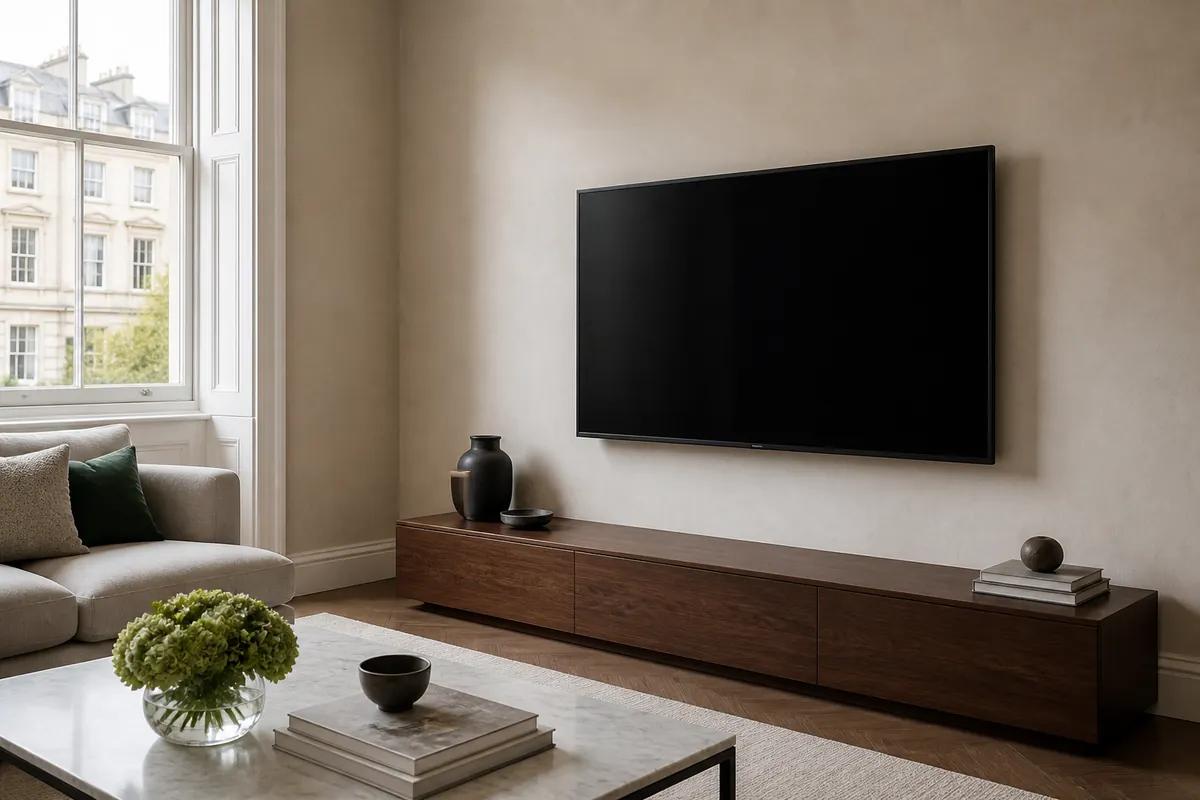
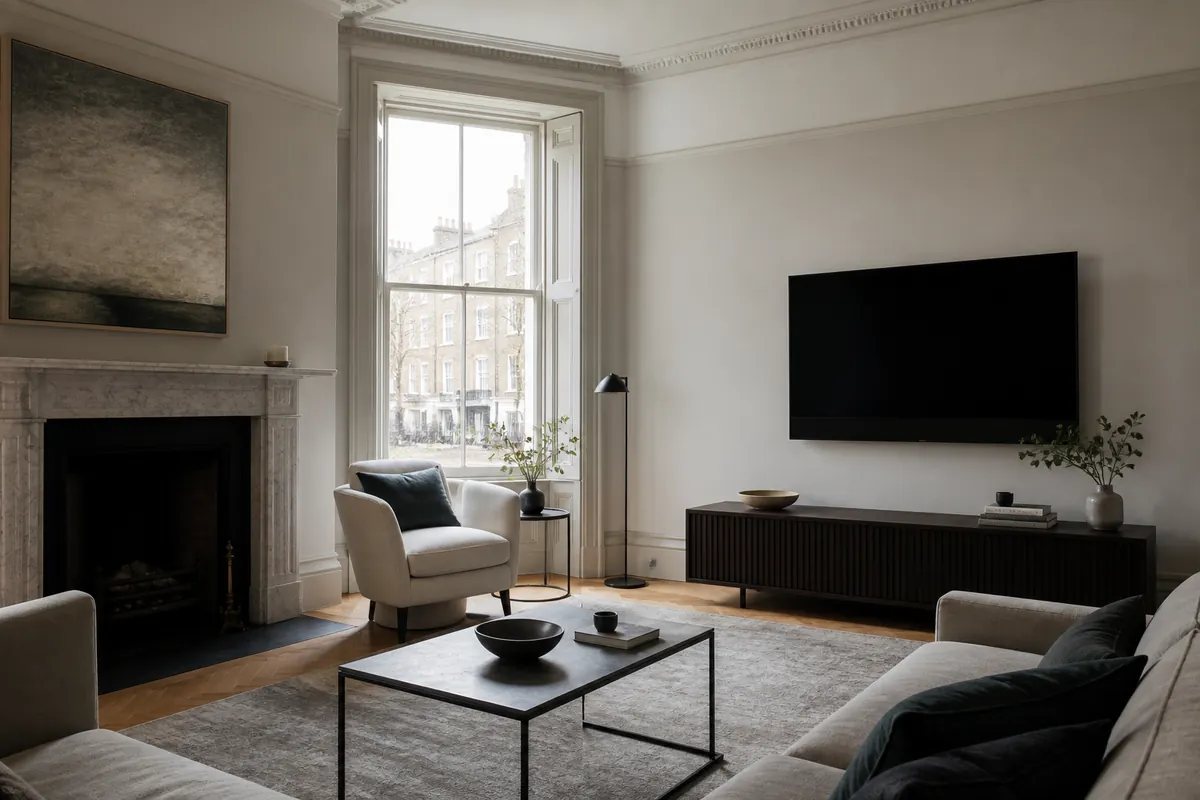
Mitcham / room by room
If a previous bracket remains, photograph its label and visible condition without dismantling an unsupported screen. The wall plate’s presence does not prove that its fixings suit the replacement load.
Let the enquiry distinguish reuse from removal. Redundant brackets, old holes and unwanted cable containment may require separately agreed work rather than being automatically included with mounting.
Describe your Mitcham installation ↗A screen is a load and a shape
Diagonal size gives a rough scale, while width, height, mass and VESA define different installation constraints. Send the exact product details rather than estimating from the box.
For a larger panel, describe the space available to unpack or prepare it as well as the route into the room. The team and lifting approach depend on the screen’s construction, mass and access.
Load capacity, screen attachment and wall support are separate checks that must all agree. None can be replaced by matching a television’s diagonal to a bracket’s packaging.
| Bracket | Best suited for | Movement | Key consideration |
|---|---|---|---|
| Fixed | A consistent watching direction and a low wall profile | Minimal | Rear service access deserves attention with a close-fitting mount. |
| Tilt | A screen needing vertical angle refinement | Vertical adjustment | Check the edge clearance throughout the chosen tilt. |
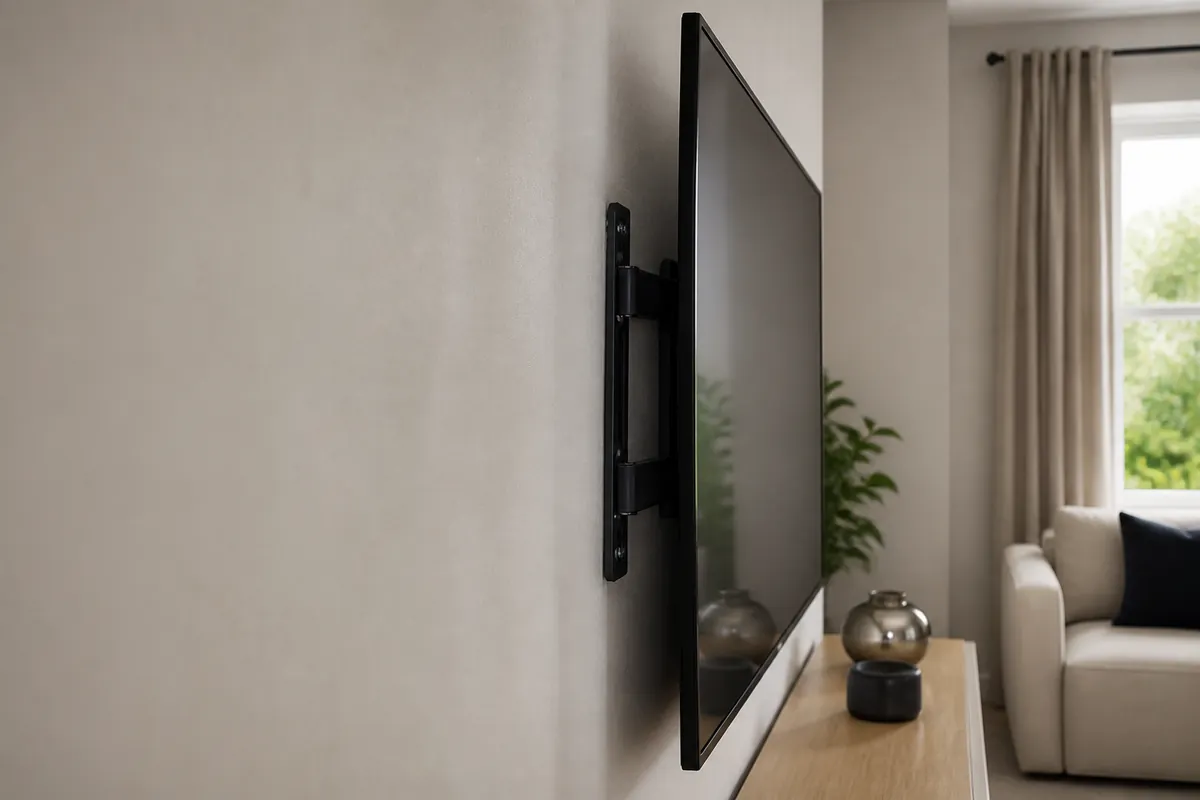
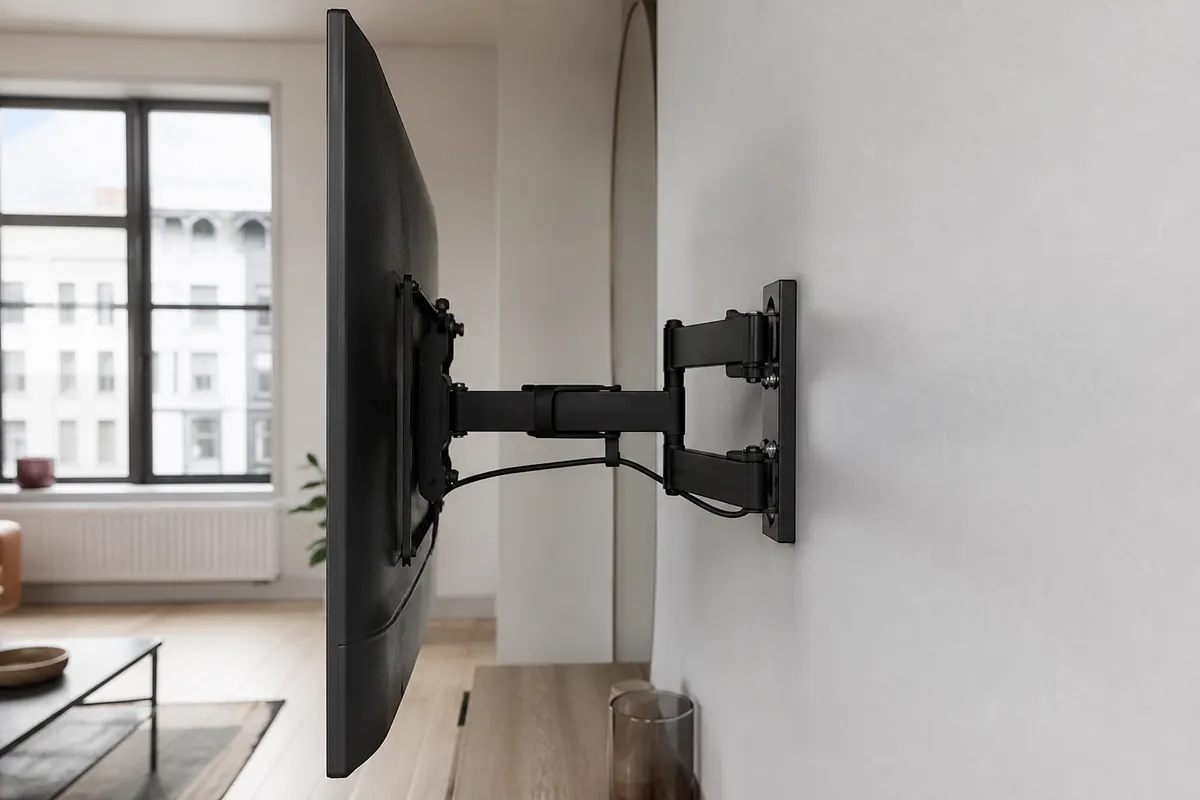
| Full motion | A room needing controlled extension or rotation | Extend and swivel | Lead routing and structural support must remain suitable as it moves. |
Preparation questions
Describe them with the mounting request so assessment can distinguish the main installation from removals, specialist finishes, cable alterations or electrical work.
No. Screen compatibility and suitable wall support are different checks; both must be satisfied for the intended load and movement.
Both requirements must be satisfied. Matching the mounting holes is not sufficient to approve the bracket for that television.
That depends on its geometry, the screen and suitable fixing points. Agree the visible screen centre after those constraints are assessed.
Their route, plug depth and access need checking. Concealment, electrical alterations and making good are separate from simply connecting accessible devices.
No. Consider side or alternative walls where comfort or technical checks make the fireplace location unsuitable.
Before marking or drilling, using the intended seat and furniture arrangement rather than an assumed standard height.
Tell us how the screen is stored and what needs moving. Preparation and handling requirements should be agreed for the actual starting condition.
Arrival and access
Send the full postcode and explain where unloading is permitted. If access depends on another person or a building appointment, resolve that arrangement before the planned visit. Include the route onwards to the television wall.
For the wider service scope, see TV mounting in London .
Load the map when you need it.
Open map in a new tabLet assessment set the fixing plan
Wall mounting should begin with evidence about construction and condition. Keep an alternative location in mind if the desired centre or bracket movement cannot be supported safely.
An apparently solid masonry wall can include weak or repaired areas. The assessed material and condition determine the fixing approach rather than a generic bag of supplied plugs.
For a boarded wall, the support behind the face must be established. The proposed screen weight and arm extension are relevant; hollow-sounding construction is neither approval nor an automatic refusal.
Timber support can affect the horizontal location of the wall plate. Agree the viewing centre only after that relationship and the required fixing arrangement have been checked.
Tell us if the drilling area includes tile, stone or another fragile finish. The finish, backing and access can affect whether the position is practical.
Do not open up the wall merely to answer an enquiry question. Explain what is unknown so any further investigation can be considered safely within the assessment.
Pipes and cables may not follow assumptions drawn from the visible room. Detection assists investigation but cannot guarantee that all concealed services have been located.
Before buying the bracket
Use the choices to describe your intended viewing arrangement, not to select a fixing method. If two positions are being considered, include both in the message with the screen model and clear room photographs.
No selection here confirms compatibility, availability or a quoted price.
Your setup brief
Small screen · Fixed bracket · Masonry wall · Visible cables.
Send this setup by email ↗Need a new socket? Plan the electrical work separately
Begin at the watching seat
Use the room drawing to discuss relationships, not to obtain a mounting measurement. Your actual seats, furniture and screen determine the proposed location.
Tell us whether the main sofa is centred or offset. That detail can matter more than symmetry with the boundaries of the wall.
Include windows beside and opposite the proposed location. Describe any glare concern before selecting a mount to correct it.
Furniture beside the television may need room to open or be serviced. Check those actions with the full screen outline, not the bracket alone.
Show radiators, sockets and fireplace features rather than cropping them out. They can affect both the position and the service-risk assessment.
A separate above-fireplace assessment
Heat exposure and chimney or flue conditions may rule out a fireplace location even if the screen fits visually. Support and concealed-service risks also need to be assessed.
The seated view also needs a separate check. Where the mantel forces excessive height or the cable route becomes impractical, discuss another arrangement before agreeing drilling.
Tidy without losing usability
The two visual arrangements are schematic. A moving bracket adds a practical requirement: the chosen leads and route must accommodate the agreed movement without strain.
List power and signal connections separately, including the equipment at each end. Surface organisation can be agreed with mounting; in-wall routing and the associated decorative repairs require additional assessment and agreement.
New sockets are electrical work, distinct from connecting a television. An ordinary power flex inside a wall is not a substitute for a correctly planned electrical installation.
Discuss a new socketThese are explanatory scenes, not photographs proving an installation result.
Make the quotation specific
A useful request combines the screen label, bracket specification, whole-wall view and postcode. Add the devices to connect and explain any constraints on entry or working room.
The price follows the assessed support, parts and handling plan. Separate optional work from the essential mounting so changes to the brief can be discussed clearly.
Request my mounting quote ↗| Installation | Pricing | Main variables |
|---|---|---|
| Standard fixed-bracket mounting | Quote after assessment | Compatible screen attachment, wall support and settled viewing centre. |
| Large TV / full-motion bracket | Quote after assessment | Load and leverage alongside the team’s handling and access needs. |
| Mounting + additional cable / electrical work | Detailed quote | The route construction permits and separately agreed finishing tasks. |
Compatibility is not one measurement
Screen size cannot approve a bracket, and bracket capacity cannot approve a wall. The assessment brings the TV specification, structure, position and connections into one proposal.
| Factor | What is checked | Why it matters |
|---|---|---|
| TV | VESA specification, actual weight and safe handling notes | Clarifies the panel’s requirements beyond its visible dimensions. |
| Bracket | Rated loading, movement limits and specified bolts or spacers | Keeps the attachment appropriate to the actual television. |
| Wall | Structural material, condition and concealed-service assessment | Sets the support method or identifies an unsuitable location. |
| Position | The viewing position and clearance for installation and use | Makes the location practical beyond its appearance. |
| Cables | Plug positions, available length and movement in use | Keeps routine viewing from straining the connections. |
Decisions before execution
Send the TV model, bracket details and pictures that show both the wall and surrounding furniture.
Review the wall construction and hidden-service risks before settling the proposed fixing position.
Check the VESA, load capacity and complete attachment kit against the manufacturer’s requirements.
Agree the screen outline with the normal watching seat and furniture in mind.
Use the assessed fixings and confirm the plate’s position and level.
Follow the handling plan with sufficient support and verify the mount’s locking features.
Connect accessible equipment and leave the leads suitable for the agreed travel.
Check the basic result and describe the agreed travel and access arrangements before handover.
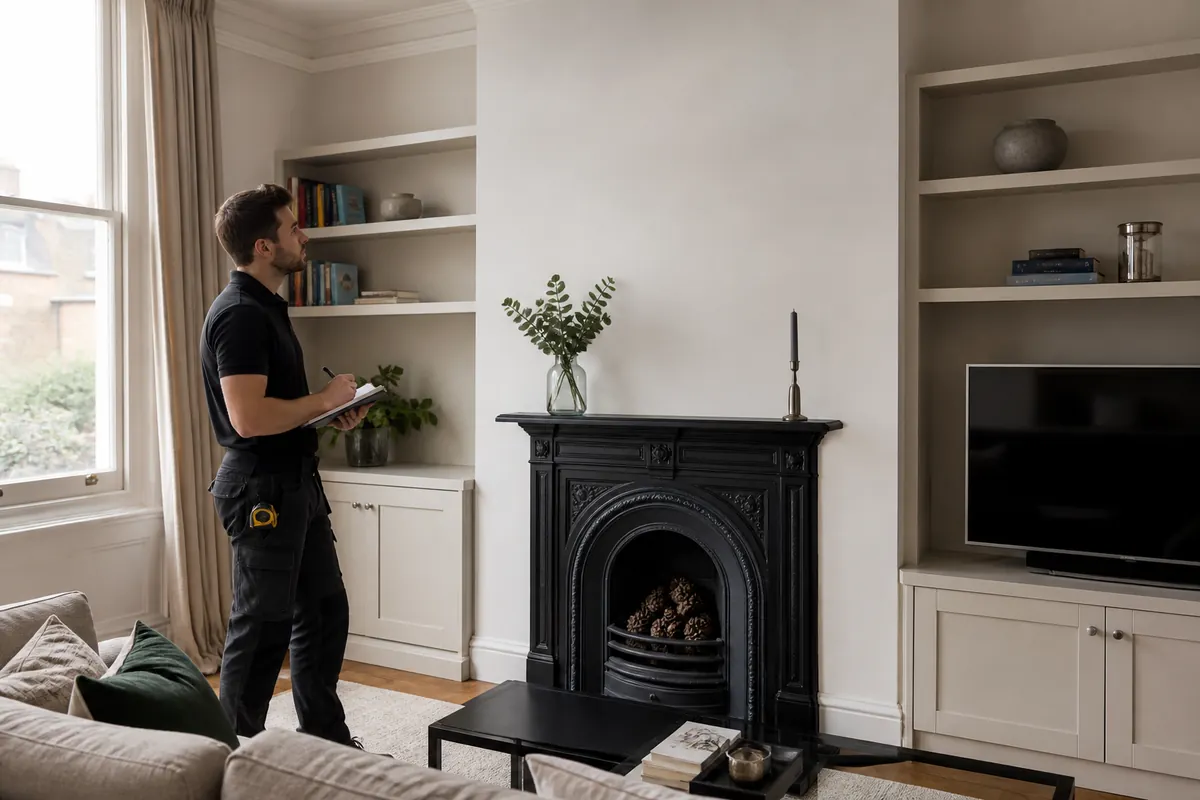
Equipment and position documented before work.
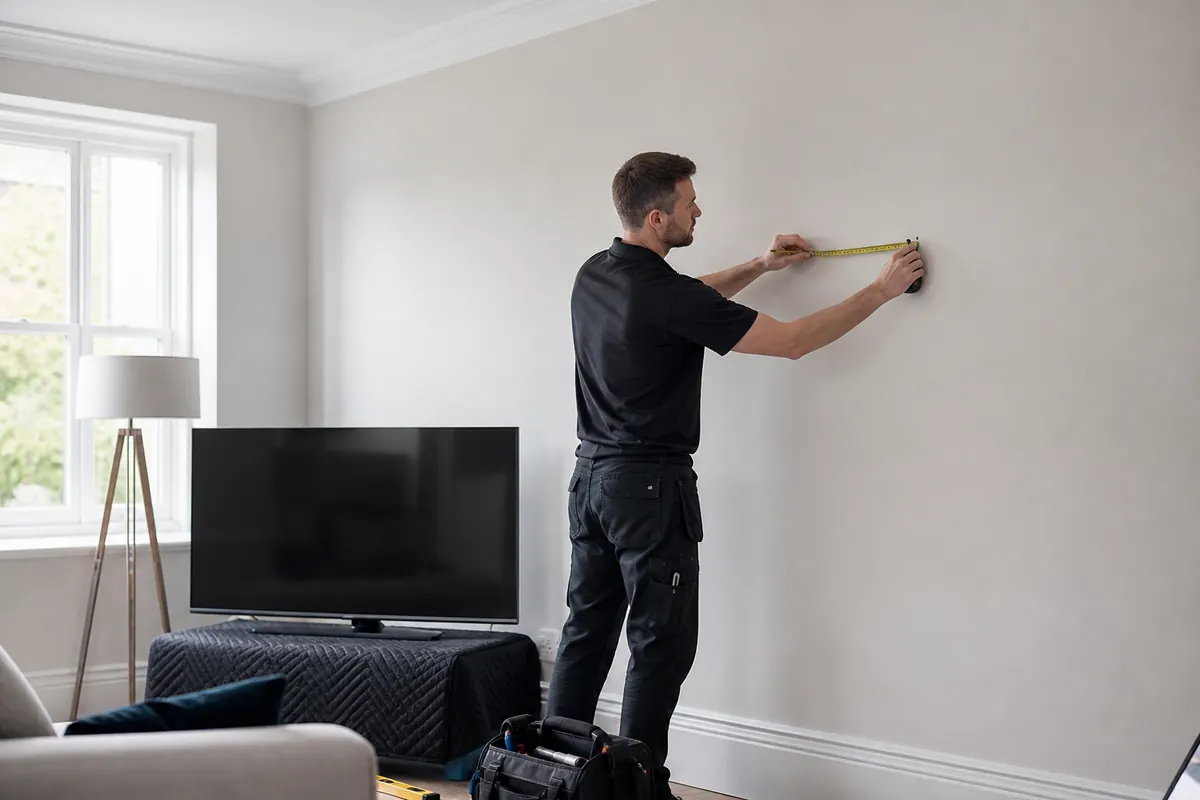
A suitable mounting plan established.
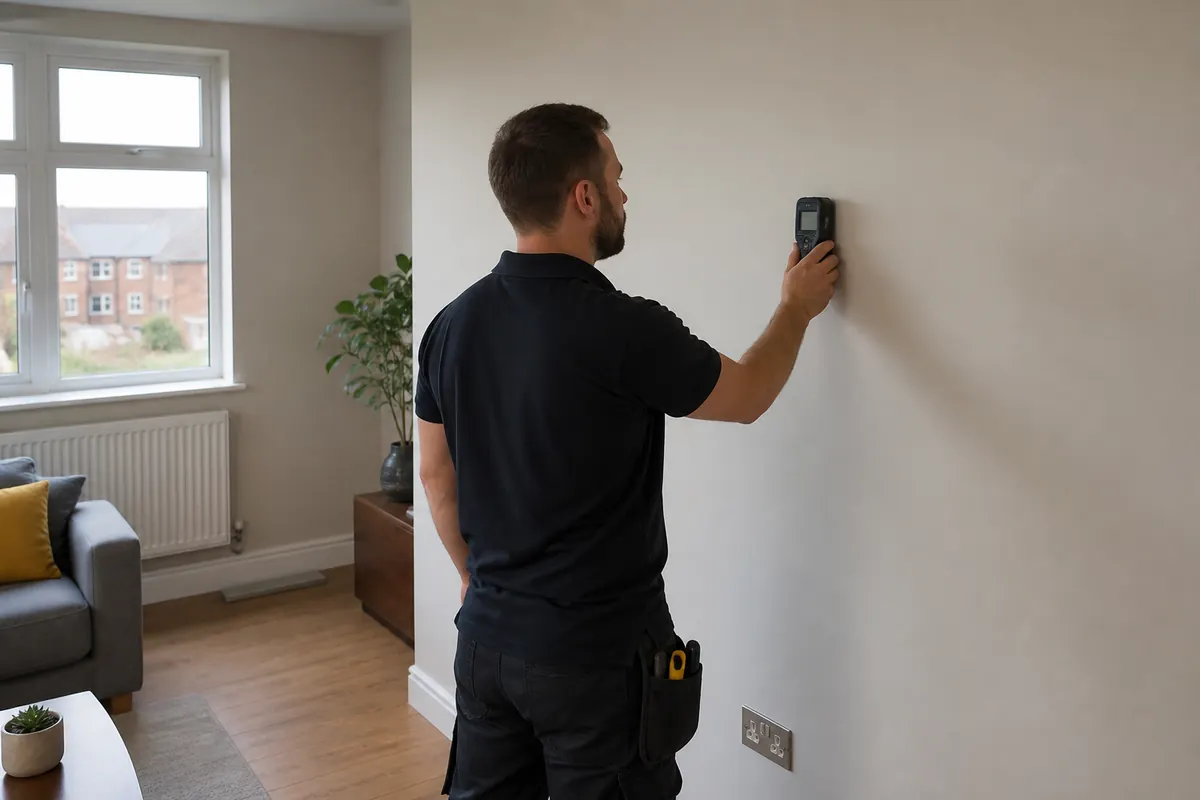
Suitable support during hanging.
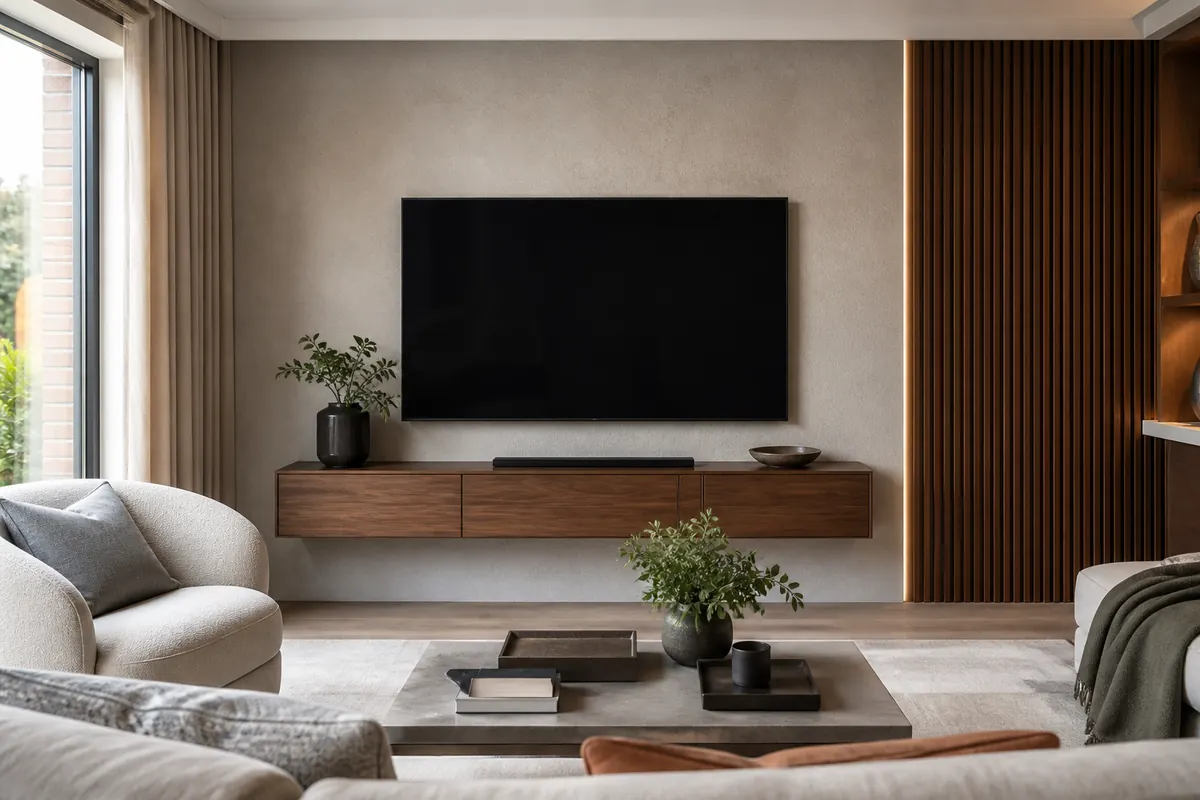
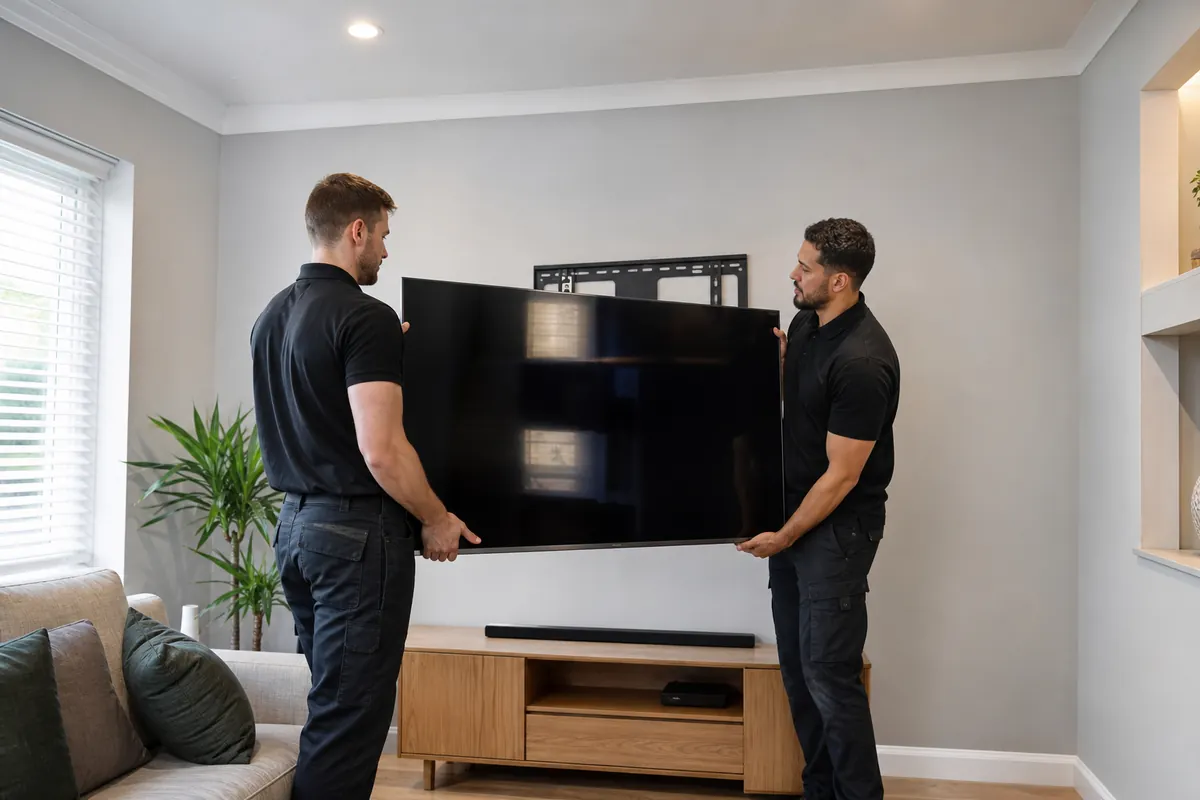
Practical checks with the screen connected.
Illustrative stages shown in different interiors, not one documented customer installation.
Room information beats property labels
The installation needs a suitable wall and a practical approach to it. Share photographs and known construction details even when the property seems straightforward from the outside.
For a flat, include entry arrangements and the route from lift or stairs to the room. Mention furniture that will restrict preparation space.
Where a chimney breast, decorative face or later lining is present, flag it. The desired appearance should not conceal relevant construction questions.
Relevant construction information can help the enquiry. A recent completion date alone does not approve the proposed wall or bracket.
For a house installation, identify the floor and starting point of the panel. Include stairs and the area available to prepare the TV.
Non-domestic installations need a specifically confirmed brief rather than assumptions drawn from a residential mounting request.
Practical details
Photograph each from the normal watching seat and show the associated windows, furniture and sockets. Explain which items can move so the alternatives can be assessed as complete room arrangements.
Not necessarily, but the sound does not identify a suitable fixing method. The wall build-up and dependable support points need establishing for the intended load and movement.
Appearance alone cannot confirm capacity or complete condition. The rating, attachment parts, wall fixings and intended use need review against the replacement screen before reuse is approved.
Discuss which ports you need to reach routinely. The bracket and cable arrangement should have an agreed access method; do not assume the screen can be pulled forward if a fixed mount is chosen.
Show its height and depth and state that it cannot move. The team needs to assess how the panel can be prepared and brought onto the bracket with that obstacle present.
Describe the result you want and the devices involved, including anything uncertain. The assessment can then separate accessible connections from surface treatment, concealed routing, electrical alterations and associated repairs.
Mention the soundbar and its location with the other devices. Any mounting hardware, extra connections or concealed routing should be included in the defined scope rather than presumed.
It is one constraint rather than a complete positioning rule. Show the preferred viewing location and existing power so any change in cable route or electrical provision can be assessed explicitly.
No. Chimney or flue construction, support and concealed services still matter, with heat conditions and viewing comfort assessed as appropriate. The location must be considered on its actual circumstances.
Only if that type still suits the viewing arrangement. A changed room layout or connection requirement may justify a different option, subject to compatibility and suitable wall support.
The room comes first
For TV mounting in Mitcham, the wall construction and bracket load need checking together. Provide what you know about the wall and the exact television before relying on a preferred position. Include the exact TV and bracket models, wall photographs and postcode. Identify any additional work you want separately assessed.
