
Accessible placement
A position that hides all fittings in a photograph may leave the installation difficult to use. Identify power, inputs and any bracket release points before agreeing the screen’s final relationship with the wall.
Ruislip · Home technology, considered
Keep the simple arrangement well specified.
If you want a fixed television in Ruislip, start with the exact panel and the position that suits your seat. A low-movement setup needs compatible parts, assessed support and practical rear connections.
Ruislip / room by room
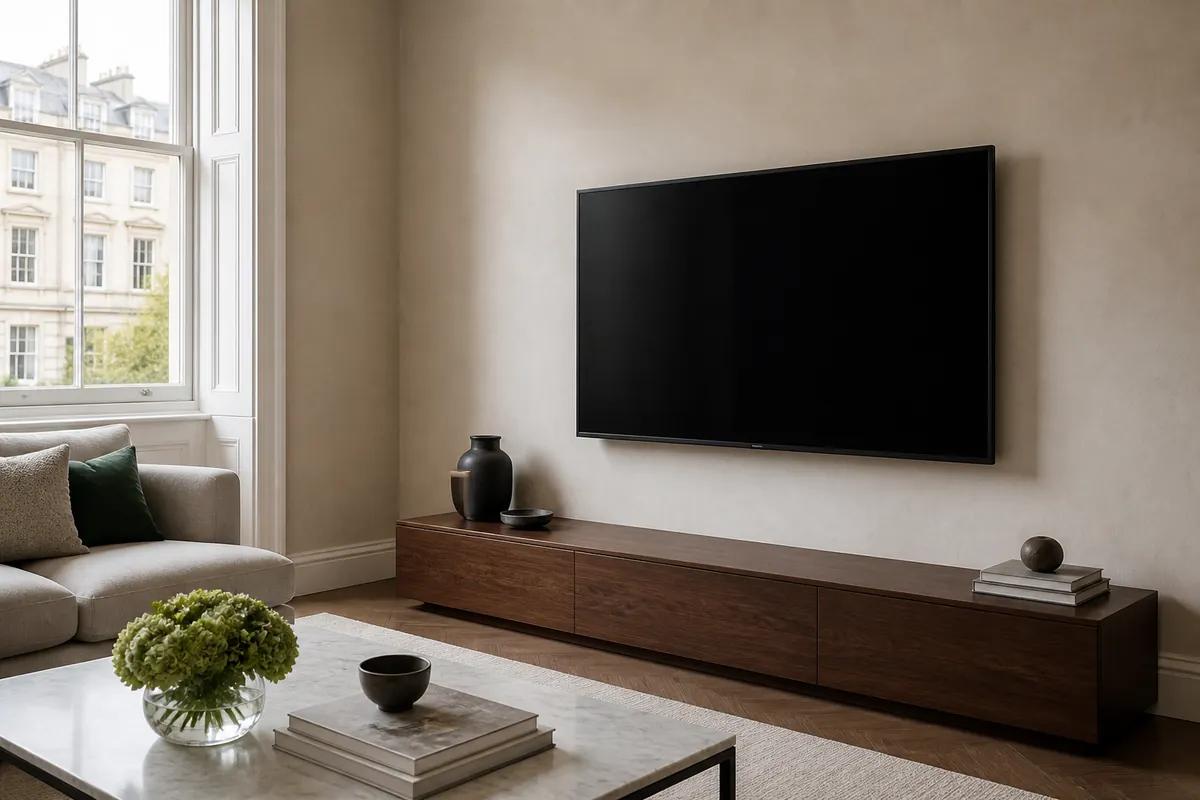
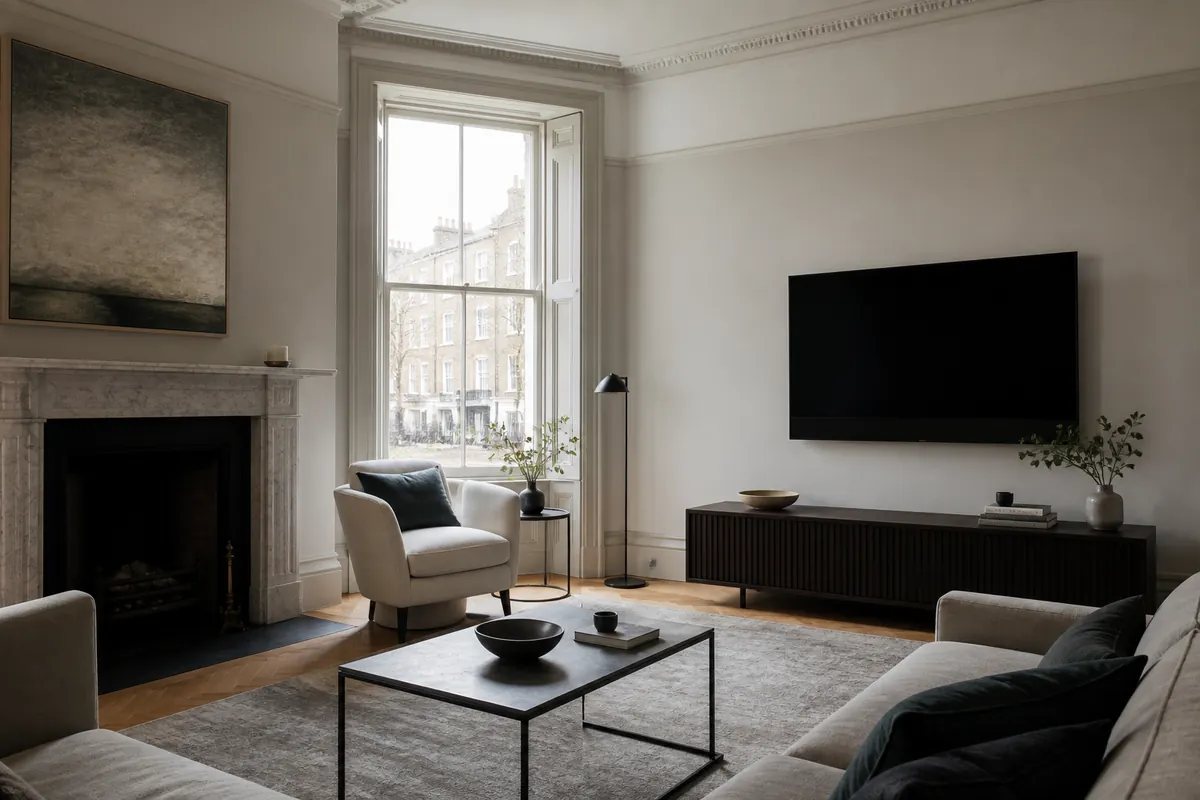
A fixed Ruislip installation offers little adjustment for a changed viewing angle. Use the actual sofa and furniture positions to agree the screen location rather than relying on an assumed standard height.
The bracket still needs a suitable wall fixing strategy. Supplied hardware and a matching VESA pattern do not by themselves establish the condition or construction of the wall.
Describe your Ruislip installation ↗The view in everyday use
Mark existing inputs and power on the drawing; their actual access needs checking with the selected bracket.
A position that hides all fittings in a photograph may leave the installation difficult to use. Identify power, inputs and any bracket release points before agreeing the screen’s final relationship with the wall.
The viewing height should still follow the actual seating. If rear access conflicts with a very narrow furniture gap, discuss that constraint before the hardware is fitted.
Check clearance for any intended tilt or turn, allowing the cables to move without strain and without blocking cupboards or the route through the room.
A convenient connection point does not establish the condition or service risks of the fixing area.
A fireplace is a separate question
A fireplace proposal also requires heat, chimney or flue, structure and hidden-service assessment; routing connections around it is a separate planning question.
If a fireplace route cannot be accepted, assess the alternative wall with new cable endpoints rather than stretching the original plan.
The support behind the surface
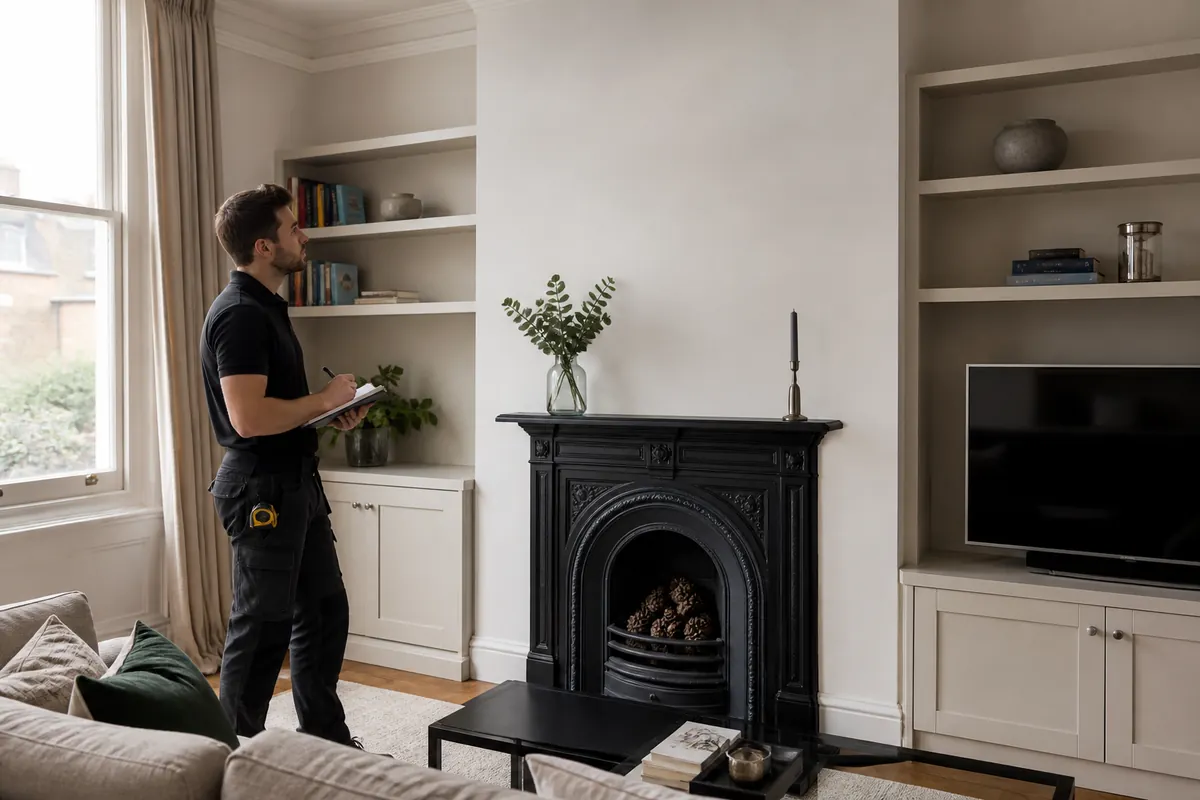
A packet supplied with a bracket is not a universal wall specification. The relevant question is whether the fixing arrangement suits the identified material, condition and installation load.
Sound brick and different types of block may call for different approaches; a generic masonry description is insufficient.
Plasterboard suitability depends on the wall system and available support, not the presence of board plugs in the box.
Timber support has to be suitably positioned and capable of accepting the intended connection arrangement.
Tile, stone or other specialist surfaces may need additional preparation or may restrict the proposed drilling location.
When the wall cannot be identified confidently, do not select a fixing merely because it is readily available.
Before drilling, hidden services must be considered; a detector cannot certify that the entire area is free from pipes and wiring.
The work in an agreed order
Start with the specifications, wall information and intended daily use. Explaining whether the panel will move regularly helps plan not only the hardware but also the checks that matter at the end.
Assess support and services, verify equipment compatibility and agree the position. Handling needs and cable scope should be settled before fixing so the final sequence follows a clear brief.
The intended adjustment needs compatible hardware as well as suitable support.
The parked position and intended viewing range need agreement.
Use the assessed fixing approach, check the wall plate and support the panel during engagement. Complete the required locking arrangement before connecting and adjusting the screen.
The mounting system is secured before its usable travel is reviewed.
Review lead allowance at the normal parked and deployed positions.
At handover, review basic function, alignment and intended travel. Ask how the bracket should be adjusted and what clearance or cable limits need to be respected.
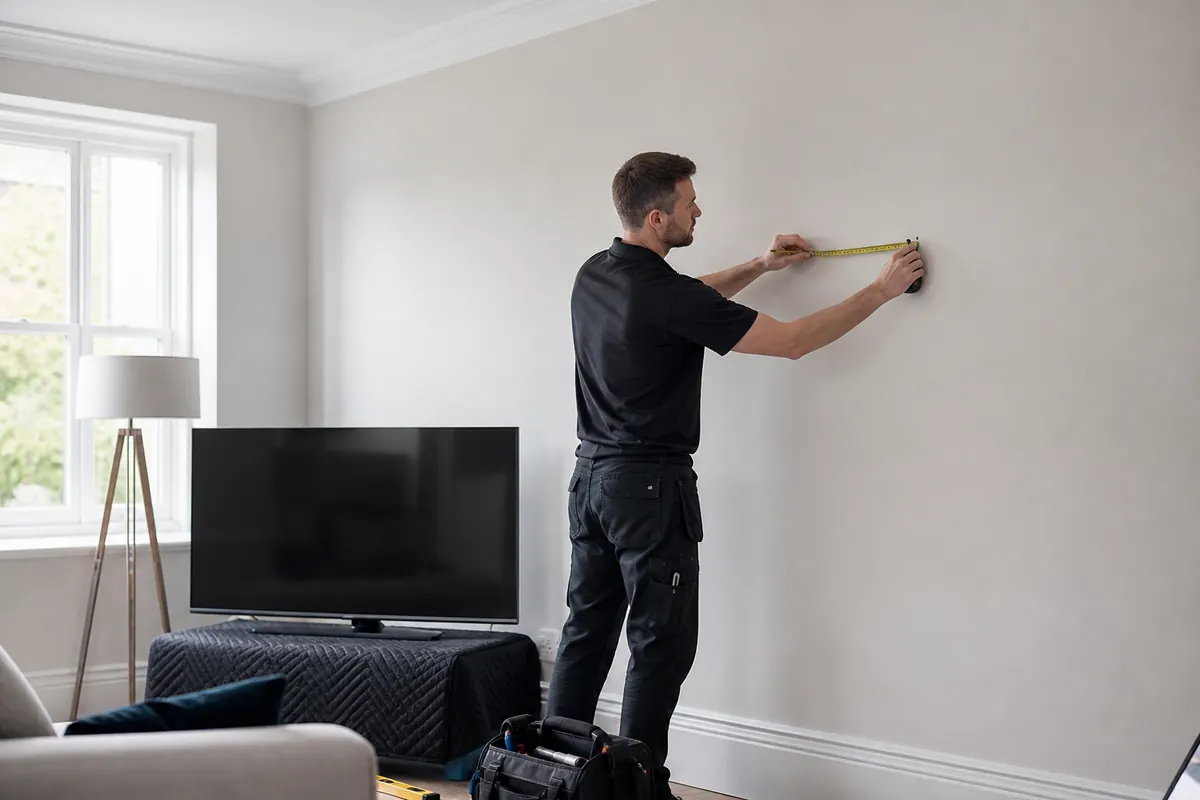
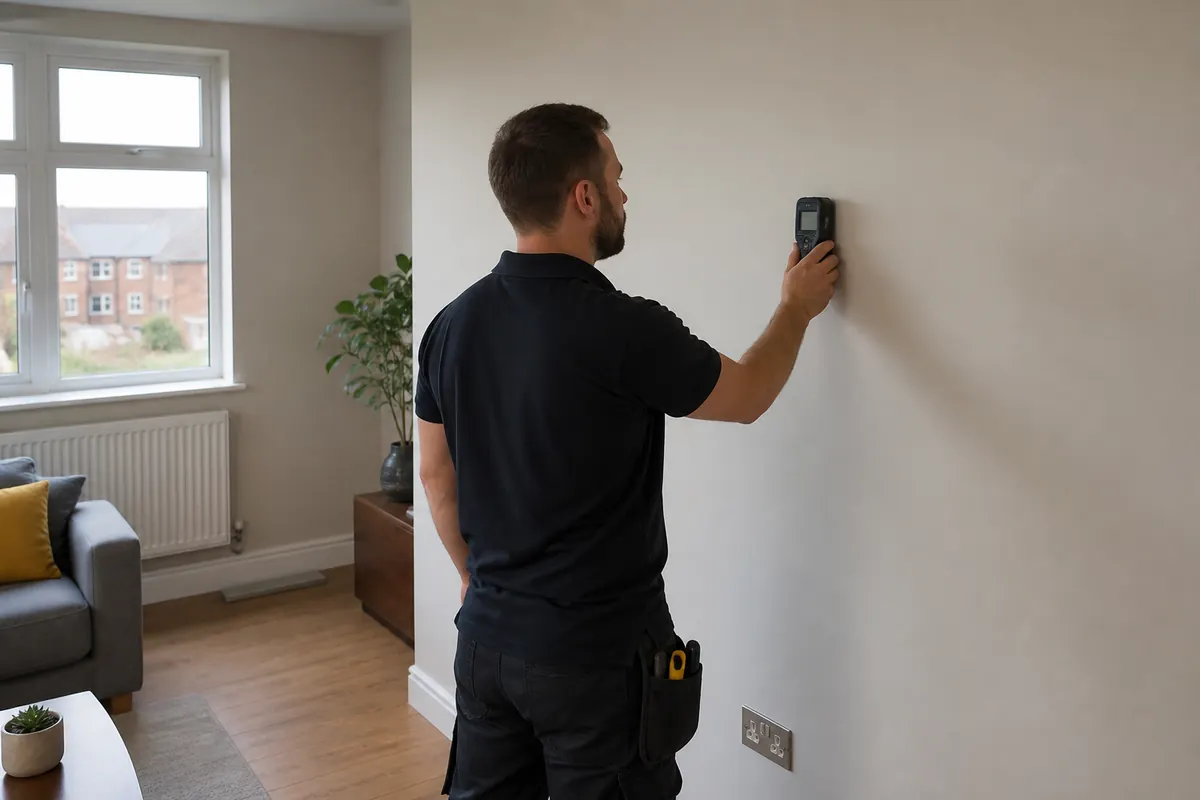
The proposed equipment and room before assessment.
The accepted support and viewing arrangement.
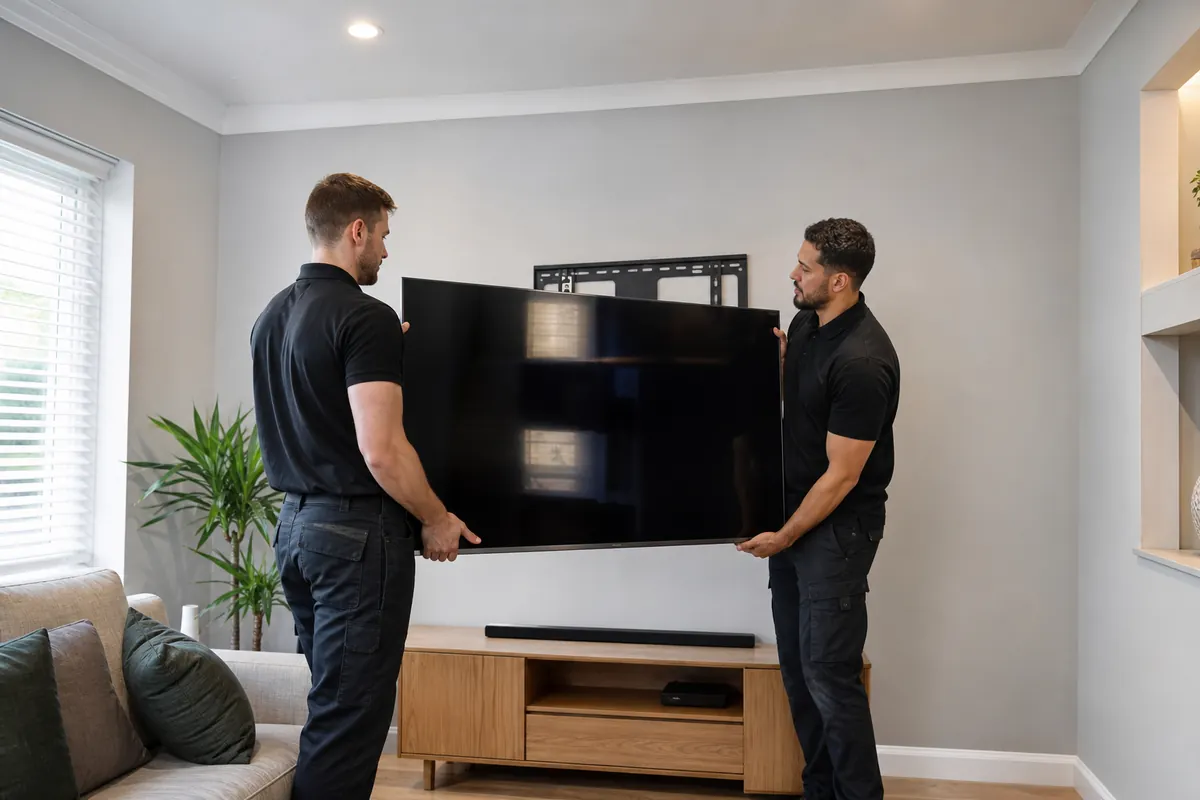
A supported panel secured to its compatible bracket.
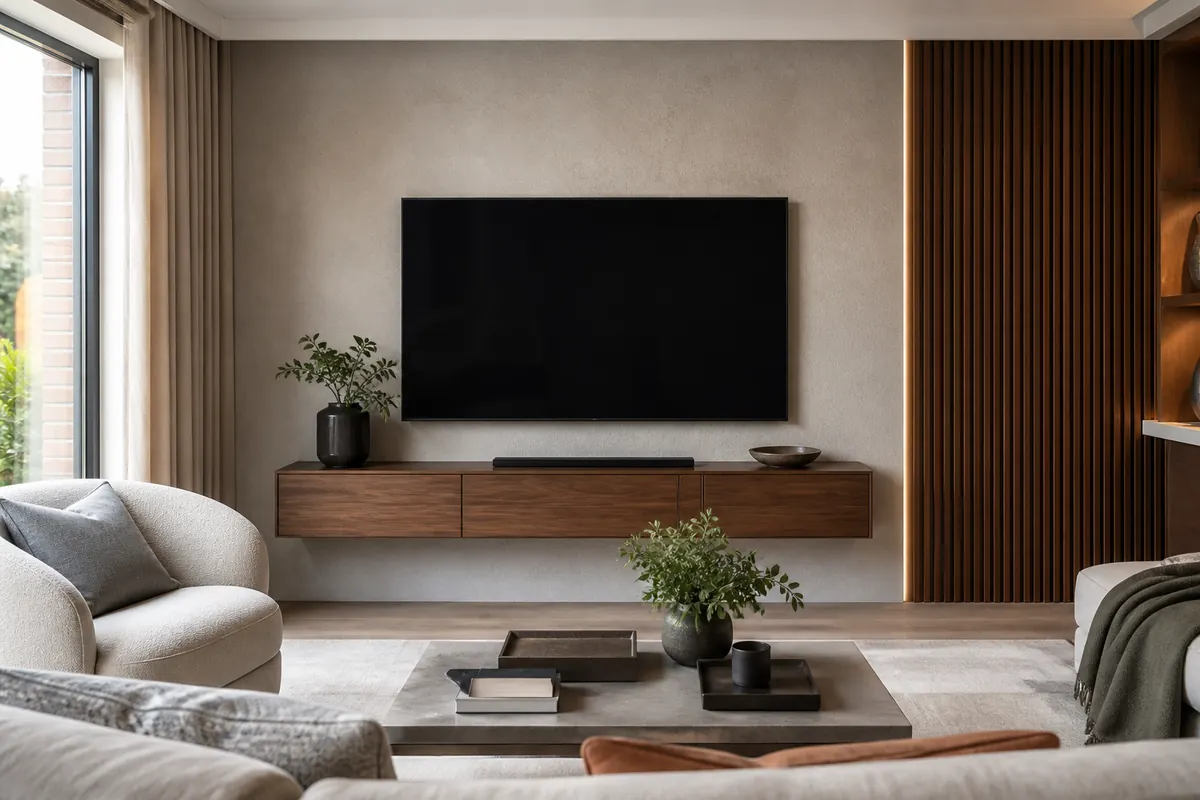
The agreed connections and usable final view.
Illustrative stages shown in different interiors, not one documented customer installation.
An assessed scope for your installation
For Ruislip, tell us who will supply the bracket and whether you already hold all its fittings and instructions. Include the television model, not just the screen size quoted on a shopping receipt.
The price follows assessment of equipment, wall and access. Missing parts or incompatible hardware can change the agreed work, so an existing bracket should not be presented as ready for use until checked.
Request my mounting quote ↗| Installation | Pricing | Main variables |
|---|---|---|
| Standard fixed-bracket mounting | Quote after assessment | Identified television and complete bracket components |
| Large TV / full-motion bracket | Quote after assessment | Actual supported weight and intended movement |
| Mounting + additional cable / electrical work | Detailed quote | Additional equipment supply or connection work |
Your practical starting brief
Write down which devices will live beneath or behind the television. A games console, receiver or streaming box may need a different cable path from the aerial lead already beside the wall. Choose how visible cable runs should be handled, then explain any new power-point request separately. The desired appearance should not hide an assumption about electrical alterations.
Cable choices prepare a discussion; concealed routes and new sockets are not approved by a form selection.
Your setup brief
Small screen · Fixed bracket · Masonry wall · Visible cables.
Send this setup by email ↗Need a new socket? Plan the electrical work separately
Dimensions, load and movement
A bracket without its locking parts or TV-side fittings may not be ready for reuse. Photograph the complete assembly and provide the instructions where available before assuming installation can proceed.
Screen size does not identify missing hardware. Actual weight, VESA, specified bolts and spacers must be considered alongside the bracket condition and the assessed wall-side support.
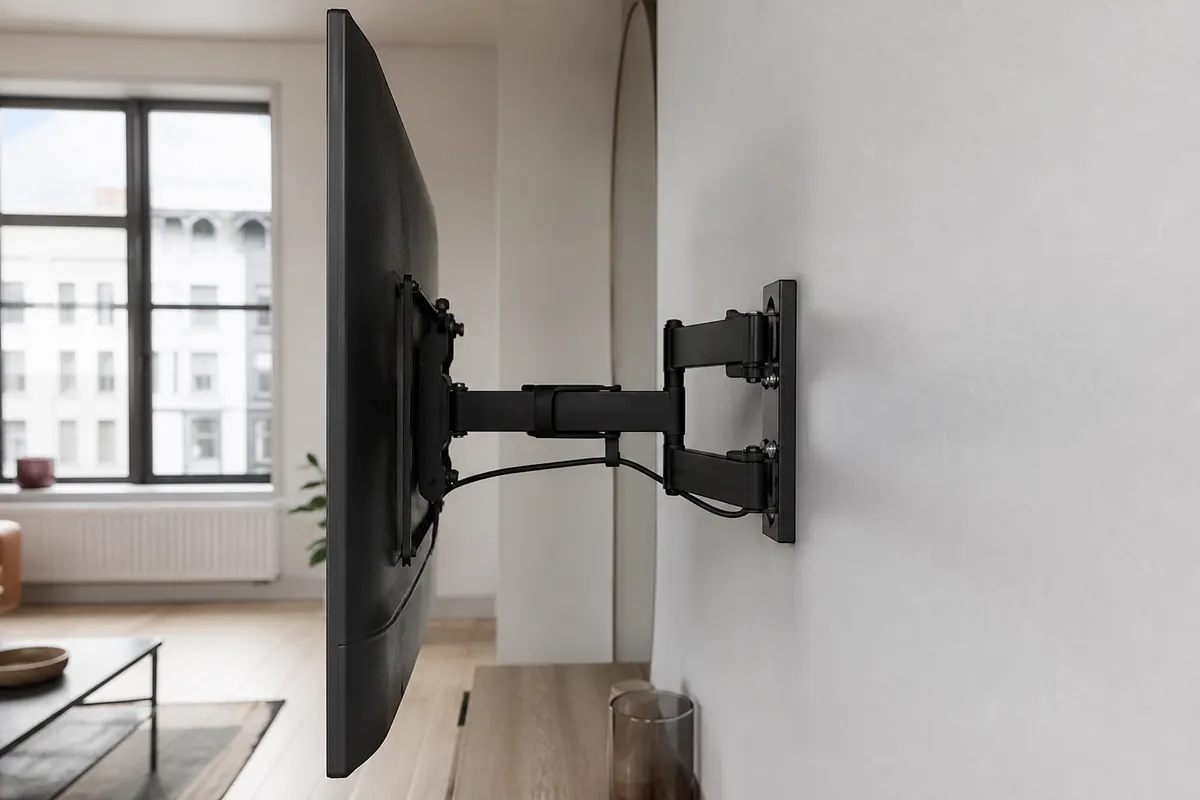
Fixed releases must remain usable, tilt mechanisms need clearance, and moving joints must suit the intended supported load and travel.
| Bracket | Best suited for | Movement | Key consideration |
|---|---|---|---|
| Fixed | A complete identified mount for a settled view | Minimal | Missing release or locking parts must not be bypassed. |
| Tilt | Adjustable pitch using the required components | Vertical adjustment | The fittings and mechanism need to be complete and suitable. |
| Full motion | A fully specified assembly intended to extend | Extend and swivel | Check condition and required parts before planning movement. |
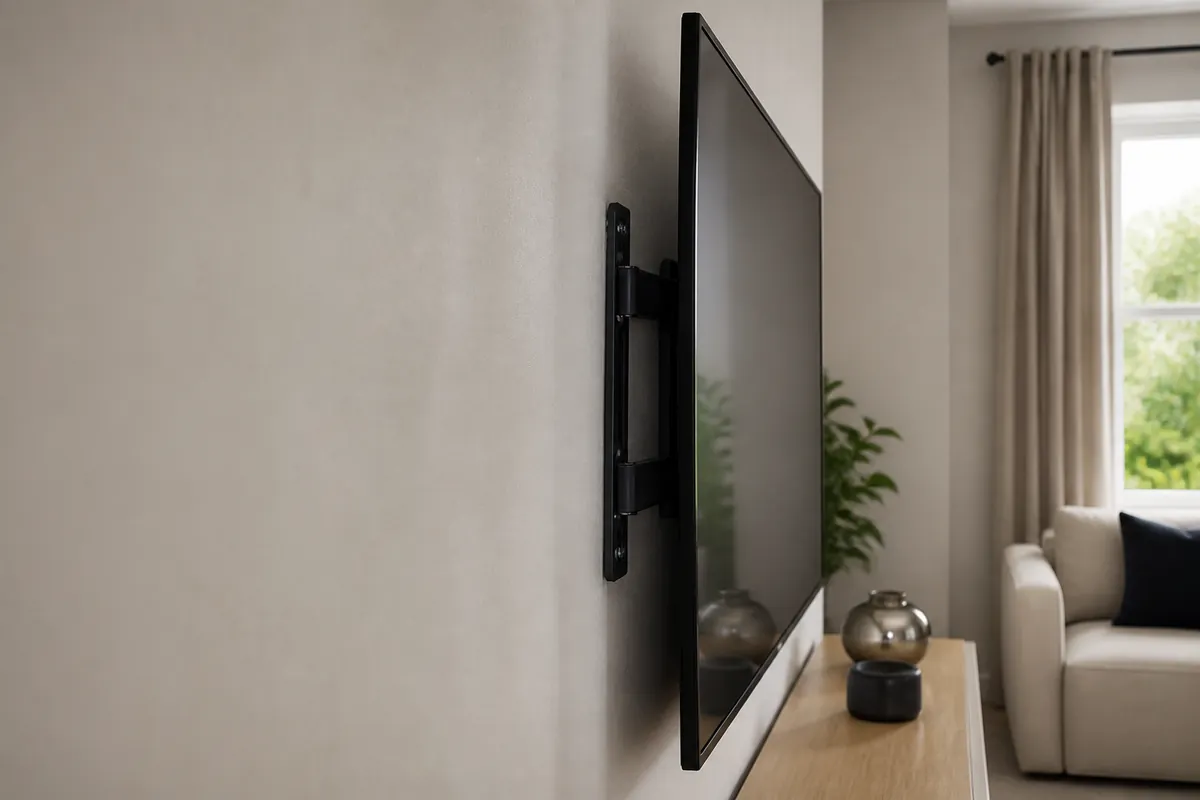
The route between screen and devices
These drawings illustrate cable appearance; they do not demonstrate an approved moving installation.
A route that looks tidy when folded can become taut as the panel extends. Discuss the maximum intended travel and where each lead enters the moving assembly before organising the finished run. Surface management and cable allowance can be included in an agreed mounting scope. Concealment, wall access and repairs need their own assessment rather than being treated as spare cable hidden somewhere.
Power changes are separately arranged electrical work; placing an ordinary mains lead inside the wall is not an acceptable shortcut.
Discuss a new socketIllustration only. No claim of a completed customer before-and-after installation.
Practical questions
No. The assessed arrangement is constrained by wall support, mount geometry, furniture and cables.
Show the open door and walking route; any conflict must be reviewed before approval.
Yes. Holding the screen farther out changes leverage on its support.
They need suitable allowance throughout the intended movement, without strain at connections.
Tilt changes vertical angle, not necessarily the sideways alignment you need.
Discuss that preference because the bracket’s geometry may shift it as it folds.
The intended travel needs clearance; contact is not a useful movement limit to assume.
Describe your actual seats so the proposed range can be assessed and explained at handover.
The complete supported arrangement
The television may fit the bracket but not reach the desired view within the available space. The complete geometry includes the wall plate, arm, panel and surrounding objects.
| Factor | What is checked | Why it matters |
|---|---|---|
| TV | Actual width and height alongside the load and attachment pattern | The panel outline governs part of its swept space. |
| Bracket | Extension, swivel design and adjustment permitted by the equipment | Mechanism geometry affects the achievable viewing position. |
| Wall | Suitable support for the chosen plate location and movement | A usable plate location must also support the intended movement. |
| Position | Wall returns, cabinet doors and the parked screen outline | Advertised travel may be limited by the surrounding room. |
| Cables | Connector access and movement allowance at the full intended reach | Connections need freedom throughout the accepted route. |
The individual room and building
An address category cannot establish the installation conditions. Tell us where the television starts, which floor it belongs on and what remains around the final wall.
For an apartment, include the route beyond the lift as well as entry arrangements; door turns can still affect handling.
In a period room, flag decorative details and any known wall alterations before choosing an exact fixing zone.
For a newer development, share available construction information and any relevant building requirements without assuming every partition is suitable.
In a house, identify stair turns and the preparation space near the proposed wall, particularly for a broad panel.
If this is a workplace rather than a home, describe its use and have the proposed scope confirmed.
Address and access details
Send the complete Ruislip address details required for the appointment and say which floor contains the chosen wall. A ground-floor entrance can still lead to an upper-floor installation through a restricted stair route. Mention unloading conditions and access through any shared areas. The route and panel specification help establish handling arrangements before the visit is confirmed.
For the wider service scope, see TV mounting in London .
Load the map when you need it.
Open map in a new tabPractical details
Explain that plan now so accessible inputs and device storage can be considered. Future connection access may influence bracket clearance, but supplying additional cables or changing furniture remains something to agree explicitly.
No. Supplied hardware must be assessed against the actual substrate and load. A bracket’s included components do not override wall condition, construction or the requirements of the chosen fixing method.
No. The appropriate thread, length and arrangement depend on the television and mount requirements. Improvised fittings can be unsuitable even when they appear to screw in, so missing components need proper review.
That depends on the television’s port layout, bracket clearance and neighbouring furniture. Explain which connections you change regularly so access can be considered before choosing a close-fitting position.
Connections need appropriate freedom for the agreed bracket movement. Tight restraint can strain plugs or restrict travel, so the routing should be checked with the panel in its intended positions rather than only while parked.
You can share a proposed model first. That allows its specification to be considered with the television, desired movement and wall rather than committing to equipment that may not suit the assessed installation.
It depends on the mechanism and installation. Describe the desired final position and check the identified mount’s movement; do not infer lateral adjustment from the fact that a bracket can swivel.
The agreed handover should cover safe adjustment and the assessed movement range. An extending panel should not be treated as free to travel anywhere its mechanism appears to allow, regardless of furniture or cables.
No. Access, wall construction, furniture and equipment vary between individual rooms. Describe the actual conditions rather than expecting the property type to determine fixings, team size or suitability.
Yes. Lift dimensions, its stopping level and the route from it to the room still matter. Include any remaining stairs or tight turns so available access is described accurately.
The room comes first
If you want a fixed television in Ruislip, start with the exact panel and the position that suits your seat. A low-movement setup needs compatible parts, assessed support and practical rear connections. Share the television’s VESA and weight.
