
An agreed seated centre
Give the main viewer priority when discussing height. A high cabinet can constrain the lower edge, but that constraint should be made explicit.
Southfields · Home technology, considered
Make the bracket decision after the room brief
For a Southfields installation, describe what you want the screen to do before buying a mount. A fixed position, downward angle and second viewing direction solve different problems.
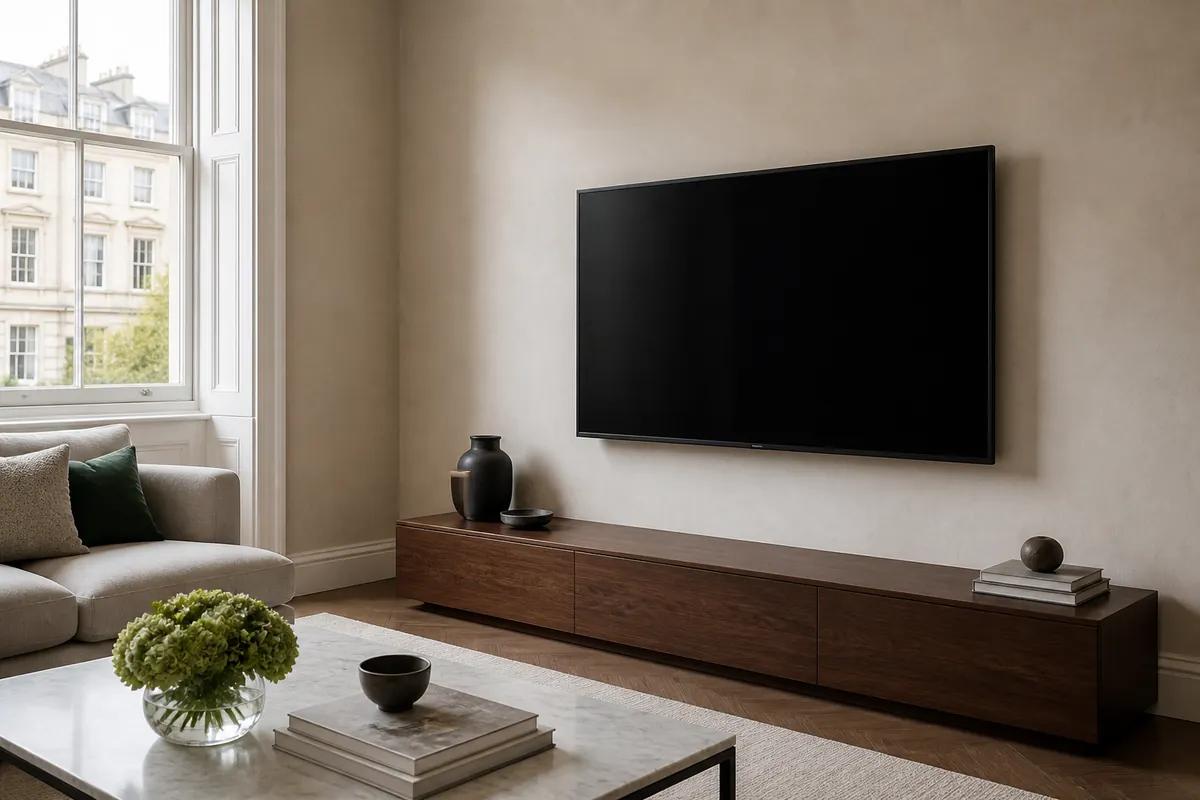
Begin at the watching seat
Use the room drawing to discuss relationships, not to obtain a mounting measurement. Your actual seats, furniture and screen determine the proposed location.
Give the main viewer priority when discussing height. A high cabinet can constrain the lower edge, but that constraint should be made explicit.
Show reflective light sources in a wider picture. Choosing the screen wall without that context may leave a problem that bracket adjustment cannot solve.
Open doors and drawers near the proposed screen when taking photographs. Their everyday use needs to remain practical after mounting.
Provide device locations and identify leads you regularly disconnect. Access to those connections can influence the bracket and cable arrangement.
A feature wall needs more checks
Any chimney or flue, heat exposure, wall build-up and hidden services must be assessed alongside the TV’s requirements. The fact that another screen was there previously is not approval.
The television’s height and connections must work as well. If the proposal fails those checks, show an alternative wall with its seating and device arrangement for a meaningful comparison.
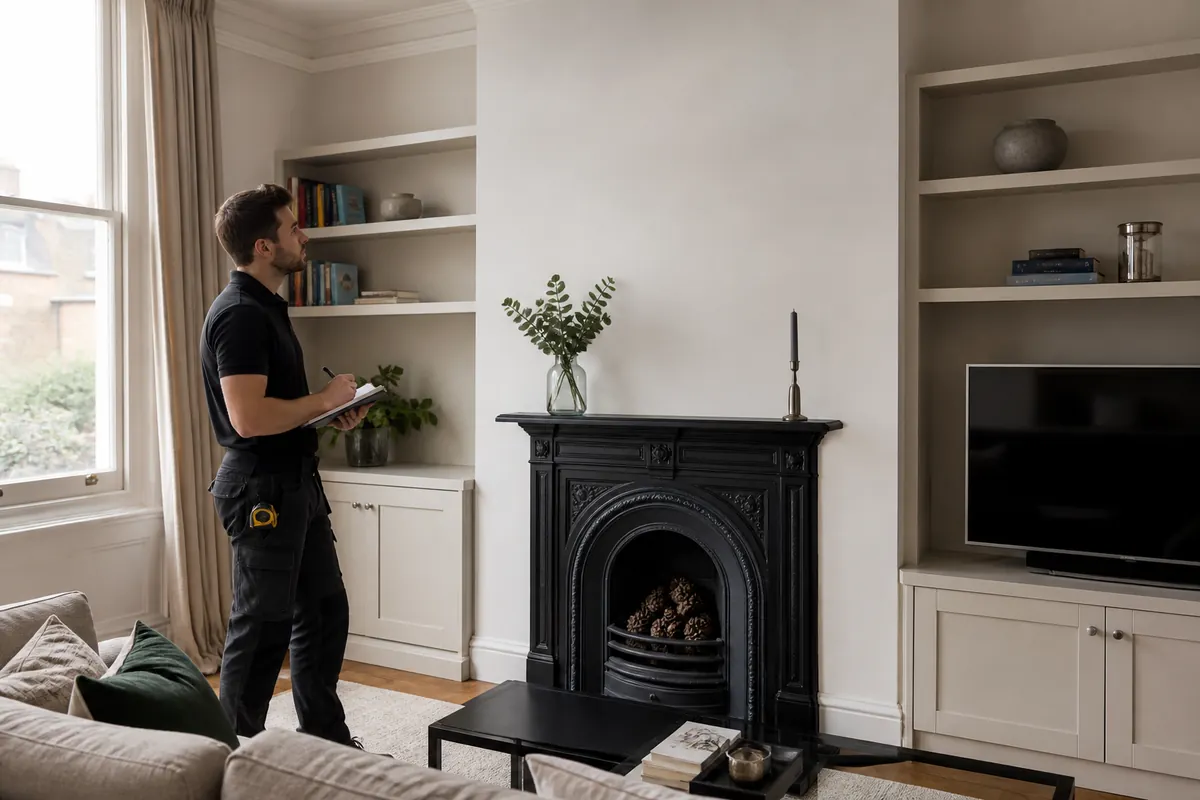
Southfields / room by room
If a bracket is already on order, send its exact specification while the wall and screen are assessed. A product’s broad size range cannot establish its suitability for your particular arrangement.
Show any cabinet below the proposed position and mark the main watching seat in your description. Those details help distinguish a genuine need for movement from a position that could be improved.
Describe your Southfields installation ↗A mounting system, not isolated parts
A suitable screen mount still depends on appropriate fixings and a workable location. Assess the load path and connection access rather than approving each item in isolation.
| Factor | What is checked | Why it matters |
|---|---|---|
| TV | Manufacturer mass, VESA spacing and handling requirements | Identifies the real attachment and lifting requirements. |
| Bracket | Load capacity, wall-plate geometry and supplied fittings | Shows whether the proposed parts serve the assessed setup. |
| Wall | Structural material, condition and concealed-service assessment | Sets the support method or identifies an unsuitable location. |
| Position | Height, horizontal centre and space around the full screen | Checks both the view and clearance beyond the wall plate. |
| Cables | Accessible ports and a route suited to bracket movement | Allows the completed screen to be connected without strain. |
Turn preferences into a scope
Tell us which TV you have, which mount is proposed and what surrounds the wall. The postcode and route into the room are useful alongside your preferred cable treatment.
No price is established by selecting a diagonal or bracket option. The assessment needs to identify the work, team and any separately agreed alterations before a quote can describe the result.
Request my mounting quote ↗| Installation | Pricing | Main variables |
|---|---|---|
| Standard fixed-bracket mounting | Quote after assessment | The intended fixed view and the assessed screen, bracket and wall. |
| Large TV / full-motion bracket | Quote after assessment | The actual panel load, arm extension and required lifting support. |
| Mounting + additional cable / electrical work | Detailed quote | Cable access, new power needs and any decorative reinstatement. |
Arrival and access
Send the full postcode and explain where unloading is permitted. If access depends on another person or a building appointment, resolve that arrangement before the planned visit. Include the route onwards to the television wall.
For the wider service scope, see TV mounting in London .
Load the map when you need it.
Open map in a new tabFrom idea to specification
A fixed screen and a moving arm put different demands on position, clearance and support. Choose the intended arrangement, then include your actual TV, wall information and preferred cable finish for review.
This tool outlines the brief, not the final installation design.
Your setup brief
Small screen · Fixed bracket · Masonry wall · Visible cables.
Send this setup by email ↗Need a new socket? Plan the electrical work separately
Look past the surface
The support’s condition matters alongside its material. Existing fittings and decorative coatings provide context, but neither can specify the installation method for a new screen.
The distinction between brick, block and a facing layer matters. Fixings need the assessed supporting material and its condition; a neat finish does not establish either.
For a boarded wall, the support behind the face must be established. The proposed screen weight and arm extension are relevant; hollow-sounding construction is neither approval nor an automatic refusal.
Framing needs to be located and assessed, with the mount’s fixing positions considered. Fasteners cannot be chosen solely because the wall is described as timber-framed.
Stone, tiles and decorative coverings should be declared in advance. A suitable wall behind them does not remove the separate drilling and finishing considerations.
Where construction is uncertain, preserve that uncertainty in the brief. An installer may need to revise the proposed centre or decline the location after assessment.
Service detection is one aid with limits, not permission to drill anywhere else. Other evidence about concealed pipes and wiring remains relevant to the decision.
Size informs handling
Do not assume a compact screen suits any wall or bracket. The model’s actual weight, VESA specification and attachment requirements still need checking.
For a larger panel, describe the space available to unpack or prepare it as well as the route into the room. The team and lifting approach depend on the screen’s construction, mass and access.
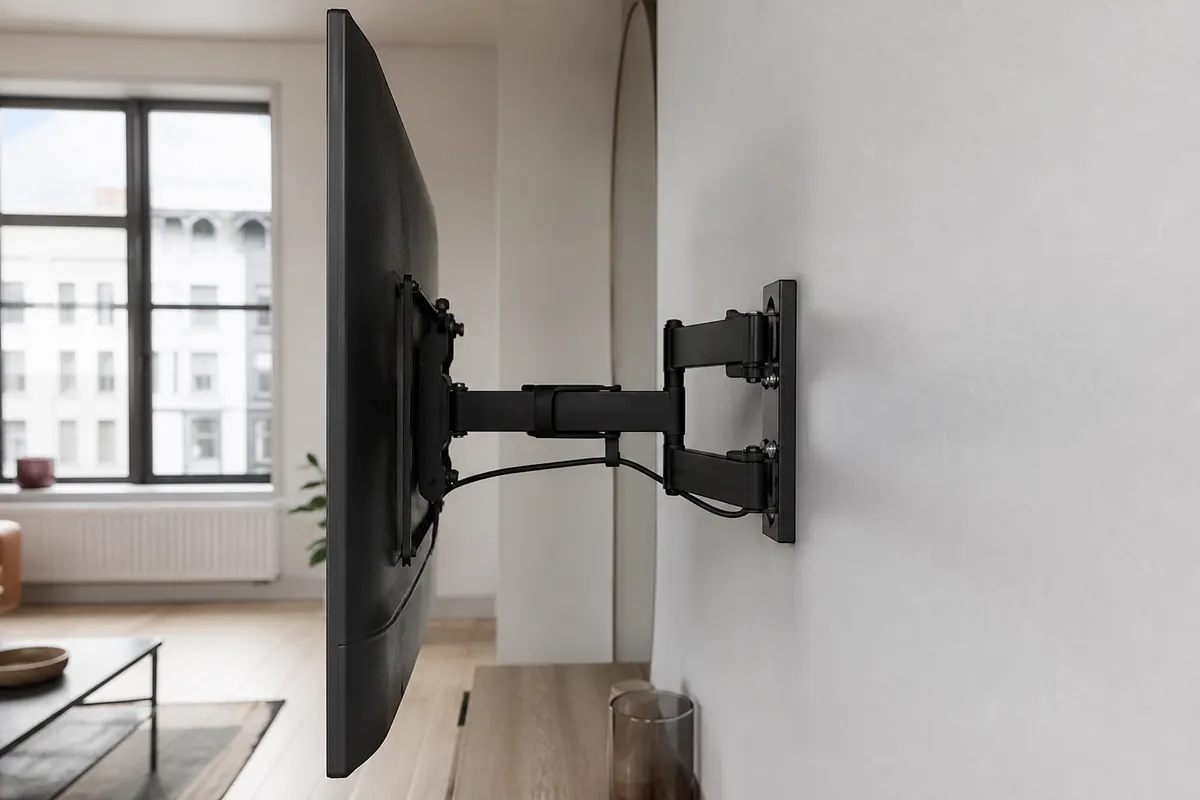
The bracket needs an appropriate rating and fit for the TV; its fixings need appropriate support. Intended extension makes those checks particularly important because it changes leverage.
| Bracket | Best suited for | Movement | Key consideration |
|---|---|---|---|
| Fixed | A settled position facing the principal seat | Minimal | Its limited adjustment makes early centre and height decisions important. |
| Tilt | A viewing setup needing vertical angle control | Vertical adjustment | The angle range must work with the real panel dimensions. |
| Full motion | Different watching seats with a defined turning path | Extend and swivel | Extension increases leverage; support and lead travel need review. |
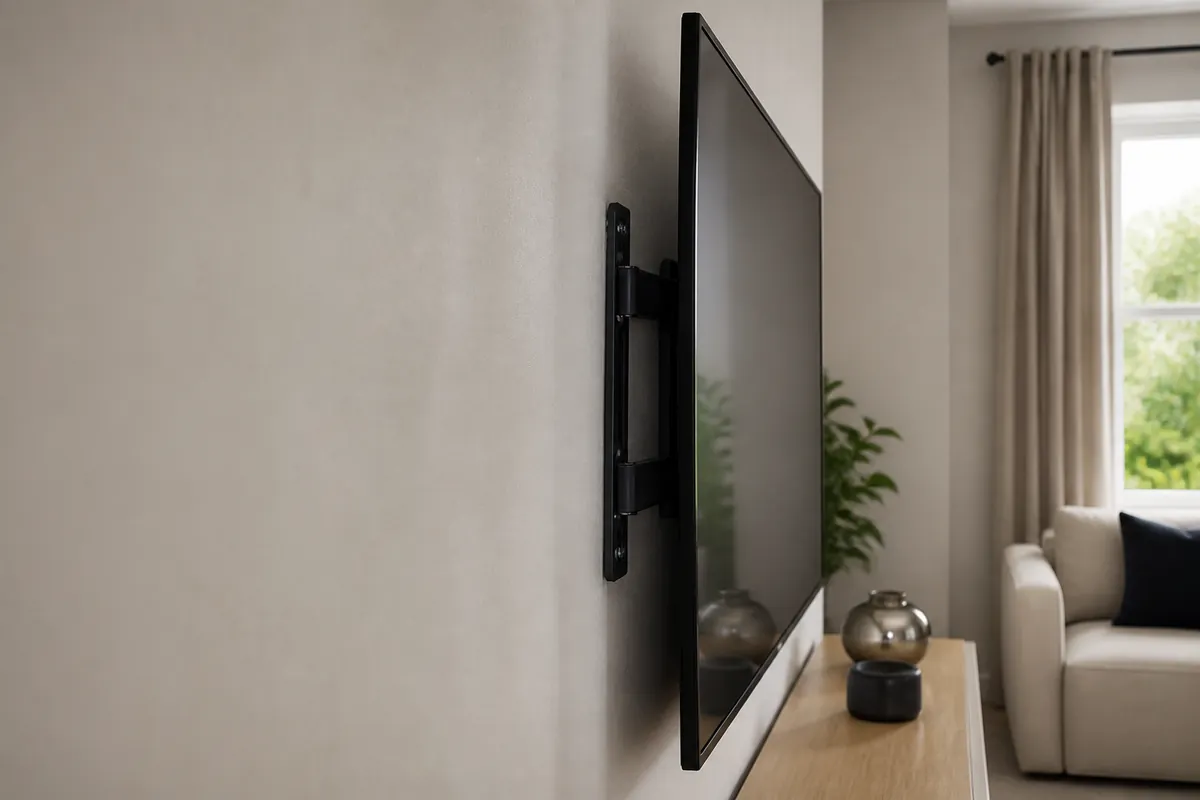
Each lead needs a destination
A cable-free appearance can involve different methods and scopes. The diagrams illustrate that choice without promising that your wall allows a concealed route.
Mention ports you change frequently and equipment kept in cupboards. A planned surface route may be sufficient; concealed routing needs assessment and an explicit agreement about any wall repairs.
An extra power point is a separate electrical task. Putting ordinary mains flex into the wall does not replace the need for an appropriate electrical installation.
Discuss a new socketThe comparison is schematic, not a photographed before-and-after customer job.
The details behind the finish
The quote follows the assessed installation rather than the diagonal alone. Wall condition, bracket, access and additional tasks all influence the work.
It assists the assessment but cannot guarantee detection of every concealed service. Wall information and other evidence remain important.
No. Weight, manufacturer handling guidance, access and available working space also influence how the panel can be prepared and mounted.
That is useful where support or clearance is uncertain. The bracket must suit both the television and the practical viewing arrangement.
Their route, plug depth and access need checking. Concealment, electrical alterations and making good are separate from simply connecting accessible devices.
Have that location assessed rather than assuming it will work. Heat, flue, structural and service considerations may require another plan.
Check it against the new screen dimensions and current seating. Reusing a mark is not necessarily the most comfortable result.
Explain the starting location and route so handling can be included in the assessed scope. Do not assume the visit covers an unspecified carry.
A considered fitting sequence
Gather the exact screen reference, mount rating and photographs of the installation area.
Review the wall construction and hidden-service risks before settling the proposed fixing position.
Verify the rated load, VESA arrangement and suitable bolts and spacers for the television.
Use the actual screen outline and intended seating to settle centre and height.
Use the assessed fixing method and check the plate’s alignment before proceeding.
Follow the handling plan, engage the screen and check all applicable locking features.
Attach accessible leads within the scope and review their allowance through any planned movement.
Review alignment and basic operation, then explain usable adjustment and any agreed limitations.
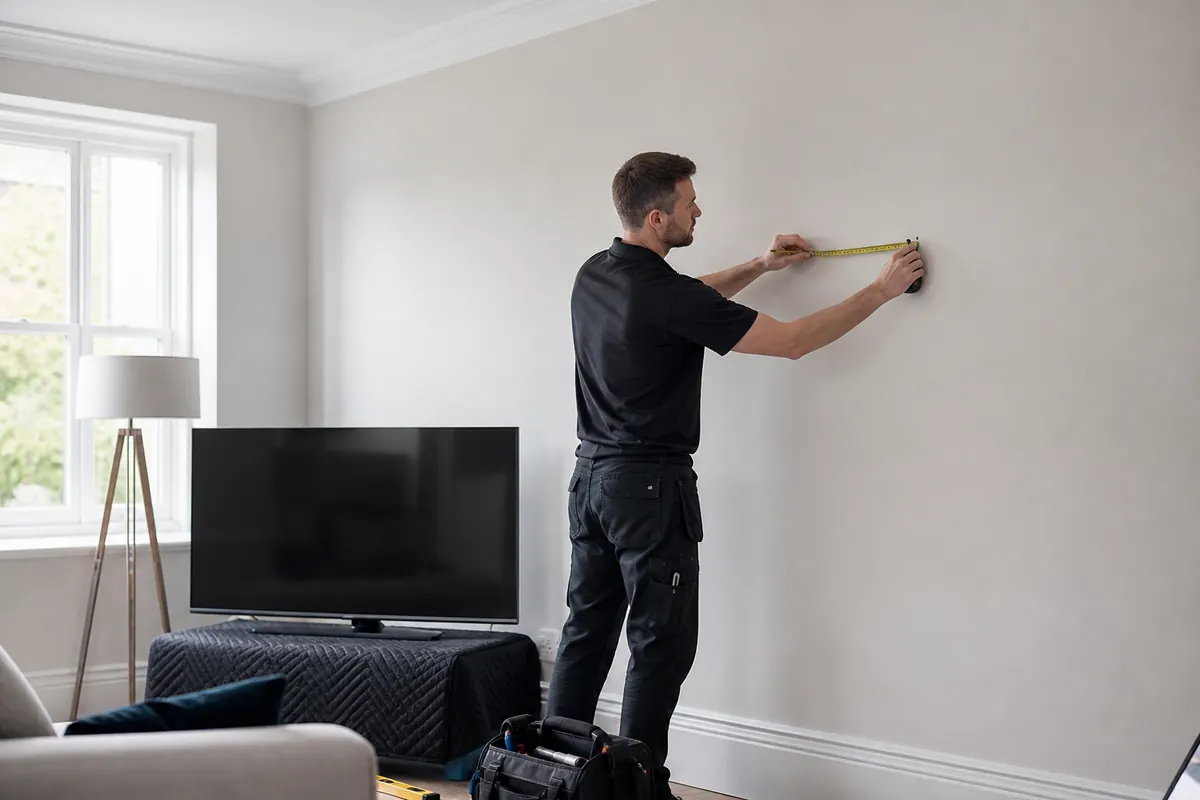
Equipment and position documented before work.
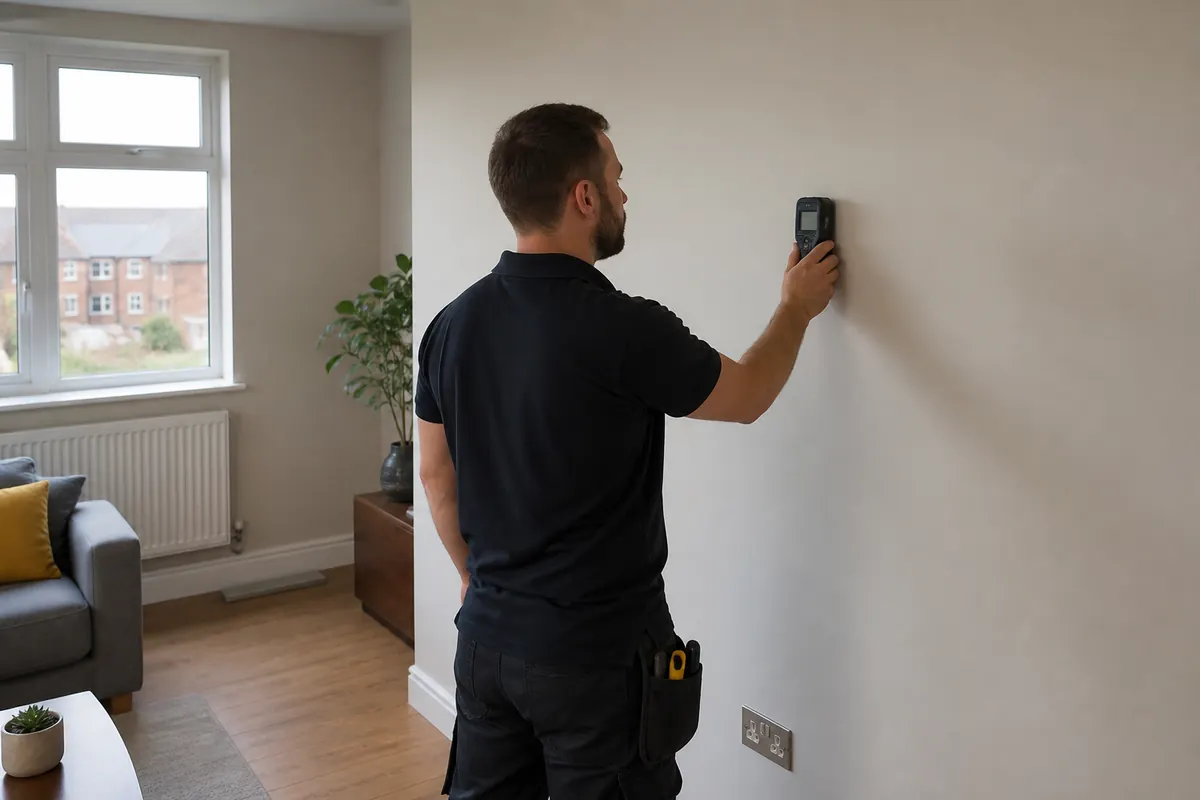
Technical and viewing checks resolved.
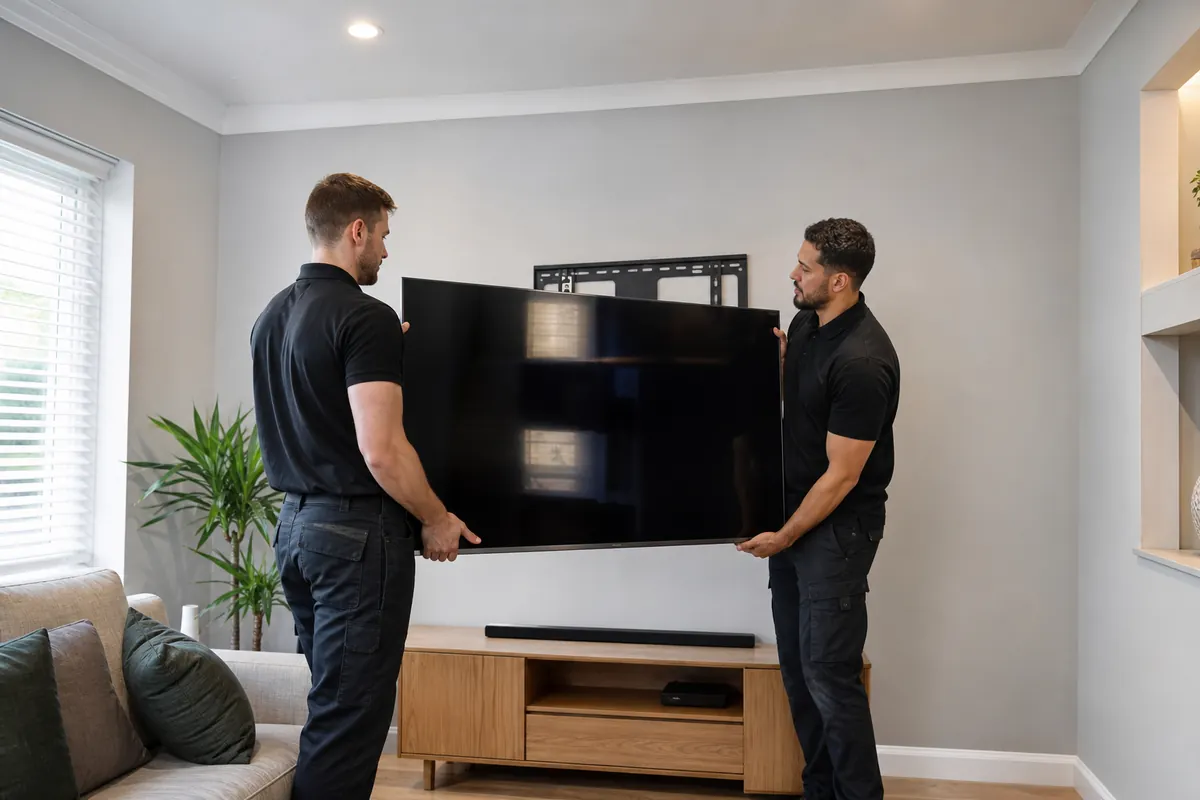
The mounted panel checked for retention.
The agreed setup checked in use.
Illustrative stages shown in different interiors, not one documented customer installation.
A property-specific approach
A house wall and an apartment wall may share a finish but have different support. Describe what is known about construction and what limits preparation in the chosen room.
For a flat, include entry arrangements and the route from lift or stairs to the room. Mention furniture that will restrict preparation space.
Provide details of specialist finishes and visible architectural features. Known earlier repairs or wall changes can be useful to the assessment.
Share relevant guidance about the wall if it exists, while allowing suitability to be assessed for the specific TV and mount.
Include stair width, tight turns and furniture at the destination. The TV’s dimensions and handling guidance inform the required team.
Confirm requirements separately where the screen is intended for a workplace or another non-domestic environment.
Practical details
A concealed signal route and an electrical power point are different tasks. Explain each desired change so construction, electrical requirements and making good can be assessed and agreed separately.
Mention any narrow doors, tight stair turns or lift restrictions and provide available dimensions. The screen’s width and handling requirements can create constraints even when its final room has plenty of space.
The wall may provide visual space without suitable support at the proposed points. Access for preparation, lifting and attaching the panel also needs consideration, together with bracket and cable requirements.
Discuss which ports you need to reach routinely. The bracket and cable arrangement should have an agreed access method; do not assume the screen can be pulled forward if a fixed mount is chosen.
Request that work explicitly. Removing a bracket and repairing or decorating the wall are separate scope questions, particularly if the new screen leaves an old fixing area exposed.
No detector guarantees that every concealed service will be found. Its readings are one part of an assessment that also considers visible fittings, available information and likely service routes.
A reference can explain the look you like, but it cannot specify your height or fixings. Your seating, furniture, screen model and actual wall construction require their own assessment.
That depends on the TV’s port orientation, connector size and bracket arrangement. Explain which connections you expect to change regularly before selecting a mount chiefly for its shallow profile.
No. Explain relevant entry, lift, loading or contractor arrangements and confirm them with the building contact where necessary. Those conditions can affect both the appointment and how equipment reaches the room.
The agreed checks include alignment, bracket engagement and retention, accessible connections, basic function and intended movement. The final arrangement should be explained before routine adjustment is left to the user.
The room comes first
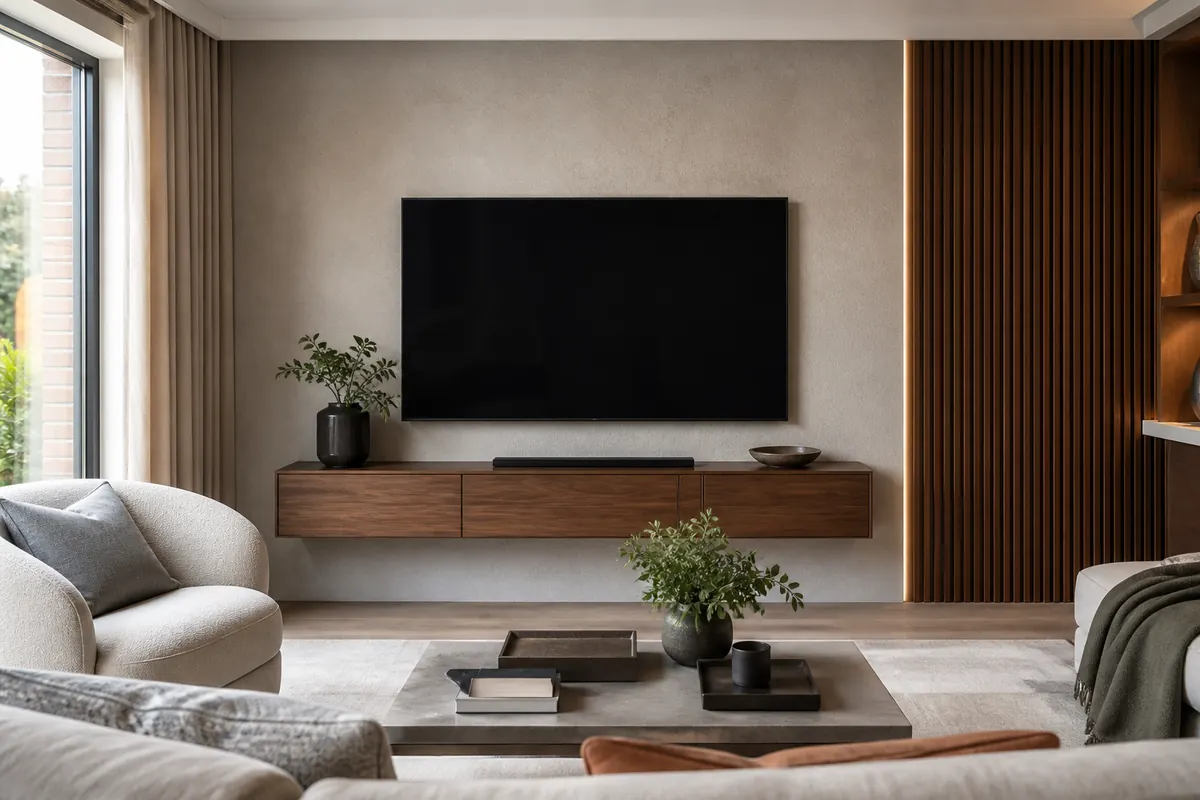
A Southfields television position should leave useful room around doors, storage and seating. Show those clearances with the screen specification so the mounting plan fits the room rather than just the wall. Include the exact TV and bracket models, wall photographs and postcode. Identify any additional work you want separately assessed.
