
Can I choose another wall later?
Tell the team; construction, services and cable routes may change the assessed scope.
Surbiton · Home technology, considered
A clear route to a well-placed screen.
For TV mounting in a Surbiton apartment, combine building access with the room and equipment details. That helps plan the handling before deciding on the final position and cable arrangement.
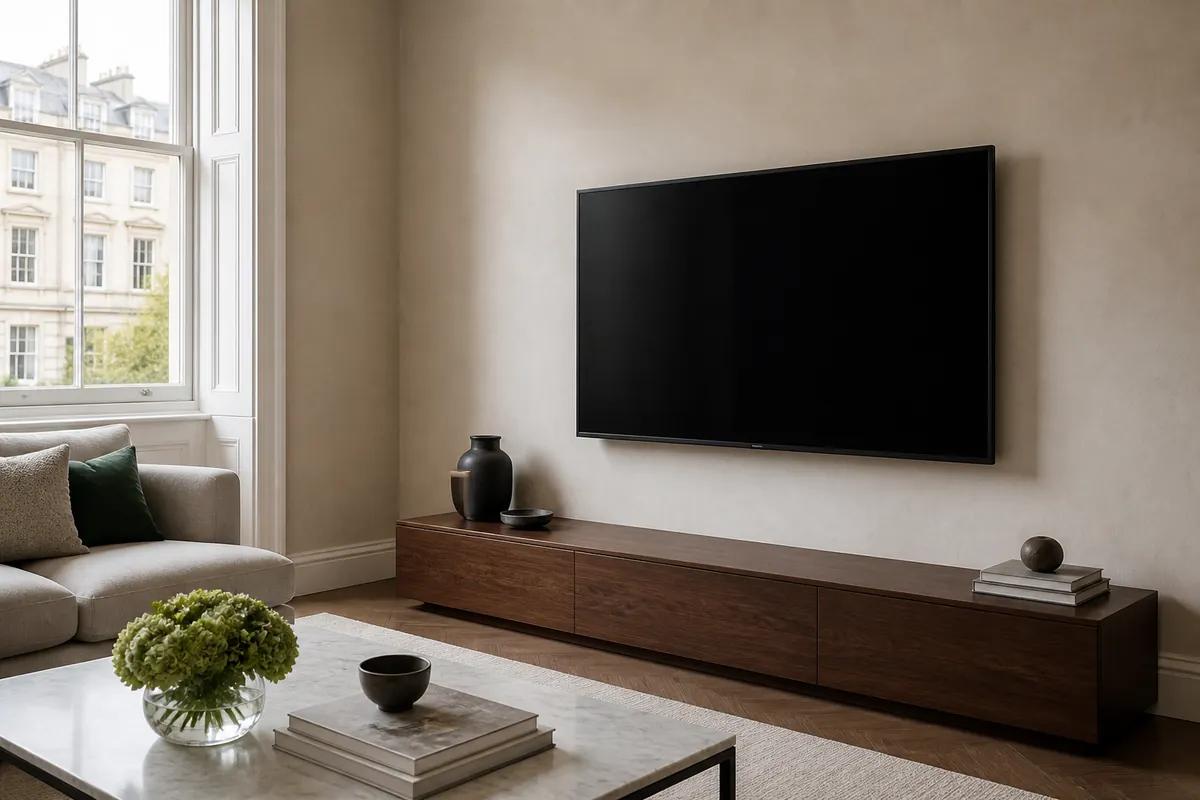
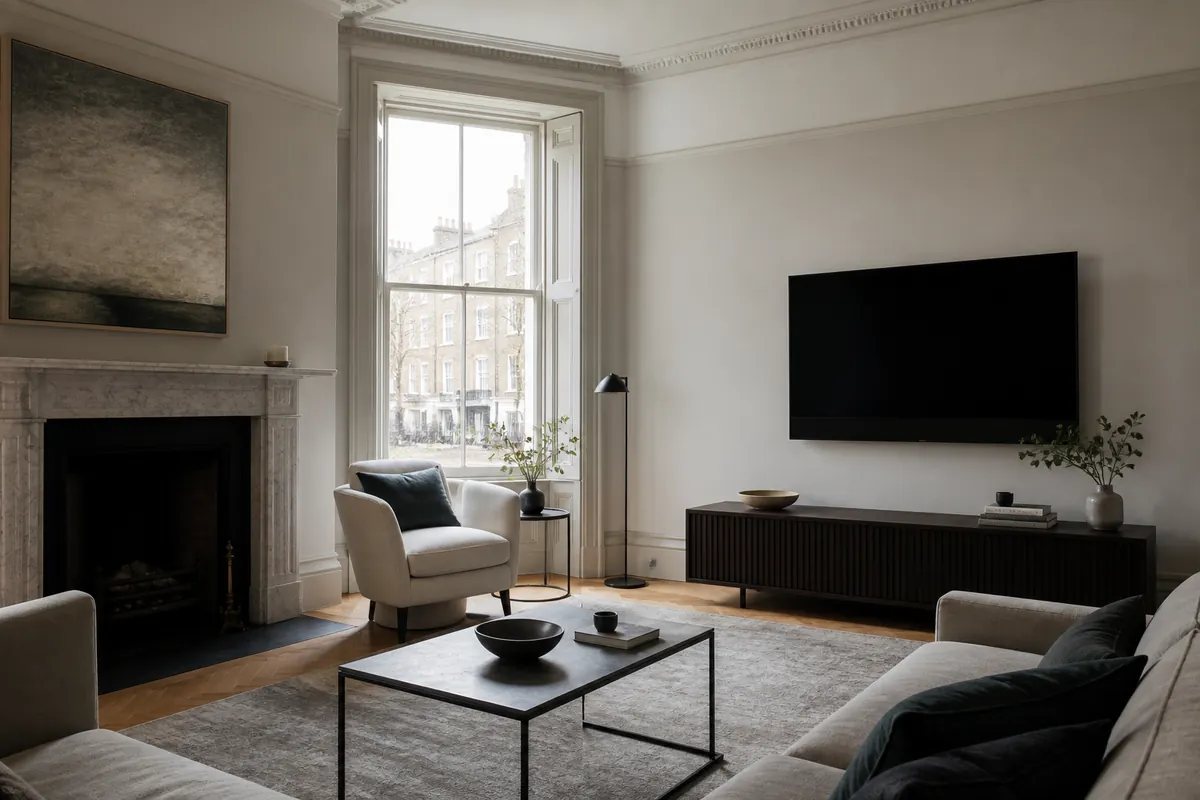
Surbiton / room by room
If your Surbiton address has a shared entrance, tell the team how access will work and whether unloading is restricted. Those details can influence the practical visit even when the mounting wall appears simple.
Inside the room, identify any furniture that cannot move. Enough preparation and lifting space must be considered alongside the desired finished position of the television.
Describe your Surbiton installation ↗Dimensions, load and movement
A thin panel can be awkward to control even when its weight appears modest. Share the exact model so handling guidance and the available working route can inform the number of people needed.
The mount must fit the VESA arrangement and carry the rated load with suitable fittings. Neither a small diagonal nor a lightweight appearance establishes a one-person installation.
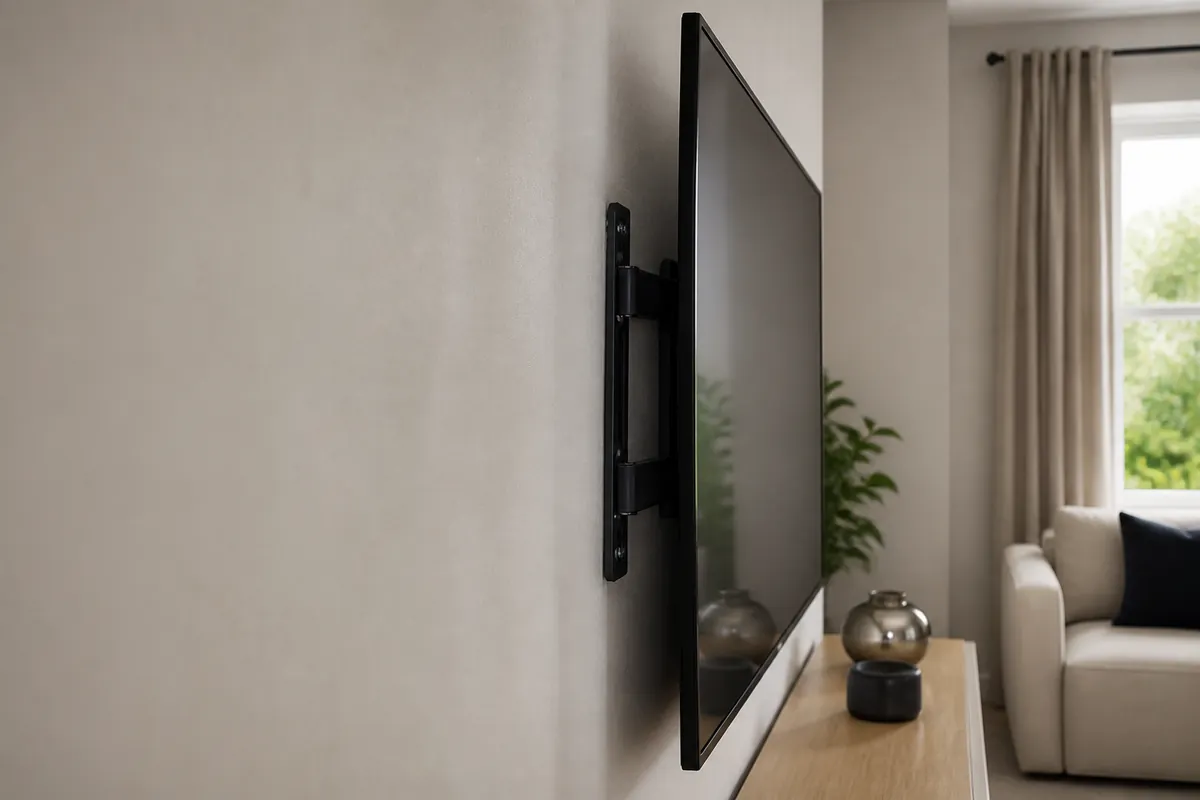
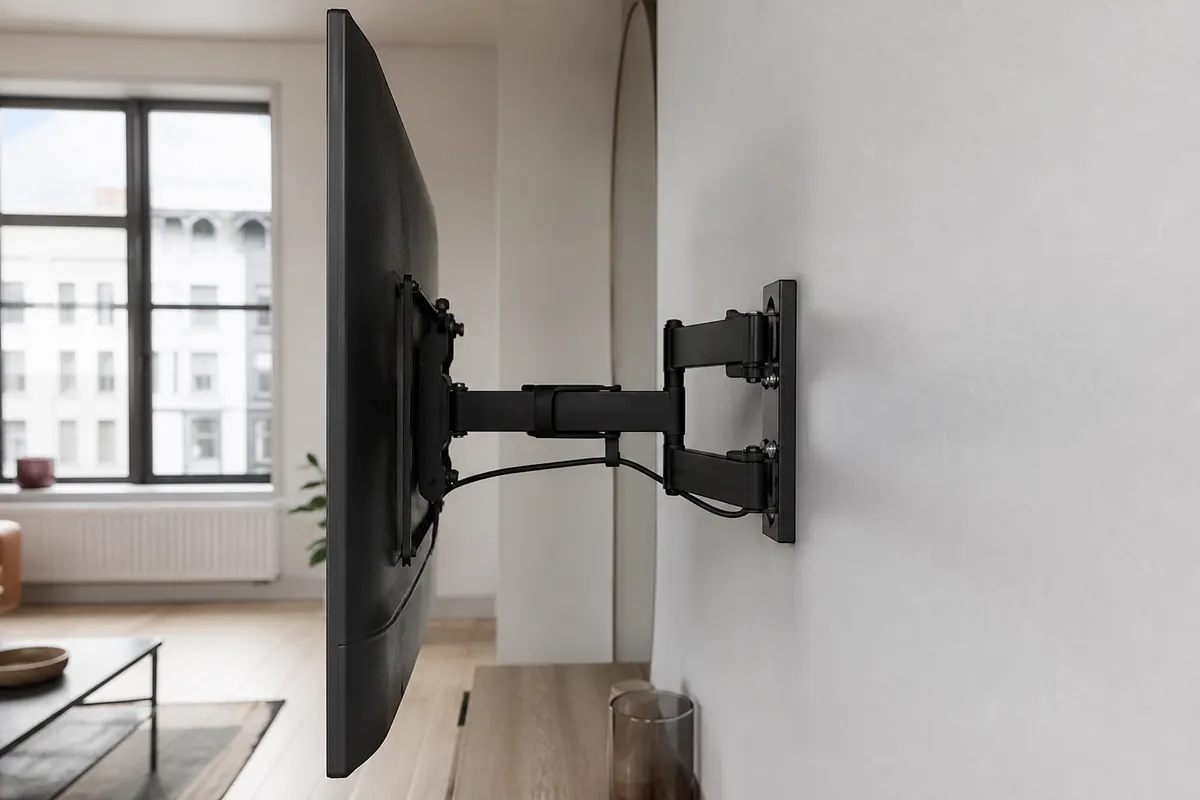
A stationary bracket still needs careful lifting. Tilt changes the viewing angle; full motion adds reach that must suit the wall and surrounding room.
| Bracket | Best suited for | Movement | Key consideration |
|---|---|---|---|
| Fixed | A stationary panel with planned lifting support | Minimal | Low weight does not remove awkward handling conditions. |
| Tilt | Vertical adjustment after the panel is secured | Vertical adjustment | The assembly and handling guidance still govern the installation. |
| Full motion | A moving screen with suitable support throughout | Extend and swivel | Assess the panel construction as well as its load. |
Practical questions
Tell the team; construction, services and cable routes may change the assessed scope.
No. Flag unknowns so assessment can address them accurately.
Reliable final dimensions and seating information are needed to avoid fixing the wrong arrangement.
No. It relates to the described and assessed work, not any alternative installation.
A labelled sketch can explain the layout, while actual measurements and support still need checks.
Discuss another route or location rather than assuming the original appearance must be achievable.
Relevant authorisation needs to be established before the work proceeds.
Equipment, wall information, desired view, connections, access and clearly separated extra work.
Address and access details
For Surbiton, confirm the entry arrangement and the contact available at the appointment. If someone else is providing access, make sure the intended screen location and any outstanding decisions are clearly recorded. Supply the complete postcode, loading conditions and carrying route. The visit needs both reliable entry and enough information to assess and agree the actual room installation.
For the wider service scope, see TV mounting in London .
Load the map when you need it.
Open map in a new tabThe support behind the surface
A screen held away from the surface places a different demand on its support from one resting close. Include the intended bracket extension when describing the wall.
Masonry must be suitable for the assessed load and leverage, with fixings chosen for its actual condition.
Board construction requires verified support appropriate to the proposed moving assembly, not just the television weight.
Timber member position and condition need to work with the wall plate under the intended movement.
A tiled or decorative face is a finish, not evidence that the underlying structure can carry an extended arm.
If suitable support cannot be established, consider a different bracket or location rather than increasing movement anyway.
Hidden pipework and wiring require consideration throughout the fixing area; no detection method guarantees finding everything.
Your practical starting brief
If the panel must negotiate a landing, tell us before discussing the wall alone. Record its model, where it is stored and the route into the room; these details help establish whether preparation and lifting need additional support. Use the choices below to describe the intended installation, then add anything the controls cannot capture, such as a tight turn or furniture that cannot move.
An enquiry summary does not confirm the team size, wall suitability or a price.
Your setup brief
Small screen · Fixed bracket · Masonry wall · Visible cables.
Send this setup by email ↗Need a new socket? Plan the electrical work separately
The view in everyday use
Use the diagram to distinguish the primary seat from occasional views that need adjustment.
A television used from a sofa and dining area may not offer the same view from both. Identify the main seat and describe how often the second position is used before selecting movement.
The necessary turn depends on the screen dimensions, mount reach and room obstructions. The wall must support the resulting leverage, and cables need room to follow the agreed adjustment.
Check the usual height from the primary seat, then compare the secondary view without sacrificing normal walking routes or furniture access.
The wall must suit the intended extended load, not simply the folded appearance.
A fireplace is a separate question
If either position suggests a fireplace wall, the heat, flue, underlying structure and hidden services still require review, with high viewing angles considered separately.
If the fireplace wall fails its checks, reconsider both viewing priorities before selecting a different mounting location.
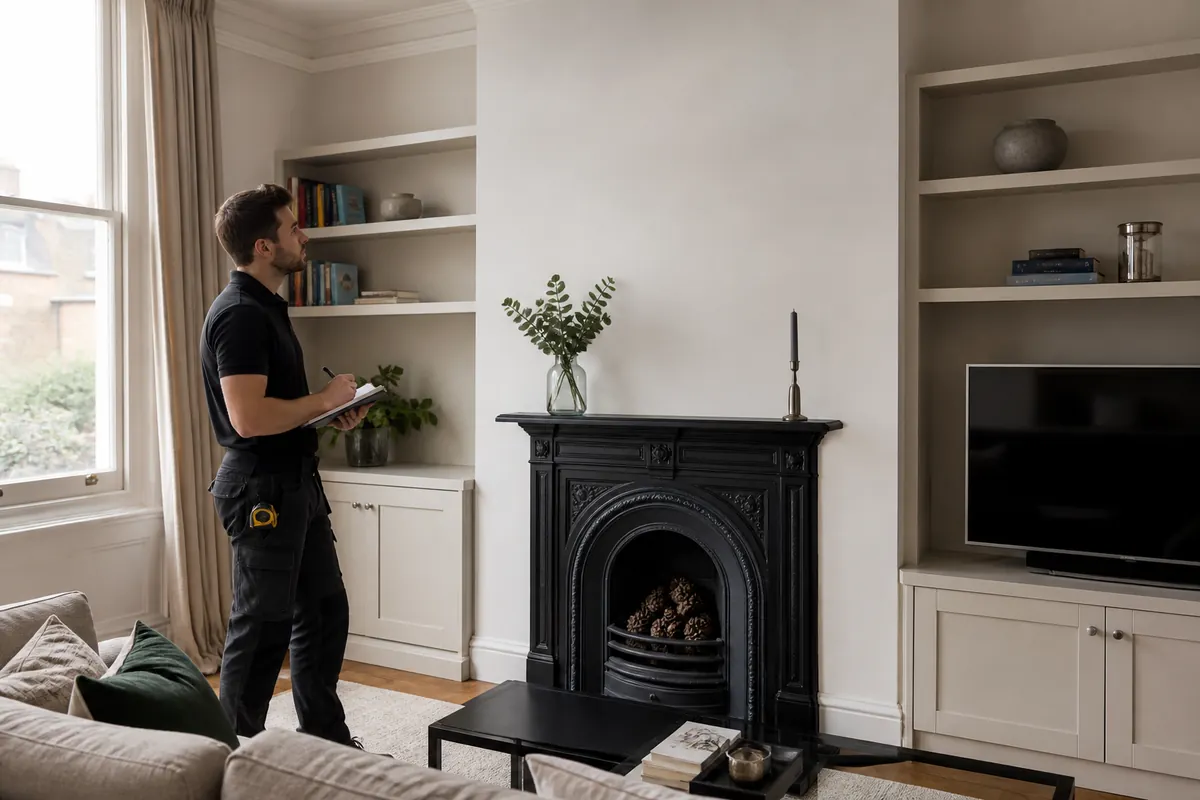
The route between screen and devices
These example drawings do not establish the extent of wall repair or the finished decorating scope.
If the requested cable route involves wall access, define what happens afterwards. Filling, surface repair and decorating can be different tasks, and the quotation should make their boundaries clear. An organised visible run or surface cover may avoid some invasive work, but the preferred appearance needs discussion rather than a promise based on an illustration. Concealment remains subject to assessment.
A new or moved socket is separately agreed electrical work, not achieved by hiding an ordinary mains lead within the wall.
Discuss a new socketIllustration only. No claim of a completed customer before-and-after installation.
An assessed scope for your installation
In your Surbiton enquiry, say whether an existing television and bracket need removal, whether any components are proposed for reuse and what marks will remain after the new panel is fitted.
Assessment must establish the new equipment’s compatibility and the wall condition. Repairing old holes or redecorating should be listed as requested work rather than assumed to accompany replacement mounting.
Request my mounting quote ↗| Installation | Pricing | Main variables |
|---|---|---|
| Standard fixed-bracket mounting | Quote after assessment | Removal and condition of retained components |
| Large TV / full-motion bracket | Quote after assessment | New load, altered dimensions and bracket movement |
| Mounting + additional cable / electrical work | Detailed quote | Redundant routes and requested surface repairs |
The complete supported arrangement
Bolts, spacers and plugs occupy real depth behind the panel. A close-fitting appearance must be checked against the equipment instructions and the room’s access constraints.
| Factor | What is checked | Why it matters |
|---|---|---|
| TV | Mounting recesses, attachment pattern and manufacturer information | Rear shape can affect the required attachment arrangement. |
| Bracket | Appropriate bolts, spacer arrangement and supported load | Fittings must work as specified rather than filling an arbitrary gap. |
| Wall | A suitable assessed fixing strategy behind the visible finish | A slim finish still relies on assessed structural support. |
| Position | Clearance for the panel, release mechanism and nearby surfaces | Access to the release mechanism must remain workable. |
| Cables | Port orientation and accessible lead connections behind the screen | Plug clearance belongs in the depth decision. |
The work in an agreed order
Gather the television and bracket model information and identify missing components. This helps separate a ready-to-assess installation from one still waiting on suitable equipment.
The wall review establishes construction, condition and service concerns. Compatibility includes the load, VESA and required bolts or spacers, while access determines the handling arrangements.
Missing or unsuitable hardware needs resolving before the assembly can be accepted.
Check the final screen position against the assembled bracket geometry.
Agree the viewing centre and use the assessed fixing method. The screen is then lifted with sufficient support and the mount’s engagement and securing features completed.
Complete every required securing component; a hanging panel is not enough.
Keep the connection work within the agreed and compatible assembly.
Connect only the agreed accessible equipment, review alignment and permitted travel, and explain adjustment. If parts or support prove unsuitable, the plan needs discussion before proceeding.
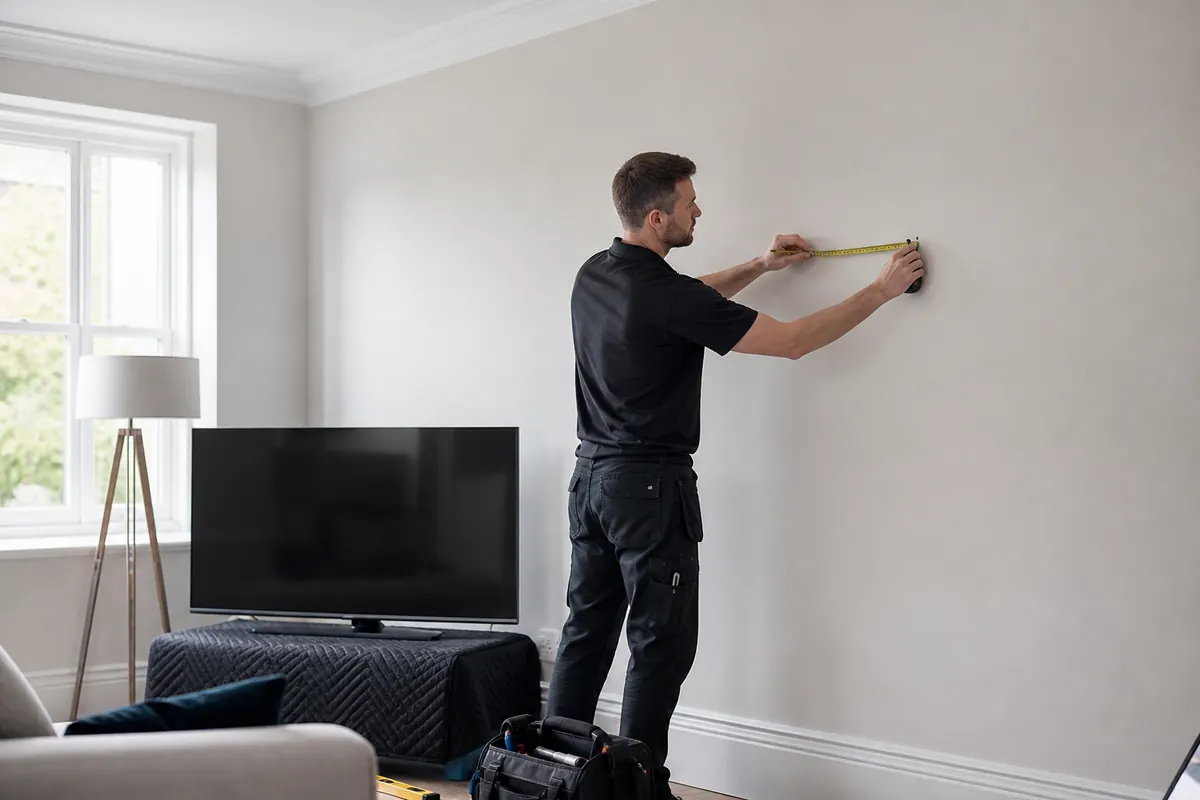
The proposed equipment and room before assessment.
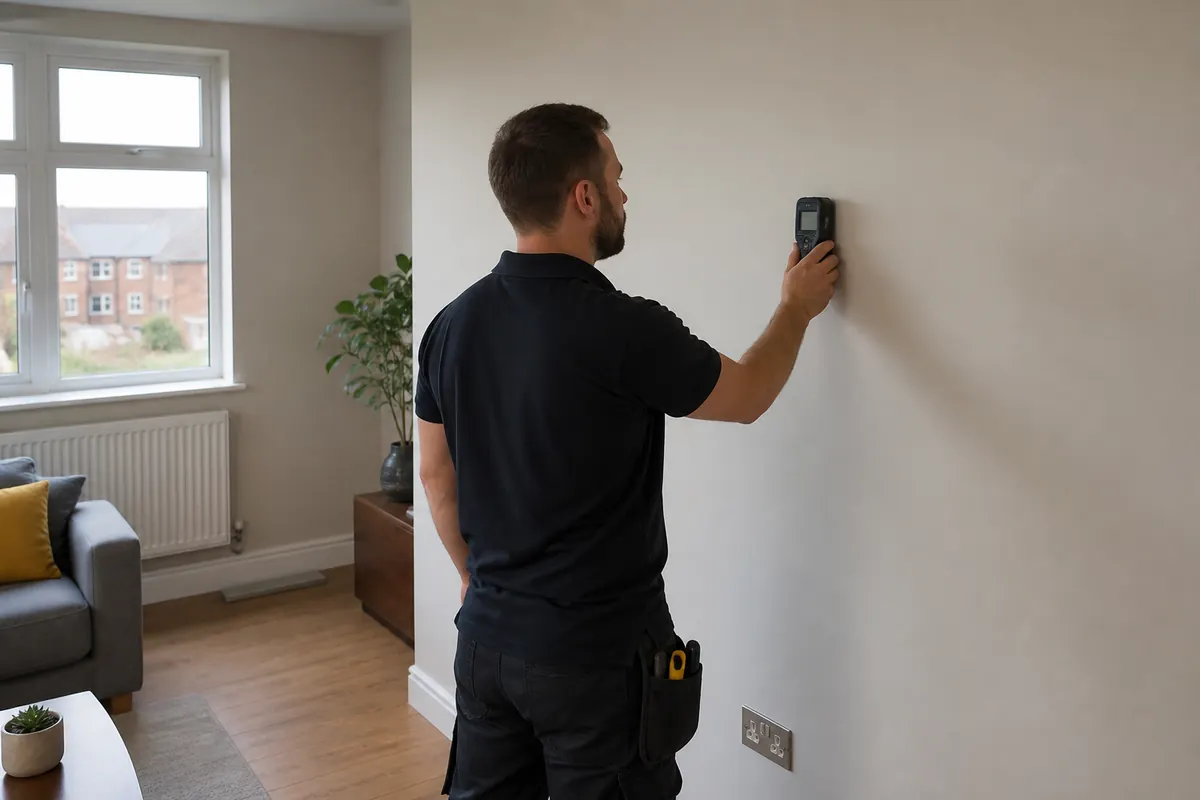
The accepted support and viewing arrangement.
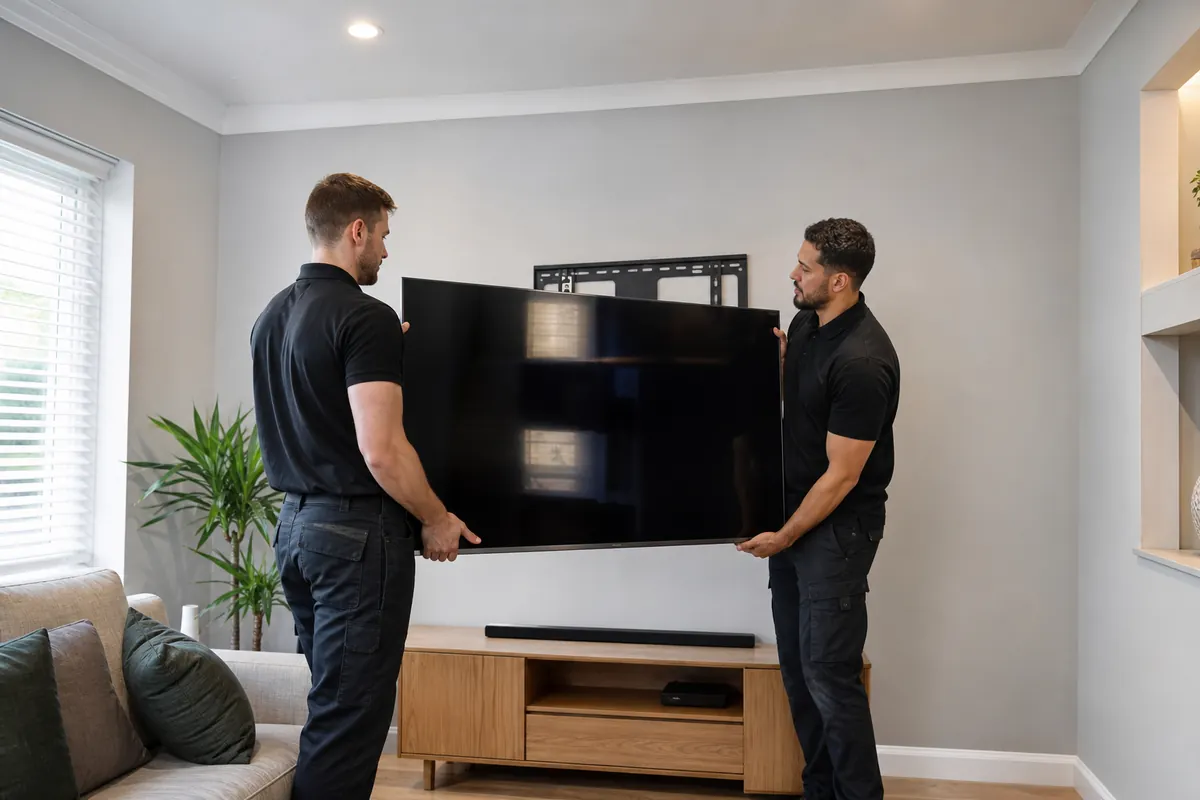
A supported panel secured to its compatible bracket.
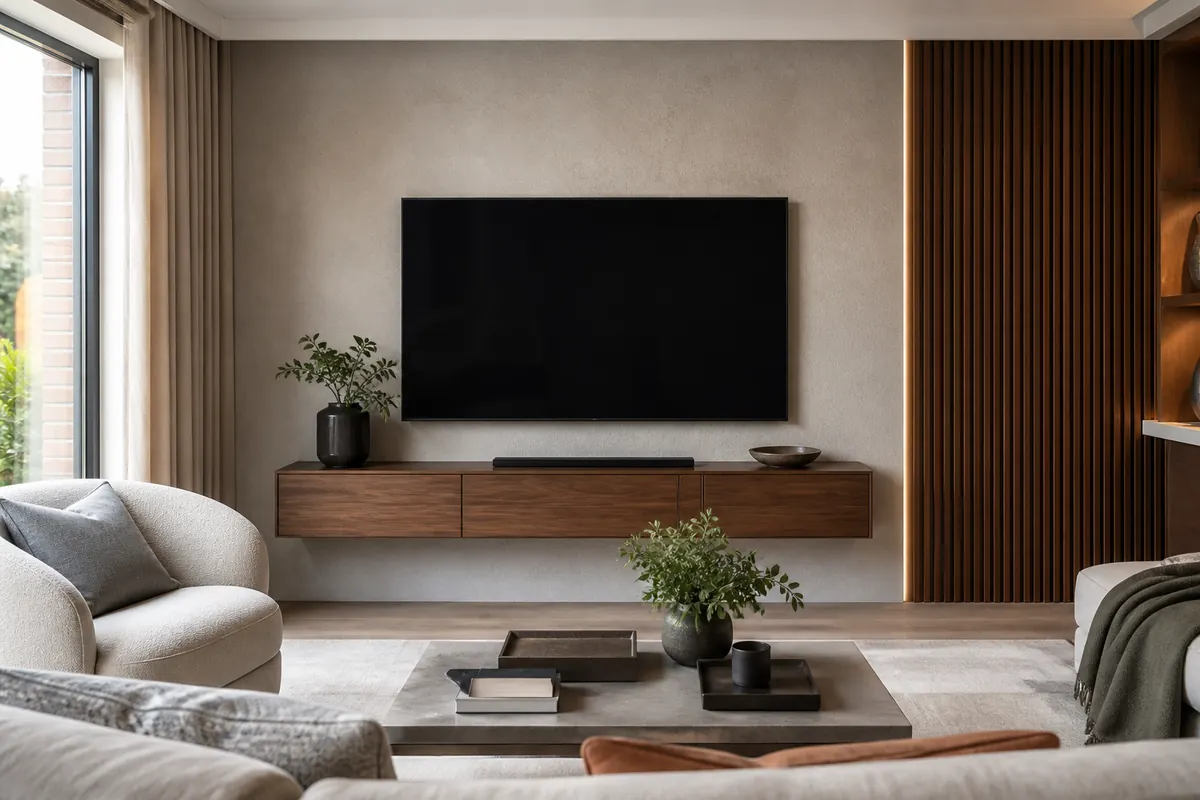
The agreed connections and usable final view.
Illustrative stages shown in different interiors, not one documented customer installation.
The individual room and building
If the Surbiton television shares space with work, dining or storage, explain those uses. The useful screen position should preserve the room’s ordinary functions as well as the main viewing seat.
In a flat, show the route past the panel and any desk or dining chair within its intended movement.
In a period interior, decorative features may constrain placement but still require separate structural assessment.
In a newer development, provide partition information and show fitted furniture that affects the screen’s resting position.
In a house, identify the installation floor and whether the room needs furniture rearranged before handling can begin.
Workplace or shared commercial use needs a clearly described brief and confirmation that the proposed installation is in scope.
Practical details
Ask when arranging the work. The handling instructions, packaging and available preparation space influence how the panel should be readied; do not lift it alone merely to take a better photograph.
No. Its load and leverage must suit the identified construction and fixing strategy. Some walls or positions may not support that arrangement, even where the bracket fits the television itself.
Not necessarily. Panel dimensions, construction, manufacturer handling requirements and access can make a light screen awkward. The team requirement should follow the complete handling assessment rather than weight alone.
Possibly, but the actual angles and obstructions need assessment. Describe both viewing positions; do not assume that a bracket labelled full motion can reach every seat or remain suitable at maximum extension.
Not necessarily. Ask which repair and decorating stages are included and how the finish will be matched. A concealed-route request should specify the expected completion standard instead of relying on an undefined phrase.
Not necessarily. Retained parts may be unsuitable, old fixings may need review and additional removal or repair may be requested. The price should follow the assessed replacement scope rather than the existence of an earlier installation.
Their need and arrangement depend on the television and mount design. The correct attachment is more than hole alignment; fittings must suit the manufacturer requirements and must not be improvised for appearance alone.
Missing equipment should be reviewed rather than bypassed. The bracket must be assembled and secured as required; an incomplete arrangement should not be treated as finished merely because the screen appears to hang in place.
Describe both views and their priority. The wall support, bracket geometry, cable allowance and room clearance determine whether that movement is practical without interfering with the room’s other uses.
Explain the arrangement in advance and make the positioning brief clear. Access alone may not settle questions about the final height, scope changes or room layout that need agreement before work proceeds.
The room comes first
For TV mounting in a Surbiton apartment, combine building access with the room and equipment details. That helps plan the handling before deciding on the final position and cable arrangement. Flag stairs or lift restrictions for the panel.
