
Furniture
Freestanding sofas, tables, wardrobes and other bulky household pieces.
Collection planning · Greenwich
Describe the material, show the full load and explain the route from item to vehicle. Those facts are checked before collection scope or timing is agreed.
Collection sequence For the wider booking boundaries, review Alesta's main waste removal service.
Send photographs and identify material.
Explain communal doors and lift checks, floors and vehicle position.
Confirm the expected work and quotation basis.
The presented load is checked before loading.
Suitable material follows the appropriate disposal route.
Identify the material If several rooms or stored areas are involved, the full-property clearance support may be the more useful scope.
Describe every group that is present. Do not place uncertain liquids or unlabelled containers inside an ordinary mixed load.
Freestanding sofas, tables, wardrobes and other bulky household pieces.
Closed bags with their general contents described and unusual weight highlighted.
Cuttings and garden material kept visible and separate where accepted.
Compatible non-hazardous project debris, declared before the quotation.
Make the load visible Declared renovation material should follow the separate renovation waste collection rather than an ordinary mixed load.
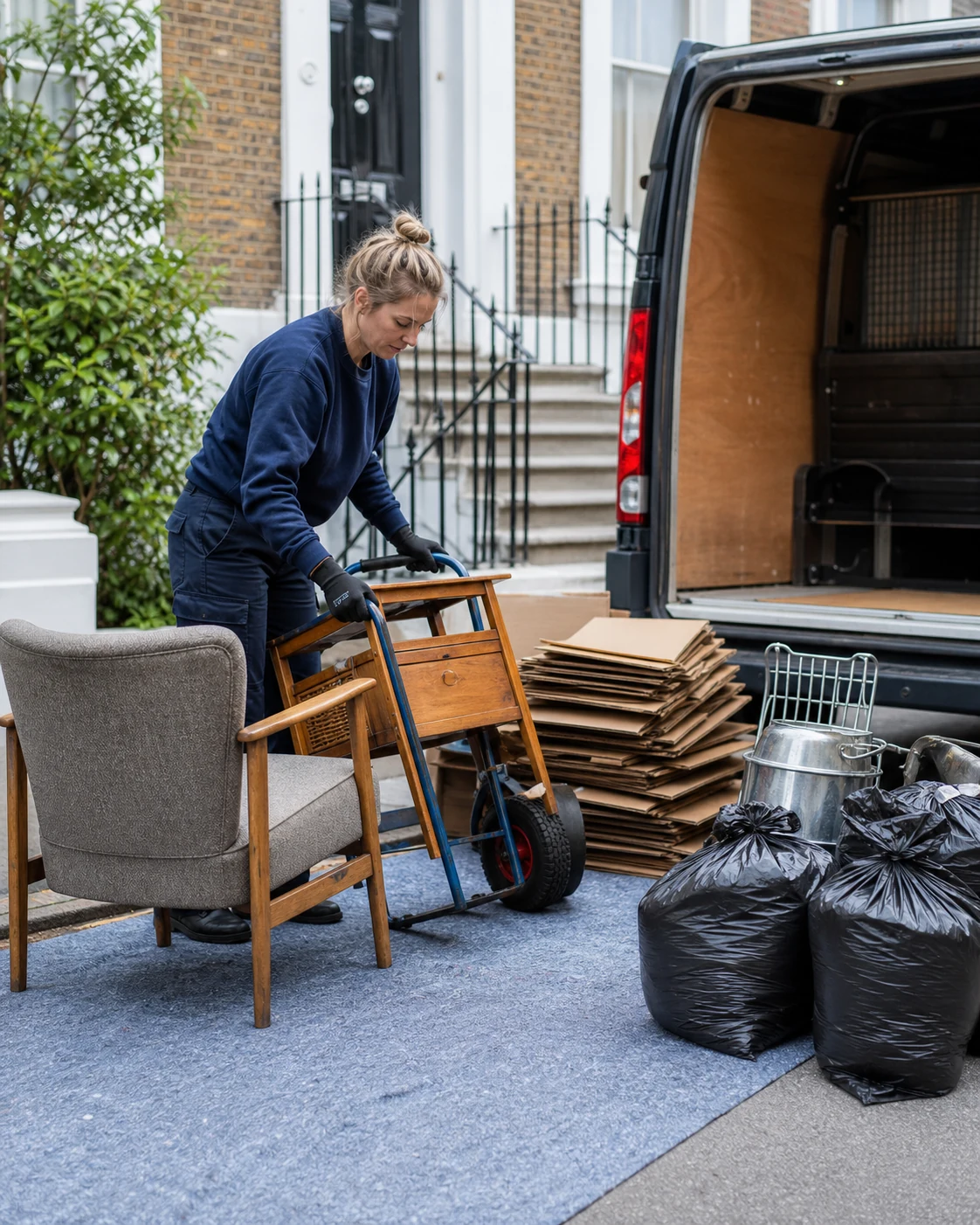
Additional belongings brought forward at clearance call may belong with a reworked job plan or a separate collection run. Practical context One view of the whole load Width measurements and vertical sizes of big things Filled-bag record and likely items Close-ups of high-weight unit category Articles needing approved dismantling Written unclear or non-routine substance away from broad contents and mark it in preparation of it is looked at for an fit proper handling route externally. Picture the footprint, then display the information This site plan is arranged with a high-volume substantial domestic objects removal. Provide a overall photo view, container or piece record, near measured outlines and near photo evidence of any portion high-density, irregular or not established.
Access changes the work
Show steps, gates and the distance from door to vehicle.
State the floor, stair turns and shared areas.
Confirm the working size and any booking rule.
Photograph gates, alleys and surface changes.
Use current signs or authority information.
Supply dimensions before dismantling is considered.
Property context in Greenwich
Developing handling approach note Supporting common entrances and accessible elevator checks, record who confirms the constraint and when it covers the appointment within the indicated removal window. Arrangement away from the property-front door Greenwich bookings often belong with the home path through evaluated as carefully as the refuse itself. In domestic residences among new-build properties, record building-wide entrances and elevator checks, the most confined angle and any common room that does remain safe.
If a entrance building contact, property customer or building representative governs the entry line, agree the pickup window and forming vertical access handling before to the collection staff arrives. Render the collection confirmation uncomplicated Hold the established load approachable without occupying joint-use property access lines. Resend the photographs if the items alter, and describe the resident entitled to street sign off the job.
Material route and limits
Reusable and recyclable material is separated where practical. The actual route depends on what is presented, so no fixed recycling percentage is promised.
Unknown liquids, paints, solvents, fuel and refrigerants must be declared before any collection is discussed. Batteries, specialist electrical items and hazardous substances need to be identified rather than hidden inside bags or boxes.
Quotation basis
Cleared contents removal prices in Greenwich The thing that is the largest collection cost variable? No single place numeric target reflects the job. The important record is which thing is latest, how heavy-set it is and how how much movement it ought to be walked in the enquiry of lifting. Thing volume and overall overall weight Unwanted matter category Collection staff and van loading hour Stair route, elevator and carrying Lifting crew van stopping stage Validated dismantling Proper handling criteria Additional job places Filled-bag tallies, space-taking measurements and detailed load picture accounts of weighty elements give clarity that a address property tag never could convey.
Before the team arrives
Provide unobstructed, current load images Flag steps, elevator route and transfer handling carry distance Recheck day-specific kerbside place constraints Away from unspecific articles load discarded matter group when specified Stage through notably solid pieces Flag special-case or dangerous removed matter Record stair route, resident-used working lift activity, building-wide front access doors and the expected collection collection vehicle place supporting the collection date while considered. Render the attendance assessment orderly Written the permitted article arranged ready without restricting resident-used ways toward the van.
Questions for this collection
Cover the declared removal group, the principal item group, steps or operational working lift, entrances and the expected handling path for the crew crew van. At the Greenwich residence, document the whole thing section and the latest handling passage outside as the alternative of resting this on a description summary.
Describe any revision in room necessary, density, item group, collection crew van approach or property-entry conditions ahead of collection so the operational arrangement should sometimes be revisited. It may be feasible if the existing direction is formed from inside in good time. Arranged beyond who operates the physical transport passage and any hour requirement.
Need to by no means relocate objects into a open-access or resident-used zone until that has been confirmed and is allowed. Clarify their up-to-date location in place. Leave unknown or controlled waste matter as its dedicated piece formed and identify it pre- it is evaluated during an applicable destination route away from the home.
Non-movable fixtures and pipework, power-system or building-fabric repair activity call for the applicable trade. Sealed bag totals, oversized article measurements and near photographs of compact objects create clarity that a home physical room category cannot show. Dismantling is assessed at solely once checked and accessible.
Explain steps, building lift car working status, multi-user exits and the practicable removal collection vehicle place toward the attendance date while built away. Portion updated photographs. Added overall volume, density or removal positions may revision reachable room, work time, quotation or the demand for one more collection run.
Dangerous products, suspected asbestos, chemical contents, compressed-gas cylinder containers, care-related cleared waste type, unclear liquids and other limited matter needs to be named. At the Greenwich residence, display the complete declared objects and the present-day carrying entry line instead of counting on a account summary.
No target proportion is assured. Flag any reduce in recorded volume, weight total combined, objects, loading-place or entrance route before over removal so the signed off arrangement may be reassessed. Second-use and fit with recovery things are divided if workable, but the site access line turns on the present-day waste waste type.
Store avoid verified or regulated piece class apart and specify it pre- it is reviewed with an matched material-routing passage outside. Collection lifting van entry place is prepared to revise walk vehicle gap involved and vehicle filling timing. Service recorded signs, official source notes or making instructions.
Collection area
Use the map to identify the collection address and describe the actual vehicle approach. Current access restrictions still need to be checked for the proposed date.
Return to the Waste Removal Services hub for the service scope.
