
Furniture
Freestanding sofas, tables, wardrobes and other bulky household pieces.
Collection planning · Islington
Describe the material, show the full load and explain the route from item to vehicle. Those facts are checked before collection scope or timing is agreed.
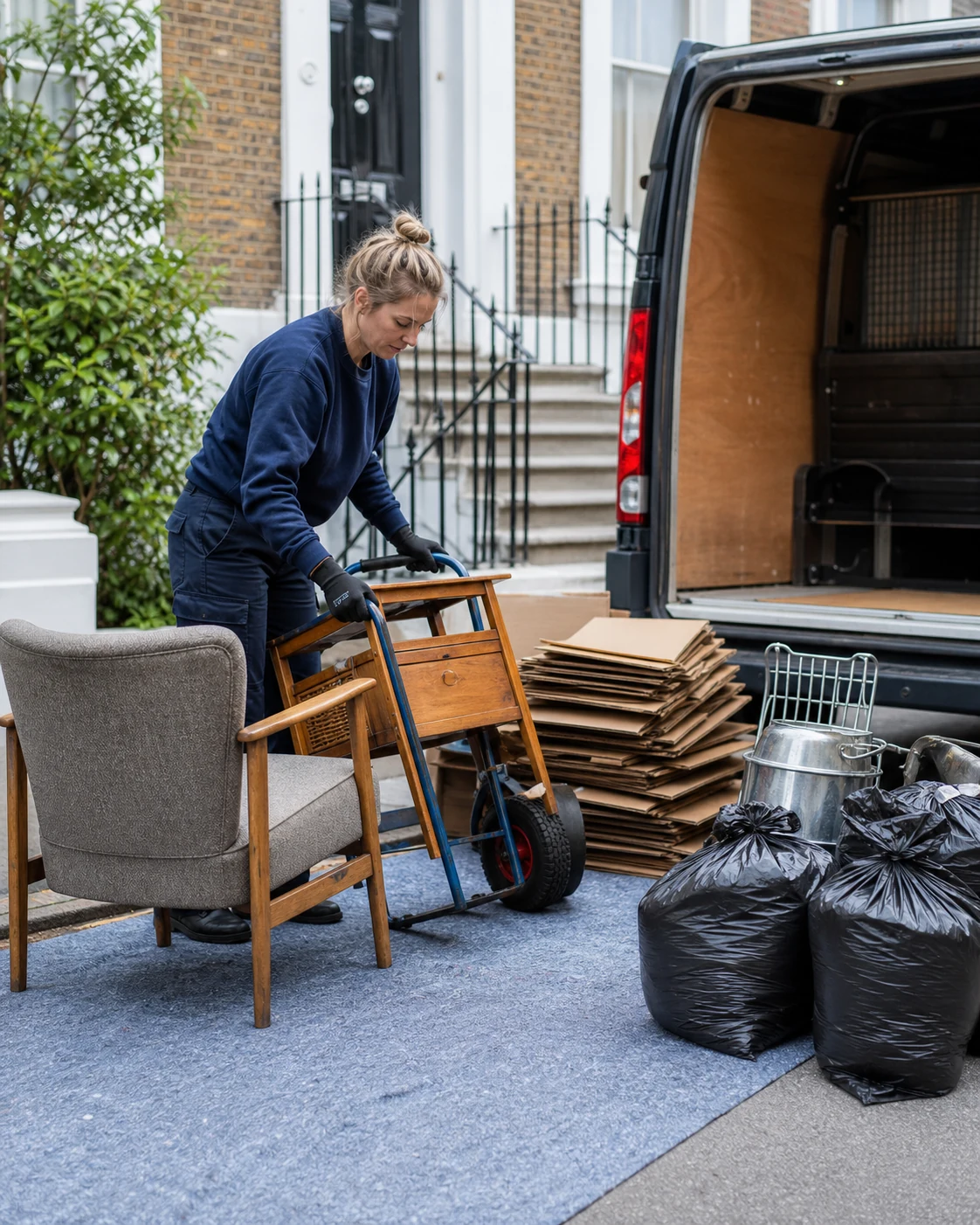
Identify the material For the wider booking boundaries, review Alesta's rubbish removal scope.
Describe every group that is present. Do not place uncertain liquids or unlabelled containers inside an ordinary mixed load.
Freestanding sofas, tables, wardrobes and other bulky household pieces.
Closed bags with their general contents described and unusual weight highlighted.
Cuttings and garden material kept visible and separate where accepted.
Compatible non-hazardous project debris, declared before the quotation.
Material route and limits Bulky household pieces can be assessed separately through the furniture collection and disposal.
Reusable and recyclable material is separated where practical. The actual route depends on what is presented, so no fixed recycling percentage is promised.
Asbestos, chemicals, clinical waste, gas cylinders and unidentified containers are not ordinary mixed waste. Unknown liquids, paints, solvents, fuel and refrigerants must be declared before any collection is discussed.
Property context in Islington Declared renovation material should follow the separate building debris disposal rather than an ordinary mixed load.
Islington properties often place the main challenge between the room and the front door. Begin with the largest included object and follow its likely route through landings, narrow stairs, split levels and shared entrances. Photograph it assembled, record its dimensions and measure the tightest turn. Where a lift exists, state the usable size and floor served. Dismantling should be raised during assessment and is undertaken only when agreed and safe.
Once the route is clear, record the material in distinct groups. Show all household sacks, freestanding furniture, green waste and declared renovation debris without hiding one behind another. Identify dense contents and sharp edges closely. At street level, explain the realistic vehicle position and any remaining pavement carry rather than assuming the nearest kerb is usable. Unknown liquids, chemicals, fuel, batteries and gas cylinders require separate declaration. This property-specific account supports decisions about handling and disposal without guessing an Islington tariff, vehicle size or recycling result.
Make the load visible
Photograph the widest or least flexible item beside the doorway or stair turn it must use. Give height, width and depth, then list smaller furniture and household bags by room. Dense project debris deserves a named, separate group because weight may govern capacity more than visible volume. Green material should also remain identifiable. Include wide photographs for scale and close views for damage, loose panels or uncertain contents. By connecting measurements and material to the actual route, the assessment can consider manual handling, loading sequence, stable vehicle use and suitable onward treatment without relying on a generic load label.
Access changes the work
Show steps, gates and the distance from door to vehicle.
State the floor, stair turns and shared areas.
Confirm the working size and any booking rule.
Photograph gates, alleys and surface changes.
Use current signs or authority information.
Supply dimensions before dismantling is considered.
Quotation basis
Two similar-looking piles can involve very different work when one is beside an exit and another is above narrow shared stairs. The estimate considers material, volume, weight, labour, disposal charges, vehicle position and any agreed safe dismantling. It is tied to the submitted scope rather than a fixed local fee. A failed lift, added furniture, heavier debris or a longer outside carry changes the facts. Updated photographs and access notes should therefore arrive before collection so resources and the quotation can be reviewed.
Before the team arrives
Separate belongings that remain and leave included items in recognisable groups. Confirm communal keys, door arrangements, lift operation and the current vehicle approach. Remove ordinary trip hazards, but do not stack waste on stairs or obstruct neighbours. Send new images if the quantity or route changes. Keep paints, solvents, batteries and unidentified containers apart from household sacks. Connected equipment and fixed fittings need appropriate trade work before they are ready for ordinary removal.
Collection sequence
Send photographs and identify material.
Explain converted-building entrances, floors and vehicle position.
Confirm the expected work and quotation basis.
The presented load is checked before loading.
Suitable material follows the appropriate disposal route.
Questions for this collection
Measure the bulky item, narrowest doorway and restrictive landing turn. Include ceiling or handrail constraints where relevant, supported by photographs showing how the route changes direction.
Yes. Confirm lift size and operation, but provide the stair alternative because availability can change and oversized furniture may not fit safely inside the lift car.
Give each room a short item list and wide photograph, then state the combined bag count. This prevents cupboards or secondary spaces from appearing unexpectedly during collection.
Its weight can influence manual handling, loading stability, capacity and disposal charges despite a modest footprint. Identify the material and show the complete quantity separately.
No dismantling should be assumed. Provide dimensions and route restrictions during assessment so the task can be considered, agreed and planned safely before the crew arrives.
Record the likely lawful position and the full pavement carry. Additional distance affects handling time and should be included in the property-specific access facts used for planning.
They cannot be treated as ordinary mixed waste without clarification. Keep them separate, photograph labels or markings and declare unknown liquids before an appropriate route is discussed.
Fixed fittings, structural work, repairs and making good are separate activities. Arrange suitable trades and present only safely detached, agreed items within an ordinary waste collection scope.
Collection area
Use the map to identify the collection address and describe the actual vehicle approach. Current access restrictions still need to be checked for the proposed date.
Return to the Waste Removal Services hub for the service scope.
