
Collection planning · Angel

Arrange rubbish removal in Angel without guessing the load

Describe the material, show the full load and explain the route from item to vehicle. Those facts are checked before collection scope or timing is agreed.

  • Photographic load assessment
  • Access and carrying route considered
  • Restricted material declared first
  • Quotation based on the assessed work
Call 020 3608 3976
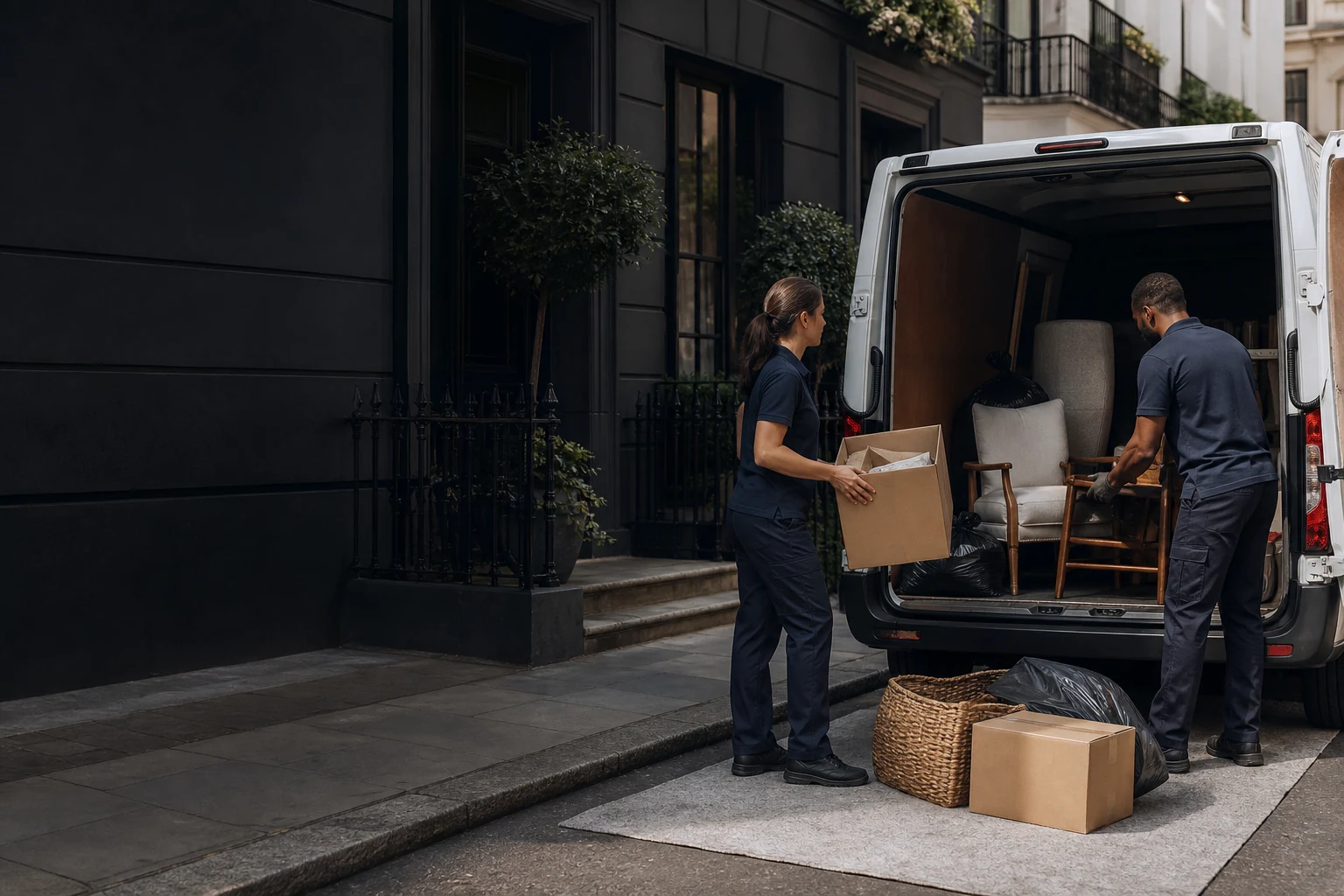
Waste removal team loading sorted household items outside a London home
bagged household material after sorting planned around split-level layouts and stair carries

Make the load visible For the wider booking boundaries, review Alesta's rubbish removal scope.

Separate compact weight from awkward physical volume

A stack of project sacks may take little floor space but weigh more than a large group of light furnishings. Identify contents, give a bag count and show the pile from far enough away to reveal depth. Measure bulky objects that must cross split levels and mention any loose parts already removed. Keep green material apart, and isolate unknown containers for clarification. State which rooms are included and whether the same item appears in multiple images. These distinctions help the reviewer consider lifting, balance, loading order, available vehicle capacity and appropriate routes without treating every photographed cubic space as equivalent.

Quotation basis If several rooms or stored areas are involved, the house clearance option may be the more useful scope.

How split-level handling shapes an Angel quotation

What is the biggest cost factor?

The assessed figure combines declared material, volume, weight, crew time and applicable disposal charges. Internal steps, shared doors, long pavement carries and the feasible vehicle position describe the handling work. Safe dismantling enters only when discussed and agreed. There is no automatic Angel rate or universal figure for split-level properties. Additional bags, newly identified dense debris or an access change may affect capacity and labour, so the quotation should be checked against updated photographs before the visit rather than stretched to cover a different collection.

Volume and weightMaterial typeCrew and loading timeStairs, lift and carryVehicle positionAgreed dismantlingDisposal requirementsMultiple collection points

Access changes the work Declared renovation material should follow the separate building debris disposal rather than an ordinary mixed load.

Match every large item to the exit route

Ground floor

Show steps, gates and the distance from door to vehicle.

Flats and stairs

State the floor, stair turns and shared areas.

Lift access

Confirm the working size and any booking rule.

Rear access

Photograph gates, alleys and surface changes.

Restricted parking

Use current signs or authority information.

Bulky pieces

Supply dimensions before dismantling is considered.

Identify the material

What is being cleared from this Angel address?

Describe every group that is present. Do not place uncertain liquids or unlabelled containers inside an ordinary mixed load.

01

Furniture

Freestanding sofas, tables, wardrobes and other bulky household pieces.

02

Bagged household material

Closed bags with their general contents described and unusual weight highlighted.

03

Green material

Cuttings and garden material kept visible and separate where accepted.

04

Renovation debris

Compatible non-hazardous project debris, declared before the quotation.

Before the team arrives

Check every level and protect the agreed scope

Walk from the furthest item to the street and remove routine obstructions from steps and shared passages. Keep objects that are staying clearly separate, and leave collection groups recognisable from their photographs. Confirm keys, communal entry and current loading information. Report additions or a changed route before arrival, allowing the operational plan to be checked. Restricted substances remain isolated and declared; plumbing or electrical disconnection, structural removal and fixed fittings require separate appropriate trades.

  • Send clear, recent photographs
  • Mention stairs, lifts and carrying distance
  • Confirm current parking restrictions
  • Separate material where requested
  • Highlight unusually heavy items
  • Declare restricted or hazardous material

Property context in Angel

Plan an Angel collection around split levels and the final kerb carry

An Angel clearance brief should begin with the movement between levels. Photograph each included room, then trace the carrying route through internal steps, half-landings, communal doors and the main entrance. Record the floor and every tight turn. For a sofa, cabinet or table, provide assembled dimensions and show its narrowest exit point. Any proposed dismantling belongs in a prior safe agreement rather than an assumption made when the team arrives.

The outside section can be equally important. Identify where loading could realistically occur and estimate the distance from the doorway, noting any controlled access information. Organise the waste into clear categories: bagged household contents, bulky furniture, green material and declared renovation debris. Photograph dense or sharp matter separately. Paints, chemicals, batteries, fuel, gas cylinders and unidentified liquids remain restricted and must be declared outside the ordinary group. Combining levels, loading position and material facts supports sensible crew and disposal planning without inventing an Angel price or guaranteeing one vehicle journey.

Collection sequence

Five checks before the area is clear

  1. 01

    Describe

    Send photographs and identify material.

  2. 02

    Check access

    Explain split-level layouts and stair carries, floors and vehicle position.

  3. 03

    Agree scope

    Confirm the expected work and quotation basis.

  4. 04

    Compare and load

    The presented load is checked before loading.

  5. 05

    Route material

    Suitable material follows the appropriate disposal route.

Material route and limits

Keep restricted material visible

Reusable and recyclable material is separated where practical. The actual route depends on what is presented, so no fixed recycling percentage is promised.

Asbestos, chemicals, clinical waste, gas cylinders and unidentified containers are not ordinary mixed waste. Unknown liquids, paints, solvents, fuel and refrigerants must be declared before any collection is discussed.

Questions for this collection

Waste removal questions in Angel

How should split-level access in Angel be recorded?

List each level change, stair section and landing turn from the furthest collection point to the street. Photographs should show shared doors and narrow points along the route.

Why is a close loading point not guaranteed?

The nearest kerb may be controlled, occupied or unsuitable on the day. Provide the realistic vehicle position and outside carrying distance instead of assuming door-side loading.

How do I describe a mixed household and project load?

Keep ordinary bags, furniture and renovation debris in separate photographed groups. Name the project material and indicate bag counts so weight and disposal needs can be considered accurately.

Can paints or solvents be placed in general sacks?

No. Paints, solvents, chemicals and unknown liquids are restricted materials requiring declaration. Keep them apart and supply clear label details before an appropriate route is considered.

Are fixed kitchen units treated as furniture?

Fixed fittings are not ordinary freestanding items. Explain what is attached and arrange appropriate disconnection or trade work before presenting any resulting material for an agreed collection.

Why might a household sack require repacking?

A torn, overloaded or sharp-filled bag may not be safe to carry. Show its condition during assessment so stronger containment and handling requirements can be addressed before arrival.

What if the Angel load grows after assessment?

Send a complete new overview and updated counts. Extra volume or weight may change crew time, vehicle capacity, disposal arrangements or make an additional journey necessary.

Is a fixed recycling proportion promised?

No standard percentage can be guaranteed. Reuse or recycling may be possible where practical, depending on the material, its condition and suitable onward routes available for that collection.

Collection area

Angel collection map

Use the map to identify the collection address and describe the actual vehicle approach. Current access restrictions still need to be checked for the proposed date.

Nearby waste removal pages

Return to the Waste Removal Services hub for the service scope.

Chat