
Collection planning · New Malden

Plan a waste collection in New Malden around access and material

Describe the material, show the full load and explain the route from item to vehicle. Those facts are checked before collection scope or timing is agreed.

  • Photographic load assessment
  • Access and carrying route considered
  • Restricted material declared first
  • Quotation based on the assessed work
Call 020 3608 3976
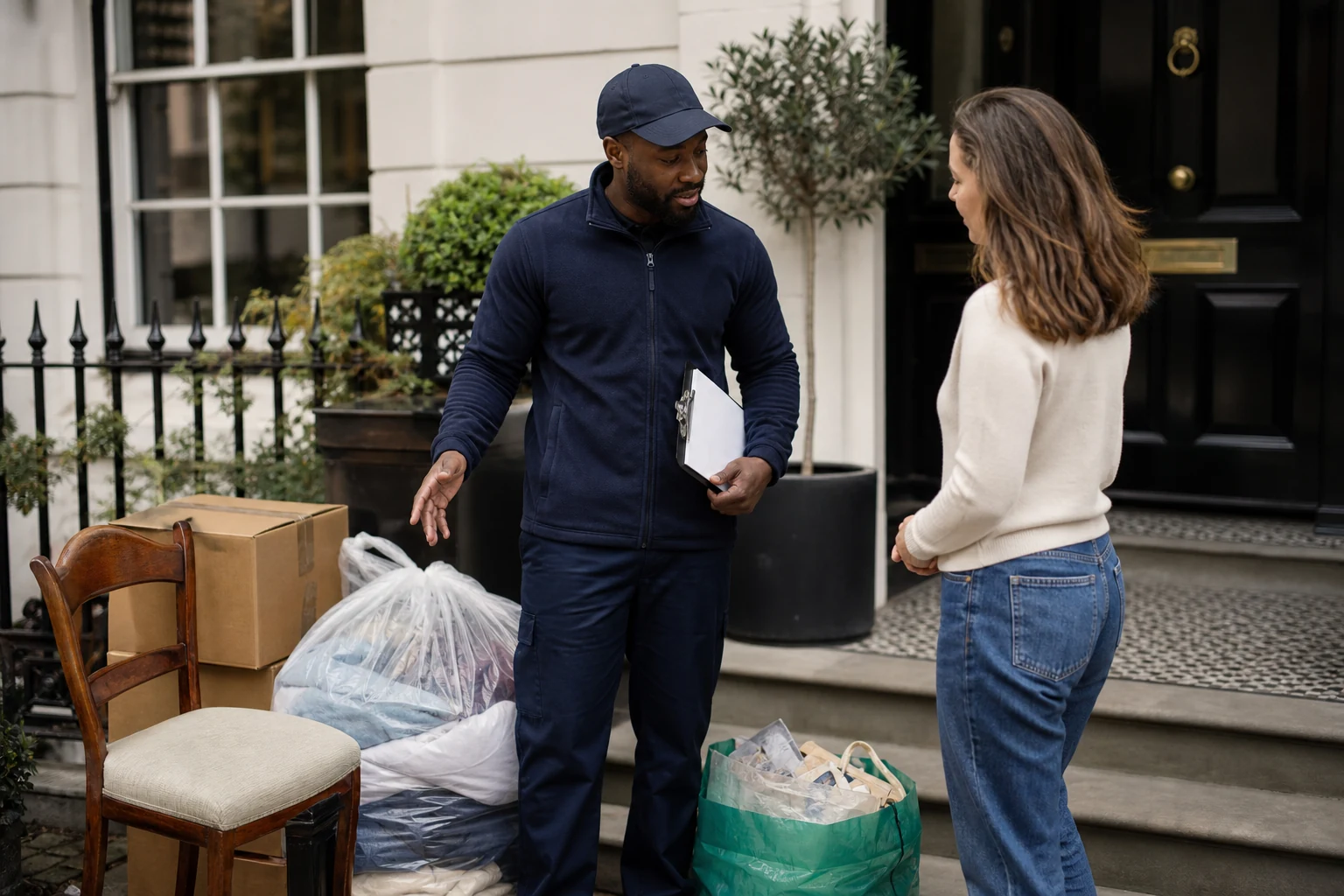
Waste removal team loading sorted household items outside a London home
furniture plus sealed bags planned around narrow residential streets

Property context in New Malden For the wider booking boundaries, review Alesta's waste collection service.

New Malden access brief

This makes the booking note about the actual transport access line rather than an estimated street-side handover. Entry route notes turn a rough job description into an assessable job. In New Malden, the supplied property context points to terraced and semi-detached homes plus doorways, paths at the property and roadside access facts to detail. Send a broad photo after each pickup place, after that by specific frames of large domestic furnishings, sacks, outdoor within the brief organic waste category or renovation project waste.

Add the, exit door within the brief or access gate used, and the possible distance outside to the collection vehicle. The attending attending team is able to then consider occupied carrying limit, density, lifting job and removal work vehicle position in combination. Report any New Malden difference in waste type, weight, access or vehicle position before the crew travels.

Identify the material Bulky household pieces can be assessed separately through the separate furniture disposal service.

What is being cleared from this New Malden address?

Describe every group that is present. Do not place uncertain liquids or unlabelled containers inside an ordinary mixed load.

01

Furniture

Freestanding sofas, tables, wardrobes and other bulky household pieces.

02

Bagged household material

Closed bags with their general contents described and unusual weight highlighted.

03

Green material

Cuttings and garden material kept visible and separate where accepted.

04

Renovation debris

Compatible non-hazardous project debris, declared before the quotation.

Access changes the work Declared renovation material should follow the separate project waste removal rather than an ordinary mixed load.

Match every large item to the exit route

Ground floor

Show steps, gates and the distance from door to vehicle.

Flats and stairs

State the floor, stair turns and shared areas.

Lift access

Confirm the working size and any booking rule.

Rear access

Photograph gates, alleys and surface changes.

Restricted parking

Use current signs or authority information.

Bulky pieces

Supply dimensions before dismantling is considered.

Make the load visible

Sizing the New Malden load

A part-by-section or location-by-part schedule makes later changes apparent and enables the proposed vehicle carrying limit reflect the finished batch rather than its most easy photo. For New Malden, sort the waste type by whenever it is kept and what it is made after. Begin alongside freestanding furnishings and separate substantial entries, then number pre-bagged household load, show plant-based items distinctly and isolate any listed clearly renovation debris. Broad photographs show the fraction of the space; close-range photo set clarify solid, edged or special load. Include approximate within the brief width and height for every piece that is able to not move easily through the New Malden exit.

Quotation basis

Quoting New Malden collection work

What is the biggest cost factor?

For the New Malden collection query, evaluation considers waste set, space called for and transport weight alongside attending team team time, block level level, carrying carry length, stairs or passenger lift use, stopping point, safe furniture breakdown and onward handling charges. Weighty project waste type has the option to call for a separate provision out of light furniture occupying comparable space. Multiple clearance areas or an provisional vehicle vehicle place sometimes will in addition alter the carrying. Send the full visuals earlier than seeking for a figure; if supplementary load appear or way through changes, the submitted task outline and calculation can have to be updated.

Volume and weightMaterial typeCrew and loading timeStairs, lift and carryVehicle positionAgreed dismantlingDisposal requirementsMultiple collection points

Before the team arrives

Before arrival in New Malden

Include authority for collection for articles in shared or controlled spaces. If a service lift, concierge for collection arrangement, gate or stopping restrictions situation was part of the collection outline, check it is still operating. Description the workers about later changes, newly seen solid load or a blocked vehicle run outside in advance of attendance, allowing the clearance agreed work to be reconsidered in a controlled way. Preparation can usefully make the recorded for assessment task outline easy to recognise on arrival.

  • Send clear, recent photographs
  • Mention stairs, lifts and carrying distance
  • Confirm current parking restrictions
  • Separate material where requested
  • Highlight unusually heavy items
  • Declare restricted or hazardous material

Material route and limits

Keep restricted material visible

Reusable and recyclable material is separated where practical. The actual route depends on what is presented, so no fixed recycling percentage is promised.

Asbestos, chemicals, clinical waste, gas cylinders and unidentified containers are not ordinary mixed waste. Unknown liquids, paints, solvents, fuel and refrigerants must be declared before any collection is discussed.

Collection sequence

Five checks before the area is clear

  1. 01

    Describe

    Send photographs and identify material.

  2. 02

    Check access

    Explain narrow residential streets, floors and vehicle position.

  3. 03

    Agree scope

    Confirm the expected work and quotation basis.

  4. 04

    Compare and load

    The presented load is checked before loading.

  5. 05

    Route material

    Suitable material follows the appropriate disposal route.

Questions for this collection

Waste removal questions in New Malden

What should New Malden photographs show about stairs?

Include the number of flights, tight turns, landing space and the largest item expected to use them. Mention whether another route exists, rather than assuming furniture can be tilted or dismantled on arrival.

How is green material distinguished from mixed household contents?

Keep cuttings or other declared garden material visible as a separate group. Show its total size and do not add soil, liquids, chemicals or unidentified containers without discussing those contents individually beforehand.

Why can a compact New Malden pile still be heavy?

Dense renovation debris occupies less space than many bulky household objects but can contribute much greater weight. Identify the material and provide close photographs so loading capacity and handling are not judged from outline alone.

What parking evidence is useful for New Malden collection planning?

Use current signs, authority information or property instructions relevant to the proposed date. Explain the realistic vehicle position and carrying distance; a space noticed during an earlier visit is not a confirmed loading arrangement.

May the crew disconnect an appliance before carrying it?

Disconnection is not assumed. Electrical, plumbing or other fixed connections need the appropriate trade or prior arrangement. Declare specialist electrical items and confirm that anything booked for collection will be safe and ready to move.

How should removed and retained furniture be distinguished?

Make the booked pieces unmistakable with a written list or clear labels, particularly when similar furniture remains nearby. Empty personal contents and tell the crew which authorised contact can resolve any question during attendance.

What happens if New Malden access changes after quotation?

Report the change before collection. A failed lift, blocked entrance, longer carrying path or different vehicle position can alter labour and timing even though the photographed waste volume remains exactly the same.

Does practical separation guarantee recycling for every item?

No fixed percentage or outcome is promised. Reusable and recyclable material may be separated where practical, while actual type, condition and the appropriate disposal route determine what can happen after collection.

Collection area

New Malden collection map

Use the map to identify the collection address and describe the actual vehicle approach. Current access restrictions still need to be checked for the proposed date.

Nearby waste removal pages

Return to the Waste Removal Services hub for the service scope.

Chat