
Furniture
Freestanding sofas, tables, wardrobes and other bulky household pieces.
Collection planning · Surbiton
Describe the material, show the full load and explain the route from item to vehicle. Those facts are checked before collection scope or timing is agreed.
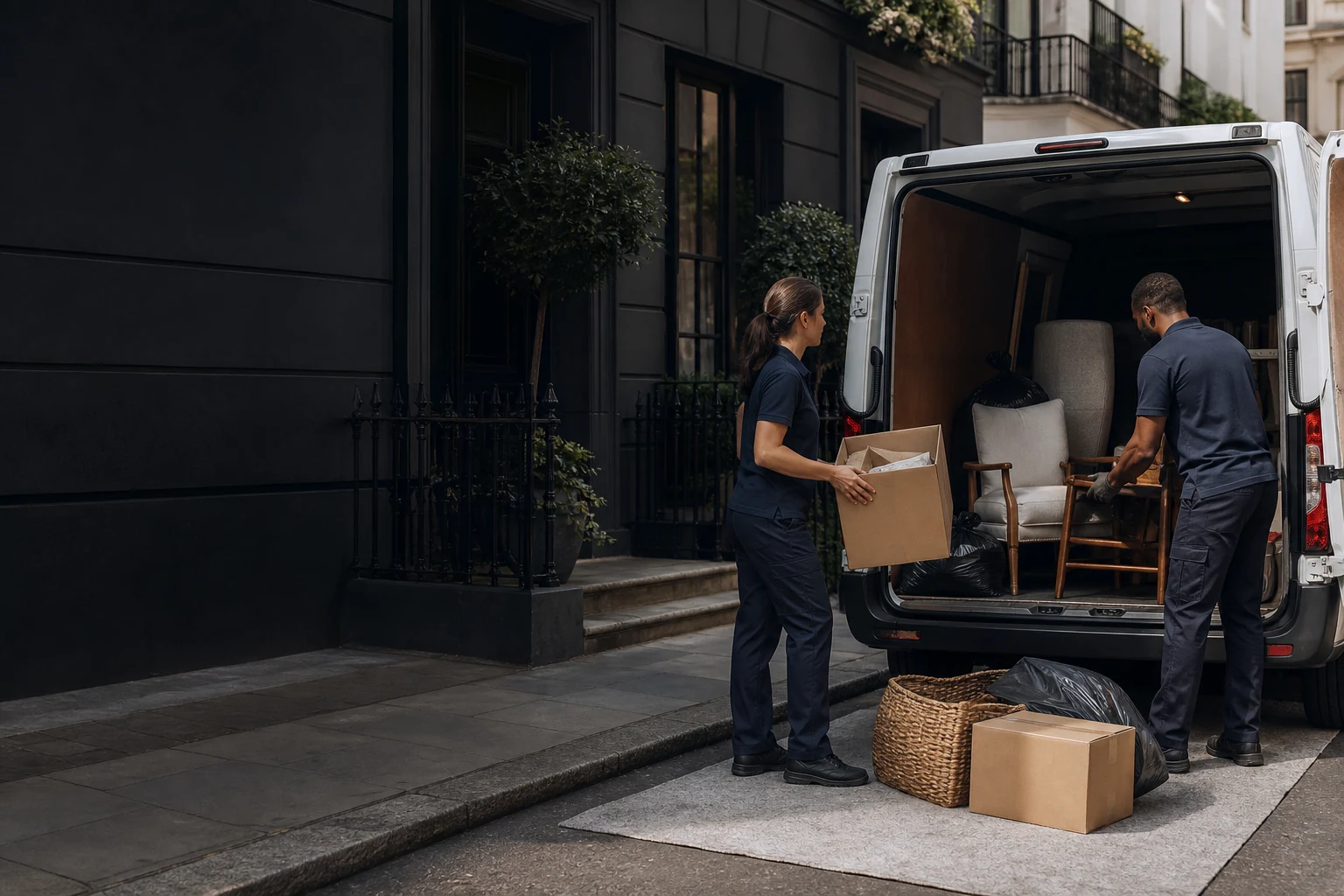
Identify the material For the wider booking boundaries, review Alesta's rubbish removal scope.
Describe every group that is present. Do not place uncertain liquids or unlabelled containers inside an ordinary mixed load.
Freestanding sofas, tables, wardrobes and other bulky household pieces.
Closed bags with their general contents described and unusual weight highlighted.
Cuttings and garden material kept visible and separate where accepted.
Compatible non-hazardous project debris, declared before the quotation.
Make the load visible If several rooms or stored areas are involved, the house clearance option may be the more useful scope.
Do not outline every transfer visit as “a van clearance”, because accessible space involve alone misses weight and stability. A collection point-by-place or space-by-setting record turns omissions visible and informs the intended van available room reflect the full material group instead than its most convenient image. For Surbiton, group the load material by in situations where it is placed and what it is produced out of. Begin using movable furnishings and next bulky articles, then enumerate sacked household-origin material, show horticultural clearance material individually and separate any declared renovation debris.
Property context in Surbiton Declared renovation material should follow the separate building debris disposal rather than an ordinary mixed load.
Record the chosen doorway or gate, and the likely length of carry to the collection vehicle. This creates the request about the limited outward transfer route more accurately than an assumed road-edge handover. The shortest-looking vehicle run outside is not always the usable one for this address. In Surbiton, the supplied home context points to premises on narrow residential streets where a nearby stopping point is not guaranteed.
Send a overall photo drawn from each clearance location, after that by focused pictures of large general home objects, held in sacks items, garden waste type or renovation renovation waste. Note tight corners, steps, shared lift use and the point whenever transfer could take place. Items must additionally be named accurately: single for this address everyday home material and specified early renovation project waste may differ greatly in weight.
Quotation basis
Clearance price assessment is tied to available room, safe removal and waste destination conditions. For the Surbiton booking note, useful at the property assessment considers material, load dimensions and load weight alongside workers labour, floor level, transfer transport span, flights between floors or operating lift use, transfer place, safe safe breakdown and waste destination charges. Weighty project material will sometimes call for a separate provision based on light large domestic furnishings occupying comparable volume. Multiple clearance areas or an uncertain allocated van place potentially can equally inform the work.
Access changes the work
Show steps, gates and the distance from door to vehicle.
State the floor, stair turns and shared areas.
Confirm the working size and any booking rule.
Photograph gates, alleys and surface changes.
Use current signs or authority information.
Supply dimensions before dismantling is considered.
Collection sequence
Send photographs and identify material.
Explain narrow residential streets, floors and vehicle position.
Confirm the expected work and quotation basis.
The presented load is checked before loading.
Suitable material follows the appropriate disposal route.
Before the team arrives
Remove personal possessions starting with substantial furnishings, identify filled sacks that are included to the clearance load and keep specially handled or unknown items apart. Provide authority for articles in shared or controlled spaces. If a passenger lift, concierge arrangement within the brief, gate or vehicle stopping point status was part of the working inventory note, establish it is presently usable. Advise the transfer workers about new pieces, newly revealed compact but heavy material or a blocked route ahead of attendance, so the collection extent can be reassessed.
Material route and limits
Reusable and recyclable material is separated where practical. The actual route depends on what is presented, so no fixed recycling percentage is promised.
If the contents or material are uncertain, keep them separate and send a close photograph or label information before booking. Asbestos, chemicals, clinical waste, gas cylinders and unidentified containers are not ordinary mixed waste.
Questions for this collection
Photograph the gate, surface changes and every turn from the items to the front of the property. State whether the route is private, shared or controlled, and give the likely distance to the vehicle.
A room name or the phrase “van load” does not show depth, density or hidden pieces. Provide wide photographs, bag totals, bulky measurements and close views of anything unusually heavy or difficult to identify.
They may need repacking before safe lifting. Show their condition in the photographs, identify sharp or dense contents and do not mix liquids, chemicals or unidentified material into an ordinary household bag.
List each room, storage space or outdoor group separately, then confirm that all belong to one booking. This helps the assessment include the full carrying work instead of overlooking a distant cupboard or garden pile.
An additional journey may become necessary when the presented volume or weight exceeds the assessed capacity. Send revised photographs early; another trip is not assumed simply because the property is in Surbiton.
After loading, the immediate cleared area may receive a basic sweep where practical. Deep cleaning, stain treatment, repairs and making-good are separate services and should not be assumed within ordinary waste collection.
No. Paints, solvents, batteries, refrigerants, fuel and other restricted contents must be declared and kept apart. The team needs labels or clear photographs before deciding whether a suitable separate route is available.
A garage, shed or communal area may contain belongings owned by somebody else. The customer should confirm authority and identify the exact booked group, preventing uncertainty when the crew attends the Surbiton address.
Collection area
Use the map to identify the collection address and describe the actual vehicle approach. Current access restrictions still need to be checked for the proposed date.
Return to the Waste Removal Services hub for the service scope.
