
Masonry
The distinction between brick, block and a facing layer matters. Fixings need the assessed supporting material and its condition; a neat finish does not establish either.
Morden · Home technology, considered
Give power and devices a clear place
A Morden TV mounting plan should show the screen, socket and connected equipment together. Decide where the boxes will sit and how you expect to reach them after installation.
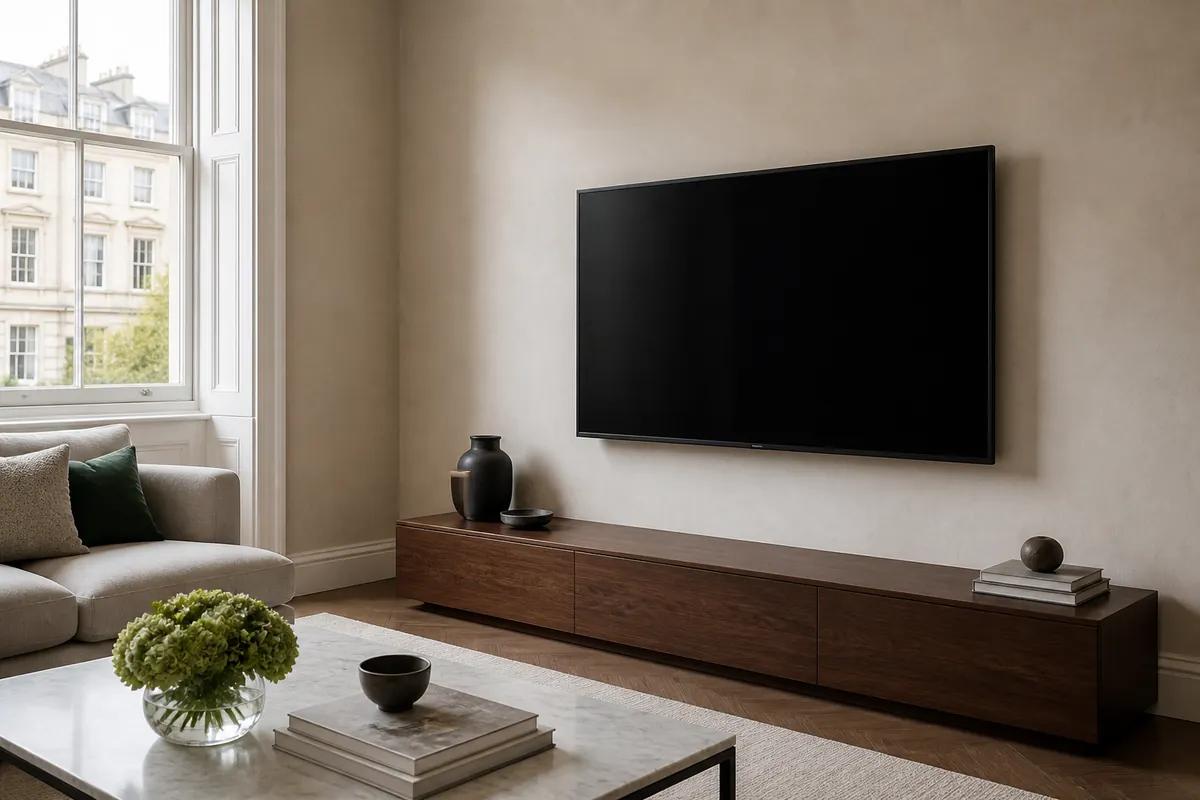
The load behind the picture
A device-rich setup still starts with the supporting wall. Identify the construction and its condition before treating a tidy cable plan as a workable installation.
The distinction between brick, block and a facing layer matters. Fixings need the assessed supporting material and its condition; a neat finish does not establish either.
Boarded partitions vary in their build-up. Establish suitable support and the proposed load before deciding whether the intended wall position can be retained.
A timber-framed wall needs more than locating a single member. Soundness, plate geometry and suitable fixing points all influence whether the intended arrangement works.
A specialist surface can make the preferred centre harder to achieve. Supply photographs before work is agreed so drilling requirements and potential finish risks can be considered.
Unknown support can affect cost, position and whether the work proceeds. A realistic enquiry makes those checks explicit instead of treating every blank wall as equivalent.
No scanner can promise a complete picture inside the wall. The installation assessment must account for hidden-service risk alongside the strength and condition of support.
The finish needs a defined scope
A lead tucked behind furniture, a surface channel and an in-wall route are different arrangements. Use the illustration to describe your preference, not to assume the work required.
Accessible device connections and a suitable surface treatment can be specified together. A concealed route may need wall access and making good, which must be assessed and agreed outside assumptions about basic mounting.
Do not treat a socket relocation as cable tidying. It must be separately agreed electrical work; burying ordinary mains flex does not provide an appropriate replacement.
Discuss a new socketThese drawings explain cable choices; they are not evidence of a completed customer project.
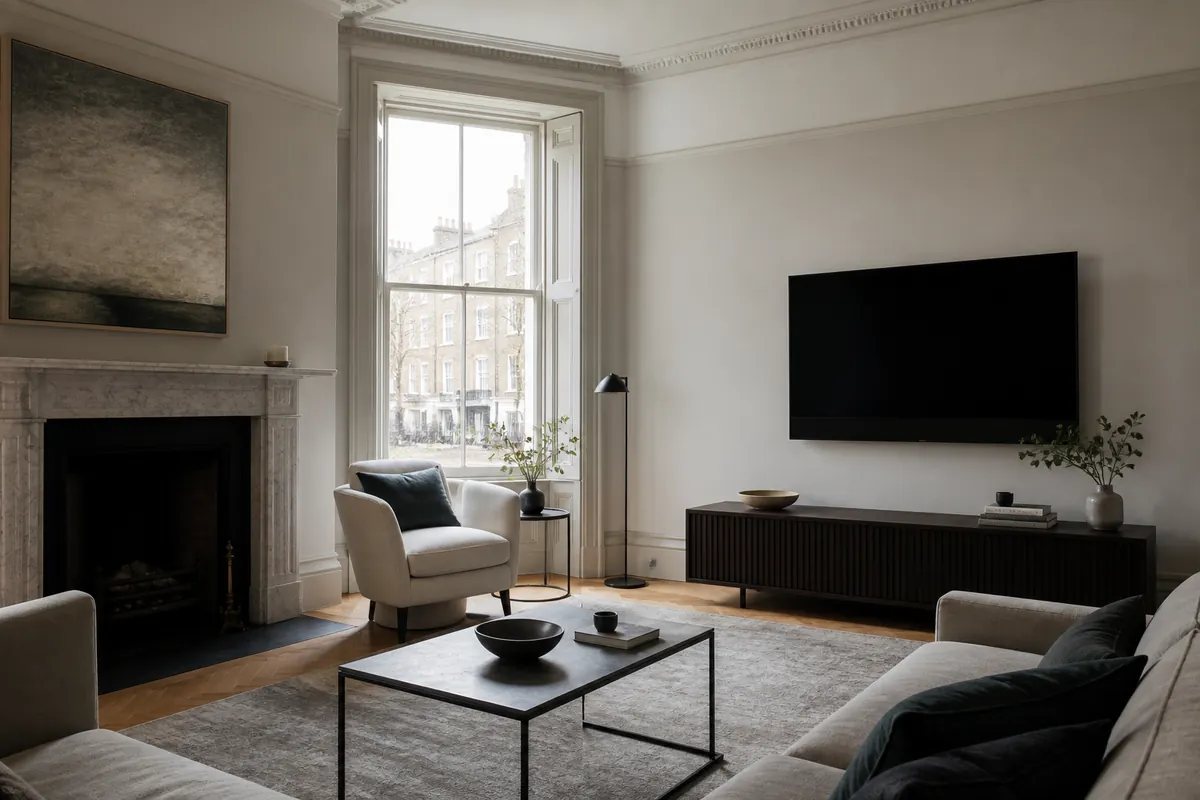
Morden / room by room
If the available power point is some distance away, explain the current lead route. The assessment can distinguish an agreed surface arrangement from a request for new electrical provision.
Consider later access before committing to a very close wall fit. A tidy first-day appearance should not depend on strained plugs or leave routine device changes unexplained.
Describe your Morden installation ↗A defined installation result
Include model references and clear photographs with the full postcode. Describe the desired position and cable appearance, plus anything that makes moving or preparing the screen difficult.
Assessment may change the bracket, location or work required. Ask for the agreed scope to identify additional electrical, concealment and making-good tasks instead of folding them into a general mounting assumption.
Request my mounting quote ↗| Installation | Pricing | Main variables |
|---|---|---|
| Standard fixed-bracket mounting | Quote after assessment | TV-to-mount fit, assessed fixings and the chosen screen location. |
| Large TV / full-motion bracket | Quote after assessment | Panel handling, extending-arm loads and usable working space. |
| Mounting + additional cable / electrical work | Detailed quote | Cable access, new power needs and any decorative reinstatement. |
Practical details
Send the replacement model and accessible details of the current bracket. Compare weight, VESA, panel dimensions and ports; a similar diagonal does not show which parts of the old arrangement can be retained.
Explain the proposed route between it and the TV. Connection length, surface containment and any concealed work need assessment; mounting the panel does not automatically include running new cables across the room.
The wall may provide visual space without suitable support at the proposed points. Access for preparation, lifting and attaching the panel also needs consideration, together with bracket and cable requirements.
Yes. Identify known partitions, linings or previous repairs, without treating recollections as verified construction information. The installer still needs to assess suitable support and service risks at the proposed fixing points.
It can, depending on device location and the agreed bracket travel. The connection needs enough usable allowance without strain, so assess the route with the screen in its intended positions.
Show the door open in the enquiry photographs and provide its relationship to the proposed screen. Check the complete panel and any bracket movement so storage remains usable after installation.
No. The attachment to the panel, bracket capacity and wall support all need to suit the intended load. Extension adds leverage that must be considered in the assessed fixing arrangement.
Check actual width, height and required clearances rather than the diagonal. Include the shelf depths and any intended tilt or rotation, because the moving outline differs from the flat screen.
Mention it explicitly, including its model and proposed position. Soundbar mounting, brackets and any additional connections should be included in the agreed scope rather than assumed from a TV mounting request.
The agreed checks include alignment, bracket engagement and retention, accessible connections, basic function and intended movement. The final arrangement should be explained before routine adjustment is left to the user.
Plan the finished arrangement
Think about the room after furniture returns: where the TV rests, whether it turns and where equipment stays. These options prepare the conversation, while support, access and hardware are checked separately.
Your answers establish preferences rather than technical approval.
Your setup brief
Small screen · Fixed bracket · Masonry wall · Visible cables.
Send this setup by email ↗Need a new socket? Plan the electrical work separately
Size informs handling
Do not assume a compact screen suits any wall or bracket. The model’s actual weight, VESA specification and attachment requirements still need checking.
A very large screen may need additional handling support even if it is not unusually heavy. Tell us about turns, doors and available preparation space so the method and team can be assessed.
VESA fit does not approve the wall, and a strong wall does not approve the bracket. The rated load, attachment parts and assessed fixings must suit the same proposed arrangement.
| Bracket | Best suited for | Movement | Key consideration |
|---|---|---|---|
| Fixed | A viewing centre unlikely to change | Minimal | Confirm both visual alignment and accessible connections. |
| Tilt | A position where vertical adjustment serves the seated view | Vertical adjustment | Tilt cannot compensate for an unsuitable overall mounting height. |
| Full motion | A screen that needs to face different parts of the room | Extend and swivel | Assess the arm’s leverage, complete screen sweep and lead allowance. |
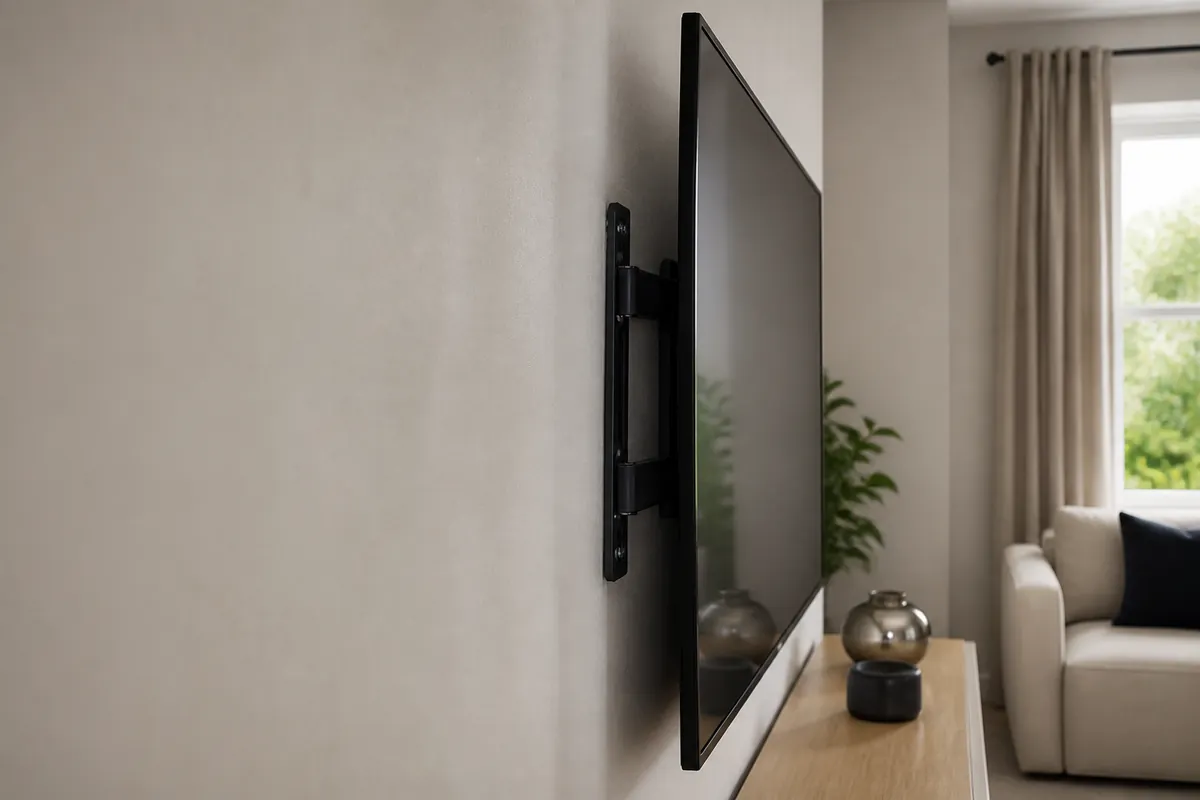
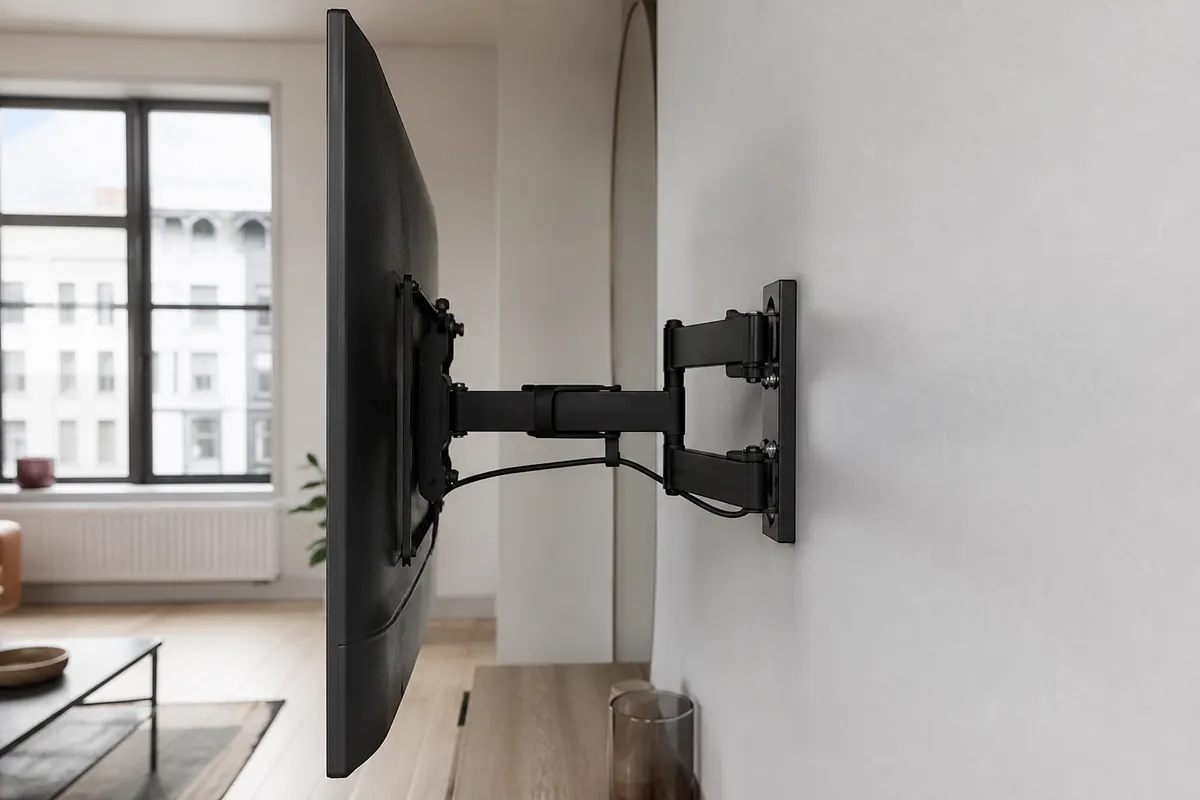
A view from the room
Treat the diagram as an aid for discussion. Measurements and the final screen position must come from the actual furniture, television and assessed wall.
Show the top of the console and any object that must remain beneath the panel. Those constraints should be considered with the usual seated eye line.
A photograph taken at midday may miss evening reflections. Explain when glare occurs and which seat is affected.
Check shelves, cabinet fronts and the route past the television. An extending screen needs a practical space to occupy, not merely a compatible arm.
Describe where equipment will live after installation. A neat screen location needs usable power and signal connections, with extra work separately scoped.
When a feature creates a constraint
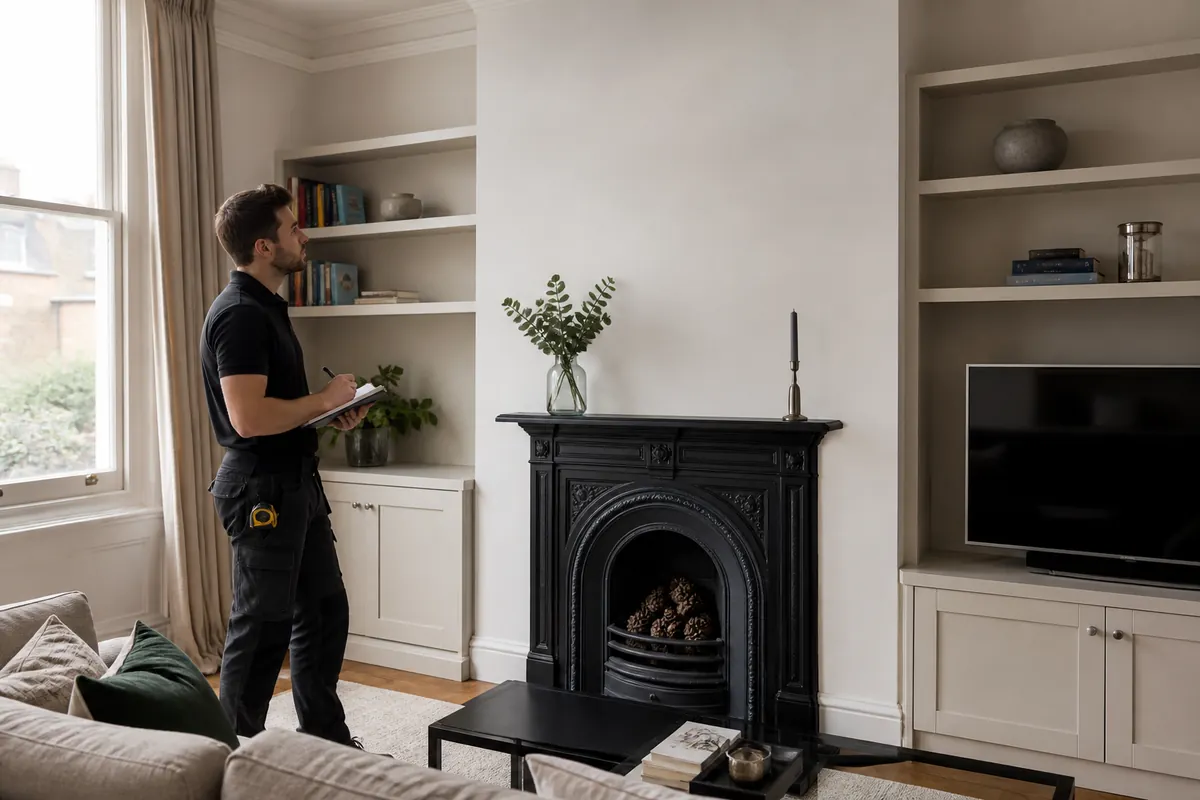
Heat, chimney or flue construction, hidden services and the supporting material must be assessed before a fireplace wall is accepted. An attractive alignment is not evidence of suitability.
The television’s height and connections must work as well. If the proposal fails those checks, show an alternative wall with its seating and device arrangement for a meaningful comparison.
Choices that affect the job
You can start the enquiry with that uncertainty identified. The final mounting approach and price depend on assessment of suitable support and the rest of the scope.
Yes. The assessed support behind the surface determines the approach; a smooth lining does not indicate the material or condition beneath it.
Not always, but actual weight, VESA, bracket condition and wall support must be reassessed. The old diagonal alone is not a compatibility test.
That is useful where support or clearance is uncertain. The bracket must suit both the television and the practical viewing arrangement.
That needs checking against the agreed route and bracket movement. Additional routing or electrical alterations should be specified separately.
Heat, chimney or flue, support, services, manufacturer requirements and the seated view all matter to the decision.
It can change the viewing relationship. Share the intended final seating position before height and centre are fixed.
Undisclosed access restrictions, unsuitable support or missing compatible parts can affect the work. Make uncertainties visible before the visit.
Follow the load and the connections
The proposed screen has to work with its mount, the mount with suitable wall support, and the finished arrangement with the viewer. Review these relationships together.
| Factor | What is checked | Why it matters |
|---|---|---|
| TV | Model-specific weight, mounting-hole spacing and handling guidance | Establishes the load and the correct way to handle the panel. |
| Bracket | Load capacity, wall-plate geometry and supplied fittings | Shows whether the proposed parts serve the assessed setup. |
| Wall | Support material, soundness and hidden-service considerations | Determines whether and how the wall can be used. |
| Position | Seated view, furniture limits and required access | Checks that the proposed centre works for the actual room. |
| Cables | Rear connector clearance and the intended cable route | Allows the selected mount to function with devices attached. |
From device list to viewing test
Gather the exact screen reference, mount rating and photographs of the installation area.
Assess suitable support and concealed-service considerations alongside the desired centre.
Verify rating, VESA and attachment parts, including bolts and spacers appropriate to the panel.
Use the intended furniture layout to agree the final height and horizontal position.
Apply the fixing method supported by the assessment and verify alignment.
Use the agreed handling assistance and check that the screen is correctly engaged and retained.
Connect the accessible devices within scope and allow the necessary movement without pulling on their ports.
Review alignment and basic operation, then explain usable adjustment and any agreed limitations.
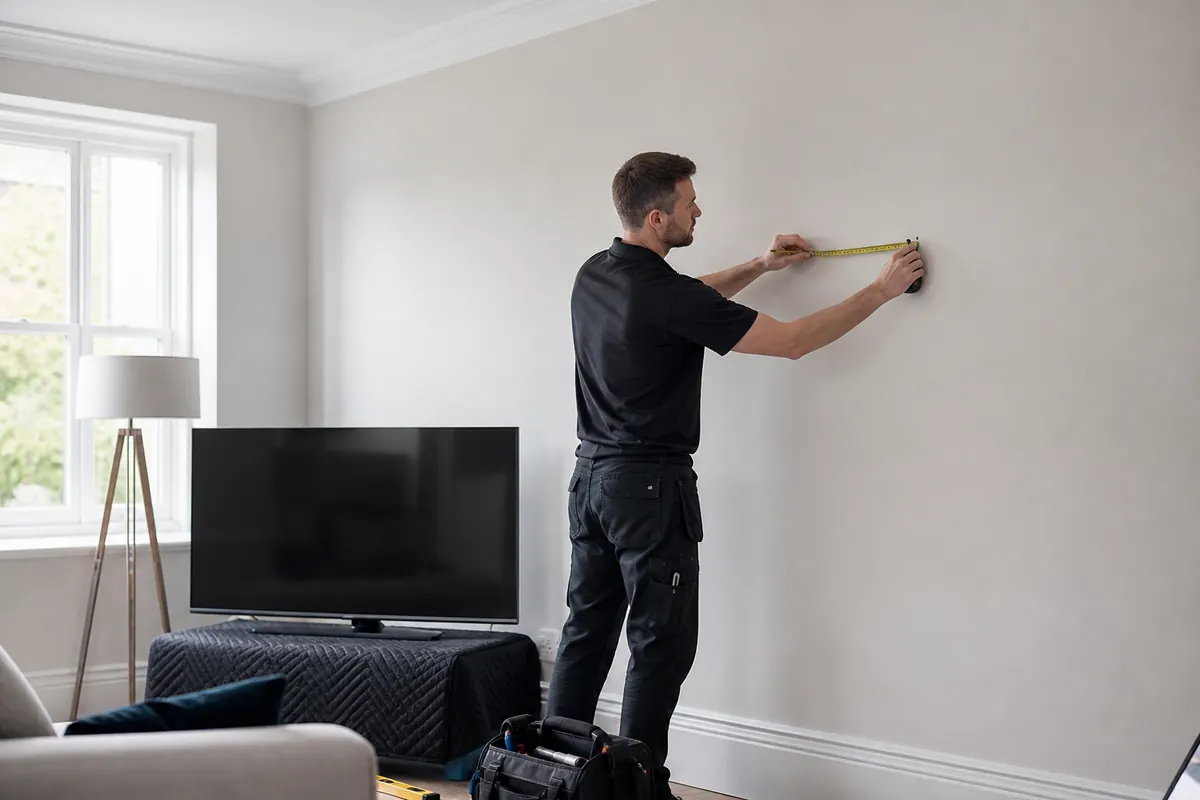
The room and equipment described.
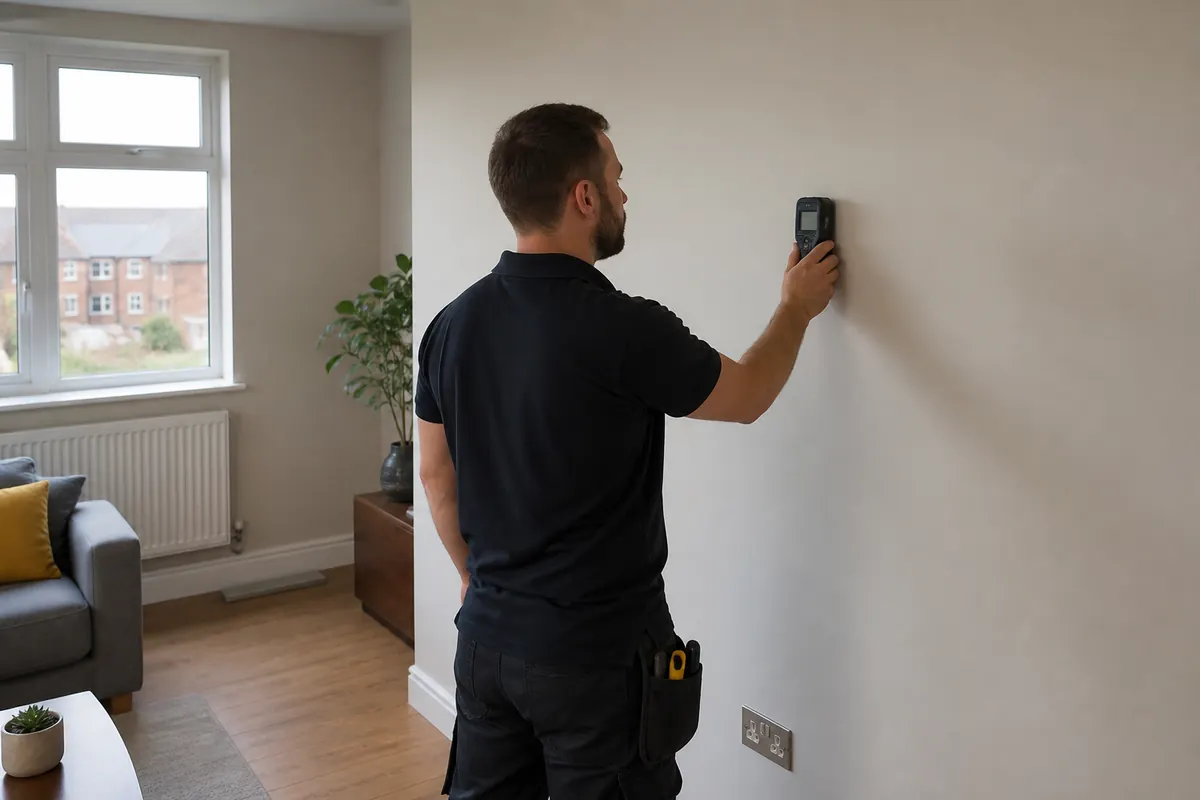
The assessed wall and viewing plan.
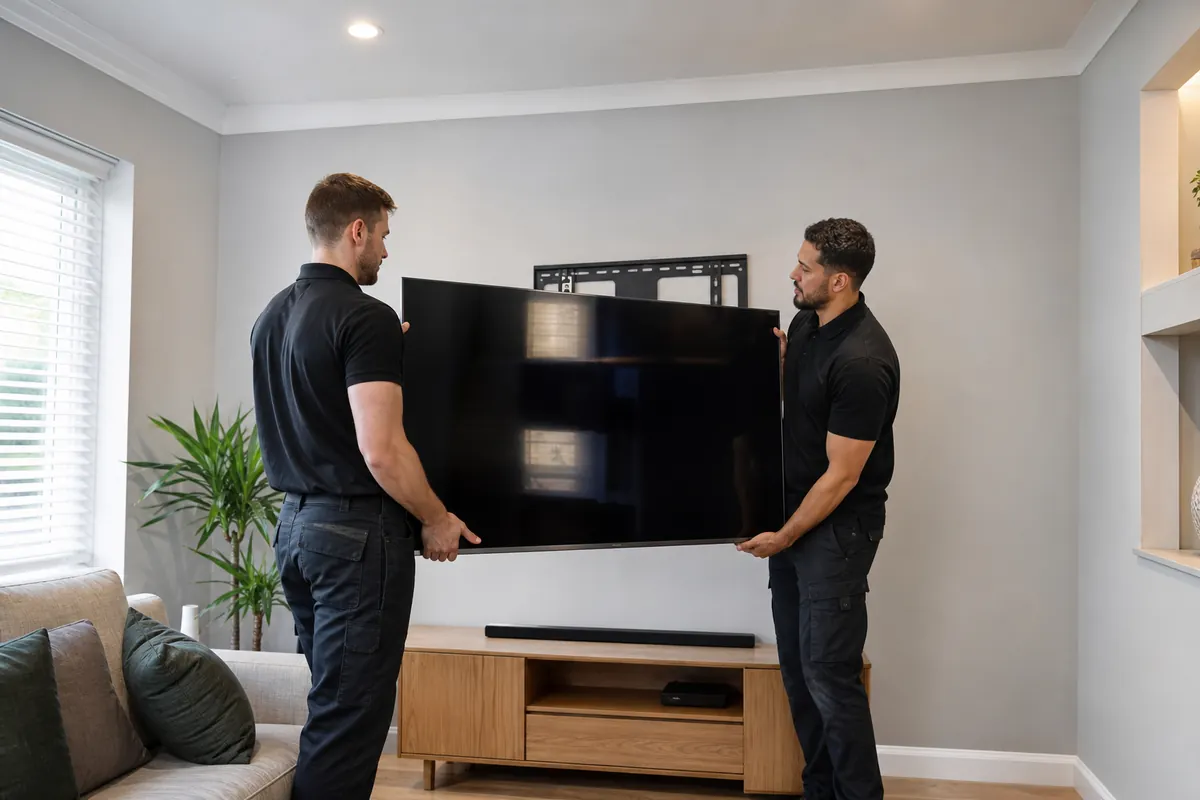
Panel secured on the mount.
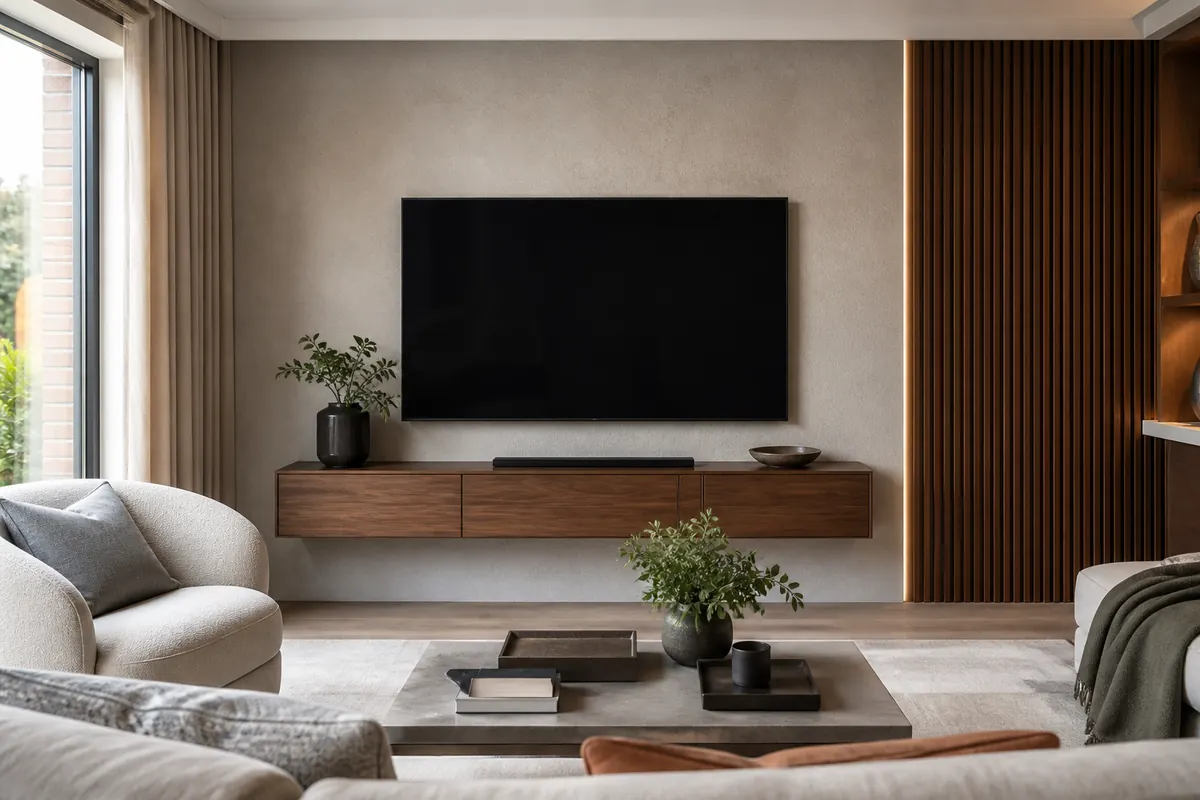
The agreed finish and use discussed.
Illustrative stages shown in different interiors, not one documented customer installation.
A property-specific approach
A house wall and an apartment wall may share a finish but have different support. Describe what is known about construction and what limits preparation in the chosen room.
Explain shared-door arrangements, lift limits and the approach inside the home. Identify fixed furniture that reduces the space available to prepare the screen.
Photograph fireplaces, wall detailing and any specialist finish. Say what is known about later alterations without guessing what lies behind the surface.
If a refurbishment introduced linings or new partitions, identify them where known. A freshly painted face can hide the support details needed for assessment.
Describe landings, door turns and the final approach. A wide panel can face access constraints that are not obvious from its weight alone.
Ask for a separate scope confirmation for a workplace, public room or other non-domestic setting.
The route to your room
Include the postcode and any permitted unloading arrangement. Where entry relies on a resident, concierge or timed access, confirm who will admit the team. Describe stairs, lift limitations and the route onwards to the proposed wall.
For the wider service scope, see TV mounting in London .
The room comes first
A fixed television in Morden needs the height and centre settled before mounting. Show the seating, furniture and connections so the low-movement setup works from the start. Include the exact TV and bracket models, wall photographs and postcode. Identify any additional work you want separately assessed.
