
Flats with shared access
Identify entry procedures and the route from stairs or lift. Mention a narrow hallway or permanent unit if it affects moving the panel.
Canary Wharf · Home technology, considered
Resolve the building arrangements early
For your Canary Wharf TV mounting enquiry, put the entry and handling details alongside the wall information. An apartment installation cannot be planned fully from the postcode alone.
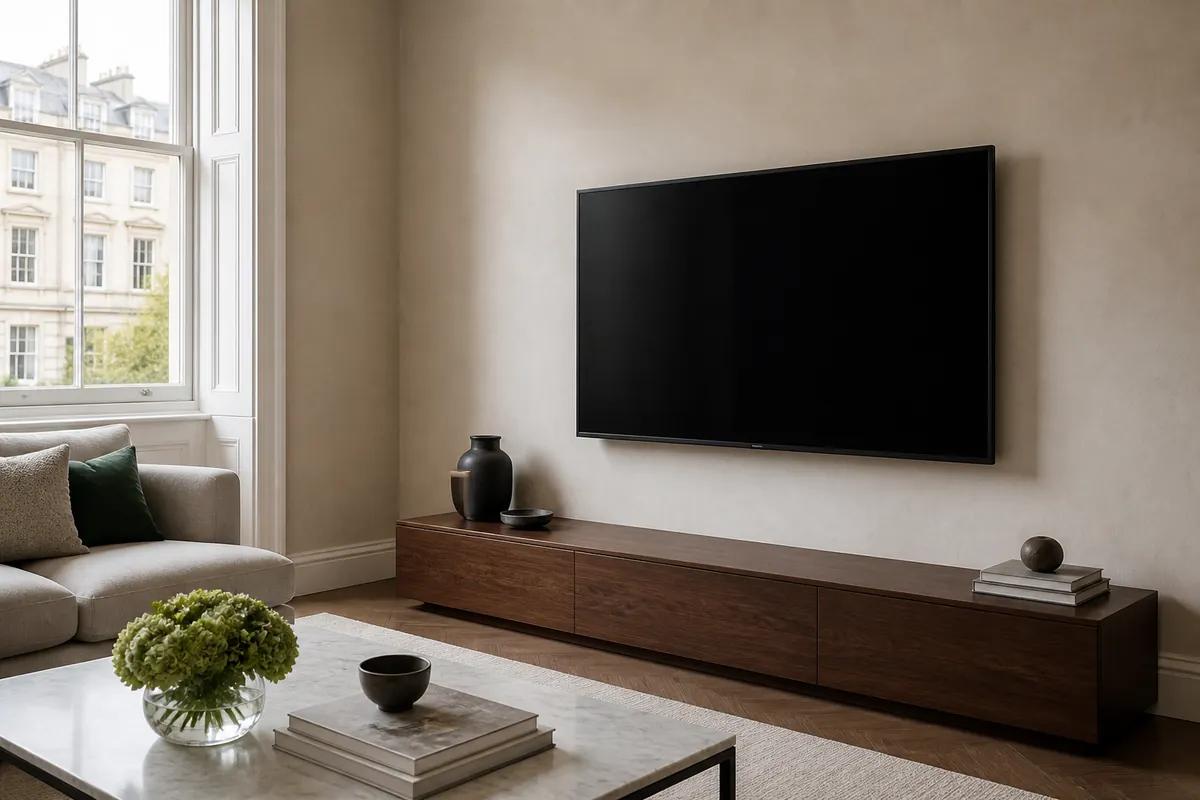
Start with the equipment
Choose the closest options, then explain the devices and furniture in your message. This brief helps assess the work; it cannot approve a wall, calculate a price or confirm that your bracket fits.
Selections are a conversation starter, not an installation specification.
Your setup brief
Small screen · Fixed bracket · Masonry wall · Visible cables.
Send this setup by email ↗Need a new socket? Plan the electrical work separately
The building is part of the brief
Different rooms in one property can require different fixing approaches. Give information about the chosen wall and preparation area instead of treating the address as a construction specification.
Identify entry procedures and the route from stairs or lift. Mention a narrow hallway or permanent unit if it affects moving the panel.
Where a chimney breast, decorative face or later lining is present, flag it. The desired appearance should not conceal relevant construction questions.
Construction drawings or relevant building information can assist. A clean surface or new decoration does not settle fixing suitability.
Describe landings, door turns and the final approach. A wide panel can face access constraints that are not obvious from its weight alone.
For offices or other non-domestic rooms, ask for the installation scope to be confirmed specifically.
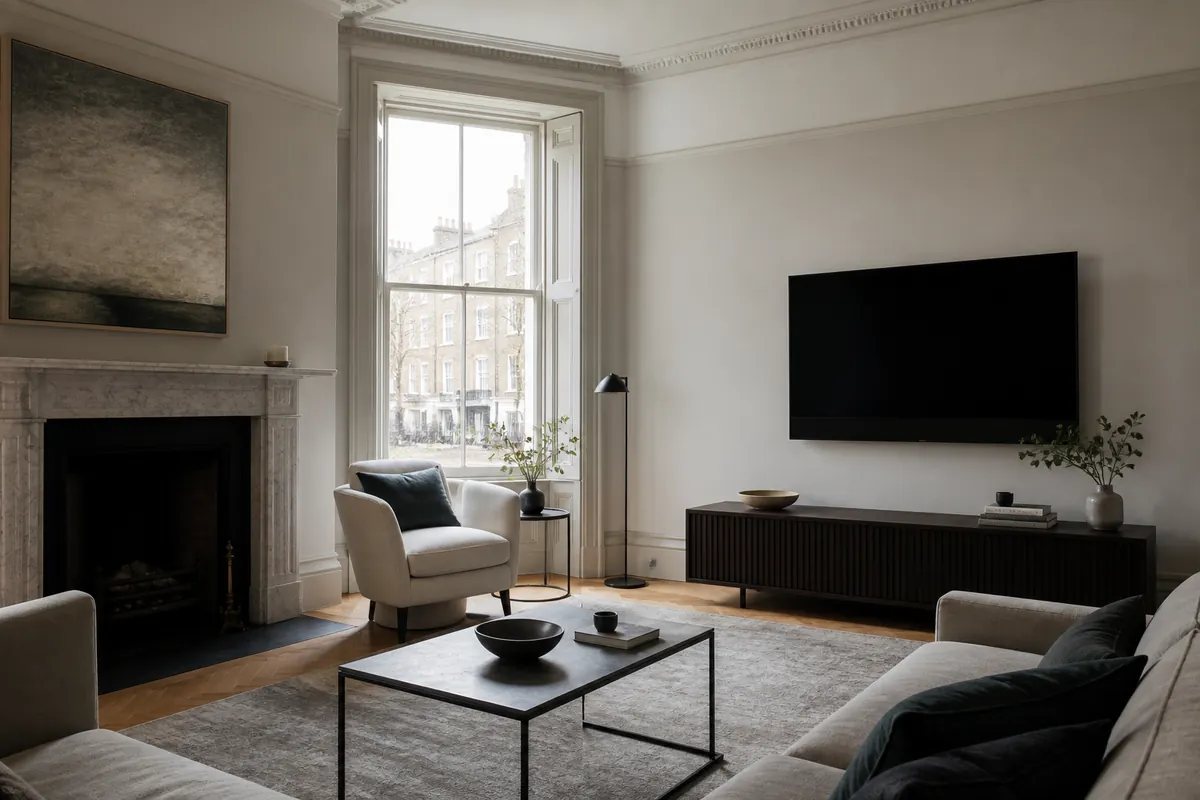
Canary Wharf / room by room
Where a building has rules for deliveries or contractors, ask for the relevant requirements before agreeing an appointment. Include lift access and any restriction on where equipment may be unloaded.
A recently decorated room can conceal several types of construction. If drawings or information about a designated TV position are available, share them for assessment without assuming that every chosen bracket is suitable.
Describe your Canary Wharf installation ↗Tidy without losing usability
The two visual arrangements are schematic. A moving bracket adds a practical requirement: the chosen leads and route must accommodate the agreed movement without strain.
Accessible device connections and a suitable surface treatment can be specified together. A concealed route may need wall access and making good, which must be assessed and agreed outside assumptions about basic mounting.
A new or relocated socket is separately agreed electrical work. Running ordinary mains flex into the wall is not a replacement for a suitable electrical installation.
Discuss a new socketThe comparison is schematic, not a photographed before-and-after customer job.
A defined installation result
Include model references and clear photographs with the full postcode. Describe the desired position and cable appearance, plus anything that makes moving or preparing the screen difficult.
Assessment may change the bracket, location or work required. Ask for the agreed scope to identify additional electrical, concealment and making-good tasks instead of folding them into a general mounting assumption.
Request my mounting quote ↗| Installation | Pricing | Main variables |
|---|---|---|
| Standard fixed-bracket mounting | Quote after assessment | Fixed location, suitable wall support and compatible TV hardware. |
| Large TV / full-motion bracket | Quote after assessment | The actual panel load, arm extension and required lifting support. |
| Mounting + additional cable / electrical work | Detailed quote | Concealment feasibility, electrical scope and the intended making-good finish. |
Practical details
Name each device and describe its storage position, then identify which leads you expect to remain connected. A photograph of the open media cabinet can reveal access constraints that the front view misses.
Mention any narrow doors, tight stair turns or lift restrictions and provide available dimensions. The screen’s width and handling requirements can create constraints even when its final room has plenty of space.
Share the console’s finished height, depth and intended position. Its dimensions can inform the screen outline, but the final mounting location should be agreed with the planned seating and connection route as well.
Port position and the required connection route can change between models. Identify the leads and devices you want retained so reach, plug clearance and access can be considered with the new bracket arrangement.
Show its height and depth and state that it cannot move. The team needs to assess how the panel can be prepared and brought onto the bracket with that obstacle present.
Agree that responsibility and finish explicitly before work is booked. Access openings, repair and decoration are separate elements of a concealment proposal, not automatic consequences of a TV mounting request.
No. The attachment to the panel, bracket capacity and wall support all need to suit the intended load. Extension adds leverage that must be considered in the assessed fixing arrangement.
Say that it is unknown and share a full-wall photograph. Further assessment is needed to identify support and service risks; a detector cannot guarantee that every hidden pipe or cable will be found.
No. Explain relevant entry, lift, loading or contractor arrangements and confirm them with the building contact where necessary. Those conditions can affect both the appointment and how equipment reaches the room.
Confirm the intended centre and height, panel edges, furniture clearance and connection arrangement, alongside suitable support and service-risk assessment. Changes are easier to discuss while the location is still a proposal.
Look past the surface
The support’s condition matters alongside its material. Existing fittings and decorative coatings provide context, but neither can specify the installation method for a new screen.
For brick or block, condition and the exact fixing location matter. Old mortar, previous holes or deteriorated material can change the mounting proposal and require further assessment.
A lightweight partition may contain suitable support, but its position and capacity need establishing. Do not infer approval for a heavy screen from a small fitting already attached nearby.
Timber support can affect the horizontal location of the wall plate. Agree the viewing centre only after that relationship and the required fixing arrangement have been checked.
Show joints, edges and the overall specialist finish in photographs. The way a facing is attached can matter along with the practical difficulty of drilling it.
Unknown support can affect cost, position and whether the work proceeds. A realistic enquiry makes those checks explicit instead of treating every blank wall as equivalent.
Hidden pipes and wiring remain part of the risk assessment. Scanning is useful evidence, not a guarantee that every concealed service has been detected.
The model is the starting evidence
A description such as 65-inch leaves important questions open. Provide the model so mounting-hole position, weight and manufacturer handling requirements can be considered.
For an oversized panel, the wall’s available width is only part of the question. Explain how the screen reaches that wall and whether there is a suitable area for preparation and supported lifting.
Load capacity, screen attachment and wall support are separate checks that must all agree. None can be replaced by matching a television’s diagonal to a bracket’s packaging.
| Bracket | Best suited for | Movement | Key consideration |
|---|---|---|---|
| Fixed | A viewing centre unlikely to change | Minimal | Confirm both visual alignment and accessible connections. |
| Tilt | A seated view needing a change of vertical angle | Vertical adjustment | Check the panel’s lower edge and cable space while tilted. |
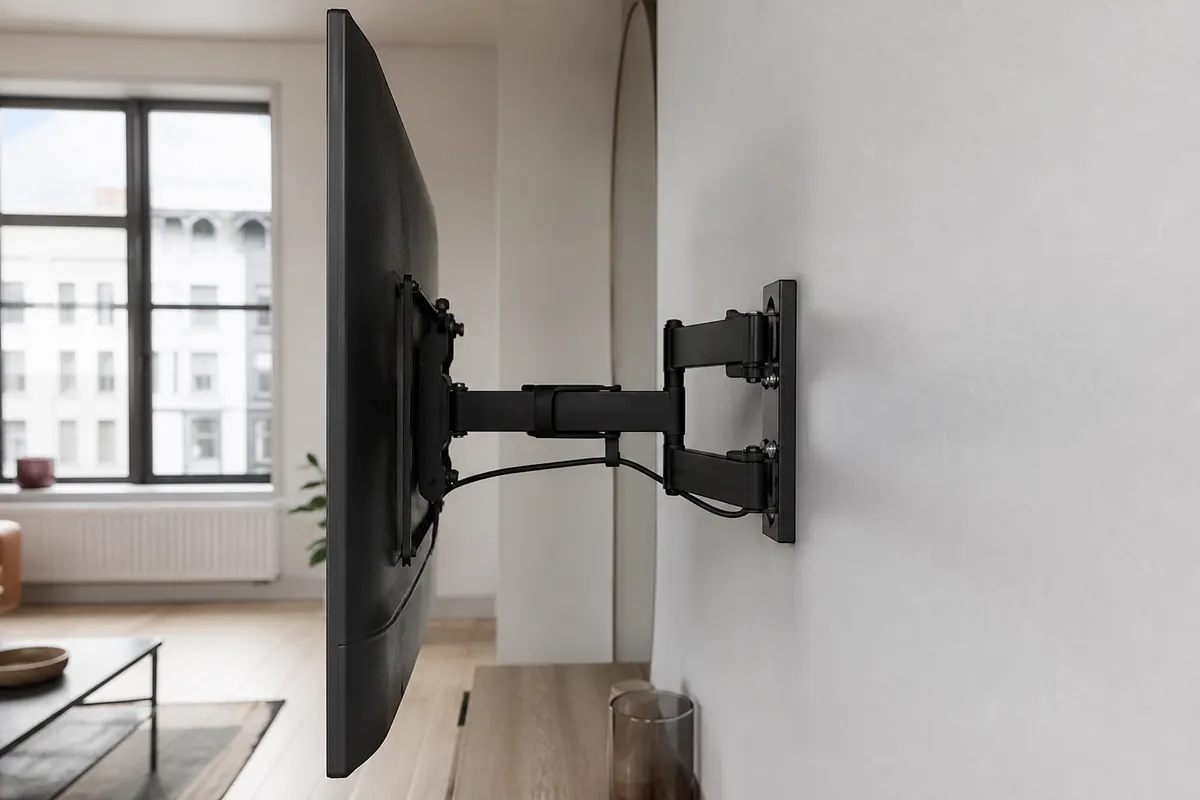
| Full motion | Different watching seats with a defined turning path | Extend and swivel | Extension increases leverage; support and lead travel need review. |
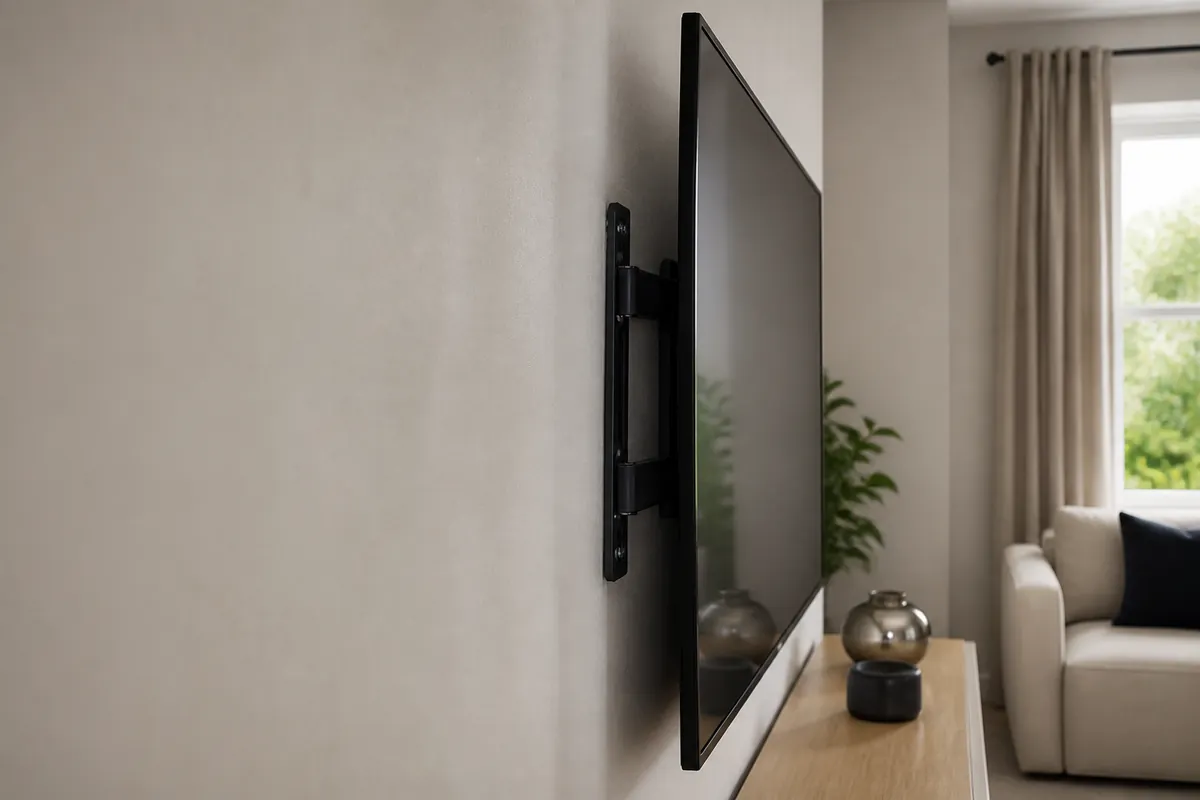
Room relationships before marks
The drawing is a conversation tool rather than a design for your property. Start with the main watching place and explain which surrounding items are fixed.
Tell us whether the main sofa is centred or offset. That detail can matter more than symmetry with the boundaries of the wall.
Explain whether glare is occasional or affects normal viewing. A moving mount may offer options, but the room arrangement still needs thought.
Check shelves, cabinet fronts and the route past the television. An extending screen needs a practical space to occupy, not merely a compatible arm.
Show sockets and equipment storage together. Connection length and access belong in the plan without automatically dictating the best viewing wall.
A feature wall needs more checks
Any chimney or flue, heat exposure, wall build-up and hidden services must be assessed alongside the TV’s requirements. The fact that another screen was there previously is not approval.
Even where technical conditions allow mounting, the height may not serve the usual seat. A different wall can change the connection plan, so assess the complete alternative rather than moving the mark alone.
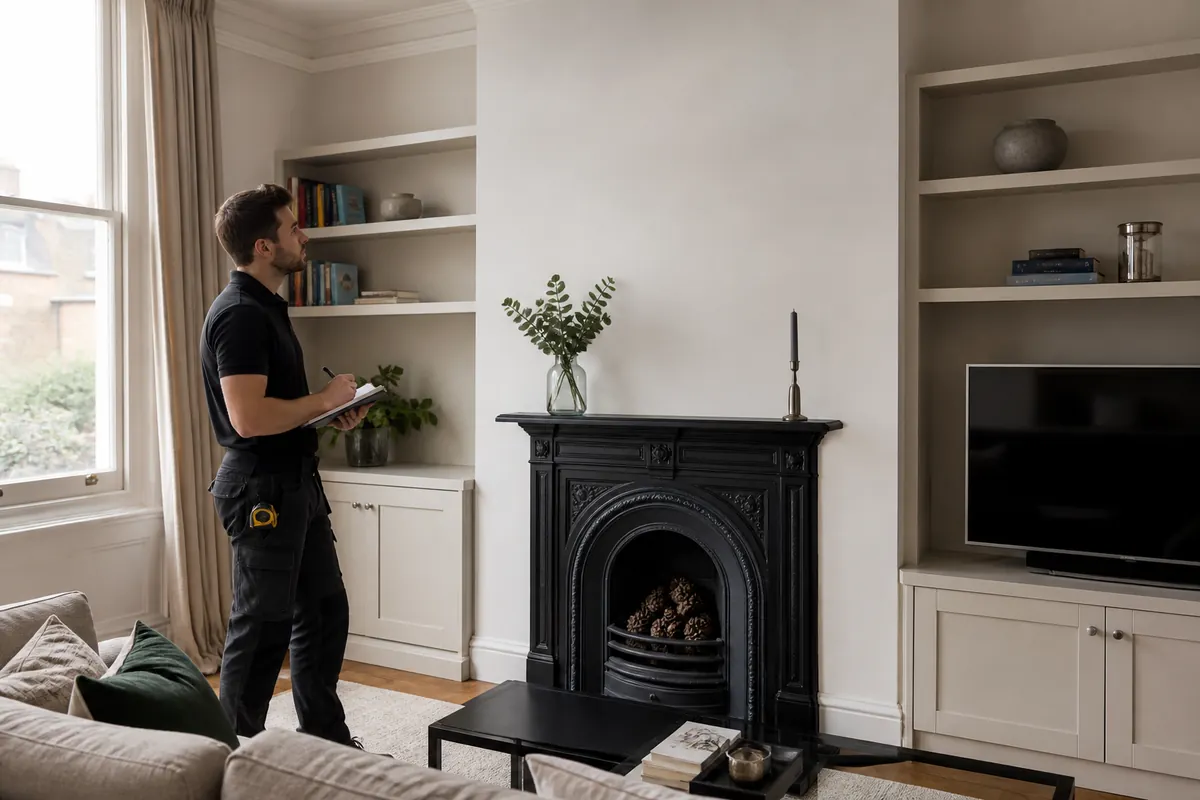
Scope before booking
You can start the enquiry with that uncertainty identified. The final mounting approach and price depend on assessment of suitable support and the rest of the scope.
That depends on the construction and available information. Do not make exploratory holes yourself on the assumption that they will be needed.
No. Weight, manufacturer handling guidance, access and available working space also influence how the panel can be prepared and mounted.
Only when its movement serves a real viewing need and the support, panel clearance and cables can accommodate it.
A new or relocated socket requires separately agreed electrical work. Identify available power when describing the mounting arrangement.
No. Consider side or alternative walls where comfort or technical checks make the fireplace location unsuitable.
It can impose a clearance constraint. Show it open and discuss the resulting view before accepting that height.
Undisclosed access restrictions, unsuitable support or missing compatible parts can affect the work. Make uncertainties visible before the visit.
Check the interfaces
A compatible VESA pattern is only one connection in the system. The bracket’s capacity, wall fixing strategy and room arrangement must also support the intended use.
| Factor | What is checked | Why it matters |
|---|---|---|
| TV | Manufacturer mass, VESA spacing and handling requirements | Identifies the real attachment and lifting requirements. |
| Bracket | Rating, VESA range and complete attachment components | Confirms more than the ability to align some holes. |
| Wall | Material condition, fixing access and concealed services | Sets the viable fixing strategy or requires another location. |
| Position | The viewing position and clearance for installation and use | Makes the location practical beyond its appearance. |
| Cables | Connection reach and slack during the intended adjustment | Keeps adjustment from tugging on plugs and device ports. |
A considered fitting sequence
Provide the screen and mount information, room photographs and desired cable result.
Review support, construction and concealed-service risks before accepting the chosen spot.
Check the VESA, load capacity and complete attachment kit against the manufacturer’s requirements.
Agree the height and centre from the intended seat with the final furniture layout available.
Apply the fixing method supported by the assessment and verify alignment.
Use the planned lifting support and check that the bracket’s retention features are correctly engaged.
Attach accessible leads within the scope and review their allowance through any planned movement.
Review basic operation, alignment and adjustment with the fitted screen and devices.
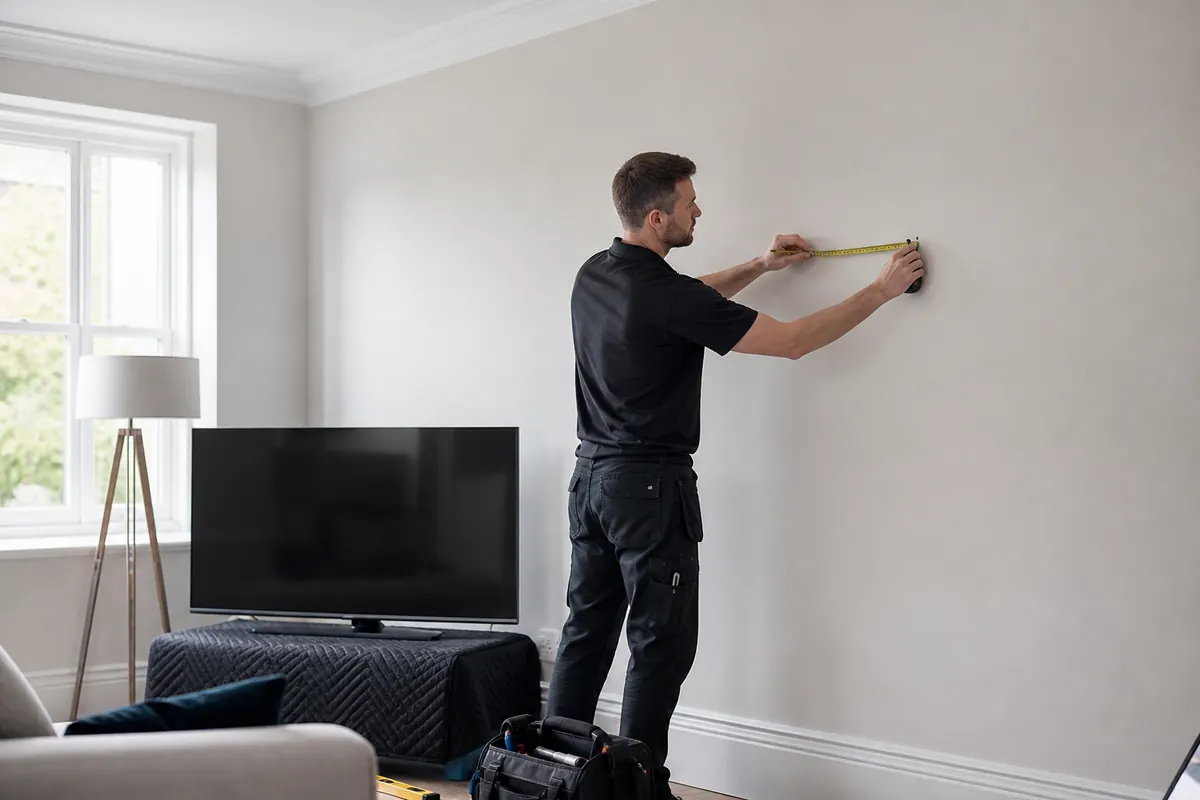
A clear brief before installation.
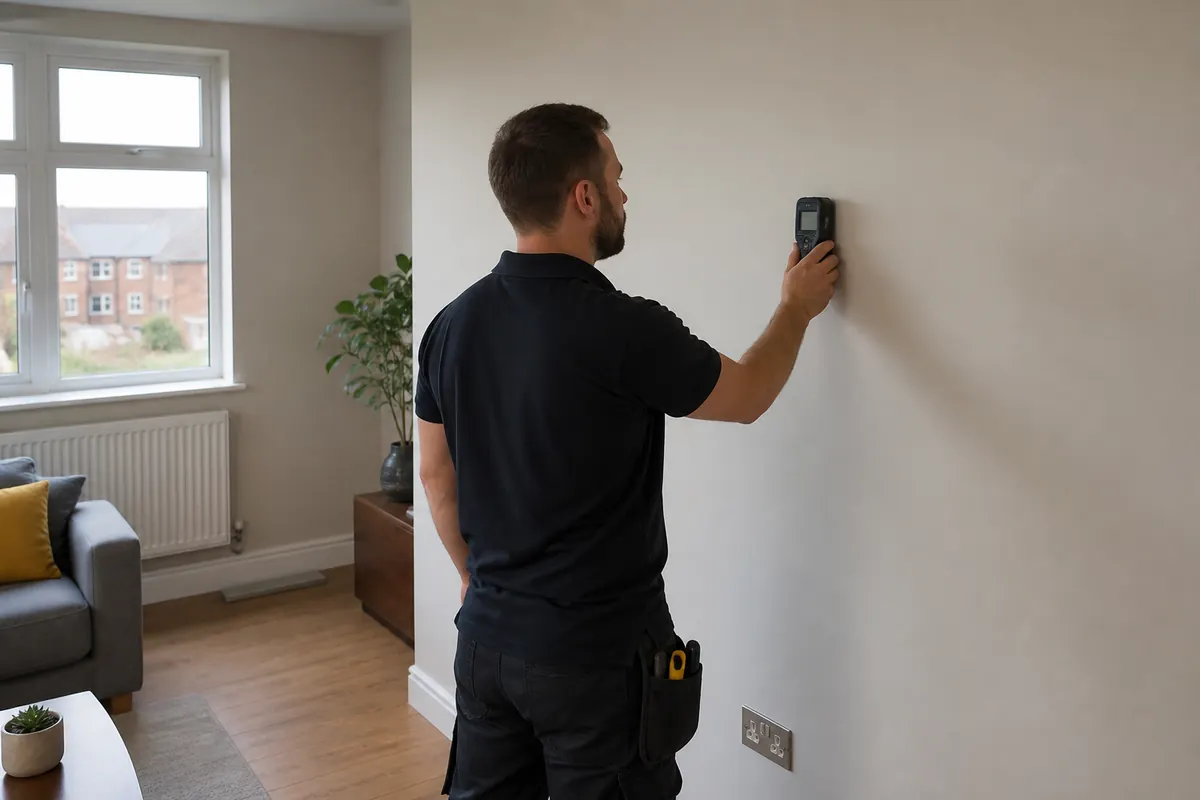
A suitable mounting plan established.
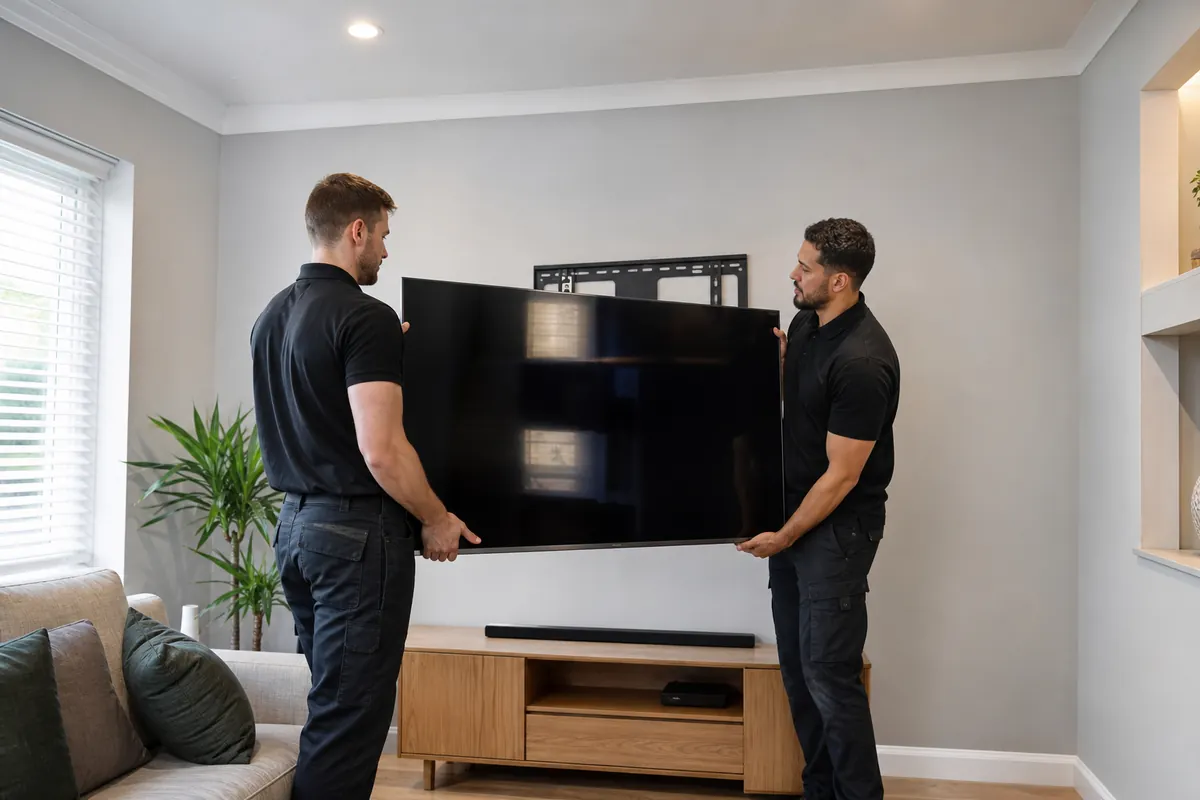
Supported mounting rather than an improvised lift.
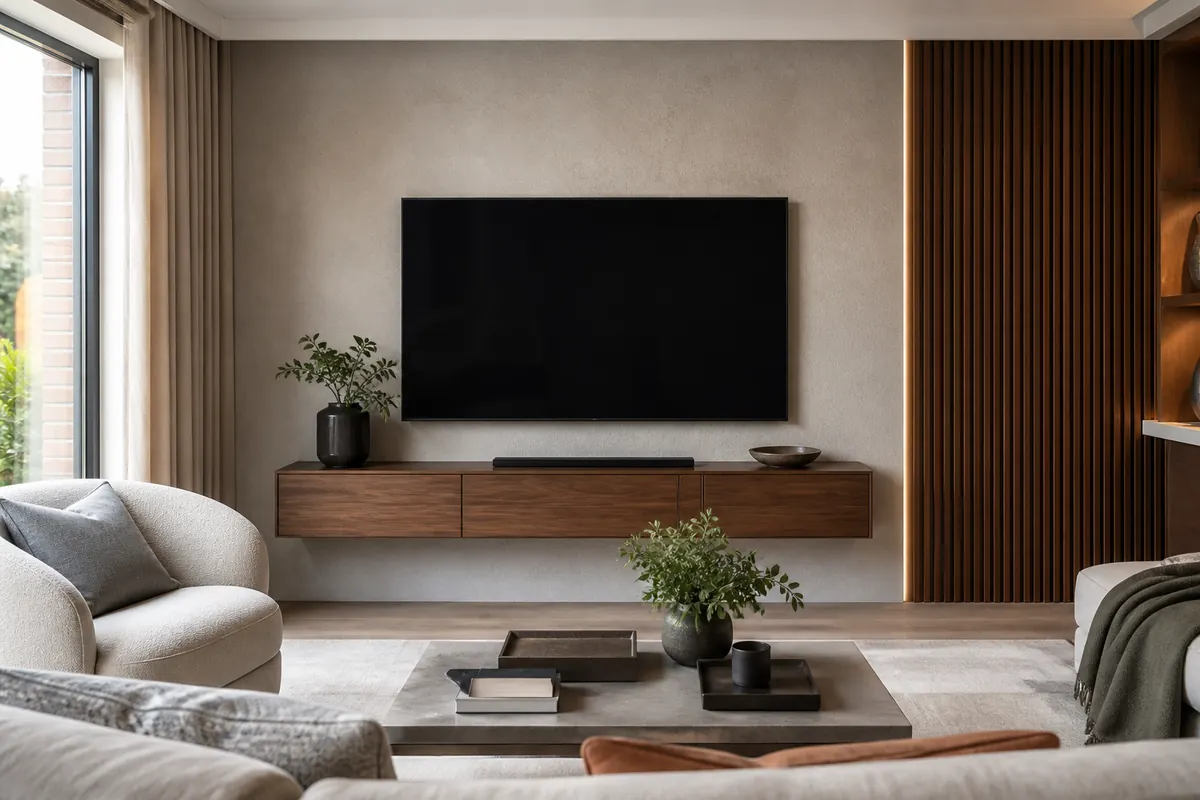
The agreed finish and use discussed.
Illustrative stages shown in different interiors, not one documented customer installation.
From arrival to installation
Provide the full postcode with clear entry instructions and known parking or loading limits. If there is a difficult turn or lift restriction, mention it with the screen dimensions. That context helps assess handling rather than leaving access to assumption.
For the wider service scope, see TV mounting in London .
Load the map when you need it.
Open map in a new tabThe room comes first
For a Canary Wharf television installation, provide apartment access information alongside the screen and bracket. A clear entry plan and a realistic room layout help define the handling and mounting scope. Include the exact TV and bracket models, wall photographs and postcode. Identify any additional work you want separately assessed.
