
Masonry
Brick or block construction needs an appropriate fixing strategy for the material and its condition. A plaster finish is not the structural support.
Westminster · Home technology, considered
A better view.
A more considered room.
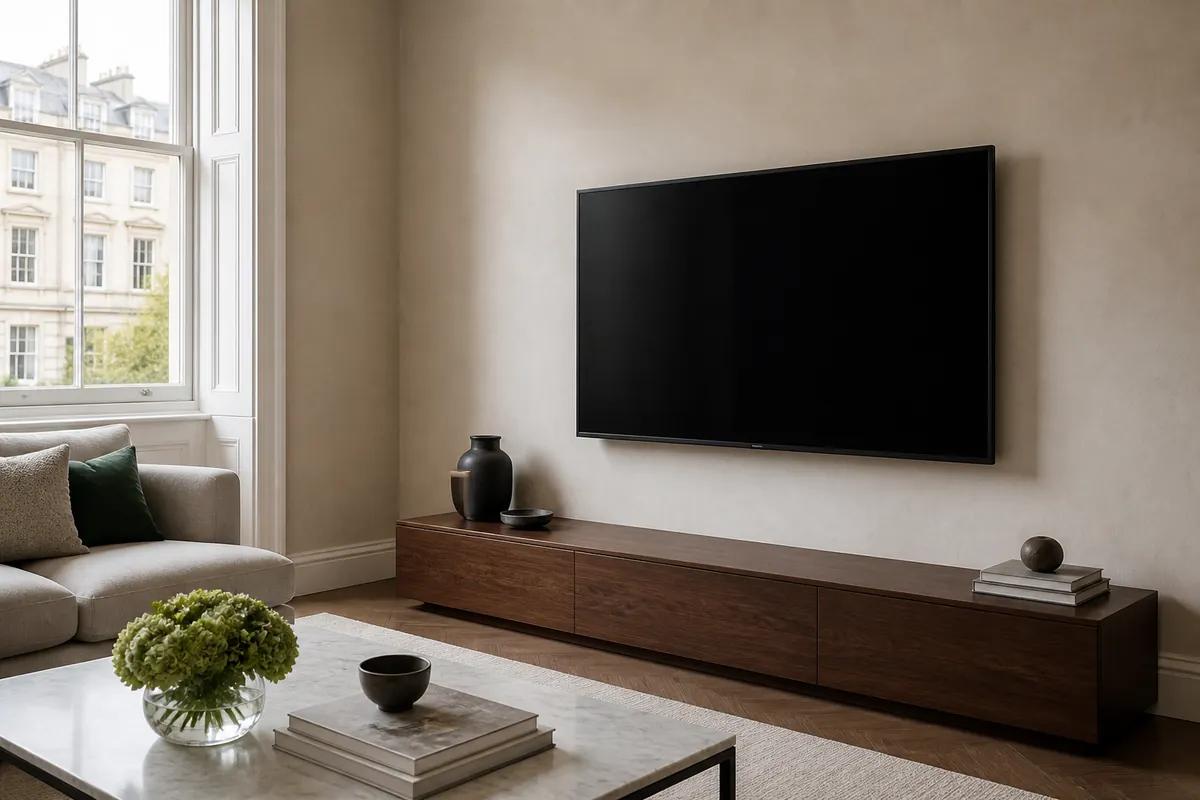
Make the screen fit your Westminster home—not just the empty space on a wall. Start with the way you sit, the structure behind the finish and the connections you use.
Your starting point
Four choices to make the first conversation more useful. The wall, bracket and lifting plan still need assessment.
This prepares an enquiry, not a price or a compatibility approval.
Your setup brief
Small screen · Fixed bracket · Masonry wall · Visible cables.
Send this setup by email ↗Need a new socket? Plan the electrical work separately
Behind the finish
A neat surface does not tell us what can safely support the bracket. Construction and condition determine the fixing approach.
Brick or block construction needs an appropriate fixing strategy for the material and its condition. A plaster finish is not the structural support.
The build-up and suitable support points must be established. A board surface alone does not confirm that a heavy screen or extended arm is suitable.
The framing position and the bracket’s fixing arrangement need to work together. Its location cannot be inferred from the room layout.
Stone, tile and other specialist finishes bring drilling and access considerations. Share photographs before agreeing the work.
Send the full wall and what you know about it. The assessment may change the position, bracket choice or whether work can proceed.
Concealed pipes and cables must be considered. No detector guarantees that every hidden service will be found.
Westminster / room by room
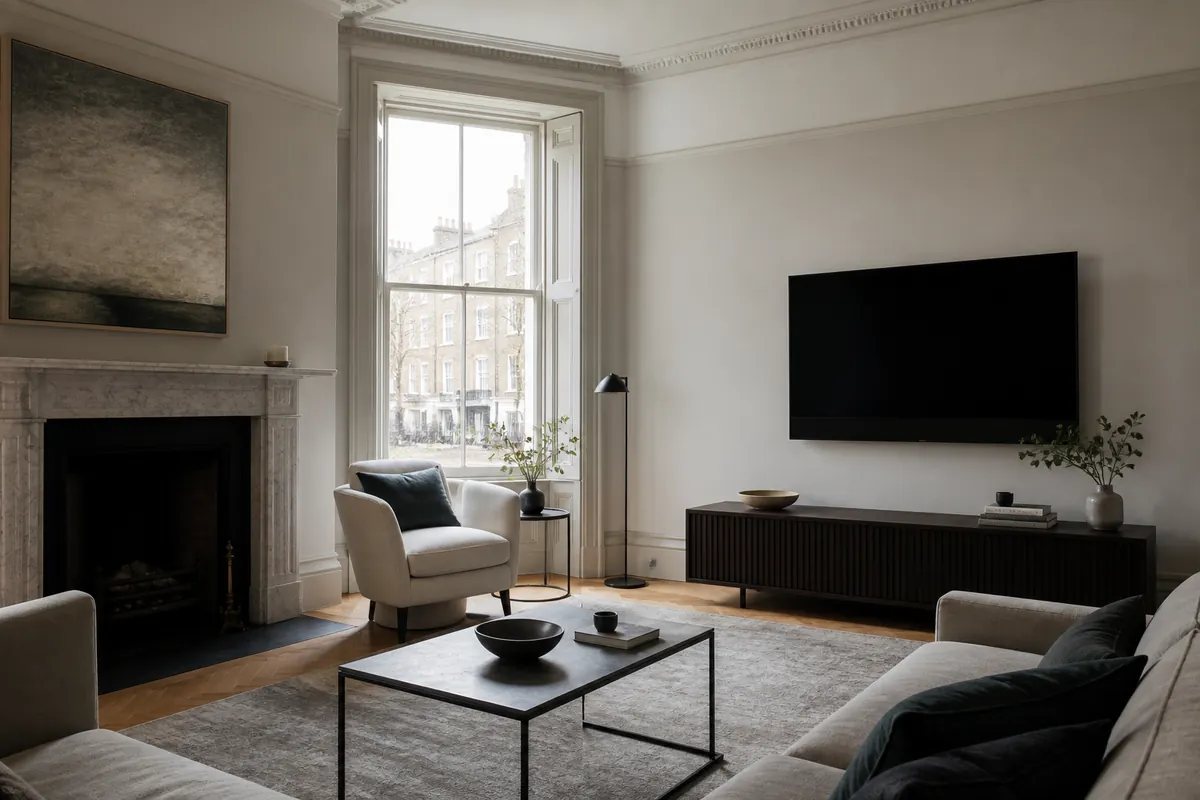
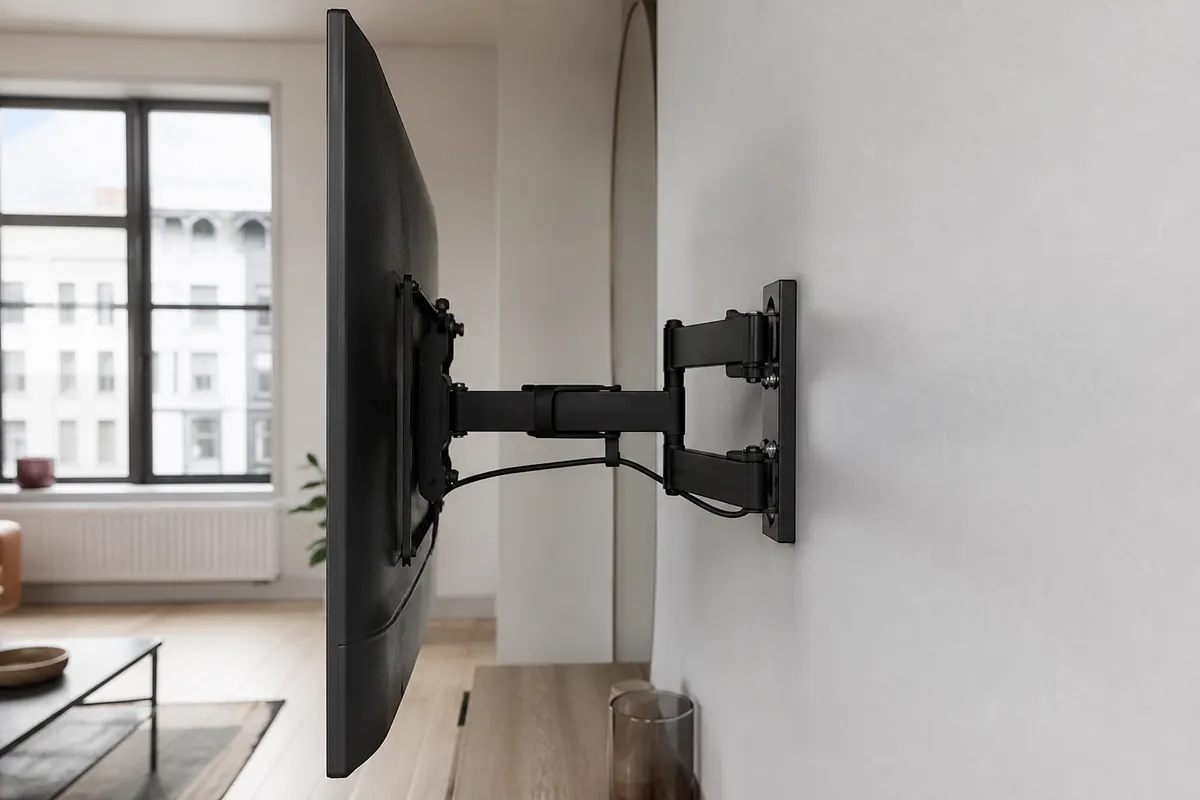
In a Westminster flat, a short wall may sit between a sash window, a door and fitted storage. A full-motion arm could improve the viewing angle, but only if the screen has room to travel and the wall can take the leverage.
A period room brings a different conversation from a modern apartment. A chimney breast, a lined wall or a new partition may look equally solid after decoration. Share what is known about the construction; do not choose a bracket on appearance alone.
For a mansion-block address, include the lift or stair route, building access and loading arrangements with your enquiry. That helps plan how the screen, tools and any second installer reach the room.
Describe your Westminster installation ↗More than inches
The diagonal helps describe a screen. Its actual weight, VESA pattern and handling requirements help determine the installation.
A larger screen can affect the lift, access route and working space around the bracket. Have the exact model and manufacturer’s weight available; equal-size televisions are not necessarily equal loads.
Bracket load rating, VESA fit, the wall and the intended extension are checked together. Screen size by itself is neither a fixing specification nor a price band.
| Bracket | Best suited for | Movement | Key consideration |
|---|---|---|---|
| Fixed | A simple, low-profile arrangement | Minimal | Agree the position accurately before fixing. |
| Tilt | A setup needing vertical angle adjustment | Vertical adjustment | Check viewing angle and clearance. |
| Full motion | More than one viewing position | Extend and swivel | Wall leverage, travel and cable slack need assessment. |
Plan the view
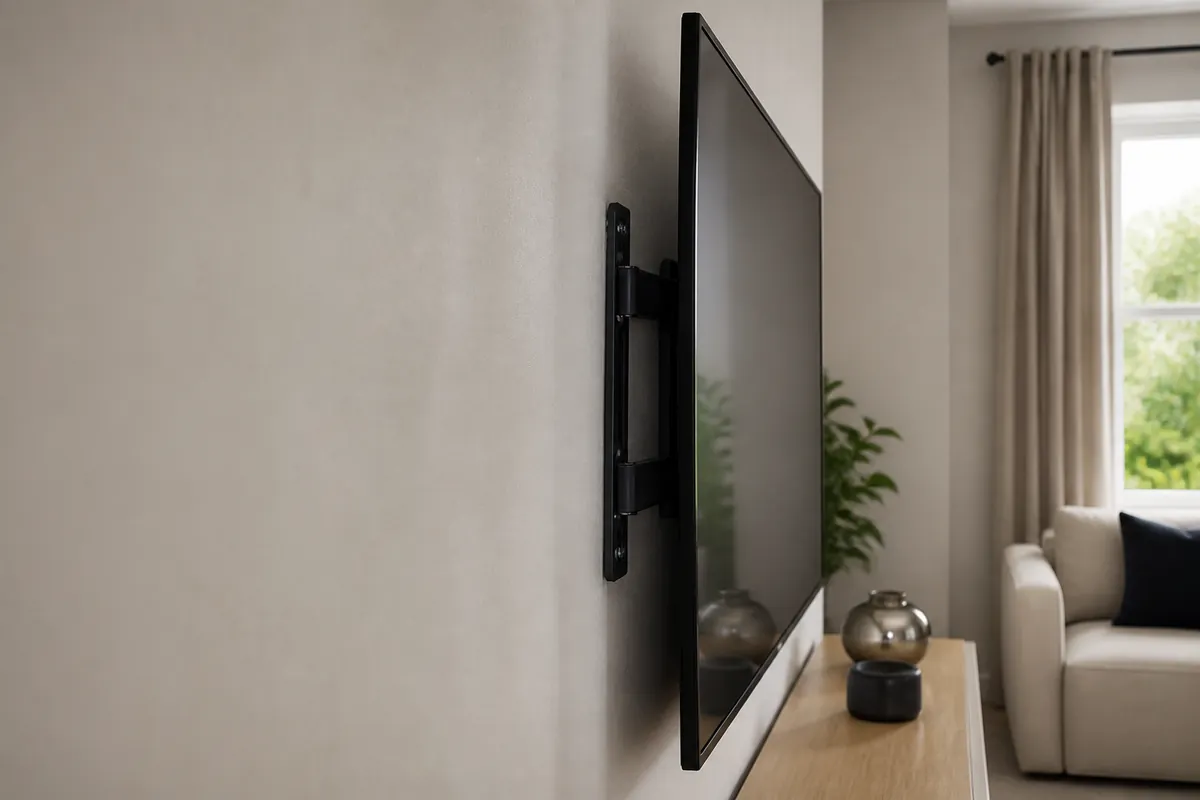
Start at the seat, then work back to the wall. The drawing is a planning aid, not a measured installation design.
Agree the screen centre from your usual seat, with the furniture in its normal position.
Consider the screen size, viewing distance and light from the windows before committing to one wall.
Allow for a swivel arm, screen edges, cupboards and connections throughout the intended travel.
Check power, device cables, fireplaces and likely service routes before marking the wall.
A separate assessment
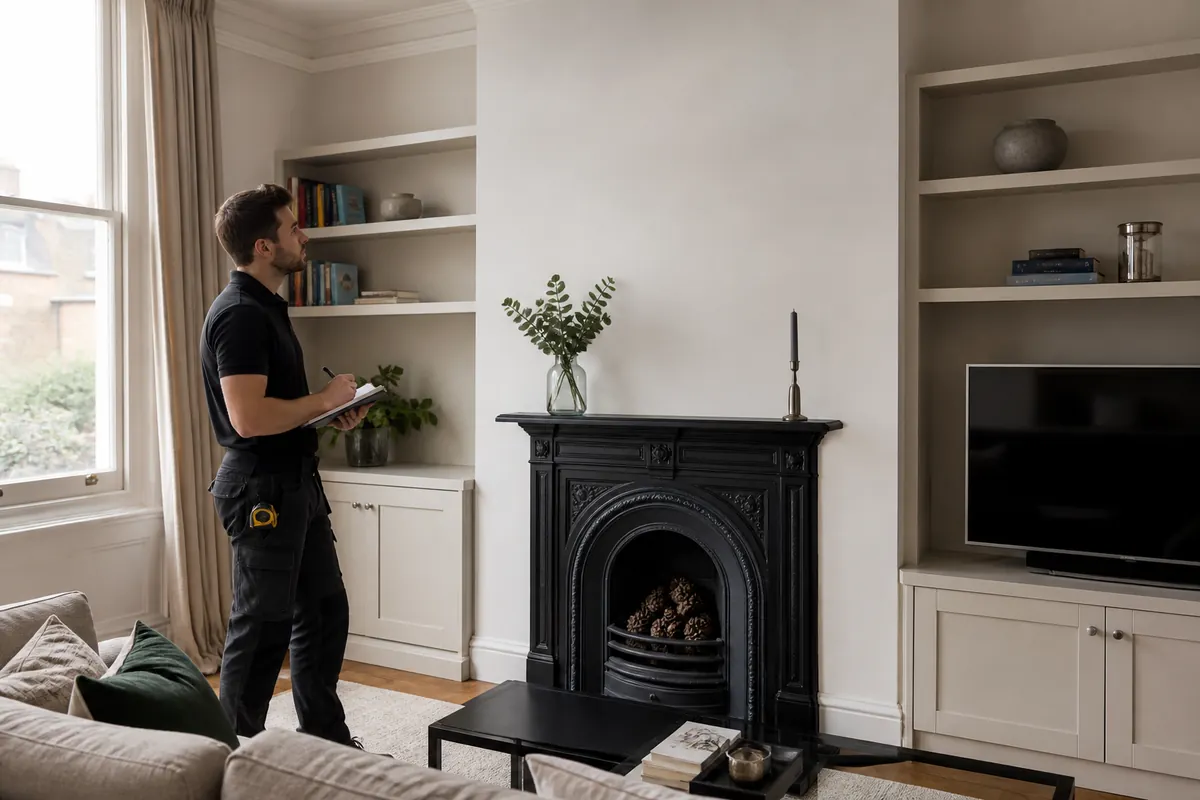
Not every fireplace position is suitable. Heat, the chimney or flue, wall construction and concealed services must be assessed alongside the bracket and screen position.
Even a structurally workable location may leave the screen uncomfortably high. Cable routing also needs its own plan. Discuss an alternative wall if these checks do not support the proposed location.
Connections, considered
Compare two schematic arrangements of the same wall. Surface management and concealed routes are different jobs.
Accessible connections and a tidy surface route can be agreed with the mounting work. Concealing a route may involve wall access and making good, so it needs separate assessment.
A new power point is electrical work. Concealing an ordinary mains flex inside a wall is not a substitute for an appropriate electrical installation.
Discuss a new socketIllustration only. No claim of a completed customer before-and-after installation.
Clear answers
It is quoted after assessment of the TV, wall, bracket, position and access. Cable work and extra lifting support can change the scope.
Possibly, after checking the wall build-up and suitable support. Not every board wall suits every screen or bracket.
The exact weight, bracket, wall and handling requirements need checking. A 75-inch diagonal is not enough to approve the installation.
Confirm bracket supply when booking. Share any bracket you already own so compatibility and completeness can be checked.
Surface management can be discussed. Concealed routes, electrical changes and making good require a separately agreed scope.
Only if the assessment supports it. Heat, the flue, structure, viewing height and cable route may rule that position out.
With the usual seating, screen, furniture and room layout in mind, before the wall is marked.
They may. Screen weight, handling instructions and the access route determine how many people are needed.
The installation, priced properly
Send the TV model, bracket details, wall photographs and Westminster postcode. Include the desired position, access and cable work.
Your quote reflects the team, fixing approach and any additional work needed for the agreed installation.
Request my mounting quote ↗| Installation | Pricing | Main variables |
|---|---|---|
| Standard fixed-bracket mounting | Quote after assessment | TV, wall, bracket and position. |
| Large TV / full-motion bracket | Quote after assessment | Weight, leverage, structure and lifting. |
| Mounting + additional cable / electrical work | Detailed quote | Route, electrical requirements and making good. |
One connected system
These checks belong together. A bracket that fits the screen still needs a suitable structure and a practical position.
| Factor | What is checked | Why it matters |
|---|---|---|
| TV | Actual weight, VESA and manufacturer’s handling information | The bracket and lifting method must match the screen. |
| Bracket | Rated load, movement, bolts and spacers | Support and connections must be suitable for the television. |
| Wall | Construction, condition and concealed-service risks | Determines the fixing strategy and whether the position is suitable. |
| Position | Height, centre, clearance and access | Supports viewing comfort and a workable installation. |
| Cables | Power, device connections and movement allowance | Keeps the agreed setup usable without strained connections. |
From specification to screen
Send TV and bracket models, wall photographs and the intended location.
Assess construction, services, access and the desired position.
Check load rating, VESA, bolts, spacers and handling requirements.
Agree the view before making marks or drilling.
Use the assessed fixing approach and check the wall plate for level.
Lift with sufficient support, engage the bracket and check its locks.
Connect the agreed devices and leave suitable movement allowance.
Review basic function, alignment and travel; explain safe adjustment.
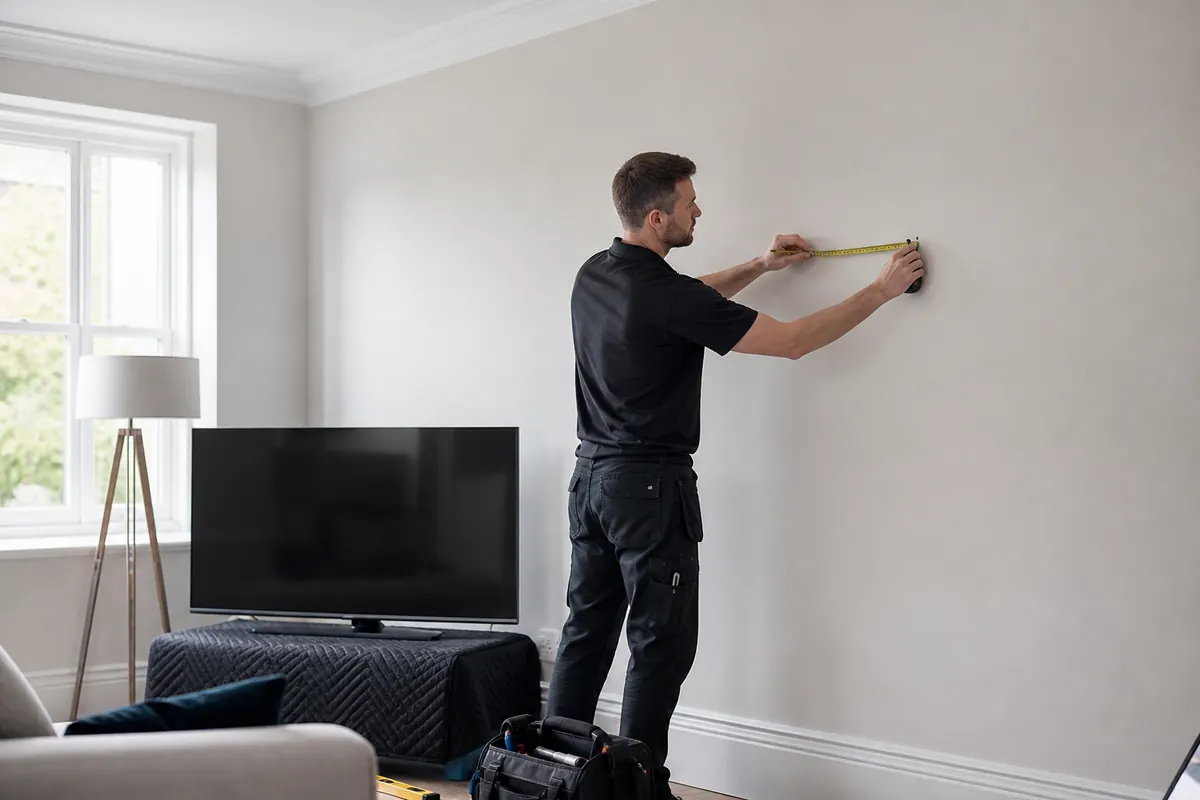
A screen waiting beside the intended wall.
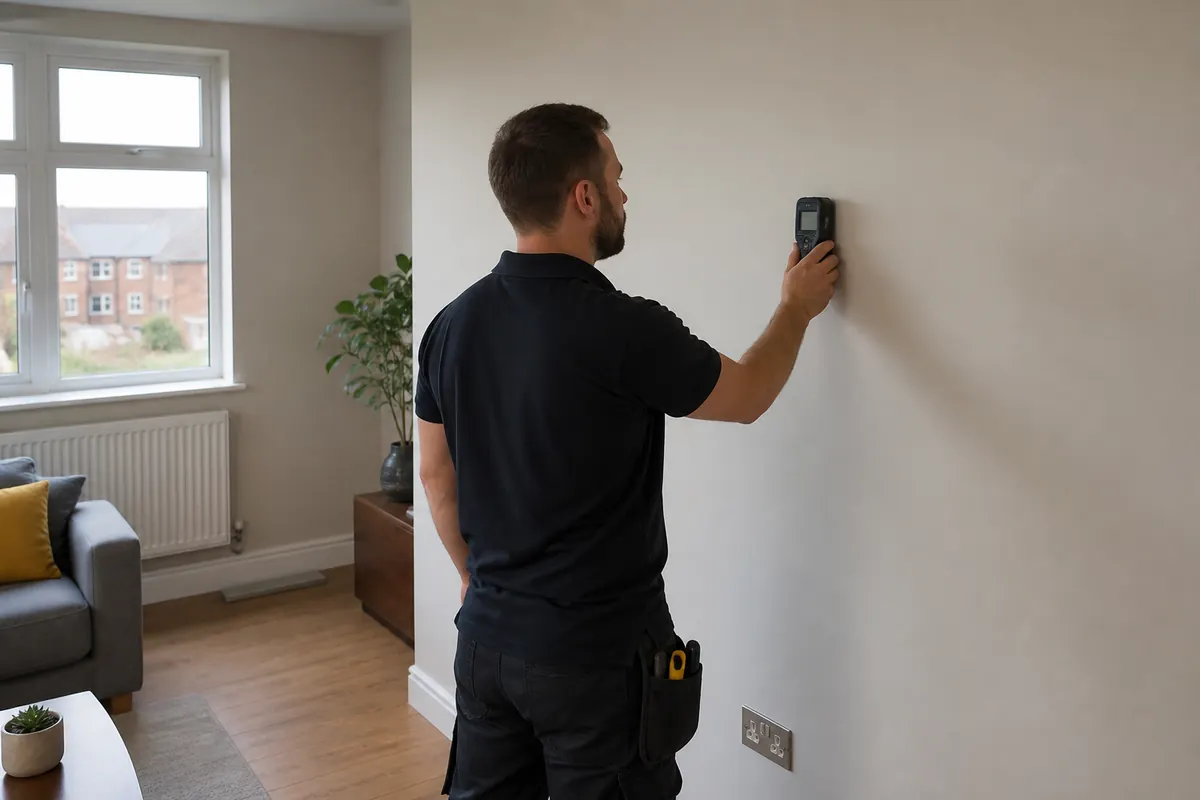
The wall and position assessed before fixing.
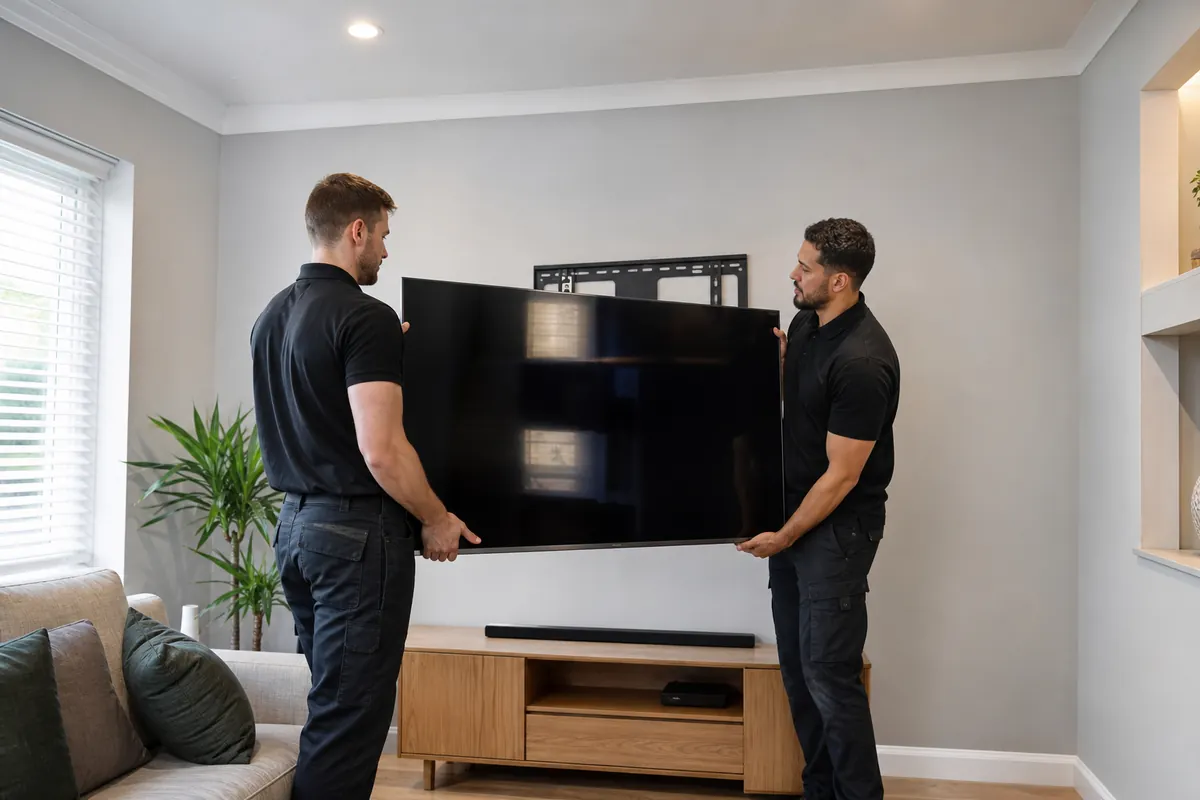
Supported lifting and bracket engagement.
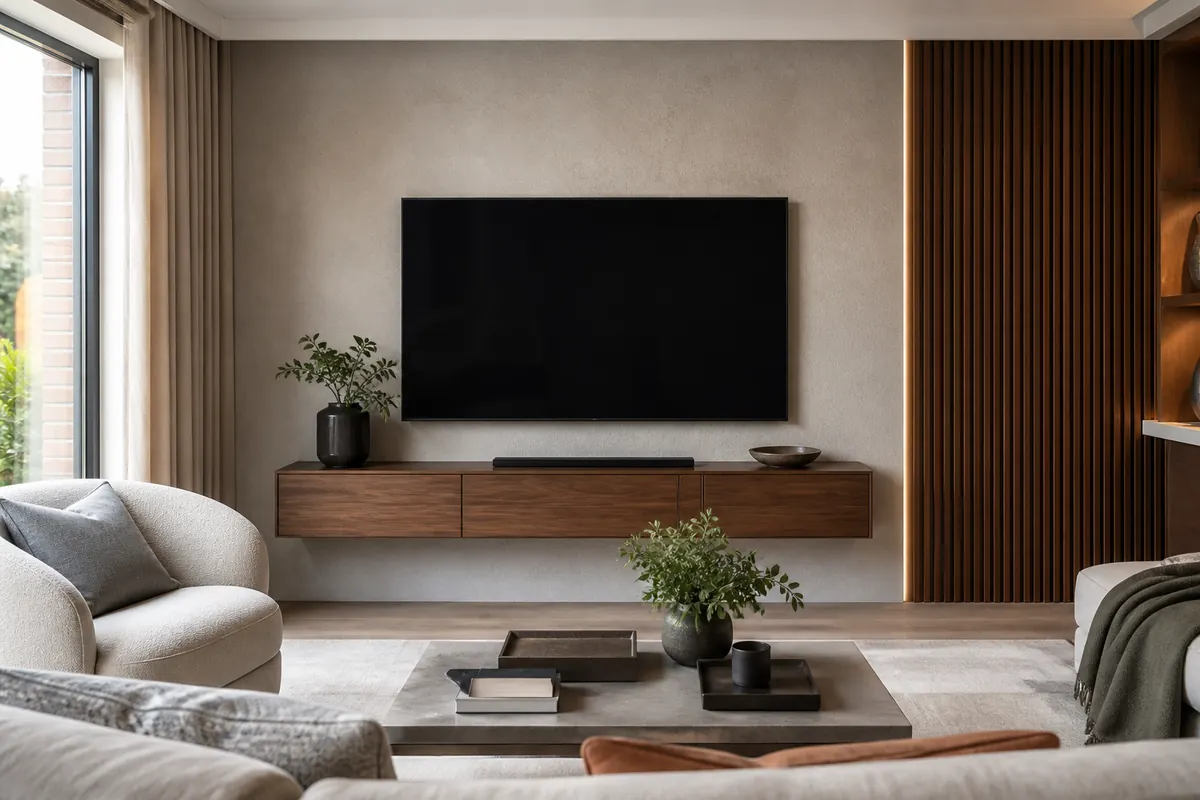
A considered entertainment arrangement.
Illustrative stages shown in different interiors, not one documented customer installation.
Your property, your brief
Describe the actual room and building access. The property label alone cannot establish the wall’s suitability.
Include the route from the entrance to the room, lift restrictions and the furniture that will remain around the screen.
Flag chimney breasts, decorative finishes and anything known about later wall linings or alterations.
Share available wall information and building requirements; a recently finished surface still needs assessment.
Explain the floor, stairs and proposed wall, particularly for a large screen or a position requiring extended reach.
For a workplace or another non-domestic setting, ask the team to confirm the scope before booking.
Central London
Provide the full postcode, building entry instructions and any parking or loading restrictions with the installation details. Confirm access before carrying a large screen through a shared entrance.
For the wider service scope, see TV mounting in London .
Load the map when you need it.
Open map in a new tabPractical details
Send the whole intended wall, the TV model label and bracket specification, plus the sockets and connected devices. A wider room photograph helps explain seating, furniture and the route for lifting the screen.
Only after its condition, rated load, VESA arrangement and wall fixings have been checked against the replacement screen. Matching the old screen size does not establish compatibility.
A hollow sound is not a wall specification. The installer needs to establish the construction and suitable support points before deciding whether the proposed screen and bracket can be supported.
Its travel needs to be assessed with the full screen width, nearby furniture and cable slack in mind. An arm that physically fits the TV can still collide with the room when extended.
The intended centre and height are agreed with your seating position, screen size and room layout before marking. Where possible, have the usual furniture in place for that discussion.
The assessment must consider heat, the chimney or flue, wall construction, concealed services and the viewing position. A preferred spot above a fireplace may be unsuitable even when it looks symmetrical.
No. New or relocated power points are separately agreed electrical work. Explain where power is currently available so mounting and any electrician visit can be scoped together.
Confirm supply before booking. If you already have a bracket, provide its model and make sure its parts and instructions are available. Its supplied fixings still need to suit the assessed wall.
Tell the team about stairs, lift dimensions, concierge arrangements and any loading restrictions. Clear the route into the room and establish any building permissions needed for the work.
No. Weight, screen construction, handling instructions and the lifting route all matter. Large or awkward panels may need two people; the team requirement should be confirmed in the quote.
Do not assume so. Removal of old brackets, making good, disposal, aerial or network work must be specified separately. Accessible device connections and basic function checks are agreed as part of the installation scope.
The room comes first
Share the screen, the wall and the position you have in mind. We’ll help define the mounting work and what needs separate assessment.
