
Can the quote cover several connected devices?
List them and explain where they sit. Accessible reconnection can be agreed; new wiring, network work or hidden routes need their own scope.
Sutton · Home technology, considered
Prepare a complete installation brief
For TV mounting in Sutton, bring the screen specification, wall view and access information into one enquiry. The quote should describe the actual job rather than rely on screen size alone.
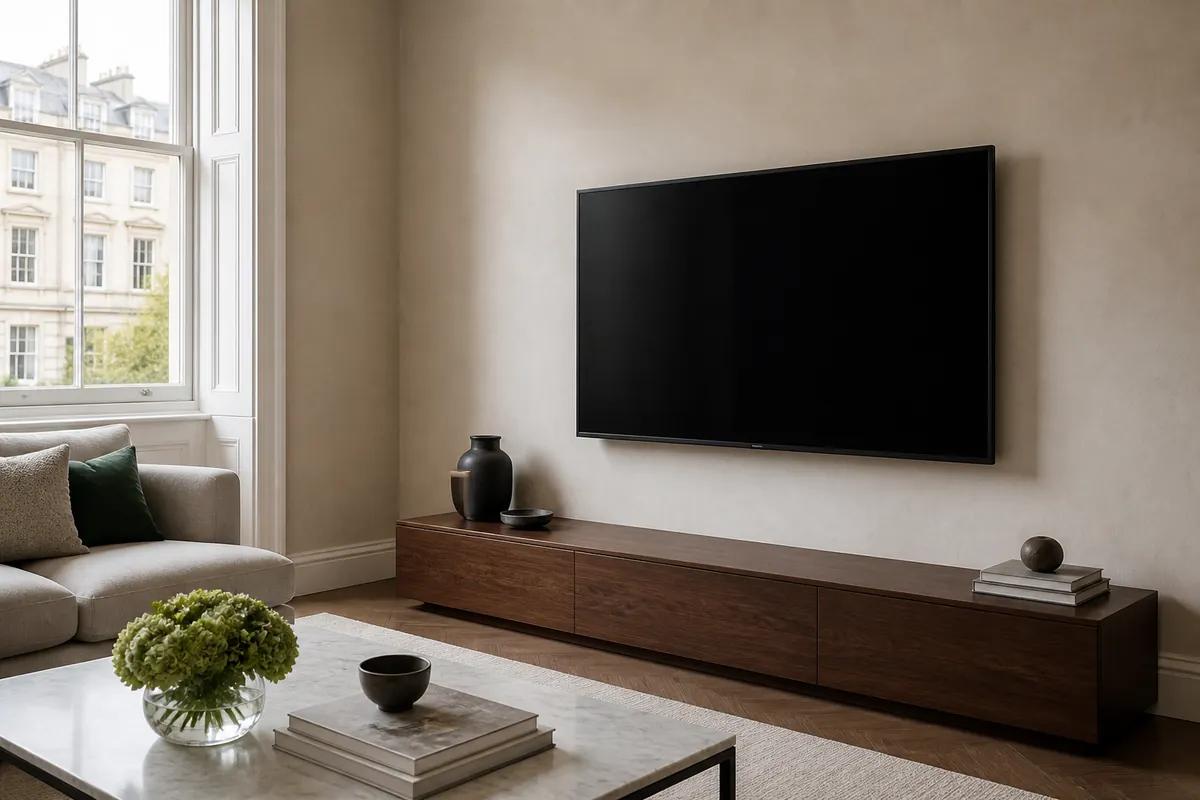
Before the position becomes permanent
List them and explain where they sit. Accessible reconnection can be agreed; new wiring, network work or hidden routes need their own scope.
No. Material, condition and the proposed fixing positions must suit the load and added leverage. Wall type alone is not approval.
No. Weight, manufacturer handling guidance, access and available working space also influence how the panel can be prepared and mounted.
No. Product quality does not establish the condition or capacity of the supporting wall or its fixing points.
Yes, describe the exact finish wanted. Surface management, concealed routes, electrical work and making good need clearly agreed boundaries.
Photographs begin the discussion, but suitability depends on the actual conditions and required checks, not its appearance in an image.
Provide the console’s finished dimensions and intended position, while keeping the watching seat part of the height and centre discussion.
The actual screen, its handling guidance and the route to the bracket determine the support required, including whether two installers are needed.
Specify, then select
Send the TV’s full reference and any bracket already supplied. Model-specific information helps distinguish a genuine fit from an advertised range that appears suitable.
Two equal-size screens can differ in rigidity, weight and mounting details. The lifting plan should reflect the actual panel and access route rather than a blanket rule based on inches.
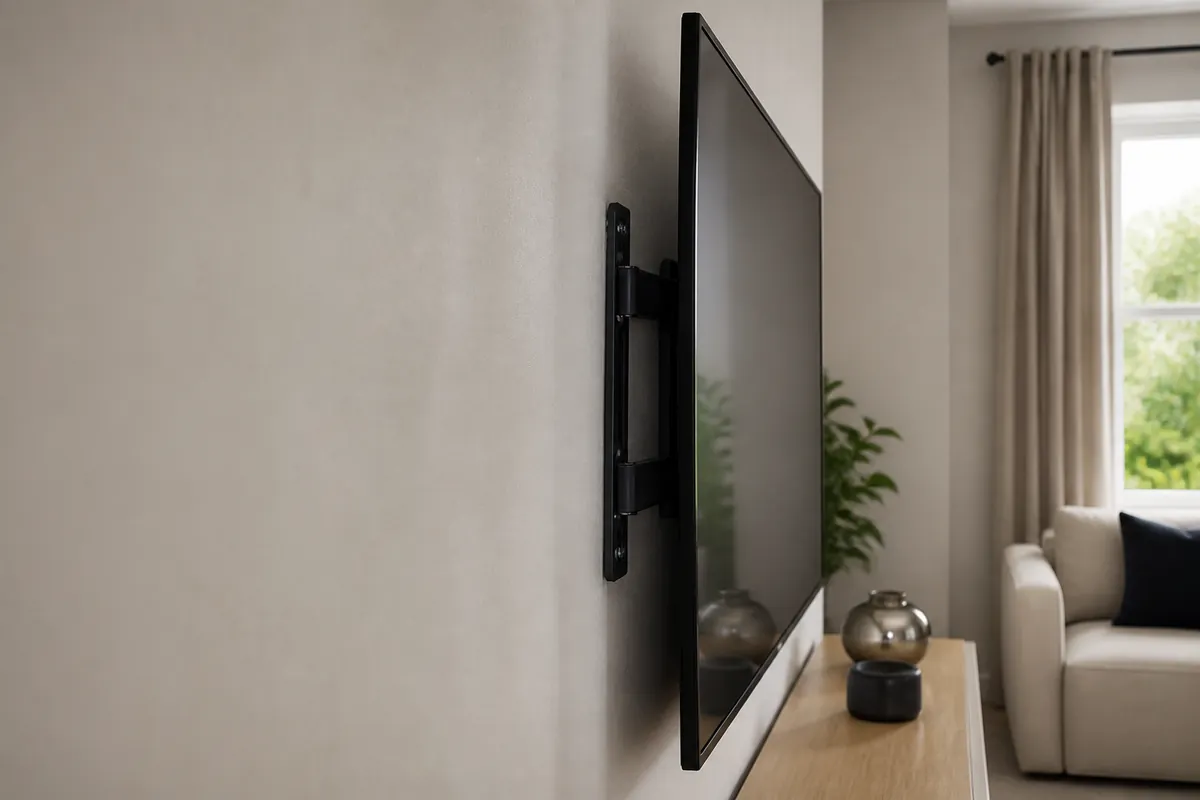
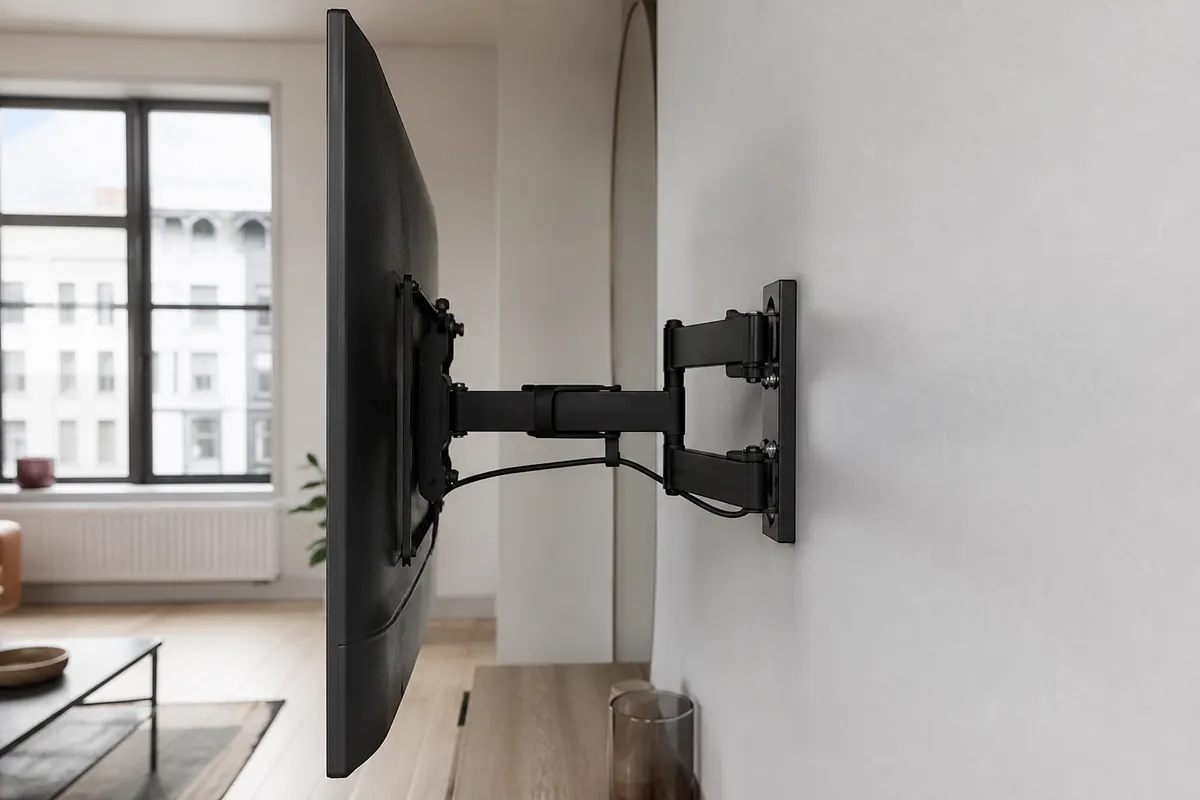
The television, bracket and assessed wall form one supported arrangement. Check VESA, capacity and fixing suitability together, including the extra leverage of an extending mount.
| Bracket | Best suited for | Movement | Key consideration |
|---|---|---|---|
| Fixed | One agreed view with a compact wall profile | Minimal | Confirm the final centre and rear plug clearance first. |
| Tilt | A screen whose vertical angle needs modest adjustment | Vertical adjustment | Review plug depth and lower-edge space in the tilted position. |
| Full motion | Different watching seats with a defined turning path | Extend and swivel | Extension increases leverage; support and lead travel need review. |
The actual building conditions
Assessment concerns the particular wall, screen and access route. A conversion, newer apartment or family house can each contain construction that needs further investigation.
State who admits the team and any restrictions on unloading or lifts. The route onwards to the wall matters as much as entry to the building.
Mention known linings, repairs or decorative materials. A chimney breast or special finish warrants consideration before the position is promised.
Share any relevant wall information supplied with the property. It still needs to be considered against the actual television and chosen bracket.
In a house, describe stairs, landings and the room approach. A large television may be harder to manoeuvre than its final wall position suggests.
If the installation is not domestic, have the requirements and service scope confirmed for that setting.
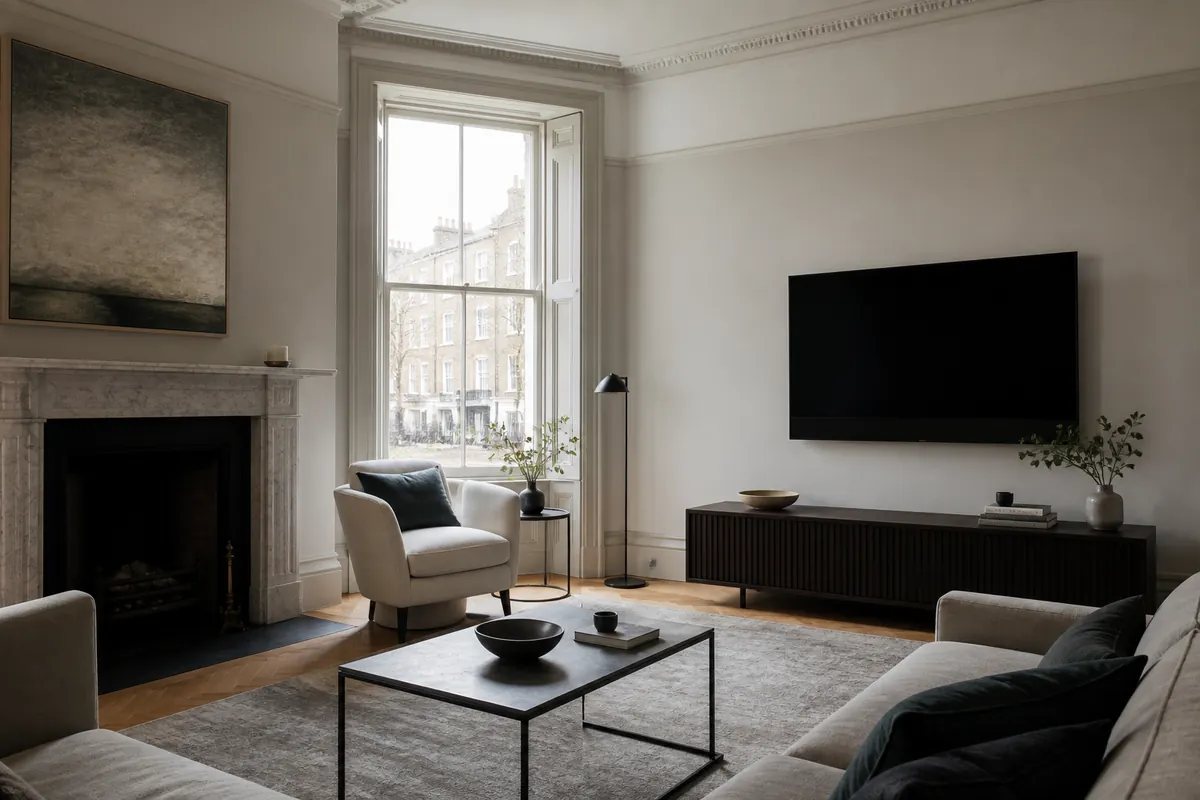
Sutton / room by room
If the room is still being decorated, state what will be finished before the appointment and which furniture will return. A new surface does not replace the need to assess the support behind it.
Explain the result you want for the cables and any existing bracket. Mounting, removal, concealed routing, electrical alterations and making good should be separated clearly when the scope is agreed.
Describe your Sutton installation ↗A considered fitting sequence
Provide model information, wall views, postcode and any additional tasks requested.
Check wall condition, support and hidden-service risk at the proposed location.
Check TV mass, VESA, mount rating and the correct fasteners and spacers.
Confirm height and centre with the complete panel dimensions and normal seating.
Use the assessed fixing approach and check alignment before the panel is brought to the bracket.
Use the required lifting support and confirm that the bracket’s retention system is secure.
Attach accessible leads within the scope and review their allowance through any planned movement.
Check basic function and alignment and explain how to use the adjustment safely.
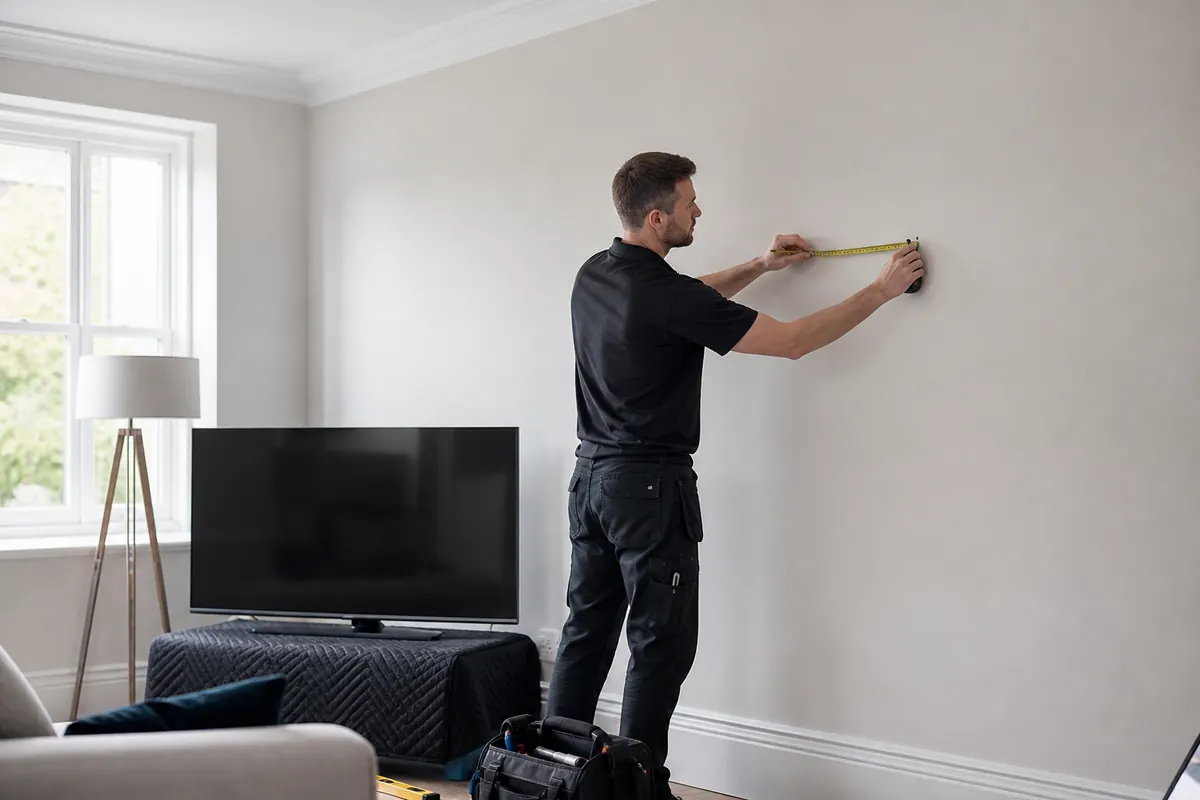
Screen details ready for review.
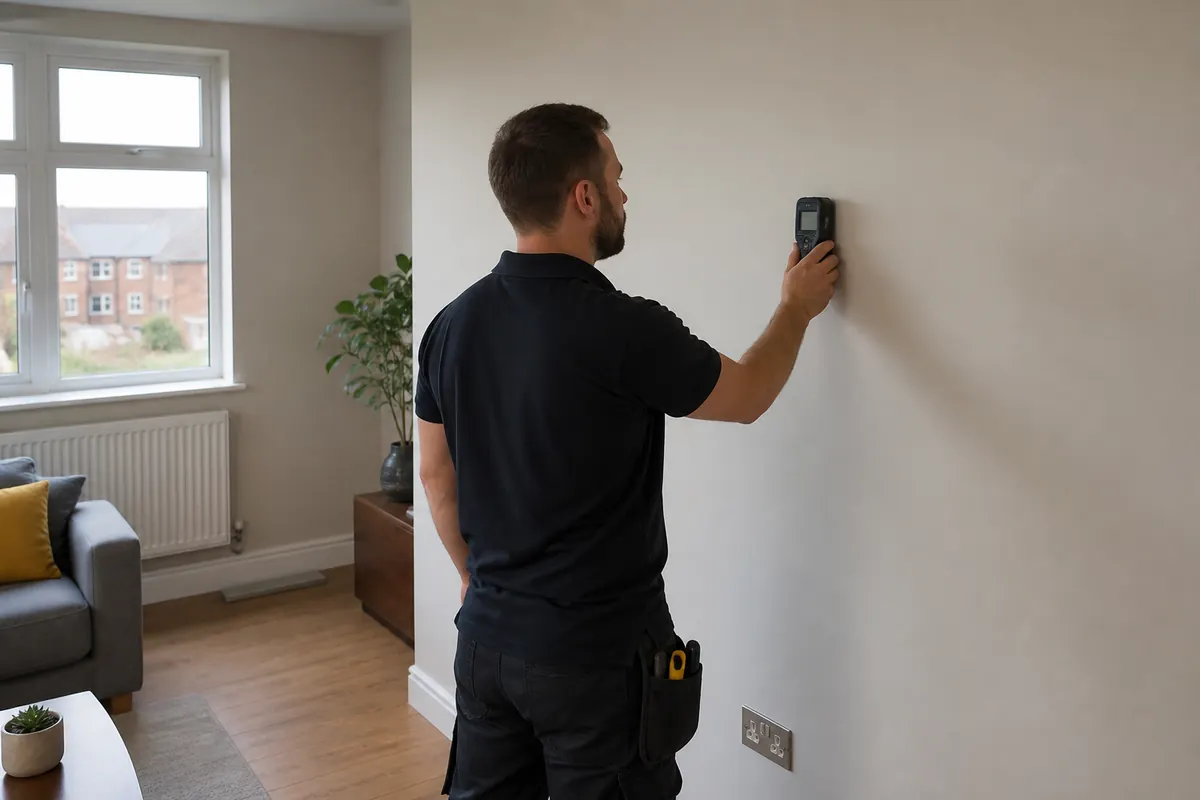
The support strategy reviewed.
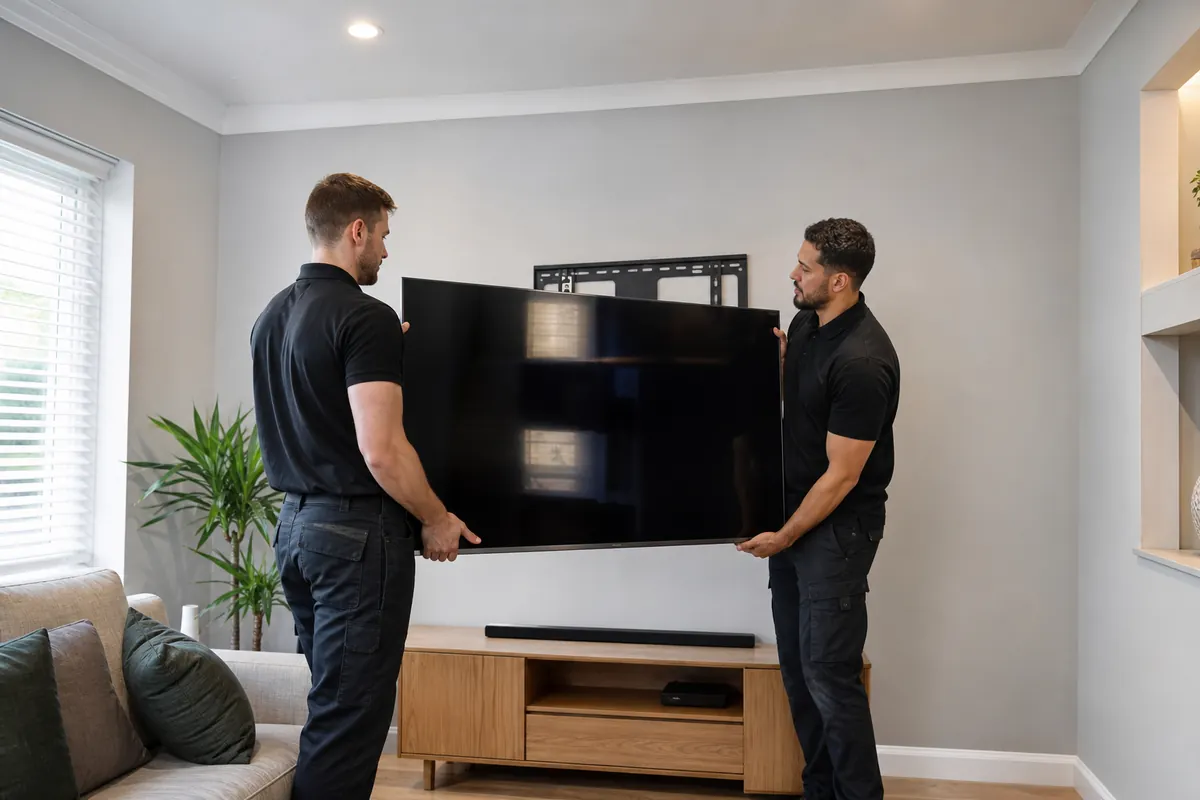
Handling planned for the real screen.
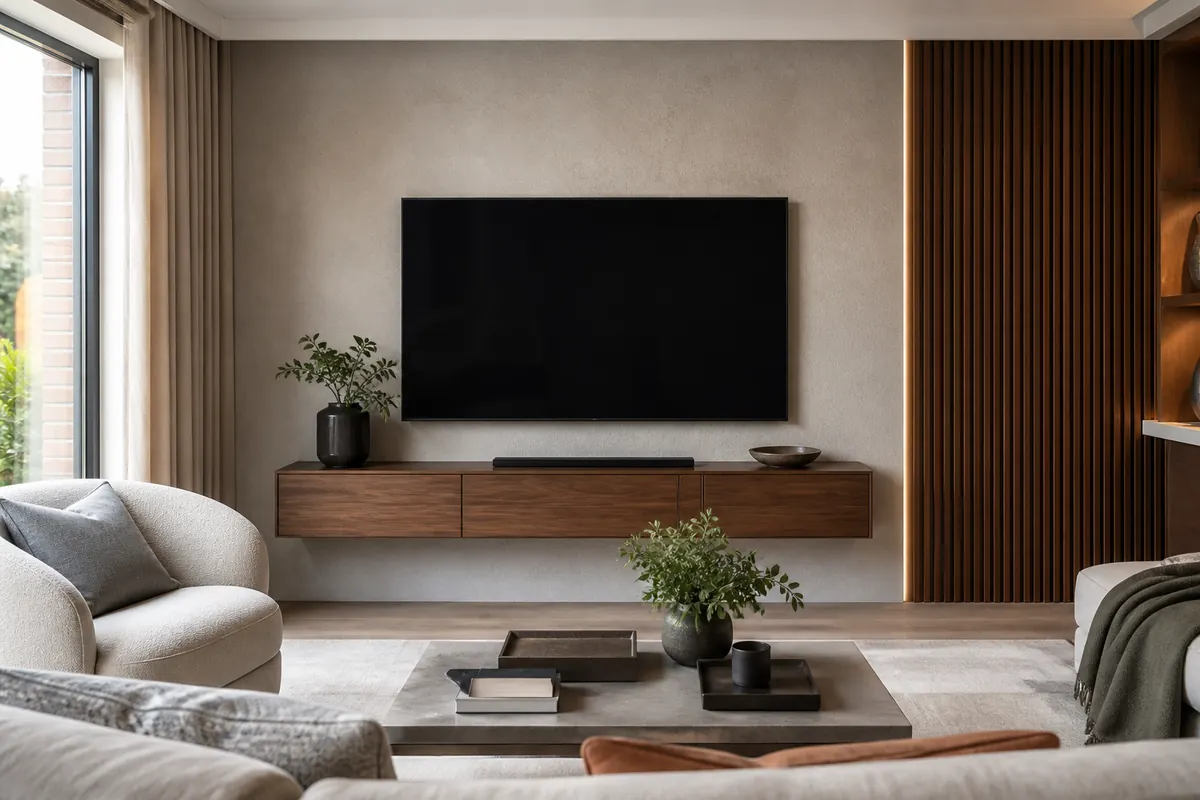
Connections reviewed from the user’s perspective.
Illustrative stages shown in different interiors, not one documented customer installation.
Start with what is known
An exact model number is more useful than a guessed weight, and an unknown wall is worth identifying honestly. Complete the closest options and explain what still needs checking before the work can be agreed.
The enquiry needs assessment before a price or fixing approach is confirmed.
Your setup brief
Small screen · Fixed bracket · Masonry wall · Visible cables.
Send this setup by email ↗Need a new socket? Plan the electrical work separately
Look past the surface
The support’s condition matters alongside its material. Existing fittings and decorative coatings provide context, but neither can specify the installation method for a new screen.
Masonry fixing depends on reaching suitable material with an appropriate assessed system. Surface plaster and the presence of an old television do not establish that system.
Plasterboard is a finish within a wall assembly, not a universal load rating. Identify suitable backing or structural support for the particular screen and bracket.
Known framing information helps, but it still needs to fit the actual wall plate and screen position. The selected fixings must suit the assessed structural timber.
Flag decorative panelling, tile or stone even if you know the structure behind it. Passing through that face introduces its own requirements and damage considerations.
If the wall history is unknown, say so. Photographs can start the enquiry, but on-site findings may require another bracket, a different position or a decision not to proceed.
Hidden electrical and plumbing routes must be considered before drilling. Detector readings are not a guarantee, including where a wall looks clear of sockets or radiators.
Choose a comfortable reference
Use the schematic to identify the relationships to discuss. It does not supply a standard height or replace measurements of your own screen and furniture.
Have the normal seating position available when height is discussed. If the furniture must be cleared for work, record its finished location first.
Look at the proposed position from the seat, not only from the doorway. Adjacent windows can influence the view even when the wall itself is clear.
Check that cupboard fronts and drawers remain usable around the full panel. An extending arm needs clearance at intermediate positions as well as its destination.
Existing sockets offer information, not a complete hidden-service map. Include visible fittings while keeping new electrical work distinct from mounting.
A feature wall needs more checks
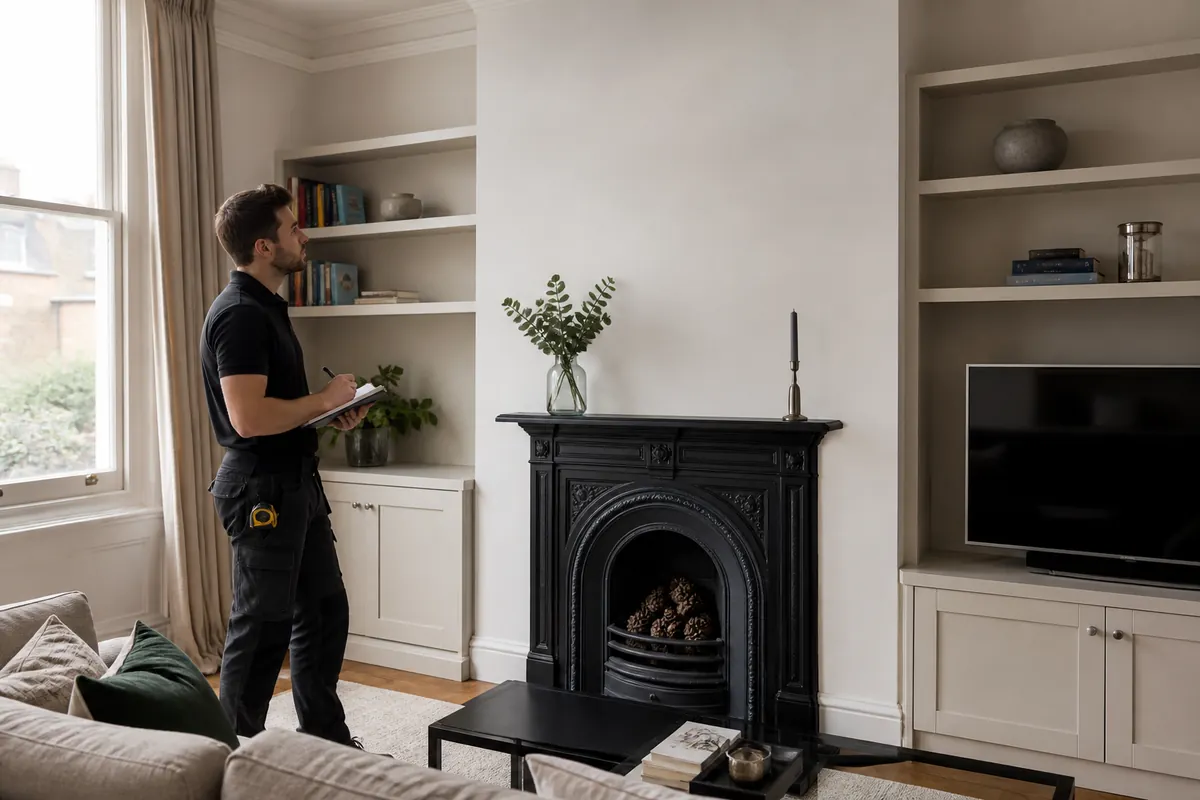
Any chimney or flue, heat exposure, wall build-up and hidden services must be assessed alongside the TV’s requirements. The fact that another screen was there previously is not approval.
A technically possible point may still give a poor seated view. Discuss whether moving the television beside the feature would provide a workable lower position and clearer cable route.
Plan the connections as a system
The drawings compare cable appearances rather than quote packages. Your screen ports, bracket depth and device locations need to inform the actual route before a finish is agreed.
A surface route can keep leads organised while leaving connections reachable. In-wall concealment needs its own assessment of access and construction, including how any opening will be repaired afterwards.
Power changes need their own electrical scope. Concealing ordinary mains flex is not an alternative to arranging a suitable new or relocated socket installation.
Discuss a new socketThe comparison is schematic, not a photographed before-and-after customer job.
Define the work before the price
Provide the model numbers, wall pictures and postcode, then list the equipment needing connection. Explain the preferred height, bracket movement and any access restriction.
Pricing follows assessment of the proposed installation. Ask the quote to separate mounting from additional cable routes, electrical changes, removal and finishing work.
Request my mounting quote ↗| Installation | Pricing | Main variables |
|---|---|---|
| Standard fixed-bracket mounting | Quote after assessment | A suitable wall plate arrangement and confirmed TV compatibility. |
| Large TV / full-motion bracket | Quote after assessment | The actual panel load, arm extension and required lifting support. |
| Mounting + additional cable / electrical work | Detailed quote | Agreed cable method, electrical tasks and repair expectations. |
Check the whole proposal
The television may physically fit a mount that is unsuitable for its weight or intended use. Wall support, position and cables must be reviewed with the hardware specification.
| Factor | What is checked | Why it matters |
|---|---|---|
| TV | Manufacturer mass, VESA spacing and handling requirements | Identifies the real attachment and lifting requirements. |
| Bracket | Correct TV fasteners, spacers and rated movement | Avoids assuming any bolt kit or size range will do. |
| Wall | The construction at the fixing points and service risks | Identifies suitable support and constraints on drilling. |
| Position | Height and centre with edge clearance and lifting space | Supports a comfortable view and a practical fitting method. |
| Cables | Device locations, port orientation and allowance for travel | Maintains accessible, unstrained connections through agreed movement. |
Practical visit information
A postcode identifies the address area, not the carrying route. Tell us about shared doors, building instructions and loading restrictions, then explain how the screen and equipment reach the room. Resolve any necessary access arrangements before booking.
For the wider service scope, see TV mounting in London .
Practical details
Provide the exact model, actual weight and full panel dimensions, then describe storage, the carrying route and working space at the wall. Those facts are more useful than a large-screen category alone.
Mention any narrow doors, tight stair turns or lift restrictions and provide available dimensions. The screen’s width and handling requirements can create constraints even when its final room has plenty of space.
Specify it when requesting the quote, including the preferred path. Accessible connection and a neatly managed surface route have different work requirements from opening the wall for concealment.
The usable movement depends on the actual panel dimensions and nearby walls or furniture, not just the bracket’s advertised range. The proposed travel also needs appropriate wall support and cable allowance.
Yes. Provide photographs and any information about the backing. The finish introduces drilling and damage considerations in addition to the support needed for the television and bracket.
Provide the manufacturer’s mounting-related weight information and exact model rather than estimating. The assessment also considers handling, bracket capacity, VESA and the suitability of the wall fixings.
Their position alone does not establish suitable support. The wall condition, intended fixings and new bracket arrangement need review before deciding whether any existing fixing location can be retained.
Explain whether the television is boxed, standing or already mounted so the handling plan reflects its condition. Follow the manufacturer’s preparation guidance rather than assuming a screen can rest safely on any surface.
No. Explain relevant entry, lift, loading or contractor arrangements and confirm them with the building contact where necessary. Those conditions can affect both the appointment and how equipment reaches the room.
No. A practical route does not establish structural support or remove hidden-service risks. The wall and fixing arrangement need assessment independently of the desired cable appearance.
The room comes first
Your Sutton TV mounting enquiry should include the exact model and actual screen weight. Bracket compatibility, the wall and handling requirements cannot be settled from inches alone. Include the exact TV and bracket models, wall photographs and postcode. Identify any additional work you want separately assessed.
