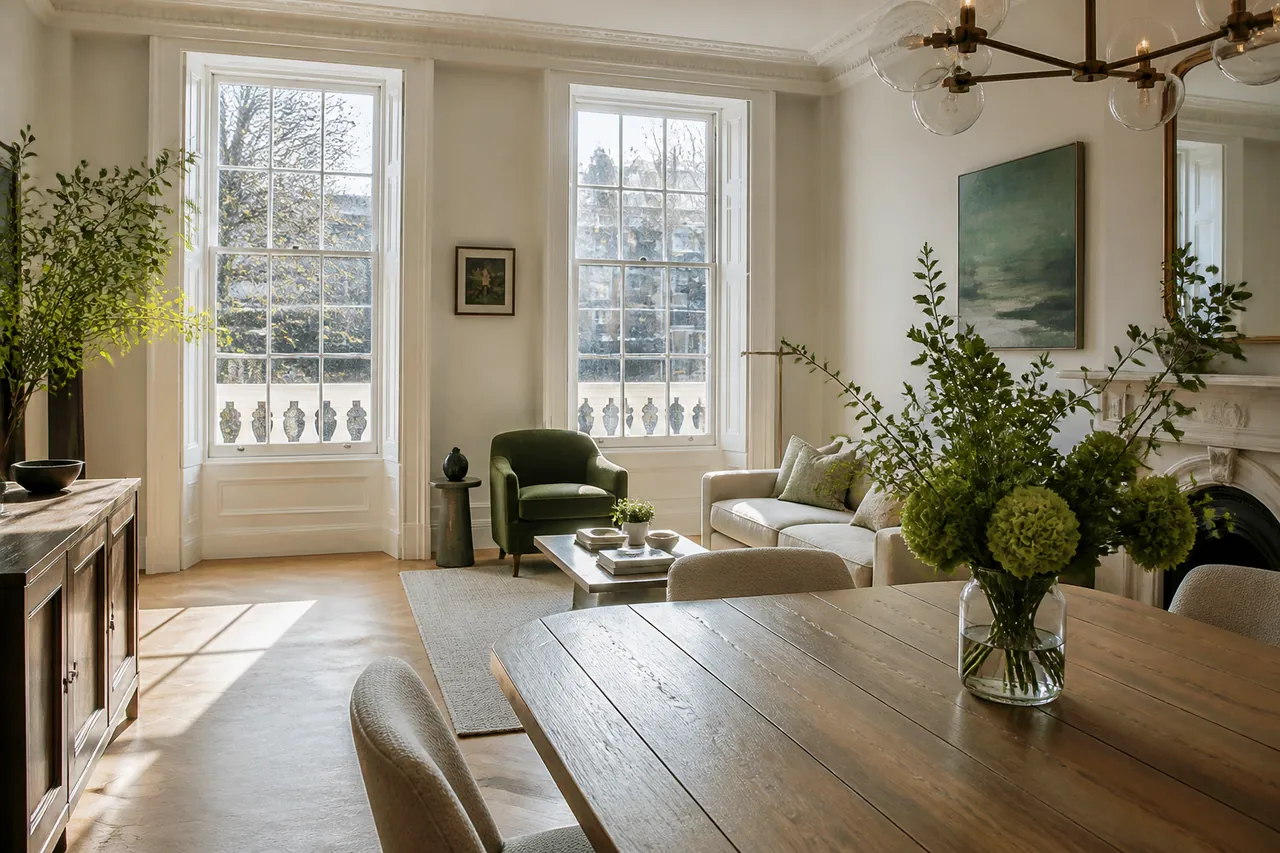
Dust along the old bookcase line
Once a unit has already been moved safely, an exposed strip may show loose dust beside the skirting. It is different from a permanently discoloured finish.

PREPARATION COMES FIRST
Describe the arrangement as it will be for the visit.
Choose an exposed area ↓These interiors and cleaning scenes are illustrative rather than customer-job photographs.
REVEALED BY A DIFFERENT LAYOUT
Once a unit has already been moved safely, an exposed strip may show loose dust beside the skirting. It is different from a permanently discoloured finish.
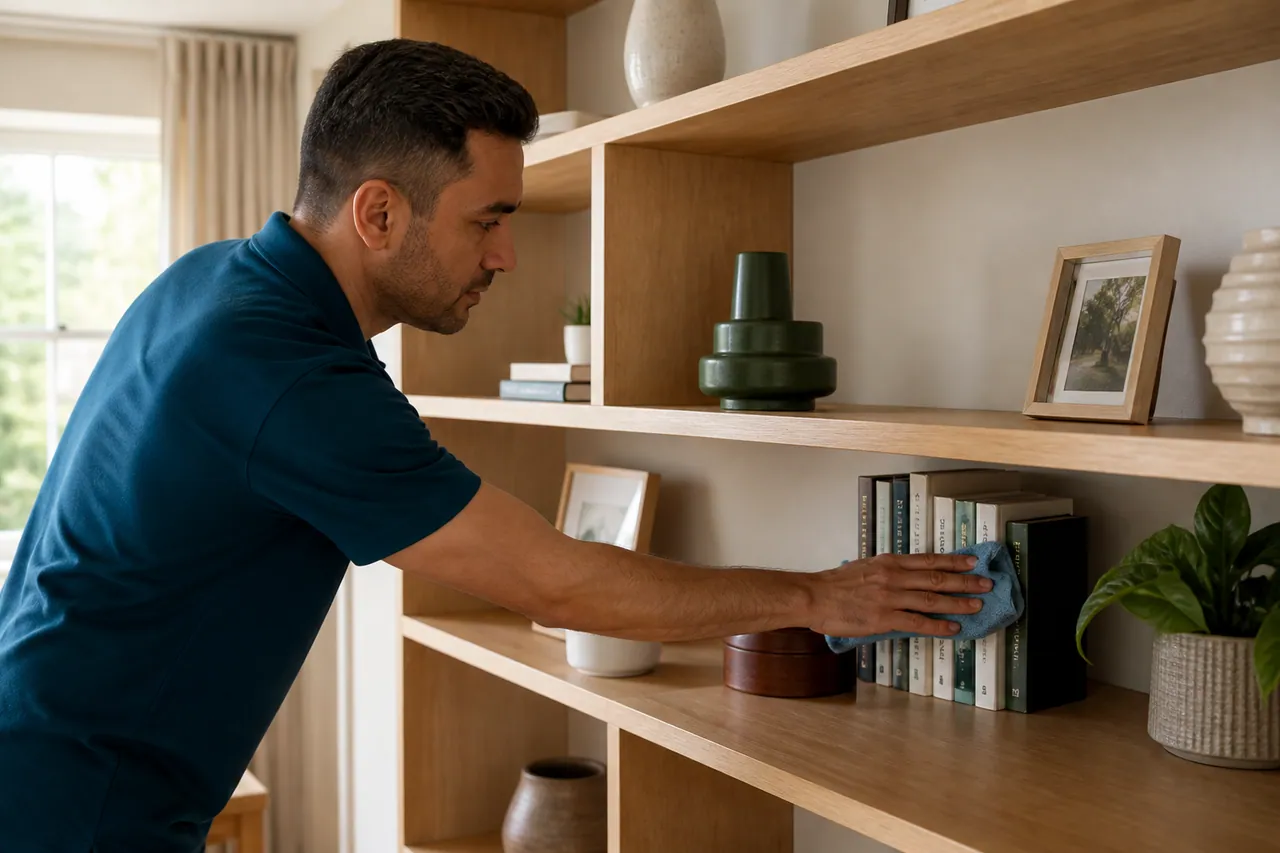
Books and ornaments can leave a dusty outline. A cleared, reachable shelf makes the actual surface available without anyone handling private collections.
The floor beneath may look different because of impressions or wear. Do not expect ordinary cleaning to erase a change in the material itself.
Cables, sockets and items still stored there can restrict access. Keep electrical equipment separate from the household surfaces being considered.
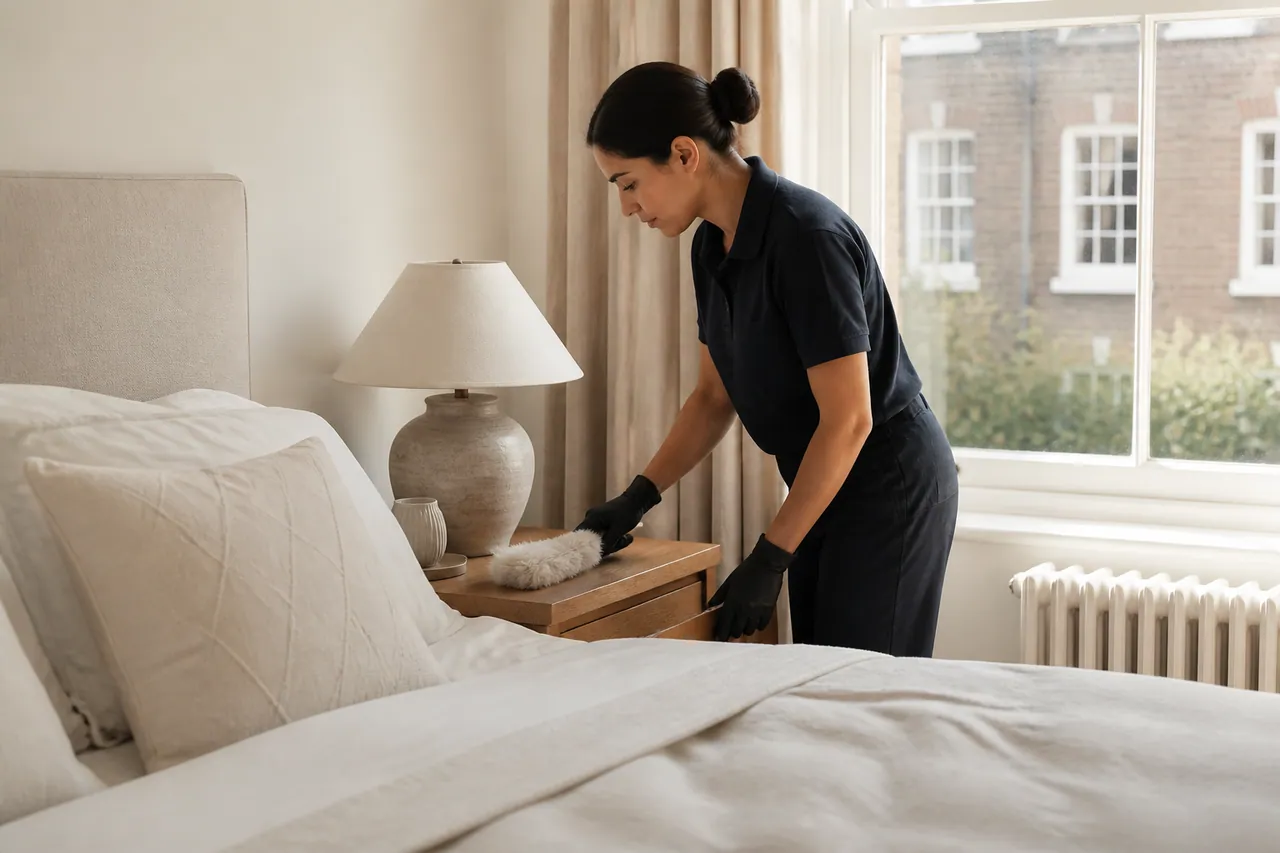
Belongings put away may reveal dusty furniture tops and an accessible bedside floor. Sorting the stored items is the household’s earlier job.
An empty interior may need its own assessment. Describe the finish and request it specifically; opening the door does not automatically include it.
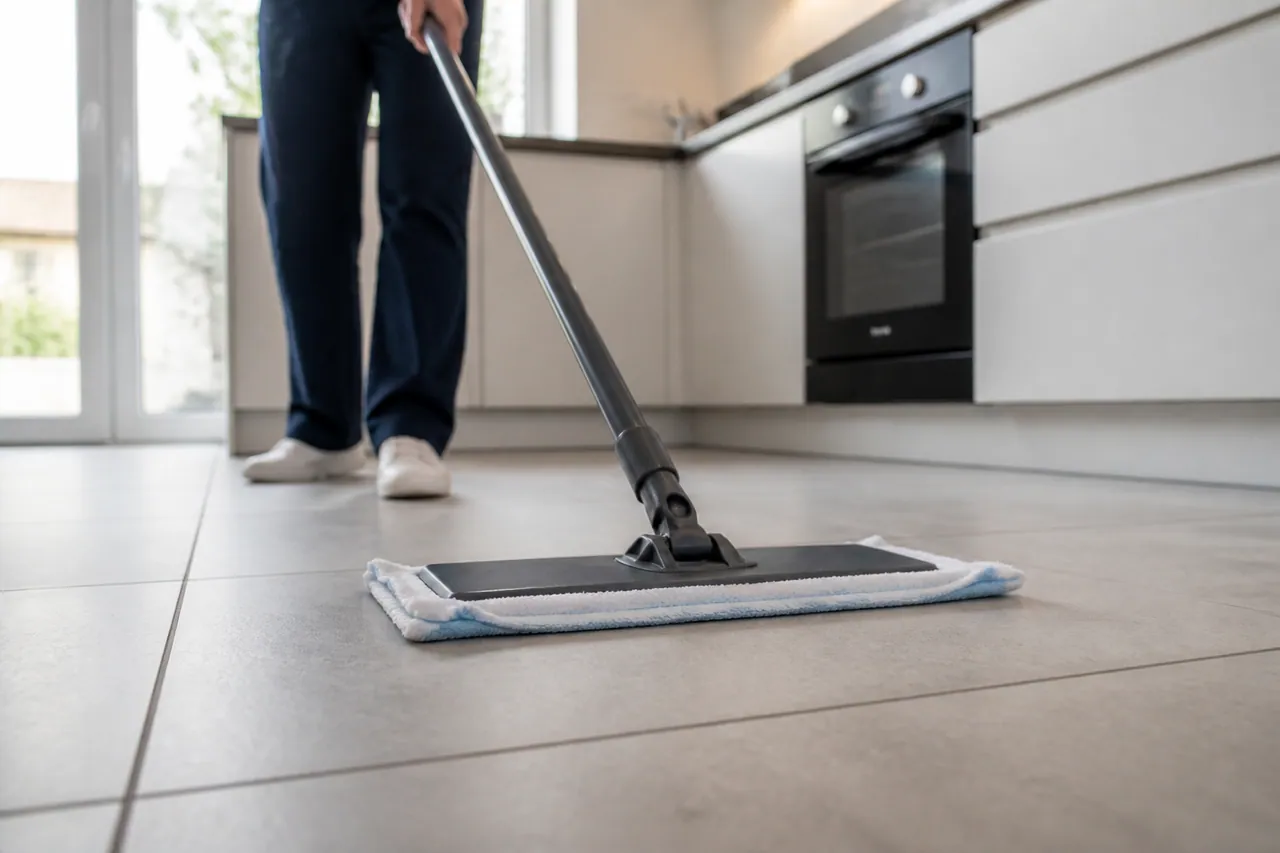
KEW / AFTER THE FURNITURE HAS MOVED
A new arrangement in your Kew home may reveal areas that looked different beneath the old furniture. Loose dust, scuffs, fading and pressure marks are not interchangeable concerns. Show the exposed surface and identify its material so the request reflects what cleaning can reasonably address.
The outline of an old positionA patch protected from daily use can contrast with the surrounding floor. Cleaning does not promise to restore even colour or undo permanent wear. Photograph that difference before deciding it is simply dirt.
Shelves without their contentsA reachable empty shelf can be considered as a surface. Books, ornaments and personal collections remain yours to handle; the service does not become a collection-sorting exercise because storage is being refreshed.
NEWLY VISIBLE DOES NOT ALWAYS MEAN DIRTY
EXPOSED DETAIL AND ORDINARY ROOM TASKS
These examples help identify household work. Safe reach, material suitability and the confirmed scope determine what is included.
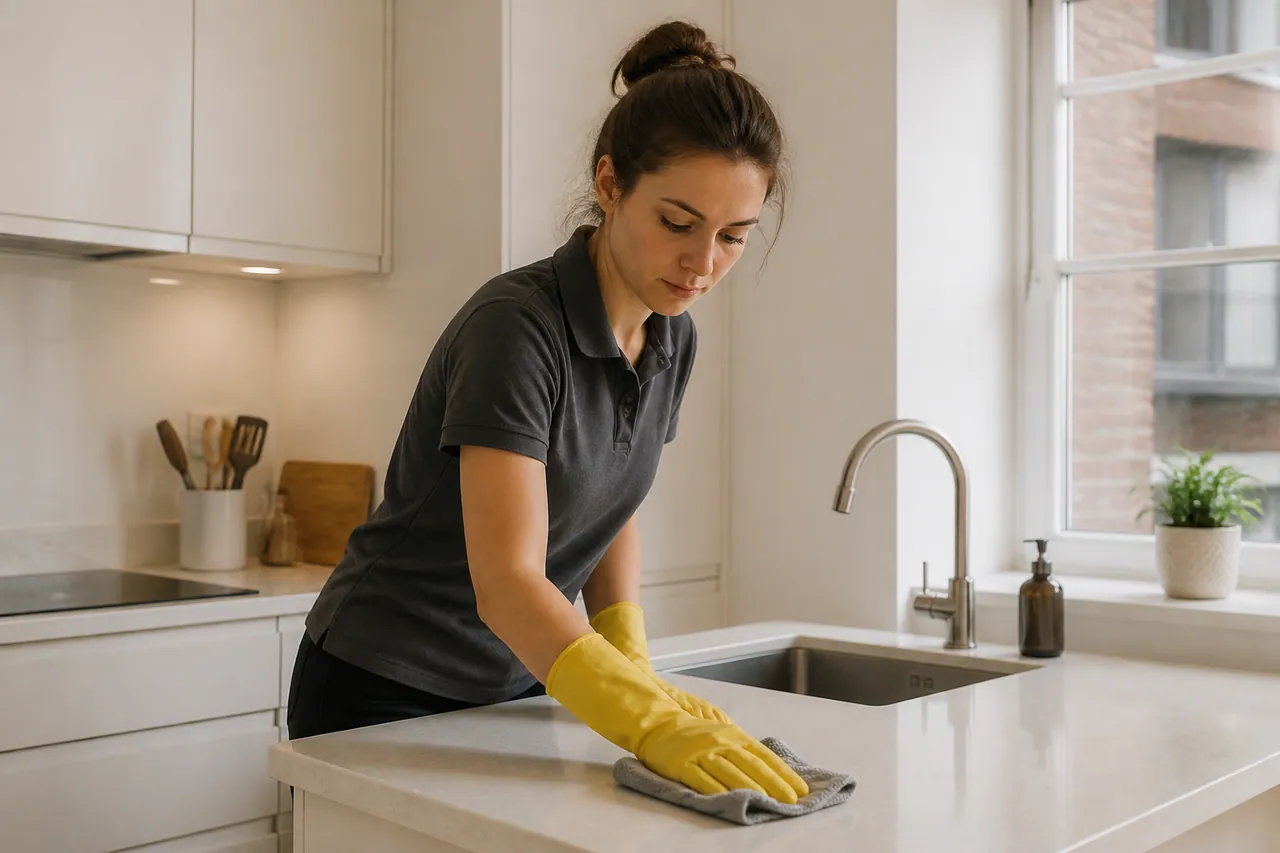
THE KITCHEN AS IT STANDS
Storage or appliance interiors require specific agreement and preparation. Internal oven treatment is a separate specialist request.
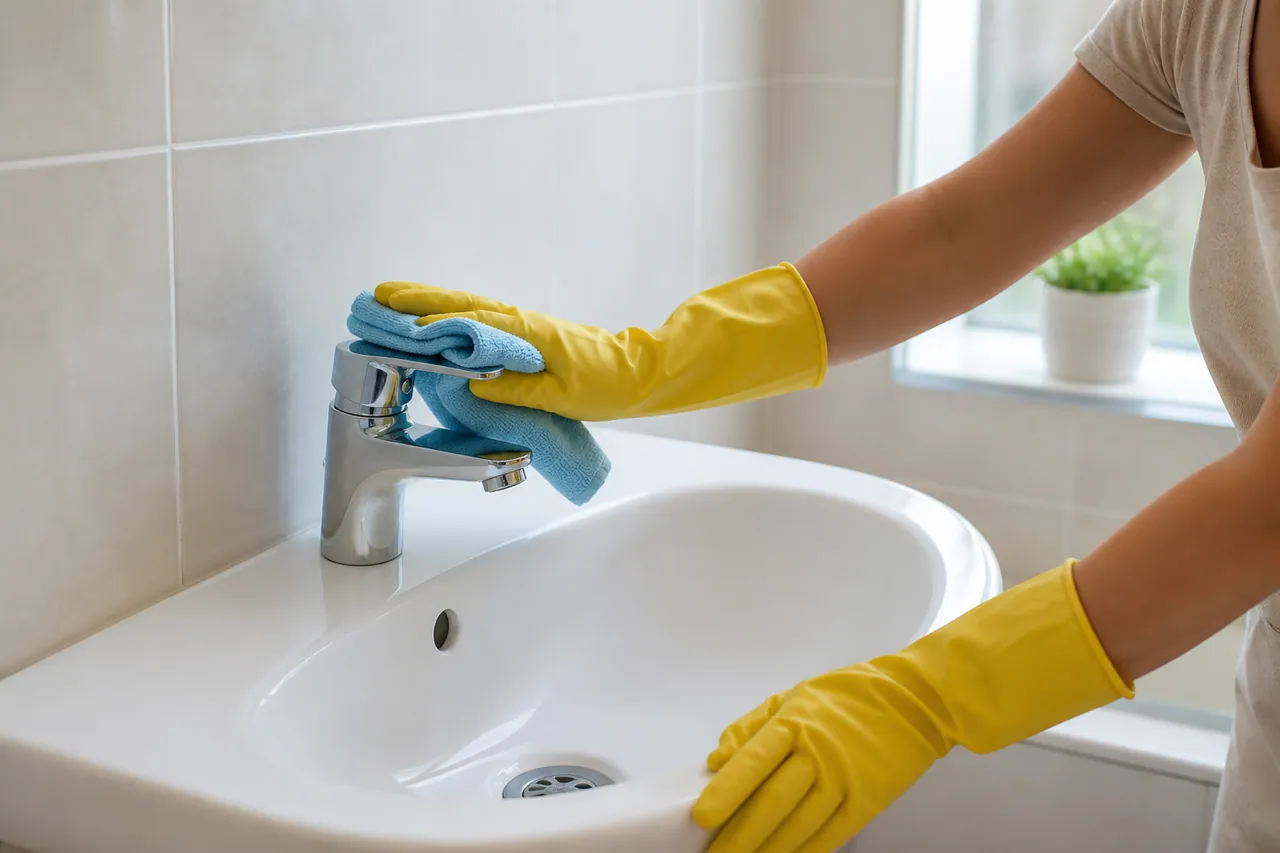
A SUPPORTING BATHROOM REQUEST
Explain any damaged finish or failed seal. Cleaning does not replace missing or deteriorated material.
THE REARRANGED LIVING AREA
Further furniture movement is not assumed. Carpet extraction or upholstery treatment needs a separate enquiry.
THE ROOM RETURNING TO USE
An empty drawer or cupboard interior still needs explicit inclusion. Private storage contents remain a household preparation task.
UNCOVER / IDENTIFY / REVISIT
A corner that was hidden for months may contain dust, but it can also reveal a worn finish. The useful starting point is identifying the surface rather than promising a transformation.
Keep a record of existing marks when a piece has already been moved safely. Furniture impressions and damaged coatings may remain.
Paint, laminate and other finishes need to be described accurately. Mention loose edges or previous damage rather than assuming a universal treatment.
Follow the relevant advice given for the work performed. There is no single waiting time that fits every shelf finish or cleaning method.
START WITH WHAT IS EXPOSED
Select a prompt for useful details to include. This guide does not arrange furniture or reserve an appointment.
Show the area now available and identify the flooring. Distinguish visible soil from impressions or damage left by furniture.
Send current pictures after preparation, plus the postcode and preferred date, so the available work can be discussed.
Enquire about the refreshed layoutWORK WITH THE PRESENT ARRANGEMENT
Describe the layout that will actually be ready. Furniture removal or rearrangement is not assumed as part of an ordinary household cleaning appointment.
Identify the exposed cooking, resting and seating surfaces within the combined space.
Select the available shelf sections, keeping private objects and unsafe heights outside the request.
Show the surfaces and floor after belongings have been put away, not only the earlier crowded state.
Explain the new furniture positions and the floor visible around them.
Note existing wear that became visible after the change and supply any known care guidance.
Keep the request focused on that room if others do not need attention, or name the supporting tasks you want added.
CHOOSE WHAT IS READY
THE STARTING LIST
Describe the material and condition of each area rather than asking for everything behind the furniture.
CLARIFY INDIVIDUALLY
Some requests require a separate service or may not be appropriate for the proposed visit.
ASSESS WHAT IS NOW AVAILABLE
Show the ready surfaces and their condition. The quotation should reflect that work, not an expectation that the team will move the room into a different layout.
| Area selected | What to show | Quotation basis |
|---|---|---|
| Exposed surface | Current access and existing wear | Reviewed individually |
| Prepared room | Ready layout and the requested detail | Confirmed scope |
| Specialist requirement | Item, material and the specific concern | Separate proposal |
Tell us if the planned rearrangement is delayed or surfaces remain blocked. The proposed work depends on what is safely available, so a change may require the scope to be reviewed.
FROM NEW LAYOUT TO A CLEANING VISIT
Make the chosen surfaces available safely before describing them as ready.
Show furniture positions, surface condition and any remaining obstructions.
Name any everyday kitchen or bathroom work wanted as well.
Confirm suitable tasks, access arrangements, availability and price.
Review the work and ask about any surface-care considerations.
KEW ADDRESS DETAILS
Give your full postcode and explain any steps or shared access when checking availability for the property.
Open the optional area view when useful for your enquiry.
Choosing the map creates a connection to Google.WHEN THE OLD LAYOUT IS GONE
Furniture can conceal dust, but it can also protect an area from use or leave pressure marks. Identify the flooring and the kind of difference; cleaning cannot promise to make worn and protected areas identical.
Do not make unsafe moves for a cleaning request. Show what is already available and identify the remaining obstruction. Heavy furniture handling is not implied by the appointment.
That distinction is useful. Put books and personal objects away yourself, then identify the reachable shelf sections you want assessed. Handling a collection is a separate responsibility.
Give the material or finish if known, describe the mark and mention products already applied. Ask for the particular interior explicitly rather than treating all storage as automatically included.
Say so. Vacuuming and specialist carpet treatment are different tasks, and neither should be presented as a guaranteed remedy for a lasting furniture indentation.
Explain what is still in place and secure equipment safely yourself. Access around electrical items may remain limited; do not assume they will be disconnected or rearranged.
Show the current state, including objects that remain. The useful request is the safely available area, not the whole floor as though it were empty.
No. You can describe the newly accessible detail alone, or add kitchen and bathroom tasks deliberately. Review the available visit and quotation rather than assuming a package.
Ask about the actual finish and work at the review. Follow relevant surface-care advice; do not use a general internet waiting time as a substitute for that information.
KEW / SHOW WHAT IS READY
Send current room photographs, the exposed surfaces you want considered and the full postcode. Add any accompanying household tasks and your preferred date.
Call 020 3608 3976Enquire about newly accessible spaces ↗