
Does the old stain determine the price?
No. The current task, suitable material and access need to be clear. Explain what changed and what result you are asking about.
Carshalton / PROPERTY CONDITION
An old water stain and new spotting need two dates, not one label.
For a Carshalton enquiry, show the whole stained area and identify the part that has recently changed. Explain the known water event and any repair separately. A remaining discolouration does not prove continuing wetness, while a completed repair does not by itself describe the present surface.
Old outline · recent spotting · repair record
Carshalton / THE PROPERTY BRIEF
The useful account begins with what is different today.
Send the latest image first and explain the new concern in a sentence. Follow it with the relevant repair record or earlier photograph. This avoids asking the reviewer to infer a timeline from several similar pictures, and keeps the present enquiry distinct from a claim that an old repair has succeeded or failed.
02 / DIRECT ANSWERS
No. The current task, suitable material and access need to be clear. Explain what changed and what result you are asking about.
Keep the current evidence visible for the enquiry and ask about the sequence. A new coating can obscure the difference between old appearance and recent change.
Not by itself. Report the observation and the repair record without drawing a conclusion that requires assessment.
Ask whether the present material is ready for the proposed work. A completion date alone is not a substitute for that decision.
Follow the instructions for the actual work agreed. Neither an old repair date nor a photograph provides a general return-to-use time.
Show it safely from the floor, include fittings beneath it and explain the timeline. Do not climb or touch the area to test it.
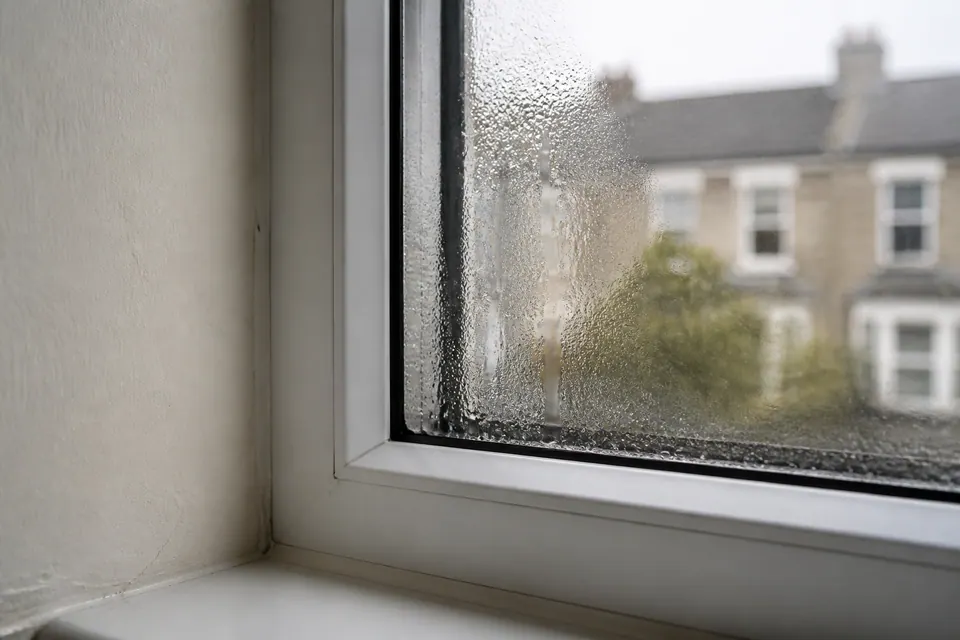
No. Identify actual observations around the pane, frame and reveal rather than naming a cause from the location.
That should not be assumed. Ask about the proposed visual result and any separate restoration or decoration requirement.
Carshalton / ACCESS & PEOPLE
Describe how long it has remained visible and whether it was assessed. Its appearance alone does not establish that the same condition is still active.
Give the observation date and a current image. Do not dismiss it merely because the older water event was repaired.
Explain that the previous finish is no longer visible. A gap in the record should remain a gap rather than being filled by a confident assumption about what the paint concealed.
Report the current change as well as the earlier maintenance reference. That makes clear why a new enquiry is being raised without claiming a technical diagnosis.
Provide the actual repair description and date where available. Distinguish a contractor’s completed work from any later inspection or confirmation that has not occurred.
Ask whether the request concerns growth treatment, stain appearance or redecoration. A single quotation should not be assumed to deliver all three results.
04 / A CONTROLLED APPROACH
Read the current photograph alongside the brief chronology. Identify what is newly observed and whether material condition or continuing wetness needs further assessment.
Agree preparation based on the present surface. Keep older records available and avoid covering or wiping the new detail solely to improve its appearance before attendance.
Carry out the suitable work explicitly agreed. Treatment of growth should not be represented as automatic removal of every historic stain or repair of the underlying building issue.
Explain what was done, the aftercare and any remaining cosmetic or maintenance question. A clear record helps distinguish later changes from an unchanged residual mark.
The illustration shows how a current concern may progress through agreed work. It does not promise that a previously stained finish will become visually identical to new decoration.
Locate the recent observation within the older outline.
Record the specific work undertaken on the present finish.
Review the result and any appearance or repair issue left open.
This schematic is not a photographed customer stain-removal result or proof of a resolved water incident.
05 / QUOTATION, NOT GUESSWORK
The visible outline alone does not define the job. Explain whether you want an assessment of new growth, suitable treatment or advice about a remaining cosmetic mark; these should not be silently combined.
See the main mould-removal service ↗| Scope | Quotation basis | Timeline detail |
|---|---|---|
| A clearly defined suitable area | A photo-led quotation may be possible for the present treatment request. | Identify new spotting within the wider old outline. |
| A recurring or uncertain change | Assessment may be needed before the work can be confirmed. | Include actual wetness observations and the repair record. |
| Damaged or complex material | A specialist quotation may be appropriate for the next step. | Explain deterioration and any restoration or repair requirement. |
Confirm the included work and total before booking. A historic stain may remain a separate decoration question, and a treatment quotation does not automatically include building repair.
06 / ROOM-BY-ROOM CONTEXT
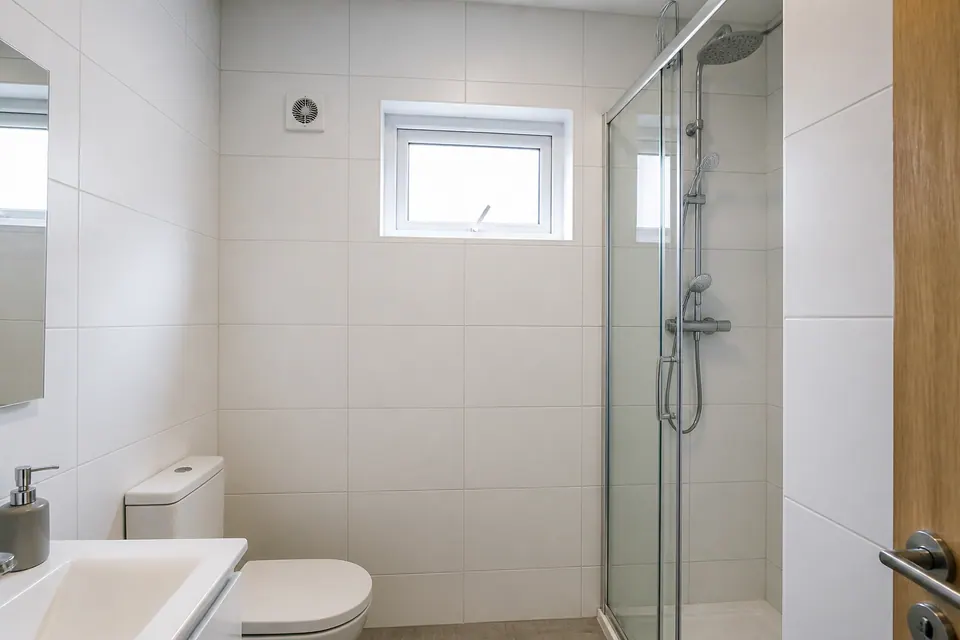
Explain any known bathroom water event and the current paint condition. A stain on one component should not be used to diagnose another.
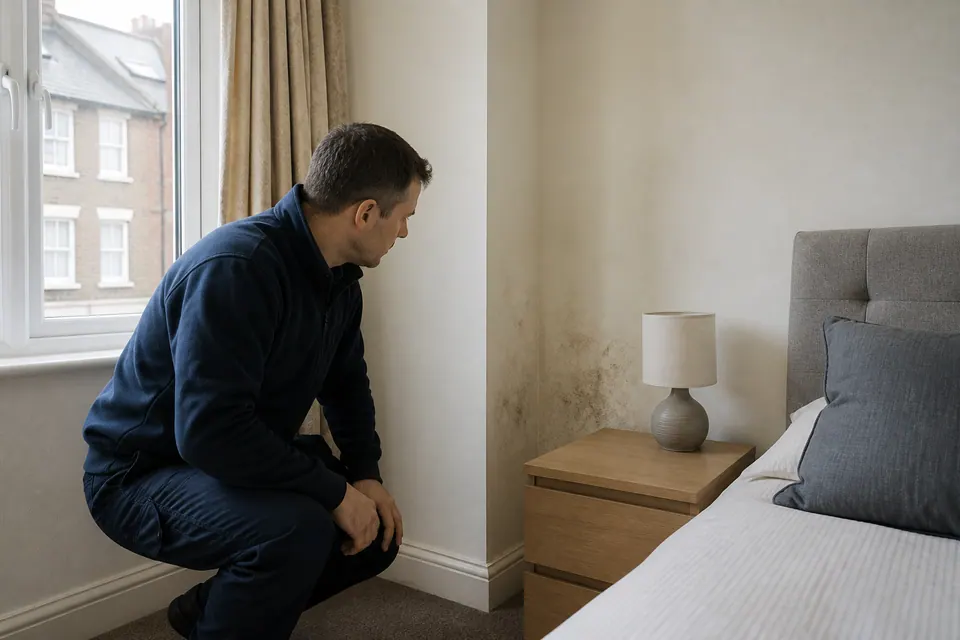
If furniture hid the mark, give the discovery date honestly. The date you first saw it may not be the date it began.
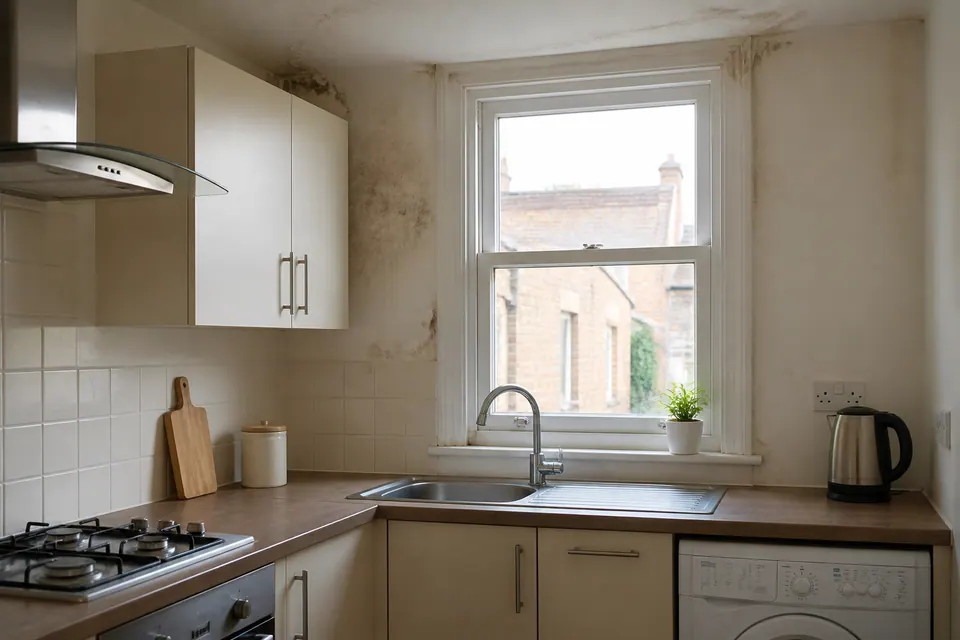
A cabinet, wall and ceiling may each have a different history. Label photographs so a repair to one is not assumed to cover all three.
Include decoration dates where an old outline was painted over. The current finish may conceal part of the earlier record.
If maintenance records are held by someone else, identify that source. Keep their documented account distinct from the current occupant’s observation.

The room’s position does not settle the water source. A dated incident and present photographs are more useful than a location-based assumption.
07 / WHEN IT COMES BACK
If an outline never disappeared, say so. New dots, a larger boundary or fresh wetness can then be described as additional observations rather than being lost inside the phrase “it came back.”
Where the area was painted, note the coating date. The first visible mark on new paint does not tell the entire history of the material underneath it.
Completed work on a water source may be relevant, but the present finish still needs consideration. Do not assume that a repaired incident guarantees suitability for immediate treatment or decoration.
08 / SEPARATE THE QUESTIONS
These examples show why old and new observations should remain distinct. A photograph can document appearance, but it cannot independently confirm the status of a moisture source.
| Visible issue | Possible contributing factor | What may need checking |
|---|---|---|
| An outline unchanged for months | It may be a residual appearance from an earlier event. | What assessment or history is actually available? |
| New spotting inside the outline | The recent change needs its own consideration. | When was it first noticed and what else changed? |
| Wetness seen after a reported repair | The present observation may require further investigation. | What work was completed and who should review it? |
| Peeling after redecoration | The coating or base may not be suitable for ordinary treatment. | Does the material need another decision first? |
Do not infer dryness or continuing dampness solely from colour. Report what has actually been observed and ask for the appropriate next step.
Suitable mould treatment may address growth on a retained finish. It does not certify a repair or guarantee removal of historic discoloration.
| Question | Mould | Damp |
|---|---|---|
| Present concern | New visible growth or a changed finish. | The status of the relevant water or building issue. |
| Helpful record | Dated images showing what is different. | The actual maintenance report and later observations. |
| Potential exclusion | Cosmetic stain removal or fresh decoration. | Work beyond the commissioned investigation or repair. |
| Later comparison | Distinguish unchanged marks from new observations. | Confirm repair questions through the responsible route. |
09 / LOCATE THE ISSUE
Select the room, then explain the difference between a long-standing stain and a more recent observation. An image of the whole area helps locate the change within its history.
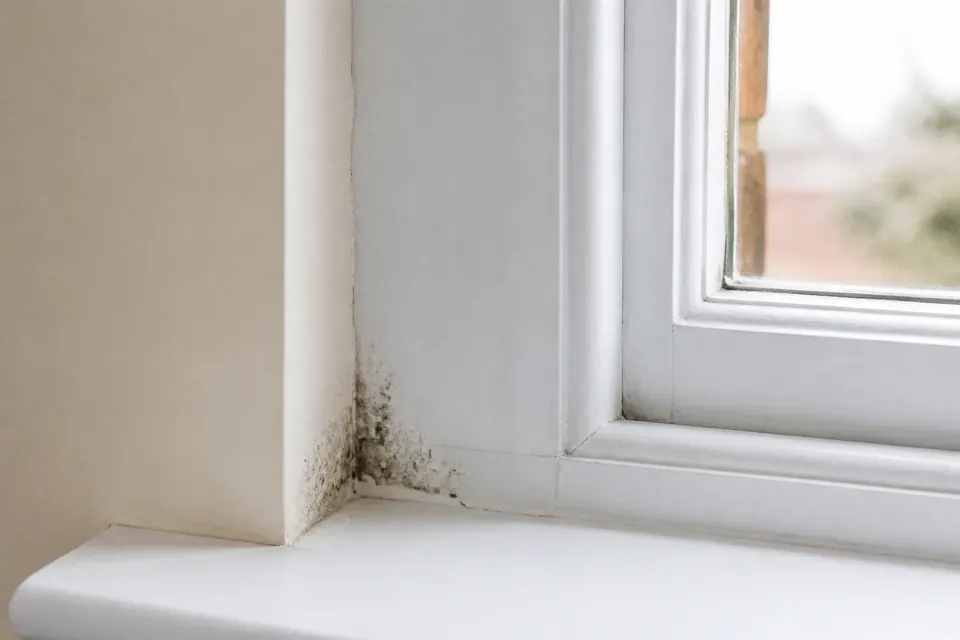
Show the frame and reveal with the stain outline. If spotting has appeared later, identify that area without assuming the window itself caused either event.
Give the known work date and show the present paint. A repair record and a current surface photograph answer different questions and should both be included where available.
Explain whether the outline was visible continuously or disappeared beneath decoration. That distinction matters when describing a supposedly returning mark.
Identify the component involved and any documented repair. Do not combine a cabinet stain and a wall patch into one event unless that connection is actually known.
Include the full older stain and the recently noticed detail. The new observation may require review even if the original water event was addressed.
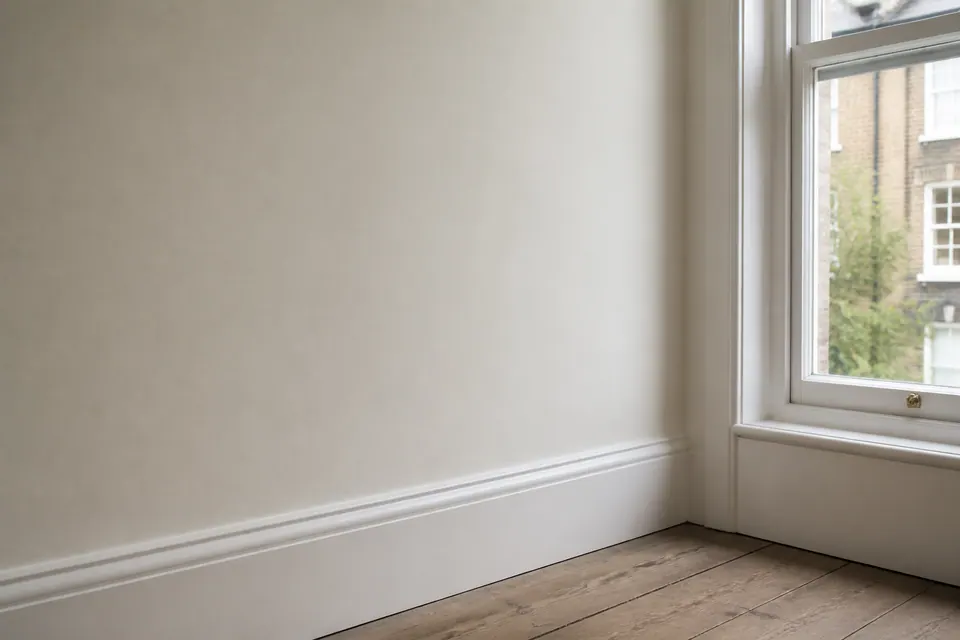
State when the coating was added and what is visible now. Paint can change what a photograph shows without providing a complete record of the underlying condition.
Separate the discovery date from an assumed date of origin. A mark found behind storage may have been present before it became visible to the occupant.
Colour alone cannot settle whether an old stain is active growth or whether the material is dry. Describe the visible change and leave those questions open for the appropriate review.
Carshalton / PLAN THE APPOINTMENT
Include the complete Carshalton postcode and explain the latest observation before adding the older records. If a maintenance contact is involved, identify who can clarify the repair history.
Arrange attendance around the actual property information and permissions. A previous contractor’s visit does not automatically authorise further alteration to the finish.
View the Carshalton area map.
Carshalton / BEFORE BOOKING
Use the chronology to describe what happened without turning a visible outline into an unsupported diagnosis.
Explain the new concern, such as spotting, a changed boundary or visible deterioration. That tells the reviewer what is different from the long-standing appearance.
A relevant work description and date may help. Make clear what it confirms and avoid treating it as proof of the present surface condition.
A photograph records appearance but cannot settle every moisture question. Report actual wetness observations and ask whether further assessment is needed.
Yes. Give the approximate date and known preparation. The coating change affects how the earlier and current photographs can be compared.
Use the discovery date and explain the earlier obstruction. Do not invent a date for when the mark first developed.
No. Discuss the expected result and any residual cosmetic issue. Treatment and stain restoration should not be assumed to be identical tasks.
State that it is pending and give the proposed timing. The next step should not be planned as though the water issue has already been resolved.
Where relevant, provide the current observation through the appropriate property route. Keep the treatment enquiry and the repair-status question clearly described.
Retain the dated current image, agreed work description and aftercare. Record later changes separately from any outline that remains unchanged.
A PROPERTY-SPECIFIC NEXT STEP
Send the Carshalton postcode, current photograph and a short dated history of the water event, repair and recent observation. State any uncertainty plainly.
The illustrative interiors are not customer evidence of a repaired leak, a dry substrate or removal of a historic water stain.
