
CANONBURY · A RUNNER, A STAIRCASE, A CAREFUL EXIT PLAN
Canonbury Rug Cleaning for Period Homes
A hallway runner can look simple until its fringe, old repairs and narrow route are considered together. Our Canonbury example begins at the front door: we note how the rug will be lifted, what lies beneath it and which signs belong to age rather than soil.
- Frame the runner from end to end while it is still in the hallway
- Photograph the entrance end, loose tassels and the most worn traffic line
- Turn back one safe corner to show the foundation and any stitched repair
- Describe the curved communal stair, loading limits and the encaustic tiles below

TELL US ABOUT YOUR RUG
Build a record without guessing at fibre
Use the choices as a note-taking aid. They highlight what we should inspect; they are not a remote diagnosis.
CANONBURY RUG QUESTIONS
Ten practical questions from Canonbury households
What should I photograph before a Canonbury rug-cleaning quote?
Start with a doorway view that captures both ends. Follow it with the underside, fringe attachment, repair stitching and the gritty section nearest the entrance.
Why does the floor under this rug matter?
Old tiles can be vulnerable to scratching or trapped moisture, so we plan protection and return separately from the textile process.
Can you guarantee that the main visible area will disappear?
No. At a threshold, embedded particles often sit alongside flattened yarn and fading. Cleaning can address soil, but it cannot rebuild missing fibre.
How is access handled for this Canonbury property?
We ask where a vehicle may pause, how tight the stair turn is and whether the runner can pass without folding against walls or rails.
Does the label settle the fibre and cleaning decision?
Treat the label as one clue. Age, replaced fringe and an unknown repair can change the safe approach even when the fibre name is clear.
Should I apply another spot product first?
Leave the area dry and tell us the product name, dilution and date. That history is more useful than another attempt before inspection.
What changes if there is fringe or edge wear?
We photograph every weak junction before lifting. A detached tassel or opening seam may require a handling restriction rather than stronger cleaning.
How is a smell in one part of the rug assessed?
Mark the location on the overview photograph and mention damp episodes. A smell at pile level does not show whether the foundation or tiled floor is involved.
Can you give an exact drying time for Canonbury?
We give drying guidance after seeing the weave, room ventilation and amount of moisture used. A generic Canonbury timetable would be misleading.
How do the guide prices apply to my rug?
Area identifies the published band; fragile ends, awkward removal and additional agreed work are then reflected in the actual quotation and visit minimum.
CANONBURY · ROOM AND ROUTE
A hallway runner is also a route-planning exercise
In this Canonbury case the runner occupies the only clear path between the apartment and a curved shared stair. The team must protect the tiled floor, avoid stressing the fringe and agree a short loading window before the textile ever leaves its position.
The Canonbury hallway scenario. An end-to-end view reveals the runner’s proportion and the stair approach. Detail photographs isolate split fringe knots and threshold abrasion, keeping permanent wear distinct from loose particulate matter.
The owner measures both the textile and the narrowest turn, records previous spot products and clears a safe inspection edge. Those facts allow a workable arrival plan while fibre tests remain open.
The Canonbury runner notebook
Room record: Record the hallway width, doorway swing and usable landing before shifting a single object.
Main concern: Threshold grit, flattened pile and weakened tassels receive separate annotations because they call for different decisions.
Arrival: A timed kerbside stop and the curved stair are measured in advance, preventing a folded rug from blocking shared access.
Scale: Measure the long edges independently; an older runner may taper, bow or sit out of square.
Material clues: A lifted corner can reveal foundation and repair thread, while fibre identity remains provisional until checked.
Colour: List the darkest reds and palest motifs so colour movement checks can target meaningful contrasts.
Edges: Count missing tassels and note where the end finish pulls away from the woven field.
History: Share old invoices or product bottles where possible; a sticky threshold may reflect earlier chemistry.
Floor interface: Tile condition is photographed before lifting and a clean barrier is prepared for the inspection fold.
Furniture: Umbrella stands, consoles and shoe benches are assigned a temporary location away from the carrying line.
Odour boundary: An odour pin on the overview distinguishes a doorway concern from a whole-runner complaint.
Condition: Sun bleaching, compressed yarn and a bowed edge stay on the condition record after loose soil is discussed.
Drying: Aftercare depends on the runner’s foundation and the apartment’s safe ventilation options, not a postcode estimate.
Price scope: Square metres open the calculation; fringe risk and stair handling complete the commercial scope.
Handover: Handover revisits the threshold and specifies when the runner and hallway furniture may return to the tiles.
Decision limit: The final route remains conditional until the weave, repair, colour and access evidence agree.

CURRENT CANONBURY GUIDE
Size sets the band; access completes the Canonbury price
Measure the runner at its true outer edges. The quotation then accounts for the fragile end, shared staircase and any separate treatment accepted after inspection.
FIBRE + DYE + CONSTRUCTION
Old repairs can matter more than the face fibre
A wool label cannot date replacement fringe or explain a patched foundation. We examine the original weave and later interventions as one object.

Material response
Wool character informs how much mechanical work the pile can tolerate.
Colour stability
Contrast tests focus on saturated motifs beside pale ground yarns.
Construction
Runner weave, foundation tension and end finish govern lifting and moisture control.
Backing, worn fringe, edge repairs
Every historic stitch is photographed before work, giving the handover a reliable comparison.
QUOTE PREPARATION
A concise evidence pack for the hallway runner
- Canonbury postcode and preferred timing
- Approximate length and width
- One complete-rug photograph
- Close-up of gritty wear at the entrance and unstable-looking fringe
- Label and reverse if reachable
- Border, fringe and corner images
- Known fibre or construction
- Earlier products or cleaning history
- Notes about restricted street stopping and a curved communal stair
Practical answers for Canonbury
Can you name the method from a photo?
No. Images improve the brief, but handling and treatment still depend on physical assessment of the vintage wool runner.
Does a dark patch always mean dirt?
No. In Canonbury, shading, fibre wear, dye change and residue must be distinguished from removable soil.
When can furniture go back?
Only after the handover guidance for this rug, its drying condition and the encaustic tile beneath it.
Is an odour treatment automatically included?
No. The location, likely source and depth of an odour concern need separate discussion and scope.
CANONBURY TREATMENT ROUTE
Seven checkpoints from hallway to return
The runner’s drying plan is decided after its foundation and apartment ventilation are understood. Any odour near the entrance is traced separately; it is never bundled into a vague deodorising claim.
-
01
Record
Measure both edges and mark every repair on a sketch
-
02
Verify
Examine foundation threads and test significant colour contrasts
-
03
Release soil
Lift loose grit while preserving the condition baseline
-
04
Work
Choose handling that respects the weakest fringe junction
-
05
Control
Protect the tile interface and keep end finishes supported
-
06
Compare
Compare the threshold, centre field and repaired end
-
07
Explain
Set return instructions for the runner, tiles and hall furniture
A MARK IS NOT ALWAYS SOIL
Read the entrance wear in layers
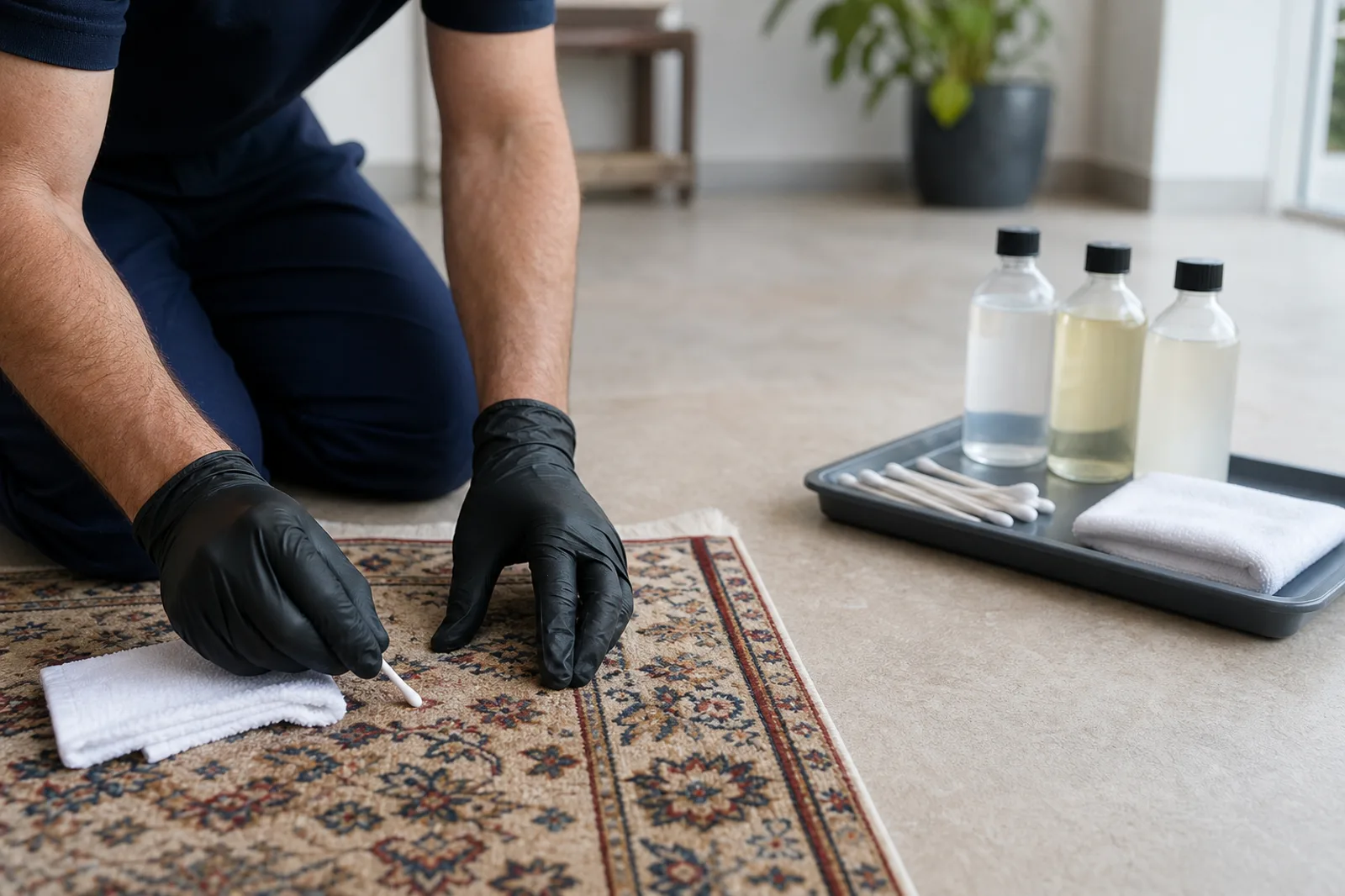
A dark threshold can include grit, compressed yarn, old product and tile-side moisture. Each layer needs evidence before an outcome is discussed.
ODOUR + PREVIOUS PRODUCTS
Follow the history, not just the smell
A dark threshold can include grit, compressed yarn, old product and tile-side moisture. Each layer needs evidence before an outcome is discussed.
- Identify the precise affected area
- List known spill and product history
- Check pile, foundation, reverse and floor contact
- Keep the outcome conditional until assessment
SEND THE EVIDENCE
