
Which signs are useful to mention?
Explain where water spills, whether debris is visible and which rainfall conditions reveal the problem. Also note drips at joints, persistent pools or slow outlet behaviour because these may have different causes.
Rainwater routes · access · clear scope
Where and when water escapes can help shape a sensible cleaning request. Gutter cleaning in Dorking removes routine leaves, loose moss and settled silt from agreed channels that can be accessed. A reachable outlet entrance may be cleared where included. Leaking components, restrictions deeper in a downpipe, underground drainage and rooflines needing another access plan remain separate matters.

Quick answers
Explain where water spills, whether debris is visible and which rainfall conditions reveal the problem. Also note drips at joints, persistent pools or slow outlet behaviour because these may have different causes.
Routine work removes accessible leaves, loose moss, silt, seeds and comparable build-up from the runs agreed. It does not include attached components, hidden pipe restrictions or underground drainage.
A focused request may be possible when the exact section and approach are clear. The surrounding run may also need consideration, since material elsewhere can move towards the same outlet.
No. Debris at the entrance is one possibility, but channel fall, outlet design or a deeper restriction may be involved. Routine cleaning cannot confirm the condition of concealed pipework.
They can show roof levels, visible accumulation and obstacles, provided they are taken safely. They cannot establish every boundary or approach, so access remains subject to the actual property.
No. Cracks, leaking unions, loose brackets and misalignment require a separate repair scope. Mentioning them early helps prevent a cleaning quotation from being mistaken for component work.
Local property context
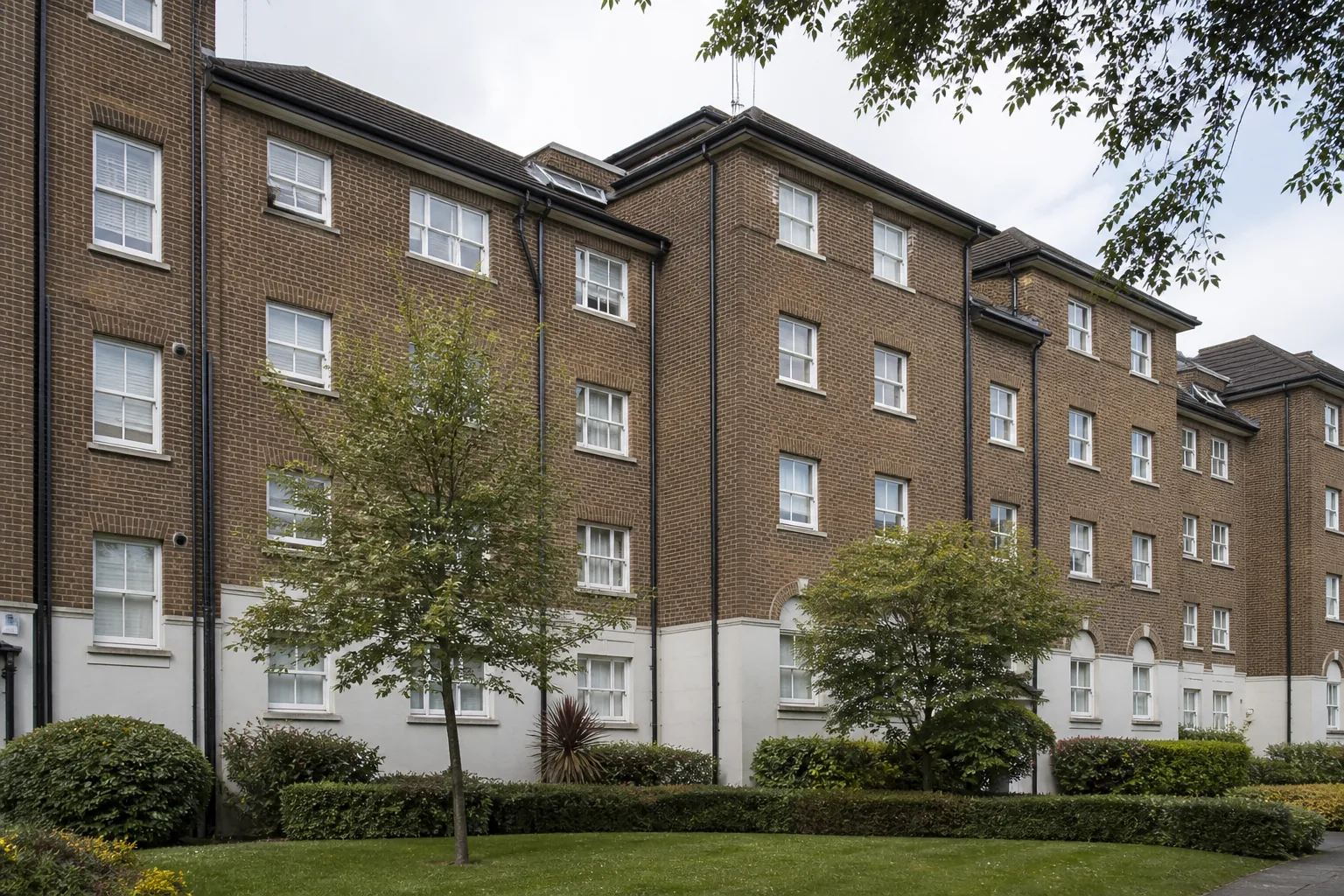
At a Dorking address, a long spill across one elevation tells a different story from a drip at a union or water escaping beside an outlet. Note the affected side, the closest corner and whether the symptom occurs only in heavy rain or during ordinary showers. This information does not diagnose the cause, but it identifies the channel that deserves attention. The actual layout must then be considered, including roof levels, additions, steps, planting and restricted passages that may affect access to that particular run.
Everyday debris often gathers unevenly. Leaves may bridge an outlet while fine sediment spreads along the bottom, or moss fragments may lodge behind a bend. Removing accessible material restores open space within the agreed channel, but it cannot resolve every water problem. A failed seal can drip after cleaning, a poorly falling section can retain water, and a blockage can remain inside concealed pipework. Keeping those outcomes distinct makes it easier to decide whether clearance is sufficient or another assessment is needed.
The relevant approach may differ at the front, rear and sides. Ground that rises or falls, enclosed areas, extensions, boundary walls and separate garages can change what is accessible. Describe any shared route or permission requirement before the scope is settled.
| Property situation | Access or gutter consideration |
|---|---|
| Homes on changing ground | The effective height and usable space may vary substantially between front and rear. |
| Terraces with enclosed gardens | Rear-route availability and the extent of connected channels need clear agreement. |
| Houses with conservatories | The conservatory gutter and original upper roofline must be considered independently. |
| Properties with several outlets | The affected outlet area should be identified without assuming the restriction lies at its mouth. |
Common causes
A blockage can begin with only a few leaves caught at a narrow point. Smaller moss pieces, seeds and grit collect behind them, and rainfall turns the mixture into a denser layer. Clearing applies to this routine material where the agreed channel can be reached.
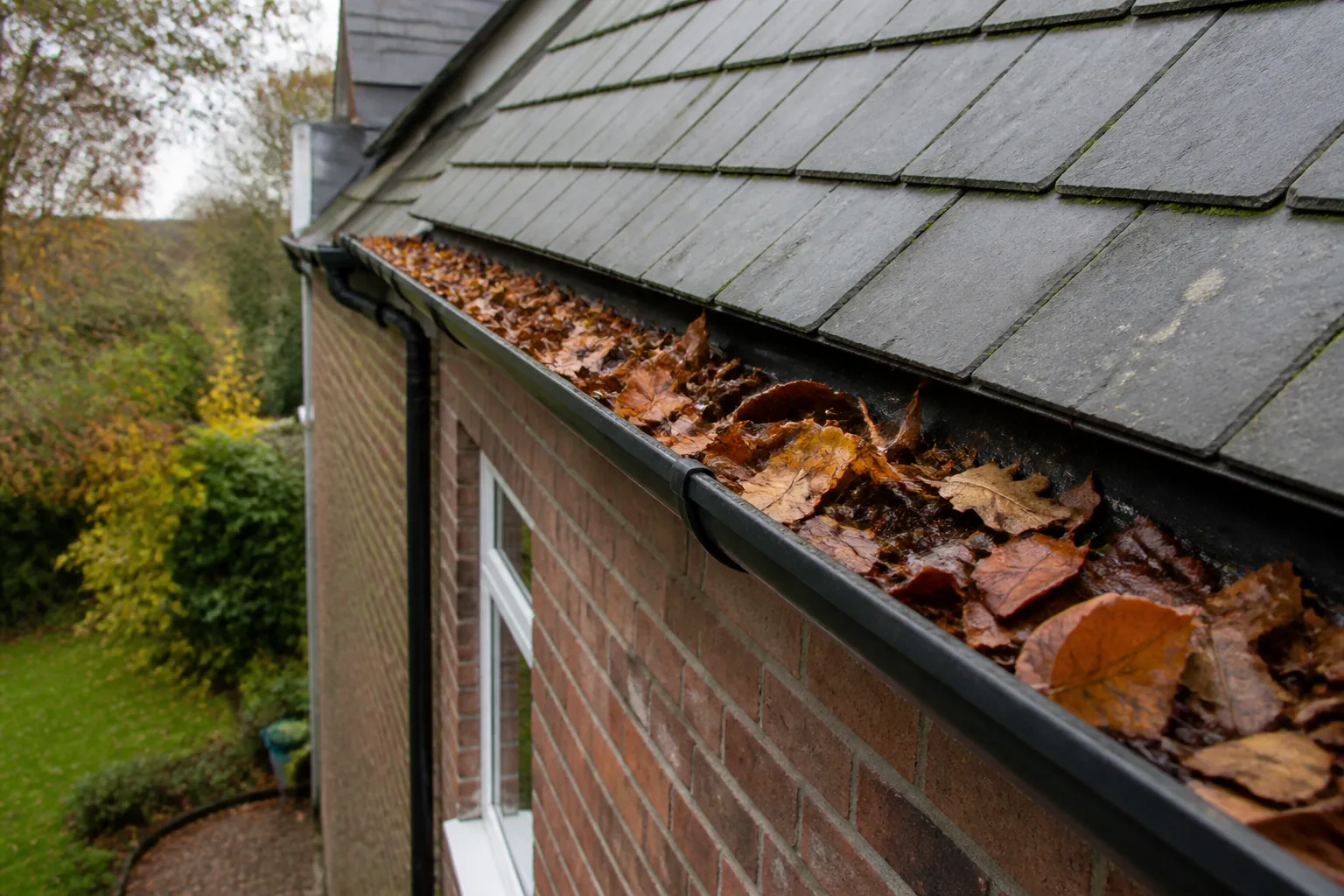
Wet leaves can settle into layers and slow water moving towards an outlet.
Loose roof moss can collect in the channel and hold other material in place.
Small twigs can bridge narrow points and trap lighter debris behind them.
Loose surface material may wash down from the roof during wet weather.
Older material can become dense and reduce the channel available for runoff.
Fine deposits can gather beneath larger debris and close to an outlet.
Structured service guide
| What you notice | Cleaning relevance | Possible separate concern |
|---|---|---|
| Leaves beside an overflow point | Remove reachable build-up | Review only if spilling continues |
| Drip directly below a union | Clear nearby channel contents | Seal or fitting repair |
| Slow outlet with open entrance | No hidden clearance included | Downpipe or drainage investigation |
Structured service guide
| Area | Included when agreed | Not included |
|---|---|---|
| Accessible gutter run | Loose leaves, moss and silt | Alignment or replacement |
| Reachable outlet opening | Surface debris removal | Internal pipe clearance |
| Below-ground route | No action | Drain work |
Structured service guide
| Factor | Practical effect |
|---|---|
| Length of affected runs | Sets the clearing extent |
| Different roof and ground levels | Changes access by elevation |
| Enclosed or narrow approaches | May restrict inclusion |
| Depth of wet sediment | Changes the work required |
Structured service guide
| If the property has | Confirm |
|---|---|
| A sloping rear area | The approach at that elevation |
| A conservatory | Its own gutter and the higher run |
| A shared alley | Permission and availability |
| Several outlet points | Which one is linked to the symptom |
A clear service sequence
Seasonal context
Autumn may bring sudden leaf deposits, while seeds and roof grit can arrive gradually across the year. Some corners may remain sheltered and retain damp material. Let previous overflow and visible accumulation at the address guide when another check is worthwhile.
Nearby trees, roof moss, gutter shape and exposure can all affect how quickly material accumulates. A visible symptom is more useful than applying one fixed timetable to every address.
Dorking service area
Nearby gutter-cleaning pages
Before booking
It excludes repairs, realignment, inaccessible or unnamed runs, internal downpipe clearance and below-ground drainage. The ordinary scope is removal of leaves, loose moss, silt and similar material from agreed accessible channels, with reachable outlet mouths included only when confirmed.
It gives a useful location but not proof of the cause. Water may cross the edge away from a debris pocket, back up from a hidden restriction or escape through a defect. The whole affected run should be considered.
A section may lack suitable fall, have moved at its supports or sit below the outlet level. These are not debris problems. Once loose material has been removed, persistent pooling needs separate component assessment rather than repeated cleaning.
Yes, when the outlet mouth is reachable and part of the agreement. This means lifting accessible material at the entrance only. It does not include following or clearing an obstruction through the downpipe's concealed length.
Its position can affect access to the higher channel, and its own lower gutter may be a separate request. Neither run should be assumed accessible or included. Explain the layout so both sections can be assessed individually.
Not always, because backed-up water can spill around an otherwise sound connection. Cleaning may remove that cause. If the union continues to drip with an open channel, its seal or fitting requires a separate repair decision.
Only the clearly identified sections for which responsibility, permission and access have been agreed. A connected run may cross ownership or occupancy boundaries. Those arrangements need to be resolved before work is treated as part of the visit.
Accessible loose growth and the retained material supporting it can normally form part of routine clearance. The presence of plants does not show whether the channel or nearby fittings are damaged, so component concerns remain separate.
Consider what the household has observed rather than relying on one fixed date. Visible build-up, recurring overflow and known catch points can prompt a review. Exposure, planting and roof condition may make individual runs behave differently.
The section that depends on that route may have to be excluded. Cleaning should proceed only where access matches the agreement. Once a locked gate, permission issue or physical obstruction is resolved, the omitted run can be reconsidered.
Discuss the actual roofline
A quotation considers how many runs are requested, their length and levels, conditions around each elevation and the volume of material present. A concentrated pocket of heavy silt differs from scattered dry leaves. Repairs or concealed drainage work are costed as different tasks.
