
How do I describe several roof levels?
Name the building, elevation and height of each run, such as lower front bay or upper rear house channel. This makes the intended work easier to assess than a single whole-property description.
Rainwater routes · access · clear scope
One address can have main eaves, a bay, porch, garage or extension at different heights. Gutter cleaning in Epsom is arranged around the accessible channels selected, with leaves, loose moss, silt and routine debris removed from those runs. Reachable outlet openings can be included where agreed. Repairs, deeper downpipe restrictions, underground drains and specialist access remain separate requirements.
Local property context
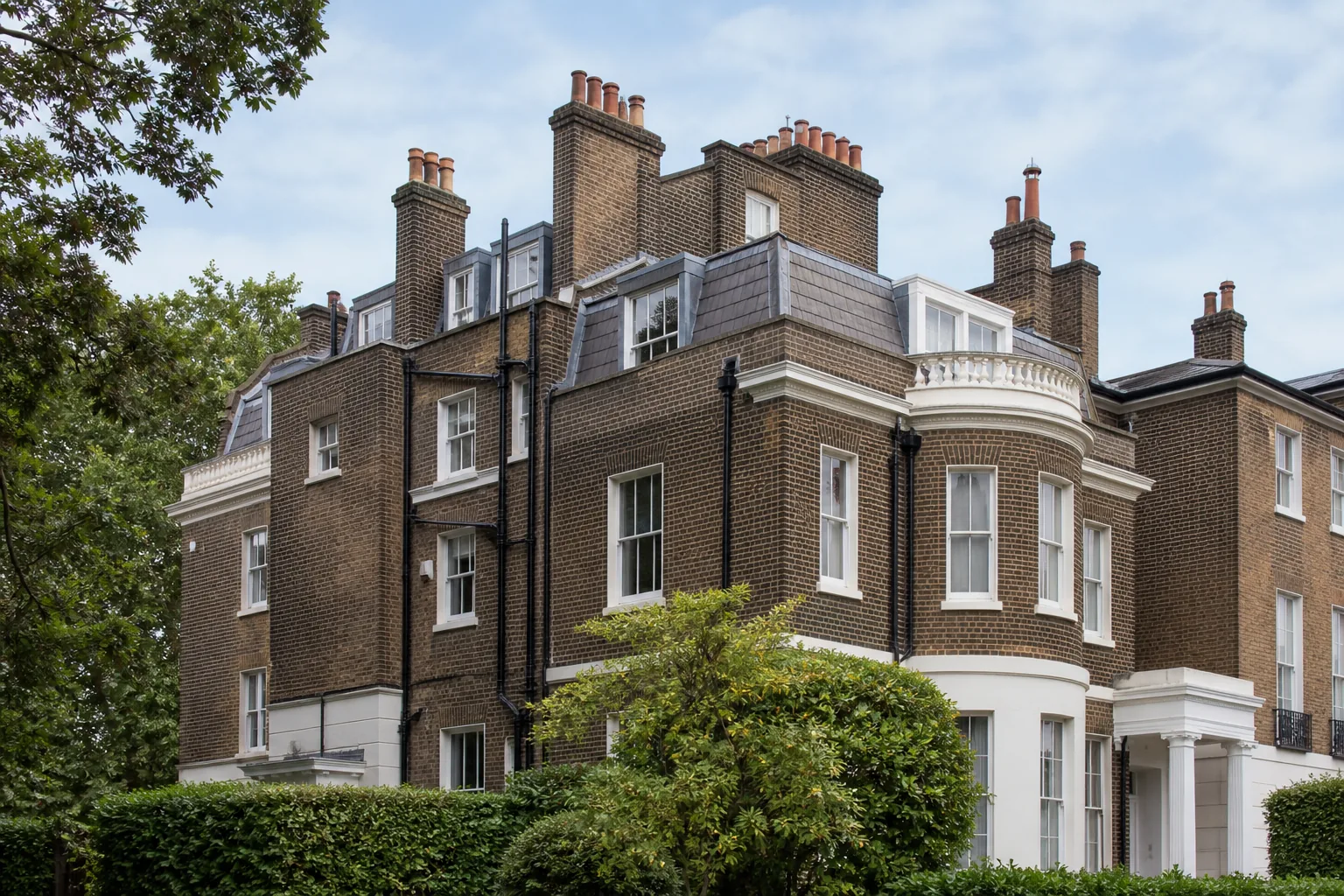
An Epsom property may have a lower roof edge across a bay or porch, a separate run on an addition, or a garage channel away from the main building. The actual arrangement can be simple or complex and must be confirmed for the address. When enquiring, distinguish the upper front from any lower front section, then do the same for the rear and sides. Include separate structures only when they need attention. This small amount of detail prevents an unclear request for all gutters from masking several different access conditions.
Levels matter because material and symptoms need not match. A short lower gutter may contain compacted leaves while a long upper run holds mostly fine silt, or water may spill from a channel that looks almost empty. Routine cleaning removes accessible deposits; it does not adjust the fall, reconnect a loose fitting or investigate a concealed pipe. If a lower roof, glazed structure or other obstacle sits beneath an upper edge, that run may require a separate access decision even when the lower channel can be accepted without difficulty.
Lower does not always mean straightforward, and visibility does not confirm reach. Conservatories, extensions, boundary walls, narrow routes, sloping ground and stored items may affect particular levels. Each elevation is considered on its own, without promising a specific access method.
| Property situation | Access or gutter consideration |
|---|---|
| House with bay and main roof gutters | The lower bay channel is a separate run and should be named if it needs clearing. |
| Home with a rear extension | Its roof edge may be accessible while the original upper channel has different approach constraints. |
| Property with a detached garage | Garage elevations add separate scope and are included only when requested. |
| Converted or shared building | Authority for communal channels and access through shared areas should be confirmed in advance. |
Visible clues
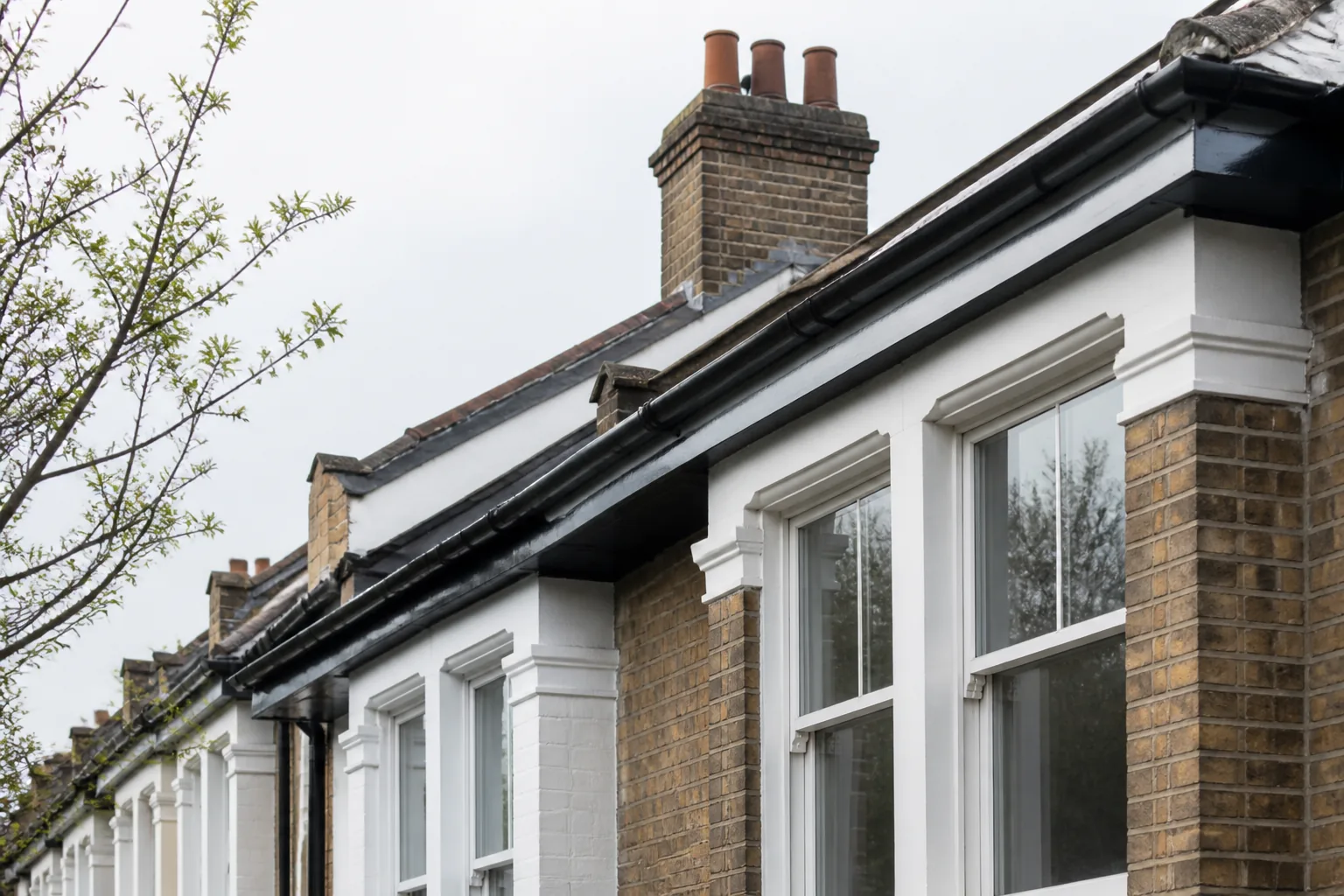
Plants, protruding debris, overflow or a visible sediment line can indicate that a particular channel needs clearing. Water dripping through a union, an edge pulling away or a visibly uneven run may instead suggest damage or alignment concerns.
Structured service guide
| Section | Routine work when agreed | Not implied |
|---|---|---|
| Main roof channel | Clear accessible loose debris | Other elevations or levels |
| Bay, porch or extension run | Include when named | Automatic inclusion with the house |
| Reachable outlet mouth | Remove accessible deposits | Concealed downpipe clearance |
| Buried drainage | Outside gutter cleaning | Underground investigation |
Structured service guide
| Observation | Cleaning response | Repair or other response |
|---|---|---|
| Leaves packed into a lower run | Remove the loose material | None if discharge is restored |
| Joint dripping after clearance | No further cleaning remedy | Assess seal or fitting |
| Empty gutter remains uneven | Debris work is complete | Review supports and alignment |
| Outlet clear but pipe backs up | Keep opening unobstructed | Assess the concealed route |
Structured service guide
| Information | Why it changes the task |
|---|---|
| Number of distinct roof levels | Each run needs its own scope and access check |
| Total selected channel length | Sets the extent of debris removal |
| Structures beneath upper eaves | May limit approach to higher sections |
| Distribution of deposits | Affects clearing effort across the runs |
Structured service guide
| If the property includes | Question to settle |
|---|---|
| A bay or porch | Is its lower channel part of the request? |
| A rear addition | Can both its edge and the run above be considered? |
| A detached garage | Which garage elevations need attention? |
| Communal roof drainage | Who has authority to arrange the work? |
A clear service sequence
Quick answers
Name the building, elevation and height of each run, such as lower front bay or upper rear house channel. This makes the intended work easier to assess than a single whole-property description.
No. A porch is a distinct roof edge even when it sits directly below the main channel. Ask for it expressly so its access, length and build-up form part of the agreement.
Leaves, loose moss, seeds, silt, grit and small twigs within an accessible selected channel are routine deposits. Attached roof growth, damaged parts and unusual material fall outside that description.
Photographs can show the general position, but may not reveal ground levels, obstacles or the available route beneath it. Actual access still needs confirmation before the section is accepted.
No. The reachable mouth can be cleared when included, but concealed bends and the rest of the downpipe require separate assessment if water still fails to discharge as expected.
Yes. Separate structures do not have to be included with the house. The quotation can cover only the chosen house runs, provided those sections and their access are clearly identified.
Seasonal context
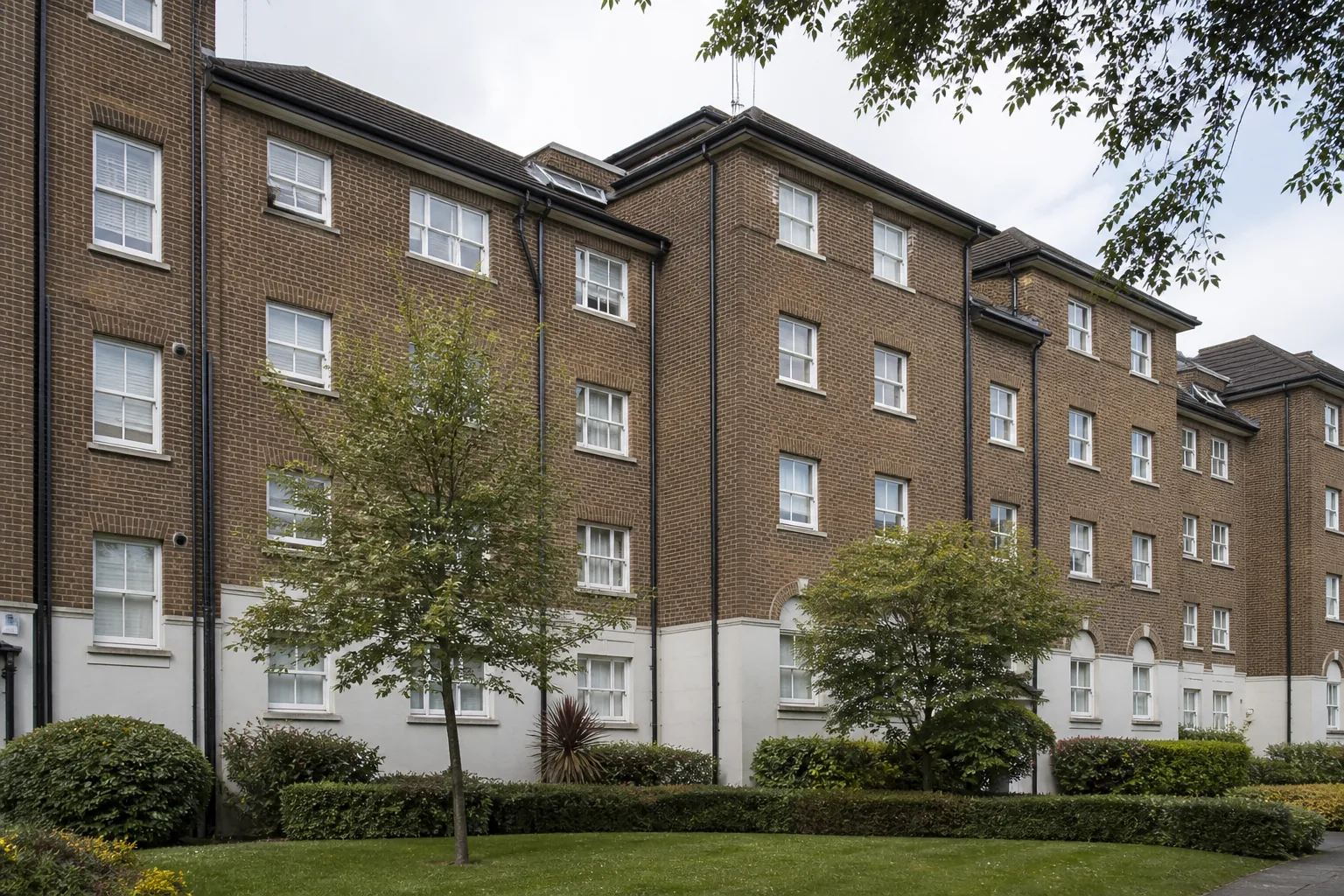
Different levels can collect material at different rates as exposure, shelter, surrounding planting and roof condition vary. Autumn may bring a concentrated leaf fall, while grit and loose moss arrive gradually. Review each known collection point when deciding when attention is due.
Nearby trees, roof moss, gutter shape and exposure can all affect how quickly material accumulates. A visible symptom is more useful than applying one fixed timetable to every address.
Epsom service area
Nearby gutter-cleaning pages
Before booking
The service includes removal of routine loose debris from the accessible channel runs agreed for the visit, plus reachable outlet openings where specified. It does not automatically extend to every level, separate building, downpipe interior or drain.
A bay or porch channel may have a different outlet, height, amount of debris and access route from the main eaves above. Listing both avoids assuming that inclusion or access for one also settles the other.
It may, depending on its position and the usable space around it. Mention both the addition and the upper roof edge when enquiring. The higher section is considered from the actual layout rather than guaranteed in advance.
Separate runs can receive different amounts of leaves, moss and sediment, and their outlets or physical condition may differ. The affected level should be inspected on its own instead of treating another clear gutter as proof of its condition.
No. Removing deposits can reduce weight and restore space within the channel, but it does not realign the gutter or repair its supports. A section that remains uneven after clearing needs a separate repair consideration and response.
It can be included when the outlet opening is reachable, the run is accepted and that work is part of the agreement. This does not mean the concealed pipe below has been opened or shown to be clear.
Responsibility and authority should be established before arranging work. The requested communal section and available access need to be clear. One resident’s visible elevation does not automatically define permission for the full connected run or other exterior areas.
Not necessarily. Price reflects the entire requested task, including access, length, height, build-up and the number of separate runs. A short channel can still have constraints or dense deposits that affect the work involved at that property.
It is outside routine roof-edge clearance. If discharge remains poor beyond the downpipe or water appears around a ground connection, describe that concern separately so the need for drainage assessment is not confused with channel cleaning.
Base the timing on what each run previously held, its exposure, surrounding planting and any repeated overflow. Lower and upper sections may accumulate at different rates, so they do not need one automatic timetable for future attention.
Discuss the actual roofline
A price is shaped by the number of requested runs, their combined length, separate heights, access around each roof edge and the deposits present. Adding a porch, garage or extension expands the task. Repair, hidden pipe and drainage needs are quoted apart.
