
SOUTH KENSINGTON · A CAREFUL START FOR DISTINCTIVE RUGS
Rug Cleaning in South Kensington, Planned Around the Textile
From a narrow townhouse runner to a large drawing-room rug, each piece presents a different combination of yarn, colour and construction. We begin with what you can show us, then decide what must be verified in person.
- Photograph the complete rug in daylight, with every edge visible
- Point out colour changes, compressed areas and previous repairs separately
- Share measurements, care labels and any known cleaning history
- Explain lifts, stairs, parking limits and the surface beneath the rug
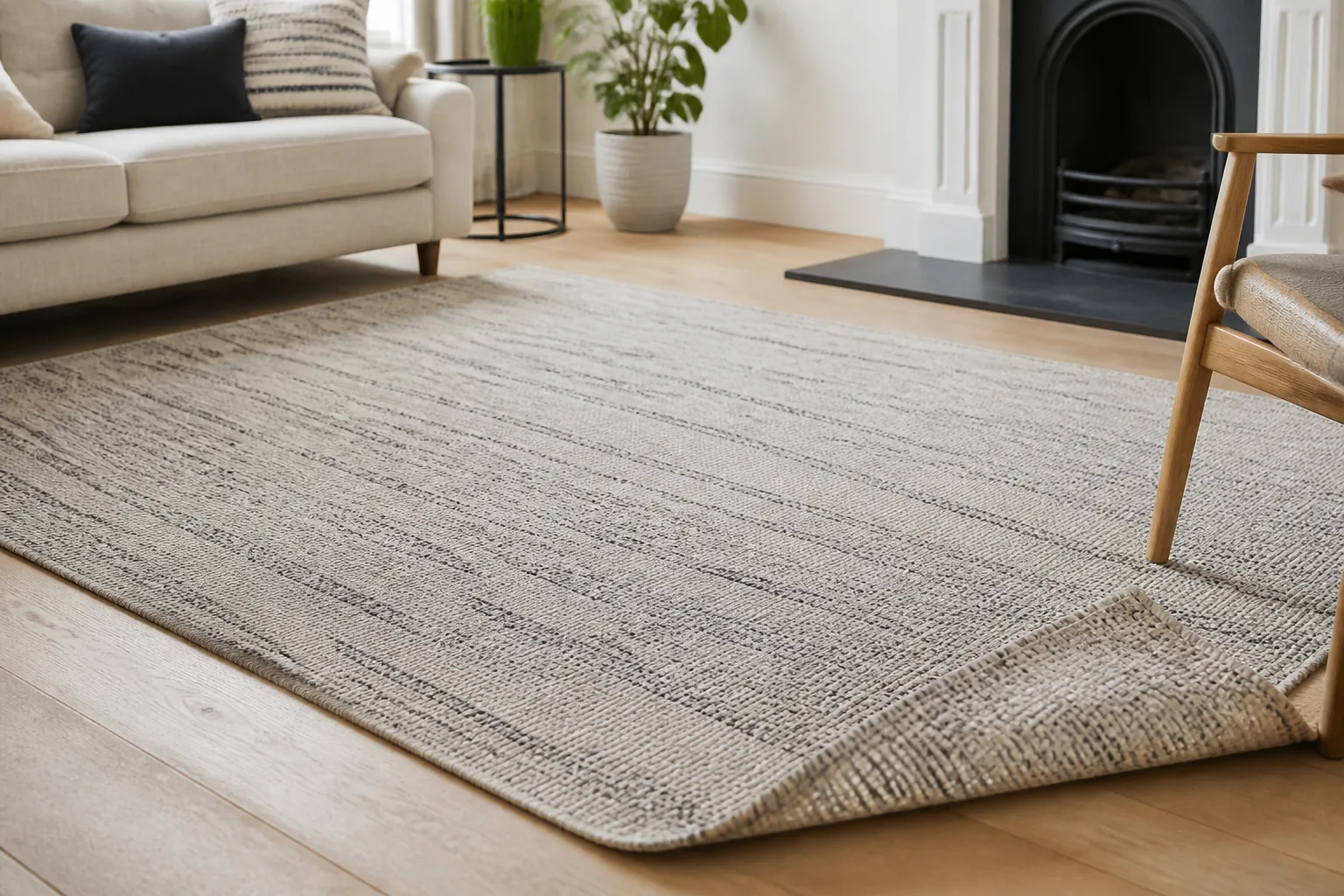
BUILD A USEFUL FIRST BRIEF
Sort the facts from the assumptions
You do not need to identify the fibre yourself. These prompts simply organise the clues we need to discuss before inspection.
THE ROOM CHANGES THE PRACTICAL PLAN
Record how the rug is used, reached and supported
A South Kensington appointment may involve a lower-ground-floor flat, a mansion block with a managed entrance, or a tall house with several flights. Those differences affect handling and preparation even when the rugs look similar.
Use photographs to tell a sequence. Start with the room, add an unobstructed overhead view, then capture the front, reverse, corners and any priority area. This reveals scale and position without pretending that a photograph can diagnose the fibres.
Tell us which furniture rests on the rug and whether building staff control access. We can then separate customer preparation from work that needs to be agreed as part of the visit.
A practical South Kensington handover record
Identity: Give the rug a simple room name so photographs and notes cannot be confused with another item.
Dimensions: Measure the longest and widest points, including fringe only when you state that clearly.
Orientation: Mark which end sits near a window, radiator or regularly used doorway.
Surface: Photograph the floor exposed at one corner before lifting more of the textile.
Traffic: Explain where shoes, chair legs or repeated walking place the greatest load.
Marks: Describe when each concern appeared instead of grouping every variation as a stain.
Products: Name any powder, spray or hired machine previously used, even if it seemed harmless.
Colours: Include close images of dark-on-light boundaries and unusually bright decorative yarns.
Edges: Flag unravelled binding, loose fringe and corners that turn upwards.
Repairs: Point out patched backing, re-tufting or stitching from an earlier restoration.
Access: Record doorway width, steps, lift size and any restricted service entrance.
Parking: Mention loading controls rather than assuming a nearby stopping point will be available.
Furniture: Agree in advance which objects the household will remove and which need discussion.
Priorities: Rank the issues that matter most so the quotation reflects the actual purpose of the visit.
Aftercare: Keep the room available until the textile-specific guidance permits normal use.
Limits: Assessment may identify permanent wear, dye change or structural weakness outside a cleaning outcome.
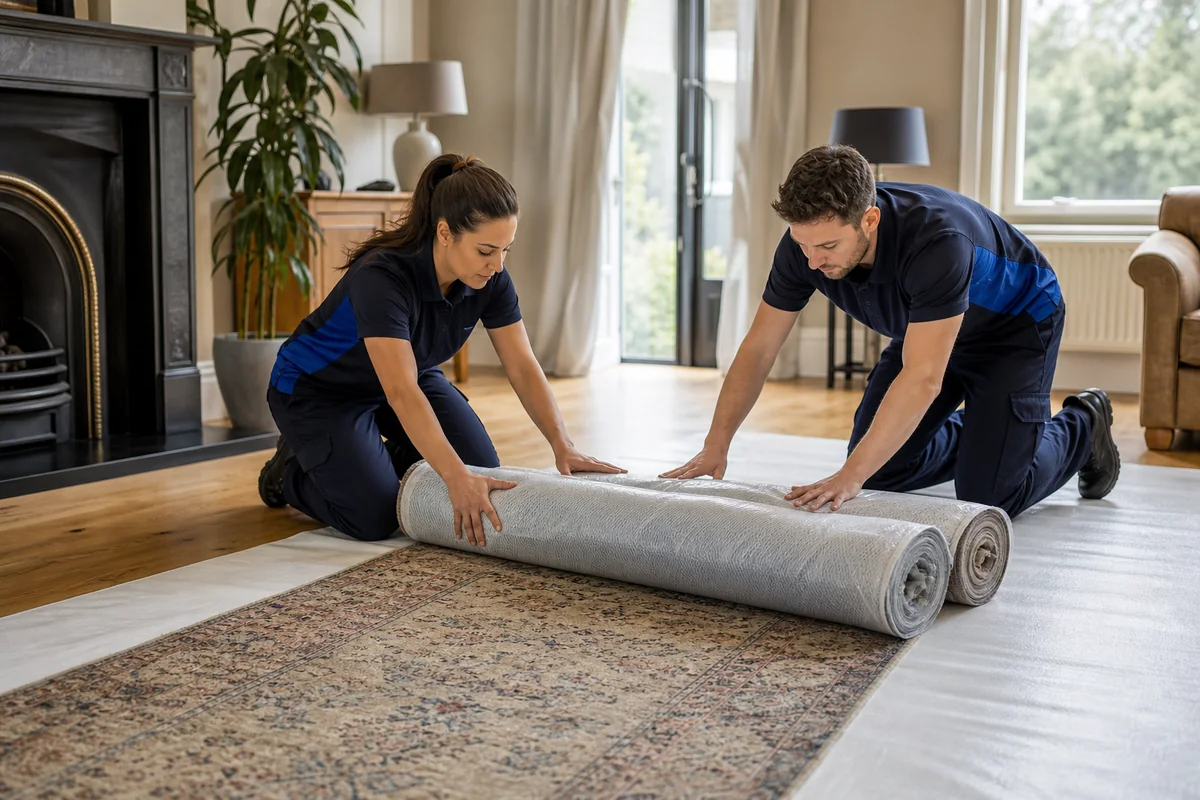
VISIBLE CHANGE
Describe what happened before naming the problem
A pale area may come from abrasion, sun exposure, residue or a spill. Its position, shape and history are more useful than calling it a stain too early.
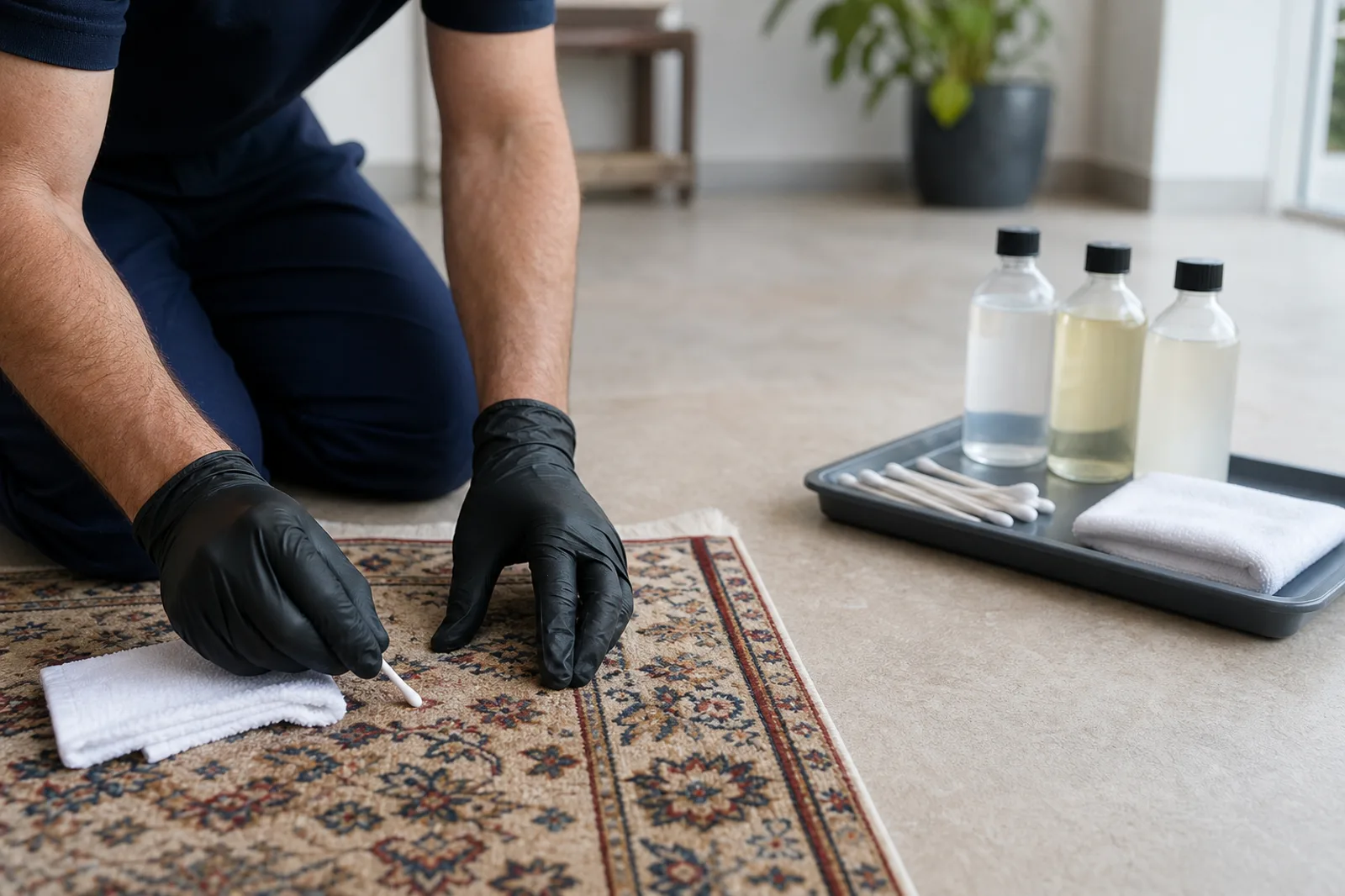
SMELL AND MOISTURE HISTORY
Map an odour rather than masking it
Indicate where it is strongest, when it is noticed and whether the rug or floor has ever become wet. That evidence helps establish what can reasonably be investigated.
- Outline the affected zone on a full-rug image
- Share any known pet, spill or damp event
- Report treatments already applied to that area
- Expect the response to depend on depth and construction
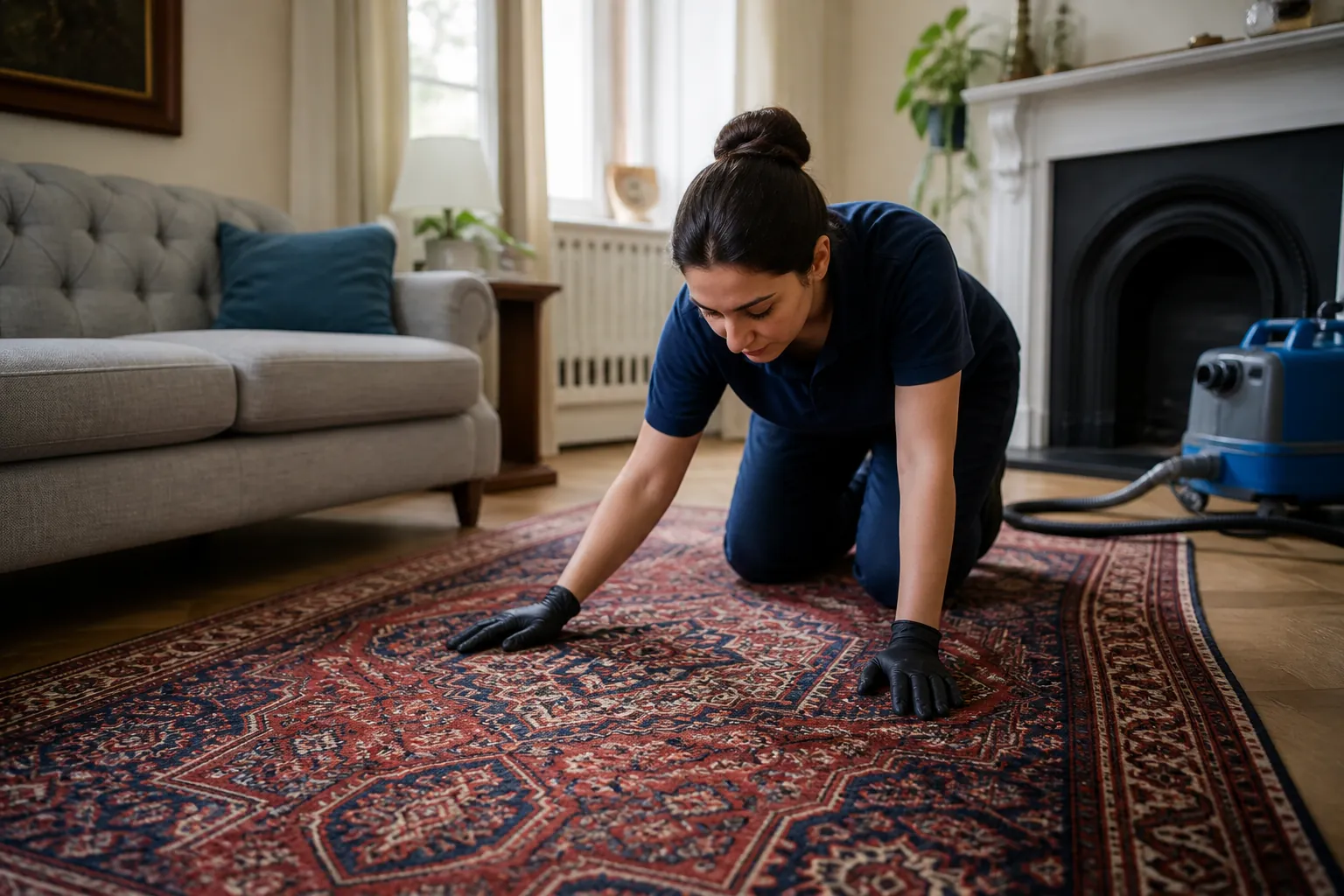
ONE OBJECT, FOUR SETS OF CLUES
Build the method from evidence that works together
No single label, photograph or fibre guess settles the approach. The inspection brings material behaviour, colour, assembly and vulnerable details into one decision.
Reaction and resilience
Fibre characteristics influence handling, chemistry and mechanical action.
Migration risk
Contrasting dyes may require tests and tighter control.
Foundation and pile
Tufting, knots, adhesive and density affect what is feasible.
Edges, repairs and backing
Existing fragility is logged before the rug is repositioned.
FROM ENQUIRY TO HANDOVER
A sequence that can change when the rug requires it
The route is confirmed progressively. A finding at any checkpoint can narrow the work, add a precaution or prompt a different recommendation.
- 01
Orient
Match the rug to its photographs, measurements and room notes
- 02
Inspect
Read labels, surfaces, edges, reverse and previous repairs
- 03
Test
Check relevant colour or material behaviour where appropriate
- 04
Define
Agree priorities, exclusions and the workable treatment boundary
- 05
Proceed
Carry out only the controlled work supported by those findings
- 06
Review
Compare priority zones while distinguishing change from damage
- 07
Return
Give room-use, drying and furniture guidance for this particular rug
SIZE GUIDES FOR INITIAL PLANNING
Measurements open the quote; condition completes it
Area helps place the rug in a guide band. The final quotation follows the recorded construction, access, condition and any separately requested work, so two equal-size pieces need not have identical scopes.
BEFORE YOU ASK FOR A PRICE
Prepare nine pieces of information
- Your South Kensington postcode
- Length and width at the widest points
- A photograph of the rug within its room
- A second image showing the full border
- Close views of priority areas
- Label, reverse and fringe photographs
- Known age, origin or material information
- Earlier spill products and cleaning attempts
- Entry, parking, stair and furniture constraints
Short answers before you send
Must I know the fibre?
No. Share reliable label information and leave identification open where it is uncertain.
Can photographs confirm a result?
No. They improve preparation but cannot establish dye behaviour, depth or permanent change.
Should the rug be rolled beforehand?
Not unless specifically agreed. Its position and visible condition can be useful at inspection.
Can another household item join the booking?
Ask when enquiring. Each item needs its own description and an agreed place in the quotation.
QUESTIONS FROM SOUTH KENSINGTON HOUSEHOLDS
Useful decisions to settle before the day
What makes a complete set of rug photographs?
Include the entire face, each edge, the reverse if safely accessible and close-ups that retain enough context to locate every concern.
Why do you ask what lies beneath the rug?
The supporting floor affects lifting, protection and return arrangements, even though it does not identify the textile treatment.
How should I report a wine or coffee spill?
State what was spilled, roughly when it happened, what was applied afterwards and how the appearance changed as it dried.
Can worn pile be restored through cleaning?
Cleaning addresses suitable contamination, not missing fibre, abrasion or permanent pile distortion. Assessment keeps those outcomes distinct.
Do concierge and lift details matter?
Yes. Access hours, loading instructions and lift dimensions can change the practical handling plan for a larger rug.
What if the care label is missing?
That is common. Photographs and inspection provide other clues, while uncertain composition remains explicitly unconfirmed.
May I use a shop-bought remover before the visit?
It is safer to avoid adding unknown residue. Send a current photograph and list anything already applied.
How are fringes treated in the quotation?
Their fibre, attachment and condition are reviewed separately because fragile or discoloured fringe can require a narrower scope.
When will the rug be ready for normal use?
Aftercare is based on the chosen work, absorbency, backing, room conditions and observed progress rather than a universal clock.
What can change the published starting price?
Construction, measured area, accessibility, condition and optional tasks can all shape the confirmed quotation and visit minimum.
START WITH WHAT YOU KNOW
