
KENSINGTON · CARE STARTS WITH THE OBJECT IN FRONT OF US
Rug Cleaning in Kensington with the Right Checks First
A rug may be an everyday runner, a room-sized wool piece or something collected over decades. We begin by identifying what can safely be handled, then shape the work around its colour, construction and present condition.
- Show the whole rug and how it sits among furniture
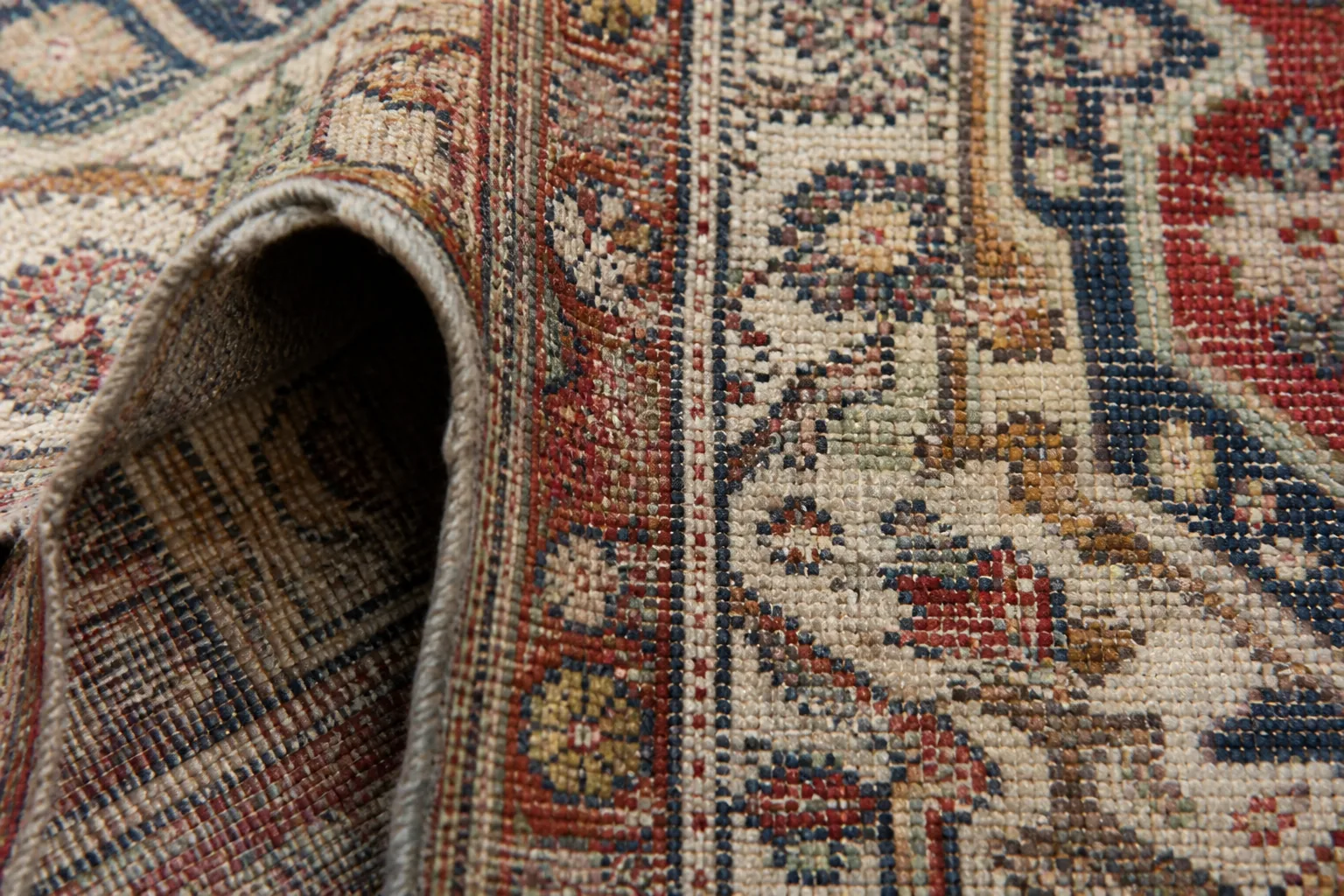
- Photograph the reverse, fringe and any maker’s label you can reach
- Point out old repairs, fading, ripples and areas that feel different
- Explain lifts, narrow stairs, concierge rules or restricted parking
A BETTER ENQUIRY
Make the first conversation specific
- Address and practical arrival instructions
- Length and width at the outermost edges
- A clear photograph taken from above
- Separate images of every area causing concern
- Reverse, binding and fringe details
- Any fibre or manufacturer information
- Whether furniture currently rests on it
- Known spills, home treatments or past cleaning
- Deadline, room use and access restrictions
Before you make arrangements
Should the rug be rolled before the visit?
Please leave it in place unless we agree otherwise. Its position can reveal shape, furniture load and flooring considerations.
Can a photograph confirm the fibre?
It can provide clues, but appearance alone is not reliable enough to settle material or treatment.
Do you move every piece of furniture?
No. Tell us what is on the rug so safe, realistic movement can be agreed beforehand.
Will an old stain definitely improve?
Not always. A visible patch may include permanent dye or fibre change as well as removable residue.
READING THE RUG
Four clues shape a responsible approach
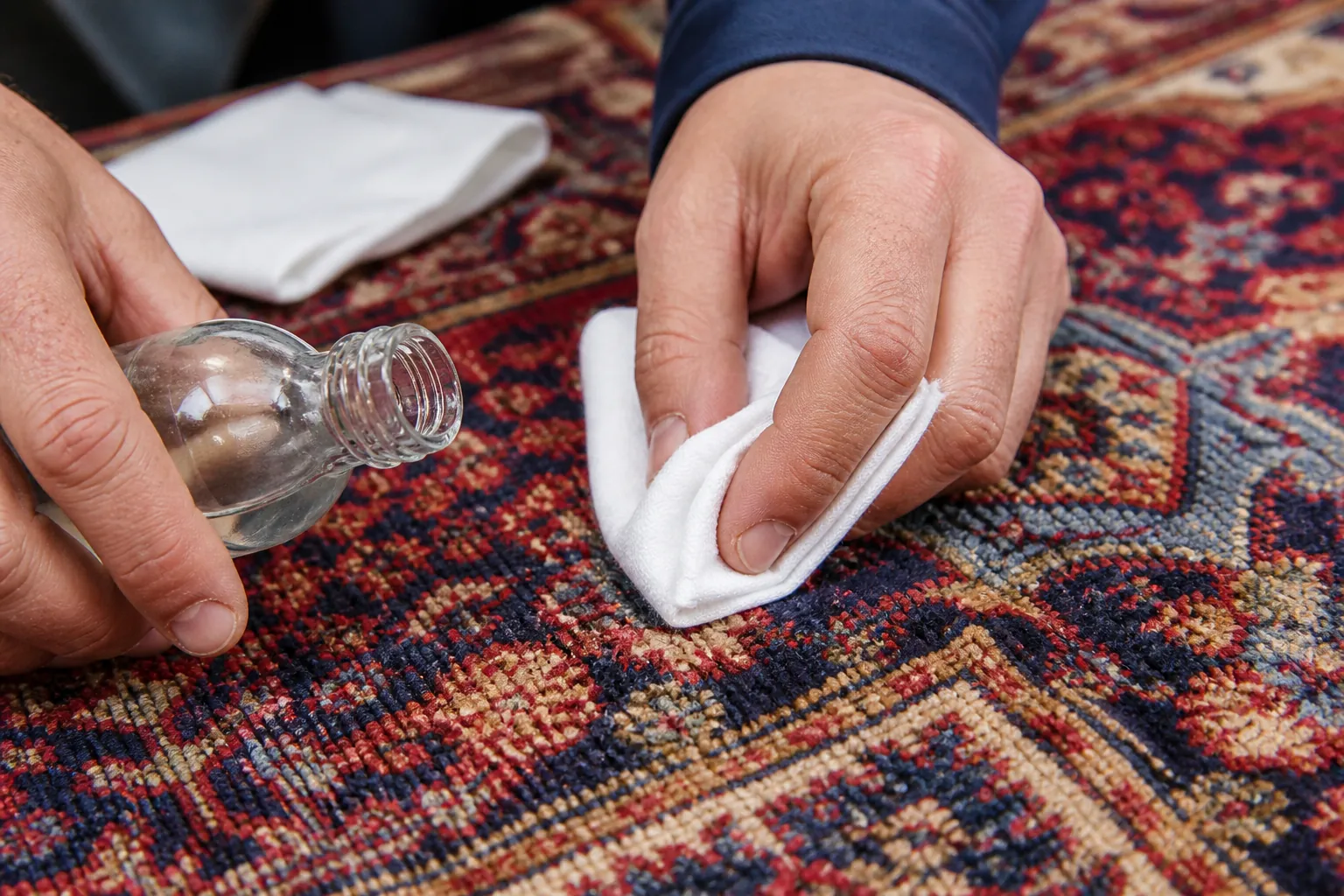
No single clue is decisive. The face yarn, the way colours behave, the structure beneath the pile and signs of age need to tell a consistent story before work proceeds.
How the surface responds
Natural and manufactured fibres tolerate moisture and movement differently.
Whether dyes stay put
Contrasting tones and uncertain history deserve particular attention.
What holds the piece together
Knots, backing, adhesive and stitching affect what can be attempted.
Change that cleaning cannot reverse
Sun loss, abrasion, brittle fringe and distortion are recorded as condition.
THE VISIBLE PATCH
Describe what happened, not just what you see
When possible, tell us when the change appeared, whether it was wet, and what was used afterwards. That history is often more useful than calling every darker area a stain.
WHEN SMELL IS THE CONCERN
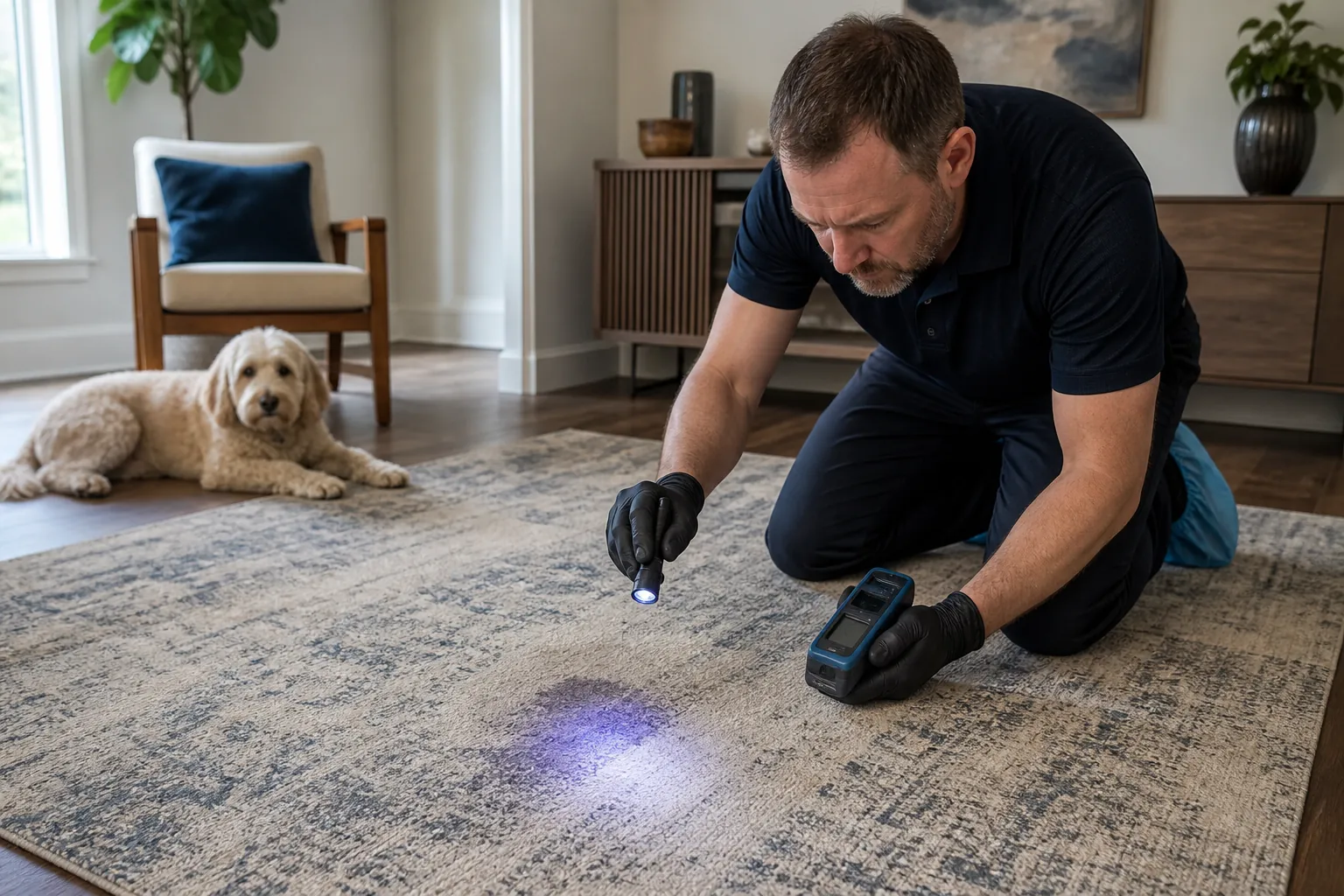
Map the source before discussing treatment
An odour can sit at the surface or extend into the foundation and flooring below. Location, recurrence and known cause help us define an honest scope.
- Circle the affected zone in a photograph
- Mention pets, damp storage and earlier spills
- Say whether the smell changes with humidity
- Keep the floor beneath available for inspection
BUILD A USEFUL PROFILE
Choose observations, not a treatment
These prompts organise the enquiry. The final decision still follows direct inspection and any appropriate tests.
KENSINGTON HOMES · REAL-WORLD HANDLING
The route through the property is part of the brief
A large rug in a mansion flat needs a different collection plan from a small hallway piece beside a street-level entrance. We separate those handling facts from the textile decision, while accounting for polished timber, stone floors and tightly arranged rooms.
Picture a typical enquiry. A patterned wool rug sits partly beneath a dining table, with one pale traffic lane and a repaired corner. The customer photographs the entire room, measures the rug, and identifies the repair without attempting to drag the table away.
The building has a staffed entrance and a timed lift booking. Those details allow the carrying and appointment window to be discussed before arrival; they do not become claims about how the pale lane will respond.
A Kensington handover record
Identity: The booking distinguishes a removable rug from fitted carpet and notes whether a maker or retailer is known.
Dimensions: Measurements include fringe separately so the textile area is not confused with decorative length.
Use: We record whether the piece serves an entrance, dining space, bedroom or low-traffic reception room.
Daylight: Window-facing fading is photographed because cleaning cannot restore colour lost to sun exposure.
Wear: Flattened pile and exposed foundation are treated as pre-existing condition, not simply embedded dirt.
Repair: Rebound edges, patched backing and replaced fringe are flagged before lifting begins.
Spill history: Drinks, plant water, pet incidents and spot products are listed with approximate dates.
Colour map: Deep reds, dark blues, pale fields and contrasting borders are highlighted for closer review.
Underside: Powdering, adhesive, labels and transfer from non-slip material are documented where visible.
Floor: The support surface is noted so neither dragging nor premature replacement is assumed.
Access: Door widths, turns, stairs and lift arrangements help determine how a bulky roll can leave safely.
People: The plan states who will provide entry and whether building staff need advance notice.
Priority: One or two principal concerns are agreed, avoiding a vague promise to make the rug “as new”.
Aftercare: Use, ventilation and furniture-return guidance is tailored after the actual work, not copied from a timetable.
Quotation: Size establishes the guide band; condition and handling establish what the quoted work includes.
Decision: If evidence suggests an unsuitable risk, the assessor may narrow or decline the proposed treatment.

FROM DOORWAY TO HANDOVER
A sequence that leaves room for judgement
Each stage has a purpose: to preserve evidence, control handling and keep expectations tied to what the rug actually allows.
- 01
Survey
Confirm dimensions, setting, visible weakness and priorities.
- 02
Examine
Review yarn clues, colours, backing, edges and repair work.
- 03
Test
Carry out suitable checks where uncertainty could alter the plan.
- 04
Prepare
Release accessible loose matter within the safe handling limit.
- 05
Treat
Follow only the method supported by the findings.
- 06
Finish
Manage pile, edges and recovered moisture as appropriate.
- 07
Handover
Review priority areas and explain use and furniture return.
KENSINGTON SIZE GUIDE
Area provides the starting band, not the whole quotation
Measure the textile at its widest and longest usable points. We then qualify the guide using construction, existing fragility, the work requested and practical handling through the property.
QUESTIONS FROM KENSINGTON HOUSEHOLDS
Details worth settling before the appointment
How should I measure a rug with an uneven fringe?
Measure the main woven body at its widest points, then note the fringe length separately and send a full photograph.
What if I do not know whether it is wool or synthetic?
Say that the material is unknown. Labels and appearance provide evidence, but physical assessment should resolve the working limits.
Can you work around a dining table?
Send images and list what rests on the rug. Furniture movement must be agreed rather than assumed at the appointment.
Why do you ask about the floor underneath?
Polished wood, stone, underlay and non-slip layers each affect lifting, protection and the timing of replacement.
Will cleaning restore a sun-faded border?
No cleaning process can replace dye already lost to light. Fading is recorded separately from soil.
Is a repaired corner a problem?
It is important information. The repair’s stability and materials may require gentler handling or a reduced scope.
Should I use stain remover while waiting?
Avoid adding another unknown product. Photograph the area and tell us exactly what has already been applied.
How is a pet-related smell discussed?
Identify the location, recurrence and known incident. The assessment considers whether the concern reaches beyond the face yarn.
Can you promise a collection or drying time immediately?
Timing depends on access, the chosen route, absorbency and actual drying conditions, so it is confirmed only when enough is known.
What might change the published starting price?
Unusual construction, fragile condition, optional treatment, difficult movement or a larger measured area can alter the final scope.
START WITH EVIDENCE
