
A CONVERSION FLAT, A TUFTED RUG, A CAREFUL LIFT
Rug Cleaning in Belsize Park, Planned from the Backing Up
Fireplace dust can settle deep into a tufted surface while an ageing backing stays hidden underneath. Our Belsize Park brief records both sides of the piece before anyone discusses moisture, movement or likely improvement.
- Photograph the rug where it normally sits, with the hearth and furniture visible
- Show the powdery area in daylight rather than brushing it first
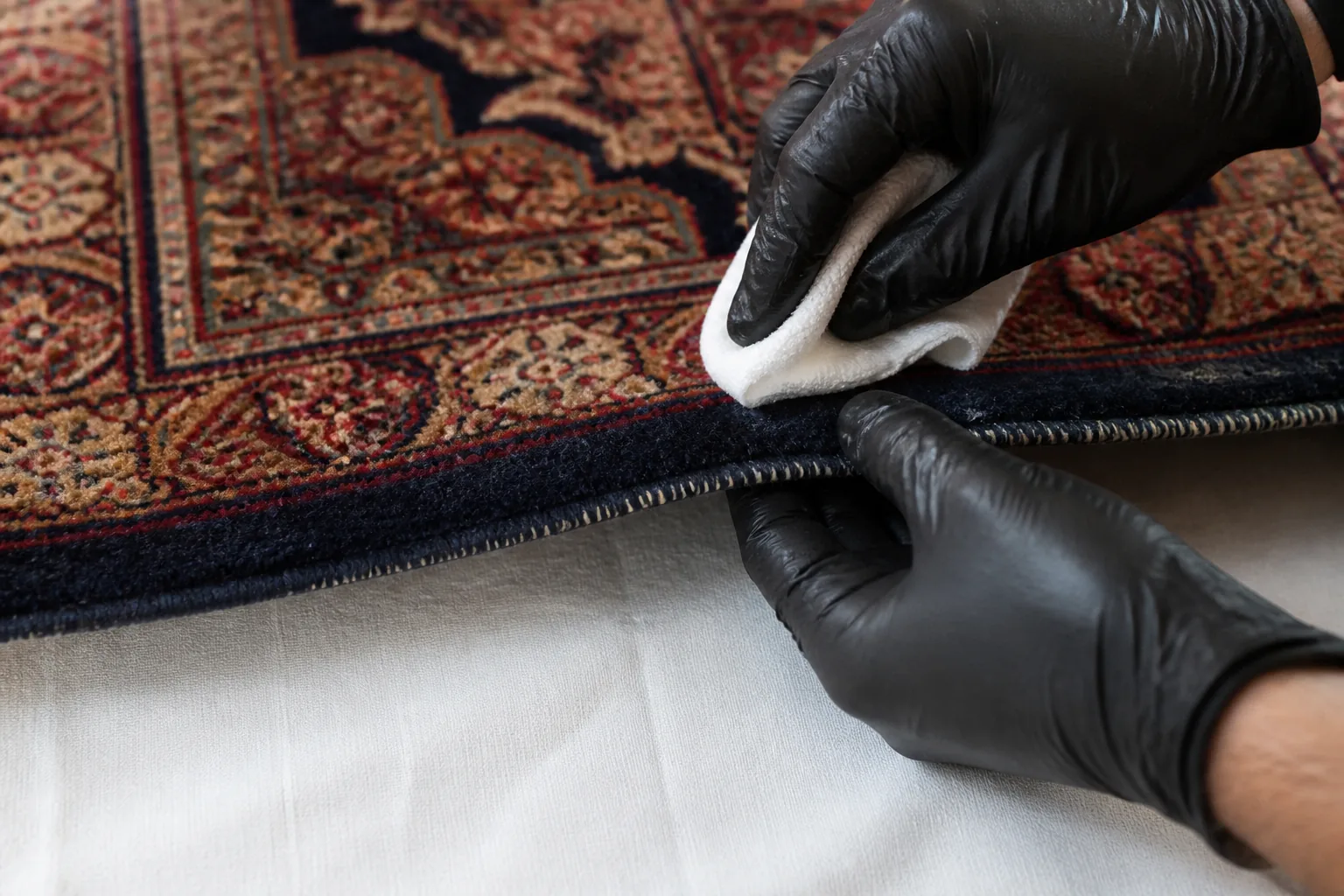
- Turn one reachable corner for a clear image of the backing
- Measure the steps and mention resident-parking restrictions
THE BELSIZE PARK ROOM RECORD
Document the journey before lifting the rug
For this enquiry, the rug rests on painted timber boards. The arrival involves raised entrance steps and permit-controlled parking. Those facts influence protection, carrying and scheduling; they do not identify the textile or prescribe a cleaning method.
First view. A wide photograph establishes proportions, nearby furniture and the path to the door. It also reveals whether the rug can be examined without dragging an edge across the floor.
Second view. Close photographs record fine hearth residue across a regularly used field, the border, corners and underside. They help the assessor ask better questions but are never treated as a removal guarantee.
A working file for this Belsize Park rug
Orientation: Note which edge faces the window and where foot traffic crosses the pile; this makes later comparisons meaningful.
Dimensions: Measure the greatest length and width, excluding loose fringe, and state whether the rug sits beneath heavy furniture.
Construction clues: Supply a readable label and an underside photograph. Leave fibre identification open when the evidence conflicts.
Wear map: Circle thin, flattened or abraded zones separately from dirt. Cleaning cannot rebuild missing yarn.
Colour record: Photograph pale and strongly coloured areas in neutral light, without filters or automatic enhancement.
Edge condition: List curling corners, broken binding, detached fringe and any place where the foundation can be seen.
Product history: Name powders, sprays or rented equipment already used, including treatments that appeared to do nothing.
Moisture history: Mention leaks, plant-pot seepage or repeated wetting even when the surface currently feels dry.
Odour position: Locate a smell by area and likely event. Scent alone cannot show whether a source reached the foundation.
Room protection: painted timber boards is part of the logistics record so examination and aftercare do not create a second problem.
Access plan: Because the route includes raised entrance steps and permit-controlled parking, widths, turns and stopping points should be confirmed beforehand.
Expectations: Improvement is discussed after condition and colour checks; restoration, repair and cleaning remain different services.
Drying conditions: Ventilation, temperature, pile mass and backing behaviour determine the advice given at handover.
Quote boundary: Area is only the first pricing input. Fragility, construction, access and agreed optional work can change scope.
Final comparison: Review the documented priority rather than judging the entire rug by one shifting patch of pile.

READING THE OBJECT
Four clues shape a responsible proposal
hand-tufted wool with a slightly separating backing cannot be understood from the face alone. Yarn, colour, assembly and past intervention each set a different limit.
Feel and response
Unknown or blended fibres remain unconfirmed until evidence supports a description.
Transfer risk
Contrasting dyes may call for small checks and narrower working boundaries.
How the rug holds together
Tufting, knots, adhesive and backing affect what handling is sensible.
Repairs and edge work
Older stitching is mapped so pre-existing change is not confused with treatment damage.
BUILD A USEFUL DESCRIPTION
Choose facts, not a cleaning recipe
The answers create an inspection checklist for Belsize Park; they do not select machinery or chemistry.
A SEQUENCE FOR BELSIZE PARK
Pause points are part of the work
fine hearth residue across a regularly used field is followed through the sequence without pretending that every visual change is removable.
- 01
Frame
Photograph the room and mark the hearth-facing edge.
- 02
Lift
Support a corner and inspect the backing without pulling it.
- 03
Test
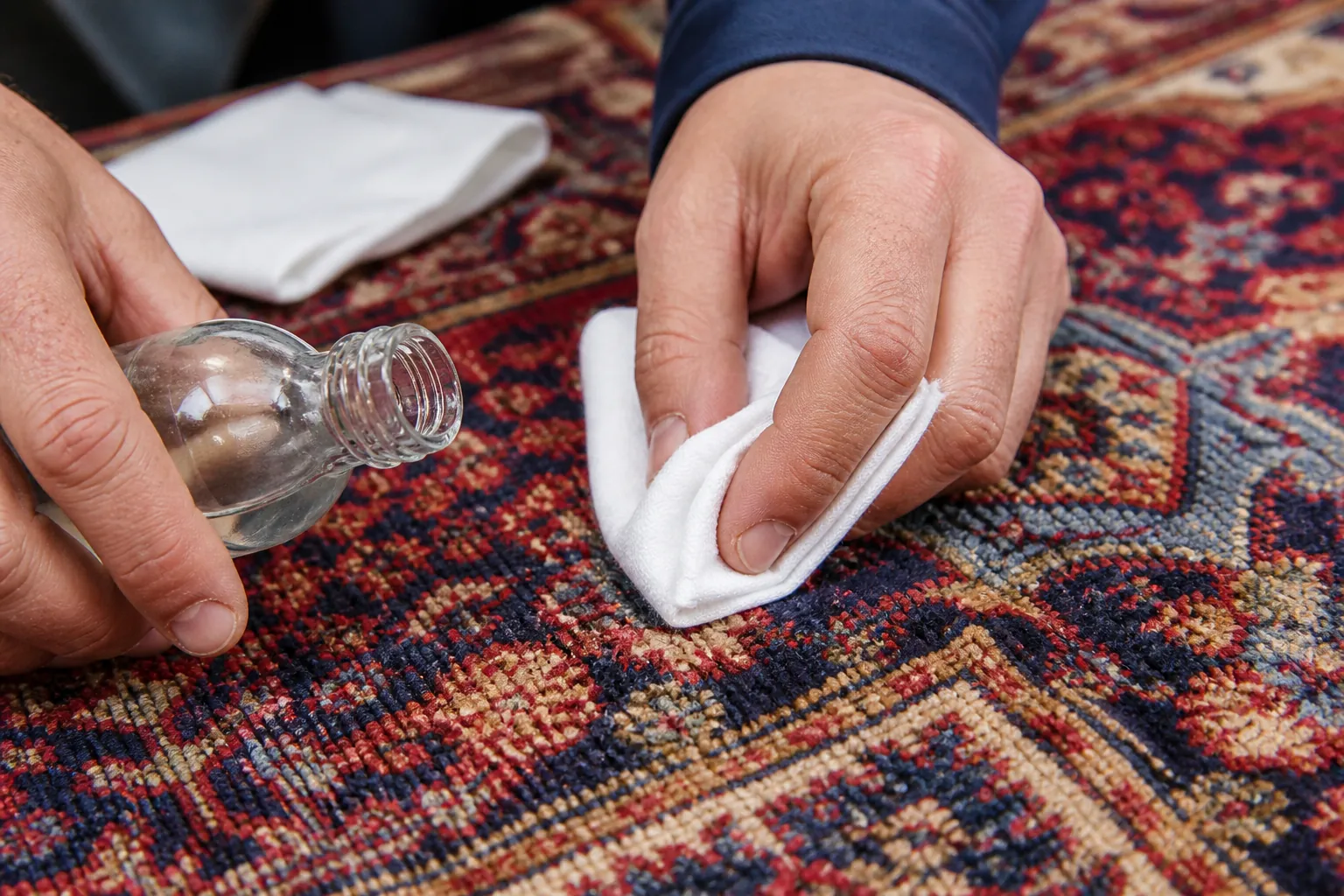
Consider colour behaviour where a check is appropriate.
- 04
Release
Address accessible dry powder before wet decisions.
- 05
Treat
Work only within the agreed material boundary.
- 06
Settle
Arrange the pile and protect painted boards.
- 07
Return
Explain ventilation and furniture timing.
MEASURED-AREA GUIDE
Size opens the estimate; condition completes it
These published starting points help frame a Belsize Park enquiry. The quotation is confirmed only after construction, fine hearth residue across a regularly used field, handling and access are understood.
THE VISIBLE PATCH
Appearance has several possible causes
fine hearth residue across a regularly used field may sit beside fading, pile reversal, abrasion or residue. We record the boundaries and history before describing a realistic aim.

WHAT A SMELL CAN — AND CANNOT — SAY
Locate the source before discussing treatment
An odour report needs a position, event and timeline. It may involve face yarn, foundation, backing or painted timber boards; a generic deodorising promise would hide those distinctions.
- Map the smallest affected zone
- Record liquid and product history
- Check the underside and supporting floor
- Keep the result conditional on findings
BEFORE YOU REQUEST A PRICE
Send a brief that another person can picture
- Belsize Park postcode and suitable dates
- Maximum length and width
- One full-room photograph
- Close view of fine hearth residue across a regularly used field
- Label and reachable reverse
- Every weak edge or old repair
- Known products and previous work
- The floor: painted timber boards
- The route: raised entrance steps and permit-controlled parking
Four boundaries to understand
Can images confirm the fibre?
They can show clues, but touch, construction and labels may still leave the composition open.
Is dullness always removable soil?
No. Wear, light change and pile direction can produce a similar appearance.
May chairs return immediately?
Follow the item-specific handover advice and protect painted timber boards until the rug is ready.
Is odour work part of every clean?
No. Its source, affected layers and requested scope are discussed separately.
QUESTIONS FROM A BELSIZE PARK BRIEF
Ten points to settle before expectations harden
Why show the fireplace in the wide photograph?
It explains where fine mineral dust may originate and gives scale without claiming that every grey area is soot.
What does backing separation change?
It can limit lifting, agitation and moisture, so its extent must be checked before the scope is fixed.
Should I vacuum the powder first?
Leave the priority area representative if practical and tell us what routine vacuuming has already removed.
Can painted boards be marked?
Any supporting floor deserves a protection plan; existing paint condition should be photographed before movement.
Do permit hours affect the quotation?
They can affect arrival logistics and available working time, which is why the restriction belongs in the enquiry.
Will a tufted rug be treated like woven wool?
Not automatically. Adhesive, backing and construction have different tolerances from a woven foundation.
Can faded hearth-side colour return?
Cleaning does not reverse sun change, heat effects or lost dye; assessment separates those from surface deposits.
What if the label has been cut away?
Send the reverse and edge details, and describe the uncertainty rather than guessing a fibre.
How is drying discussed?
Advice follows absorbency, backing, room airflow and the selected route, not a universal clock.
Where do the guide prices begin?
Measured area places the item in a starting band; fragility, access and agreed extras complete the quotation.
START WITH OBSERVATIONS
