
MAYFAIR · A RUG IS ASSESSED AS AN INDIVIDUAL TEXTILE.
Mayfair Rug Cleaning for Wool, Weave and Wear
In a Mayfair mansion block, a hand-knotted Persian rug may be the quiet centre of a drawing room while concealing hard use around occasional chairs. Our brief follows the knots, cotton foundation, oily seating mark and compressed pile. Concierge timing matters for collection and handling, but it never substitutes for examining the textile itself.
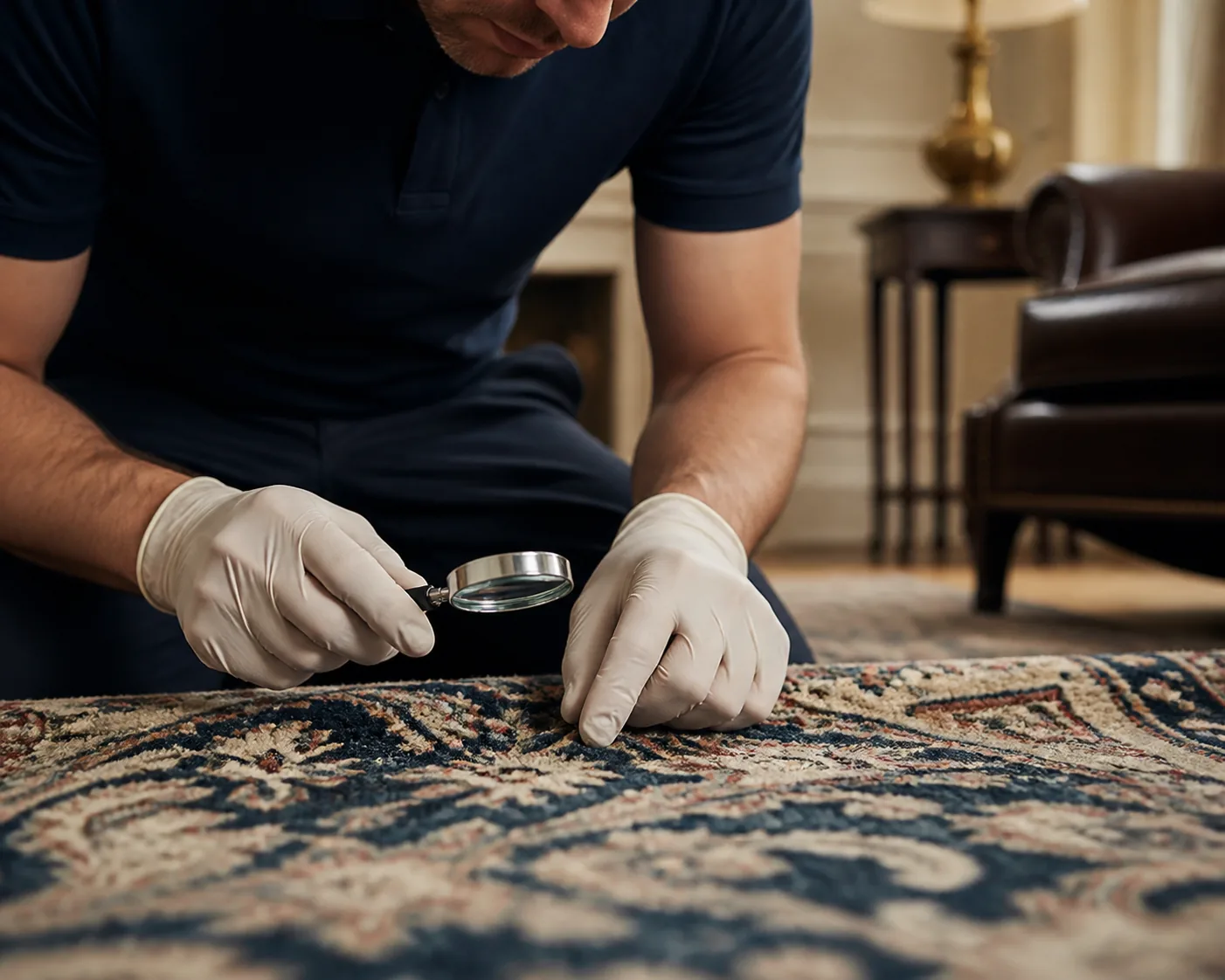
- Take a low-angle image across the knotted pile to reveal pressure change
- Place the dark chair-side mark in a wider photograph before adding close-ups
- Include fringe roots, side cords and the cotton foundation on the reverse
- Reserve the Mayfair loading window and measure the compact passenger lift
MAYFAIR · ROOM AND ROUTE
Access details belong in the textile brief
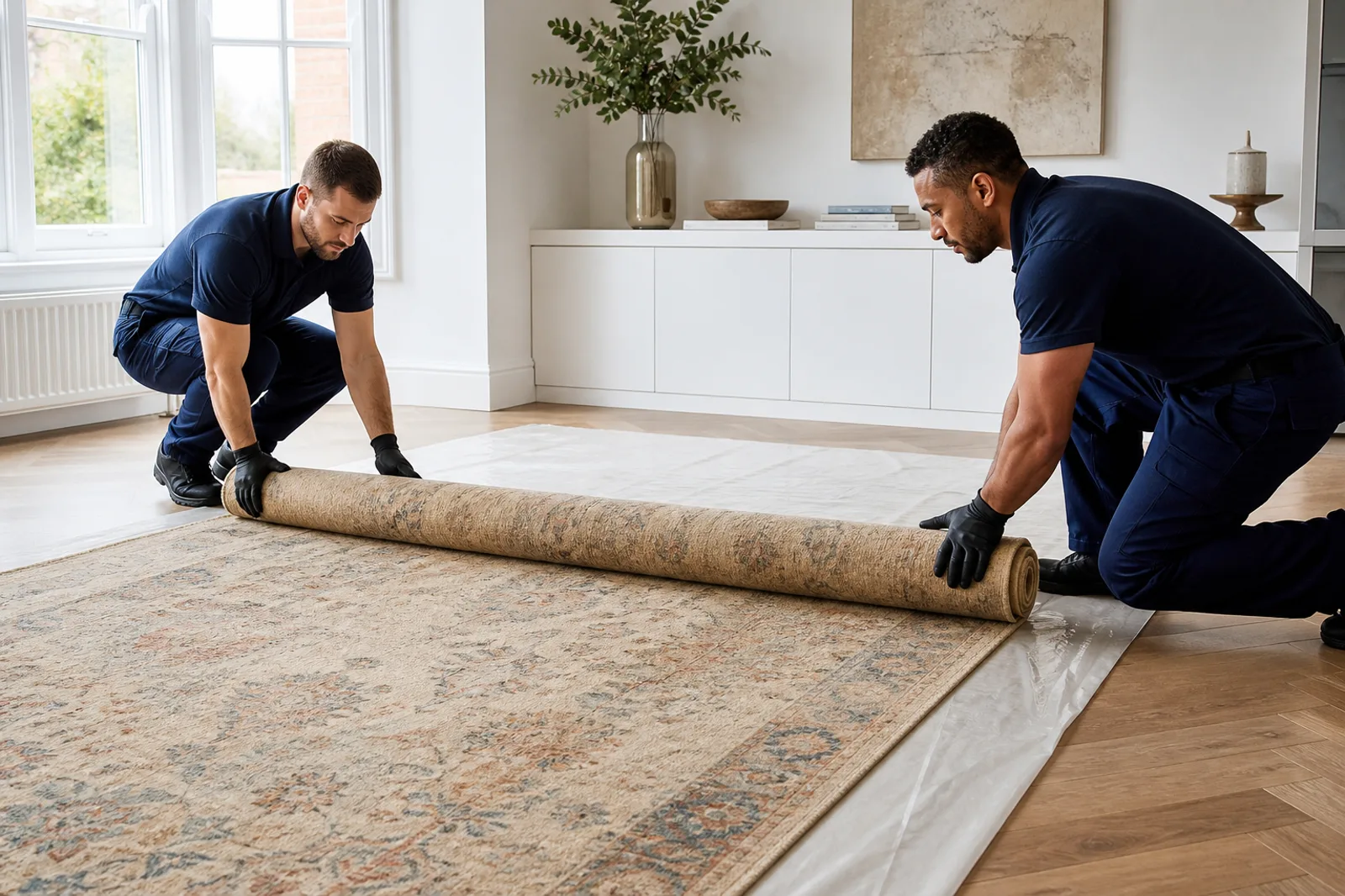
Mayfair planning begins in the room where the rug is used. Here, the working example is a mansion-block drawing room with a hand-knotted Persian rug over parquet; concierge loading window and a compact lift affects the carrying plan, while the textile assessment remains centred on compressed pile beneath occasional chairs and a dark drink mark.
A realistic Mayfair case. The full-room image establishes scale and furniture position. Separate close-ups then distinguish compressed pile beneath occasional chairs and a dark drink mark from ordinary loose soil, shading or wear. None of those photographs is treated as proof that a mark can be removed.
Before the visit, the owner notes the rug’s approximate dimensions, known cleaning history and whether the parquet can be protected during inspection. The team can then discuss a proportionate route without promising a technique or drying time in advance.
mayfair working dossier
Drawing-room arrangement: The Mayfair case uses a hand-knotted rug beneath light occasional furniture rather than a dining table. Soil distribution therefore follows short routes between seats, doors and the hearth instead of one broad central lane.
Knot and foundation: A reverse photograph should show knot spacing and the pale structural yarns without pulling or bending the rug sharply. Construction evidence informs handling but is not used to invent provenance.
Oily local mark: The dark area beside a chair is recorded with its edge, sheen and known history. Skin oil, furniture contact, a spilled product and fibre change can appear similar in a phone image.
Compressed pile: Pressure beneath chair feet can change reflection even when little contamination is present. Views from opposite directions help explain that optical shift to the customer.
Fringe roots: The fringe is structural on many hand-knotted pieces. Its attachment line is examined for thinning and old repairs before anyone treats it as decorative trim.
Concierge window: The Mayfair building offers a defined service period rather than unrestricted kerb access. Staffing and wrapping are planned around that window without rushing textile documentation.
Compact lift: Measured lift depth, door width and turning space decide whether the planned route is practical. A rolled dimension is never guessed before the rug itself has been considered.
Parquet beneath: The parquet surface is photographed at an exposed edge and noted in the return instructions. Damp contact and premature replacement of furniture are avoided.
Expectation setting: An oily deposit may be treatable, whereas pressure shading, historic fading and abrasion are not equivalent forms of soil. The quotation uses those distinctions in plain language.
Mayfair close-out: At handover, the customer receives observations about the chair-side area, pile direction, fringe and safe room reset. The discussion is tied to what was actually done, not a generic leaflet.
A MARK IS NOT ALWAYS SOIL
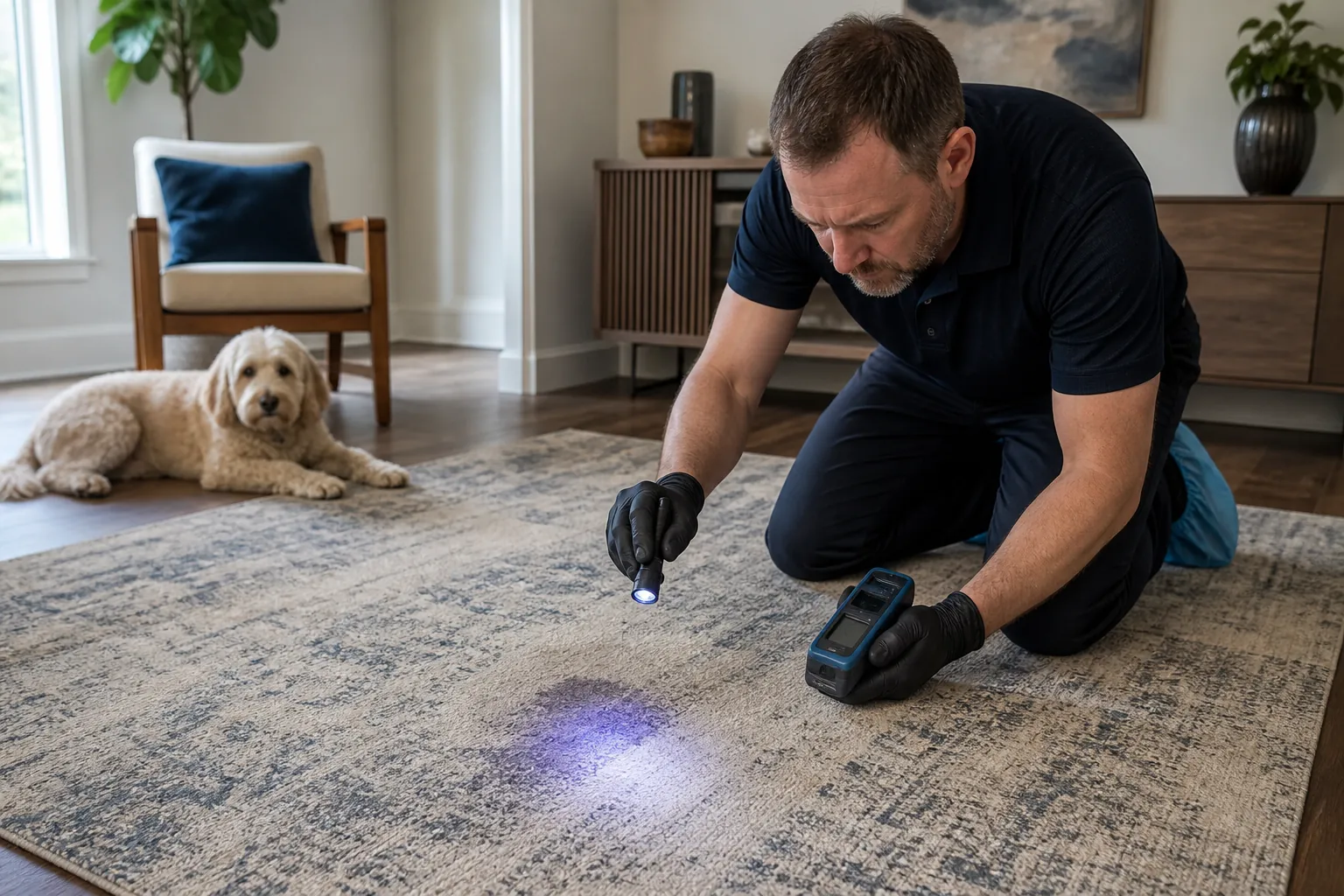
Separate contamination from permanent change
Report the exact area and any known source or product. A concern can involve the pile, foundation, reverse or even the parquet below, so total removal is never assumed from a description.
ODOUR + PREVIOUS PRODUCTS
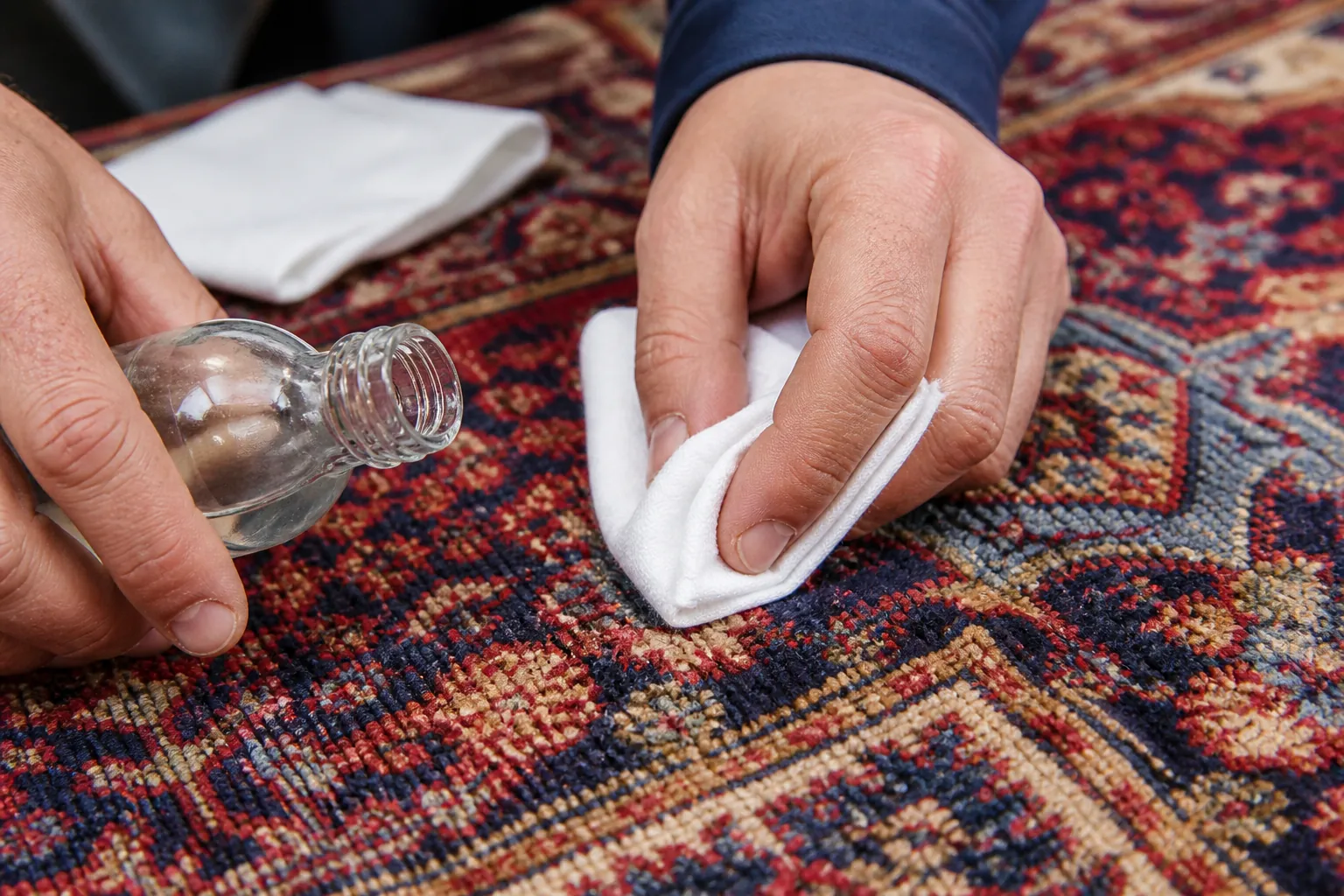
Trace odour and residue before treating
Report the exact area and any known source or product. A concern can involve the pile, foundation, reverse or even the parquet below, so total removal is never assumed from a description.
- Identify the precise affected area
- List known spill and product history
- Check pile, foundation, reverse and floor contact
- Keep the outcome conditional until assessment
FIBRE + DYE + CONSTRUCTION
Construction changes the safe working range
The label is useful, but it never tells the whole story of this hand-knotted Persian rug. Fibre response, dye stability, edge finish and the way the rug was assembled have to be considered together.
Material response
Sets the limits for agitation, solution choice and handling.
Colour stability
A stability check helps identify colours that need a more cautious approach.
Construction
Knots, tufting, foundation and pile density affect moisture and finishing.
Backing, fringe detail, visible repairs
Edges, backing and old repairs are documented so weakness is not mistaken for new damage.
MAYFAIR TREATMENT ROUTE
The working method follows the evidence
Drying for this hand-knotted Persian rug is based on absorbency, pile density, backing, airflow and the selected treatment. If compressed pile beneath occasional chairs and a dark drink mark includes an odour concern, the affected area and any known source are recorded rather than covered by a standard deodorising promise.
- 01
Record
Measure the hand-knotted Persian rug; map wear, marks and repairs
- 02
Verify
Check material clues and colour response where suitable
- 03
Release soil
Remove accessible dry particles without assuming all dullness is soil
- 04
Work
Apply only the route supported by the assessment
- 05
Control
Manage recovered moisture, pile and edges
- 06
Compare
Review the field, borders and the priority area in Mayfair
- 07
Explain
Provide condition-specific drying and furniture guidance over parquet
QUOTE PREPARATION
Build a quote brief around evidence
- Mayfair postcode and preferred timing
- Approximate length and width
- One complete-rug photograph
- Close-up of compressed pile beneath occasional chairs and a dark drink mark
- Label and reverse if reachable
- Border, fringe and corner images
- Known fibre or construction
- Earlier products or cleaning history
- Notes about concierge loading window and a compact lift
Practical answers for Mayfair
Can you name the method from a photo?
No. Images improve the brief, but handling and treatment still depend on physical assessment of the hand-knotted Persian rug.
Does a dark patch always mean dirt?
No. In Mayfair, shading, fibre wear, dye change and residue must be distinguished from removable soil.
When can furniture go back?
Only after the handover guidance for this rug, its drying condition and the parquet beneath it.
Is an odour treatment automatically included?
No. The location, likely source and depth of an odour concern need separate discussion and scope.
INFORMED RUG QUESTIONS
Details to resolve for this particular textile
Which Mayfair photographs reveal hand knotting best?
Use an overall face image, a straight-on border view and a clear section of the reverse. Avoid folding a brittle corner solely to obtain the photograph.
Is the dark chair-side patch certainly grease?
No. Appearance alone cannot separate oily matter from pile compression, dye change or old product residue. Share its history and leave the classification open.
Why photograph the rug from two directions?
Hand-knotted pile reflects light differently with and against its lay. Opposing views prevent normal shading from being mistaken for a new mark.
May I trim uneven fringe before the appointment?
Do not alter it for presentation. The existing fringe roots and any loss are useful condition evidence.
Can a Persian rug receive a standard process?
The description Persian is too broad to prescribe treatment. Fibre, dyes, foundation, repairs and present stability establish feasibility.
What concierge details belong in the quote request?
Give the authorised loading period, sign-in requirement, lift size and any protection rule for common areas.
Does rolling always make the lift route possible?
No. Stiffness, weakness, pile direction and rolled diameter matter, and some rugs should not be tightly rolled merely to fit.
How are Mayfair guide prices read?
Where shown, size bands begin at £27, £37 and £46, while the confirmed scope accounts for the actual rug and the visit minimum remains £68.
When can the occasional chairs return?
Follow the specific handover instruction after dryness and parquet protection have been considered. Do not rely on a calendar estimate made before treatment.
Will cleaning correct every compressed area?
No promise is made. Some pile may respond to finishing, while long-standing pressure or physical wear can remain visible.
OPEN A MAYFAIR TEXTILE ENQUIRY
