
WALTON-ON-THAMES · THE HOUSEHOLD HISTORY MATTERS
Walton-on-Thames Rug Cleaning for Lived-In Family Rooms
In a room shared by children, pets and an open garden door, today’s mark may sit over yesterday’s treatment. A useful Walton-on-Thames enquiry reads like a short timeline: what happened, what was applied, what dried, and what changed afterwards.
- List incidents in date order instead of combining every mark into “general staining”
- Photograph paw routes, play areas and dining edges as separate zones
- Retain the name or photograph of any spotter, powder or rental solution used
- Mention patio access, muddy footwear and periods when the room stays closed

A FAMILY ROOM IS A RECORD OF USE
Walton-on-Thames planning follows incidents, not assumptions
Garden connections and active living spaces create overlapping evidence: dry soil at the door, spills near seating, pressed pile under play furniture and occasional deep contamination. The quote becomes clearer when each area receives its own description.
Saturday morning evidence. A family photographs the rug before moving toys. The garden-door strip shows dry grit, a drink mark sits near the sofa, and one corner carries a returning pet odour. Each concern is numbered on a simple sketch.
The treatment ledger. A supermarket spotter was used on the drink mark three months ago, while the pet corner was only blotted. Keeping these histories apart prevents residue and contamination from being treated as the same problem.
Walton-on-Thames condition ledger
Zones. Divide the rug into doorway, seating, dining and quiet areas so causes are not merged
Dates. Use approximate month or season where an exact incident date is unavailable
Liquids. Note volume, temperature and whether the event was blotted, rubbed or left to dry
Pets. Separate isolated accidents from a recurring location and mention any pad beneath
Garden. Identify the entrance used after rain and whether shoes or paws cross the textile
Children. Record washable paint, food, slime or craft materials by product name where known
Machines. State whether a hire extractor, steam device or domestic vacuum-washer was used
Powders. Photograph packaging because fragranced residue can confuse later odour observations
Texture. Show crusting, stiffness or tackiness as well as colour change
Reverse. Check only when safe for tide marks or migration through the foundation
Edges. Photograph corners near doors where catching and curling may be physical wear
Furniture. Mark low tables, toy storage and seating that normally cover sections of pile
Ventilation. Explain whether garden doors can remain secure while air circulates
Expectation. Choose hygiene, soil reduction, odour improvement or appearance as distinct priorities
Access. Give driveway, side gate and internal route details relevant to equipment and carrying
Quote. Combine dimensions with the number and type of treatment zones rather than counting stains alone
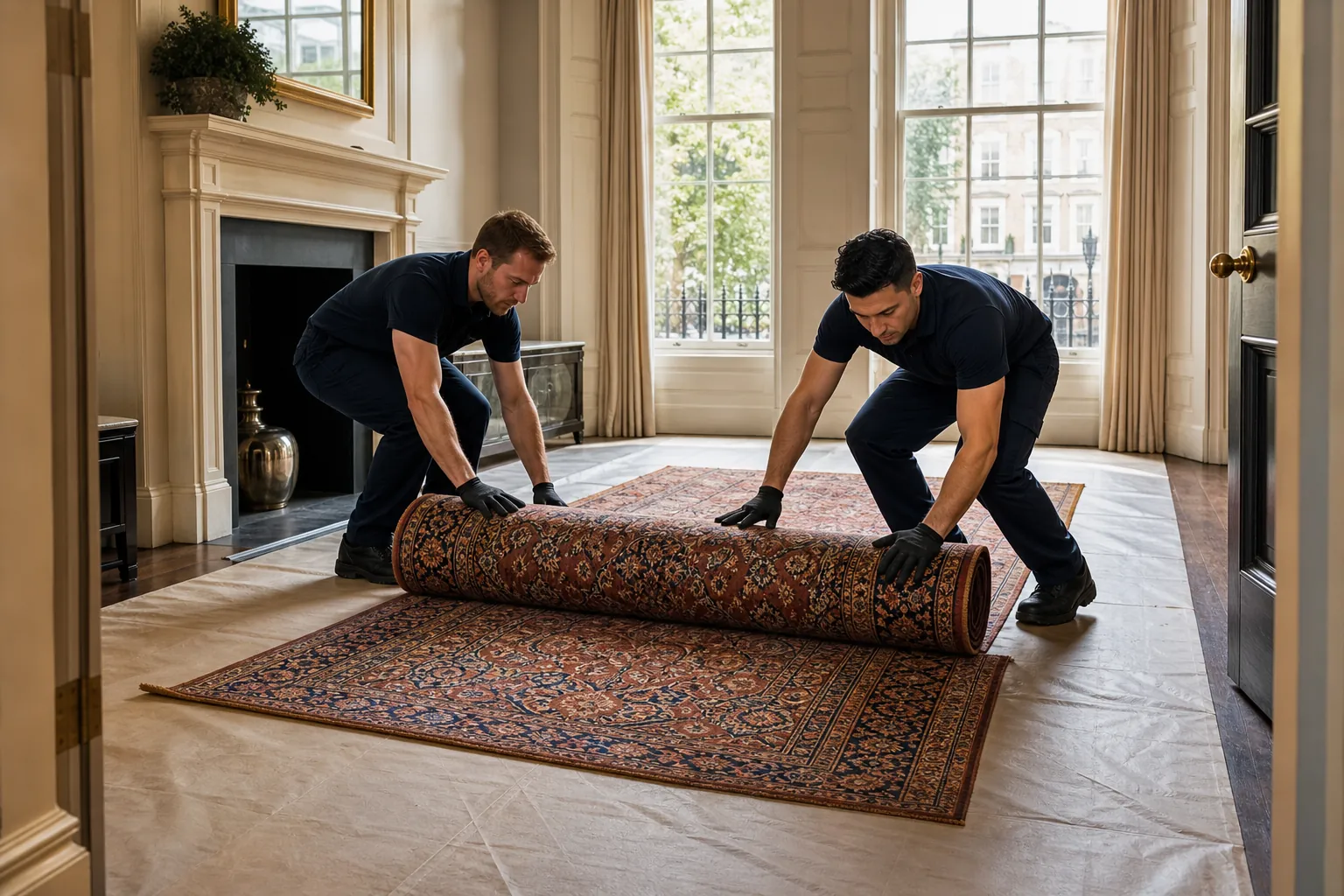
HOUSEHOLD VARIABLES
Four factors turn a mark into a useful record
The treatment decision follows material evidence and incident history together.
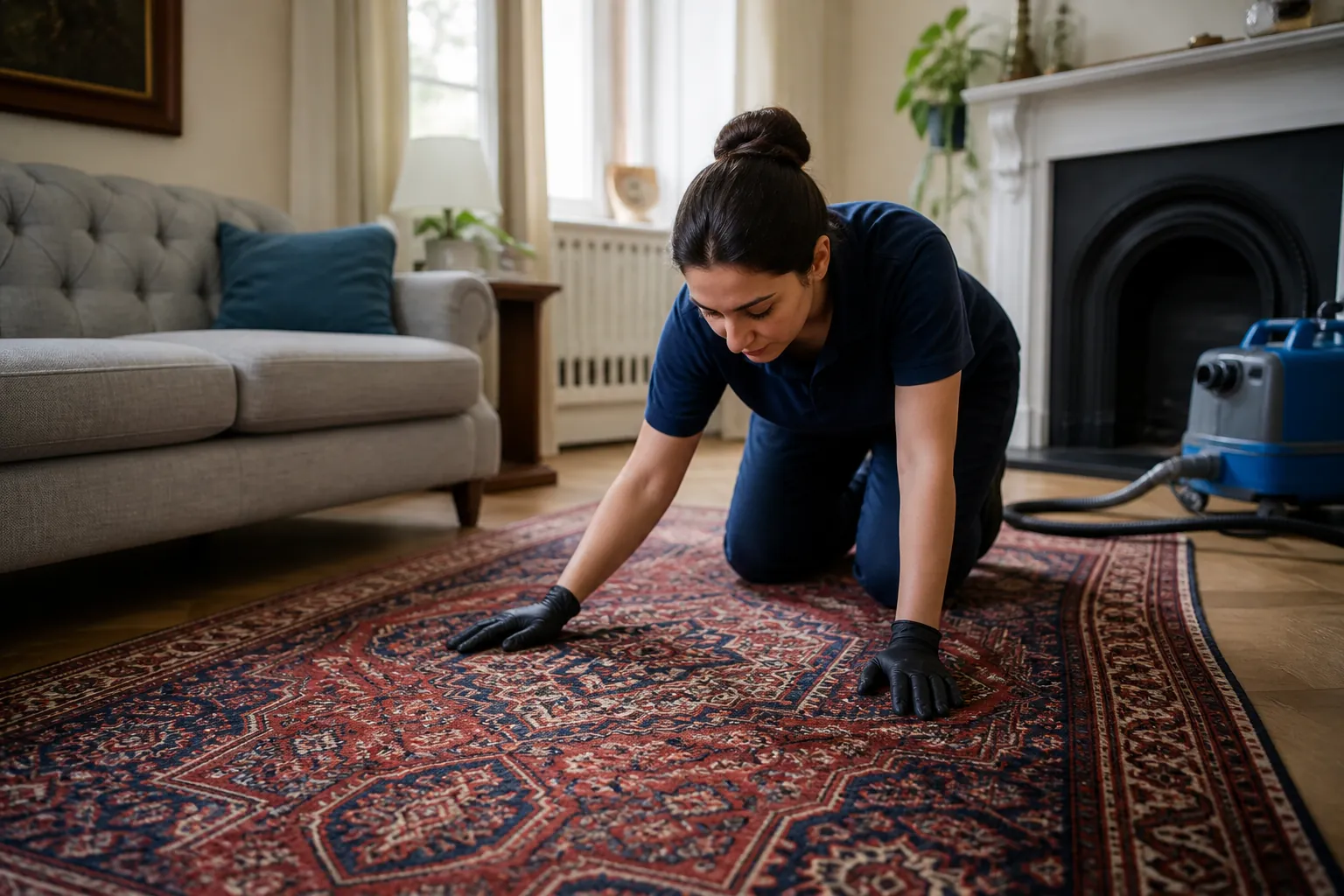
What reached the pile
Food, drink, soil and biological contamination behave differently.
What happened next
Blotting, rubbing and added products alter the starting condition.
Where it travelled
Face yarn, foundation, underlay and floor may each hold separate evidence.
How it changed
Age, repeat wetting and residue influence attainable improvement.
ONE RUG, SEVERAL HISTORIES
Map each patch to the event that created it
A pale ring from an earlier spotter, compacted pile under a play table and soil beside a patio door do not support one generic treatment claim. Wide photographs establish the geography; close views document texture and edge definition.
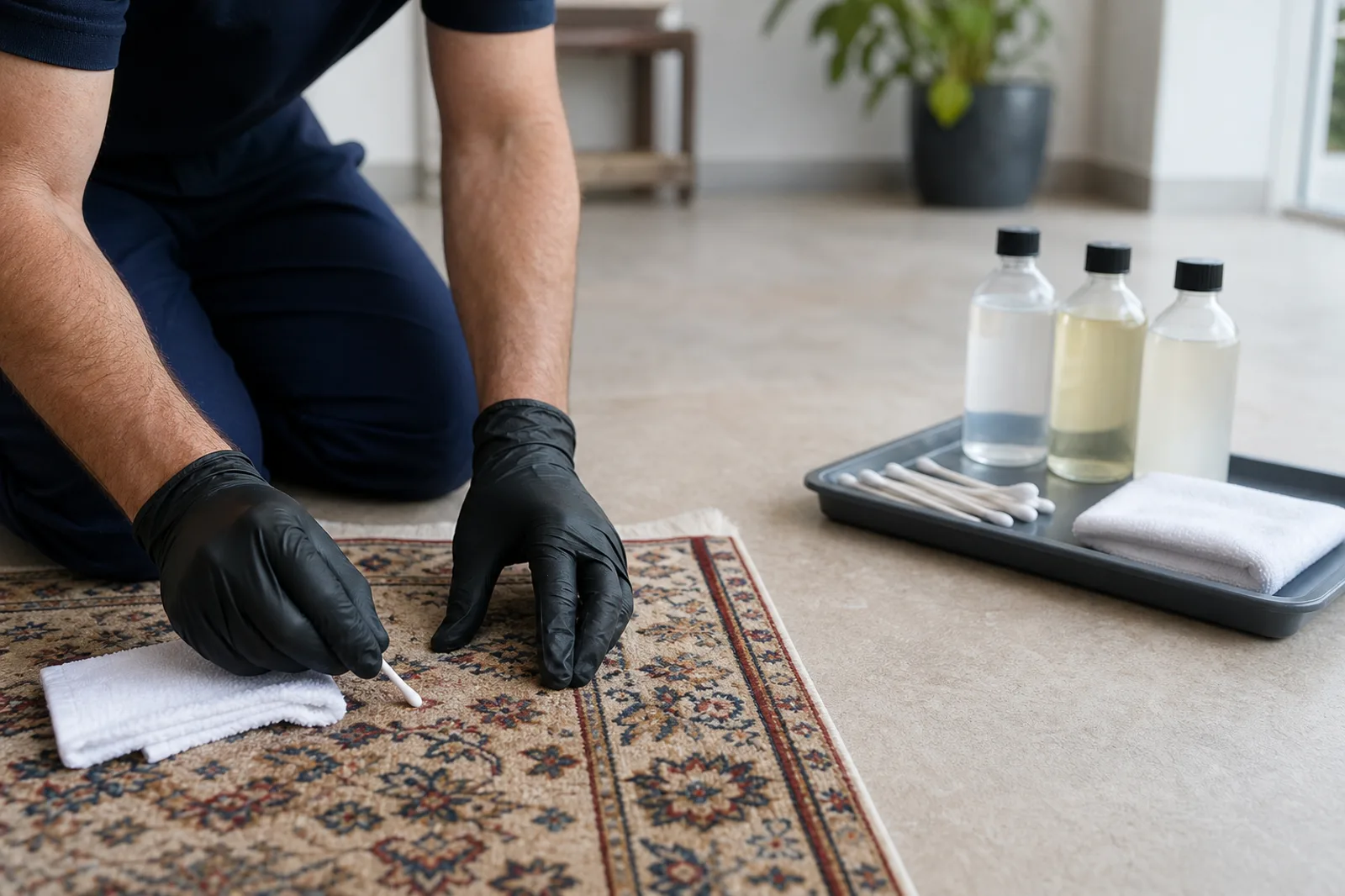
ODOUR NEEDS A TIMELINE
Notice when the smell returns
Humidity, warmth or pressure can make deep contamination more apparent. Say whether it is constant, seasonal or strongest after the rug has been walked on.
- Record repeat incidents at the same location
- Photograph the face and accessible reverse separately
- Mention underlay and the floor directly below
- Do not mask the area with fragrance before review
FROM INCIDENT TO HANDOVER
A seven-stage household sequence
The order protects the evidence and keeps family priorities visible throughout the booking.
- 01
List
Give each incident a date and location
- 02
Photograph
Capture whole rug, zone and texture detail
- 03
Disclose
Name every product and machine used
- 04
Assess
Check material, colour and contamination depth
- 05
Scope
Agree priorities and realistic limitations
- 06
Treat
Apply the selected route to the relevant zones
- 07
Reset
Follow drying, access and furniture guidance
SORT THE CONDITION STORY
Separate events before they blur into one request
Use these prompts to organise what the household knows. Final compatibility still depends on inspection of the actual rug.
CREATE THE INCIDENT PACK
Send a timeline, not a collage without labels
Number each concern so the written history and photographs match. This makes follow-up questions shorter and more precise.
- Walton-on-Thames postcode and preferred appointment contact
- Overall length and width
- Uncropped photograph of the rug in normal use
- Simple sketch numbering each concern
- Close image for every numbered area
- Approximate date and cause of each incident
- Product names and actions already taken
- Pet, garden and play-area context
- Access plus secure drying arrangements
Decisions before adding anything else
Should I shampoo the rug first?
No. Additional residue can obscure the condition and complicate compatibility checks.
What if I cannot remember the product?
Photograph any bottle or receipt you still have and say what is unknown rather than guessing.
Can a recurring pet smell be guaranteed away?
No. Depth, repeat incidents and affected supporting layers determine the practical limit.
Do toys need clearing before the quote?
A clear overview helps, but heavy furniture movement should wait until the preparation plan is agreed.
SIZE BANDS FOR INITIAL PLANNING
The footprint is only one line in the household estimate
Area places the rug in a guide band. Multiple incident zones, residue, construction, access and optional work can change the confirmed Walton-on-Thames quotation.
WALTON-ON-THAMES HOUSEHOLD FAQ
Answers for spills, paws and everyday family use
How do I label several marks in photographs?
Place non-adhesive numbered cards beside them or use a duplicate digital image with simple annotations.
Is muddy garden soil treated like a drink spill?
No. Dry particulate removal and liquid-residue assessment begin differently, even when the final patches overlap.
Why does an old spot sometimes look lighter?
Earlier chemistry, rubbing, dye change or residue can alter reflection. Inspection is needed before attributing the difference to cleanliness.
What should I report about a pet incident?
Give location, frequency, approximate age, actions taken and whether moisture may have reached backing, underlay or floor.
Can children remain in the room during work?
The agreed access and safety plan should keep the active area clear; household arrangements are confirmed before attendance.
Does fragrance prove the rug is clean?
No. Scent can mask rather than explain contamination, and added fragrance may itself leave residue.
Should I lift the rug to photograph underneath?
Only if it can be done safely without dragging weak edges or heavy furniture. Otherwise state that the reverse is inaccessible.
How long before the play area can be used again?
Follow the specific handover based on fibre, moisture, room conditions and the work actually completed.
Can the patio-door edge be restored if worn?
Accessible soil may improve, but abraded fibre, missing pile and faded dye are physical changes.
How do the Walton-on-Thames prices work?
The guide uses measured area; the final proposal also considers build, condition zones, access and accepted extras.
WRITE THE STORY BEFORE THE SCOPE
Give every Walton-on-Thames rug concern its own place and date
A numbered timeline helps separate residue, contamination, soil and wear before quotation.
