
BELGRAVIA · COLOUR, CONSTRUCTION AND CONDITION BELONG IN ONE BRIEF.
Professional Rug Care in Belgravia with Assessment First
A broad wool-and-cotton rug in a Belgravia stucco house poses a handling problem before it becomes a cleaning problem. Fireplace particles sit near one edge, the border shows abrasion, and the route crosses front steps plus a narrow lower landing. We document those three facts independently so that soot-like soil is not confused with structural wear.
- Capture the whole reception-room rug with hearth and doorway visible
- Photograph edge abrasion in raking light without brushing the fibres
- Show the cotton backing, bound corners and any heat-affected area
- Measure Belgravia front steps, landing turn and the narrowest doorway
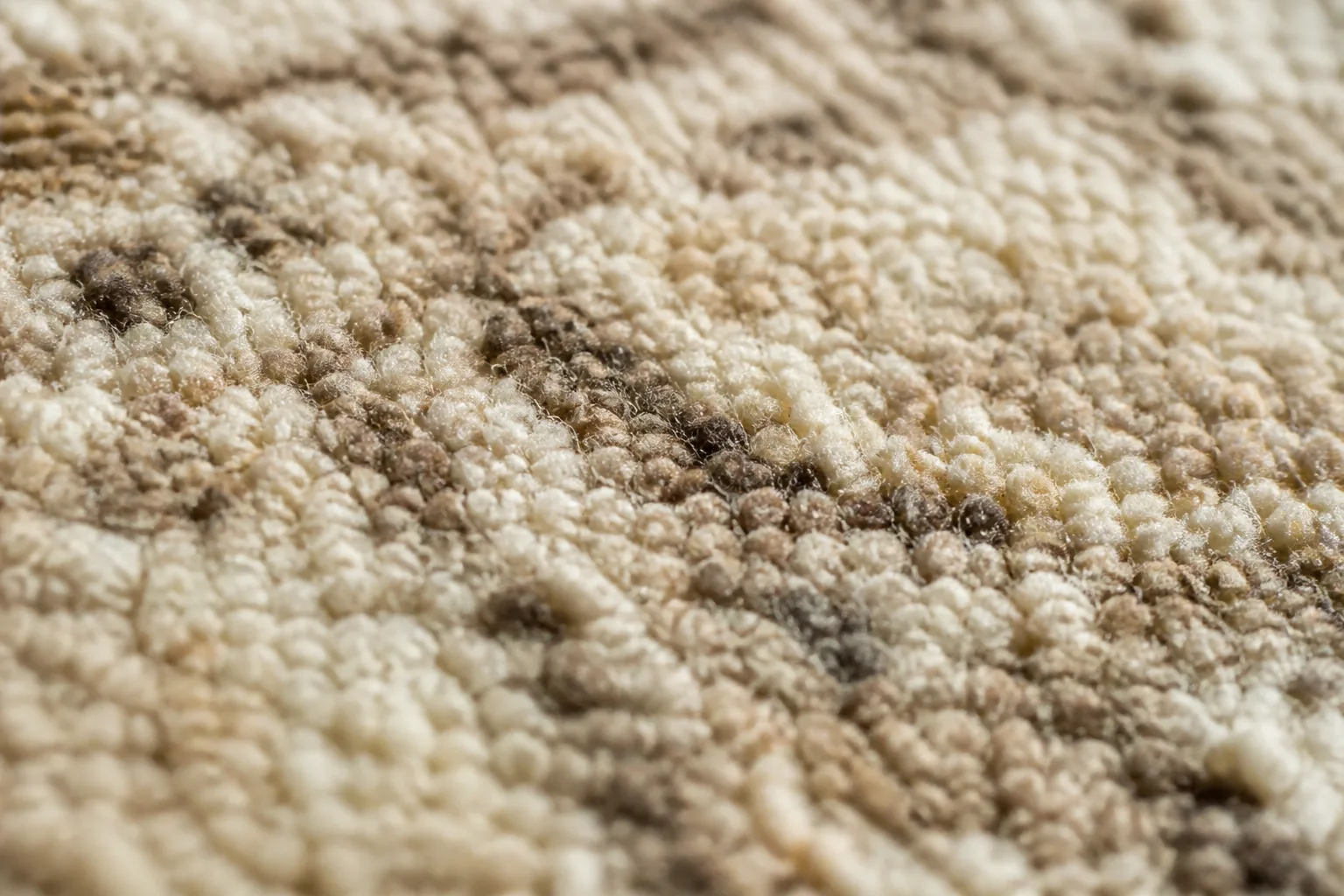
TELL US ABOUT YOUR RUG
Sort the observations before choosing a route
Use the profile to flag material, construction and condition. Physical checks still set the safe boundary.
BELGRAVIA · ROOM AND ROUTE
The room changes logistics, not material facts
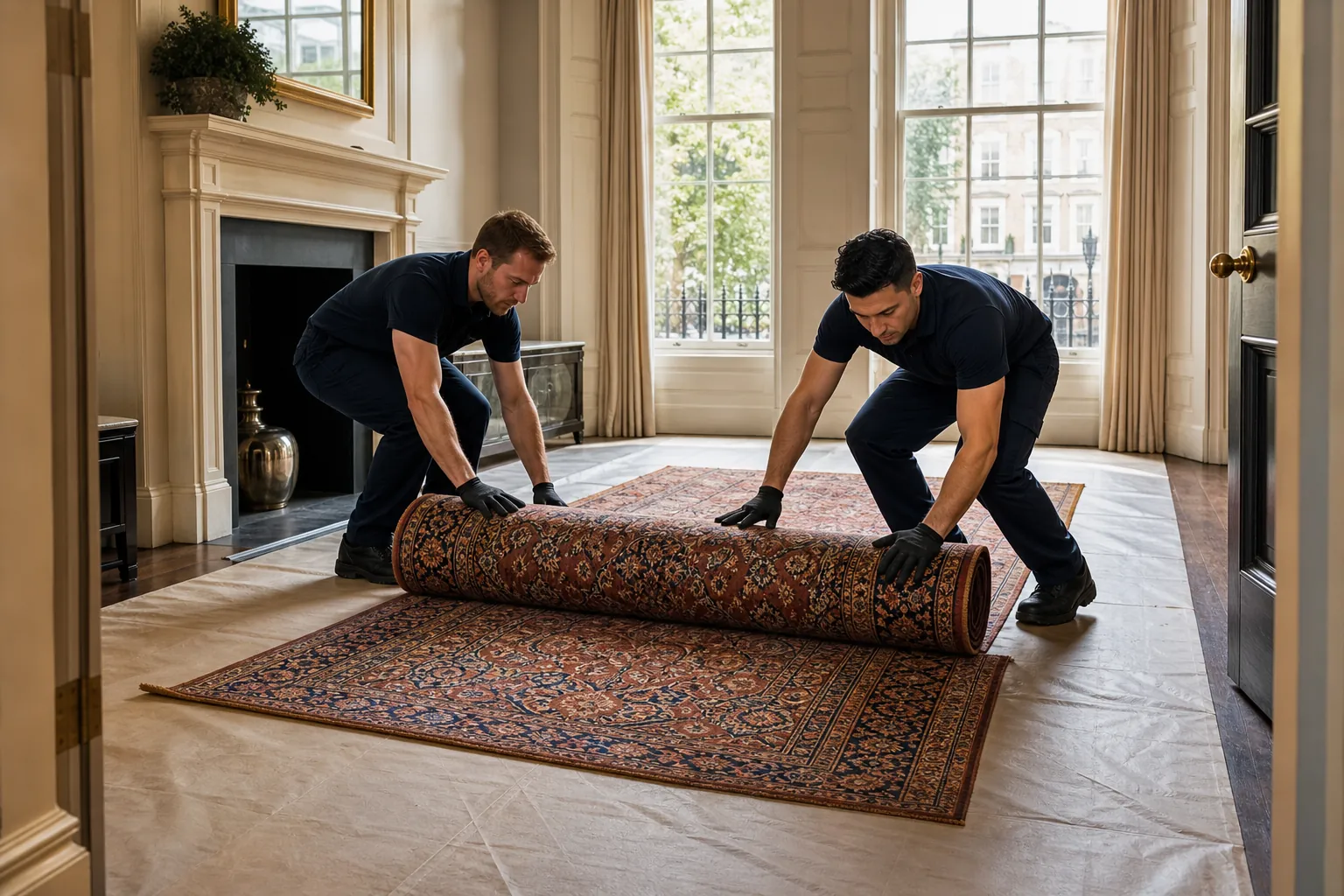
Belgravia planning begins in the room where the rug is used. Here, the working example is a stucco townhouse reception room with a large wool-and-cotton rug over limestone; front steps and a narrow lower landing affects the carrying plan, while the textile assessment remains centred on edge abrasion near the fireplace plus settled soil.
A realistic Belgravia case. The full-room image establishes scale and furniture position. Separate close-ups then distinguish edge abrasion near the fireplace plus settled soil from ordinary loose soil, shading or wear. None of those photographs is treated as proof that a mark can be removed.
Before the visit, the owner notes the rug’s approximate dimensions, known cleaning history and whether the limestone can be protected during inspection. The team can then discuss a proportionate route without promising a technique or drying time in advance.
belgravia working dossier
Stucco-house route: This Belgravia example begins above street level and continues through a restricted landing. Carrying geometry, not neighbourhood prestige, determines crew preparation and whether furnishings must move first.
Hearth-side particles: Dark matter near the fireplace is described by location and texture. The team does not assume soot, ash or dye change until the surface and fibre response have been examined.
Abraded border: The worn edge receives a straight photograph and a low raking view. Broken tips and exposed foundation are condition issues, not stubborn dirt requiring more agitation.
Wool face and cotton base: Different components can respond differently to moisture and tension. The visible pile label is therefore considered beside construction at the reverse and edges.
Large dimensions: Measurements are taken in both directions at the widest points. Room estimates based on floorboards or furniture scale are useful only as preliminary context.
Stone threshold: The limestone and interior stone surfaces are identified along the lifting route. Corners must not drag across hard edges while the rug is repositioned.
Fireplace history: The customer notes fuel type, recent building work and any earlier attempt to wipe the dark zone. That history narrows questions without predetermining chemistry.
Furniture agreement: The reception-room layout is listed before arrival. Heavy items that remain in place become explicit scope boundaries rather than surprises during the visit.
Drying position: Available floor protection, warmth and air movement are discussed for this specific townhouse. Dense construction prevents a responsible universal time promise.
Belgravia review: The closing inspection returns to the hearth edge, abraded border, corners and overall field. Aftercare explains safe placement over limestone and the limits created by pre-existing wear.
A MARK IS NOT ALWAYS SOIL
Separate contamination from permanent change
Report the exact area and any known source or product. A concern can involve the pile, foundation, reverse or even the limestone below, so total removal is never assumed from a description.
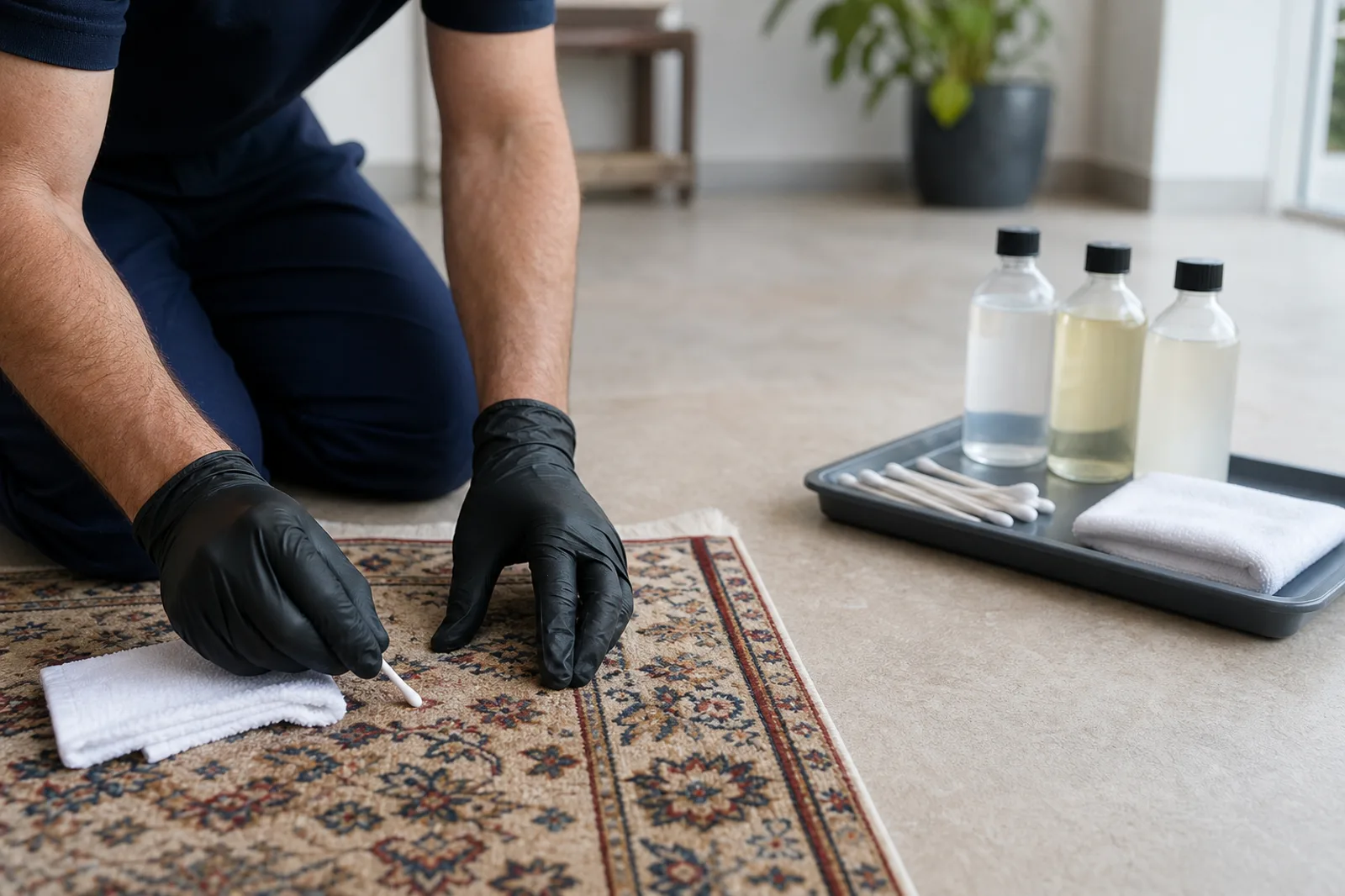
ODOUR + PREVIOUS PRODUCTS
Trace odour and residue before treating
Report the exact area and any known source or product. A concern can involve the pile, foundation, reverse or even the limestone below, so total removal is never assumed from a description.
- Identify the precise affected area
- List known spill and product history
- Check pile, foundation, reverse and floor contact
- Keep the outcome conditional until assessment
QUOTE PREPARATION
Give the assessor a clear picture before arrival
- Belgravia postcode and preferred timing
- Approximate length and width
- One complete-rug photograph
- Close-up of edge abrasion near the fireplace plus settled soil
- Label and reverse if reachable
- Border, fringe and corner images
- Known fibre or construction
- Earlier products or cleaning history
- Notes about front steps and a narrow lower landing
Practical answers for Belgravia
Can you name the method from a photo?
No. Images improve the brief, but handling and treatment still depend on physical assessment of the large wool-and-cotton rug.
Does a dark patch always mean dirt?
No. In Belgravia, shading, fibre wear, dye change and residue must be distinguished from removable soil.
When can furniture go back?
Only after the handover guidance for this rug, its drying condition and the limestone beneath it.
Is an odour treatment automatically included?
No. The location, likely source and depth of an odour concern need separate discussion and scope.
INFORMED RUG QUESTIONS
Details to resolve for this particular textile
How should I document the Belgravia hearth edge?
Take one image connecting it to the fireplace, then close views of particles, fibre tips and the transition into unaffected pile.
Does black material beside a fireplace always wash out?
No. Loose combustion particles, oily soot, scorching and colour change are different conditions with different limitations.
Why is border abrasion recorded before cleaning?
It establishes physical weakness and prevents worn yarn from being misreported as removable soil or treatment damage.
Can wool pile and cotton foundation be treated as one material?
They belong to one rug but may differ in absorbency, dimensional response and dye interaction, so construction is assessed as a system.
What access measurements matter in the townhouse?
Provide the narrowest door, stair width, landing depth and any sharp turn between the street and reception room.
Should fireplace residue be vacuumed at home first?
Avoid vigorous experiments. Describe what has already been attempted and let the assessed route address accessible dry matter safely.
How does size affect the Belgravia quotation?
Dimensions provide the starting band where a price grid is present; construction, edge weakness, condition and access define the eventual scope, with a £68 visit minimum.
Can the rug dry directly on limestone?
That is not assumed. The handover plan considers the rug, selected treatment and protection of the supporting surface.
Will cleaning rebuild a thin border?
No. Cleaning does not replace missing yarn or reconstruct an abraded foundation; repair would be a separate discipline.
Why list furniture that will not move?
It defines reachable areas and safe lifting space, allowing the quotation and final review to describe the same job.
MAP THE BELGRAVIA HANDLING ROUTE
