
EALING · MAKE A RECORD BEFORE MAKING A PROMISE.
Ealing Rug Cleaning Planned from a Textile Record
Treat the first enquiry like a small catalogue entry: identify the rug, show its scale, record what has changed and note how it leaves the room. That evidence is more useful than guessing a fibre or choosing a process from a distant photograph.
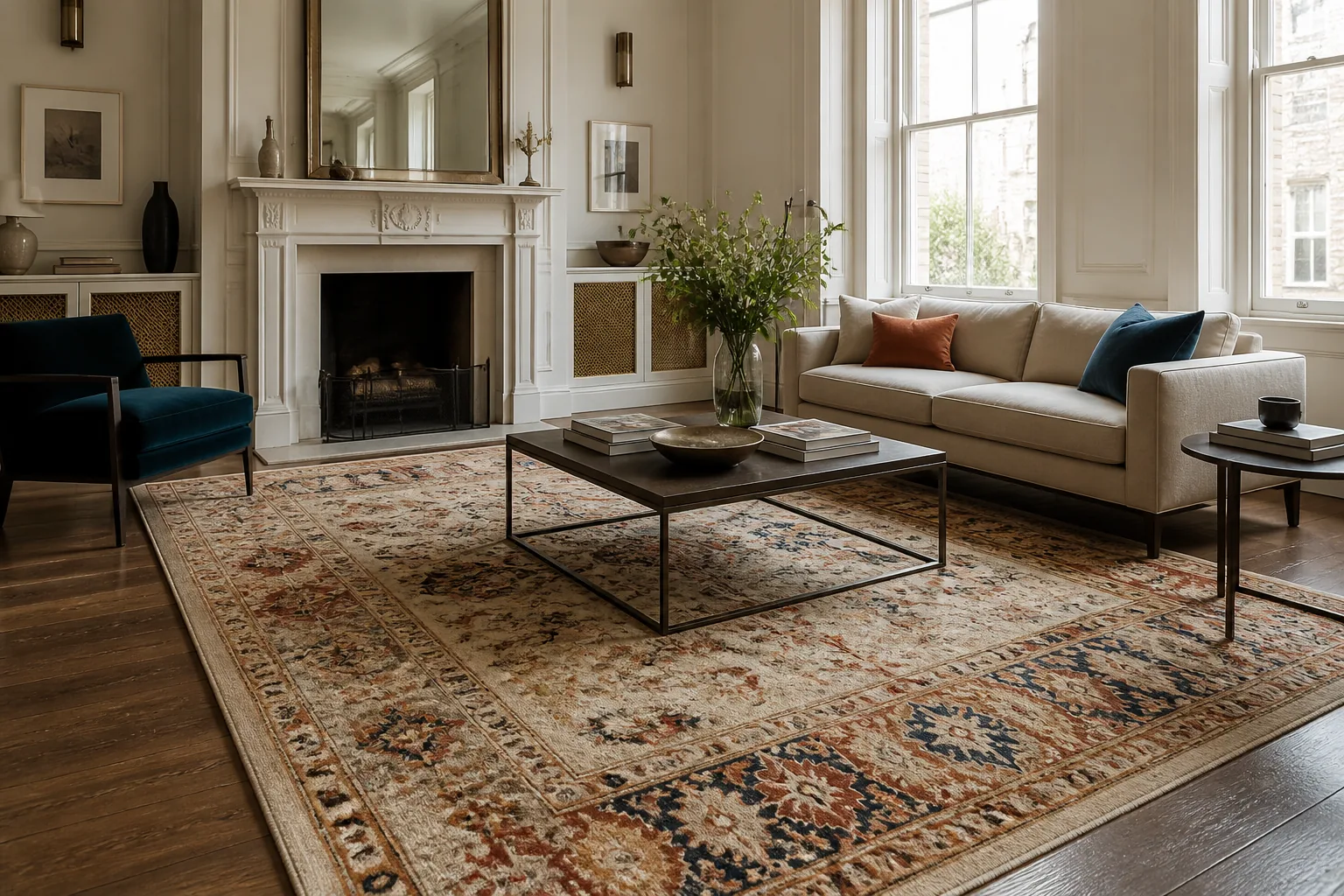
- Take one square, daylight view with all four corners visible
- Mark the walking lane and the separate drink splash beside the sofa
- Photograph the underside, selvedge and any hand-stitched repair
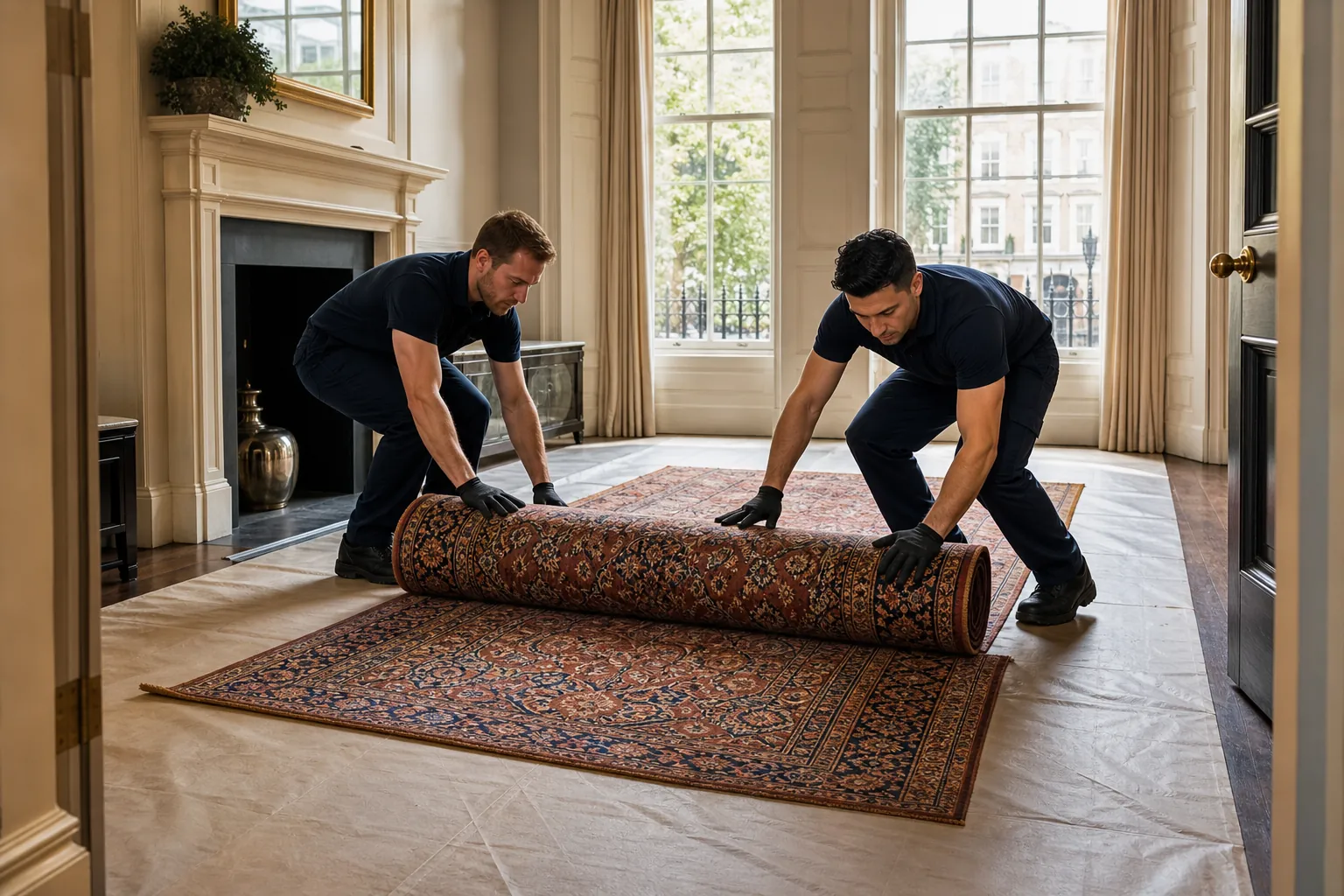
- Describe the lift, stair turn and collection point at the Ealing address
BUILD THE CATALOGUE CARD
Record what can be seen without interpreting it
Use these fields to assemble a factual note. A selection describes the object; it does not certify fibre, colourfastness or a cleaning route.
READ THE OBJECT IN LAYERS
Four entries belong beside the front photograph
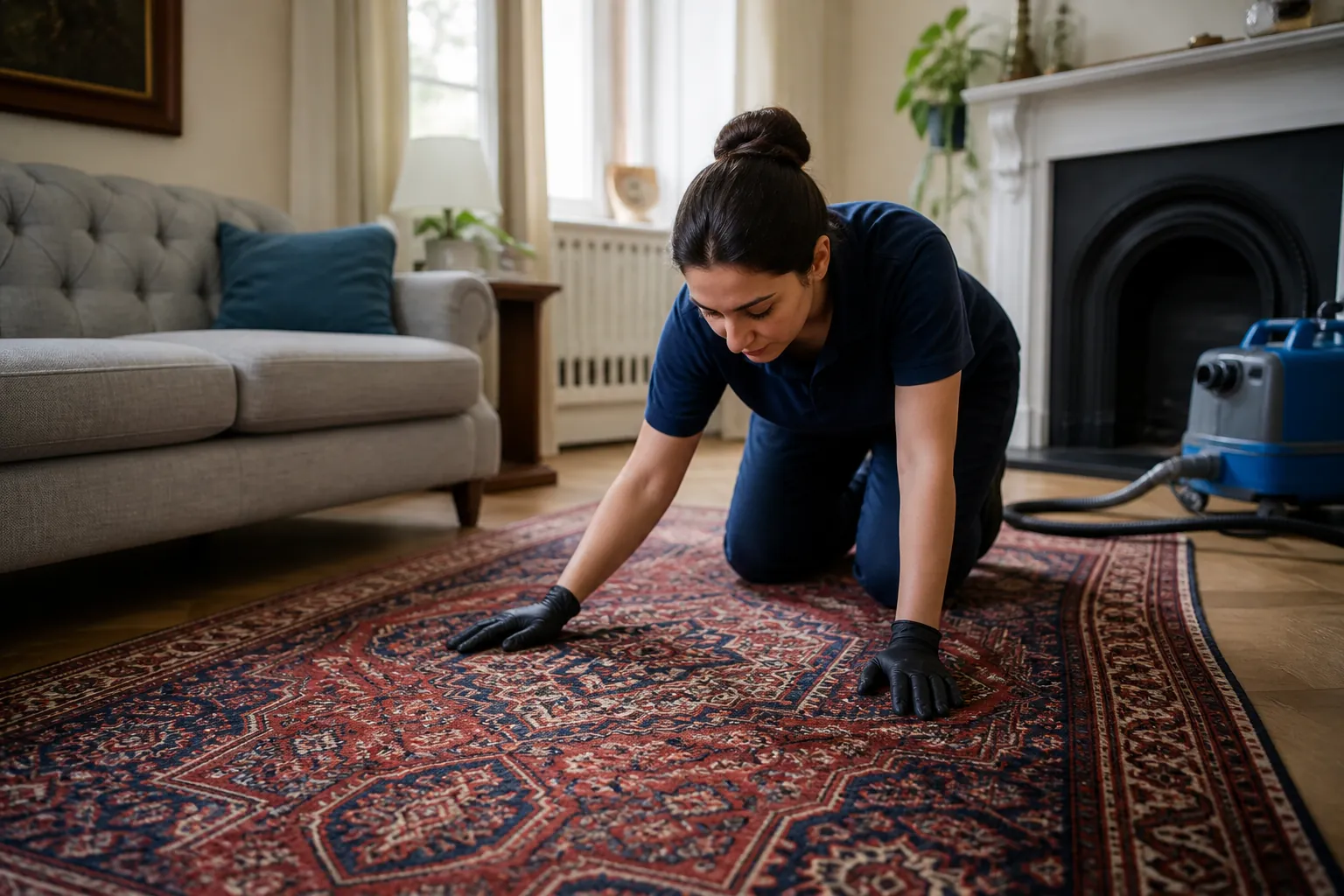
A good textile record includes how the face behaves, how colour is arranged, what supports the pile and where the object is already vulnerable.
Handle, pile and surface
Sheen, spring and direction can explain why adjacent areas photograph differently.
Motifs, borders and fading
Each strong colour and any sun-altered strip is shown separately.
Foundation and backing
The underside may reveal manufacture, coating, labels and historic repairs.
Edges, tears and old work
A dated defect note distinguishes pre-existing loss from the agreed cleaning scope.
THE EALING ROOM ENTRY
Add the setting to the object record
A rug across an airy reception presents a different handling problem from the same dimensions fitted between a dining table and bookcase. Note the clear floor around it, the route to the entrance and a suitable handover position.
Example entry. A 2.4 by 3.1 metre patterned rug lies on parquet in a second-floor reception. Images show a grey walking line and a small brown mark by the left sofa arm. The owner can roll it, but the landing turn is tight.
What that changes. Scale and carriage can be discussed without pretending the mark has been identified. The backing, border and faded window edge remain separate observations; previous stain spray is logged by name.
Catalogue fields for an Ealing rug
Reference view. Frame the whole rectangle from above or as square-on as the room allows.
Dimensions. Record the longest and widest points in metres, excluding loose fringe.
Face description. Note short pile, loop, shag, flat weave or simply “not sure”.
Reverse evidence. Capture the label, foundation pattern, backing coating and repair stitches.
Colour map. Show strong borders and a sun-altered strip in neutral daylight without filters.
Condition key. Give different labels to soil, spill residue, wear, fading and missing fibre.
Timeline. State when the drink event occurred and whether its outline has changed.
Interventions. List powders, hire machines, wipes and professional visits by date if known.
Floor note. Identify the surface below; do not assume the substrate is unaffected.
Room use. Mention shoes, pets or dining only when they explain the mapped area.
Clearance. Say which light pieces will leave and which heavy pieces stay.
Rolling limit. Give the shortest safe rolled length if doors or lifts restrict it.
Collection point. Record bay controls, concierge arrangements and flight count.
Open questions. Unknown fibre, dye behaviour and internal contamination stay marked unknown.
Desired result. Rank appearance, loose-soil removal and odour instead of bundling them.
Decision record. The assessed quotation, not the first card, contains the method and exclusions.
FROM CARD TO CONDITION REPORT
Seven entries keep the work auditable
The sequence keeps the original concern visible while allowing new evidence to change the scope.
-
01
Accession
Match the rug to its images, measurements and room note
-
02
Read
Compare label information with face and reverse construction
-
03
Survey
Plot weak edges, unstable-looking colour and earlier work
-
04
Propose
Set a process boundary and explain any excluded outcome
-
05
Carry out
Follow the agreed controls for soil, residue and moisture
-
06
Reconcile
Compare the result with the initial reference images
-
07
Close
Issue the condition note and placement guidance
DIMENSIONS AND GUIDE FIGURES
Size places the rug in a band; the record explains the rest
Measure the textile itself rather than the room. Construction, a vulnerable border, the mapped drink mark and the Ealing carrying route can all alter the final scope after review.
ANNOTATE THE VISIBLE CHANGE
One dark lane can contain several conditions
Dry grit, oily transfer, flattened pile and lost colour may overlap along the route to the sofa. Include an unaffected comparison patch and side-lit image so texture is not mistaken for removable dirt.
ADD A PROVENANCE NOTE
Smell and past products need a timeline
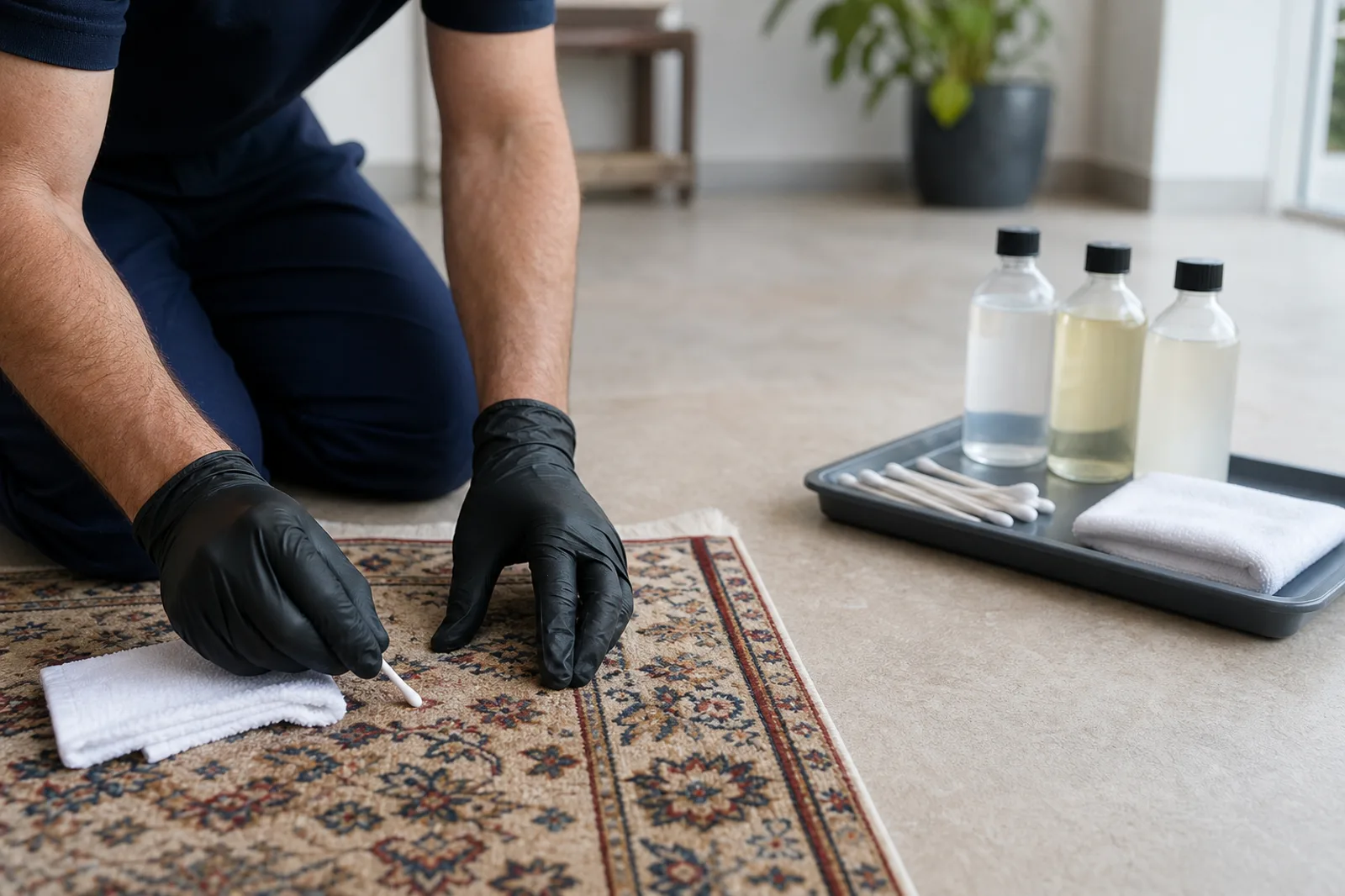
Say whether odour is present only in humid weather or at all times, and whether it appears on the reverse. Name previous sprays and machines: residue from an earlier attempt can matter as much as the original event.
- Use a removable paper marker beside the face image
- Photograph the corresponding underside quadrant
- Date the first notice and every later intervention
- Keep textile and parquet observations in different entries
SUBMIT THE EALING RECORD
Nine labelled items are easier to review than a photo stream
Put the overview first, then attach close-ups with short captions. This order shows where each detail belongs.
- Contact name, Ealing postcode and preferred reply channel
- Length and width in metres
- Full rug and full room photographs
- Face and reverse of the walking lane
- Close-up of the drink mark beside a clean reference area
- Label transcription or an explicit “no label”
- Border, corner and repair details
- Chronology of every product already applied
- Rolled route from room to collection point
Before the Ealing record becomes a booking
Does a catalogue card diagnose the stain?
No. It locates and describes the change so an assessment begins with reliable context.
Why include an unaffected reference area?
It helps compare colour, pile direction and wear without relying on memory or altered phone settings.
Can the guide band confirm the final price?
No. The band starts with area; identified handling limits and agreed optional work complete the quotation.
Who decides when the rug returns to parquet?
The handover advice follows the assessed construction, selected process and actual condition at completion.
QUESTIONS ABOUT THE TEXTILE RECORD
How to make Ealing evidence useful
Which image should be labelled “reference”?
Use the square-on full-object view that shows every corner and the rug’s orientation in the room.
Should I identify the brown mark myself?
Describe its position, age, texture and known cause. Avoid naming it when the source is uncertain.
Why photograph the parquet after lifting?
It creates a separate condition record for the supporting floor and may reveal transfer or trapped residue.
What measurement helps with the communal landing?
Provide the rolled rug’s expected length plus the narrowest clear width and tightest change of direction.
How should damaged fringe appear in the card?
Photograph the full edge, then add a close view with a ruler; record missing or loose elements as condition loss.
May I enhance a dark photograph?
Send the unedited original. Take a second daylight image instead of changing colour or contrast digitally.
What if the label has disappeared?
Write “no label found” and provide clear face, reverse and edge images; identification remains subject to assessment.
How is an intermittent odour recorded?
Note the weather, room conditions and side of the rug where it is strongest, as well as any known liquid history.
Can a catalogue entry promise restoration?
No. Cleaning, stain improvement and physical repair are different scopes, and irreversible loss remains documented.
Where is the £68 Ealing minimum recorded?
It appears as the visit baseline in the quote. Any eligible combined task counts only when explicitly included.
OPEN THE EALING FILE
Turn a room photograph into a reviewable textile record
Begin with the whole rug, add dimensions, then attach only the detail images that explain condition or handling.
