
WESTERHAM · READ THE HEARTH ZONE BEFORE DISTURBING IT
Westerham Rug Cleaning for Fireplace Rooms
Dark material beside a hearth may be dry fall-out, tracked grit, old liquid staining or permanent change. The safest enquiry leaves the scene intact long enough to map it. We pair that deposit map with fireplace use, stone joints and the cottage carrying route.
- Leave the dark area undisturbed for the first reference photographs
- Draw a simple boundary around the deposit and the separate historic mark
- Report fuel type, last fire and any earlier powder or liquid applied
- Walk the path to the vehicle, noting lintels, gravel, gates and steps
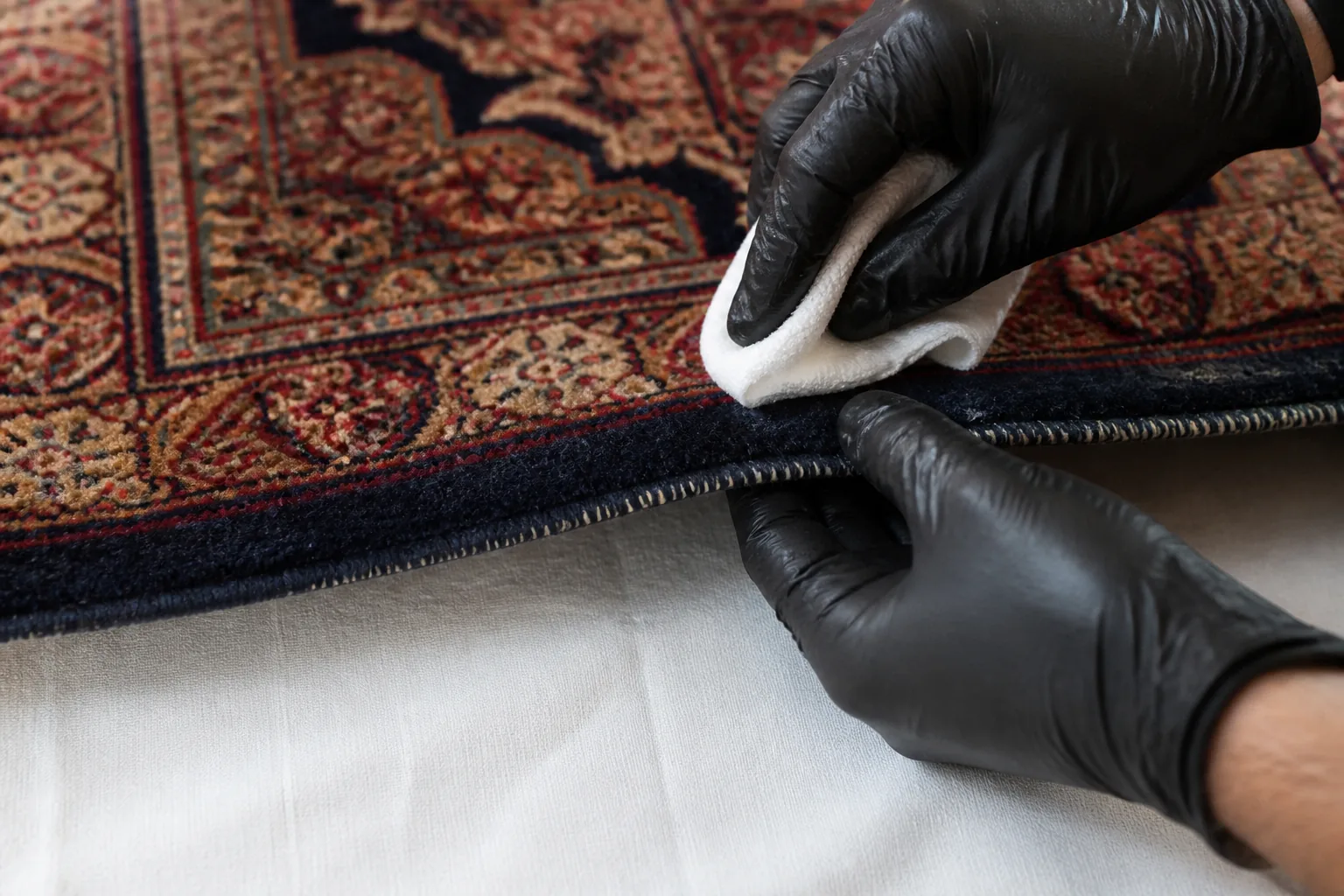
BUILD A USEFUL WESTERHAM QUOTE PACK
Assemble a hearth-side evidence pack
Begin with a full-room photograph showing fireplace, rug and stone. Add measurements and close views without rubbing the dark deposit: its distribution is more useful when undisturbed.
- Westerham postcode and preferred contact details
- Length measured along the longest edge
- Width at the widest point
- A square-on photograph of the complete rug
- Close-ups and reverse views of soot-like particulate matter and a historic stain
- Label, fibre information or “unknown”
- Fringe, binding and repair photographs
- Names of products previously applied
- Notes on low doorways, uneven paths and limited loading space
What owners of fireplace rugs usually ask
Is every dark patch removable?
No. Soil may lift, while abrasion, dye loss or pile-direction shading can remain because they are changes to the textile.
Are valuable or hand-knotted pieces automatically accepted?
They are considered individually. Construction, colour stability, repairs and present condition decide whether a safe scope can be offered.
Why is there no fixed drying promise?
Westerham room conditions, fibre absorbency, pile depth and the chosen moisture level all influence the handover.
What happens to furniture?
We agree the preparation and return plan for this room; heavy items should not be replaced until the rug is ready.
THE WESTERHAM HEARTH TRANSECT
Read the room as zones radiating from the fireplace
Instead of treating the rug as one uniform rectangle, divide the setting by distance from the hearth. Compare the near edge, central field and far edge. Add the stone joints and traffic direction. This spatial record can distinguish a concentrated fall-out pattern from general room soil.
Zone A — hearth edge. Photograph particulate density, singe-like changes and the clearance from the opening without brushing the pile.
Zone B — route outward. Follow darkening across the centre towards the doorway. Record the older stain independently, even where the two areas overlap.
A field sheet for the Westerham fireplace room
Ignition point. Mark the closest rug edge to the fireplace opening.
Fuel record. Note wood, coal, gas or decorative non-use.
Last burn. Give the approximate date and duration.
Airflow. Show doors, vents and draught direction.
Scatter. Trace visible particles without rubbing them deeper.
Gradient. Compare the near-hearth pile with the far corner.
Historic zone. Outline the older stain using a removable marker beside it.
Interventions. List sweeping, vacuuming, powders and liquids chronologically.
Backing response. Report stiffness or noise immediately and stop flexing.
Stone joints. Photograph lines and residues after an approved lift.
Threshold. Measure the lowest and narrowest interior clearance.
Garden path. Count steps and identify loose or wet ground.
Gate. Give its usable width, not the nominal opening.
Loading point. Describe safe stopping distance from the entrance.
Temporary position. Keep the rug level and away from active heat.
Scope boundary. Inspection decides what can be addressed and what remains permanent.
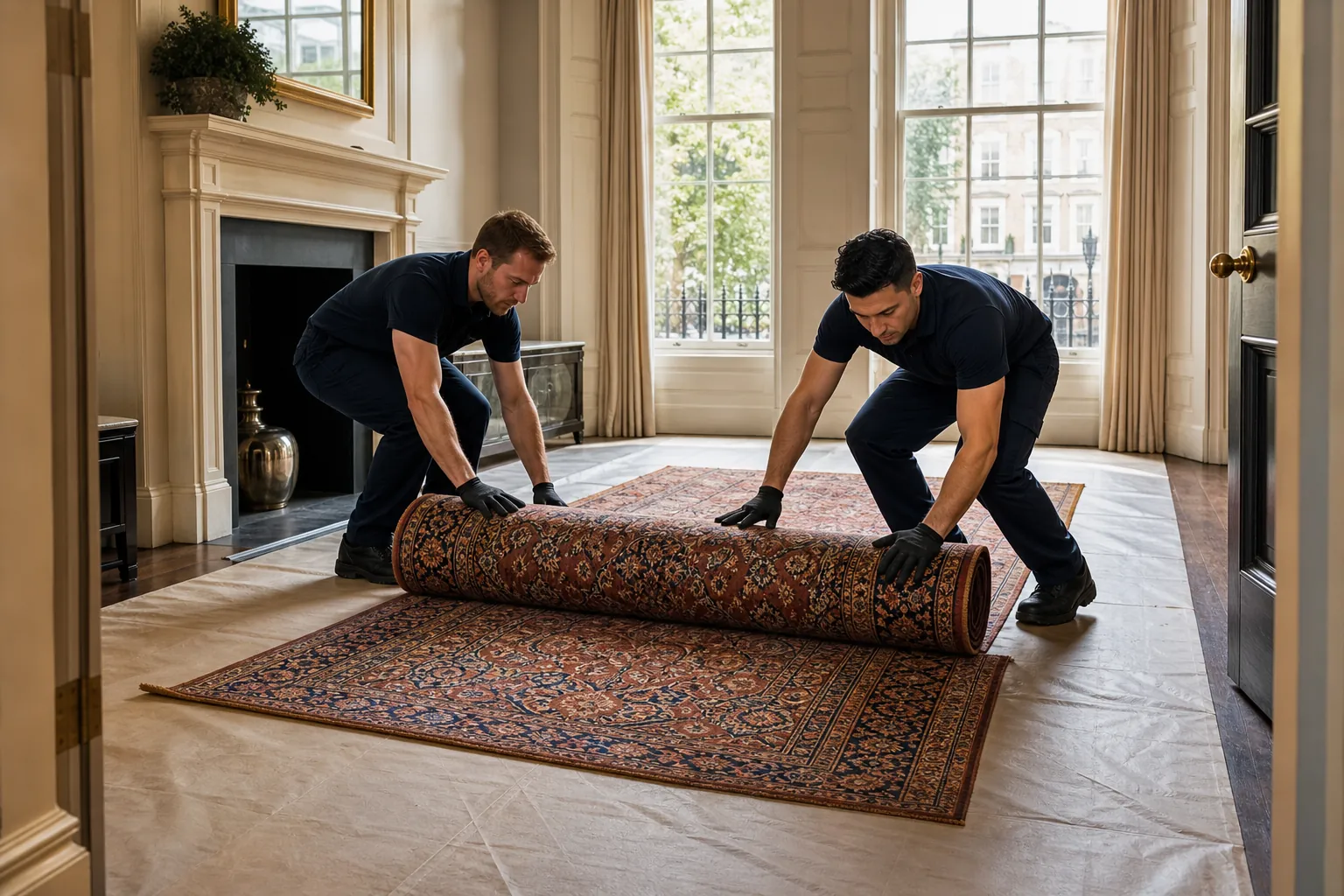
FOUR LIMITS TO CHECK
A hearth-side rug must be understood layer by layer
The pile is only one part of a small wool rug beside a fireplace. Foundation, dyes and edge attachments can change what is practical.

Absorbency and response
Fibre clues narrow the range of compatible products and agitation.
Stability across motifs
Contrasting dyes and faded areas deserve separate observation.
Weight and construction
Knotting, tufting or machine weaving affects moisture and handling.
Fringe, binding and repairs
Existing damage is recorded so cleaning is not confused with restoration.
DESCRIBE THE WESTERHAM RUG
Sort visible clues without diagnosing them remotely
The buttons create a concise evidence note for a small wool rug beside a fireplace. They are not a remote diagnosis and do not prescribe chemistry.
SEVEN CHECKPOINTS FOR WESTERHAM
Move from undisturbed deposit to documented handover
A documented handover keeps soot-like particulate matter and a historic stain in context while construction and room conditions set the safe boundaries.
- 01
Map
Photograph the field, reverse, edges and priority zone
- 02
Identify
Review labels, fibre clues, colours and repairs
- 03
Stabilise
Remove accessible dry matter before wet decisions
- 04
Address
Work within the tested limits of this construction
- 05
Extract
Control residue and moisture appropriate to the rug
- 06
Compare
Inspect the centre, borders, fringe and original concern
- 07
Return
Give room-specific drying and furniture instructions
WESTERHAM SIZE GUIDE
Size bands keep the initial conversation transparent
The listed bands are reference points for measured area. The agreed price may also reflect a fragile foundation, carbon-like deposit, previous stain treatment, cottage carrying route and separately authorised extras.
READ THE CHANGE BEFORE TREATING IT
Dark hearth deposits and permanent fibre change can resemble one another
Soot-like particulate matter and a historic stain may involve loose particles, transferred material, altered dye, crushed pile or permanent fibre wear. These categories can look similar in a phone image but carry different outcome limits. We document the unaffected field as well as the priority area so improvement can be judged against a fair reference.
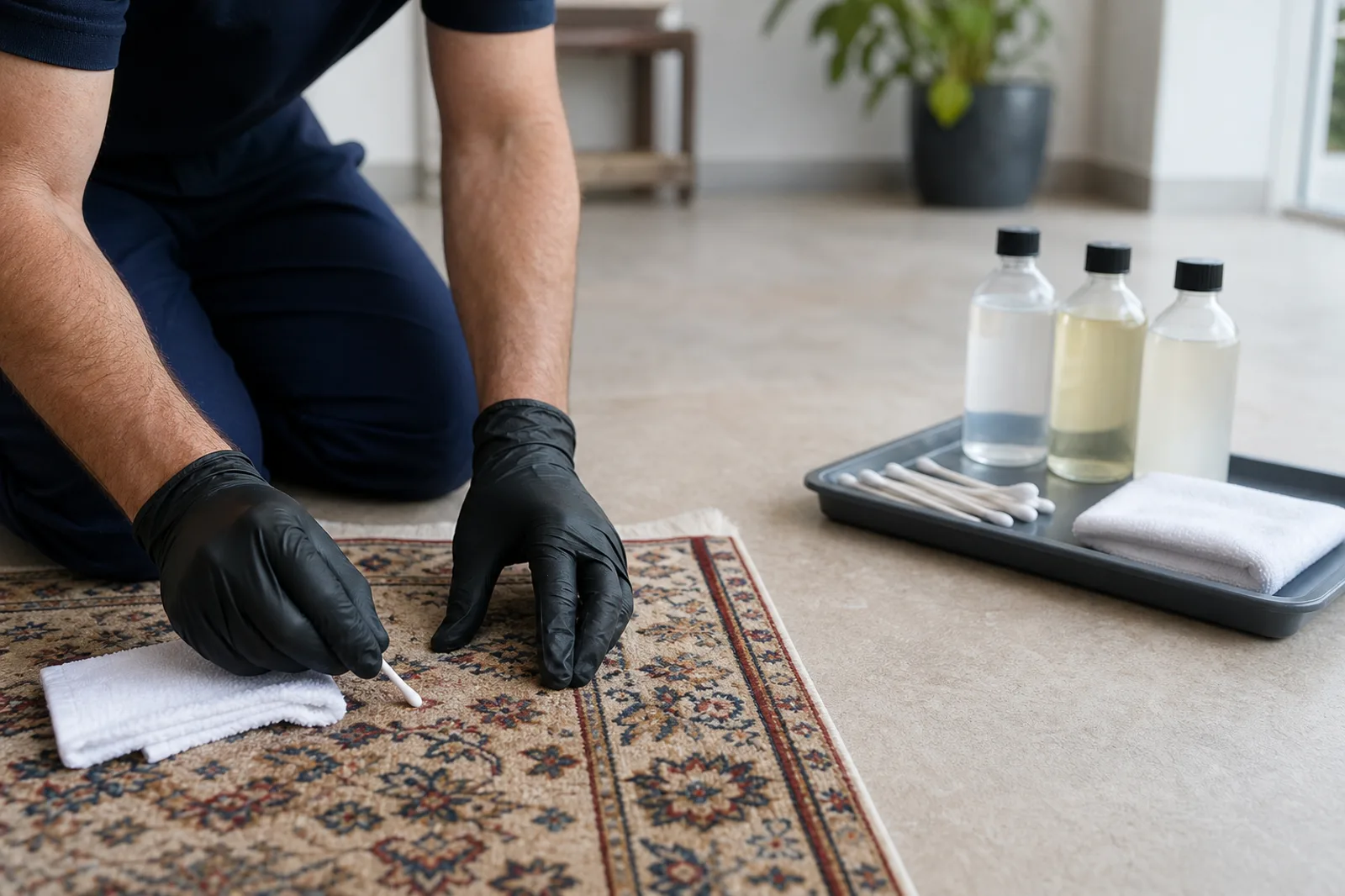
ODOUR, DEPTH AND PRODUCT HISTORY
Smoke odour needs a location history, not a masking product
For Westerham, describe where an odour is strongest, when it appears and whether liquid may have reached the foundation, backing or stone. List every powder, spray, detergent or machine already used. This protects the next assessment from hidden residue and prevents an unsupported promise.
- Map the affected area on both face and reverse
- Check the floor separately after lifting is agreed
- Record contamination age and repeat incidents
- Set expectations only after construction is understood
WESTERHAM HEARTH NOTES
Decisions to make before the fireplace rug is moved
Why should I avoid vacuuming the dark deposit first?
An untouched pattern can indicate whether material fell from above, travelled from the hearth or followed a walking lane. Photograph it before altering that pattern.
Is black dust automatically soot?
No. Ash, carbon, soil, degraded backing and transferred material can appear similar. Identification and compatibility checks come before a method.
What fireplace information is useful?
State the fuel, frequency of use, date of the last fire and whether the opening has recently been swept or repaired.
How do stone joints affect the observation?
They may trap debris or coincide with lines visible through the pile. Images of the uncovered support help keep floor effects distinct.
Can an old brown mark be assessed with the black deposit?
Record it as a second zone. Its age, outline and product history may have no connection with recent hearth fall-out.
What if the rug feels stiff when a corner is raised?
Stop bending or rolling it. Stiffness, cracking sounds and brittle backing require handling advice before movement.
Does a low cottage doorway rule out service?
Not by itself. Provide the opening height, width, rolled rug length and every turn so the practical route can be considered.
Should the rug dry near the fireplace?
No heat source should be assumed suitable. The agreed drying position must follow the textile assessment and job-specific instructions.
Will smoke smell disappear completely?
A guarantee would ignore depth, duration and material response. Report when the odour is strongest so expectations can be set honestly.
How is the £68 minimum visit used here?
It is the published attendance minimum. The final scope is confirmed from the item evidence, access and any eligible combined work.
A CLEARER WESTERHAM START
Show the hearth setting and the complete carrying path
Measurements and honest photographs give us a better basis for fibre-aware advice and a scoped quotation.
