
RUISLIP · FOLLOW THE PATH FROM GARDEN DOOR TO RUG.
Rug Cleaning in Ruislip for Garden-Tracked Family Rooms
The useful starting point in this Ruislip room is a traffic map. Garden grit enters at one side, crosses laminate and settles into a wool rug where the pile also looks pressed. Recording that route helps separate removable dry soil from the lasting effects of repeated footsteps.
- Draw the walking line from the garden entrance across the room
- Compare a compressed zone with pile beneath a rarely moved chair
- Send a reverse view where gritty particles gather near the edge
- Measure porch, hallway and doorway turns along the carrying path
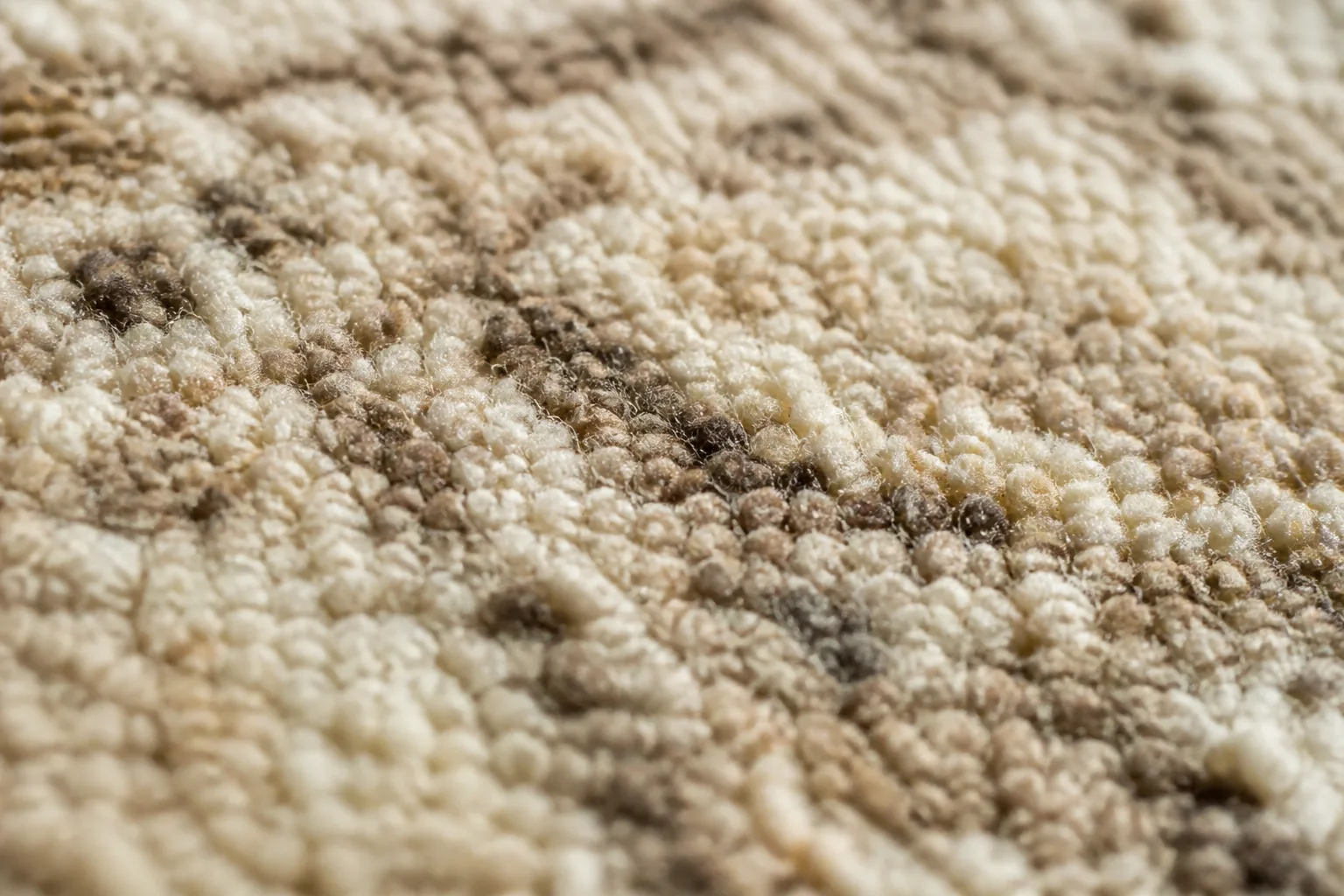
BUILD A ROOM-TO-RUG TRAFFIC MAP
Sort what arrives, what settles and what has worn
Use the prompts to classify your observations before photographs are sent. The resulting note does not identify fibre or choose a treatment; it simply makes the household pattern easier to assess.
RUISLIP · TWO ROUTES, ONE PRACTICAL PLAN
Record how soil enters and how the rolled rug leaves
A bungalow with a straight hall creates different handling from an upper-floor apartment, yet both can have a garden-facing traffic line. We document the everyday route separately from the carrying route, then consider construction, laminate and ventilation on their own evidence.
A Ruislip family-room example. The owner photographs muddy grit near the garden-side border, a dull walking strip towards the sofa and protected pile below a lightweight table. They measure the rug and the porch turn, then explain where it can rest without blocking the household.
Why laminate receives its own note. Granular soil can collect between rug and floor, while moisture or rubberised underlay may affect the surface beneath. A safe corner view records both faces without merging floor care into the textile quotation.
Ruislip soil-and-traffic field notes
Room anchor. A wide photograph places the wool rug between the garden door, seating and main internal entrance.
Garden deposit. Dry crumbs, damp marks and plant matter are described separately because they do not imply the same response.
Protected reference. Pile beneath a rarely moved light object offers a comparison for the exposed walking lane.
Porch geometry. Door width alone is insufficient; the angle between outer door, wall and hallway may be the real restriction.
Pile direction. Matching photographs taken with and against the lay help distinguish shading from embedded soil.
Garden-side edge. Binding and corners nearest the entrance receive extra attention for grit accumulation and abrasion.
Recent weather. State whether the concern followed a wet week, building work or a one-off spill rather than assuming ordinary use.
Area and roll. Flat dimensions establish guide area; pile direction and construction influence how the item might be rolled.
Footwear routine. Note where outdoor shoes normally stop and whether pets cross the rug from the garden.
Outcome split. Loose particulate removal is discussed apart from crushed pile, fading and physical fibre loss.
Family access. The plan accounts for children, pets and room use while the rug is being handled or left undisturbed.
Underlay. Any separate pad is photographed and identified because its residue and condition are not part of the pile itself.
Air route. Openable windows, secure doors and normal heating conditions inform handover guidance for this room.
Reset. Return orientation and furniture timing follow the item-specific advice supplied after the work.
Scope inputs. Size bands are combined with soil load, compressed traffic zones, construction and the porch route.
Evidence limit. A picture can show distribution but cannot prove fibre identity, dye stability or the reversibility of wear.

READ THE WALKING LANE IN CROSS-SECTION
Grit in the pile and pile pressed flat are different conditions
Photograph the lane from the side as well as above. Loose mineral particles may sit between fibres, whereas repeated pressure can alter the way the yarn reflects light. A protected reference patch makes that distinction more useful than an isolated dark close-up.

WHEN GARDEN MOISTURE REACHES THE BASE
Check the underside and laminate as separate layers
A damp-earth smell may sit in the pile, foundation, underlay or supporting floor. Explain when it is strongest and whether a pet or wet footwear crossed the area. Avoid adding fragrance, as that makes the original evidence harder to interpret.
- Mark the garden-facing edge on front and reverse
- Photograph underlay apart from the laminate finish
- Give the dates of wet-weather or pet events
- List powders used for odour or moisture absorption
ASSEMBLE THE RUISLIP ROUTE PACK
Pair textile evidence with a simple property sketch
A quotation works better when the soil distribution and the physical journey appear together. The following short pack shows where the rug is used, where it may be carried and which observations need closer assessment.
- Address, floor level and the room’s main use
- Flat length measured parallel to the traffic lane
- Width across the rug at its broadest point
- One photograph from the garden entrance
- Side-light views of compressed and protected pile
- Reverse, label and separate underlay photographs
- A close frame of the garden-side binding
- Dates and names for any product already applied
- Door widths plus a sketch of the porch turn
Four checks for a garden-facing room
Does a darker lane always mean more dirt?
No. Soil, compressed pile, abrasion and viewing direction can overlap. Opposite-angle photographs help the initial distinction.
Can the laminate be cleaned in the same scope?
Not by assumption. The rug, pad and hard floor are separate objects and any additional work must be explicitly agreed.
Why measure the porch turn?
A rolled rug may pass a doorway but fail to rotate into the hall. The angle and landing space can matter more than width alone.
What is the best traffic comparison?
Photograph exposed pile beside an area protected by light furniture, using the same light direction and camera height.
SEVEN STOPS ALONG THE RUISLIP ROUTE
Move from dry soil mapping to a room-ready handover
The order protects the assessment from shortcuts: record the lane, understand the structure, then control each stage against the actual room.
-
01
Trace
Draw the path from exterior threshold to seating
-
02
Compare
View compressed pile beside a protected reference
-
03
Release
Address accessible dry grit before moisture is considered
-
04
Bound
Set limits from fibre, dye, backing and weak edges
-
05
Control
Manage residue and dampness for the selected approach
-
06
Walk back
Review garden border, lane, centre and protected pile
-
07
Reopen
Give household guidance for ventilation and normal use
RUISLIP AREA AND ACCESS GUIDE
Square metres begin the estimate; the route completes it
Use the measured bands below as orientation. Soil loading, pile compression, underlay, construction and a difficult porch or apartment route may change the agreed work and confirmed amount.
FOUR LAYERS IN THE FAMILY-ROOM MAP
Traffic evidence runs from yarn tips to laminate
The visible lane crosses several layers: fibre face, foundation, optional underlay and supporting floor. Each deserves its own observation before their effects are connected.
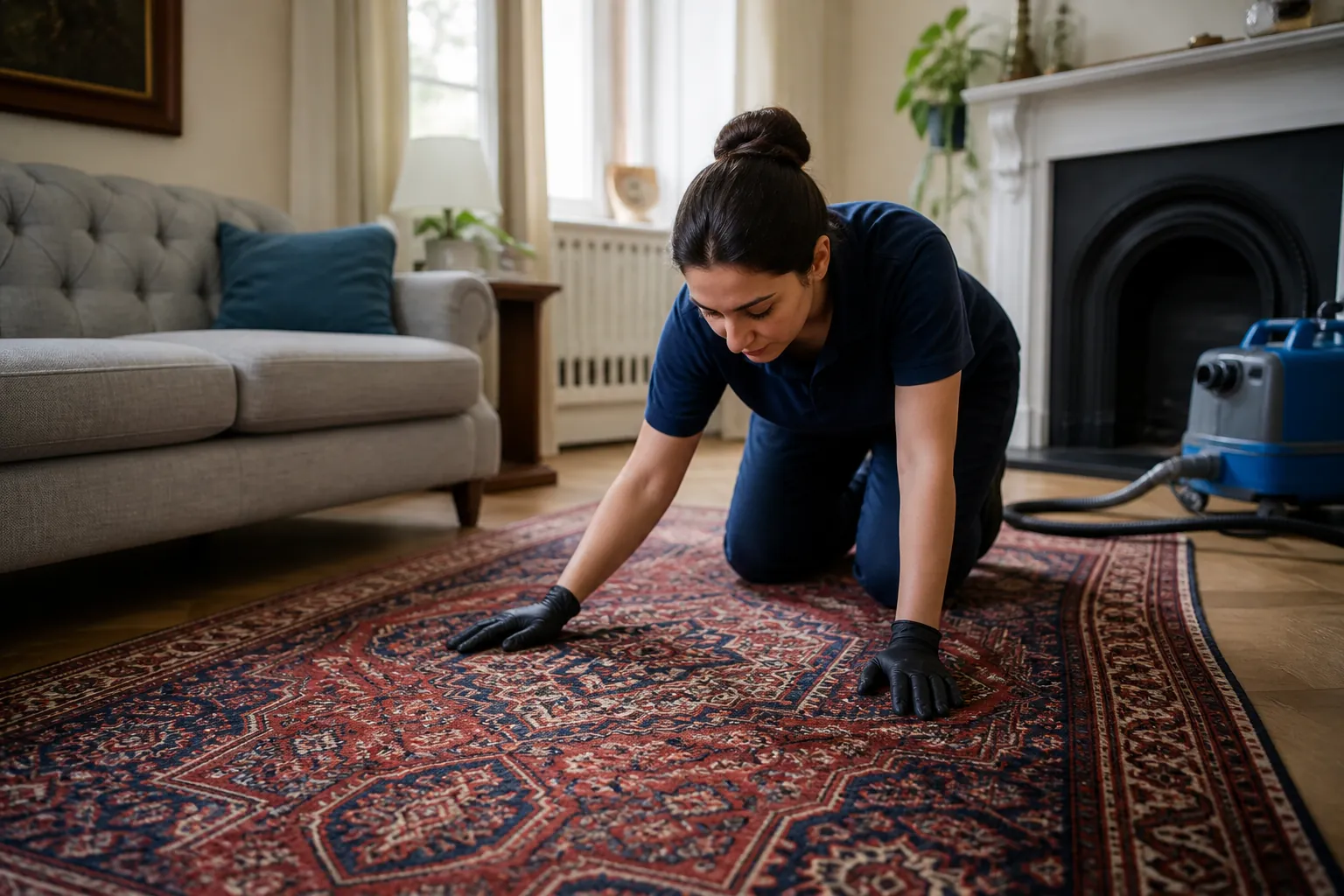
Where grit sits
Particle size and pile density affect how dry matter settles and releases.
What changing angle reveals
Opposite views help distinguish soiling from direction-dependent shading.
How the face is supported
Weave, backing and weight influence rolling, lifting and moisture limits.
Floor and underlay boundary
Laminate condition stays distinct from residue found on the textile reverse.
QUESTIONS FROM A RUISLIP TRAFFIC MAP
Garden grit, flattened pile and laminate need separate answers
Where should the first photograph be taken from?
Stand near the garden entrance and include the rug, the walking line and the main seating. A second view from the opposite side helps reveal pile shading.
Can flattening be removed together with dry soil?
Not necessarily. Particles may be removable while compression, abrasion or yarn distortion remains as physical wear.
Is the laminate part of rug cleaning?
No. It is documented because it supports the item and may affect placement, but hard-floor work requires its own agreed scope.
What if the hall is wide but the porch is tight?
Provide both widths and a photograph of the turn. Manoeuvring length can be the deciding factor for a rolled rug.
Should I shake the rug outdoors before assessment?
Avoid vigorous shaking where edges or backing may be weak. Describe the loose soil and wait for preparation guidance.
May I brush the flattened lane upright?
Do not force the pile. Gentle viewing from different directions provides evidence without adding mechanical stress.
Which weather detail is worth sharing?
Mention recent rain, muddy footwear or a damp pet if they coincide with the change. Seasonal assumptions are less useful than a dated event.
Why inspect a separate underlay?
It can retain particles, liquid or odour independently. Its condition should not be inferred from the visible face of the rug.
How soon can the family use the route again?
Follow the handover for this item and room. Moisture, pile and furniture positioning all affect readiness.
How do £27 and £68 relate?
£27 is the compact area guide; £68 is the current minimum visit value. The accepted quotation reconciles size and total booked work.
START AT THE GARDEN-SIDE EDGE
Send a traffic map, pile comparison and porch sketch
Those three pieces of evidence turn a vague “dull rug” request into a practical Ruislip assessment brief.
