
CHIGWELL · A QUIET-ROOM TEXTILE RECORD
Considered Rug Cleaning for Chigwell Homes
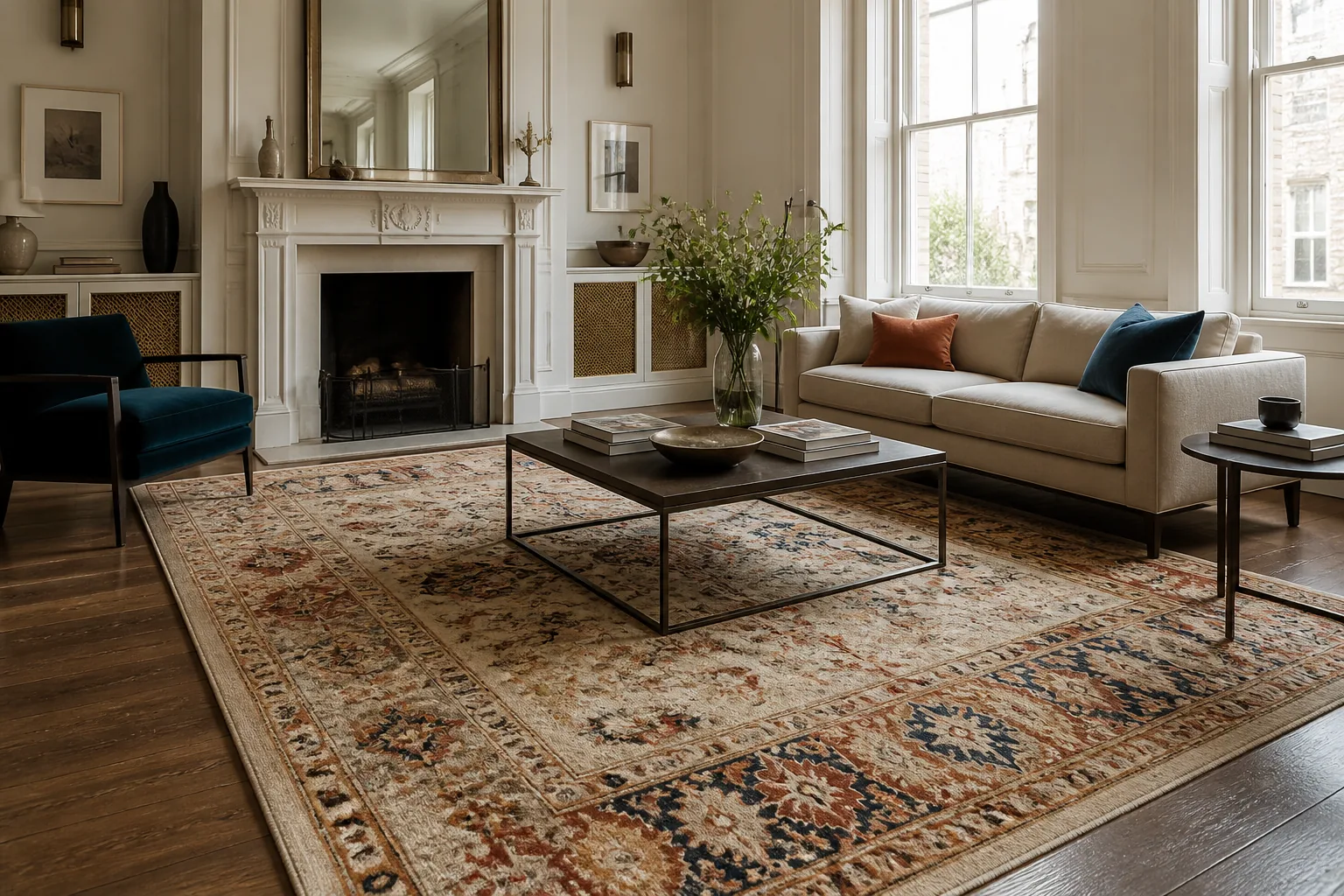
A rug chosen for a reception room may carry family history as well as footfall. Before proposing work, we document what is known about the piece, where colour has changed, which edges feel vulnerable and how it can leave its present position without strain.
- Show the rug in its entire room, with doors and fixed furniture visible
- Photograph abrash, fading and fresh marks in the same natural light
- Record inherited repairs, loose fringe knots and curling corners without pulling them
- Describe gates, parking and the shortest level route from room to vehicle
MAKE AN OBJECT RECORD
Describe what cannot be replaced
Use the prompts to assemble factual notes about the Chigwell piece. A selection records an observation; it never confirms fibre, age or treatment suitability.
LOOK BEYOND THE PILE
Four clues govern a careful handling plan
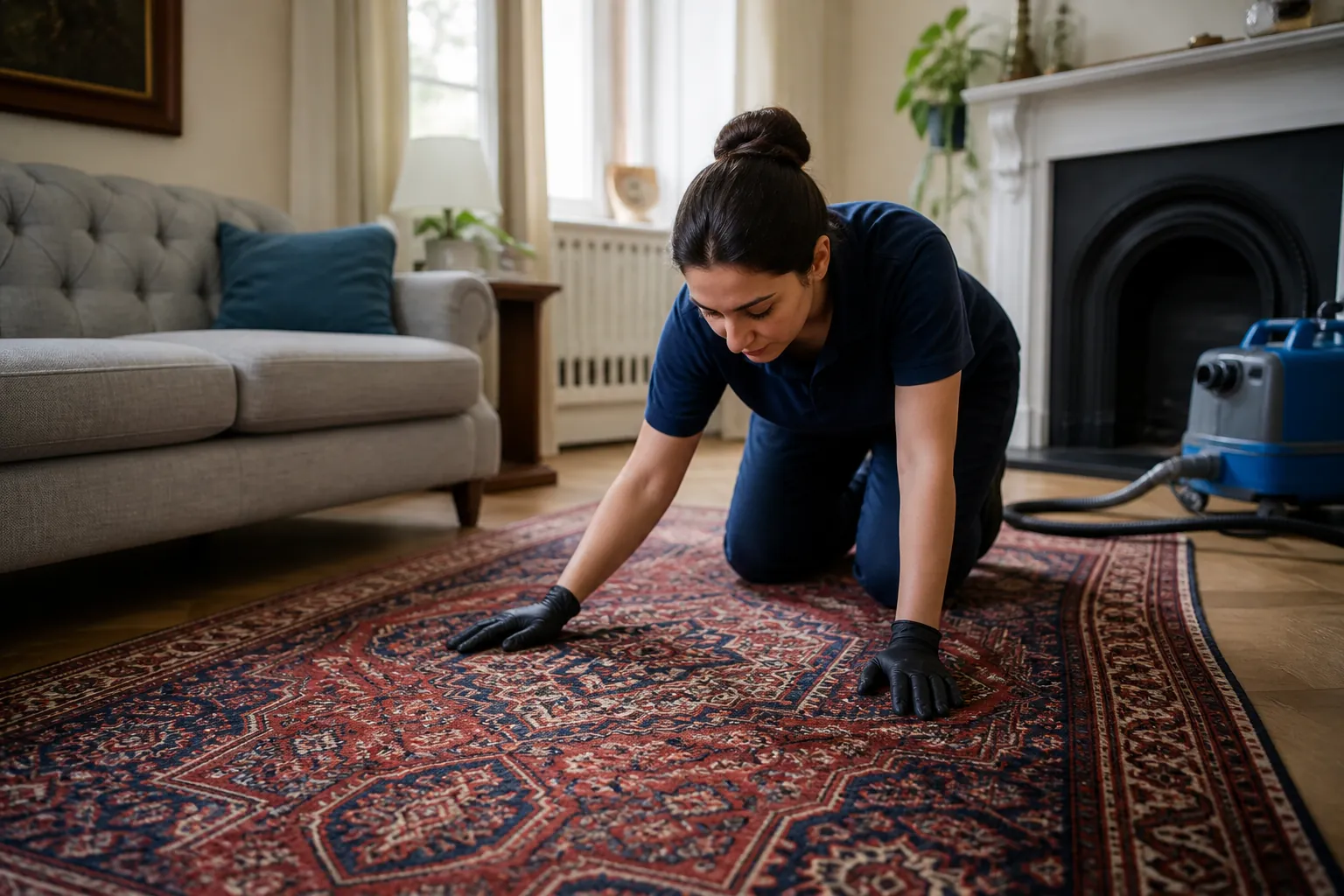
A handsome face can conceal a dry foundation or an earlier repair. These checkpoints keep appearance separate from structural confidence.
What the owner knows
Age, origin and previous care are recorded as evidence, not assumed from pattern.
Variation across the design
Fading, abrash and transferred colour are mapped in consistent light.
Foundation and repairs
The reverse can reveal adhesive, patches, broken rows or a weakened backing.
Corners, selvedges and fringe
The least stable edge sets the limit for lifting and agitation.
A CHIGWELL HOUSEHOLD SCENE
Plan the journey before lifting the rug
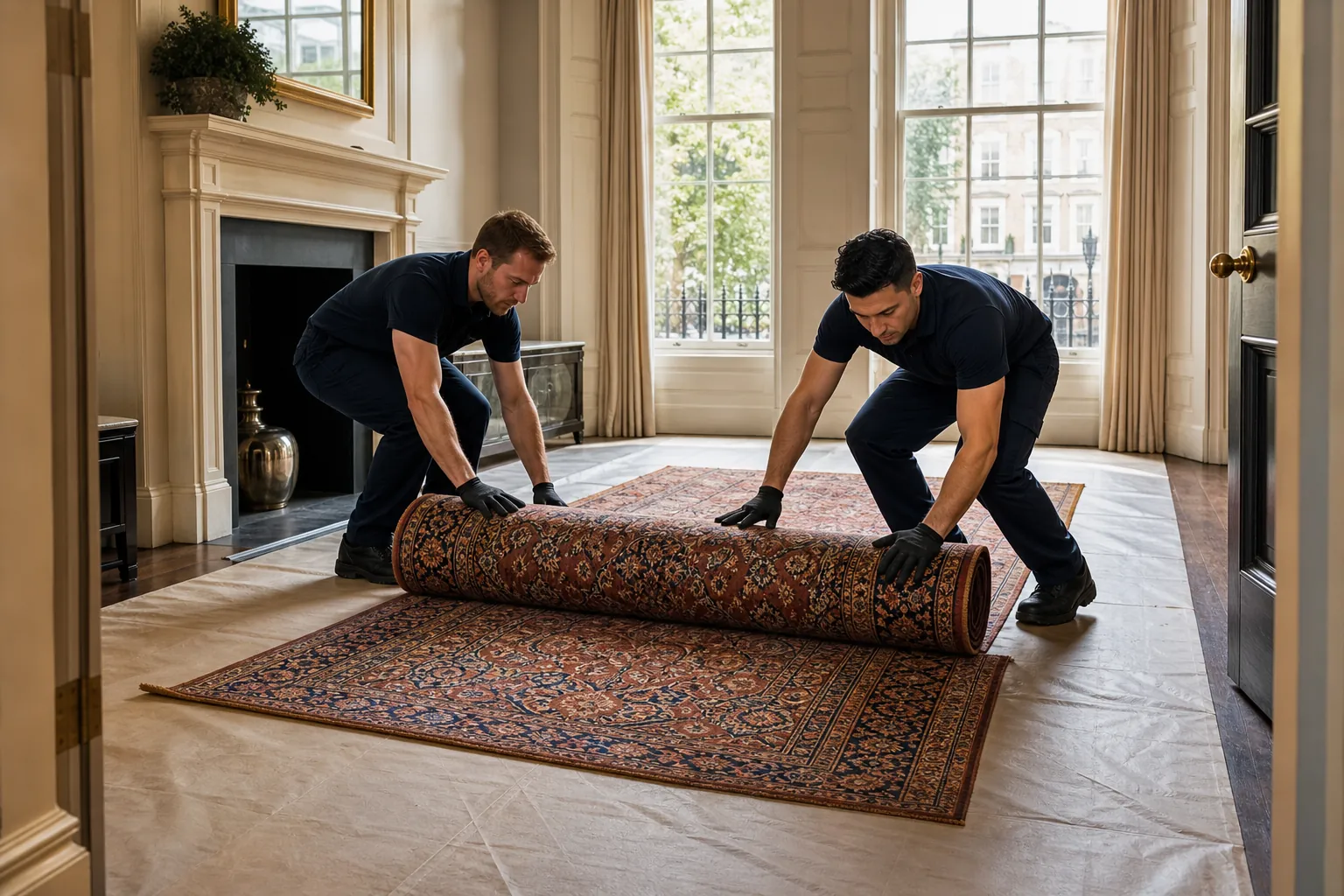
In a formal sitting room, the practical question is often not simply how the textile will be cleaned. It is whether a large piece can pass a console, turn through a hall and cross a threshold without folding a vulnerable foundation.
Example enquiry. A patterned rug has sat beneath two armchairs for twelve years. One corner curls, sunlight has softened the window-side border and a small drink mark sits near the hearth. The family wants the surface refreshed while preserving its settled character.
Useful evidence. A straight-on room image shows the carrying line; a reverse corner photograph reveals an old hand repair; measurements include fringe separately. The owner confirms that no modern stain remover has been applied.
Notes for a Chigwell textile dossier
Identity. Write down the maker, dealer or family attribution exactly as supplied; do not convert it into a fibre claim.
Dimensions. Measure the woven body first and the fringe afterwards, because tassels do not define the treated area.
Orientation. Mark the window edge and doorway edge so later photographs can be compared correctly.
Light. Capture the full rug without flash, then repeat any colour concern close up.
Foundation. Lift only a safe corner to show knots, canvas, secondary backing or repair cloth.
Perimeter. Record unravelled rows, exposed cord and detached fringe before rolling.
History. Include storage periods, earlier professional care and every home product remembered.
Priority. State whether preservation, freshening, a particular mark or odour is the principal concern.
Furniture. Identify pieces resting on the rug and who will move them.
Access. Add gate instructions, parking restrictions, steps and the narrowest doorway.
Floor. Note polished stone, timber or another sensitive support independently.
Expectation. Retained patina, fading and wear are discussed apart from removable soil.
Testing. Dye and fibre behaviour must be checked on the object, not inferred from location.
Drying. The return plan depends on construction, moisture use and an undisturbed space.
Value. If insurance or specialist conservation requirements apply, say so before booking.
Decision. Assessment may lead to a restricted scope or a specialist referral rather than routine work.
FROM RECORD TO RETURN
A seven-stage conservation-minded sequence
Each checkpoint protects the rug’s history and makes the agreed boundary visible to the household.
- 01
Orient
Mark window, doorway and fringe ends in the room record.
- 02
Read
Compare face, reverse, repairs and construction clues.
- 03
Test
Check selected fibres and colours without broad assumptions.
- 04
Limit
Define what weak edges and previous work will allow.
- 05
Care
Carry out only the method accepted for this object.
- 06
Review
Compare tonal field, marked area and perimeter fairly.
- 07
Settle
Return only when floor, rug and furniture timing align.
MEASURED CHIGWELL GUIDE
Size provides a reference; fragility defines the work
These guide points begin with woven area. A final quotation considers edge weakness, colour testing, earlier repairs, carrying requirements and any restricted treatment agreed after review.
COLOUR THAT BELONGS
Not every variation is a stain
Handmade rugs may contain yarn changes, abrash, pile reversal and old fading. Chigwell photographs should show the complete motif before isolating a darker or paler patch, so an authentic feature is not mistaken for removable contamination.
THE QUIET ODOUR QUESTION
Trace the history before choosing a response
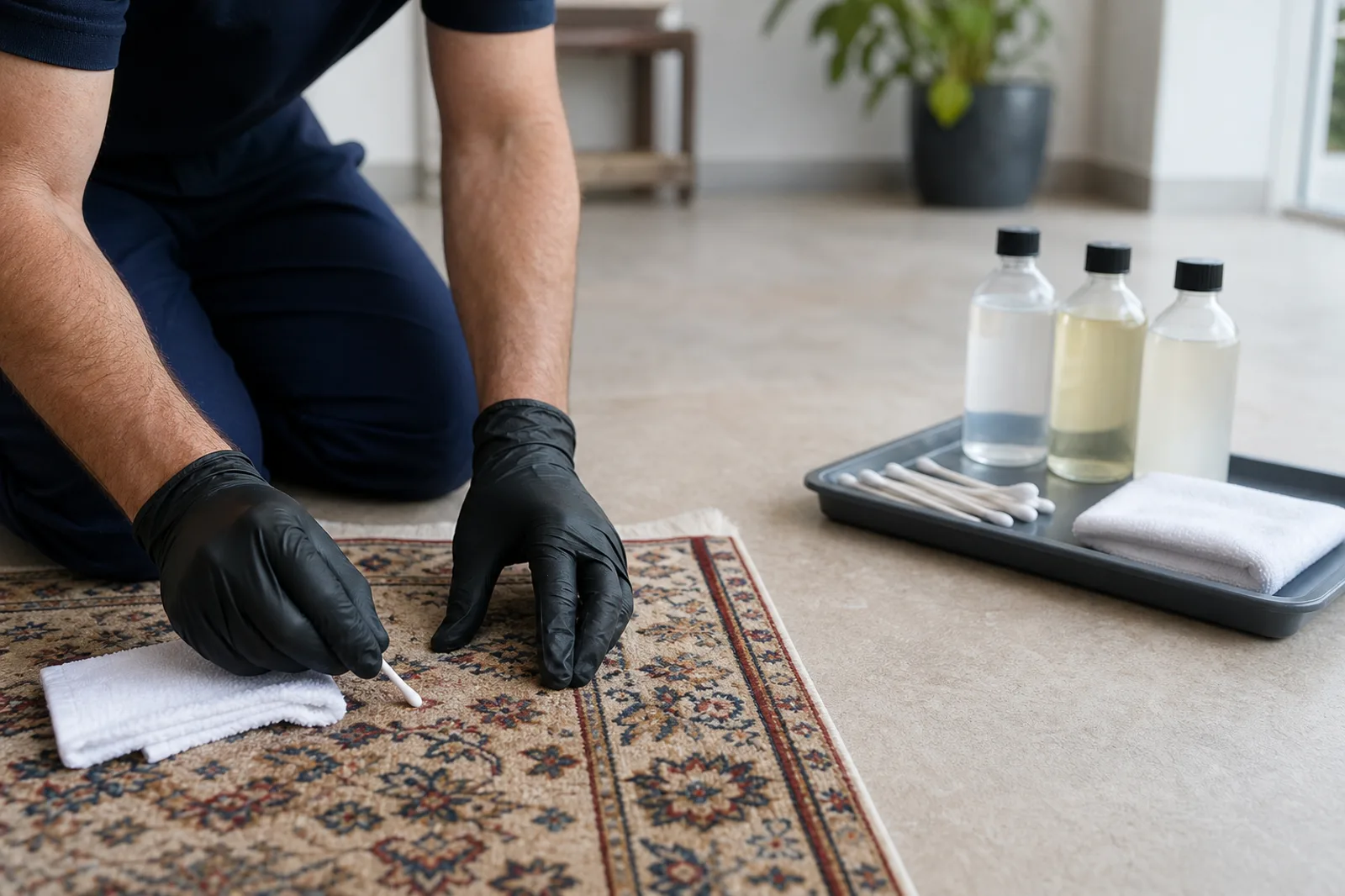
A closed-room smell may come from dust, storage, a fireplace, pet contact or the supporting surface. Record when it appears and whether it follows one corner, the centre or the underside.
- Air the room without spraying fragrance onto the textile
- Map the strongest point on face and reverse
- Describe old storage wrapping and damp exposure
- Keep deodorising expectations conditional on the cause
SEND A CHIGWELL OBJECT FILE
A few exact records are better than many vague images
Assemble the rug’s facts in one message so provenance, condition and logistics can be read together.
- Address area and preferred contact method
- Woven length and width, with fringe listed separately
- One square photograph of the complete design
- Reverse views of corners, label and repaired sections
- Natural-light images of fading or transferred colour
- Known maker, age or purchase information
- Products, spills and previous cleaning remembered
- Floor type and furniture resting on the rug
- Gate, parking, steps and narrow-turn details
Before agreeing a Chigwell visit
Can a faded border be restored by cleaning?
Cleaning may reveal cleaner fibre, but it cannot put dye back where light or wear has removed it.
Will you rely on a dealer’s fibre description?
It is useful history, yet present fibre and colour behaviour still require appropriate checks.
May a fragile fringe be excluded?
Yes. The agreed scope can restrict handling where attachment or yarn strength is doubtful.
Why photograph the route?
A safe roll length and turning plan can matter as much as room size for a large, stiff rug.
CHIGWELL QUESTIONS, OBJECT-SPECIFIC ANSWERS
What owners of distinctive rugs often need to know
Should I vacuum an heirloom rug before the assessment?
Only follow the maker’s established care advice. Avoid vigorous brushing or lifting a weak edge simply to prepare photographs.
Does a family attribution prove that a rug is antique?
No. Share the history, but age, origin and value should not be presented as verified without suitable expertise.
Why measure fringe separately?
The woven body determines area, while fringe length and attachment influence handling rather than square metres.
Can old wine staining disappear completely?
No result should be promised remotely. Dye change, residue and fibre damage may remain even after removable material improves.
What if one colour looks unstable?
The evidence may require a limited approach, further testing or a decision not to proceed with standard cleaning.
Do gates and long drives change the quotation?
They can affect arrival, carrying time and equipment planning, so include them before the scope is confirmed.
Is pile shading a cleaning fault?
Not automatically. Directional pile reflects light differently and should be viewed from more than one side.
Can the rug go straight back under heavy chairs?
Only after the handover guidance confirms that the textile and supporting floor are ready.
What if the underside has an old glued patch?
Photograph it. Adhesive and repair materials can restrict moisture, movement or products used nearby.
How does the £68 attendance minimum work?
It is the current visit minimum; only compatible work included in the confirmed booking can count towards it.
START WITH THE OBJECT, NOT A PROMISE
Tell us what makes your Chigwell rug distinctive
A calm record of history, condition and route allows a more responsible conversation about scope.
