
BARNET · FOLLOW THE EVIDENCE, NOT THE SMELL ALONE
Pet Odour Rug Assessment in Barnet
When an accident has happened near one edge, the visible face tells only part of the story. A useful enquiry follows the route through pile, foundation and floor beneath, while keeping fibre damage separate from removable residue.
- Photograph the whole rug before lifting a corner
- Mark the affected edge on a simple room view
- List every spray, powder or machine already used
- Explain where the textile can be moved and aired safely
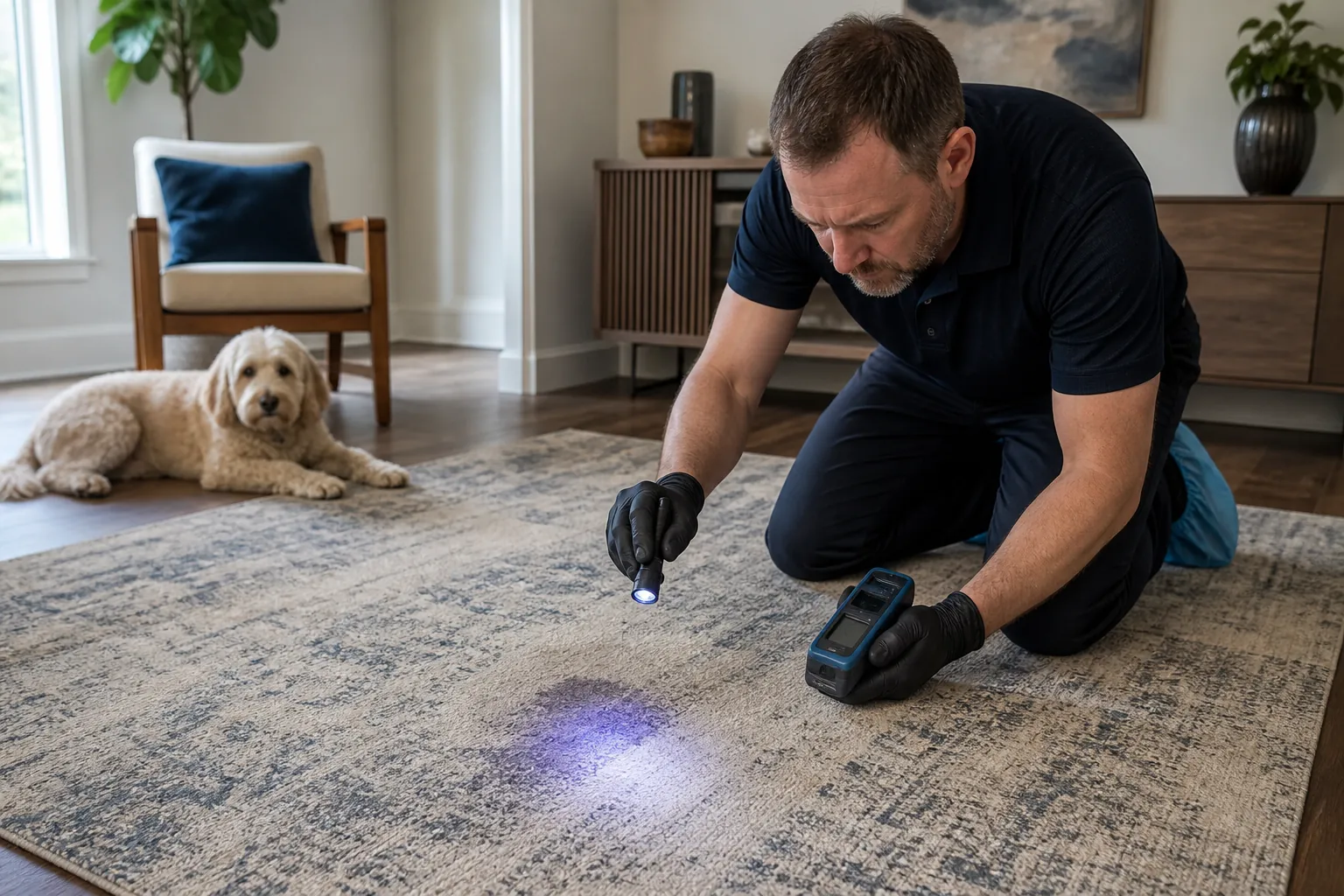
BUILD AN HONEST RECORD
Choose what you can see and leave the rest open
The buttons create a handover note; they are not a remote diagnosis.
A BARNET HOUSE, STEP BY STEP
Plan the lift before disturbing the room
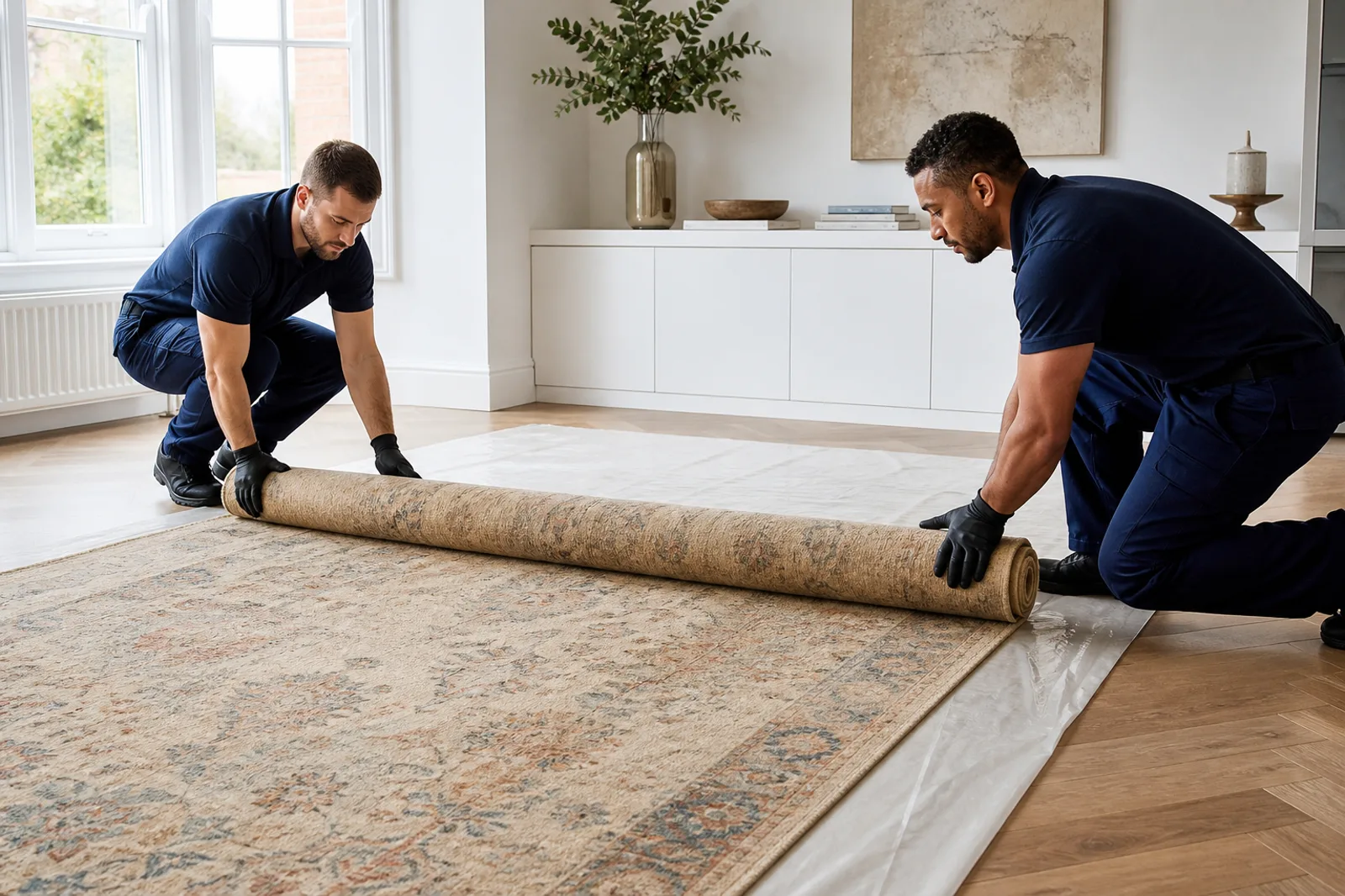
A rug may sit partly beneath a sofa on timber boards. Before anyone rolls it, note the heavy furniture, the nearest clear route and whether the reverse can be viewed without dragging the textile.
Start wide. A room photograph records scale and placement. Add close images only after the overall position is clear.
Trace history. Dates, repeated incidents and earlier remedies are more useful than a guess about what remains inside.
The Barnet evidence file
Overview: Include every edge in one uncropped image.
Dimensions: Measure the textile, not the room.
Marker: Place a harmless object beside the concern for scale.
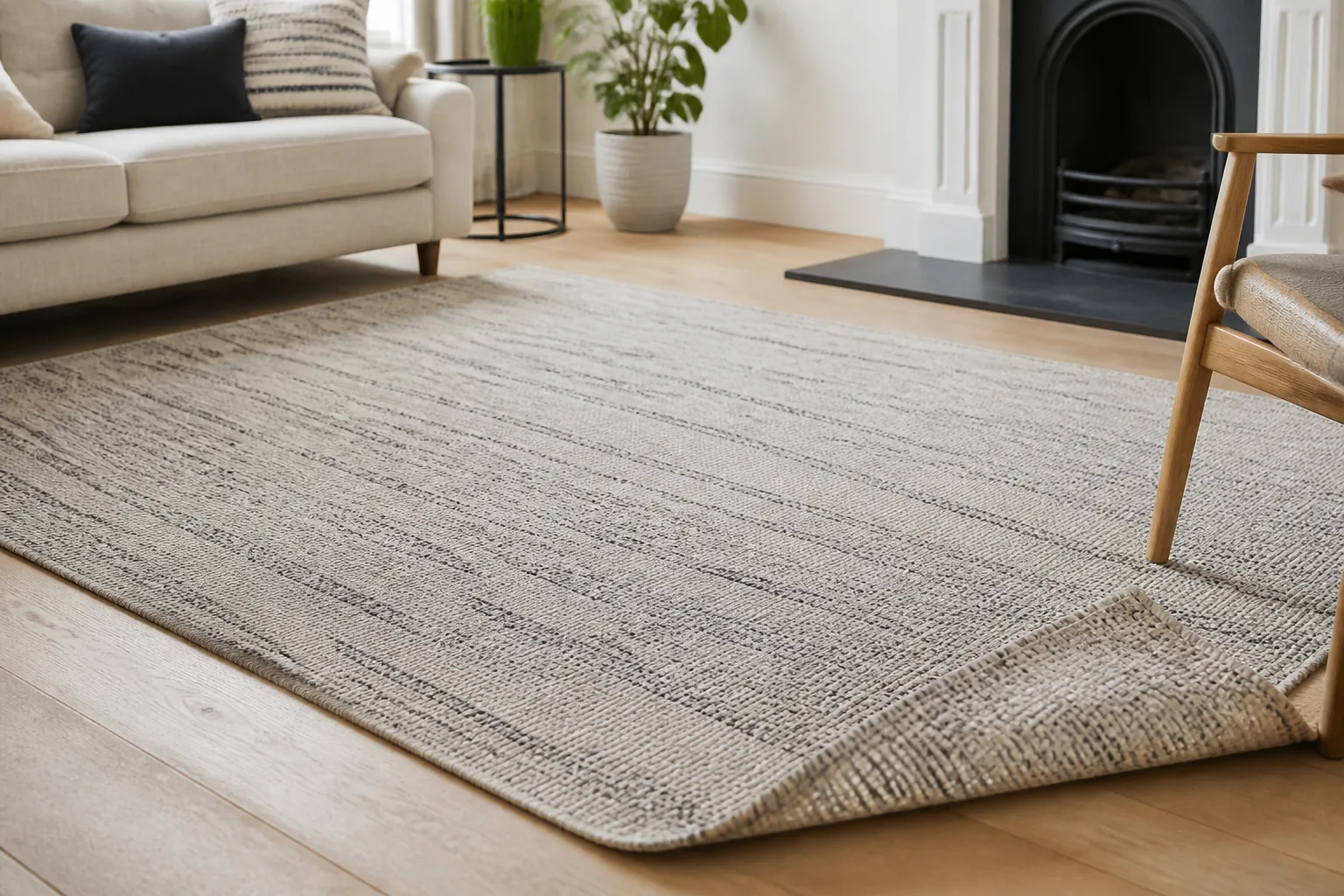
Reverse: Expose it only when safe.
Floor: Check for transfer without promising a cause.
Timing: Give first and latest incident dates.
Moisture: State whether the area is still damp.
Products: Copy brand names where available.
Attempts: Mention rubbing, rinsing or extraction.
Pets: Describe repeat access to the same corner.
Fringe: Show tangles, splits and missing knots.
Colour: Flag bleeding, fading or pale rings.
Route: Record the practical exit.
Storage: Never seal a damp rug in plastic.
Limits: Odour reduction cannot be judged from a photo.
Handover: Keep uncertainties explicitly labelled.
WHAT THE PATCH MAY MEAN
Appearance and contamination are different questions
A halo might be dried residue, disturbed pile, lost dye or wear. Photographs locate it; inspection decides whether a cleaning response is appropriate.
DEPTH CHANGES THE BRIEF
Odour can travel beyond the place first noticed
Liquid may stop in the face yarn, enter the foundation or reach an underlay and hard floor.
- Describe the source without overstating certainty
- Separate old staining from current dampness
- Report any smell in the floor after lifting
- Expect advice to depend on assessed depth
FOUR DIFFERENT RISKS
The safest route is constrained by the weakest feature
A robust face yarn does not guarantee stable dyes, sound backing or secure edges.
Absorption
Influences residue and moisture behaviour.
Migration
Contrasts may call for controlled testing.
Hidden load
Material can remain below visible yarn.
Handling strength
Frayed corners may limit moving.
FROM REPORT TO RETURN
A Barnet odour enquiry moves through seven decisions
Each stage can narrow the work; none guarantees a universal outcome.
- 01
Locate
Map the report on a complete view
- 02
Trace
Review dates, liquids and past attempts
- 03
Inspect
Check face, reverse, edge and floor
- 04
Test
Assess colour and material response
- 05
Define
Agree what can be addressed
- 06
Control
Manage moisture and drying conditions
- 07
Review
Explain placement and limitations
SIZE GUIDE, THEN QUALIFIERS
Measurements open the quotation; they do not finish it
Construction, contamination depth, weak edges, carrying access and separately agreed work can alter scope.
MAKE THE FIRST MESSAGE COUNT
Send evidence in the order someone else can follow
Begin with the complete item, move to the affected zone and finish with access.
- Barnet postcode
- Maximum dimensions
- Room view with furniture
- Close photograph with scale
- Safe reverse and label view
- Dates and repeat incidents
- Previous product list
- Surface directly below
- Doorway and parking constraints
Before moving anything
Should the rug be rolled immediately?
Not if damp, structurally weak or trapped by furniture; describe the situation first.
Does smell prove the depth?
No. Face, foundation and floor require separate consideration.
Can a label replace testing?
No. It informs review but does not prove present colour stability.
Why record the room?
Placement affects lifting, protection, ventilation and return.
BARNET PET-RUG QUESTIONS
Useful answers before assessment
What photographs should I take first?
Start with the complete rug in its room, then add the corner, edge, label and reverse where safe.
Can complete odour removal be promised?
No. Source, age, depth, construction and the surface below matter.
Why does the floor beneath matter?
Transferred liquid may sit outside the removable textile.
Should I use another spray now?
Avoid adding chemistry and disclose everything already applied.
What if the accident happened repeatedly?
Give rough frequency and whether it returned to one area.
Can the rug remain under a sofa?
Photograph the arrangement; heavy furniture needs a safe plan.
Does a care label settle the method?
No. Dye behaviour, wear, backing and condition still count.
How long will drying take?
No fixed time applies; material, airflow and room conditions contribute.
Is pricing only based on area?
No. Size starts a band while build, condition and access qualify it.
How does the £68 minimum work?
It is the starting minimum for an eligible confirmed visit.
START WITH THE COMPLETE PICTURE
Tell the Barnet rug story from room to reverse
A careful record makes the limits and next useful question easier to see.
