
NORTHWOOD · PLAN FROM ROOM TO DOORWAY
Rug Cleaning Planned for Northwood Homes
A rug in a broad reception room can still have a difficult journey to the entrance. Our Northwood brief records the textile first, then maps furniture, thresholds, stairs and managed access so the quotation reflects the real handling job.
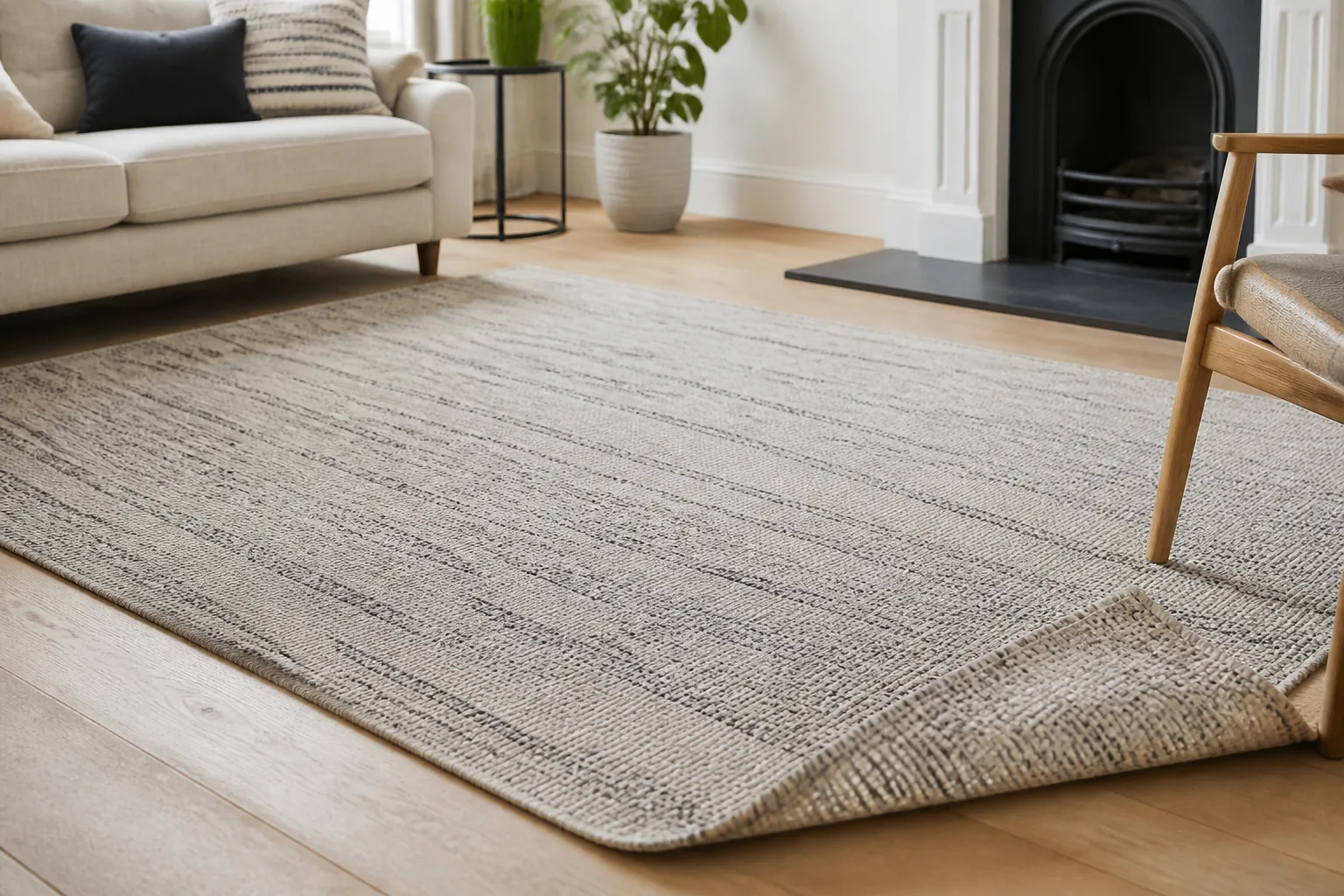
- Show the full rug with the surrounding furniture still visible
- Measure both the textile and the narrowest point on its exit route
- Photograph pile direction, borders, fringe and the underside
- Tell us whether a concierge, gate code or booked lift controls arrival
BUILD THE NORTHWOOD SURVEY
Record what can change handling
Use these prompts to assemble facts rather than guess a treatment. The finished note gives the assessor a better starting point.
A NORTHWOOD HOUSEHOLD EXAMPLE
Start with the room, not a generic square-metre figure
Consider a wool rug beneath a dining table in a detached Northwood home. One side has dulled along the route to the garden while the protected field remains brighter. French doors are nearby, but the practical exit is through a hall with a stone threshold. That contrast belongs in the scope.
The owner’s evidence. A daylight overview shows chairs, table legs and the complete border. Close views capture the grey walking lane, a pale drink mark and a short section of loose fringe.
The access evidence. The note identifies what can be moved, where the rug may be rolled, whether two people can turn it in the hall and when the gate can be opened.
The Northwood room-to-route dossier
Overview. Photograph the rug square-on and include enough of the room to establish scale.
Dimensions. Give length, width and fringe separately; do not include guesses from furniture size.
Orientation. Mark the window side and the main walking edge so pile shading has context.
Thresholds. Note raised strips, stone edges and changes of level between room and entrance.
Furniture. List objects resting on the textile and distinguish movable chairs from substantial pieces.
Colour. Capture strong reds, blues or dark borders in neutral daylight without filters.
Underside. A corner view may reveal construction, repairs or contamination that the face hides.
Fringe. Show attachment points as well as the visible ends; cleaning is not fringe restoration.
History. Name spot sprays, rental machines and previous professional visits where known.
Security. Provide gate, concierge or visitor-parking arrangements only as needed for attendance.
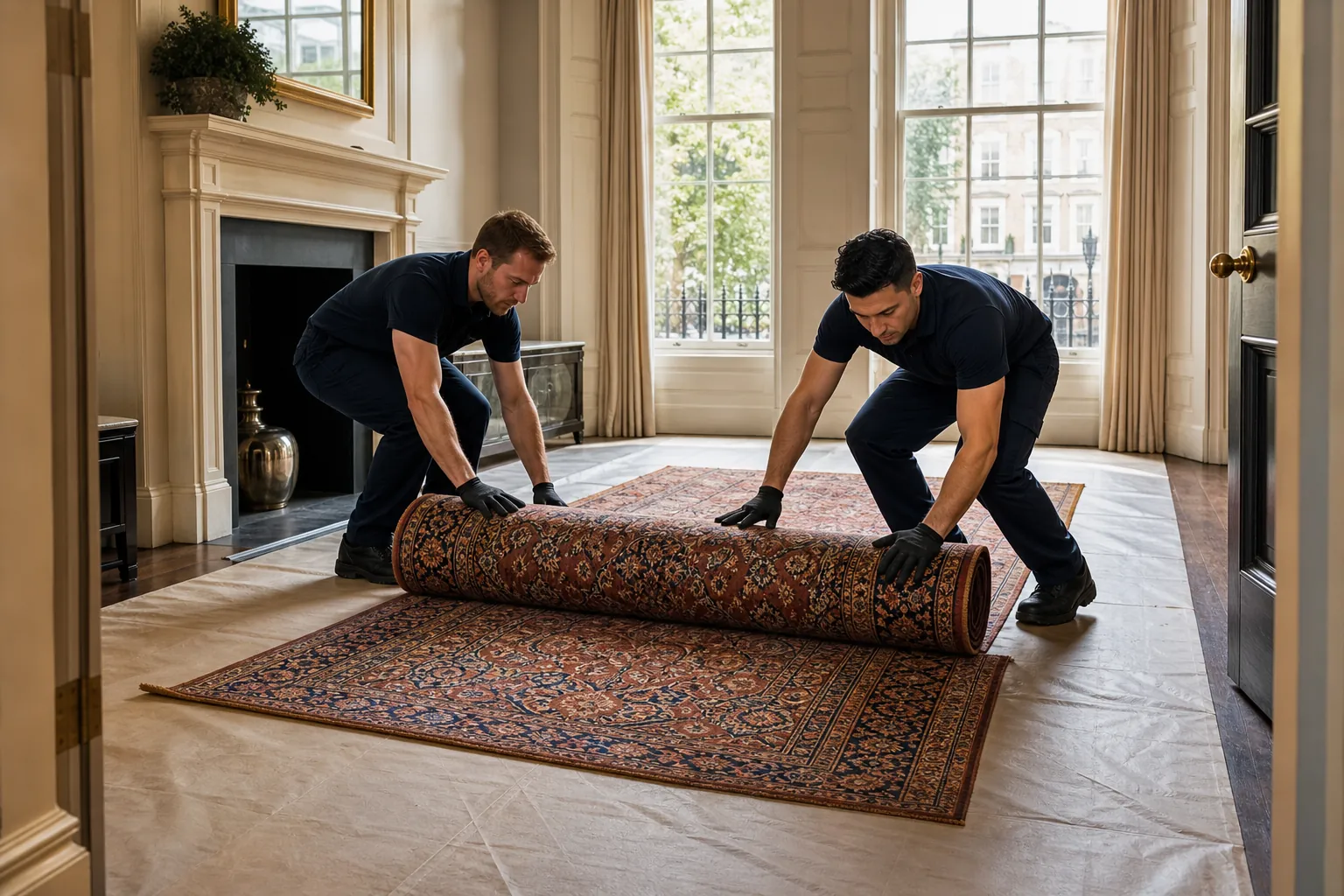
Carrying. Measure the tightest door or turn rather than assuming a large room means easy access.
Drying. Identify a ventilated, protected position where the rug can remain undisturbed.
Pets. State the location and age of an incident instead of describing the whole rug as odorous.
Expectation. Loose soil, a stain, colour change and fibre wear are discussed independently.
Quotation. Size is combined with construction, condition and the agreed handling plan.
Handover. Furniture only returns when the textile and supporting floor are ready.
READ THE TRAFFIC LANE
Dulling beside a garden route has more than one cause
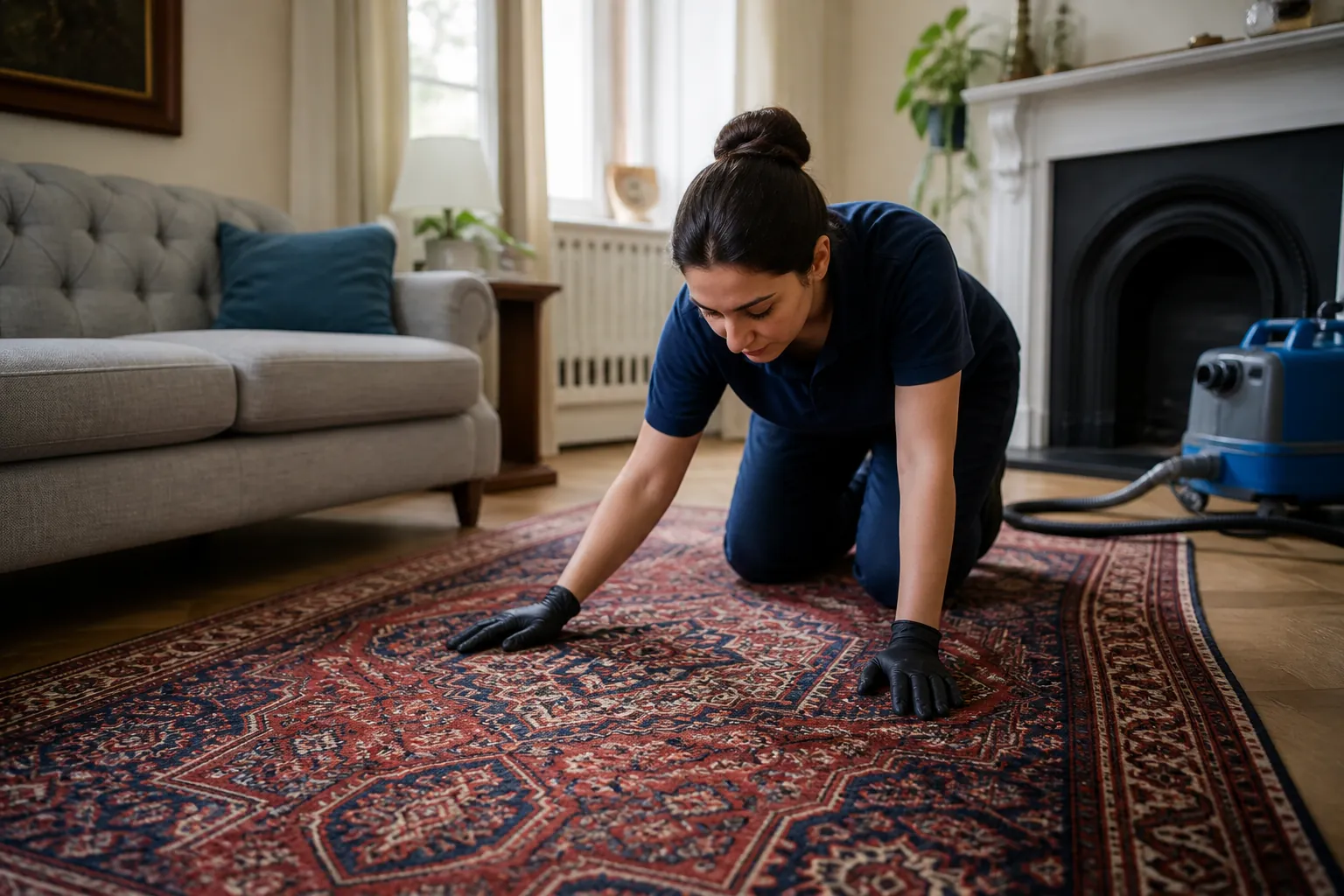
Dry grit, compressed pile and light exposure can overlap along the same edge. A photograph from each direction helps reveal whether the apparent colour shift follows soil, fibre orientation or lasting wear. The protected area beneath furniture provides a useful comparison, not a guaranteed finish.
TRACE LIQUID DOWNWARD
An isolated smell needs a depth record
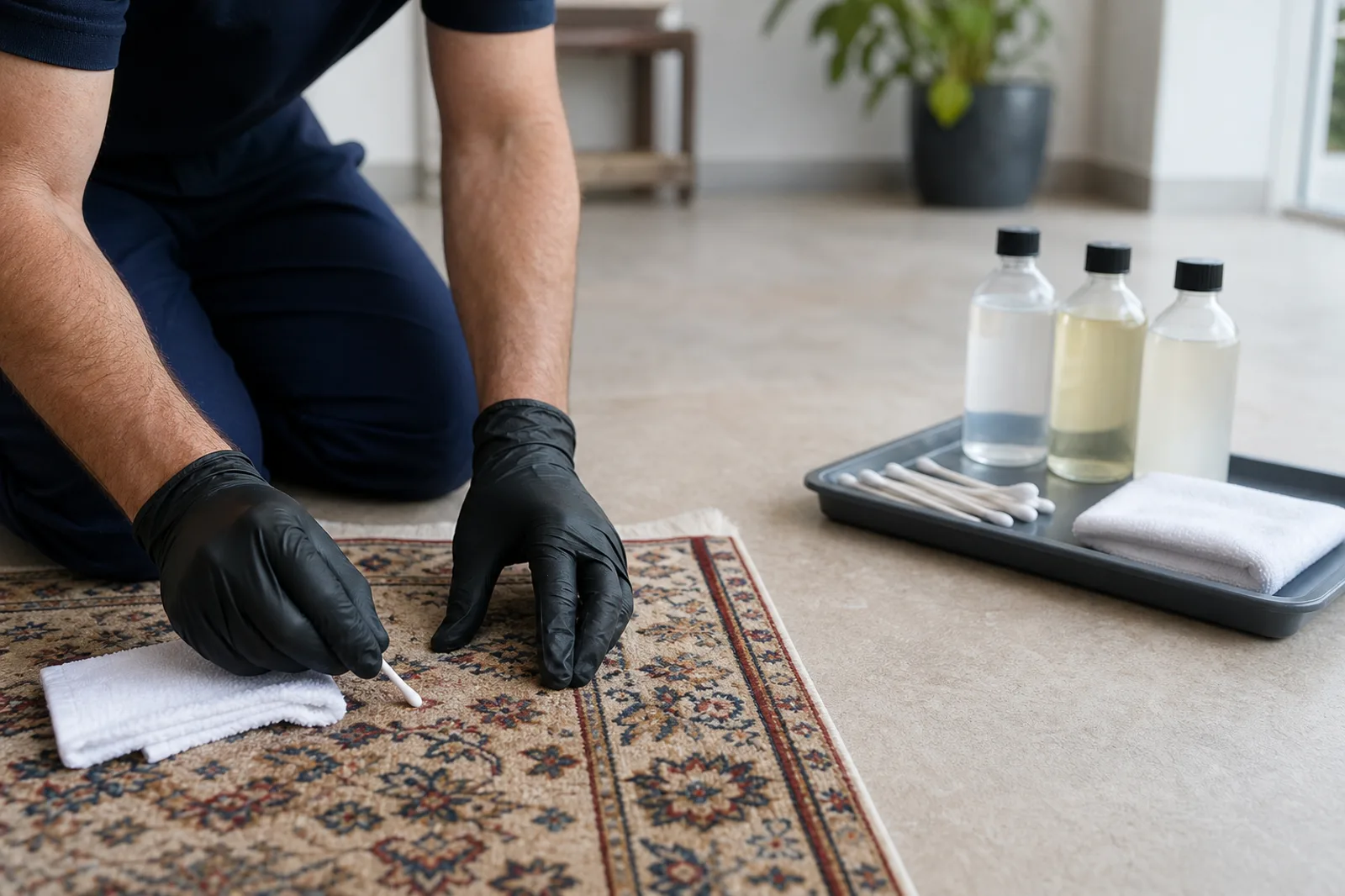
Mark the strongest point, photograph the reverse and check the supporting floor only when lifting is safe. Odour at the surface does not show whether residue remains in the pile, foundation, underlay or stone below.
- State when the event happened
- List every product already applied
- Show the boundary of the affected zone
- Keep deodorising expectations conditional
BEFORE THE RUG MOVES
Four checks define the safe envelope
A handsome room does not identify a textile. Material evidence and weak details remain more important than décor.
Fibre and density
Absorbency, finish and agitation tolerance vary.
Motifs tested separately
A stable field does not prove every border colour.
Foundation and weight
Construction influences moisture and lifting.
Repairs set limits
Loose binding or fringe can narrow the agreed work.
THE NORTHWOOD HANDLING SEQUENCE
Keep the textile and the route in one plan
Each checkpoint answers a different question, from initial documentation to replacing furniture safely.
- 01
Frame
Capture the room and entire rug before anything moves
- 02
Trace
Follow marks across face, edge and reverse
- 03
Test
Check relevant fibres, dyes and vulnerable details
- 04
Clear
Agree furniture and create a protected rolling space
- 05
Work
Apply the selected process within recorded limits
- 06
Review
Compare traffic lane, field and borders
- 07
Reset
Follow the room-specific drying and return advice
SIZE REFERENCES
Useful figures, followed by a Northwood scope
Area establishes a starting band. Dense construction, fragile edges, old residues, furniture and a controlled arrival can alter what must be included before the final amount is agreed.
SEND ONE COMPLETE NORTHWOOD PACK
Make the quotation easy to verify
Group the measurements, photographs and arrival facts in one message so important details do not become separated.
- Postcode and preferred appointment contact
- Exact length and width
- Whole-room and whole-rug views
- Close-ups from both pile directions
- Reverse, fringe and repair images
- Known fibre or label wording
- Product and incident history
- Furniture resting on the rug
- Gate, parking, stairs, lift and narrow-turn notes
Before choosing a date
Must the room be empty?
No. First show the normal arrangement; movement can then be agreed instead of assumed.
Can a faded edge be restored by cleaning?
Cleaning addresses removable material, while light-related dye change may remain.
Why measure the hallway?
A large textile may need rolling and turning space that the reception room alone does not reveal.
Is a gate code enough access information?
Add visitor parking, concierge timing or lift booking where any of those controls the visit.
NORTHWOOD QUESTIONS
Details that shape this household plan
Which first image is most helpful?
A level view showing all four edges, nearby furniture and the direction of the main doorway.
Should I vacuum immediately before the survey?
Normal loose debris may be removed if the rug permits, but leave the priority area visible and avoid new products.
Does hand knotting guarantee one cleaning route?
No. Fibre, dyes, repairs, foundation and present condition still need individual review.
What if the label is missing?
Send construction photographs and mark the fibre as unknown; absence of a label is useful information.
Can an old drink mark disappear completely?
No outcome can be promised from a photograph because residue, dye change and fibre alteration may coexist.
Why photograph the stone beneath?
It records the support separately and helps plan lifting, protection and return placement.
How are delicate fringes handled?
Their attachment and strength are assessed first; cleaning cannot replace missing or structurally weak material.
When can the dining table go back?
Only after the specific drying and handover guidance confirms that the rug and floor are ready.
How long will drying take?
Fibre, pile density, moisture level, temperature and airflow decide timing, not the Northwood postcode.
How does the £68 visit minimum work?
It is the current minimum; other eligible work counts only when combined in the accepted scope.
FROM ROOM VIEW TO WORKABLE SCOPE
Show us how your Northwood rug lives and moves
A measured route and honest textile record create a clearer conversation than a postcode and size alone.
