
THAMES DITTON · RESPECT THE RUG AND THE FLOOR BENEATH IT
Thames Ditton Rug Cleaning with Period Floors in Mind
A rug laid over old boards may hide more than dust: loose tacks, wax transfer, uneven underlay and historic repairs can all influence safe handling. Our first task is to understand the textile’s relationship with the room before it is lifted.
- Show the rug in place before moving tables or turning back corners
- Record fireplaces, floor vents and exposed board joints nearby
- Photograph underlay, old repairs and any transfer on the reverse
- Describe low doorways, steps and the safest exit from the property
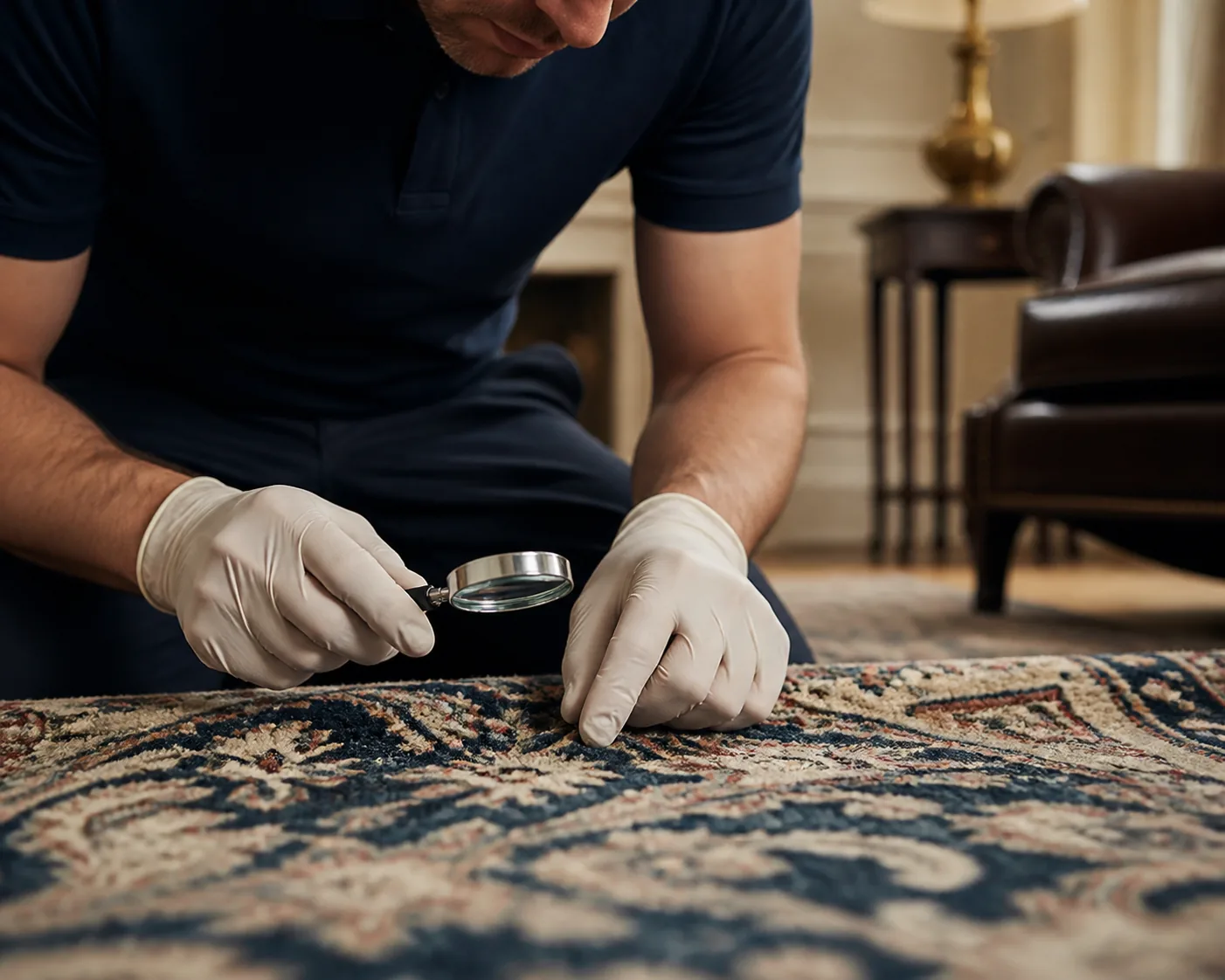
THAMES DITTON · BEFORE THE FIRST CORNER IS LIFTED
Old boards change how the room is prepared
Imagine a dining-room rug extending beneath a heavy table in a cottage with narrow internal doors. One end meets a hearth while the other crosses a slightly raised board. The quotation must account for furniture, safe lifting, the vulnerable floor and a repaired fringe—not simply the visible top.
Start above the rug. Take a room view that includes every furniture leg and threshold. Only then add close photographs of the spill, the repair and any part of the underside already visible without strain.
Do not pull a corner from beneath a loaded cabinet for the sake of a label. Instead, explain what cannot be accessed. Safe limitations are part of an accurate brief and can be resolved during appointment planning.
Period-room lifting checklist
Placement: Sketch which edge meets the hearth, doorway and main furniture group.
Outline: Measure any irregular corners rather than assuming a perfect rectangle.
Boards: Mention polish, paint, wax or unfinished timber where known.
Movement: Report whether the rug creeps, ripples or catches at a joint.
Underlay: Show crumbling foam, mesh or felt without peeling stuck material away.
Hearth side: Look for soot, ember damage and heat-related colour change.
Underside: Record wax, paint or rubber transfer separately from the face concern.
Joinery: Note metal strips, tacks or sharp floor details at the perimeter.
Repair: Photograph stitching from both directions if it is freely accessible.
Furniture: Identify pieces requiring specialist movers rather than informal lifting.
Handling: Leave a large textile flat until an appropriate rolling plan exists.
Space: Say whether another clean room can hold the item without foot traffic.
Protection: Do not place plastic directly against a sensitive old finish without advice.
Incident: Give the age and location of the spill relative to boards and underlay.
Logistics: Include controlled parking, shared passages and the shortest usable route.
Outcome: Treat cleaning, repair and floor restoration as different jobs with different limits.
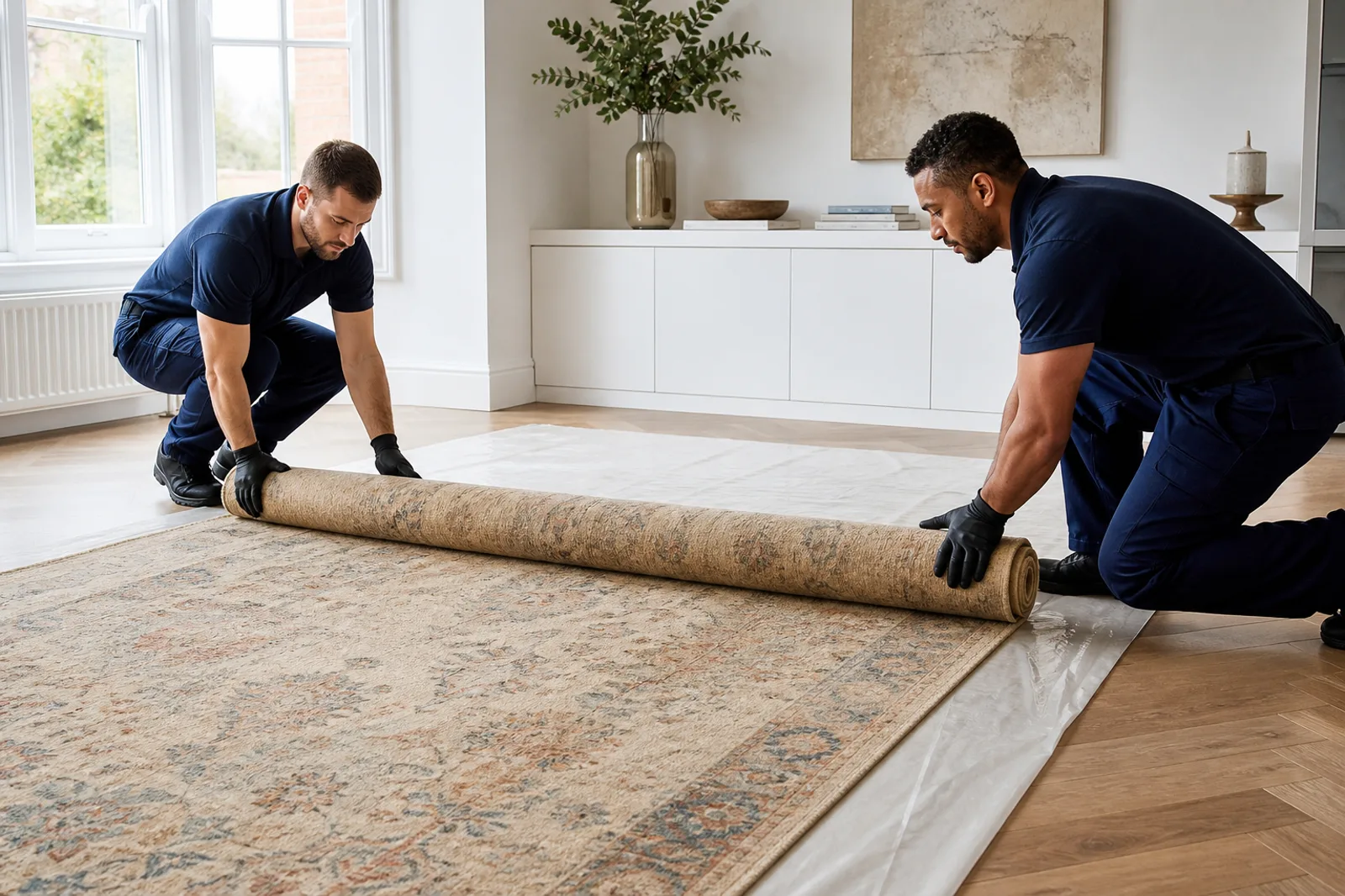
WHEN THE MARK MIRRORS THE FLOORBOARD
Transfer can travel upward as well as downward
A line on the rug may follow a board joint, underlay seam or furniture rail. Its shape and position help distinguish tracked soil from contact transfer, moisture migration and wear. Photograph the geometry before the textile is shifted.
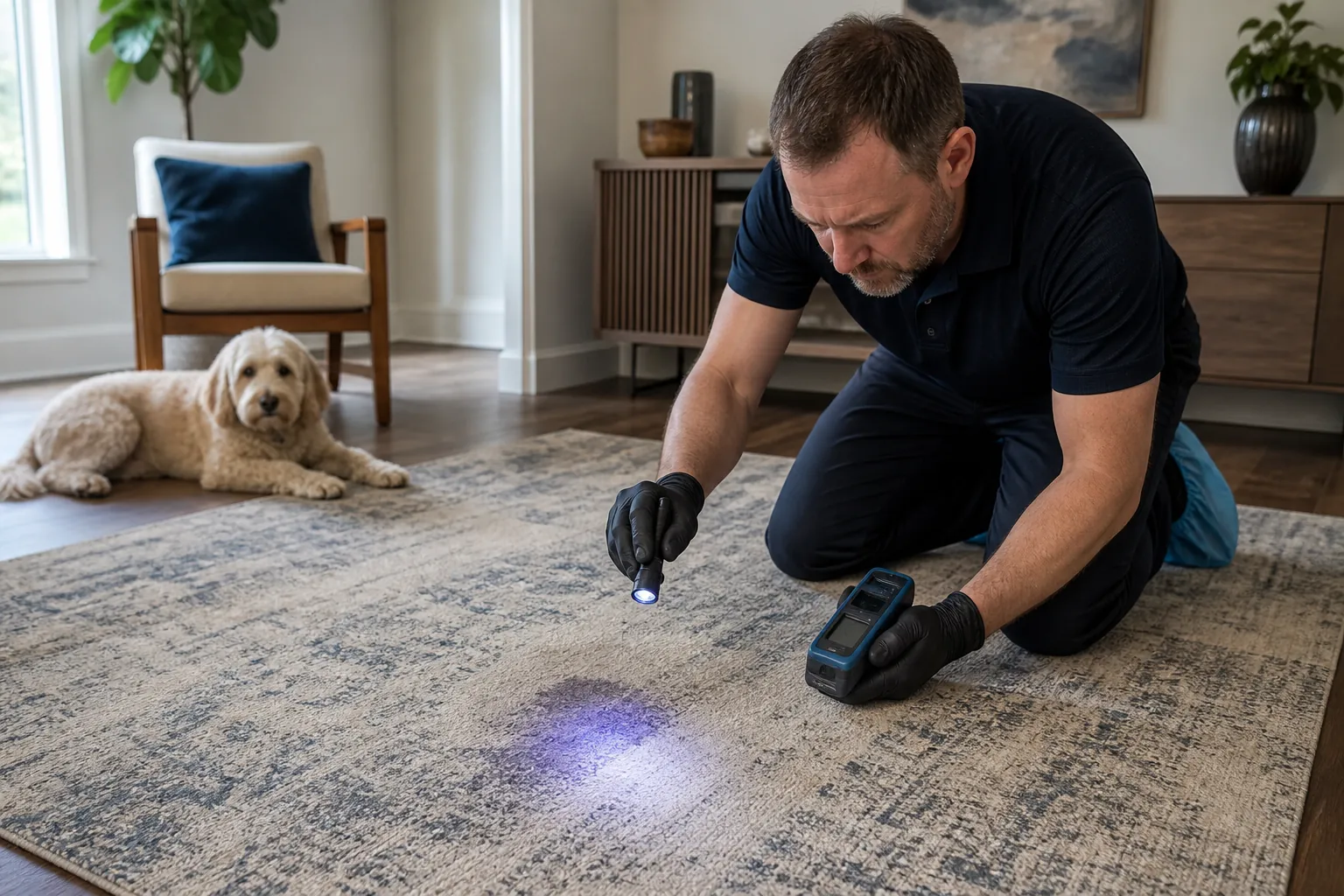
A SPILL SHARED BY RUG, PAD AND WOOD
One incident may leave three separate sources
If liquid passed through the pile, smell or discolouration can remain in the underlay or boards. State how much was spilled, what was lifted at the time and whether the room now smells different in warm weather. Surface fragrance does not resolve a deeper source.
- Mark the centre of the incident on a room-level photograph
- Say whether the rug was lifted while the area was wet
- List treatment applied to the textile and the floor separately
- Keep removal expectations open until all affected layers are considered
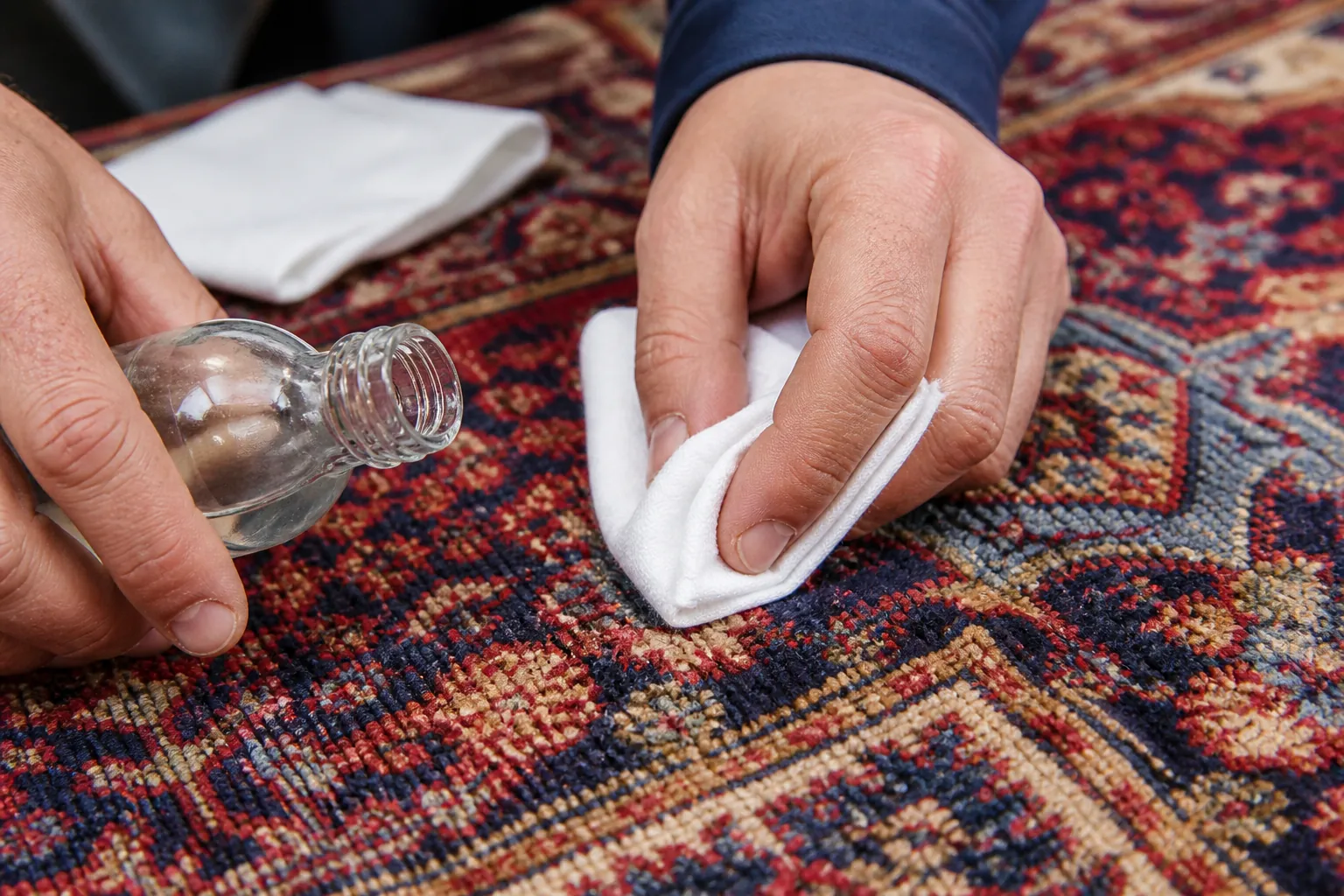
READ THE RUG FROM TOP TO FLOOR
Four layers can explain one visible symptom
The face yarn, colour system, foundation and contact surface each contribute evidence. None should be inferred from a room photograph alone.
Wear direction
Side lighting separates shading from deposited matter.
Dye boundaries
Fine outlines and saturated motifs deserve focused checks.
Foundation tension
Old repair and distortion can limit rolling or wet work.
Underlay and board finish
Transferred coatings or residue require their own record.
A CAREFUL LIFTING-TO-RETURN SEQUENCE
The room is documented before the rug changes position
This order protects both surfaces and creates a reference for replacing the textile. Any weak repair or unsafe furniture movement changes the plan.
-
01
Photograph placement
Capture alignment, furniture feet and floor boundaries
-
02
Clear safely
Agree which objects can move and which must remain
-
03
Inspect the contact
Review reverse, underlay and exposed board condition
-
04
Define the work
Separate cleaning aims from repair and floor issues
-
05
Support the textile
Maintain shape around weak ends and old stitching
-
06
Check both faces
Compare mapped changes before the room is reset
-
07
Re-place deliberately
Follow floor, underlay and furniture guidance
DOCUMENT THE ROOM BEFORE DISTURBING IT
A lifting plan begins with the view from the doorway
Your first message should make clear what sits on the rug, what lies under it and which edge can be reached without unsafe movement.
- Property style and Thames Ditton street area
- Rug outline with maximum measurements
- Wide image including hearth and thresholds
- Every furniture foot resting on the rug
- Accessible underside and underlay views
- Close detail of repairs or distorted ends
- Spill response on rug and boards
- Finish or coating on the floor below
- Narrowest doorway and number of steps
Before anything is lifted
Should I move the dining table myself?
Only if it is normally safe for you to do so. Otherwise photograph it and explain that it remains in place.
What if the underlay is stuck to the boards?
Do not peel it away for a photograph. Show the accessible boundary and mention the attachment.
Does the fireplace need to be out of use?
Share whether it operates and when. Safe temperature and access arrangements can then be agreed.
Can the rug return to freshly treated boards?
That depends on the floor product and its curing advice as well as the rug handover.
GUIDE BANDS FOR THE TEXTILE ITSELF
Area is measured before logistics are added
These starting points cover rug size. Fragile repairs, difficult furniture, restricted exits and separately agreed specialist tasks can alter the final written scope.
LABEL WHAT IS VISIBLE, LEAVE THE REST OPEN
Use these choices to organise photographs
This is an evidence sorter, not a remote material test. Select “unknown” whenever the construction is hidden.
THAMES DITTON ROOM-AND-RUG FAQ
Questions about lifting from older floors
Which photograph should come first?
Begin at the doorway with the whole rug, furniture, hearth and floor boundaries visible in one frame.
Must I expose the label before requesting a quote?
No. Never strain a repaired edge or shift unsafe furniture solely to locate a hidden label.
Why is there a straight line across the rug?
It could align with underlay, a board joint, furniture pressure or use. Show its path before moving the textile.
What if old foam is attached to the reverse?
Leave it undisturbed. Photograph a naturally exposed area and explain whether the material is brittle, sticky or powdering.
Should floor wax be removed from the rug at home?
No. Further solvent or scraping could affect fibres and dyes; keep the transfer visible for assessment.
Can odour remain in the boards after the rug is cleaned?
Yes. Textile, underlay and timber can retain separate parts of an incident and may require different services.
When may the dining table go back?
Only after the stated rug and floor conditions are met; premature loading can trap moisture or leave impressions.
Does a working fireplace help with drying?
Uncontrolled local heat is not a substitute for the advised airflow and temperature plan.
Does difficult furniture movement appear in the estimate?
It must be disclosed. The team can then confirm what is included, excluded or requires separate help.
What does the £68 appointment minimum mean here?
An eligible visit begins at that level; another compatible, confirmed task may contribute to the same booking.
BEGIN WITH THE UNDISTURBED ROOM
Show what is above, below and around the rug
A safe lifting conversation starts with context, not with a corner pulled from beneath furniture.
