
GOLDERS GREEN · CARE THAT FITS A BUSY HOME
Golders Green Rug Cleaning with Family Life in Mind
Dining chairs, children’s play and weekend visitors can leave several kinds of change on one rug. A Golders Green enquiry works best when crumbs, a food mark and genuine pile wear are described separately.
- Send the rug’s dimensions and the number of movable chairs
- Photograph food marks before trying another household cleaner
- Include the backing, care tag and one clear corner
- Tell us when a communal entrance is busiest or restricted
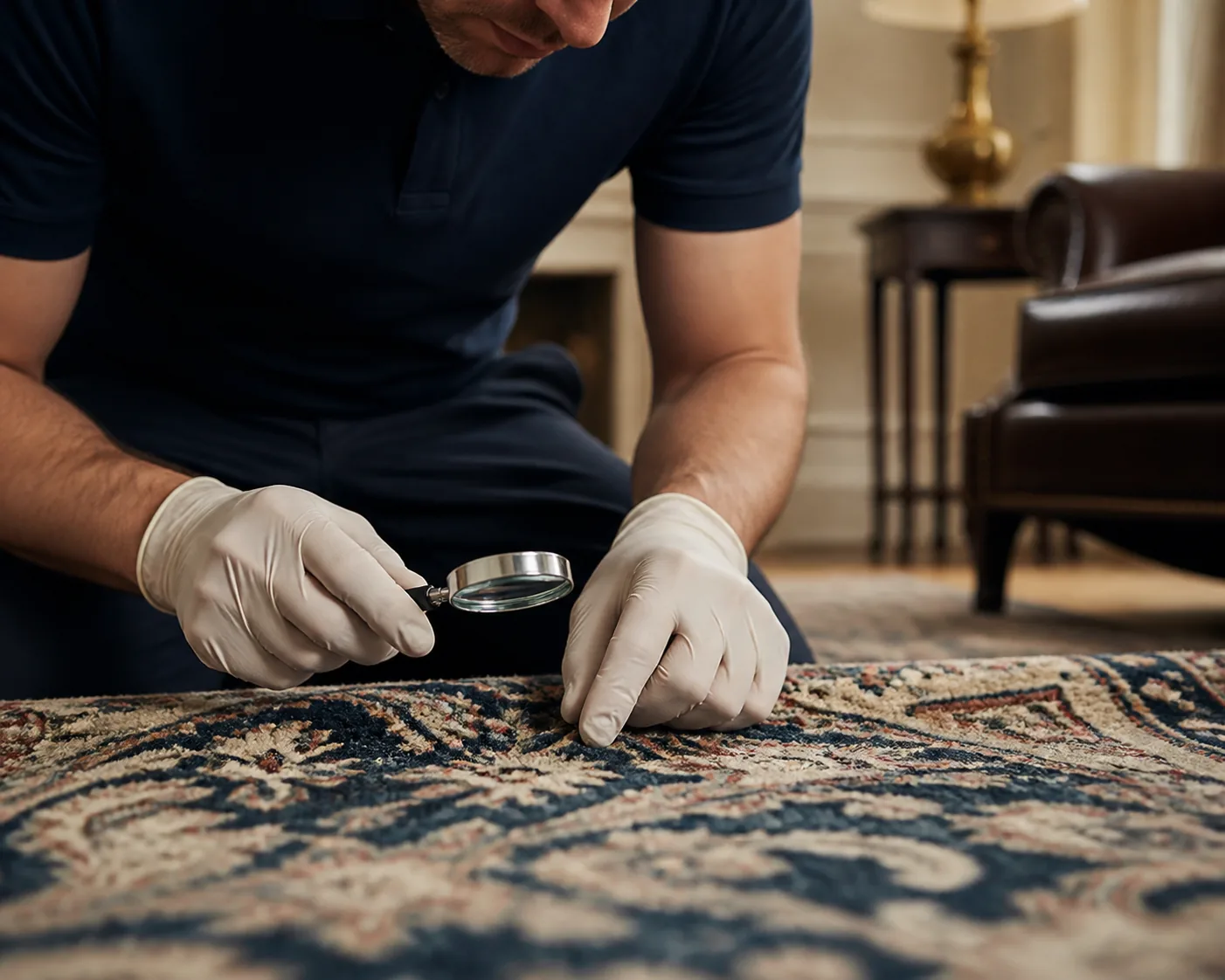
THE HOUSEHOLD BRIEF
Record how the room works on an ordinary day
Our Golders Green example is a dining-room rug on sealed timber. One side receives constant chair movement, while the other sits beneath a cabinet. That uneven use explains where to inspect; it does not prove what can be removed.
Use plain language. “Tea spilled beside the blue chair last winter” is more useful than “deep stain”. It gives the assessor a location, likely substance and rough age without presenting a diagnosis.
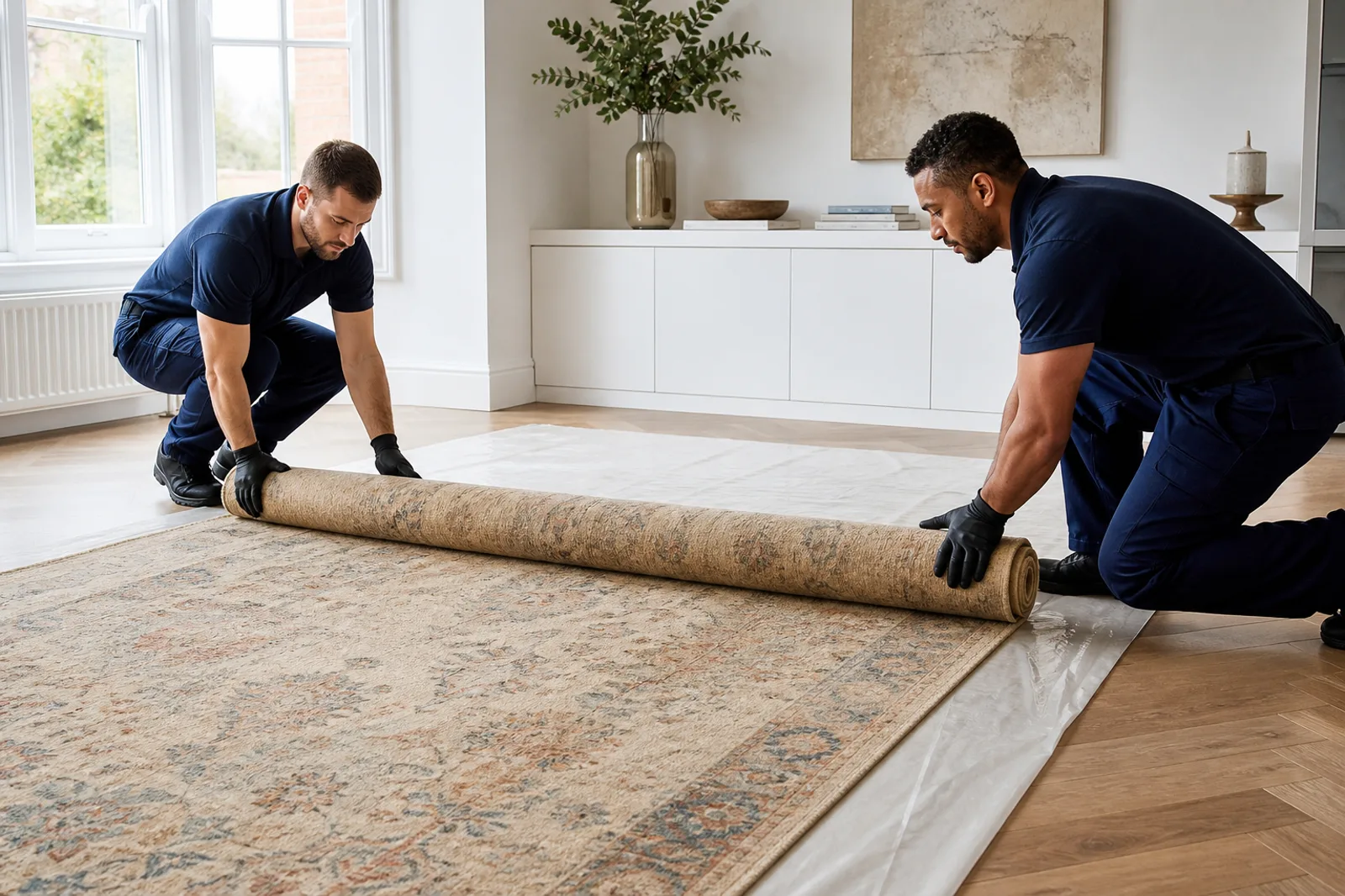
Plan for the people as well as the object. School runs, meal times and shared-door rules can determine the quietest window for safe movement through communal areas.
A Golders Green household record
Purpose: State whether the rug anchors dining, play or formal seating.
People: Mention children or older residents only where timing and access are affected.
Dimensions: Measure the textile once furniture is safely clear of its edge.
Meal mark: Identify the drink or food if known and note whether heat was involved.
Routine soil: Keep loose crumbs and general tracking distinct from the main concern.
Chair movement: Photograph compressed arcs or worn channels without calling them stains.
Material: Provide maker information but leave an uncertain yarn unlabelled.
Colours: Show dark and pale sections in the same neutral-light image.
Backing: Lift only a safe corner and never strain a heavy, rigid foundation.
Products: List soap, powder or stain remover in the language shown on its label.
Previous work: Note professional visits, home machines and approximate dates.
Shared route: Check door codes, lift size and permitted service times.
Parking: Explain loading limits near the building rather than assuming curb access.
Dry zone: Reserve a room where feet and furniture can stay off the textile.
Expectations: Treat permanent thinning separately from removable deposits.
Handover: Give one household member the placement and aftercare notes.
FOOD, DRINK AND DAILY USE
One dark area may contain several histories
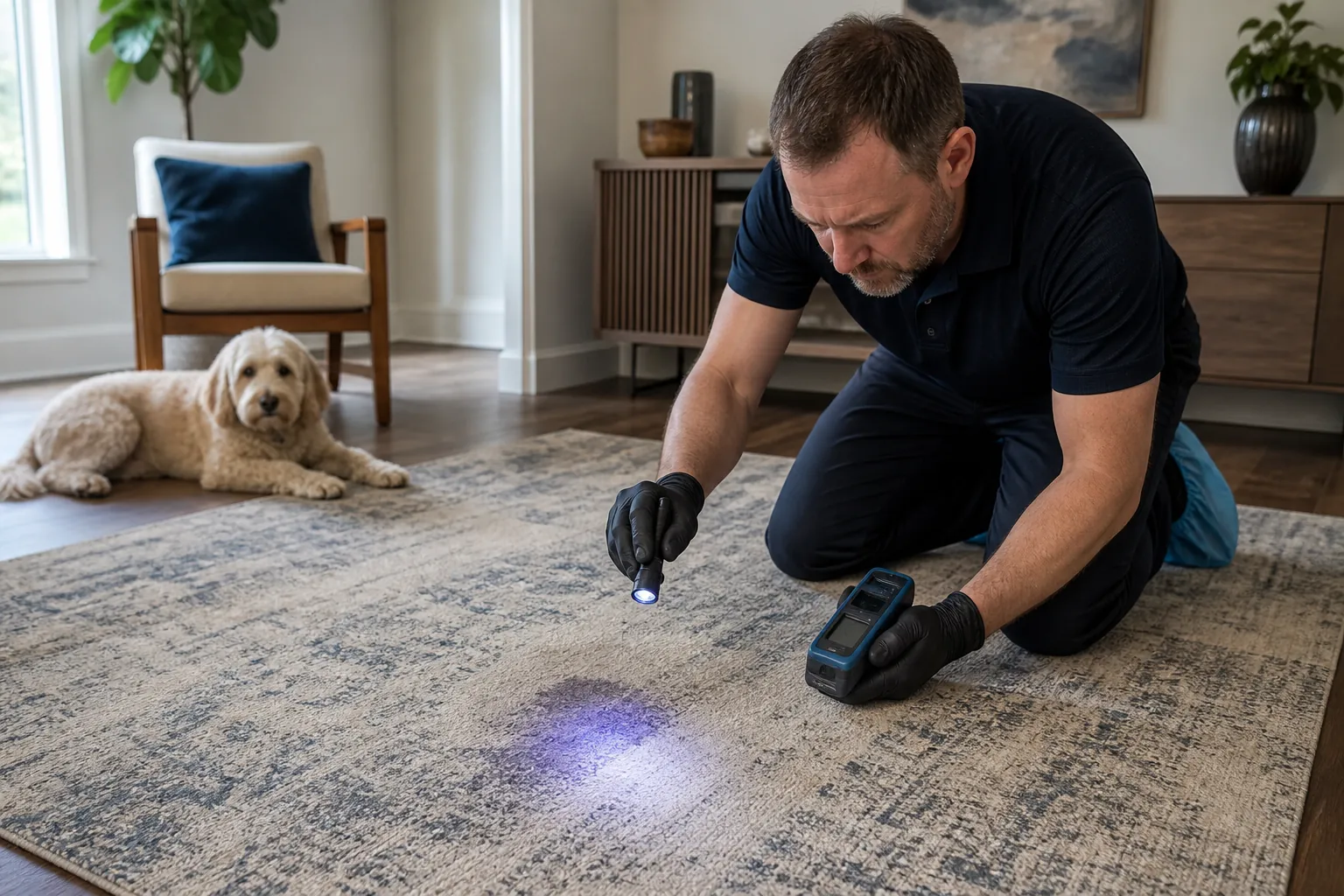
A spill can leave colour, sugar or cleaning residue. Nearby pile may also be abraded by chair feet. Comparing the affected yarn with a sheltered area helps set realistic expectations.
A MULTILINGUAL PRODUCT RECORD
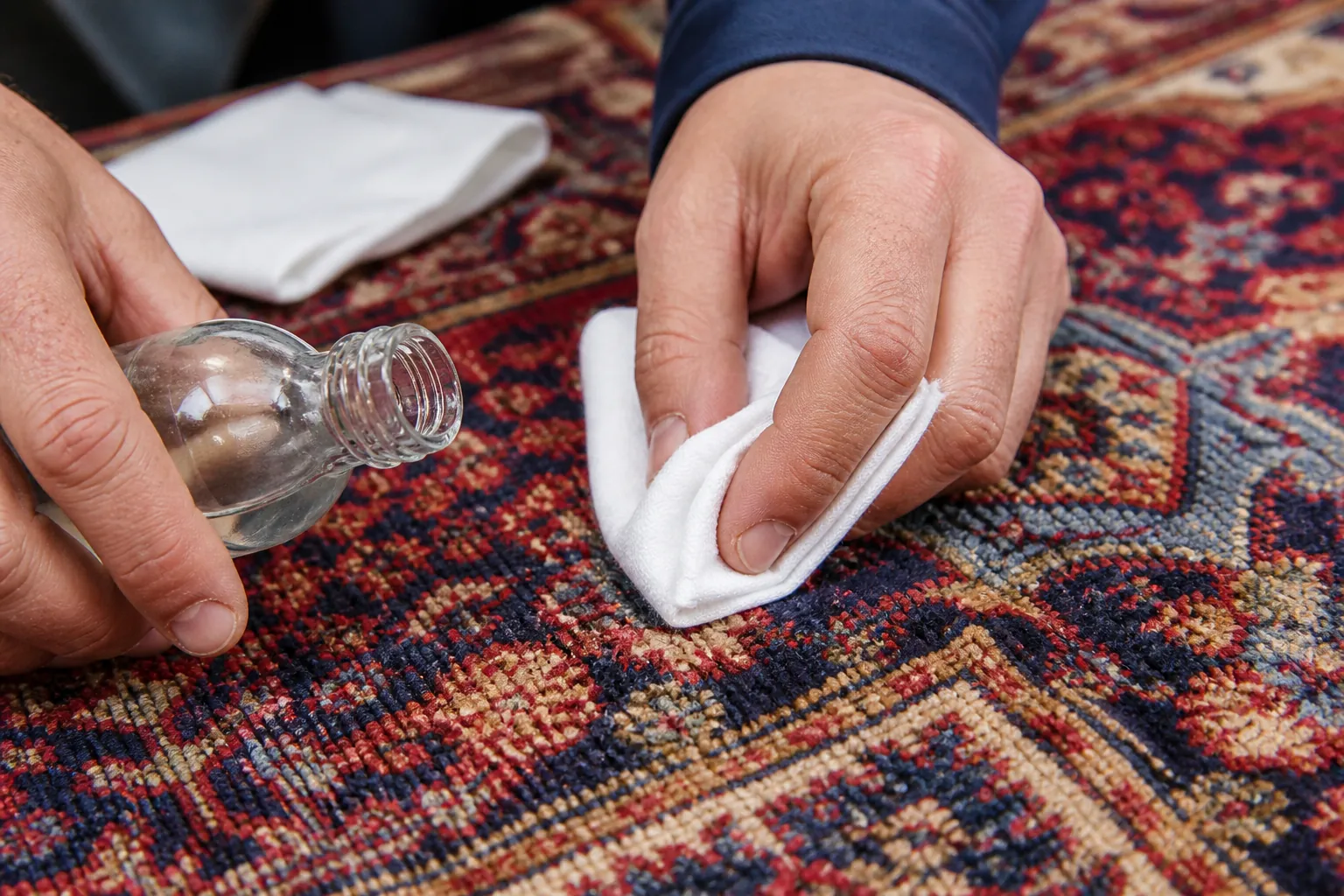
Photograph the packet when the name is uncertain
Brands and ingredient lists may not be familiar in English. A clear label image avoids guesswork and helps the technician understand what has already contacted the fibre.
- Front and ingredient panel of the product
- Approximate quantity and dilution
- Whether the area was rinsed afterward
- Any colour or texture change that followed
COMPARE BEFORE YOU CONCLUDE
Protected pile provides a useful reference
The area beneath a light chair can reveal original colour and pile height. It becomes a comparison point, not a promise that the exposed field will return to the same appearance.
Daily traffic
Look for particles, flattening and small food debris.
Reference colour
Furniture-covered yarn may show the effect of light and wear elsewhere.
Transition line
A boundary can help distinguish residue from general use.
Mechanical pressure
Thinning caused by movement needs a damage-aware expectation.
A FAMILY-HOME APPOINTMENT
Seven stages with a quiet room at the end
The final stage is not simply “finished”. The household needs a protected period in which the rug can remain untouched under the advised conditions.
- 01
Locate
Mark dining, play and sheltered comparison zones.
- 02
Identify
Review labels, yarn clues and foundation.
- 03
Check colour
Assess contrasting dyes where relevant.
- 04
Lift particles
Address dry debris compatible with the weave.
- 05
Work locally
Approach the meal mark within tested limits.
- 06
Balance
Finish pile without disguising wear.
- 07
Protect
Keep chairs, children and pets off as advised.
BEFORE YOU REQUEST A SLOT
Collect information once, then keep it with the booking
- Golders Green address and access contact
- Length and width without furniture
- Image of the entire dining area
- Close-up of the older meal spill
- Protected-pile comparison image
- Care label and visible underside
- Product packaging photographs
- Number of chairs needing movement
- Lift, concierge and loading rules
Planning answers
Must every chair be removed?
Tell us the number and weight; the practical furniture plan is agreed before work begins.
Can I translate a product name?
A photo of the original packaging is preferable to an approximate translation.
Is worn pile treatable like a spill?
No. Physical fibre loss and contamination require different expectations.
May children use the room afterward?
Only in line with the item-specific handover and drying guidance.
GUIDES FOR GOLDERS GREEN
Start with the rug’s measured footprint
Size gives the opening band. Dense construction, a complex spill, building access or optional combined work can alter the agreed total.
LABEL THE HOUSEHOLD SITUATION
Organise the enquiry in four short columns
The profile keeps observations together while leaving technical decisions for the on-site assessment.
GOLDERS GREEN FAMILY-RUG QUESTIONS
Practical details people ask before booking
Can I send details in more than one language?
Yes. Preserve original product names and attach label photographs so information is not lost in translation.
How should I photograph a rug beneath a dining table?
Take a safe wide view first, then move only light items you can handle comfortably for edge and mark images.
Will cleaning restore pile worn by chair legs?
Lost or abraded fibre cannot be recreated by removing soil, though the two conditions can occur together.
Does an old tea mark require special information?
Its age, ingredients, heat and anything previously applied all help shape the assessment.
Why mention a communal front door?
Building rules and busy periods influence carrying, timing and the people needed.
Can the rug remain under a heavy cabinet?
Furniture boundaries must be agreed; technicians should not discover an immovable object after arrival.
What if the care tag contradicts the seller?
Provide both accounts. Material and construction remain subject to physical review.
How long must the family avoid the room?
No universal duration applies; treatment, fibre, backing, temperature and ventilation determine advice.
Are food-spill treatments in the size price?
Not automatically. Guide bands begin with area, while the actual condition defines the accepted work.
How does the minimum work with two rugs?
Both may contribute if they are compatible and individually described before the appointment is confirmed.
MAKE THE APPOINTMENT FIT THE HOME
Share the room routine, the rug and the building route
A precise brief saves repeated questions and supports safer planning.
