
MILL HILL · START WITH SCALE, WEIGHT AND ROOM USE
Large Rug Cleaning in Mill Hill for Open-Plan Rooms
A generous rug beneath a dining table presents a lifting problem before it becomes a cleaning problem. The brief records room layout, pile depth, furniture weight and the space available for careful handling.
- Take one wide image showing rug, table and surrounding floor
- Measure beneath furniture rather than estimating visible area
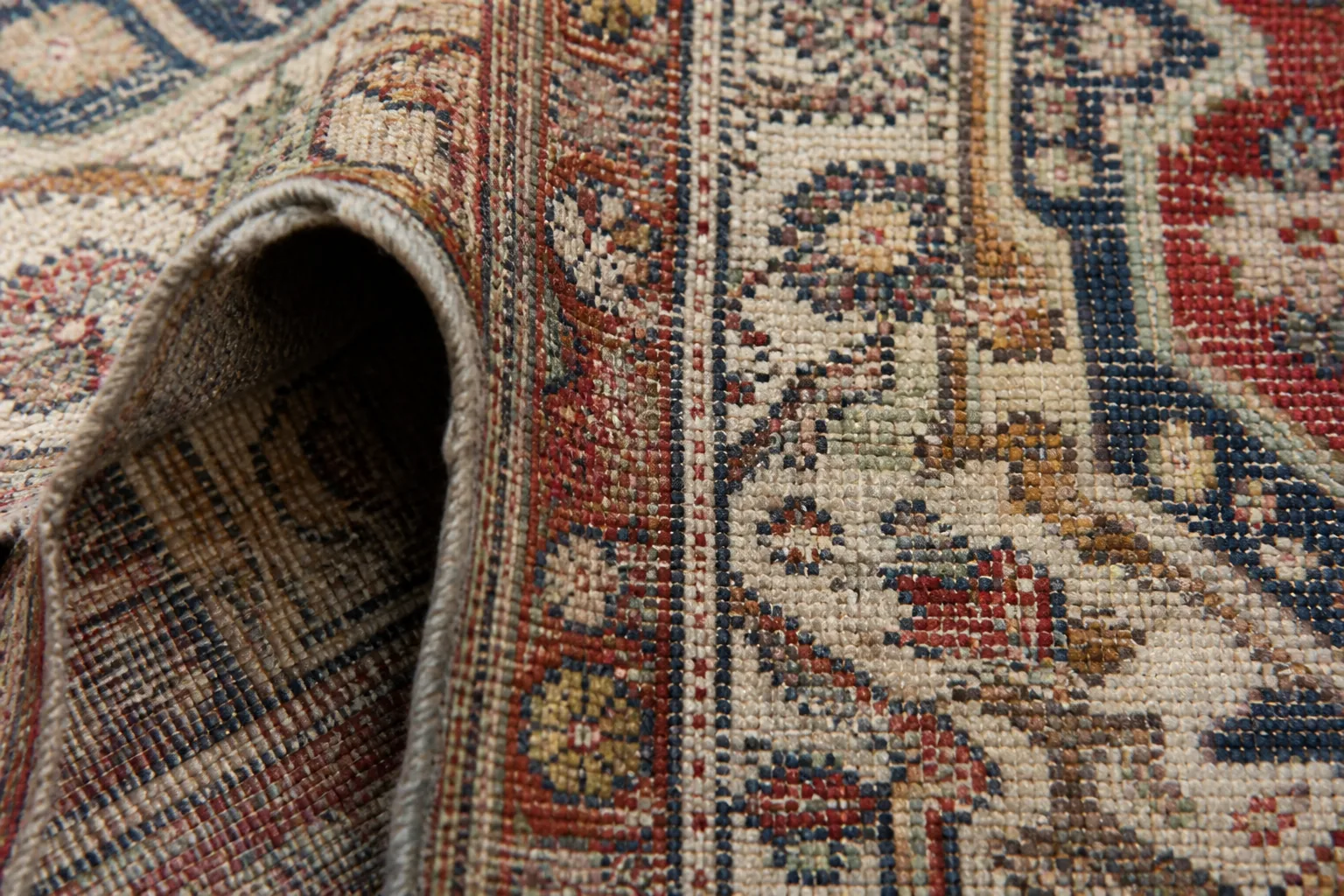
- Include low-angle pile detail and a view of the underside
- List pieces that can move and those that must remain
MEASURE WHAT THE ROOM CONCEALS
Show the full footprint as well as the visible field
A Mill Hill enquiry is clearer when measurements, photographs, history and access arrive together. State uncertainties plainly instead of choosing a likely answer.
- Mill Hill postcode and contact preference
- Maximum rug length
- Maximum rug width
- Complete room-context photograph
- Close views of a grey traffic lane beside a worn corner
- Label, reverse, fringe and repairs
- Previous product or cleaning history
- Floor below and furniture position
- Parking, entrance, stairs or lift details
Before arranging a Mill Hill visit
Can the label settle every question?
It is useful evidence, but the visible construction and current condition still need review.
Is every discoloured patch a stain?
No. Dye change, abrasion and pile distortion can remain after removable matter is gone.
Can drying be promised in advance?
No. Fibre, pile, backing, selected route, temperature and airflow all contribute.
When should furniture go back?
Return heavy items only when the rug-specific handover permits it.
PILE DEPTH · WEIGHT · FOUNDATION
A large rug behaves as a layered object
Absorbency, colour response, foundation, backing and old repairs can all change handling and moisture limits.
Material response
Fibre behaviour helps exclude unsuitable options.
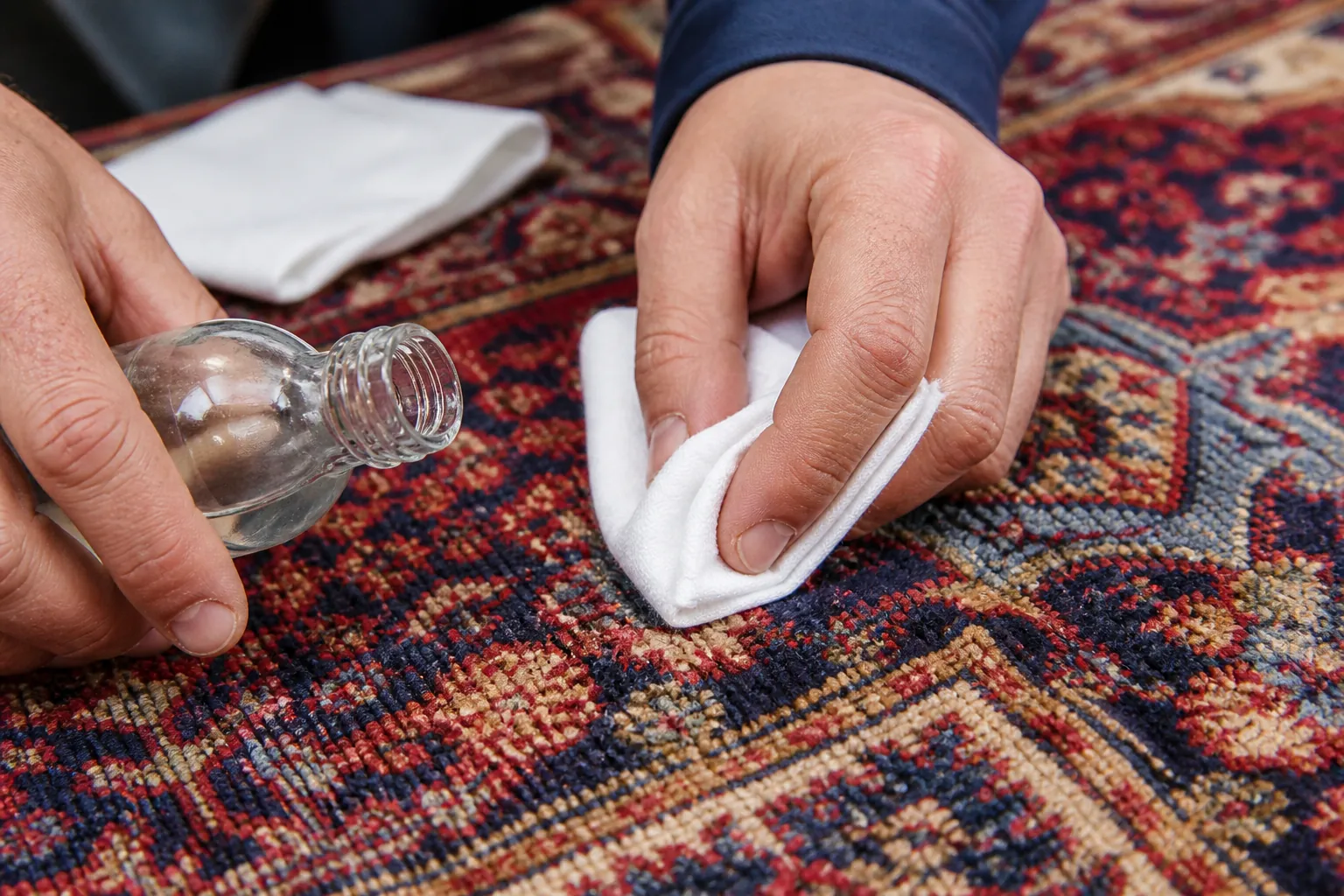
Dye stability
Testing informs risk around contrasting or altered shades.
Pile and foundation
Assembly affects soil release, moisture and finishing.
Fringe, backing and repairs
Vulnerable points enter the record before handling.
CHAIR LINES AND DINING SPILLS
Position explains patterns that colour alone cannot
A dark area might be particulate soil, oily residue or altered pile direction. A pale area could reflect residue, bleaching, dye loss or abrasion. Comparing the field, edge and reverse helps separate cleanable matter from permanent change.
WHAT MAY HAVE PASSED THROUGH
Spill history belongs with the floor note
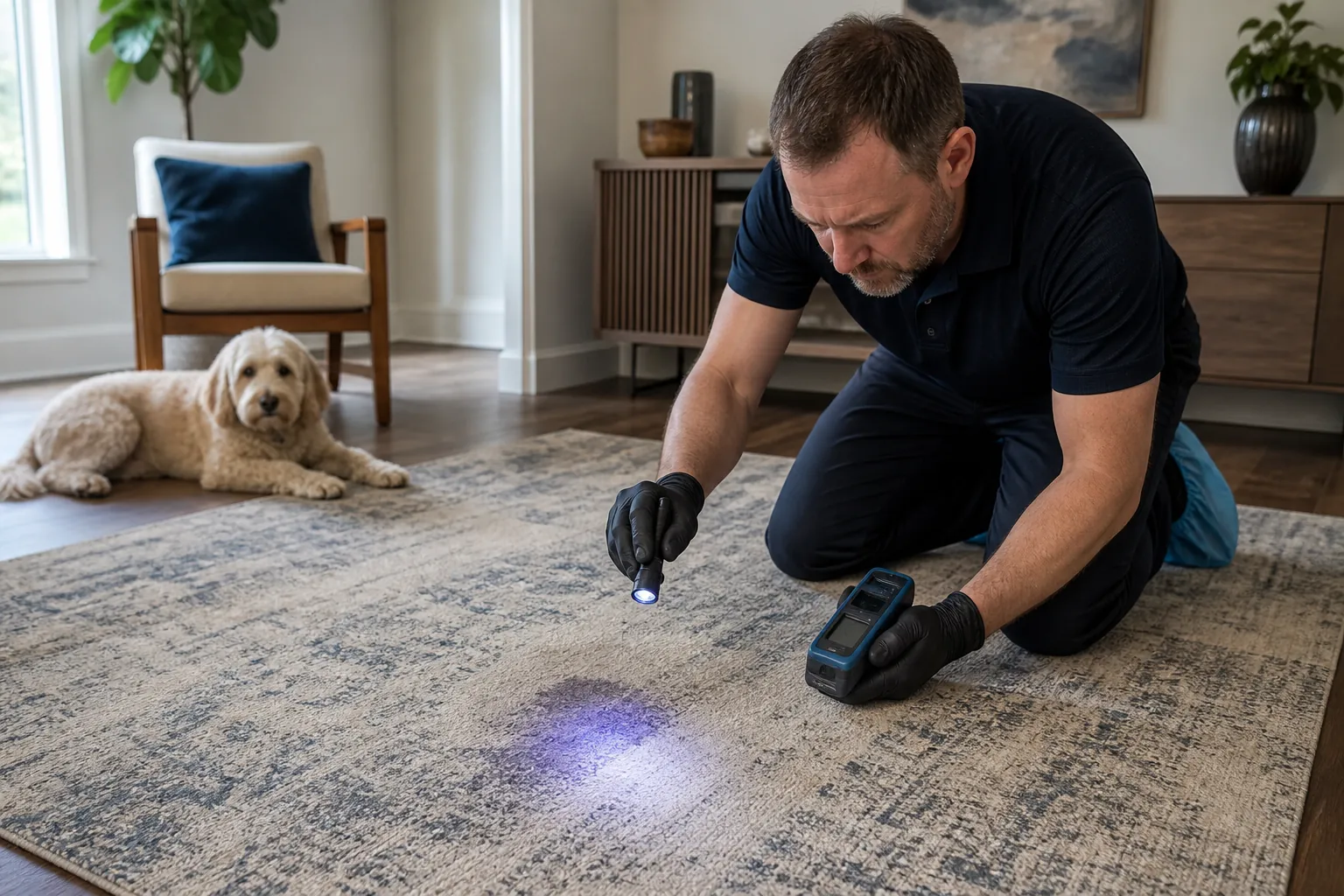
With a grey traffic lane beside a worn corner, explain whether liquid could have entered the pile, foundation, backing or floor beneath. Name household products and machines already used; applying another remedy before review can obscure evidence.
- Approximate date and source of the concern
- Area affected on the face and reverse
- Known sprays, detergents, powders or extraction
- No complete-removal assurance before assessment
BUILD A FIRST-PASS PROFILE
Select what you observe and preserve unknowns
The choices organise the enquiry; they neither diagnose the textile nor assign a treatment automatically.
MILL HILL · PROPERTY AND RUG RECORD
The carrying route belongs beside the condition notes
Imagine a detached house with a long path from parking to the sitting room. The item is a hand-knotted wool rug, and the visible priority is a grey traffic lane beside a worn corner. This scene does not dictate treatment; it identifies the handling, access and assessment questions that should be answered first.
Mill Hill working example. A room-wide photograph establishes scale, nearby furniture and the floor beneath. Focused images can then locate the priority patch, compare it with an unaffected area and show whether wear continues onto an edge.
The reverse view records foundation and backing condition. A label, known repair or previous product is evidence, while missing information stays explicitly unknown. That distinction makes the quotation clearer without pretending that photographs replace testing.
Mill Hill assessment dossier
Textile: The hand-knotted wool rug is treated separately from fitted flooring.
Dimensions: Maximum length and width establish the initial size band.
Priority: Mark a grey traffic lane beside a worn corner on the full-rug image.
Material: Photograph the label, but do not guess when fibre is uncertain.
Construction: Pile, foundation and backing can alter moisture tolerance.
Colour: Strong contrasts and earlier chemistry may warrant dye checks.
Edges: Record fringe loss, binding wear, curling and weak corners separately.
Reverse: Show backing change, repairs, residue or transferred contamination.
History: List spills, powders, sprays, machines and earlier professional work.
Odour: Describe source, age and extent rather than masking it before review.
Room: Note furniture position and the nature of the surface below.
Access: Give the real carrying route through the Mill Hill property.
Airflow: Explain where the rug can remain undisturbed after treatment.
Return: Heavy furniture waits for the item-specific handover instruction.
Scope: Keep routine soil, marks, odour and physical damage distinct.
Expectation: Cleaning may remove matter but cannot rebuild worn fibre or lost dye.
A LARGE-RUG HANDLING SEQUENCE
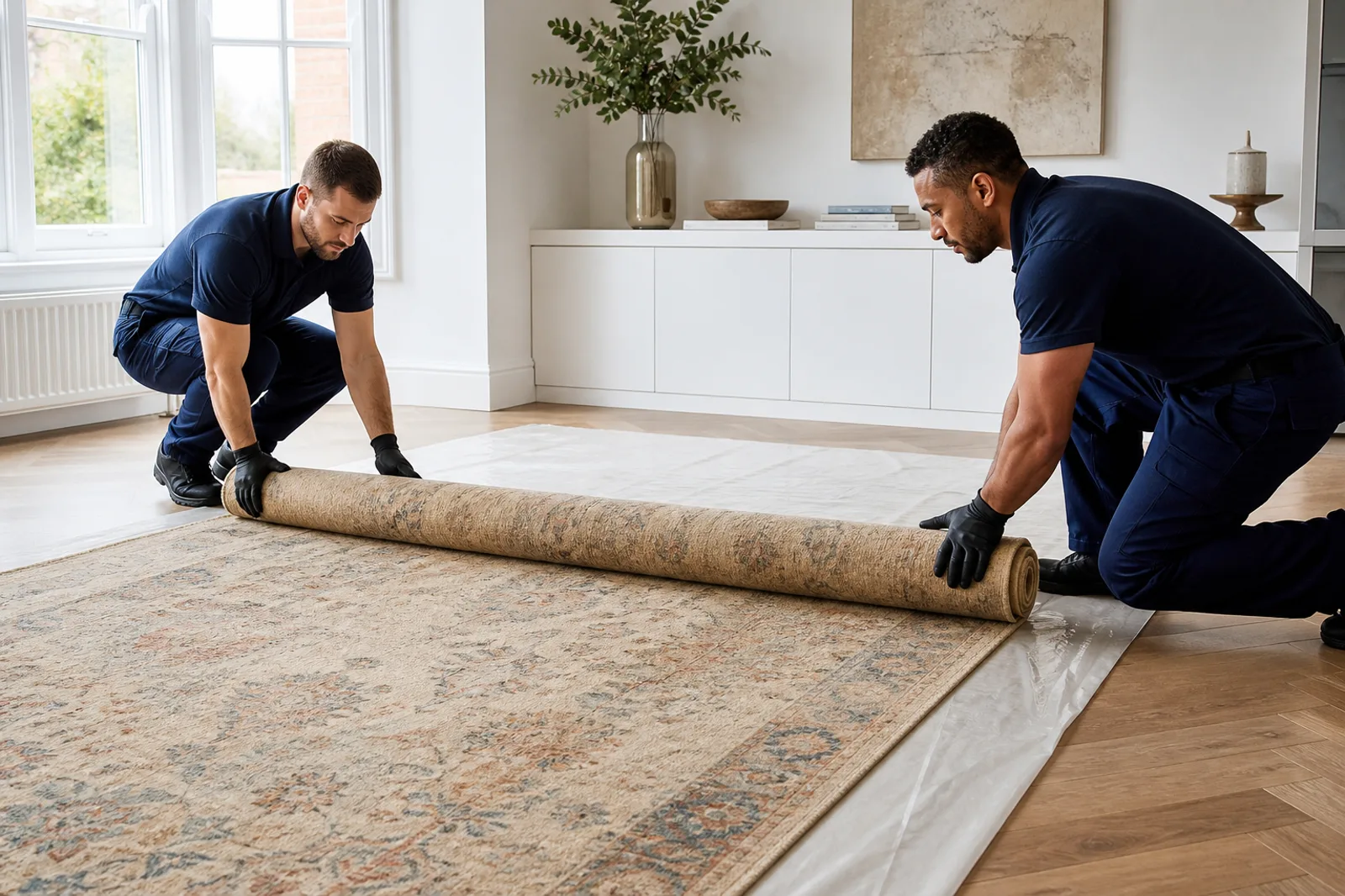
Each stage protects the textile, furniture and adjacent finish
Material, colour, construction, contamination and room conditions are considered together. Drying advice follows the actual rug and environment, not a universal timetable.
- 01
Map
Record dimensions, wear, repairs and priority areas
- 02
Examine
Review yarn, dye, pile, backing and edges
- 03
Reduce particles
Remove compatible accessible dry matter
- 04
Address the brief
Work within the limits identified by assessment
- 05
Control moisture
Support the chosen route and rug construction
- 06
Inspect
Review field, colour, fringe and finish
- 07
Handover
Explain drying, placement and furniture return
MILL HILL AREA GUIDE
Hidden area still counts toward measured size
The confirmed quotation can also reflect fibre, construction, condition, odour work, access and agreed optional treatment.
MILL HILL LARGE-RUG FAQ
Room planning questions answered before moving day
What should lead a Mill Hill quotation request?
Send postcode, measurements, a complete photograph, close views of a grey traffic lane beside a worn corner, access and known product history.
Can a photograph confirm that this is a hand-knotted wool rug?
Images help frame questions but cannot prove fibre content, dye stability or every hidden construction detail.
Will a grey traffic lane beside a worn corner certainly be removed?
No. The appearance may combine soil, residue, dye alteration or physical wear, each with different limits.
Why is a reverse photograph useful?
It can show labels, repairs, foundation, backing failure or evidence that contamination travelled through.
Should I try another product first?
Avoid adding chemistry before review. Retain packaging and report what has already been applied.
How do you consider odour below the pile?
The source, age, area, foundation, backing and contact surface are considered rather than only the face.
Can furniture return immediately after work?
Follow the handover for this item; premature return can restrict drying or transfer marks.
What controls drying in a Mill Hill property?
Fibre absorbency, density, construction, treatment route, temperature, airflow and available space all matter.
Does rug area alone determine the final figure?
No. Area starts the guide band, then material, construction, condition, access and extras qualify the scope.
How is the £68 visit minimum used?
It is the minimum for an eligible visit; compatible combined services may contribute after scope confirmation.
MAP THE MILL HILL ROOM BEFORE BOOKING
Send dimensions, furniture positions and a clear lifting route
Clear measurements and photographs create a sound starting point.
