
PINNER · READ THE PATTERN, FRINGE AND HISTORY.
Rug Cleaning in Pinner for Detailed and Delicate Pieces
A closely patterned rug can conceal gradual dulling while making a single mark look sharper. Our Pinner brief treats the field, border and fringe as separate evidence, then adds what is known about fibre, earlier products and the journey from the room to the door.
- Take one level image showing the complete design from end to end
- Photograph the worn fringe in daylight without pulling or trimming it
- Place the unknown mark within a wider view of the surrounding motifs
- Describe gates, stairs and the nearest practical loading point
MAKE A PINNER IMAGE SEQUENCE
Work from the whole design towards the smallest detail
Numbered photographs prevent a loose fringe, faded border and isolated spot from being confused. A short sequence also reveals which side normally faces the window and where occasional furniture interrupts the pile.
- Begin with the Pinner address and room name
- Measure the woven body without including loose tassels
- Record the second dimension across the border
- Photograph the front in even natural light
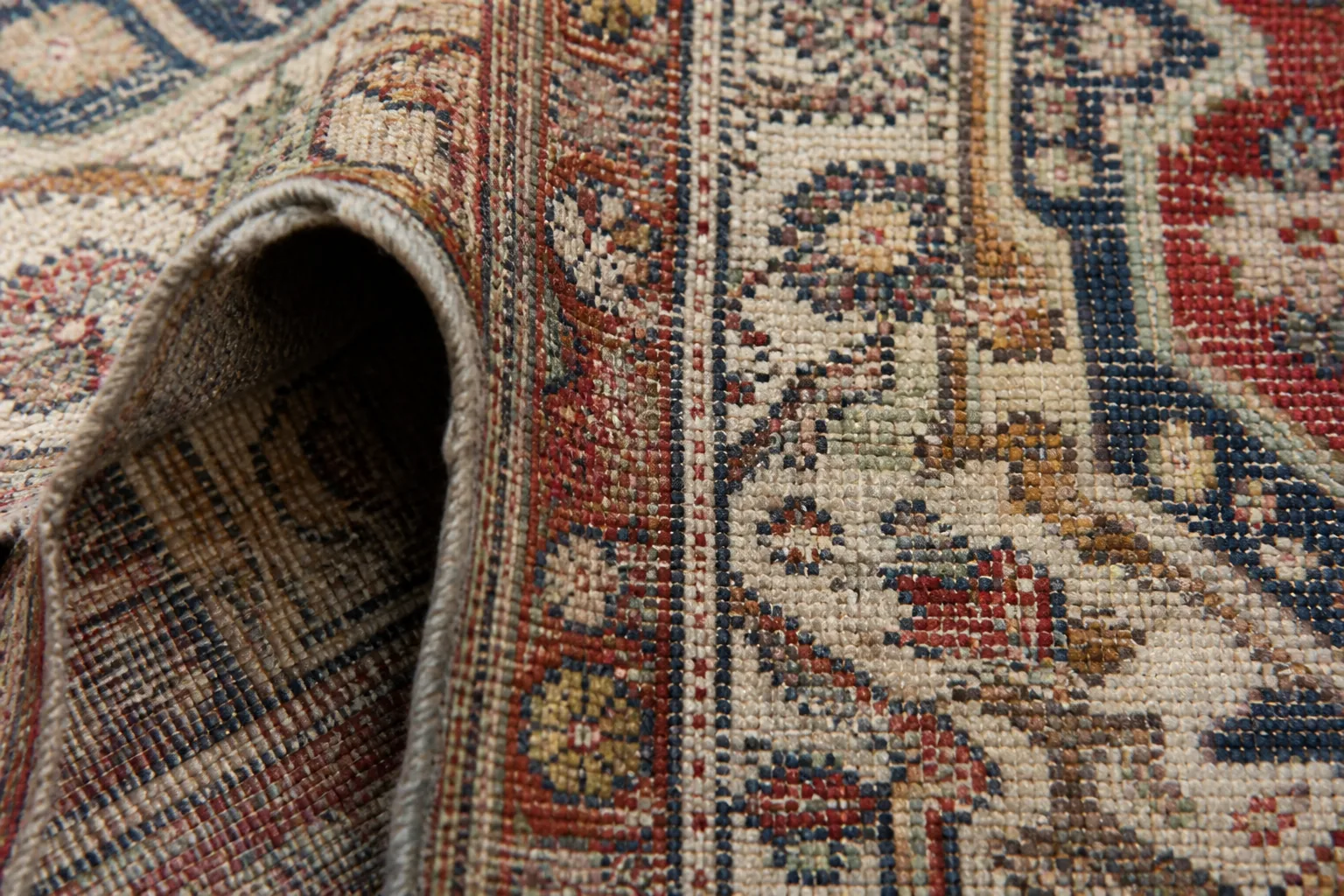
- Turn one corner to show the underside safely
- Capture the care label or state that none is present
- Add separate frames for fringe wear and the unexplained mark
- List spotters, powders or hired machines used previously
- Finish with the staircase, gate and collection route
Before this patterned rug is booked
Why include unaffected motifs?
They provide a colour and texture reference. Without them, a close-up cannot show whether the change is residue, wear or ordinary pile direction.
Does an old appearance prove that the rug is handmade?
No. Age and production method are different questions. The reverse, edge and knot or weave structure offer more useful clues.
Can damaged tassels be included?
Yes, but as a condition note. Cleaning and structural fringe repair are not the same service, and weak attachments can restrict handling.
Should occasional tables be moved first?
Small pieces may be cleared if safe. Photograph their original positions and leave heavy or fragile movement for the agreed plan.
THE DESIGN HAS FOUR READING LEVELS
Look beyond the face yarn before choosing a route
A patterned wool surface tells only part of the story. The weave beneath, colour boundaries and the way the fringe joins the body determine how confidently the piece can be handled.
Feel, lustre and absorbency
Observed fibre characteristics guide testing without pretending that a photograph confirms composition.
Boundaries between dyes
High-contrast motifs are checked at several points rather than treated as one colour field.
The structure seen from behind
The reverse helps distinguish woven, knotted and backed construction and exposes earlier repairs.
Tassels and end finishes
Loose strands are mapped before movement because they may be integral to the foundation.
LOCATE THE MARK WITHIN THE MOTIF
A close-up needs a wider pattern reference
The small Pinner mark might be deposited matter, an old spot-treatment halo, colour loss or a change in pile lay. Three distances—whole rug, motif group and close detail—make the difference easier to discuss without declaring a result from a screen.

THE UNDERSIDE KEEPS ITS OWN RECORD
Odour and residue can travel beyond the visible spot
Note whether the smell changes after the rug has been closed up overnight, and whether the oak beneath carries the same odour. Previous sprays or powders can leave rings and scent that alter later observations, so exact product names are useful.
- Compare the corresponding front and back positions
- Keep observations about the oak floor in a separate note
- Say whether the event happened once or repeatedly
- Avoid masking the area with a newly scented product
INDEX WHAT YOU CAN ACTUALLY SEE
Build a visual index before requesting an assessment
Use these prompts as headings for your photograph set. They organise the conversation; none of them identifies fibre or authorises a treatment remotely.
PINNER · FROM WINDOW LIGHT TO GATED DRIVE
The room record continues all the way to the vehicle
A village-centre flat may involve stairs and shared access; a detached house may add a gate and a longer carry. Inside, window orientation and oak flooring matter to the photographic record. We combine those practical facts without treating property type as a cleaning instruction.
A useful Pinner sequence. The owner moves only a light side table, photographs the entire wool rug, then follows the border clockwise. The worn end and unfamiliar mark receive numbered frames. A final photograph shows the gate and staircase, giving the enquiry both textile detail and a credible handling route.
Why the light direction matters. Pile can look darker when viewed against its lay, and sunlight can fade one side more than another. Matching views taken from opposite ends help identify these effects. The oak surface is examined in its own right once safe corner lifting has been agreed.
Pinner pattern-and-provenance notebook
Opening view. Start square to the rug so its outline, border proportions and relationship to nearby furniture remain legible.
Clock position. Locate the unknown mark as though the rug were a clock face; this prevents confusion between similar motifs.
Floor outline. Note any shadow or finish variation around the rug without assuming the textile caused it.
Rolled length. A carrying route is assessed against the rolled dimension, not only the flat width shown in the room.
Motif comparison. Repeat colours are photographed side by side where possible, revealing inconsistent fading or transferred material.
End structure. Tassels are traced back to the woven body so detached decoration is not mistaken for foundation fringe.
Provenance. Purchase date, inheritance, storage and previous care are recorded only when known; uncertain memories stay labelled as such.
True size. Dimensions are taken along the straight woven body, with fringe length supplied as a separate measurement.
Daily contact. Identify table feet, sun patches and the usual walking approach rather than adding a generic household description.
Desired change. Say whether the concern is field dulling, one mark, smell or fragile fringe; each carries a different discussion.
Room preparation. Remove breakables from the route, but leave difficult furniture untouched until responsibility is clear.
Test points. Contrasting dyes, hidden yarn and any repaired zone may require distinct checks rather than one universal result.
Moisture release. Dense pile and local ventilation influence when the piece can safely return to normal use.
Orientation. Before movement, mark which end faced the main window so the agreed return position can be understood.
Estimate inputs. Woven area, fibre evidence, weak fringe, isolated work and carrying constraints shape the final scope.
Honest limit. Images support triage but cannot certify dye stability or predict complete removal of an unexplained mark.

SEVEN FRAMES IN THE PINNER RECORD
Keep one visual thread from room view to handover
The sequence below keeps the original pattern, worn end and marked motif identifiable while the technical decisions are made.
-
01
Frame
Record the full rectangle and surrounding oak floor
-
02
Trace
Follow motifs, end finish and underside construction
-
03
Screen
Check loose areas and contrasting colour junctions
-
04
Sequence
Choose an order that protects the weakest detail
-
05
Balance
Manage soil removal, residue and moisture together
-
06
Reframe
Repeat the original views under comparable light
-
07
Orient
Confirm direction, readiness and furniture clearance
PINNER MEASUREMENT BRACKETS
Price starts with woven area and finishes with the actual brief
The four figures below are guide points, not promises based on a photograph. Fringe vulnerability, dense construction, the unknown mark and the gated or stair route may alter the work that can responsibly be offered.
QUESTIONS FROM THE PINNER NOTEBOOK
Pattern, fringe and access need different answers
How can I photograph a large pattern without distortion?
Stand as centrally as the room permits and keep the camera level. If one image is impossible, add overlapping views while retaining a full-room reference.
Should fringe be counted in the square-metre measurement?
Measure the woven body first and provide tassel length separately. This distinguishes textile area from the vulnerable end finish.
Why photograph the oak after a corner is lifted?
It can reveal a floor outline, transferred residue or an unrelated finish change. The supporting surface remains outside the rug condition description.
What Pinner access measurement is most useful?
Give the narrowest gate or doorway and the tightest landing turn, then compare these with the rolled rug length.
Will cleaning replace missing fringe strands?
No. Accessible soil and structural loss are separate matters. Restoration would require its own specialist judgement.
Can I mark the spot with sticky tape?
Avoid adhesive on the textile. Place a removable reference beside the rug for the photograph or describe the motif and clock position.
Why does the underside need a photograph?
It can reveal weave structure, backing, labels and repair thread that the patterned face conceals.
What if no one remembers what caused the mark?
Call it unknown. Colour, texture, location and previous attempts are more reliable than an invented explanation.
When can the side table go back?
Follow the item-specific handover. Concentrated furniture feet should not return while moisture or pile compression remains a concern.
Does a £27 guide mean a £27 appointment?
No. £27 is the compact-size guide while £68 is the current visit minimum; the accepted written scope confirms the actual total.
OPEN THE PINNER NOTEBOOK
Send the whole pattern before zooming into the mark
A numbered sequence, woven dimensions and a frank history create a stronger basis for discussing this particular rug.
