
BECKENHAM · CARE THAT STARTS WITH THE RUG
Beckenham Rug Cleaning for Wool, Weave and Wear
Every rug tells the story of its room through footfall, sunlight, old spills and earlier care. We collect that story before proposing work, so the advice fits the textile rather than a generic label.
- Show the entire rug in natural light, not only the troublesome patch
- Give edge-to-edge dimensions and list tassels separately
- Add clear pictures of the underside, label and damaged details
- Explain the route outside and indoors, including awkward steps
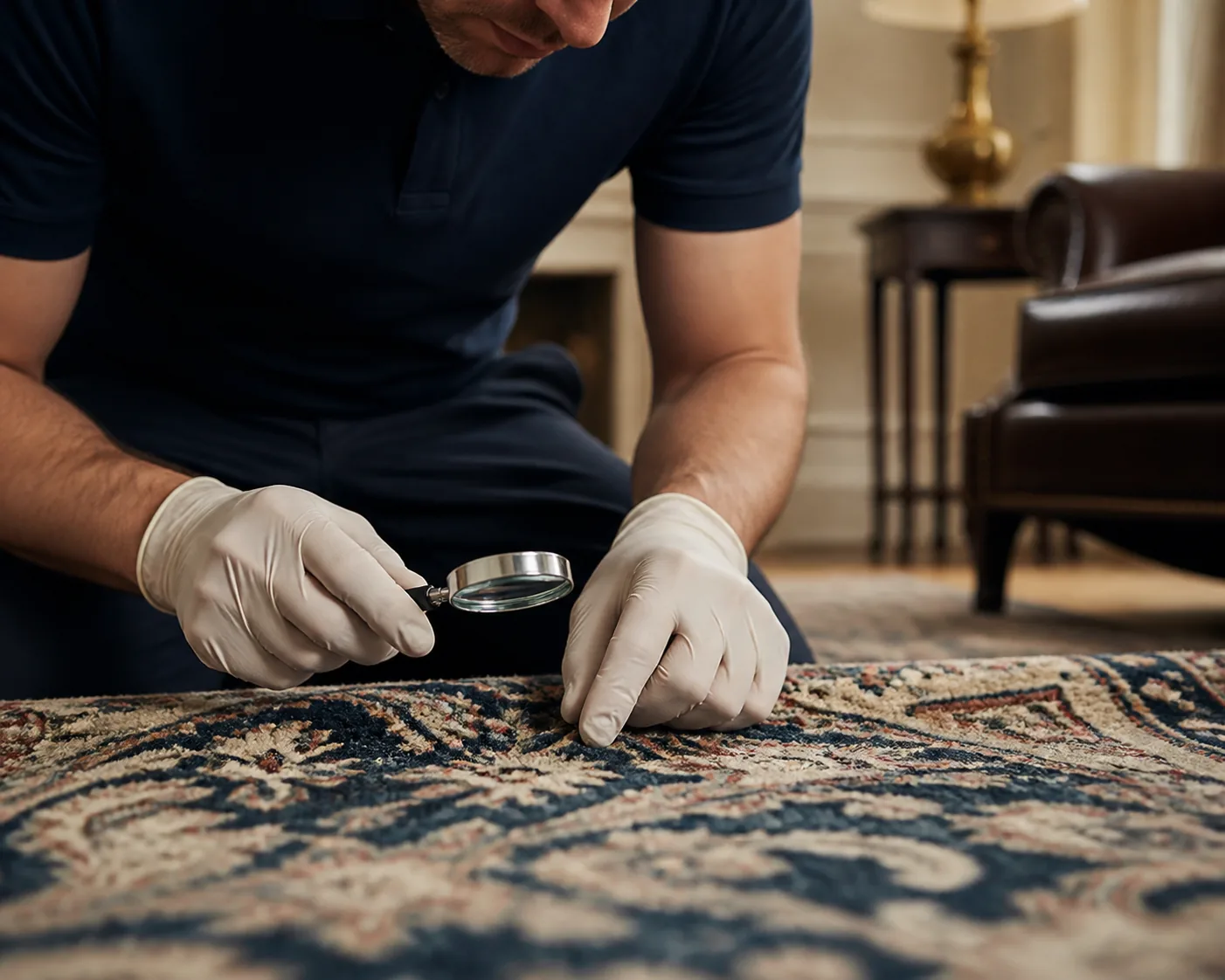
A REALISTIC BECKENHAM BRIEF
Planning begins in the room, before anything is lifted
Consider a wool rug beneath a dining table in a Beckenham terrace. Chair movement has dulled one zone, fringe catches beneath a door and the timber below needs protection. Each fact changes the handling plan; none can be solved by guessing from style or colour.
Start with context. A wide photograph establishes scale, furniture and daily traffic. Detail shots then become meaningful because the assessor can locate a worn corner or spill.
A thick synthetic rug upstairs presents different questions. Its label helps, but so do landing width, backing condition and the availability of a clean handover space.
Your Beckenham rug record
Identity: Describe its apparent fibre and manufacture; uncertainty is useful information.
Scale: Measure the longest and widest points without stretching the edges.
Position: Note the surface underneath and whether a separate pad is present.
Priority: Locate the mark, smell, faded patch or worn section precisely.
Event: Record spills, pets, decorating dust or unwanted water.
Attempts: Name every powder, spray, detergent or machine already tried.
Face: Photograph pile from opposing directions because nap alters shade.
Back: Capture knots, seams, backing, labels and possible tide lines.
Perimeter: Separate loose binding, missing tassels and curling corners.
Colour: Bright contrasts warrant checking before treatment decisions.
Journey: Explain the true carrying route, not merely the floor number.
Movement: Leave fragile or bulky pieces flat until handling is agreed.
Air: Room temperature and ventilation inform sensible aftercare.
Furniture: Identify items that cannot be cleared safely.
Scope: Distinguish routine cleaning from odour, stain or repair requests.
Budget: Area opens the estimate; actual needs complete it.
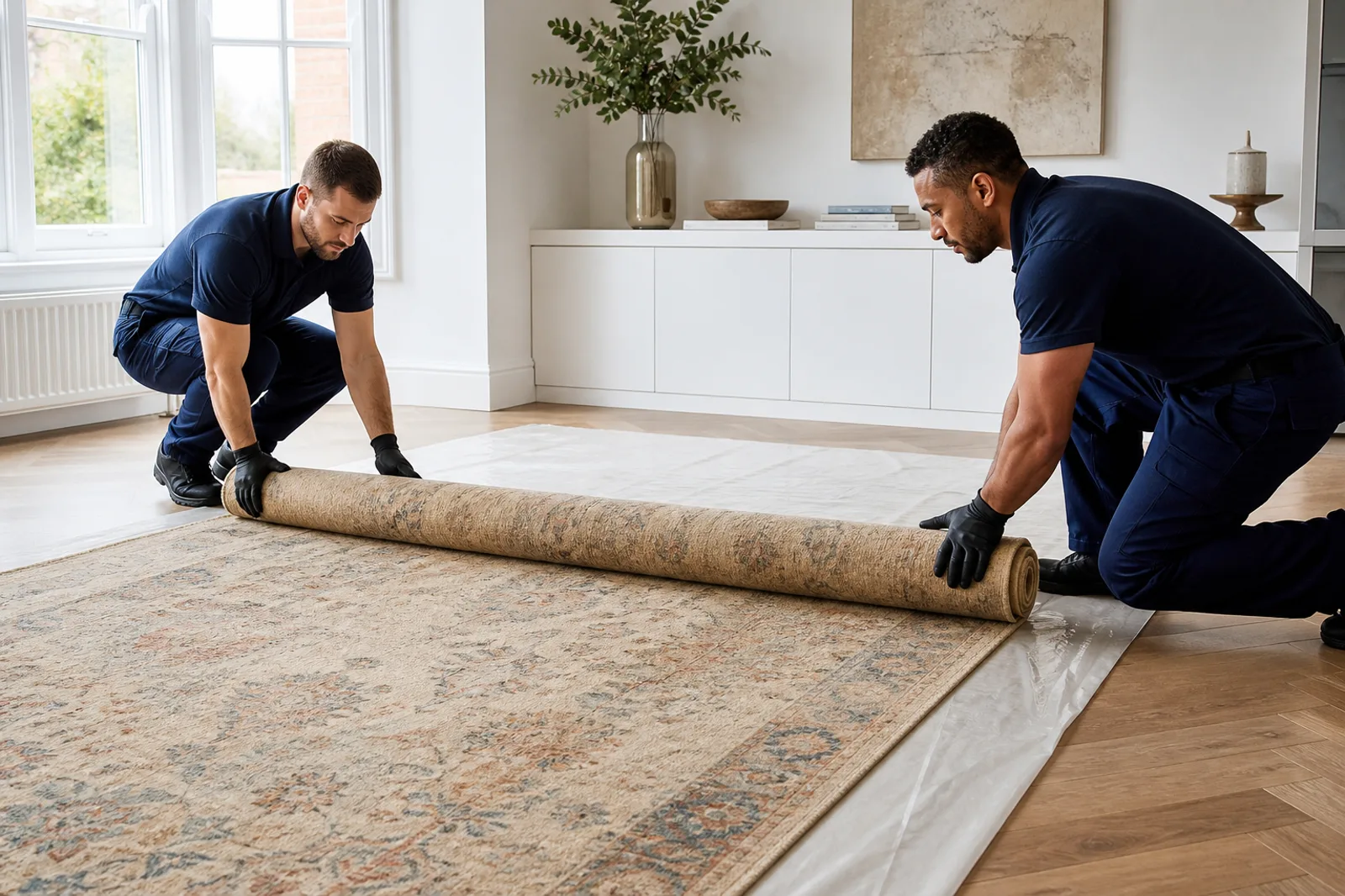
LOOKING BEYOND A MARK
Changed appearance is not always trapped dirt
Grit may lift away, whereas crushed pile, fading and abrasion cannot behave like soil. Residue can attract new dust and form a halo. Separating these causes allows an honest expectation.
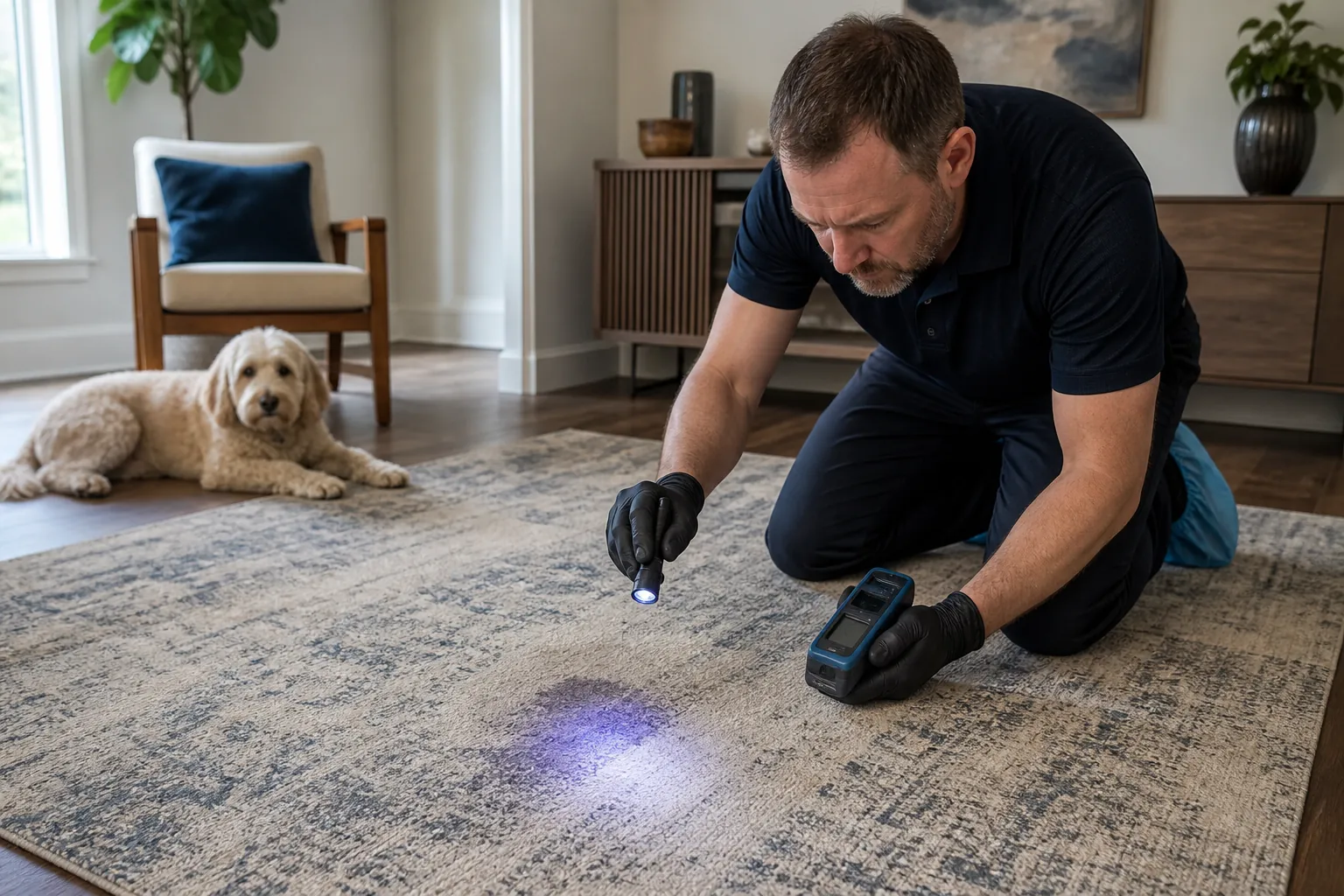
SPILLS, SMELLS AND EARLIER ATTEMPTS
A liquid’s hidden journey can redefine the job
A modest surface ring may conceal migration into foundation or underlay. Tell us what happened and what followed; repeated wetting or fragrance can disguise valuable evidence.
- Mark the first affected point and current boundary
- Notice whether warmth or damp weather strengthens odour
- Keep the product container or photograph its label
- Reserve conclusions until relevant checks are complete
YARN · DYE · BUILD
The approach must make sense for all three
Similar-looking rugs may react very differently. Yarn, colour system and internal assembly are considered together before moisture, agitation or finishing is selected.
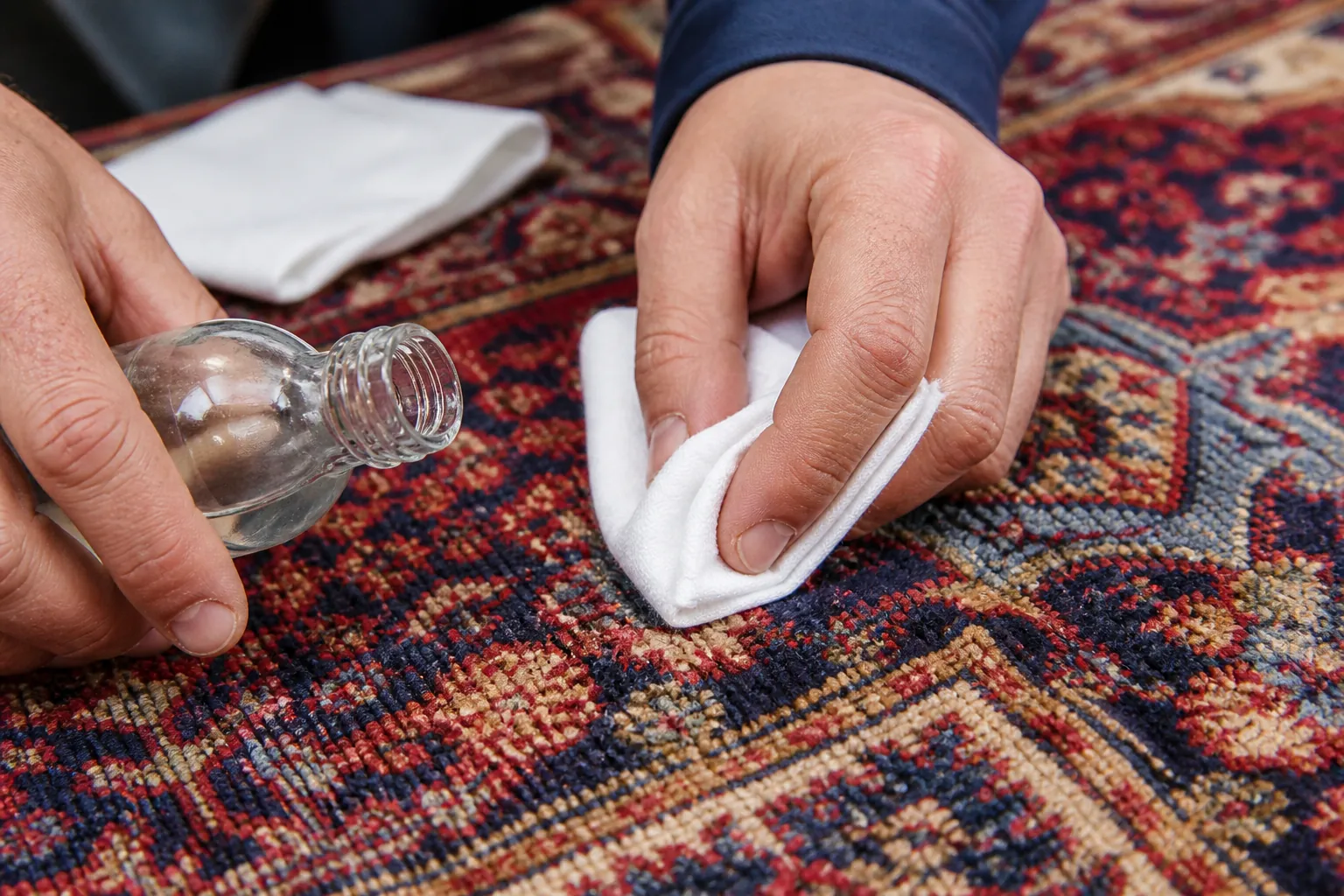
Feel offers an early clue
Absorbency and resilience require more than visual assumption.
Contrast raises questions
Checking indicates whether adjacent shades can be handled safely.
Unseen layers count
Knots, adhesive and foundation influence practical choices.
Weak points receive a plan
Repairs, open seams and fringe wear are logged before movement.
FROM ENQUIRY TO HANDOVER
Seven decisions, each informed by the last
No clock predicts every rug. Density, room conditions and the chosen technique determine readiness, so timing follows the technician’s findings.
- 01
Listen
Capture priorities, history and access notes
- 02
Inspect
Read yarn, dyes, backing, edges and repairs
- 03
Release particles
Address loose matter by compatible means
- 04
Treat selectively
Focus effort where findings support it
- 05
Manage conditions
Balance moisture and airflow for the construction
- 06
Check finish
Review texture, perimeter and priority areas
- 07
Return with advice
Explain placement and furniture precautions
HELP US PRICE THE REAL JOB
Nine details make remote discussion useful
You need no textile expertise. Accurate observations, measurements and unedited images are enough to begin.
- Beckenham postcode and preferred reply method
- Maximum length and width in metres
- One photograph containing all four edges
- Close-ups explaining the reason for calling
- Any label and a broad underside view
- Tassels, binding, holes or old repairs
- Previous domestic or professional treatment
- The floor underneath and furniture above
- Vehicle access and the indoor carrying route
Before arranging a visit
Does the label settle everything?
No. It informs the review, but current condition and construction still matter.
Does darkness prove staining?
No. Nap, wear, residue and fading can create a similar impression.
Can you promise a drying hour now?
Timing follows the work, textile density, warmth and available airflow.
When may furniture return?
Follow the handover advice because premature weight can cause problems.
GUIDE PRICES IN BECKENHAM
Start with area, then account for the rug
These bands support early budgeting. Construction, sensitivity, contamination, access and optional specialist attention may alter the confirmed figure.
SKETCH YOUR RUG PROFILE
Pick what seems closest and keep doubts visible
This record improves the enquiry; it is neither diagnosis nor automatic treatment selection.
QUESTIONS FROM BECKENHAM RUG OWNERS
Clear answers before work is agreed
What is the best first message?
Include postcode, dimensions, a full view, detail images and known care history.
Can a photograph confirm wool?
It suggests possibilities but cannot prove fibre, dyes or hidden backing.
Will a traffic strip become uniform?
Soil may lift, but cleaning cannot rebuild abraded yarn or lost colour.
Why show the underside?
It may reveal construction, repairs, adhesive failure and moisture travel.
Should I apply stain remover?
Avoid another chemical and report precisely what has already touched it.
How is an odour investigated?
Source, age and depth are considered through face, foundation, pad and floor.
May the table return immediately?
Wait for specific guidance; weight and low airflow can hinder final settling.
What affects drying at home?
Air movement, warmth, absorbency, pile depth and moisture volume all contribute.
Are published prices fixed?
No. They guide by size while the confirmed scope reflects the actual rug.
What does the £68 minimum mean?
It starts an eligible visit; compatible booked services may count towards it.
START A BECKENHAM CONVERSATION
Let photographs show the rug while notes explain its history
A measured, documented enquiry makes the next recommendation more relevant.
