
BROMLEY · A CAREFUL START FOR EVERY RUG
Rug Cleaning in Bromley, Built Around Fibre and Colour
Rugs rarely arrive with a complete biography. Useful photographs and a straightforward account of spills, wear and previous cleaning let us begin with facts rather than assumptions.
- Photograph the whole rug in daylight if possible
- Give its longest measurements, including any tassels
- Capture the underside, label and damaged areas clearly
- Tell us about steps, tight corners and nearby parking
A QUICK DESCRIPTION
Choose what you recognise; leave the rest open
The answers give our team a useful starting point, even when the maker or material is unknown.
WHAT WE LOOK AT
Two wool rugs can require very different decisions
The way yarn is spun, colour is held and layers are joined matters as much as the fibre named on a label.
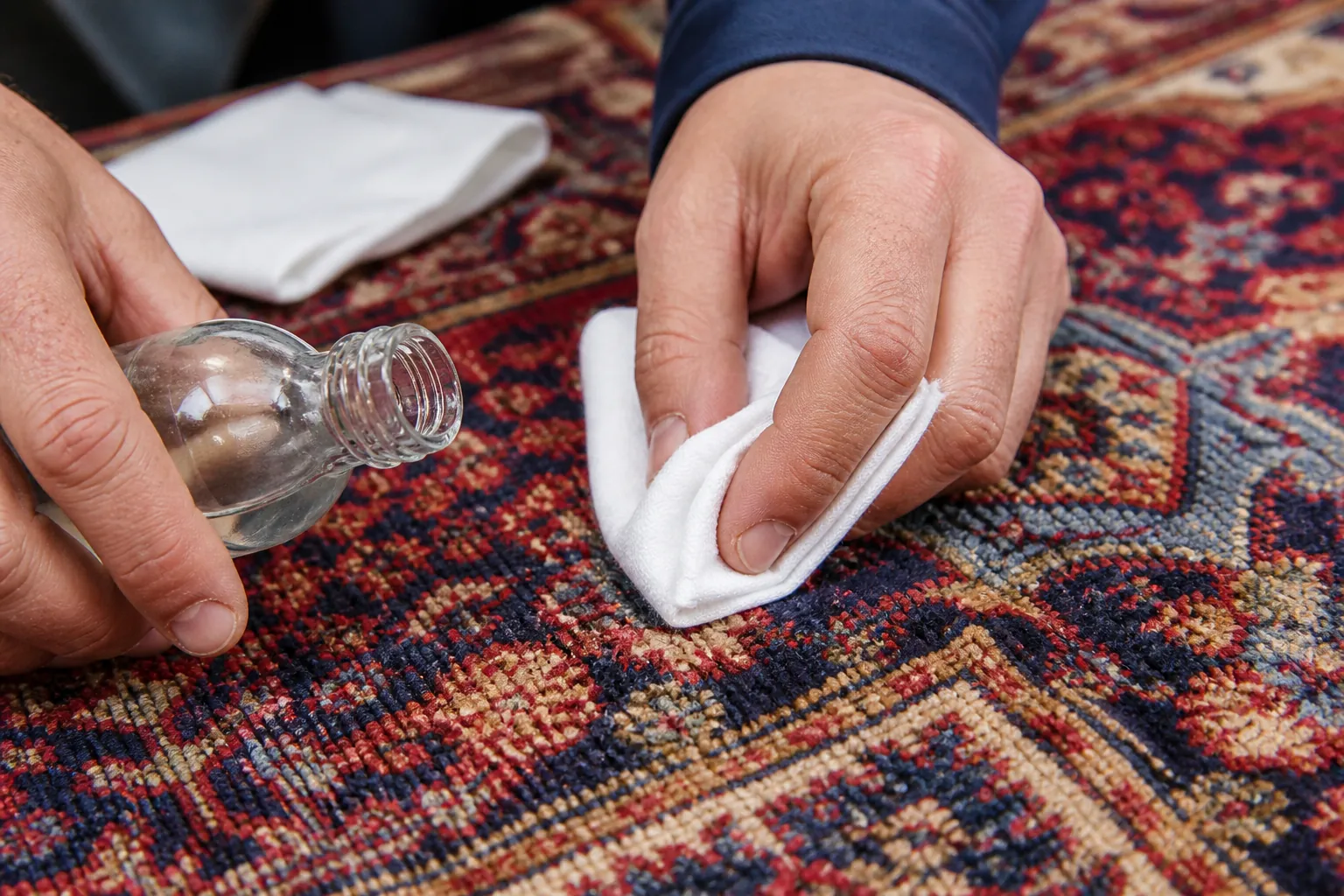
Pile and texture
Dense, looped and long fibres trap soil in distinct ways.
Dye confidence
Bold borders and pale fields are checked before moisture reaches them.
Shape and support
The underlying weave can affect movement, shrinkage and drying.
Repairs and residues
Older adhesive, patching or spot treatments may change the plan.
A BROMLEY HOME IN PRACTICE
The room around a rug deserves attention too
A large rug in a Victorian house near Bromley North may sit beneath a dining table and turn awkwardly through a narrow hallway. In a newer flat around Bromley South, lift dimensions and shared access can be the practical constraint.
A useful photo set. Begin far enough back to show the rug’s position, then add close-ups with a familiar object for scale. Photograph marks from more than one angle where the pile changes their appearance.
If a pet accident was treated, name the product and roughly when it happened. An honest uncertainty is preferable to a confident guess.
Notes worth gathering before you contact us
Identity: Treat the rug as an individual item, not simply part of the floor.
Dimensions: Measure the widest and longest points in metres.
Main issue: Mark its position on a photograph of the entire piece.
Label: Copy wording exactly rather than interpreting abbreviations.
Palette: Include close views where dark and light yarns meet.
Texture: Mention a deep pile, loops or a notably thin weave.
Perimeter: Record curling corners, loose binding and missing tassels.
Underside: Look for discolouration, labels, latex or stitched patches.
Products: List household remedies and commercial spotters already tried.
Smell: Explain whether it is general or concentrated in one place.
Collection path: Describe the journey from rug to vehicle.
Subfloor: Identify the material currently touching the reverse.
Clear space: Say whether furniture can be moved beforehand.
Timing: Flag building rules or restricted access hours.
Damage: Distinguish tears and fading from removable deposits.
Priorities: Tell us what a satisfactory result means to you.
FROM FIRST LOOK TO HANDOVER
A sequence that responds to the rug
Observations made at each stage inform what happens next; no single routine suits every textile.
- 01
Document
Note dimensions, marks, fading and existing faults
- 02
Examine
Consider the yarn, colours, weave and reverse
- 03
Lift dry soil
Release suitable loose particles before wet work
- 04
Treat carefully
Address agreed concerns within tested boundaries
- 05
Control drying
Watch airflow, moisture and the rug’s changing shape
- 06
Review
Inspect the centre, borders, corners and fringe
- 07
Hand back
Explain placement, aftercare and remaining limitations
BROMLEY PRICE GUIDE
Size provides the first reference point
Your confirmed figure can also reflect construction, soiling, access and any specialist task agreed before work begins.
MAKE THE FIRST MESSAGE COUNT
A concise brief helps us ask better questions
You do not need technical vocabulary. Plain details, accurate measurements and unedited photographs are more useful.
- Your Bromley postcode
- Length and width at maximum points
- One image showing the entire rug
- Close-ups of stains, fading or damage
- Photographs of label and underside
- Condition of borders and fringe
- Cleaning products used previously
- Floor type and furniture resting above
- Steps, doorways, lift and parking notes
Useful realities to know
Will a label settle every question?
It helps, although face yarn, foundation, backing and decorative details may differ.
Does a dark mark always mean dirt?
No. Crushed pile, abrasion or altered dye can look darker without being removable soil.
Can you promise a drying hour?
Only a practical estimate is possible because weave, humidity, airflow and retained moisture vary.
Should the rug go straight under furniture?
Wait for the guidance supplied at handover so the item and floor are ready.
ANSWERS FOR BROMLEY HOUSEHOLDS
Ten common questions before rug cleaning
What should my initial enquiry contain?
Send your postcode, measurements, several clear images and a short account of the problem and access.
Can you recognise my rug from a photograph?
Photos reveal useful clues, but they cannot reliably confirm every yarn, dye or hidden layer.
Why does the underside matter?
It can expose construction, old repairs, backing deterioration and residues invisible from above.
Will an old stain certainly come out?
No. Its substance, age, earlier treatments and any permanent fibre change all influence the outcome.
What should I do after a fresh spill?
Avoid rubbing or experimenting with more products; share what happened when you contact us.
How are pet odours approached?
We consider the affected depth, backing, age of contamination and whether it reached the floor beneath.
Do fringes need separate photographs?
Yes. Images help show yellowing, wear, previous repair and weak sections before handling.
What determines the time needed to dry?
Fibre, density, backing, indoor conditions and the amount of suitable ventilation all contribute.
Is the quotation based solely on area?
Area begins the estimate, while condition, construction, logistics and added work can alter it.
What does the £68 minimum mean?
It is the minimum eligible visit value once scope is agreed; compatible services may be combined.
YOUR BROMLEY ENQUIRY
Let the photographs tell us where to begin
Add dimensions and access notes, and we can turn that evidence into a useful conversation.
