
The appointment cannot reach the task if boundary access is unclear.
Plan the visit in the order it will actually happen
Electrician Services in Orpington
A useful Orpington brief follows the electrician’s journey: arrival at the boundary, unloading, entry to the house, access to electrical equipment and movement to the final room or outbuilding. Write those stages in order and name any step that depends on a code, key or another person. This sequence exposes practical gaps before the appointment, particularly when a drive, garage or garden building is part of the request.
- Start the plan at the road rather than the work area
- Assign every gate and door to a key holder
- Keep the main house open for outside-building tasks
- Schedule vehicle movements before tools are unloaded
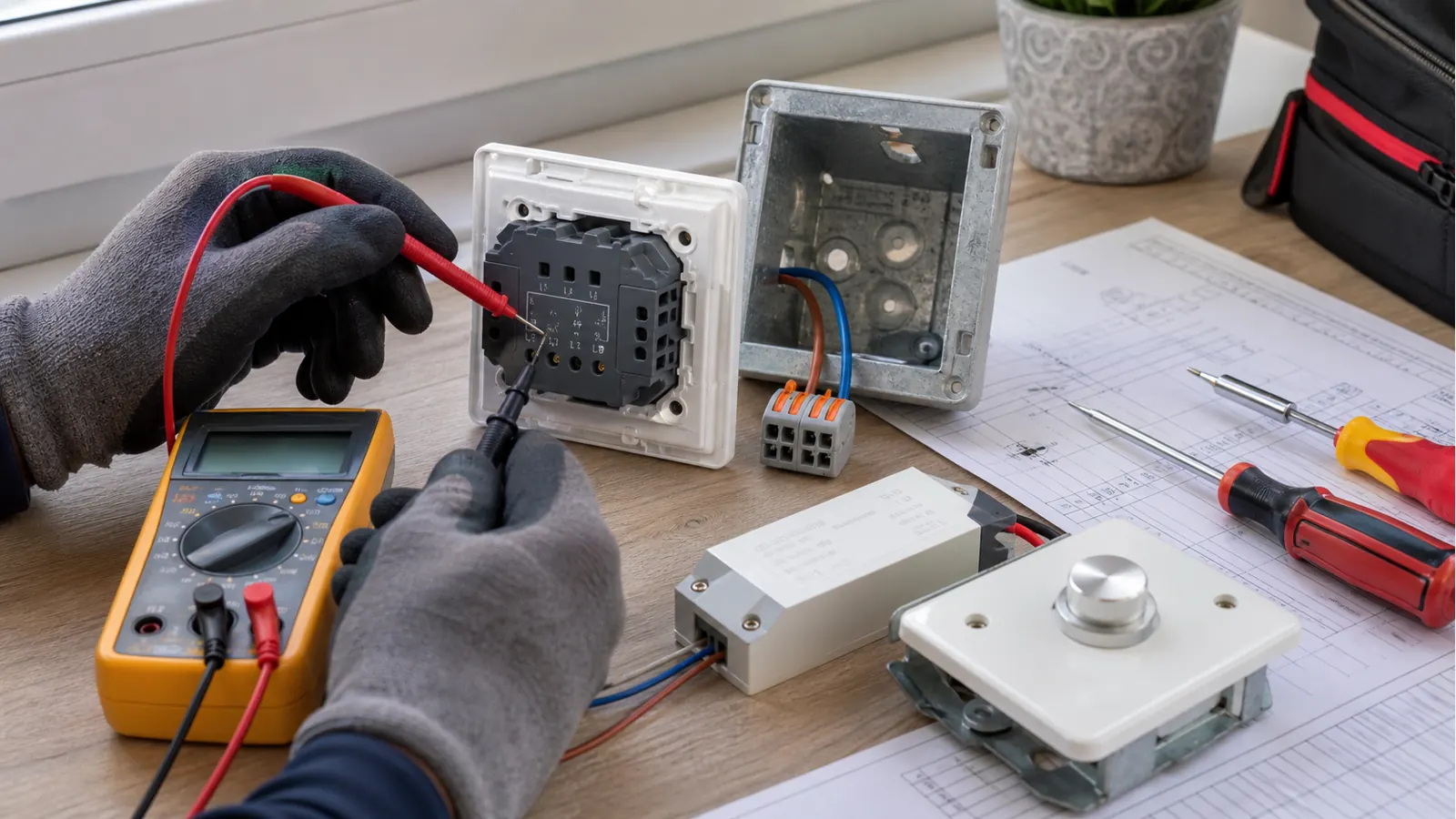
NeedFault · Repair · Installation · Upgrade
AreaLighting · Sockets · Circuit · Consumer unit
PropertyFlat · House · Managed property
Next stepAssessment · Planned work
Arrival stageBoundary entry tested beforehand
Unloading stageVehicle position leaves routes open
Indoor stageMain equipment remains accessible
Endpoint stageFinal building cleared and unlocked
Orpington property context
A visit-day sequence from gate to final task
Write the first instruction for someone standing outside the property. Explain how the gate opens, where a vehicle can stop and whether another household car must move. Next, identify the entrance and relevant indoor areas. Only then describe the garage, annex or garden office. For planned charging, lighting or broader alterations, attach product information to the appropriate stage. The quotation can separate preparation, assessment and installation where the route or property extent still needs confirmation.
| Property situation | Electrical consideration | Effect on the visit |
|---|---|---|
| House behind a controlled gate | The work area can be ready while the arrival process depends on a code or remote release. | Test the gate shortly before attendance and keep the release contact responsive. |
| Multi-car drive used throughout the day | An unloading point may block the vehicle needed by another occupant. | Set the movement order and mark the bay that must remain available. |
| Detached garage or garden office | The final task may rely on accessible equipment inside the main house. | Open both structures before the person holding keys leaves. |
| Home considering several future alterations | Materials and routes may depend on which rooms change first. | Put proposed work into a realistic sequence instead of treating it as one event. |
Choose by the work required
Electrical service routes for Orpington
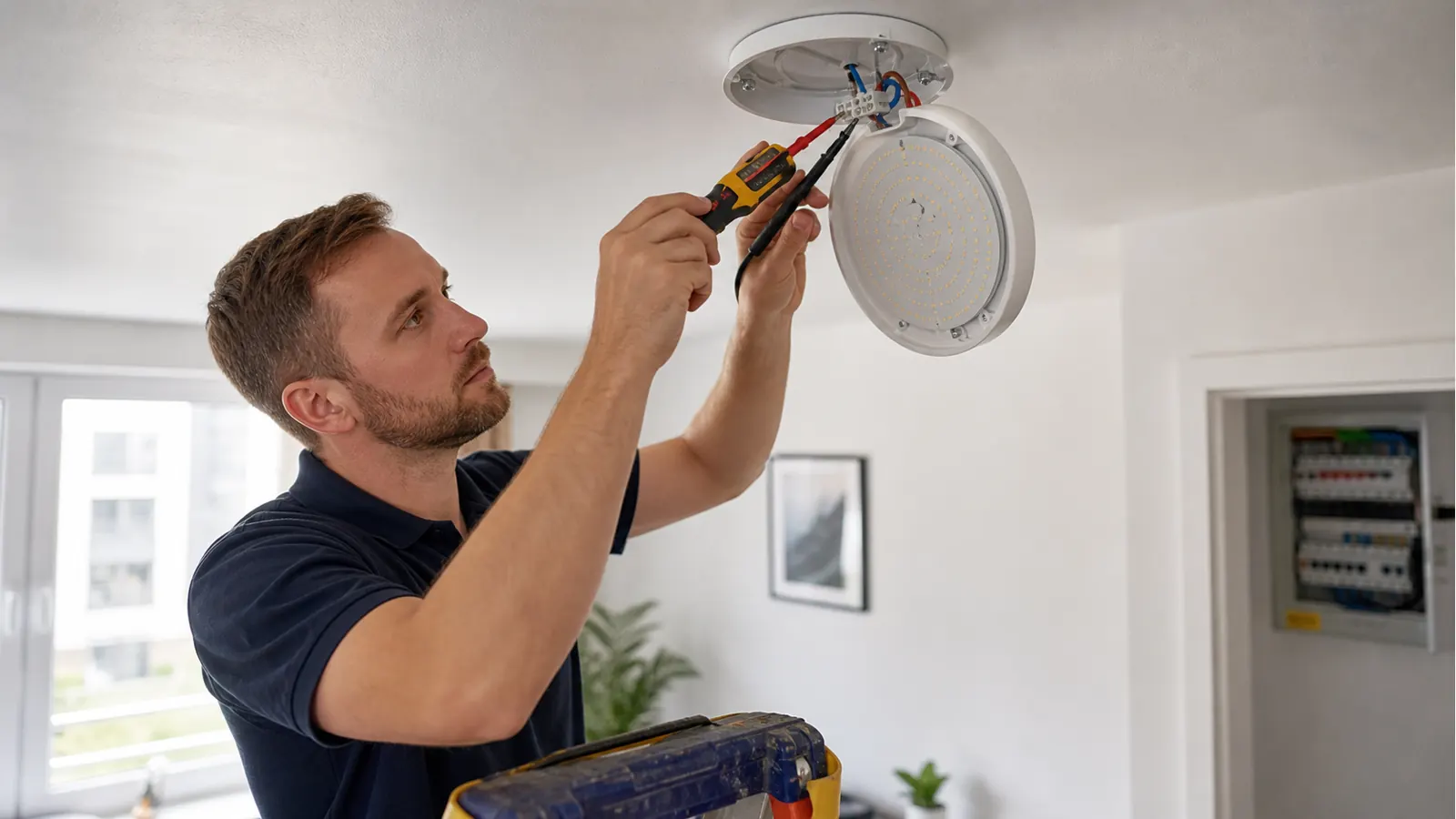
Use the problem, desired result and assessment boundary together when comparing service options. Apply that distinction to the Orpington address.
| Problem or requirement | Relevant service | Important boundary |
|---|---|---|
| An unexplained issue involving the house and an ancillary building | Electrical fault finding | Assessment follows the complete property sequence before a remedy is selected. |
| Vehicle charging planned within a changing driveway arrangement | EV charger installation | Parking behaviour, arrival access and site findings all inform scope. |
| Lighting failure or a planned fitting along an indoor or outside route | Light fixture installation and repair | Product, controls, support and physical access require consideration. |
| Broader work coordinated across rooms and separate structures | Electrical rewiring | The order and extent should follow assessment and the planned property use. |
| A staged list covering house, garage and outdoor areas | Electrician services | Every stage needs its own location, preparation and intended result. |
A quotation needs a defined scope
What can change the price in Orpington
A like-for-like quote identifies testing, materials, disruption and any work left to another trade. The Orpington property details provide the comparison point.
| Factor | Why it changes the work | Useful evidence |
|---|---|---|
| Boundary arrival | The appointment begins at the correct entrance without avoidable waiting. | Gate method, visible landmark and contact able to release entry. |
| Vehicle choreography | Tools remain accessible without trapping another household vehicle. | Usual parking order, unloading bay and cars that must leave during the visit. |
| Indoor dependency | Outbuilding work is not quoted as though the house were irrelevant. | Consumer-unit location and rooms needed before reaching the endpoint. |
| Final-stage access | The destination is ready when earlier visit stages are complete. | Keys, path photographs and cleared working space at the garage or studio. |
| Follow-on sequence | Later work has a defined trigger rather than an open-ended allowance. | Separate lines for assessment, permission, materials and installation. |
Fast guidance for the initial enquiry
Before electrical work is booked in Orpington
Yes, close enough to the visit to catch an access problem.
Only move vehicles affecting unloading, gate travel or the work zone.
Relevant equipment in the house may also need to be reached.
Include surfaces, steps, turns and every locked transition.
Leave fixed electrical enclosures closed.
Mark the normal bay and at least one practical fallback.
Ask for each assessment and installation phase to be named.
Fault notes before diagnosis
Describe what changes in Orpington
A concise event history helps narrow the investigation while keeping the diagnosis open. For Orpington, keep the account factual.
| Symptom | Appropriate next step | Why assessment matters |
|---|---|---|
| Garage power is lost before house occupants notice any change | Record working and failed equipment at the garage and house stages. | The timing and separate structure do not establish the complete route. |
| Approach lighting operates inconsistently | Note the natural pattern while leaving fixed outdoor enclosures closed. | Several controls and physical areas may be involved along the route. |
| A damaged switch blocks use of a storage area | Restrict entry, keep the point unused and clear storage for inspection. | Visible damage cannot reveal the condition behind the accessory. |
| A charger is proposed where vehicles swap positions | Map usual parking order, gate travel and acceptable alternatives. | Daily movement matters as much as the preferred wall or bay. |
Before the visit
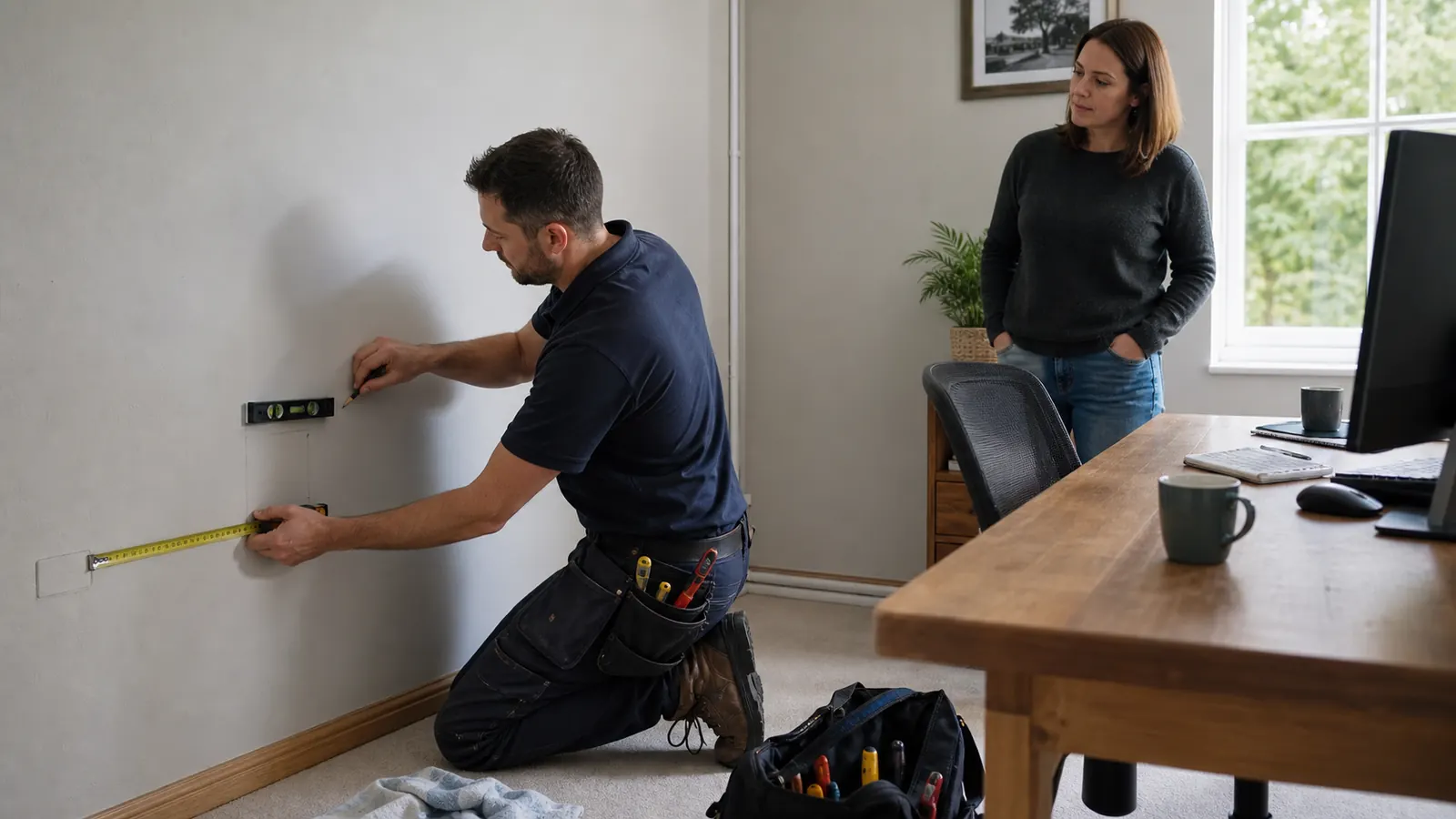
Remove avoidable access obstacles in Orpington
- Write arrival instructions from the driver’s point of view.
- Test codes, remotes and gate-release contacts before the booking.
- Plan which household vehicles move first and where they will wait.
- Clear access to the main electrical equipment inside the house.
- Unlock every garage, annex or garden building in the agreed sequence.
- Photograph steps and narrow turns along the tool-carrying route.
- Place product sheets beside the stage where each item is used.
Safety boundary
Electrical symptoms need safe boundaries
For a Orpington address: Photos and notes can help plan a visit, but they cannot confirm a fault. Do not probe wiring, open a consumer unit or bypass protection. Seek urgent help when there is immediate danger.
Orpington electrical FAQ
Questions to answer before agreeing the scope in Orpington
What is the first line of an Orpington visit-day plan?
State the road approach, visible entrance and way the gate will be released. Add a telephone contact who will answer at the booked time.
How should household vehicles be coordinated?
Decide which car moves before unloading, which bay stays clear and whether anyone must leave during the appointment. Put that order into the arrival notes.
Why include the house in a garage request?
The complete arrangement may involve equipment or access inside the main property. Unlock relevant indoor areas even when the visible symptom sits elsewhere.
What should be recorded after an outbuilding power loss?
List working and failed lights, outlets and fixed items in both buildings. Include time and use without treating the building boundary as the cause.
How is intermittent approach lighting described?
Note when it appears, which controls were used and any conditions observed naturally. Keep outdoor fittings closed rather than repeatedly operating them.
What makes a driveway charging plan realistic?
Show daily parking, vehicle orientation, gate movement and how other cars enter or leave. Include manufacturer information and a usable alternative position.
When should future alterations be placed into phases?
Use phases when one room or building affects the route or decision for another. The quote can then link later work to actual findings and permissions.
How much storage should be cleared at the endpoint?
Provide a direct path and enough working space around the named fitting, wall or equipment. Storage outside that zone can remain if it does not obstruct access.
What if the key holder must leave early?
Open all agreed spaces first, label any remaining keys and confirm the decision contact. The electrician should not discover the final stage is locked later.
How do I compare Orpington quotations?
Match boundary access, vehicle movements, indoor dependencies, endpoint preparation, investigation and products. Check whether the same visit stages are included.
Electrical planning close by
Electrical coverage around Orpington
Create a workable plan around the test evidence
Sequence the Orpington visit from boundary to endpoint
Share the gate process, vehicle order, indoor dependencies and final-building access so every stage of the electrical appointment can proceed in turn.
