
Detailed lock assessment
The locksmith identifies hardware and operation, notes visible preparation and sets out what can be concluded without removal. This supports an informed planned scope.
Photograph · measure · expose carefully · approve the finish
A finish-sensitive door needs an intervention plan as well as a lock specification. For a Kensington period conversion, mansion flat or mews property, record what can be seen, what may be concealed and who accepts any visible change before hardware is removed.
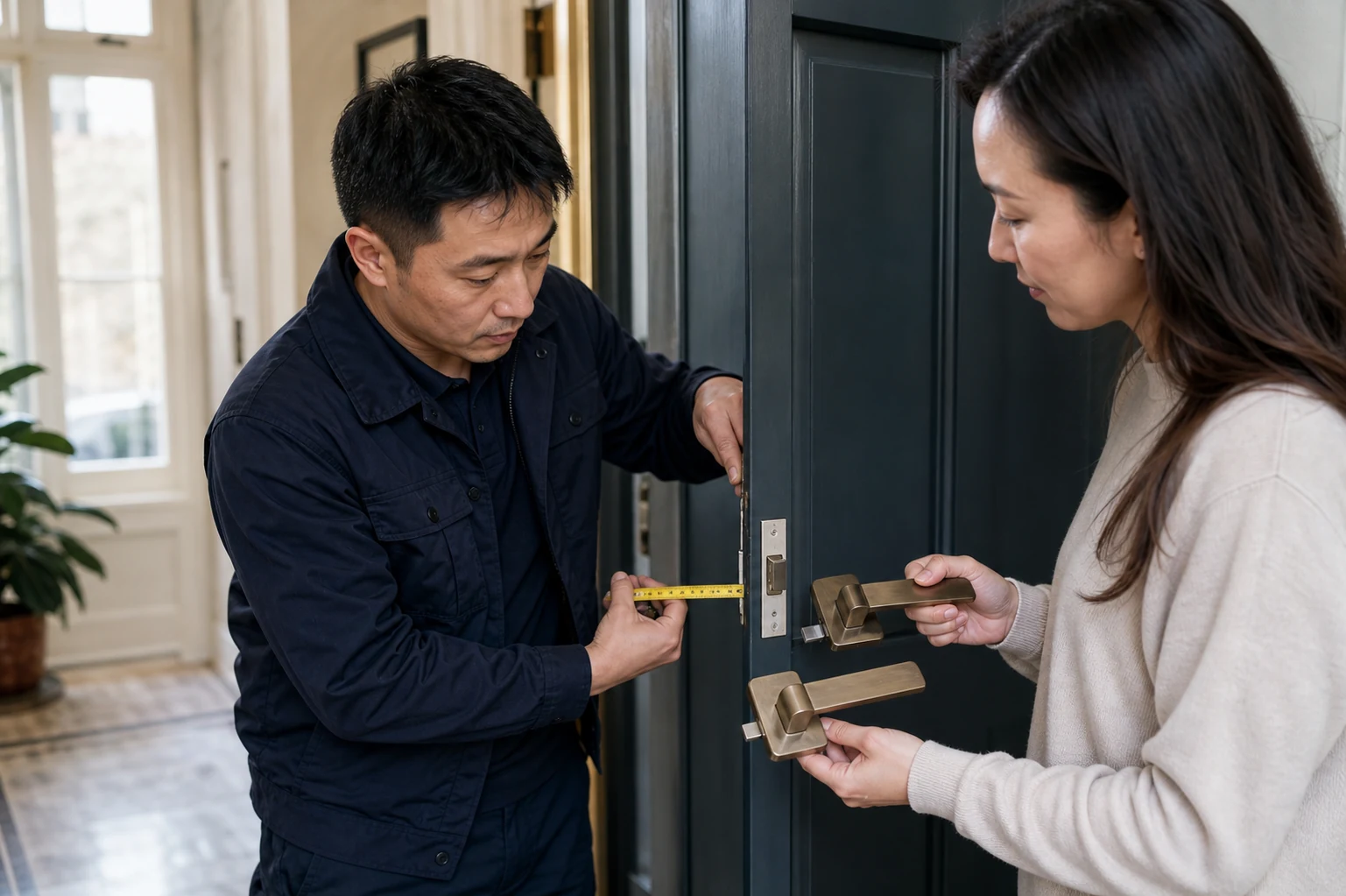
Plan the intervention
A replacement can operate correctly while leaving unwanted holes, a visible paint line or an uncovered recess from older hardware. Conversely, keeping an unsuitable plate solely to hide a mark can compromise the new arrangement. The brief should balance reliable security, compatible construction and the accepted appearance.
Begin with photographs and measurements taken without dismantling the door. Record the existing lock faces, furniture, edge plate, keeps and any visible repair. State which finishes must be preserved and whether a joiner or decorator is already involved. In a managed mansion block, obtain any private-door requirements from the building. The locksmith can then propose an intervention level and identify what will only become known once authorised hardware is removed.
| Intervention level | Typical boundary | Approval question |
|---|---|---|
| Operational adjustment | Assessing alignment or a serviceable component without replacing the main hardware | Can reliable operation be restored within the existing preparation? |
| Like-for-compatible repair | Replacing an identified worn part while retaining suitable visible furniture | Is the component available and sound within the complete door system? |
| Covered replacement | New compatible hardware that uses or conceals the existing openings | Does the approved plate genuinely cover previous preparation? |
| Fresh preparation | New cutting, drilling or keep work for the agreed product | Who accepts permanent changes to the door and frame? |
| Joinery-led reinstatement | Timber repair, filling or structural work beyond normal lock fitting | Which trade owns the repair and final decoration? |
Record the door before the part
Send a full view of the closed door, both hardware faces, the edge with the door safely open and the frame keeps. Include a scale only where it can be positioned without touching unsafe or damaged equipment. Note whether the door is timber, UPVC or composite, but do not infer internal construction from appearance alone.
Describe operation open and closed. A key that becomes stiff only as the door meets the frame may point the assessment towards alignment, yet it does not prove the lock is sound. A loose escutcheon may be cosmetic or may reflect failing fixings. The locksmith must examine the connected parts before selecting repair or replacement.
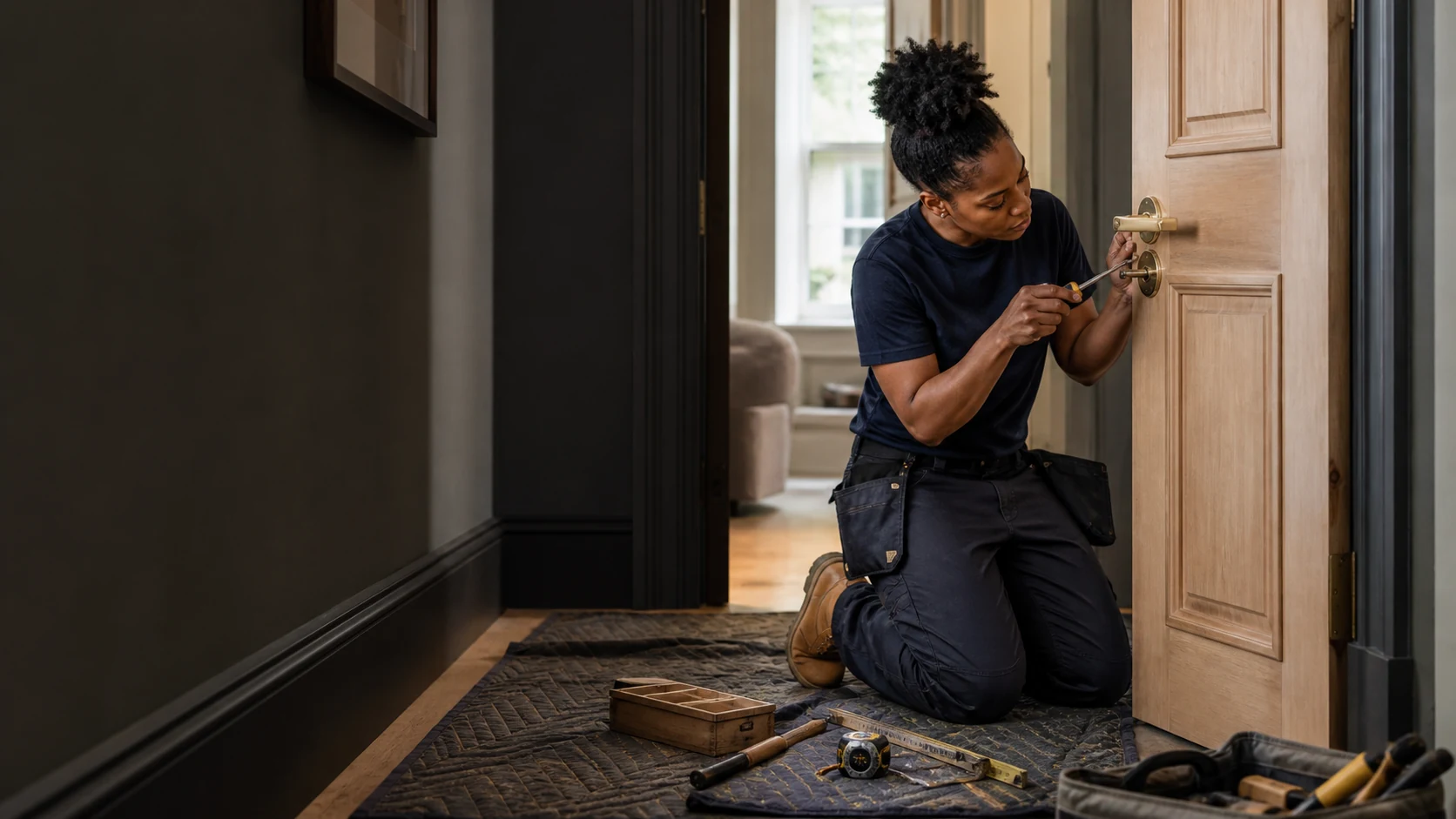
Fault, finish and next decision
| Observed issue | First examination aim | Finish consideration |
|---|---|---|
| Key is stiff only while the door is closed | Compare lock operation and door-to-frame contact | Avoid unnecessary replacement before alignment is understood |
| Handle or backplate has become loose | Check fixings, connected lock and existing holes | A different plate may reveal marks or require new drilling |
| Lock works but old keys are not controlled | Define the key-control outcome and compatible change | Preserve sound door preparation where the security goal allows |
| Mortice lock no longer operates reliably | Identify the case, dimensions, keep and door condition | New case or preparation should not be assumed to cover prior work |
| Multipoint door needs the handle lifted forcefully | Assess alignment, handles, cylinder, gearbox and strip | Do not replace visible furniture as a substitute for system diagnosis |
| Attempted entry has damaged lock and timber | Separate immediate security from full door restoration | Record insurer evidence and allocate joinery and decoration |
Service options
The locksmith identifies hardware and operation, notes visible preparation and sets out what can be concluded without removal. This supports an informed planned scope.
Where a compatible component or adjustment restores reliable operation, the door may avoid unnecessary new cutting. Suitability depends on condition and required security.
A proposed lock should match the door construction, function and approved intervention. Product name alone does not settle case size, backset, handing or coverage.
Handles, knobs, escutcheons and plates are reviewed with fixing points and lock function. A finish preference cannot override mechanical compatibility.
When access needs to change, list authorised users and affected private doors. Communal or controlled systems require the building owner’s involvement.
Temporary lock work may make the entrance controllable while careful joinery or finishing is planned. Label the temporary and permanent stages distinctly.
A quotation with intervention limits
A Kensington location does not justify an invented price. The quote follows inspection, method, labour, hardware and access. For a finished door, it should also describe accepted drilling, coverage, protection and who deals with revealed marks or damage.
| Quoted area | Evidence or selection | Required written boundary |
|---|---|---|
| Assessment | Door photographs, symptoms, measurements and desired outcome | What can be concluded before hardware is removed |
| Lock hardware | Function, case dimensions, security need and key count | Specified item, accepted alternative and compatibility responsibility |
| Visible furniture | Finish, plate size, fixing centres and coverage | What existing marks or holes may remain visible |
| Door preparation | Current mortice, drilling, keeps and concealed condition | Permitted new cutting and process for hidden discoveries |
| Protection and making good | Timber, veneer, paint, wall and floor surfaces near the work | Locksmith protection versus joinery and decoration |
| Handover | Functions to test, keys, old hardware and unfinished items | Who accepts the appearance and arranges any later restoration |
A photograph taken after removal can document a concealed cut-out, but it should not be treated as automatic permission to enlarge or cover it. The client or named representative should receive the new finding, options and cost before the intervention changes.
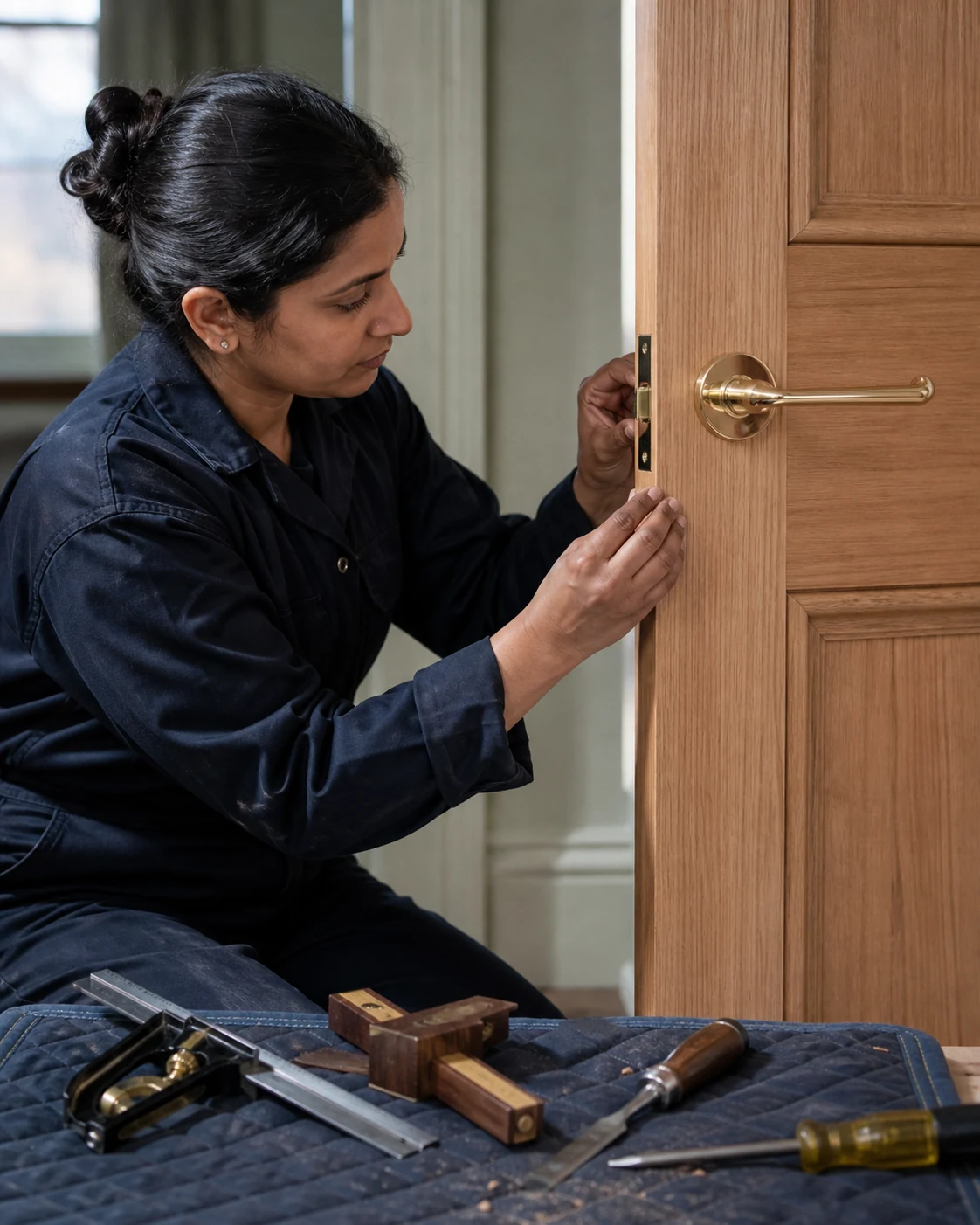
Kensington property context
A period conversion can retain an older timber entrance while the flat behind it has changed substantially. The door’s visible age does not confirm the lock case or what earlier alterations lie beneath the furniture. Photograph, measure and inspect before recommending a replacement.
In a mansion block, private-door work may also be subject to building requirements. Ask management for the information it holds and contractor procedure. The building’s approval establishes permission; the locksmith’s assessment establishes how the mechanical work can be performed. Both are needed where the rules apply.
A mews property may have a garage or secondary entrance with a different construction from the main door. Do not force one hardware palette across every opening. Prepare a separate intervention note for each door, including its use, existing finish and acceptable making good.
Visual and operational handover
Test closing, latching, locking, unlocking and handle return. Then review the visible plates, edge and keep with the approving person. Count supplied keys and record old hardware that has been retained. If paint, veneer or timber restoration remains, identify the trade and owner rather than describing the installation as cosmetically complete.
Where a limitation prevented the intended hardware or finish, record it. A technically sound alternative can be accepted, but the handover should not erase the design decision that was made.
Kensington locksmith FAQ
Possibly, once dimensions, fixing centres and door condition are checked. Existing holes should not be reused if they compromise reliable fitting.
Older mortices, repairs, damage and paint lines may be concealed by the current plates. Agree how those findings will be photographed and approved.
Not before the existing preparation is understood. The quote should state expected coverage and who handles filling, joinery or decoration if marks remain.
No. Confirm handing, fixing centres, spindle arrangement, plate coverage and lock compatibility before committing to visible furniture.
It may have requirements connected with the building or door. Obtain those from the responsible manager and give them to the locksmith before specification.
No. Operation, alignment and component condition need assessment. A sound adjustment or repair may meet the required outcome with less intervention.
The accepted quotation should say. Structural or cosmetic joinery and decoration may sit outside normal lock fitting even when coordinated with it.
Test normal door functions, count keys and review the visible hardware, edge and frame. Record any agreed restoration still to be completed.
Nearby locksmith pages
Follow the page matching the actual address and its property context.
Approve the intervention, not just the product
Send the Kensington address, door photographs, observed operation, finish constraints and person authorised to approve hidden discoveries.
