
Lock repair
A serviceable lock may need adjustment, a compatible component or attention to how the door meets the frame. Repair is considered from condition and required reliability, not used as a blanket promise.
Audit first · choose the outcome · match the door
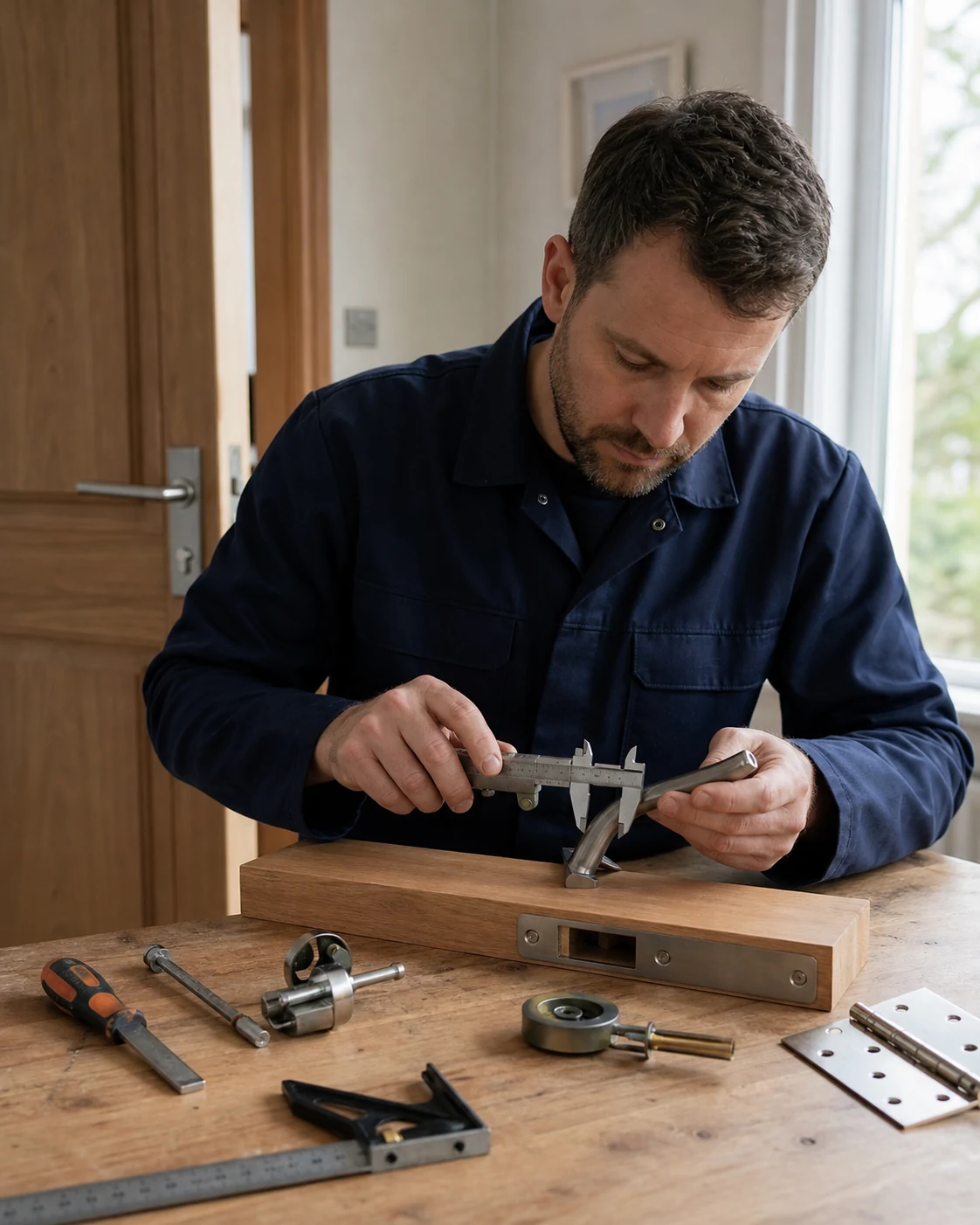
A planned lock upgrade should begin with the existing door, not a product chosen from a photograph. Marylebone homes can combine period timber entrances, mews properties, managed flats and carefully finished internal joinery, so compatibility and the intended security outcome deserve a proper review.
Planned security work
“A better lock” can mean several things. A new owner may want confidence that old keys no longer work. A landlord may need a clear handover between authorised occupiers. A household may find an existing lock awkward to use, or want one key arrangement simplified. Another door may already lock securely but have handles or escutcheons that no longer suit the finish. These are different projects and should not be pushed towards the same part.
Begin with the outcome in ordinary language. List who should have access, which doors are included, how the door is used each day and what is unsatisfactory now. Then allow the locksmith to identify the lock case, cylinder, furniture, door construction and frame condition. Where a Marylebone building is managed, check whether the flat entrance has requirements connected with the building, fire safety or a controlled key system. Planning in this order avoids buying incompatible hardware and protects the appearance of a well-finished door.
| Item to record | What to observe safely | How it informs the plan |
|---|---|---|
| Door and frame | Material, thickness, closing movement, previous repairs and visible gaps | Shows whether adjustment or door work should be considered with the lock |
| Current lock | Edge plate, external and internal faces, key operation and markings | Supports accurate identification without removing the case |
| Door furniture | Handles, knobs, escutcheons, backplates and existing holes | Helps avoid unwanted marks or incompatible visible fittings |
| Key control | Known key holders, missing copies and doors operated by the same key | Defines whether the main need is access control rather than mechanical repair |
| Building boundary | Private entrance, communal door, management rules and approval contact | Prevents private work from conflicting with shared arrangements |
A door is a system
A stiff key is sometimes blamed on the cylinder even when the lock works smoothly with the door open. A latch may miss its keep because the door has moved. Decorative plates can conceal older holes, while a different replacement may expose them. On a multipoint door, the cylinder, handles, gearbox, strip and frame keeps interact. A planned visit allows these relationships to be checked without the pressure of a lockout.
Do not oil a lock with an unsuitable product, plane a door or enlarge a keep merely to prepare for the locksmith. Instead, record what the door does when opened and closed. Mention seasonal movement only if you have actually observed it. If a closer or fire-door function is present, flag it before any hardware choice is made.

Outcome to option
| Desired outcome | Questions to answer | What should not be assumed |
|---|---|---|
| Old keys should stop working | Which locks are affected, who needs new keys and whether a controlled system exists | That every door needs a complete new lock |
| Door should operate more reliably | Does the fault occur open, closed or in both positions, and which parts feel different | That the visible cylinder is the failed component |
| Hardware should suit a renovated interior | Which finish is wanted, what holes already exist and what may be altered | That a visually suitable product will fit the lock and door |
| Several entrances should be easier to manage | Who needs access to each door and whether shared or commercial doors are involved | That one-key convenience is appropriate or permitted everywhere |
| Security should be reviewed after moving | Which keys are accounted for and whether the current hardware meets the owner’s needs | That property age alone proves a lock must be replaced |
| A worn lock should be modernised | What is actually worn, whether compatible parts exist and how the door will be prepared | That replacement is preferable to a sound repair in every case |
Services within a planned review
A serviceable lock may need adjustment, a compatible component or attention to how the door meets the frame. Repair is considered from condition and required reliability, not used as a blanket promise.
Where replacement is justified, the specification should state the part, dimensions, security requirement, keys and any preparation or finishing around the opening.
Moving home, a tenancy change or missing keys can prompt a review of who should retain access. The solution should cover the relevant doors without disrupting a building system.
Handles and visible plates can be reviewed with the lock, but their fixing centres, handing, coverage and compatibility matter. Decorative choice should not compromise operation.
On UPVC or composite doors, difficulties may involve alignment, handles, cylinder, gearbox or the full strip. Testing should separate them before parts are ordered.
If a planned issue becomes an inability to enter, explain authority, door position and urgency. Opening the door and completing the intended upgrade may still be separate scopes.
Quoting the right project
No responsible area-based figure can replace inspection of the actual door. A Marylebone quote should explain what is supplied and fitted, how existing openings are handled, the number of keys and whether adjustment or decorative work is included.
| Quotation section | Evidence or choice required | Boundary to make explicit |
|---|---|---|
| Assessment | Door list, current symptoms, access and desired outcome | Whether a survey or fault diagnosis is separate from installation |
| Hardware | Confirmed lock type, measurements, finish, specification and compatibility | Exact product or an agreed equivalent, plus supplied key count |
| Door preparation | Existing mortices, holes, plates and frame keeps | Cutting, filling, reinforcement and structural door repair |
| Adjustment | Operation while open and closed, alignment and hinge condition | Minor setting within lock work versus a separate door repair |
| Managed-building requirements | Owner or agent approval and any door restrictions | Who confirms compliance and signs off shared implications |
| Finish and handover | Visible surfaces, protection, key recipients and testing | Decoration, making good and disposal of old hardware |
Ask how changes discovered after removal will be handled. The locksmith should describe the finding and revised option before extra work proceeds. A contingency is not permission for an undefined alteration.
Marylebone property context
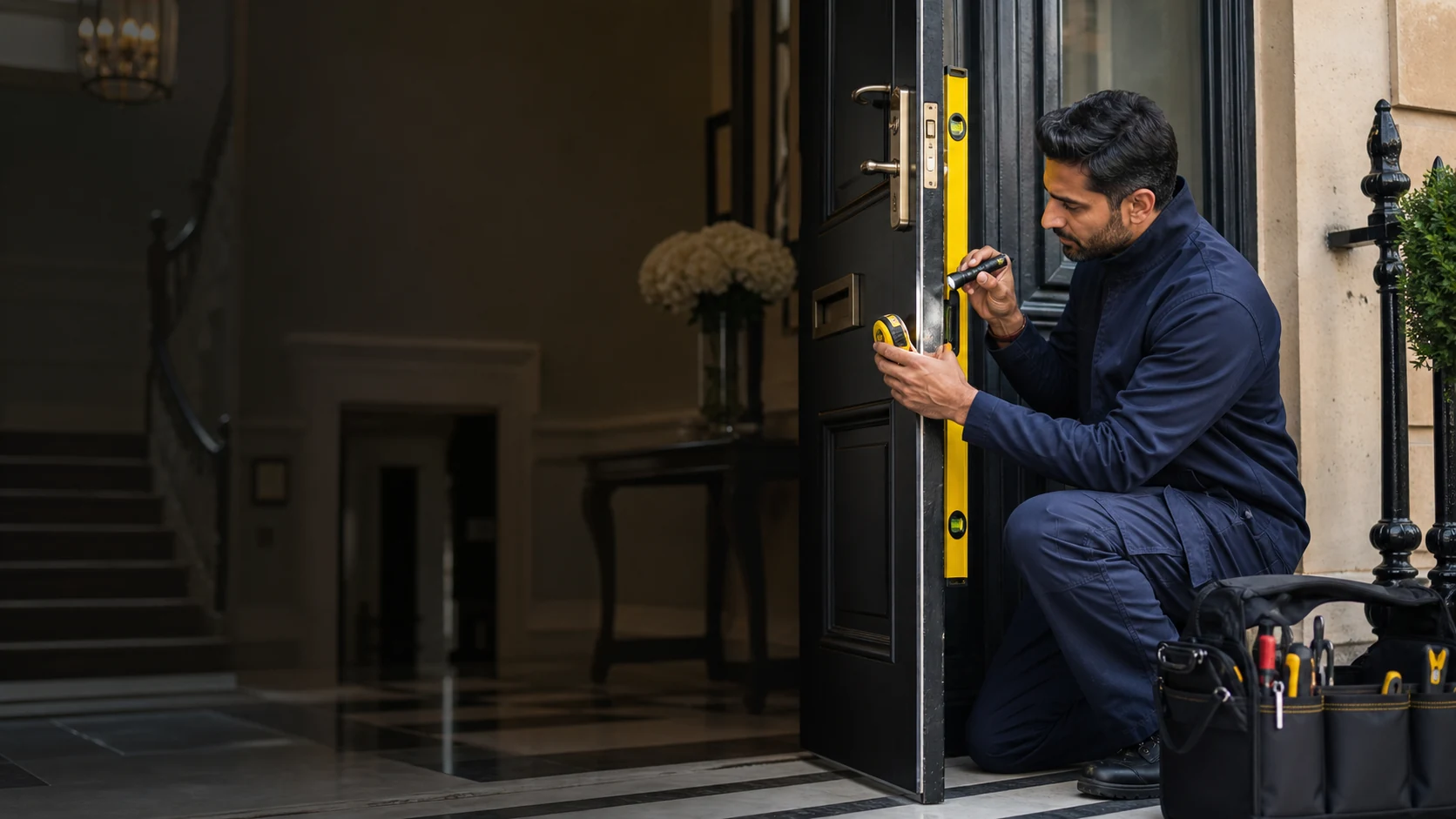
A period flat entrance may have a timber door, older mortice preparation and carefully matched furniture. The visual character is important to the owner, but appearance does not identify what is concealed in the door edge. Measurements and operation come first. If a proposed lock would expose earlier cut-outs or require fresh preparation, that should be discussed before installation.
A mews house may have more than one practical entrance, including a garage or secondary door. List which entrances belong in the key-control plan rather than assuming every lock should change together. Where the property sits in a managed block, ask whether the flat door is subject to building requirements and whether contractors need booking in. Management approval and the locksmith’s technical assessment serve different purposes; one should not be presented as the other.
Renovation programmes also need sequencing. Lock work may be best coordinated with joinery, decoration or door repair, but those trades need a clear boundary. Protect finished surfaces and agree who deals with old holes, paint lines or damaged timber that only becomes visible once hardware is removed.
From plan to handover
At completion, test the door from both sides where safe: closing, latching, locking, unlocking and handle return. Count keys by authorised recipient and confirm what happens to old keys. For several doors, retain a simple schedule showing which key operates which entrance. If a part of the plan could not be completed, state the reason and the next decision needed.
Do not label a project finished when a door still binds, a communal permission remains unresolved or decoration has been deferred without an owner. A clear handover protects both day-to-day use and the intention behind the upgrade.
Marylebone locksmith FAQ
Wait until the door, existing preparation, measurements and required outcome are understood. A product can look suitable online while being incompatible with the lock case or visible openings.
Not automatically. Review which keys are accounted for, who previously had access and whether the current hardware meets your needs. Change should follow the actual key-control decision.
It may be repairable, depending on the failed or misaligned part and its condition. Compare operation with the door open and closed rather than assuming the cylinder needs replacement.
Finish can be part of the specification, but fixing centres, coverage, handing and compatibility must also work. Ask what marks or older openings may remain visible.
The resident or owner authorises private work, while the freeholder or managing agent may impose requirements for the building. Confirm both roles before ordering hardware.
Possibly, once each lock and user group is mapped. Communal, commercial or controlled systems should not be altered solely for convenience without proper authority.
Only if the quotation says so. Lock installation, filling old cut-outs, structural joinery and decoration can be separate tasks.
Confirm closing, latching, locking, unlocking, handle operation, supplied keys and any unresolved door or frame issue. Record which person receives each key set.
Nearby locksmith pages
Use the page that matches the property and entrance involved; the linked areas have their own local guidance.
Choose the outcome before the hardware
Send the Marylebone address, included doors, current operation, key-control concern and safe photographs of the existing hardware.
