
Private lockout
The locksmith checks the customer’s authority, door state and visible hardware before discussing a suitable opening approach. Entry and any later replacement should be treated as two decisions when the condition is not yet known.
Managed entrance · authority · private door · handover
In a managed building, the first locked door is not always the door that needs work. A useful Westminster enquiry identifies the resident’s entrance, the communal route, the person who controls each part and the outcome required after access is restored.
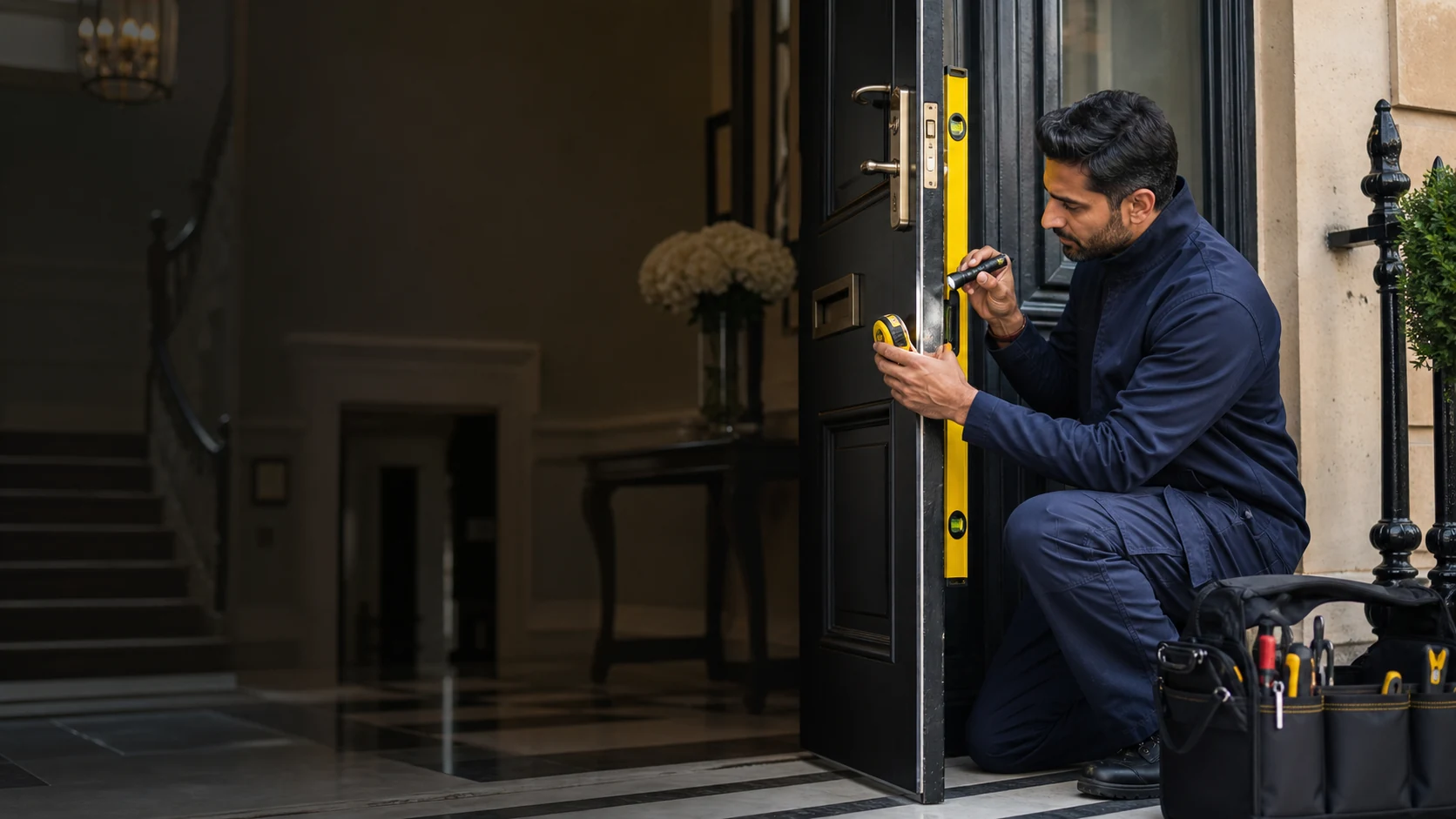
Managed-building triage
A resident can normally explain what happens at their own flat door, but that does not automatically give permission to alter the street entrance, a shared lobby door or a lock used by building staff. Westminster appointments can involve porters, concierge desks, estate teams, landlords and managing agents. Before a locksmith travels, establish which person can authorise the exact work being requested.
This distinction is practical as well as legal. A communal door may be part of a fire strategy, an access-control system or a master-key arrangement. A purely mechanical problem on a private door may sit within ordinary locksmith work, while a powered release, intercom command or magnetic lock may need an access-control engineer or electrician. Describing the symptom accurately allows the booking to be routed without pretending that one trade covers every component.
| Door or area | Useful confirmation | Why it changes the visit |
|---|---|---|
| Private flat entrance | Occupier, owner or authorised landlord contact | The locksmith needs a reasonable basis for entry and approval of any part change |
| Communal street door | Managing agent, freeholder or building manager authority | One resident should not commission a shared lock alteration on behalf of everyone |
| Porter-controlled lobby | Desk hours, visitor process and route to the flat | Tools and replacement parts must reach the correct entrance without delay |
| Service or staff entrance | Permission to use it and the person meeting the locksmith | A convenient route is not necessarily an authorised route |
| Powered access door | Whether the fault is mechanical, electrical or uncertain | The correct specialist depends on the component that has failed |
Describe the fault
“The front door will not open” is too broad for a managed block. Say whether a key turns, a fob is accepted, the handle moves, the latch retracts or the door is being held by a powered device. Note whether the problem affects one resident or everyone who has tried the entrance. Do not remove a closer cover, force the leaf or interfere with shared controls.
For a flat door, say whether the door is open or closed and whether the lock behaves differently in each position. A lock that works while open but binds when closed may involve how the leaf meets the frame; that observation is useful, but it is not a diagnosis. For a lockout, tell the locksmith whether identification is with you or inside and who at the building can confirm occupancy.

Problem and next step
| Reported situation | Safe next step before attendance | Likely boundary to clarify |
|---|---|---|
| Resident locked out of a private flat | Arrange building entry and prepare evidence of occupancy or authority | Opening the flat does not include changing communal locks |
| Communal key no longer operates | Ask management whether other authorised keys work and report only direct observations | Approval, master-key implications and responsibility belong to the building |
| Fob responds but door remains secured | Keep the entrance unobstructed and notify the managing contact | Mechanical lock, closer and electrical access system may require different trades |
| Private door closes but will not lock | Leave it unforced and compare operation only if the door can be used safely | Adjustment, repair and hardware replacement are separate possibilities |
| Damage after attempted entry | Preserve relevant evidence, follow police or insurer guidance and prevent unsafe use | Temporary securing, lock work, door repair and decoration may be separate scopes |
| Keys cannot be accounted for | List who still needs authorised access and whether keys identify the address | Private key control must not disrupt a communal or master-key system |
What a locksmith can assess
The locksmith checks the customer’s authority, door state and visible hardware before discussing a suitable opening approach. Entry and any later replacement should be treated as two decisions when the condition is not yet known.
Loose cases, stiff key operation, latching trouble and unreliable handles can be examined with the door in use. Door movement, frame contact and connected parts are considered alongside the lock.
Where keys are missing or access needs to change, the required users, cylinders and building restrictions should be mapped before parts are selected. Shared arrangements need management involvement.
A locksmith can describe visible mechanical findings within an authorised visit. Decisions affecting all occupants should be sent to the responsible manager rather than agreed informally at the doorway.
After damage, the first aim may be safe temporary closure. Permanent door, frame, glazing and finish repairs can require a later coordinated scope.
Powered locks, door-entry systems, alarms, safes and complex fire-door concerns may sit outside ordinary residential lock work. The limitation should be stated rather than concealed.
Quotation boundaries
The area name does not produce a reliable locksmith price. The useful question is what attendance, labour, opening method, parts and handover are included for the actual door. No figure should be invented before those inputs are known.
| Work element | Details needed for a quote | Point to confirm in writing |
|---|---|---|
| Attendance and assessment | Timing, correct entrance, porter procedure and reported fault | Whether the quoted amount covers attendance only or specified work |
| Opening a private door | Door state, known lock type, authority and visible damage | How a destructive method would be approved if it becomes necessary |
| Repair | Confirmed failed component, access to the mechanism and compatible parts | Which adjustment or part is included and what remains excluded |
| Replacement hardware | Measurements, security requirement, keys needed and building restrictions | Exact hardware, fitting and key quantity |
| Communal entrance work | Written authority, affected users and any controlled key arrangement | Who approves, receives keys and signs off the completed function |
| Damage response | Door, frame and lock condition plus immediate security need | Difference between temporary securing and full reinstatement |
Parking, service-lift rules, restricted contractor hours or time spent obtaining a building key can affect the practical attendance. Give these facts in advance. They should not be used as a substitute for describing the lock itself.
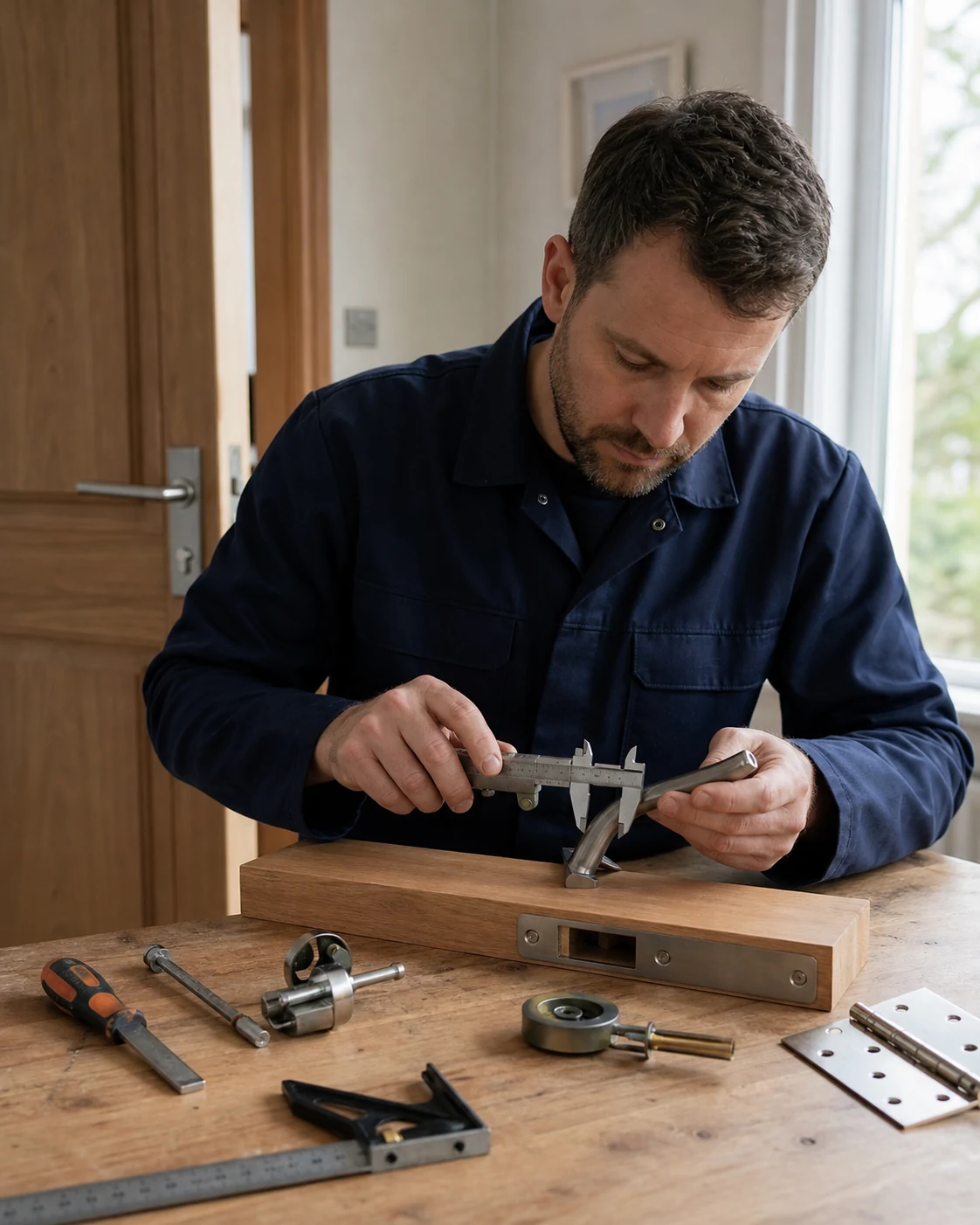
Westminster property context
A mansion block or managed apartment building can provide a clear point of contact, but the porter’s ability to admit a visitor is not the same as authority to change a resident’s or communal lock. Tell the desk who is attending, what door is involved and who will approve the work. Where a resident is absent, confirm whether the owner or agent has arranged lawful access and can make decisions if the fault differs from the initial description.
For carefully maintained common parts, ask how tools should be moved and which surfaces require protection. If the door is identified as a fire door, do not treat that label as a specification for a replacement lock. The responsible building party may need to confirm compatible hardware and the required closer, latch or certification arrangements. A locksmith should not invent that information from appearance.
Service entrances can be useful in buildings with controlled front lobbies, yet they may have their own opening hours or security procedure. Record the route all the way to the door, including lift limits and internal keys. A well-organised appointment preserves time for the lock rather than transferring a building-access problem to the engineer on arrival.
A managed handover
After authorised work, the relevant door should be checked for closing, latching, locking and unlocking. Supplied keys should be counted and handed to the named person. If the work touches a shared entrance, management should understand exactly what changed, what did not change and whether another system or door repair remains outstanding.
Keep written records proportionate: hardware fitted, limitations found, areas not opened and any referral required. Where a temporary measure was used, identify who will arrange the permanent solution. This avoids a safe short-term action being mistaken for complete reinstatement.
Westminster locksmith FAQ
A porter may facilitate entry, but authority for the private door normally needs to come from the resident, owner or properly authorised manager. Confirm the building’s process before attendance.
Have reasonable evidence that you occupy, own or are authorised to manage the property. If identification is inside, explain this while booking so another verification route can be discussed.
Not on behalf of the whole building without appropriate authority. The freeholder or managing agent may need to consider other key holders, fire-door duties and any master-key or access-control arrangement.
Report the fob response, sounds and mechanical behaviour without opening controls. The fault may involve powered access equipment, door hardware or both, so management may need more than one specialist.
Non-destructive options can be considered, but no method can be guaranteed before the lock and door are assessed. A destructive approach should be explained and authorised first.
Consider whether the keys can identify the property, who still needs access and whether a communal key system is involved. The correct response depends on the real key-control risk.
Only when it is stated in the scope. Lock fitting, structural door repair, decoration and access-control work should not be silently bundled together.
Ask for the finding, proposed method, new parts, effect on the door and revised price. The person with authority should agree that change before work continues.
Local coverage
These nearby pages are part of the same local review batch and cover their own property and access contexts.
Name the door and the decision-maker
Send the Westminster address, flat or entrance, porter instructions, observed lock behaviour and the contact authorised to approve the work.
