
Authorised apartment entry
The locksmith checks a reasonable authority route and inspects the secured door before proposing an opening method. The cause may still need repair after entry.
Porter · permission · service route · private entrance
A porter may control entry to the building without having authority to alter a resident’s lock. Confirm the contractor route, the exact private or communal door and the person entitled to approve work before the locksmith attends.
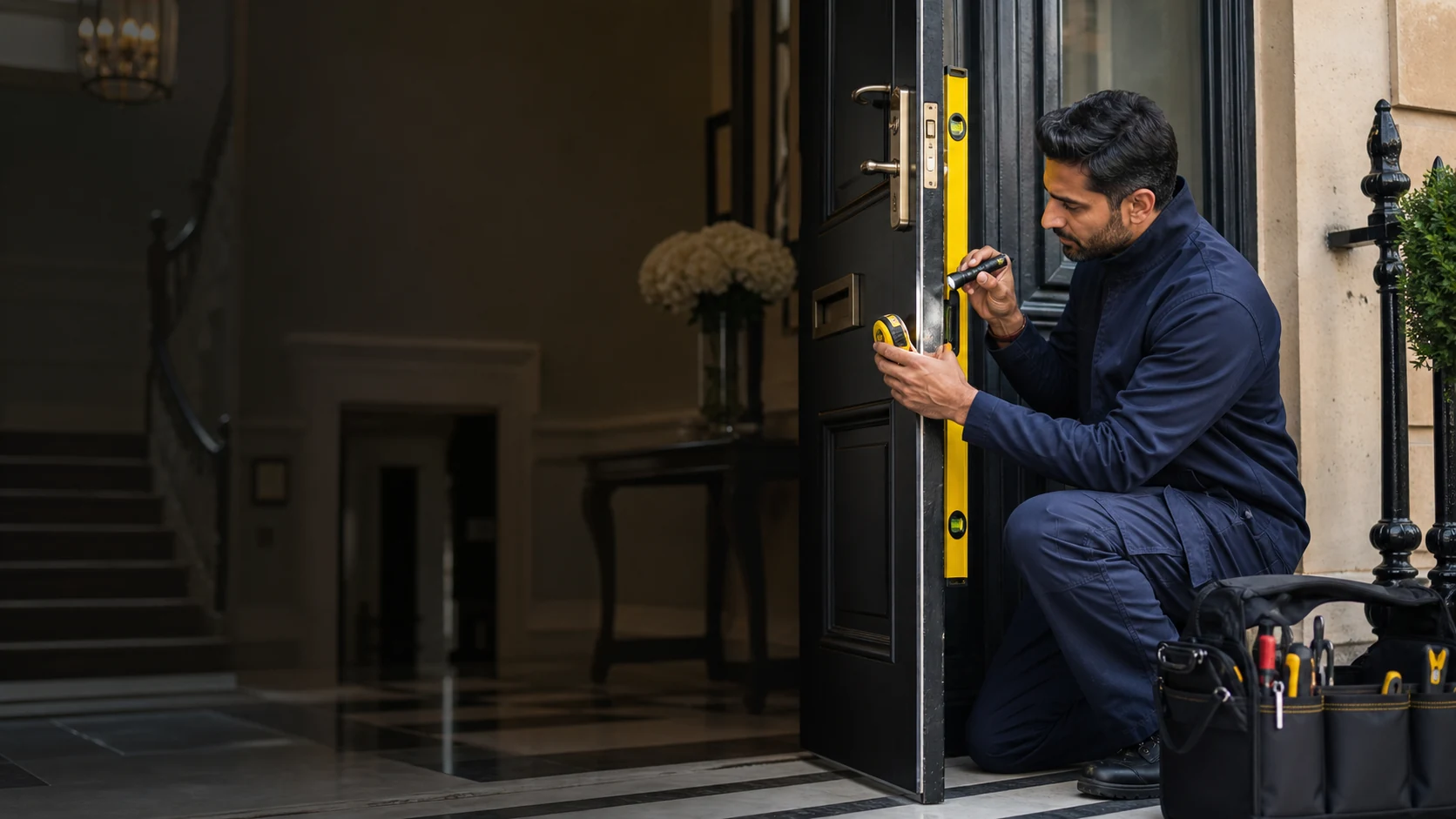
Managed-building access
South Kensington enquiries can involve porter-managed mansion blocks, basement flats and buildings where residents, visitors and tradespeople use different entrances. The resident’s key may open the apartment but not a service gate, lift lobby or meter cupboard. Ask the porter or managing agent where a locksmith should report, whether a booking is required and who can release keys for shared areas. Give the locksmith the building name, apartment number, floor and a contact who will answer at the agreed time.
Physical access and authority are different. A porter can admit a contractor but may not be able to approve a replacement on a private door. A resident can instruct work within their entitlement but should not order changes to the communal entrance. If a basement route crosses storage, staff or plant areas, obtain permission rather than assuming it is part of the flat. These distinctions protect building security and keep the visit focused on the correct hardware.
| Door or route | Who may control access | Decision to confirm |
|---|---|---|
| Private apartment entrance | Resident or owner, subject to tenancy conditions | Who can authorise opening, repair or replacement? |
| Communal street door | Freeholder, managing agent or building operator | Which hardware and key users must remain supported? |
| Porter or service entrance | Building staff | When and how may the locksmith and tools enter? |
| Basement corridor or gated area | Manager, landlord or another key holder | Is the whole route lawful and available for the appointment? |
| Door linked to electronic release | Building management or its system provider | Is the symptom mechanical, electronic or shared? |
Private and communal symptoms
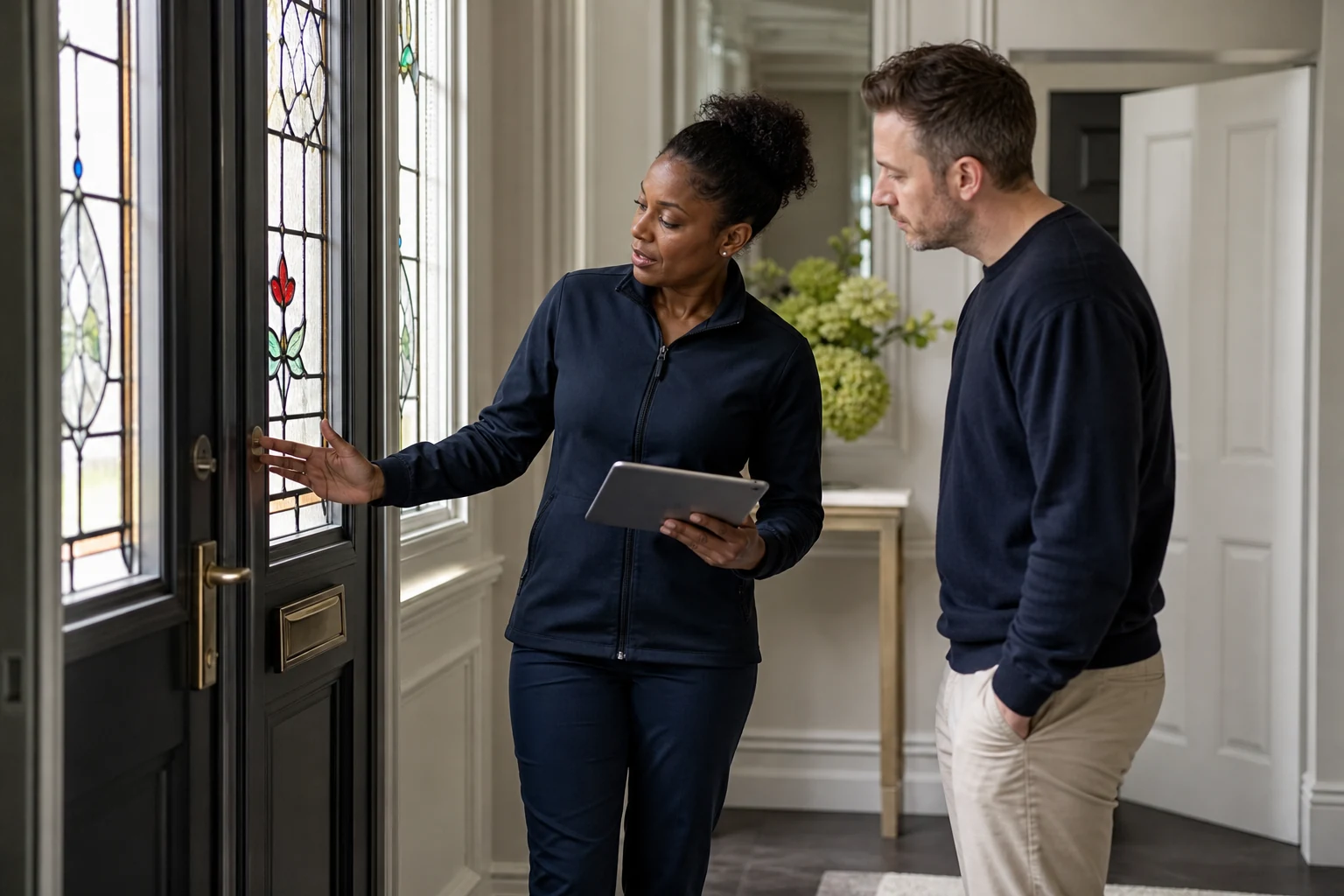
Say what the key, handle, latch or access credential does at the affected door. If a common entrance will not close, report whether the closer returns the leaf and whether the electronic release resets. If an apartment key resists, state whether the door is open or secured and whether a sound authorised spare behaves differently. Do not dismantle a shared lock, wedge a fire-resisting door open or ask building staff to bypass access control.
Safe photographs can show the complete door, lock faces, edge hardware and frame. For a high-finish interior, include the surrounding joinery or decorated panel so an acceptable approach can be discussed. Images do not reveal concealed condition, and a visually similar replacement may not match the case, door thickness or existing cut-outs.
Problem routing
| Observed issue | Useful first information | Appropriate route |
|---|---|---|
| Apartment key turns but the latch remains engaged | Door state, handle movement and proof of occupancy | Authorised locksmith assessment of the private entrance. |
| Communal key works only intermittently | Whether several residents are affected and how the door closes | Management-led review before changing shared key control. |
| Intercom releases but the door stays shut | Sound of the release, latch position and closer behaviour | Coordinate mechanical and access-control checks through management. |
| Basement flat cannot be reached through a service gate | Gate controller, porter hours and alternative authorised route | Arrange lawful entry before booking private-door work. |
| Visible damage affects lock and decorative panel | Safe images and whether the property can be secured | Separate locksmith securing from joinery and decorative restoration. |
| Keys are missing after an occupancy change | Doors served, building key rules and authorised users | Plan private key control without unauthorised communal changes. |
Services inside the accepted boundary
The locksmith checks a reasonable authority route and inspects the secured door before proposing an opening method. The cause may still need repair after entry.
Key movement, handle return and latching are compared with the door open and closed. Alignment and frame pressure are not mistaken for internal failure.
Measurements, key quantities, security aim and building rules guide compatible hardware. Appearance alone is not enough to select the part.
The fragment position and lock condition determine whether extraction, opening or replacement is needed. Improvised tools should be avoided.
On composite or UPVC doors, cylinder, handles, gearbox, strip, keeps and alignment operate together and need systematic checks.
An agreed measure may restore immediate security after damage. Permanent work to the door, frame, glazing or access-control system can remain separate.
High-finish interiors
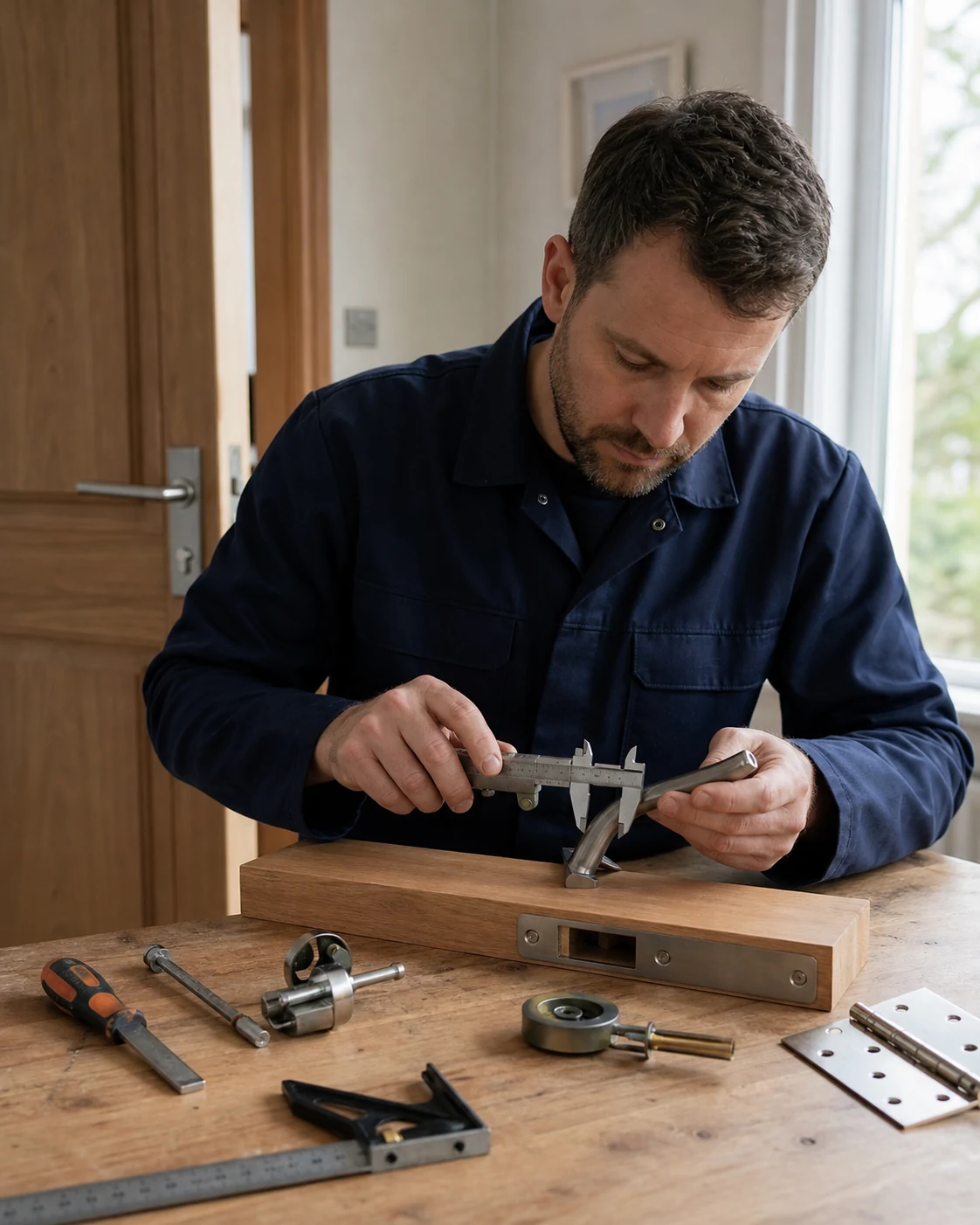
Decorative timber, metal escutcheons, fitted wall panels and stone thresholds can narrow the practical options. Tell the locksmith which elements should be retained and whether building management has a hardware schedule. Do not remove panelling, lift flooring or enlarge a hole in preparation. The existing lock case, backset and door construction need measurement at the property.
If opening could damage the current cylinder or another component, the authorised customer should hear that before the method proceeds. For planned work, compare routes and products by security function, compatibility and effect on the finish. A quoted locksmith scope should not silently include specialist joinery or decoration.
Test closing, latching, locking, unlocking and handle return in normal use. Count supplied keys and confirm who receives them. Record any remaining closer, frame or electronic-release issue for the manager. A clear note is more useful than adjusting a private lock to compensate for an unresolved common-door problem.
Quotation inputs
There is no reliable area-only locksmith price. The written scope should reflect the door, timing, method, parts and managed access. It should also state what happens when a key holder is absent or the finding belongs to communal equipment.
| Element | Details to provide | Boundary to confirm |
|---|---|---|
| Contractor arrival | Porter hours, registration, parking, service entrance and lift | Any waiting or return caused by unavailable managed access. |
| Lockout | Door state, authority, hardware and known damage | Attendance, opening, replacement and post-entry securing. |
| Repair | Key, handle and latch behaviour plus door alignment | Investigation, labour, parts and excluded door work. |
| Replacement | Measurements, approved finish, security aim and key quantity | Named hardware, fitting, operational tests and handover. |
| Communal finding | Manager contact, all users and electronic-control involvement | Referral rather than unauthorised alteration. |
| Decorative impact | Protected surfaces and any approved opening route | Protection, locksmith work, joinery and making good. |
Where inspection changes the expected task, request the revised method, product and total before proceeding. Destructive opening or additional hardware should be expressly accepted by the person authorised for that door.
South Kensington locksmith FAQ
A porter may coordinate entry but does not automatically have authority over a resident’s private lock. Confirm whether the owner, tenant, agent or building manager must approve the work.
Follow the building’s contractor procedure. Ask about identification, working hours, the service entrance, lift use and any information required before attendance.
The freeholder, managing agent or properly authorised building operator should instruct it. Shared keys, door safety and electronic access arrangements must remain coordinated.
Give the exact private door, lock state and a reasonable route for proving occupancy or authority. Mention if identification is inside so verification can be discussed.
No. Arrange the lawful key holder or another authorised route. Access through common or staff areas should not be created by damaging building hardware.
No. It is considered where suitable, but failed, damaged or deadlocked hardware can require another method. Any expected damage and replacement should be agreed first.
No. Appearance is one requirement alongside dimensions, door construction, operation and security function. The existing installation must be measured and assessed.
Report the release, latch and closing behaviour to management. Mechanical and electronic components may need coordinated checks rather than an unauthorised cylinder change.
Only if written into the scope. Lock fitting, specialist timber repair, metalwork and decoration can be separate responsibilities.
Map and live nearby pages
Use the page matching the property address and entrance arrangement. These nearby pages already exist or are included in the present batch.
Settle access before selecting hardware
Send the contractor route, affected door, management contact, safe photographs and the person able to approve the agreed scope.
