
Authorised opening
The locksmith establishes a reasonable right to enter and inspects the secured door. The method depends on hardware and condition rather than a guarantee made from the address.
Entrance route · access window · door controller · locksmith scope
A riverside apartment, a flat above a shop and a terraced house create different routes to the same kind of lock problem. Give the locksmith the correct entrance, usable arrival window and authorised contact for every controlled door.
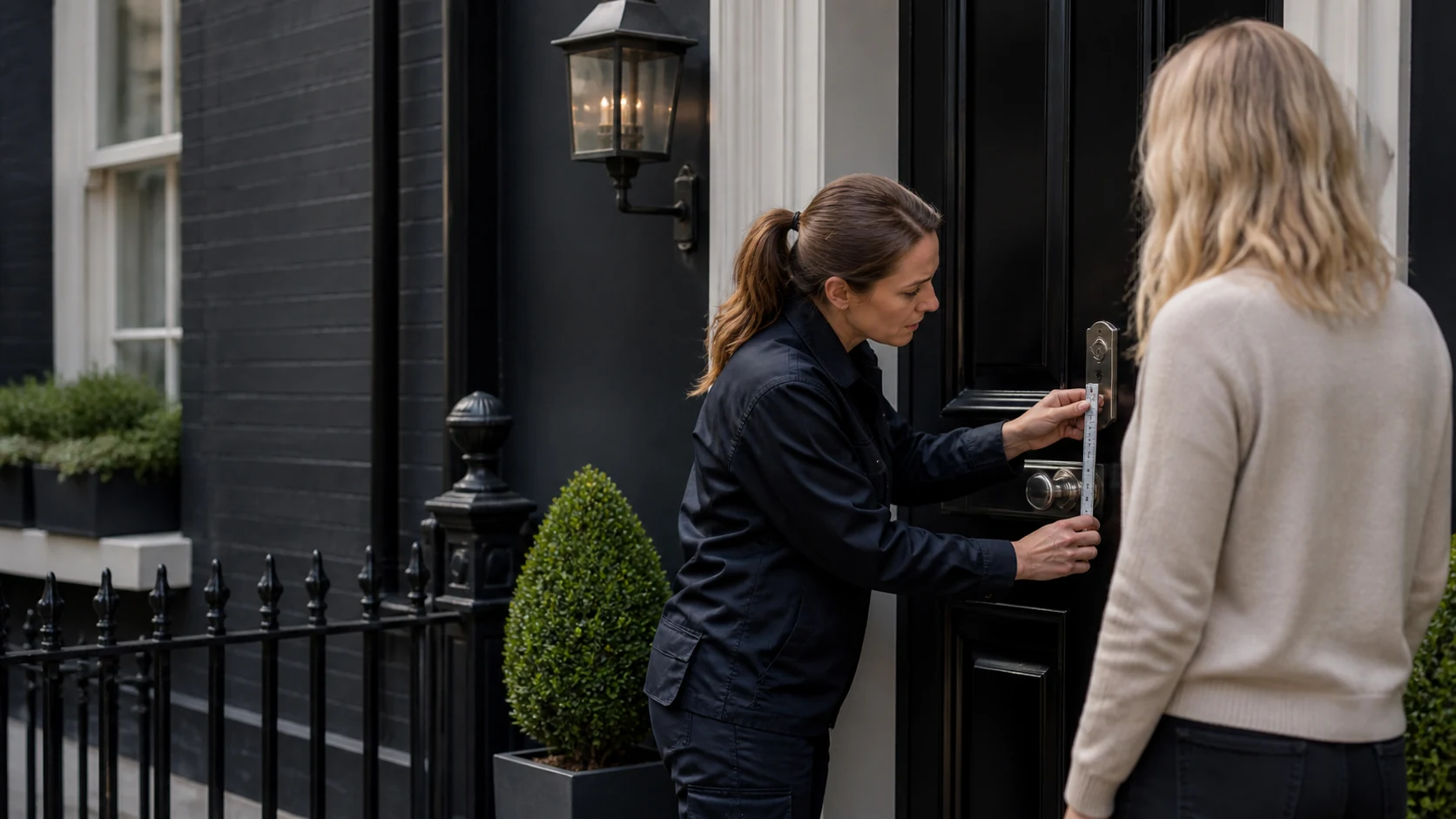
Three access regimes
Hammersmith includes homes reached through commercial frontages, managed riverside developments and ordinary terrace entrances. A flat above a shop may use a narrow door beside the trading unit, with staff controlling a gate during business hours. A managed development can require registration, a loading route and a service lift. A terraced house normally offers direct authority at the private front door, although a converted house can add a communal stage.
Tell the locksmith which arrangement applies and follow the journey from pavement to faulty lock. Include the building or business name, residential number, floor, intercom, internal gate and exact flat. Say who opens each stage and whether the route changes after a particular time. This prevents an appointment being planned for an entrance that is closed, resident-only or controlled by another organisation.
| Setting | Arrival details | Authority boundary |
|---|---|---|
| Flat above commercial premises | Residential doorway, shop relationship, stair route and trading window | The business may provide access without controlling the flat lock. |
| Riverside managed apartment | Reception, contractor sign-in, parking, lift and floor contact | Management controls common parts; resident authority covers the private entrance. |
| Terraced family house | Street number, front or rear door and lawful unloading option | The owner or occupier usually controls the private door. |
| Converted terrace | Common front door followed by the individual flat entrance | Freeholder or agent approval may be needed for the shared lock. |
| Gated residential courtyard | Credential, override key holder and route to the dwelling | Electronic gate operation remains with the site controller. |
Arrival window
For planned work, ask when the loading point, service lift or shop-side passage can be used. Confirm whether a resident must meet the locksmith at the street rather than expecting reception or staff to locate the flat. In a busy commercial setting, choose a period that does not obstruct customers or deliveries. In a managed block, keep the booking reference and porter telephone available.
An urgent private lockout still requires lawful access through earlier doors. State whether you are outside the entire building or only outside the dwelling. If identification is inside, explain that so a reasonable verification route can be discussed. A tradesperson should not be asked to tailgate through a controlled entrance or force a common door to reach private work.
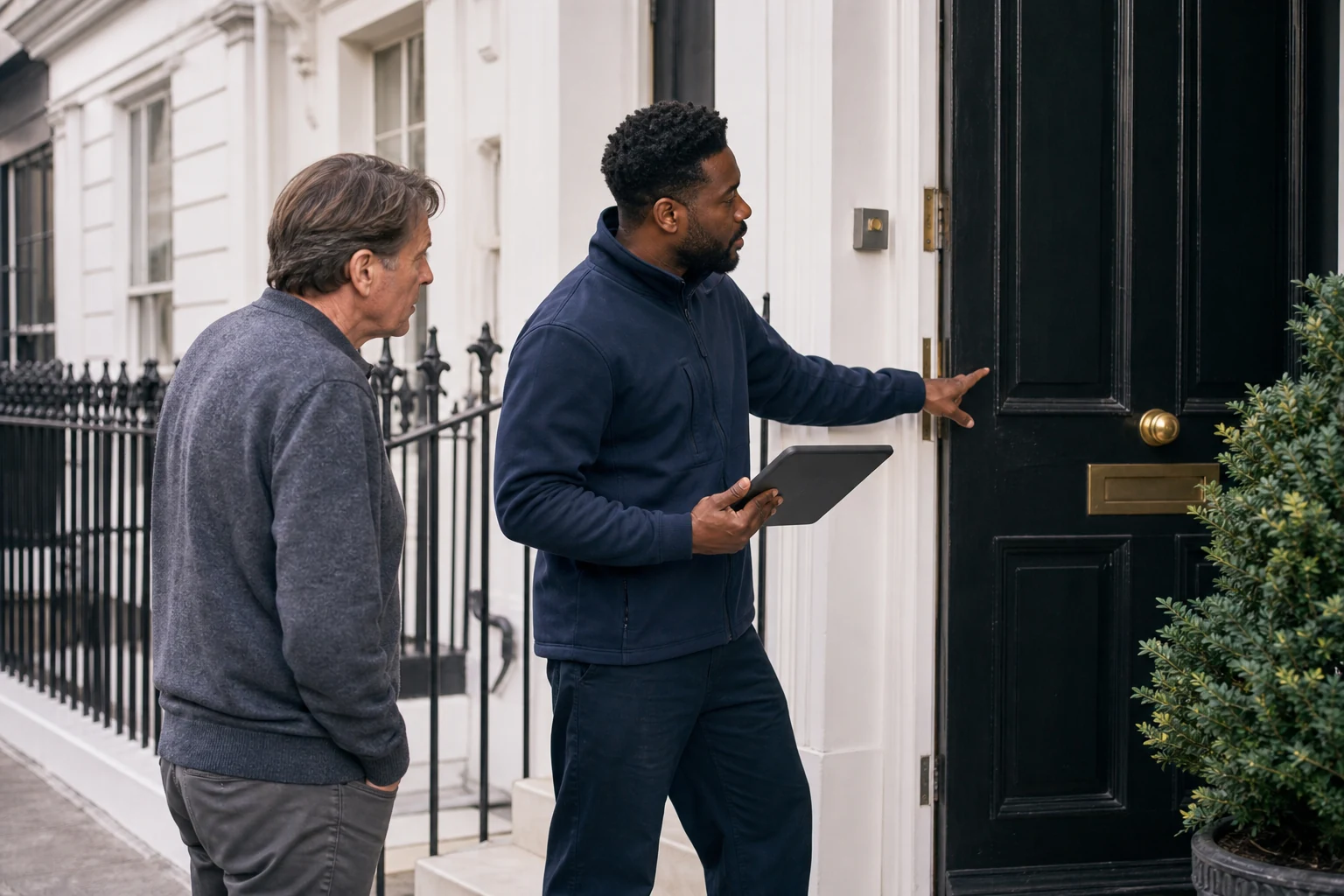
Problem and controller
| Reported event | Controller to identify | Useful service route |
|---|---|---|
| Resident is locked outside the flat | Occupier, owner or authorised landlord contact | Verify authority and assess an appropriate opening method. |
| Shop-side residential street door will not latch | Freeholder or manager of the common entrance | Check mechanical latch, closer, frame and any electric release. |
| Apartment fob is rejected in the lobby | Managed development or access-control operator | Confirm credential and system status before changing a lock. |
| Private key works only when the door is pushed | Resident or owner for the dwelling entrance | Compare alignment, frame pressure and lock operation. |
| Key was lost near premises serving several doors | Separate controllers for residential, common and commercial locks | Map which doors the key opens before changing key control. |
| Damage affects a common doorway and shop surround | Building owner, business and insurer as applicable | Separate immediate securing, lock work and fabric repair. |
Locksmith work for the identified door
The locksmith establishes a reasonable right to enter and inspects the secured door. The method depends on hardware and condition rather than a guarantee made from the address.
Key, handle, latch and bolt operation are checked through the complete door cycle. Door pressure can imitate an internal fault and needs comparison.
Measurements, door construction, desired security result and key users guide a compatible change for the authorised private entrance.
Leave the fragment in place and retain the other piece. Extraction, opening and replacement are assessed as separate possible outcomes.
Cylinder, handles, gearbox, long strip, frame keeps and alignment interact on many UPVC and composite doors. One part is not assumed remotely.
The locksmith can define an authorised securing task. Frame, door leaf, glazing, shutter or electrical access control may require another provider.
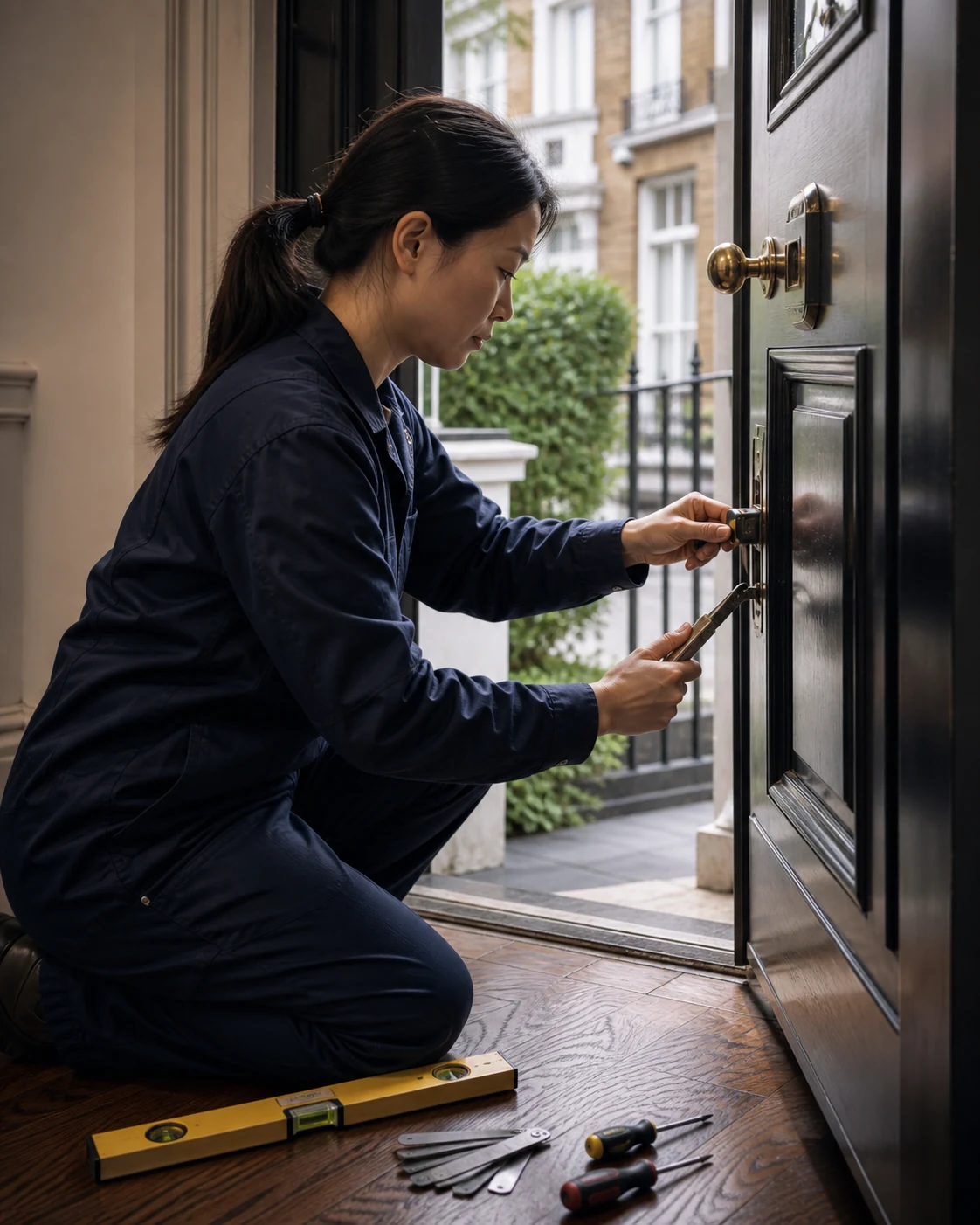
Working in shared routes
Agree where tools can be placed and who will manage people passing through. A narrow shop-side stair should not be blocked, and a common fire-resisting door should not be wedged open for convenience. In a riverside development, use the authorised service route and protect shared finishes as required by management. In a terrace, clear ordinary belongings but leave fixed panels and lock covers assembled.
At completion, test the affected private door in normal use and hand keys directly to the nominated person. If the common entrance still has a closer or access-control fault, record it for management. Do not adjust a private lock repeatedly to conceal movement elsewhere in the building.
Keep the accepted scope, invoice, hardware description and number of keys supplied. Note which door was worked on so the record cannot be mistaken for permission covering the neighbouring business or common entrance.
Quote structure
Hammersmith does not determine a fixed locksmith charge. Attendance timing, controlled access, opening method, fault, parts and follow-on work all affect the scope. Ask for an itemised boundary that remains meaningful if the building route is unavailable.
| Factor | Information to share | What the quote should state |
|---|---|---|
| Arrival route | Commercial doorway, reception, parking, lift and key holder | Access assumptions and any separately arranged return. |
| Lockout | Door state, authority, hardware and known damage | Attendance, opening, replacement and securing boundaries. |
| Fault repair | Key, handle and latch behaviour open and closed | Investigation, labour, compatible parts and door exclusions. |
| Replacement | Measurements, door type, key quantity and security aim | Specified hardware, fitting, testing and key handover. |
| Common-door issue | Manager contact, closer and electronic-release behaviour | Authorised locksmith work versus referral to another system provider. |
| Physical damage | Current security, frame, leaf, glazing and insurer evidence needs | Temporary protection compared with permanent restoration. |
If inspection reveals a different task, pause for an explanation and revised scope. Destructive entry, another lock or additional parts require the approval of the person controlling that exact door.
Hammersmith locksmith FAQ
Give the residential number, door position beside the frontage, business name as a landmark and the full stair route. Say whether staff control any gate.
Only if they also hold proper authority for that door. They may provide physical access while the resident, landlord or freeholder approves the locksmith work.
Follow its management procedure. Ask about reception, parking, service lifts, working hours and any requested contractor information before attendance.
The locksmith needs reasonable evidence of occupancy, ownership or management authority. Mention if identification is inside so verification can be discussed.
A fob or reader belongs to the building access-control system and may require its nominated provider. Mechanical hardware can be assessed within proper authority.
Pressure may change how the bolt or latch meets the frame. Avoid force and request checks of alignment and lock condition before selecting parts.
No. Suitable non-destructive methods are considered, but failure or deadlocking may require another approach. Expected damage should be explained first.
Only if the written scope says so. Lock work, shutter, glazing, frame, joinery and decoration may involve separate responsible parties.
A lawful place to unload and the exact controlled route are more useful than a general landmark. Confirm the person who will actually open each stage.
Map and nearby live pages
These pages are live within the present local content set. Choose the actual property location because neighbouring areas can have different access arrangements.
Give the complete route, not only the postcode
Send the entrance sequence, access window, faulty door, safe observations and the correct decision-maker for the proposed work.
